
Quick Answer
Start by treating the banker as your process lead, not a finder of introductions. For a mid-market transaction, that means setting mandate scope (sell-side or buy-side), staging disclosure from teaser to signed Non-Disclosure Agreement, and keeping diligence and negotiations moving through closing. Management still owns factual accuracy, while counsel owns legal judgment. A practical readiness test is whether deal objective, escalation owner, and evidence files are all clear before outreach begins.
Why this role matters before you start a deal#
An investment banker in mergers and acquisitions matters before the first buyer is contacted because the job is more than making introductions. In a strong process, the banker acts as an advisor on a complex transaction, an intermediary between parties, and an execution partner who helps surface issues before they become bigger problems.
That distinction matters for a mid-market owner. If you think the investment banker role in M&A starts with a buyer list, you will probably underprepare for the harder work. In practice, that work often includes framing the transaction, pressure-testing assumptions against market conditions, and setting process rules early. Banks and advisors are often described as bringing market insight and end-to-end transaction support. That is a much broader job than being a connector.
This article is meant to be practical, not ceremonial. We will go stage by stage through what the banker actually owns, what management still owns, and where legal and tax specialists need to lead. For a seller, that means decision points such as when your materials are ready, when to widen buyer outreach, when to gate information behind a Non-Disclosure Agreement, and how to compare bids beyond headline price. For a buyer, the emphasis shifts, but the same point holds. The advisor's value is in process quality and decision discipline, not just access.
A useful early checkpoint is simple. Before launch, you should be able to answer three questions in one sentence each. What is the deal objective? Who owns factual accuracy for company information? Who decides when an issue gets escalated to counsel? If those answers are fuzzy, the process is not ready, even if buyer interest feels strong. Starting outreach with a polished narrative but weak internal proof can create avoidable friction as scrutiny increases.
Keep the scope realistic. Fees, timing, and legal standards are not one-size-fits-all, and each M&A process is shaped by company-specific facts. That is why this guide focuses less on promises about how long a deal will take. It focuses more on the parts you can actually control: role boundaries, decision points, and the quality of the information you put into the market.
What an investment banker does and does not do in mid-market M&A#
In mid-market M&A, an investment banker is there to run a disciplined process and act as an intermediary, not to replace your legal or tax specialists.
An investment bank is the advisory firm. The investment banker is the deal lead or team on your mandate. You may also see M&A advisor or business broker for similar work, and the title overlap is real, so the mandate matters more than the label.
What bankers typically do is coordinate deal execution: position the company, manage buyer introductions and communication, support negotiation, and in some cases help arrange financing. Their role can vary with company size and with how experienced the client is in M&A.
What they do not do is take over specialist judgment. They can coordinate legal and regulatory workstreams and flag issues for counsel, but they are not your lawyer and they are not your tax advisor.
You might also find this useful: The Best Marketplaces for Buying and Selling Small Businesses.
Sell-side and buy-side work are different jobs#
Sell-side and buy-side mandates use similar tools, but they optimize for different outcomes. Sell-side work is usually about creating competitive tension, protecting confidentiality, and improving valuation and terms; buy-side work is about target fit, downside-risk reduction, and whether integration is feasible.
A practical way to read the difference is this:
| Dimension | Sell-side M&A | Buy-side M&A |
|---|---|---|
| Core objective | Run a credible process that supports stronger price and terms | Find the right target and avoid value-destructive risk |
| Pacing | Often auction-style, with controlled bid timing | Often learning-driven, focused on screening and diligence depth |
| Confidentiality flow | Common gated sequence: teaser -> NDA -> fuller detail (often CIM-level) | Access expands after NDA and evaluation progress |
| What "win" means | Competitive buyer field and terms that hold through diligence | Proceeding only when fit, risk, and integration case are clear |
What changes by side#
Sell-Side M&A means the banker represents the seller. Buy-Side M&A means the banker represents the acquirer. That one choice drives process design, information flow, and decision pressure.
On the sell-side, you are usually managing exposure in stages: teaser first, then NDA, then fuller information for qualified parties. On the buy-side, the emphasis is usually disciplined screening and diligence to reduce risk and test whether the deal can actually work after signing.
Outputs you should expect#
Sell-side outputs usually include:
| Sell-side output | Buy-side output |
|---|---|
| Teaser document | Target list construction |
| Buyer list construction | Outreach and response handling |
| Management narrative support | Diligence request structure |
| Bid-process control and timeline management | Offer comparison support with risk and fit in view |
- Teaser document
- Buyer list construction
- Management narrative support
- Bid-process control and timeline management
Buy-side outputs usually include:
- Target list construction
- Outreach and response handling
- Diligence request structure
- Offer comparison support with risk and fit in view
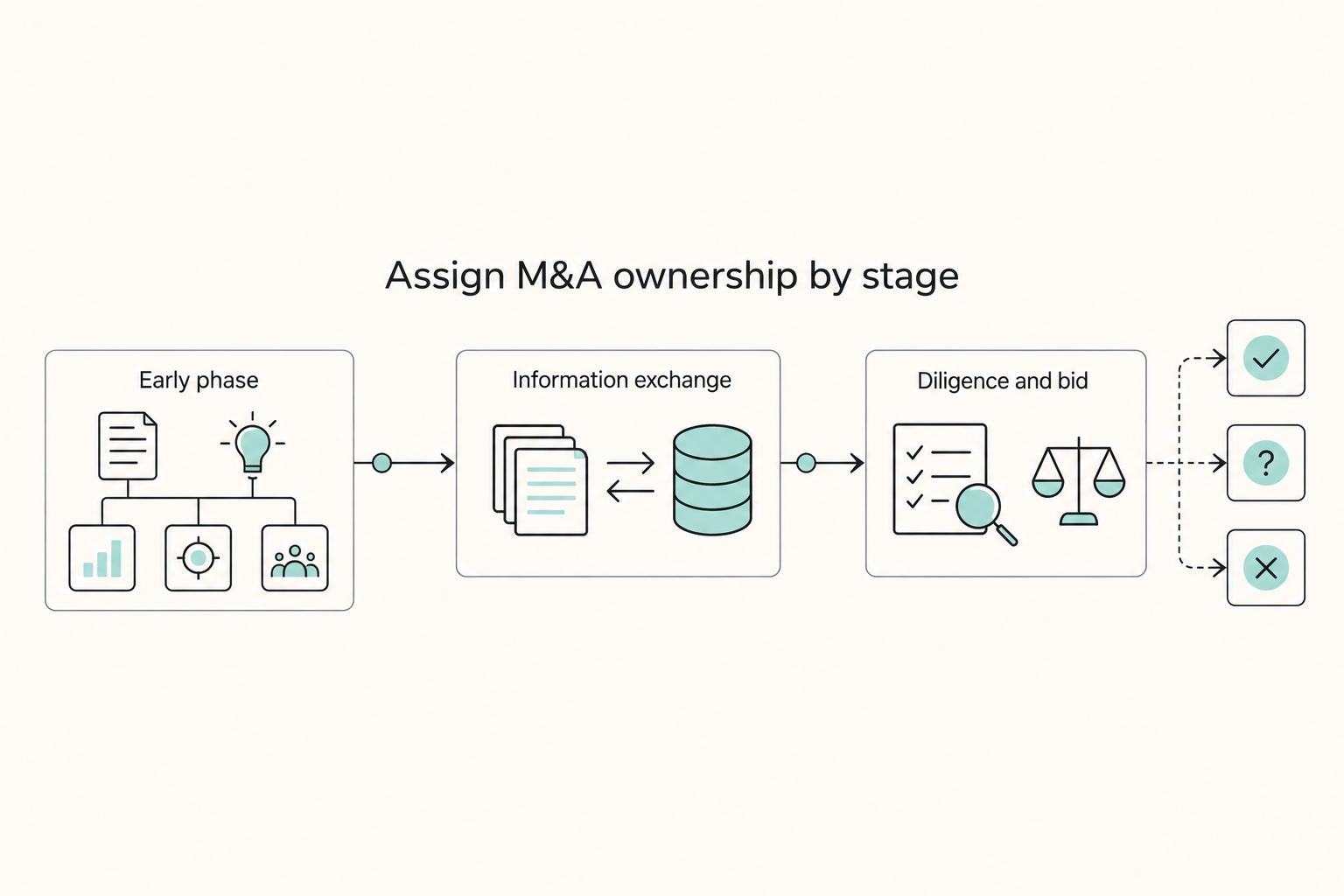
Ownership checklist by stage#
Use this as a working alignment template, then confirm exact owners before launch.
| Stage | Banker | Management | Counsel | Finance lead |
|---|---|---|---|---|
| Early phase | Process design (sell-side positioning or buy-side target search) | Strategy choices and business narrative inputs | Legal-risk flags for approach | Financial baseline and key assumptions |
| Initial information exchange | Teaser/outreach flow and NDA coordination | Disclosure approvals and management participation | NDA/confidentiality review | Early data support |
| Diligence and bid/offer phase | Process coordination, timing, and bid/offer workflow | Factual business inputs and presentations | Legal drafting and legal issue handling | Diligence financial support and Q&A |
If you remember one thing: hire for the mandate you actually need. Sell-side requires process control and buyer tension; buy-side requires disciplined screening, risk pressure, and integration realism.
Need the full breakdown? Read The Best Citizenship by Investment Programs in the Caribbean.
Decide whether to hire an investment banker or use business brokerage#
Use an investment-bank style process when your buyer universe includes both private equity and strategic acquirers, especially across regions. In that situation, broader buyer coverage and a more structured competitive process usually matter more than a lighter, local approach.
Business brokerage is often associated with smaller Main Street sales, while market reporting separates Main Street ($0-$2MM) from lower middle market deals ($2MM-$50MM). Treat those ranges as orientation, not a hard cutoff. The better decision test is buyer-universe breadth and process complexity, not size alone.
A brokerage route can still be viable for a simpler local sale with a narrow buyer pool. The tradeoff is usually process depth when you need to reach multiple buyer types, run a formal divestiture or full sale, and manage diligence in stages.
| Decision point | Business brokerage | Investment bank style M&A |
|---|---|---|
| Typical fit | Smaller, local, narrower buyer universe | Broader mid-market process with multiple buyer types and/or regions |
| Buyer coverage | Often concentrated in known/local buyers | Built to cover strategic and financial buyers more broadly |
| Process rigor | Often simpler process design | Structured competitive marketing, coordinated management presentations, staged diligence |
| Management involvement | Can require more owner-led coordination | More formal coordination across outreach and post-LOI diligence |
Before hiring, pressure-test mandate fit on three points:
- Sector familiarity: Can they map your likely strategic and financial buyers with specific logic, not generic language?
- Middle-market transaction history: Can they show recent deals similar to yours in complexity?
- Execution bench strength: Who will run execution day to day for your divestiture or full sale?
For another owner-sale perspective, see A Guide to Selling Your Freelance Business or Agency.
Prepare the materials before you contact buyers#
Before you start outreach, make your buyer logic and proof tight enough to stand up to scrutiny. Strong buyer interest can start with basic fit, but your process holds up only if your core claims are clear and supportable.
Start with buyer objectives, then align your story to the filters buyers and bankers actually use: industry, size, geography, financial performance, and strategic fit. If a point does not strengthen fit against those criteria, it likely does not belong in your first-contact narrative.
Next, pressure-test your valuation assumptions before you draft outreach language. The goal is not one perfect number; it is a defensible range tied to support you can explain consistently.
Then draft your teaser and outreach notes using only claims you can back up. A simple internal check helps:
- list each material claim you plan to make
- map it to a supporting file, report, or named internal source
- assign an owner for follow-up questions
Run one internal read-through before launch with someone who did not draft the materials. If key answers are inconsistent or hard to verify, tighten the wording or remove the claim before you contact buyers.
A practical buyers list is a critical part of the process, and some advisors note it can be hard to identify more than two or three qualified buyers without professional help. Even with a strong list, your materials still need to carry the load once buyers move from initial fit to detailed questions.
If you want a deeper dive, read Digital Nomad Health Insurance: A Comparison of Top Providers.
Run outreach and NDA flow without losing leverage#
Run outreach in a controlled sequence: shortlist likely strategic and private equity buyers, share a limited teaser, and release deeper operating detail only after a signed Non-Disclosure Agreement. This keeps interest generation separate from information exposure.
Leverage comes from qualification and prioritization, not just activity. Keep one live pipeline that shows fit, engagement, and next-step status so management time goes to credible buyers. When tracking is split across inboxes and ad hoc sheets, visibility and accountability drop.
Stage information on purpose#
Use the teaser to test fit without disclosing sensitive operating detail too early. If confidentiality risk is high, tighten buyer waves, screen recipients more strictly, and use tighter NDA terms before sharing higher-risk information.
A useful checkpoint before each disclosure is simple: if this leaked, what would materially hurt the business? If the downside is meaningful, hold it back until the process stage supports release.
Use competition carefully#
A competitive process can create bidder tension and support stronger price and terms, but broad outreach is not automatically better. In one $20M sale example, outreach was described as a marketed process to 150-300 targeted buyers; treat that as one process design, not a universal target.
The tradeoff is practical: broader outreach may increase options, but over-broad outreach can create noise, reduce trust, and consume management bandwidth with weak-fit buyers.
Keep one decision log#
Use one decision log as the control point for the process. At minimum, track:
| Log area | What to track | Used for |
|---|---|---|
| Buyer progress | buyer type, signal strength, teaser status, and NDA status | decide who advances |
| Diligence readiness | what diligence support is ready now vs. still being prepared | decide what gets shared next |
| Management coordination | management time allocation, meeting cadence, and disclosure approvals | decide when management should engage directly |
- buyer type, signal strength, teaser status, and NDA status
- what diligence support is ready now vs. still being prepared
- management time allocation, meeting cadence, and disclosure approvals
This log helps you decide who advances, what gets shared next, and when management should engage directly.
Handle diligence negotiation and closing with clean handoffs#
Late stage is where execution quality decides whether a deal closes on time or gets re-traded. Your banker should coordinate diligence, compare bids, and negotiate final commercial terms through closing, while counsel owns legal drafting and legal compliance opinions, and management owns factual accuracy.
Diligence is not a document dump. On the buyer side, legal due diligence is a structured review before they decide whether to consummate the transaction. Your banker should keep requests organized, push for clear answers, and prevent scope drift, but should not make legal calls or answer factual questions that management must own.
Keep ownership lines explicit#
Use clear lanes all the way to close. The banker runs the diligence workflow, tracks open items, and negotiates the total terms package. Legal counsel drafts and marks up transaction documents and makes legal judgment calls. Management confirms that operating, customer, financial, HR, and IP facts are complete and accurate.
When those lanes blur, deals slow down. As M&A attorney Robert E. Harig puts it: "Sometimes, due diligence reveals serious red flags-issues that could derail the transaction or require renegotiation." Treat that as an operating rule, not a surprise.
Your checkpoint should be simple: every material claim repeated in meetings should tie to a document you can produce quickly. If a buyer asks about customer concentration, disputes, change-of-control clauses, or compliance history, route the answer to the owner of that fact and log what was sent.
Compare bids as closing packages#
Do not optimize for headline valuation alone when bids are close. Certainty and timing can outweigh a small price gap.
| Bid factor | What to verify | Why it matters |
|---|---|---|
| Headline price | Is the price fixed or still assumption-heavy? | A higher headline can shrink if terms are conditional. |
| Diligence conditionality | Are key diligence asks still open-ended? | Open items create room for late re-trades. |
| Financing and approvals | Is there a credible path to required approvals? | Weak certainty can delay or break closing. |
| Timeline | What must happen before signing vs closing? | Longer paths increase execution risk. |
| Seller protections | What happens if buyer cannot close? | Protections can reduce failed-close downside. |
Watch the real closing gates#
Most late delays come from unresolved diligence items, unfinished legal documents, financing or approval friction, and regulatory dependencies. Where Hart-Scott-Rodino applies in the U.S., parties may not close until the waiting period passes: 30 days, or 15 days for a cash tender offer or bankruptcy.
Ask for one open-items tracker that shows owner, missing document or approval, signing vs closing impact, and last movement date. If an item has no owner or no evidence behind it, treat it as a closing risk.
This is where a strong banker adds value: pressure on process, clean escalations, and disciplined handoffs without overstepping legal or factual ownership. For related reading, see The Role of a Contact Person for an Estonian e-Resident Company.
Red flags that signal process breakdown#
Treat this as process breakdown, not normal friction, when the buyer thesis is unclear, the teaser is weak, management answers are inconsistent, and diligence support is missing.
Poor diligence is a major failure pattern in M&A, and it can surface issues that force renegotiation or derail the deal. If your thesis keeps shifting by buyer, decisions usually get weaker and outreach quality drops with it.
Use this quick red-flag check:
- no clear, specific buyer thesis
- weak teaser quality (especially for a one-to-two-page first impression)
- headline claims that do not map to support files
- inconsistent management answers across calls
- missing diligence support for core claims
Governance gaps that make buyers lose trust#
Governance gaps are often the hidden cause of process failure: no clear owner for banker requests, no document control, and no escalation path for legal or compliance blockers.
Your control test is simple: can the team quickly produce the current approved support for a management claim? A structured virtual data room with an index and organized folders is the baseline. If documents are scattered, duplicated, or unclear on ownership, buyers read that as risk.
Fix the process before you restart outreach#
Incentives can drift when price targets are overpromised or timelines are rushed. That usually pushes outreach ahead of evidence quality and increases failed-close or re-trade risk.
Before restarting outreach:
- reset the timeline around material quality, not launch pressure
- tighten the diligence pack so each major claim ties to a document
- re-qualify the buyer list against a specific thesis
This reset does not guarantee success, but it restores credibility and gives the process a better chance to hold up under diligence.
This pairs well with our guide on The Best Cities for Airbnb Investment in the US.
Make the banker relationship a controlled operating decision#
Treat the banker relationship as an operating decision, not a reputation bet. In M&A, the right advisor helps you handle a complex process with stronger execution discipline, while a poor mandate fit usually creates avoidable noise and late surprises.
| Criterion | What to assess |
|---|---|
| Mandate fit | fit for your mandate and transaction path |
| Materials and screening | quality and discipline of materials and buyer/target screening |
| Diligence and closing support | ability to support diligence and closing, not just sourcing |
| Role boundaries | clarity on boundaries with counsel and management |
| Execution realism | realism on timing, workload, and confidentiality risk |
Do not hire on brand alone. Pressure-test how the advisor works: mandate fit (sell-side vs. buy-side), quality of working materials, and whether they stay effective through diligence and closing rather than only at introductions. Use checkpoints that force clarity on evidence, ownership, and version control so important claims stay supportable under pressure.
Role boundaries should be explicit from day one. Your banker runs the commercial process, while counsel owns legal advice and legal drafting, and management owns factual accuracy. If those lines blur, execution risk rises quickly.
If you are comparing advisors, score them against your actual deal profile:
- fit for your mandate and transaction path
- quality and discipline of materials and buyer/target screening
- ability to support diligence and closing, not just sourcing
- clarity on boundaries with counsel and management
- realism on timing, workload, and confidentiality risk
Next step: shortlist a few advisors, score them with the same criteria, and test their process against your facts before launch. Then confirm with legal, tax, and compliance specialists where country-level or program-level rules may change what can be shared, when it can be shared, and who must approve it.
For a step-by-step walkthrough, see The Role of the BSA/AML Compliance Officer in a U.S. FinTech Company.
Frequently Asked Questions
What does an investment banker actually do in M&A day to day?
In the provided materials, M&A work is presented as a structured process with defined deliverables, not just introductions. One concrete example is the Confidential Information Memorandum (CIM), which is treated as a document with a specific order and contents. Beyond that, the day-to-day task split is mandate- and team-dependent.
How is the role different in sell-side M&A versus buy-side M&A?
Sell-side and buy-side are treated as distinct process tracks and are compared directly, so role expectations are not one-size-fits-all. Exact responsibilities and emphasis should be set explicitly for the mandate at hand.
When should a mid-market owner hire an investment bank instead of a business broker?
Do not assume there is a hard rule for choosing an investment bank versus a business broker. A practical filter is whether you need a formal M&A process with investment-banking-style deliverables, such as a structured CIM. If not, a lighter process may be sufficient.
What deliverables should I expect before buyers sign a Non-Disclosure Agreement?
The CIM is a structured deliverable, and teams should be clear about what a CIM is and is not. Exactly what is shared before an NDA is process-specific and should be aligned early.
Where does the banker’s role end and legal counsel begin?
Do not assume there is a complete banker-versus-counsel responsibility framework, and do not assume there are set legal standards for NDA handling. Treat scope boundaries as deal-specific, document them early, and route legal interpretations to counsel.
How does a banker help during due diligence and deal closing?
Do not assume there are definitive stage-by-stage benchmarks for diligence or closing. Conservatively, banker involvement should be treated as process support that varies by mandate, with responsibilities and decision rights defined explicitly by the deal team.
Try a related tool
Researched and edited by the Gruv editorial team. Gruv builds cross-border billing, payouts, and finance-operations software for global businesses.
Sources
Includes 5 external sources outside the trusted-domain allowlist.
- ftc.gov/advice-guidance/competition-guidance/guide-a...trusted
- occ.gov/topics/charters-and-licensing/public-comment...trusted
- sec.gov/Archives/edgar/data/1626115/0000950170250291...trusted
- alejandrocremades.com/deal-architects-key-responsibilities-of-inve...external
- americanbar.org/groups/young_lawyers/resources/after-the-bar...external
- cascade-partners.com/investment-bankers-and-ma-attorneys-the-deal...external
- clearlyacquired.com/blog/the-role-of-an-investment-bank-business...external
- corporatefinanceinstitute.com/resources/valuation/private-equity-transacti...external
Educational content only. Not legal, tax, or financial advice.
Related Posts

Digital Nomad Health Insurance Comparison for Long-Stay Moves
Use focused time now to avoid expensive mistakes later. Start with a practical `digital nomad health insurance comparison`, then map your route in [Gruv's visa planner](/tools/visa-for-digital-nomads) so we anchor policy checks to your real plan before pricing pages pull you off course.
A Guide to Selling Your Freelance Business or Agency
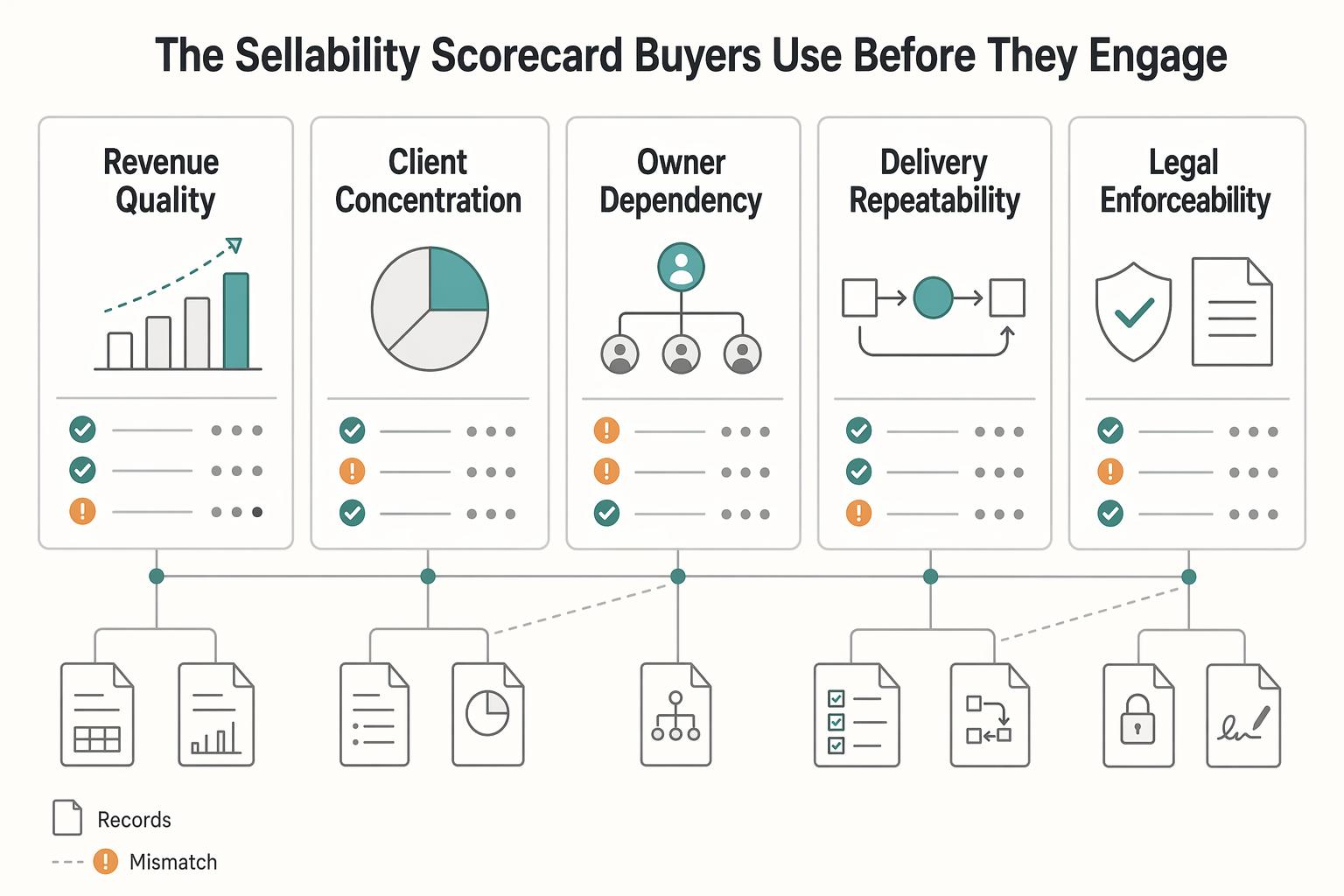
**When you sell your freelance business, buyers are paying for a reliable asset they can verify, transfer, and run, not for your personal hustle.** A common mistake is mixing advice about winning clients with advice about closing an acquisition. Those are different jobs. This guide is a sellability-to-close playbook designed to reduce surprises before buyer conversations begin.
The Best Marketplaces for Buying and Selling Small Businesses
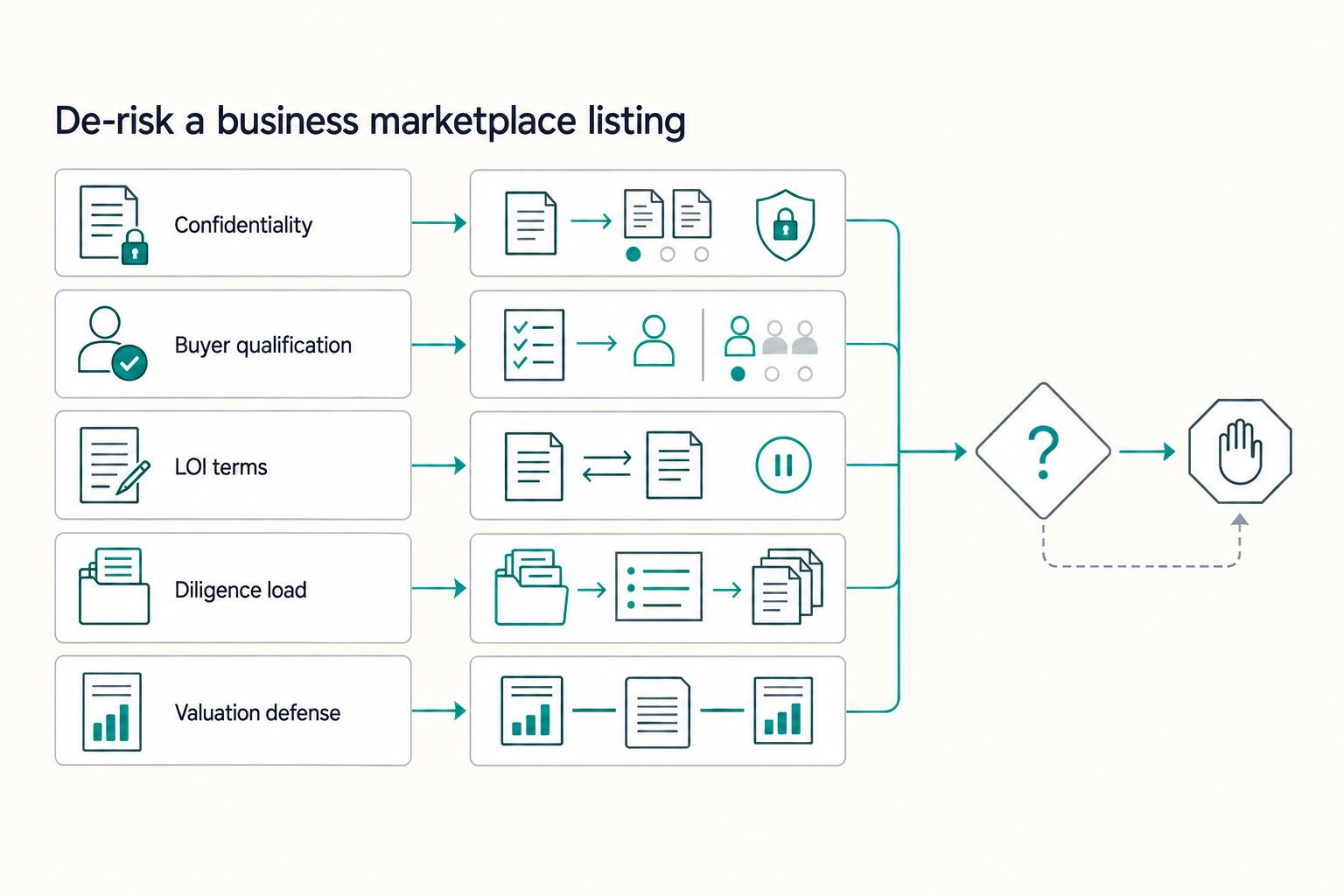
Choose downside control before reach. In **marketplaces for selling businesses**, buyers and sellers usually start with no relationship, so trust risk is the default, not the exception. Your first question is not "where will I get the most eyeballs?" but "where can I reduce exposure to fraud, weak screening, and unclear trust-and-safety processes?"