
Quick Answer
Choose a manager-led long-term lease unless you can run a short-term rental like an operating business from abroad. In short-term vs long-term rentals, check three points first: whether your involvement could move treatment toward Schedule C or raise Permanent Establishment concerns, whether you can reliably handle Airbnb and Vrbo response and turnover demands, and whether repatriated cash still holds after platform fees, payout lag, and FX transfer friction.
The Global Professional's Dilemma: Is Your Rental Property an Asset or a Liability?#
You are probably not chasing the biggest headline revenue number. You want rent that arrives, stays collected, and does not turn into a second job or a cross-border tax headache. For an owner living internationally, the real choice between a short stay and a long-term lease is about risk first. Which model gives you lower compliance exposure, less remote operating drag, and more cash left after fees, taxes, and reporting?
That matters because the failure modes are not theoretical. If you are a U.S. citizen or resident alien abroad, rental income still falls under worldwide income reporting. If rent and expense money moves through foreign accounts, FBAR can apply once your aggregate foreign account balance exceeds $10,000 at any point in the year, even if that account produced no taxable income. Platform tax handling is not a complete safety net either. Airbnb and Vrbo both note that hosts may still need to collect, file, or remit some local taxes themselves.
| Risk area | Short-term rental via Airbnb/VRBO | Long-term lease |
|---|---|---|
| Compliance exposure | Often higher. More transactions, local lodging-tax checks, and a greater chance substantial guest services shift treatment toward business reporting. | Often lower. Fewer payments, simpler records, and a clearer starting point for Schedule E rental reporting. |
| Remote operations | High-touch. Turnovers, guest messaging, repairs, refunds, and cleaner oversight. | Lower-touch. One tenant, one lease, fewer handoffs. |
| Net cash retention | Can be strong, but platform fees and service layers eat into payouts. Airbnb says most hosts pay 3%; Vrbo pay-per-booking lists 3% payment processing plus 5% commission. | Usually steadier, with fewer moving parts between gross rent and net cash. |
The better question is not, "Can this property earn more?" It is, "What extra activity am I creating?" As you become more active, you raise more questions around tax residency, cross-border reporting, and whether your setup could start to look like a fixed place of business, which is the core idea behind Permanent Establishment. The next three pillars walk through that decision in order. First the compliance risk, then the remote operating load, then whether the return still works once cross-border friction is counted.
For a step-by-step walkthrough, see Do You Need Separate Short-Term Rental Insurance?.
Pillar 1: The Compliance Shield - Which Rental Model Puts Your Global Status at Risk?#
If your priority is protecting legal standing and cashflow reliability, a professionally managed long-term lease is usually the lower-risk default. A short-term model can still work, but only if your role stays closer to passive ownership than active operations.
This decision is an activity test, not just a revenue test. As your involvement increases, residency exposure, business-presence exposure, and U.S. reporting complexity can increase with it. Authorities look at what you do, who acts for you, and how consistently those activities happen.
Use the activity test before you launch#
A long-term lease with independent management usually aligns more cleanly with passive ownership. A short-term setup can look like an operating business because it typically includes pricing, booking, cleaning, guest support, and frequent payment flows. That matters for permanent establishment (PE), which treaty language ties to a fixed place of business, and for dependent-agent risk when someone in-country habitually concludes contracts in your name.
Run your setup through these four checks:
- Control: Are you setting rates, approving bookings, handling disputes, or directing day-to-day operations? More direct control usually means more active-operator risk.
- Services: Are you providing guest-convenience services (for example, frequent cleaning or similar support)? Substantial tenant-convenience services can shift U.S. reporting from Schedule E to Schedule C.
- Local presence: Do you rely on local staff, dedicated space, or a person acting mainly for your operation? That can increase PE risk.
- Decision authority: Can a local manager or agent sign or routinely conclude contracts for you? That is a key dependent-agent warning sign.
Before launch, review the management agreement line by line. Confirm whether the manager is truly independent, exactly which services they provide, and whether they can bind you contractually. Many owners outsource operations in practice but still retain control in contract terms.
| Compliance dimension | Short-term model | Long-term lease model |
|---|---|---|
| Residency exposure | Usually higher when involvement is continuous and operationally central. | Usually lower when management is independent and your role stays limited. |
| Business-presence exposure | Usually higher when the property operates like local hospitality, especially with services and in-country agents. | Usually lower when activity is limited to standard lease administration and rent collection. |
| Reporting workload | Heavier: more transactions, payouts, fees, refunds, and reconciliations. | Lighter: fewer recurring transaction types and records. |
| Documentation burden | Broader file set: registration records, platform statements, service/vendor agreements, payout logs. | Narrower file set: lease, manager agreement, rent ledger, deposit and repair records. |
Where U.S. reporting gets messy#
For U.S. filers, FBAR and Form 8938 are separate obligations, and one does not replace the other. FBAR is not filed with the IRS. Confirm the current reporting thresholds for both obligations from official tax records before relying on them.
| Topic | Grounded point | Detail |
|---|---|---|
| FBAR | Separate obligation | Not filed with the IRS. |
| Form 8938 | Separate obligation | One does not replace the other. |
| Directly held foreign real estate | Form 8938 treatment | Not itself a Form 8938 asset. |
| Foreign entity interest | Form 8938 treatment | Can be reportable if the entity holds the property. |
| Average guest use of 7 days or less | IRS passive-activity guidance | Treated differently. |
| New York City's Local Law 18 | Local-rule example | Shows registration and platform restrictions can directly affect operations. |
Two points are easy to miss. Foreign real estate held directly is not itself a Form 8938 asset, but an interest in a foreign entity that holds the property can be reportable. Also, if average guest use is 7 days or less, IRS passive-activity guidance treats that pattern differently; if substantial services are added, reporting may move outside the usual Schedule E lane.
Local rules can create risk before tax filing does. New York City's Local Law 18 shows how short-term rental registration and platform restrictions can directly affect operations. Do not generalize one city's framework to every market, but treat local registration and licensing as a pre-launch requirement.
Before choosing your model, validate in writing:
- Applicable treaty and local-law PE rules in the property jurisdiction
- Whether any manager or agent can sign or routinely conclude contracts for you
- Exact service scope, especially guest-convenience services
- Current FBAR and Form 8938 reporting thresholds from the relevant tax authority
- Whether the property is held directly or through a foreign entity
- Local host registration, licensing, and platform restrictions
If you want the property to stay investment-like, keep your role narrow, your manager independent, and your records clean. If that setup is not realistic, a long-term structure is usually the safer compliance shield.
Related: How to Invest in Real Estate as a Digital Nomad.
Pillar 2: The Remote Operational Model - Can You Truly Manage This Property From 5,000 Miles Away?#
If you will manage this property remotely, decide first whether you can run an operations system (short-term) or oversee a manager-governed asset (long-term). For most remote owners, the long-term model is easier to keep stable; a short-term setup works only when you lock in response coverage, turnover coverage, and cash controls before launch.
For short stays, treat the property like a remote hospitality desk. For long-term leases, treat it like governance with clear authority, reporting, and escalation rules.
STR remote runbook (operations-heavy)#
| STR task | Grounded requirement | Timing/detail |
|---|---|---|
| Turnovers | Confirm primary and backup vendors for cleaning, access, and urgent repairs | Before first check-in. |
| Guest messaging coverage | Airbnb responses after 24 hours count late | Vrbo critical-stay issues: 24 hours (5+ days pre-check-in), 12 hours (1-4 days pre-check-in), and 1 hour on check-in day/in-stay (8 a.m.-9 p.m., property time zone). |
| Access handoff timing | Guests must be told when and how full access instructions will be delivered | On Vrbo, effective January 1, 2025, at least 72 hours before check-in. |
| Incident response | Keep a clear emergency contact and backup contact | Do not rely only on automation. |
| Failure fallback | Document and test the backup path if one vendor fails | Backup path should already be documented and testable. |
- Turnovers: Confirm primary and backup vendors for cleaning, access, and urgent repairs before first check-in.
- Guest messaging coverage: On Airbnb, responses after 24 hours count late and hurt response metrics. On Vrbo, critical-stay issues have tighter windows: 24 hours (5+ days pre-check-in), 12 hours (1-4 days pre-check-in), and 1 hour on check-in day/in-stay (8 a.m.-9 p.m., property time zone).
- Access handoff timing: On Vrbo, effective January 1, 2025, guests must be told at least 72 hours before check-in when and how full access instructions will be delivered.
- Incident response: Keep a clear emergency contact and backup contact, not just automation.
- Failure fallback: If one vendor fails, your backup path should already be documented and testable.
LTR governance model (manager-led)#
- Manager scope and authority: Define exactly what the manager can approve without you.
- Approval rights and spend limits: Set repair-approval boundaries and escalation triggers.
- Reporting cadence: Require a fixed reporting frequency and statement format.
- Escalation rules: Define how arrears, damage, and legal notices are handled and when you are notified.
- Contract portability: Include termination language requiring handoff of core records (leases, applications, notices, inventories, related addenda).
Arizona statute is a useful contract benchmark for operating reserve terms, owner reporting frequency, and termination document handoff, but it is not a universal rule. Also verify local authority to collect rent: New York statutory text includes collecting rent for another party within broker-defined activity.
| Operational failure point | STR | LTR |
|---|---|---|
| Response-time risk | Higher. Platform response clocks can affect listing performance and stay outcomes. | Lower. Time-sensitive issues are concentrated with tenant operations managed by your manager. |
| Vendor dependency | Higher. Cleaning, access, and repair continuity must be redundant. | Moderate. Fewer moving parts, but one weak manager can still bottleneck operations. |
| Fraud/leakage risk | Higher transaction complexity; chargebacks can be deducted from future payouts on Vrbo. | Lower transaction count, but rent authority and repair billing controls still matter. |
| Documentation burden | Heavier: guest communication, turnovers, invoices, payout records. | Lighter: lease records, rent ledger, approvals, manager reports. |
| Owner time load | Ongoing oversight of daily execution quality. | Periodic governance and exception handling. |
Remote pre-launch checklist (execute before handoff)#
- Signed management agreement with authority limits, reserve terms, reporting frequency, and escalation rules.
- Vendor roster with named primary and backup contacts.
- Sample owner statement and sample guest/tenant communication templates.
- Written rule for who can approve refunds, credits, and repairs.
- Termination clause confirming return of lease and tenant records.
- One live response test (including after-hours) to confirm who answers and within what time.
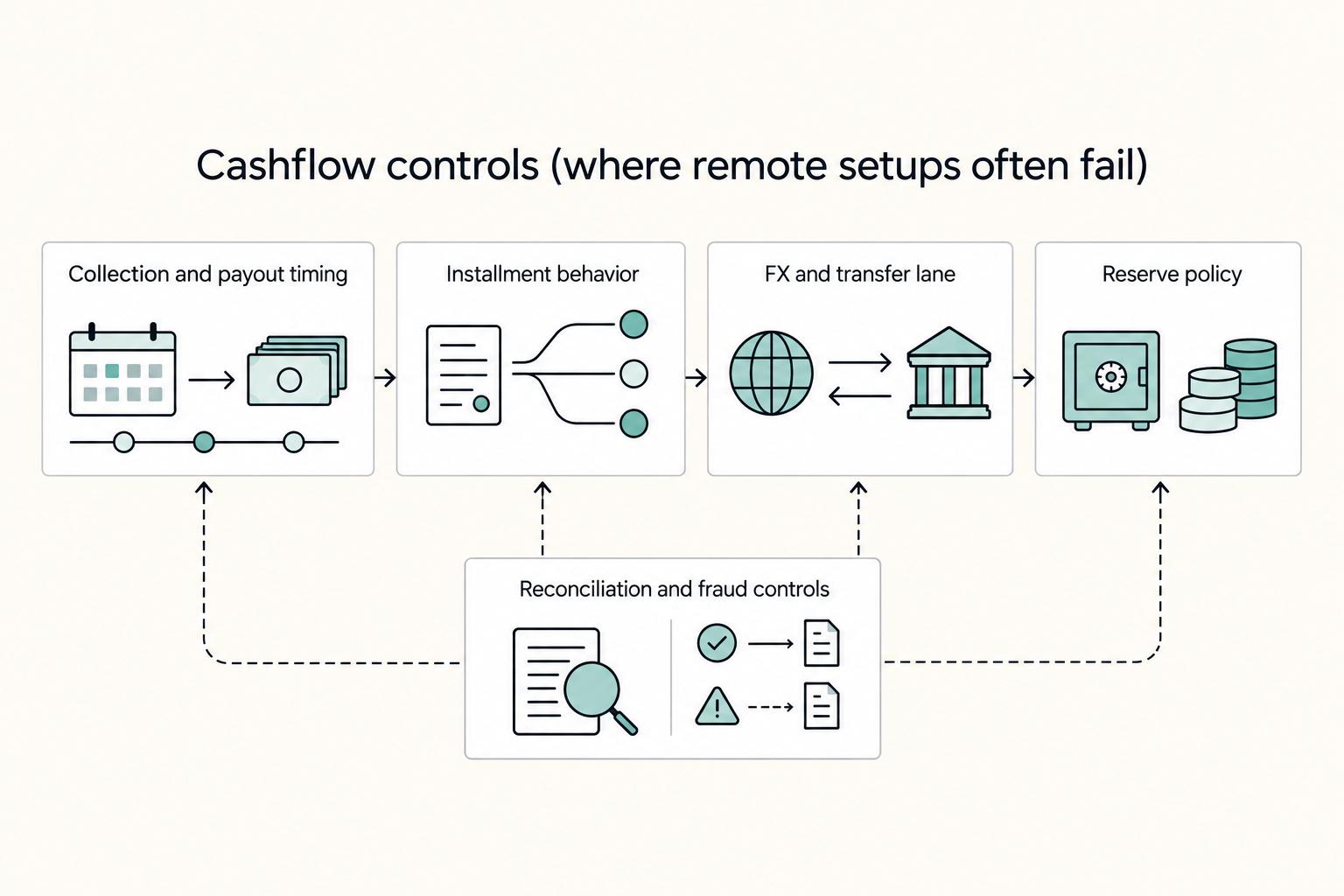
Cashflow controls (where remote setups often fail)#
Map your flow in writing and reconcile it monthly:
| Control area | Grounded detail | Timing/detail |
|---|---|---|
| Collection and payout timing | Vrbo payouts are sent about one business day after check-in | Bank availability is often about 5-7 business days later; some new-partner first payouts can take about 30 days after guest payment. |
| Installment behavior | Airbnb treats 28+ night stays as monthly | First host release is 24 hours after check-in; later installments are charged 10 days in advance. |
| FX and transfer lane | Document account path, conversion point, and transfer route | Confirm the current transfer fee range with the provider before release. |
| Reserve policy | Keep a documented operating reserve | Put it in the management agreement. |
| Reconciliation and fraud controls | Match statements, invoices, and ledger entries monthly | Retain required fee disclosures that are clear and conspicuous; treat requests for cash, wire transfer, or gift cards as scam red flags. |
If you cannot run these controls consistently from your time zone, the manager-led long-term model is usually the safer remote choice.
If you want to pressure-test the numbers, see How to Calculate Cap Rate for a Rental Property.
Pillar 3: The Global Profitability Matrix - How Do You Calculate Your Real Cross-Border ROI?#
Cap rate alone is not enough for a cross-border owner; the decision metric is repatriated net cash in your home currency. Pick the model that still works after fee drag, FX conversion, payout timing, compliance overhead, and reserves.
Use this framework:
Repatriated net cash = Gross income - Operating costs - Compliance drag - FX/transfer friction
For U.S. reporting, keep your ledger in USD terms at transaction-level timing, because the IRS requires U.S.-dollar reporting and generally uses the spot rate when you receive, pay, or accrue an item.
Build the matrix before you pick the model#
Use verified inputs where you have them, and keep unresolved inputs clearly labeled until source records are checked:
- Gross income:
STR nightly rate x occupancy forecastorLTR monthly rent x lease term - Operating costs: management, cleaning, repairs, utilities, insurance, local taxes
- Compliance drag: tax prep, bookkeeping, account reporting, filings
- FX impact: Confirm the current FX spread with your transfer provider
- Local tax treatment: Confirm the current local tax treatment with the relevant tax authority
- Repatriated cash: net payout minus conversion and transfer costs
| Stress point | STR behavior | LTR behavior |
|---|---|---|
| Currency moves | Revenue is more adjustable (for example, demand-based and seasonal pricing), but each payout can carry conversion spread risk. | Lease cashflow is steadier, but fixed local-currency rent can lose value if the currency weakens before renewal. |
| Vacancy shock | More exposed to booking swings; test weak-demand periods using forecasted occupancy assumptions. | Easier to model, but vacancy can create full rent gaps between tenants. |
| Local cost inflation | Pricing can be adjusted faster in some markets. | Costs can rise while rent remains fixed until lease reset. |
| Cash timing | Inflows are fragmented and delayed; Vrbo notes typical disbursement one business day after check-in, with availability often 5-7 business days later. | Usually fewer, larger inflows that simplify cash planning. |
Run both models through the same stress month:
- Vacancy: use a real vacancy variable (not a guess)
- Inflation: confirm the current CPI figure from the official source
- FX: test at least one adverse conversion case with verified spread assumptions
Cash leakage checklist (where ROI usually drifts)#
Start from net payout, not gross booking value.
| Leakage area | What to include |
|---|---|
| Platform and payment fees | Airbnb split-fee and single-fee structures, Vrbo 3% + 5%, and any processor fees (for example, Stripe components where applicable) |
| Embedded booking deductions | Cleaning, pet, extra-guest amounts, occupancy taxes, service fees, co-host payouts |
| FX friction | Provider conversion spread and non-mid-market execution risk |
| Transfers and disbursements | Bank wires, manager payouts, vendor payouts |
| Admin overhead | Tax prep, bookkeeping, reporting workflows |
| Reserve drag | Operating reserve plus buffer for payout lag and urgent repairs |
| Compliance overhead | Foreign-account process burden once thresholds are crossed (including FBAR workflow timing for U.S. persons) |
Set repatriation policy before the first payout#
- Payout routing: define receiving account(s) and authority to move funds.
- Conversion timing: document whether you convert on receipt, on schedule, or at a threshold.
- Transfer batching: set batching rules so repeated small transfers do not compound fees.
- Reconciliation cadence: reconcile monthly using payout summary, bank records, manager statement, and transaction-date FX records.
Decision handoff is straightforward: choose STR only if you can actively manage pricing and absorb higher variability in fees, occupancy, and FX. Choose a manager-led LTR when you prioritize steadier repatriated cash, cleaner reconciliation, and fewer leakage points.
Conclusion: Your Property, Your Rules - Making the Empowered Choice#
If you need a practical default, choose the model that removes avoidable risk before it promises more revenue. For many cross-border owners, that can point to a manager-led long-term rental unless you are fully prepared for guest turnover, tighter response expectations, more moving parts, and less predictable cash timing. Use this final decision filter:
- Compliance exposure: If your stays are very short, check the IRS line that flags an average customer-use period of 7 days or less. If you also use the property yourself, check whether personal use goes above the greater of 14 days or 10% of rental days. Do not assume platform tax collection solves everything either. Airbnb says occupancy taxes are auto-collected only in specific jurisdictions, and Airbnb also notes hosts may still have tax responsibilities. Vrbo says it collects and remits lodging tax in required jurisdictions for bookings and payments made on its platform.
- Management bandwidth: If you cannot reliably support guest messaging, handoffs, cleaning coordination, and issue resolution from abroad, do not choose a short-stay model based on headline nightly rates. Airbnb's 24-hour response expectation is a good reality check. Long-term rentals have their own dependency risk, but it is often more concentrated in one relationship: your property manager.
- Cashflow stability: Look past gross revenue. Fee leakage and transfer friction matter. Vrbo's pay-per-booking fee is 3% processing plus 5% commission, while Airbnb's single host fee is typically 14% to 16%. Cross-border payments also include fees and an FX component, and the World Bank reports a global average remittance cost of 6.49 percent. Payout timing can also stretch: Vrbo sends payouts about one business day after check-in, with bank availability often five to seven business days later.
Your next step is simple: complete a short personal go or no-go checklist for tax treatment risk, manager dependence, turnover and admin load, fee leakage, and repatriation friction. Then choose the option that best protects reliable net cash flow and reduces avoidable payment risk.
If local rules are the blocker, see A Guide to Local Regulations for Short-Term Rentals.
Frequently Asked Questions
How does owning a rental property abroad affect your tax residency?
Owning a property by itself is not a standalone California residency test. The Franchise Tax Board treats residency as a facts-and-circumstances determination, and California residents are taxed on all income regardless of source. Because filing thresholds depend on status, age, and dependent conditions, verify the current year row that applies to you before filing.
Do you need to report foreign rental income on your U.S. tax return?
Usually yes. The IRS indicates rental income and expenses are generally reported on Form 1040 or 1040-SR and Schedule E. Also verify whether the IRS "used as a residence" test applies (personal use over the greater of 14 days or 10% of rental days). If the unit is treated as a residence and rented for fewer than 15 days, the IRS says not to report that rental income and not to deduct rental expenses as rental expenses.
What is the risk of creating a Permanent Establishment with Airbnb or Vrbo activity?
Permanent Establishment trigger thresholds and safe harbors are jurisdiction-specific, so there is no reliable one-size-fits-all answer here. Verify local rules and get jurisdiction-specific advice before assuming your activity does or does not create a taxable business presence.
Which rental strategy is better for you as an expat or digital nomad investor?
There is no universal best choice. Compare your options against three practical filters: compliance exposure, remote operations burden, and cash-flow predictability, then verify local tax and regulatory requirements before deciding.
How do you manage a long-term rental from another country?
The operating model depends on your market and local requirements. Before committing, verify who handles day-to-day operations, the management agreement terms, rent remittance timing, repair approval limits, tenant-screening responsibility, and the monthly owner reporting package.
What should you check on insurance for short-term and long-term rentals abroad?
Insurance coverage requirements, exclusions, and premium rules vary by policy and rental use. Confirm directly with your insurer and local professionals that your policy language matches your actual use before relying on coverage.
Try a related tool
Researched and edited by the Gruv editorial team. Gruv builds cross-border billing, payouts, and finance-operations software for global businesses.
Sources
- azleg.gov/ars/32/02173.htmtrusted
- bsaefiling.fincen.gov/resources/FinCENFBARHelp.pdftrusted
- consumer.ftc.gov/keys-avoiding-home-rental-scamstrusted
- ftb.ca.gov/file/personal/residency-status/index.htmltrusted
- irs.gov/businesses/small-businesses-self-employed/re...trusted
- irs.gov/businesses/corporations/basic-questions-and-...trusted
- tax.ny.gov/pubs_and_bulls/tg_bulletins/pit/permanent_pl...trusted
Educational content only. Not legal, tax, or financial advice.
Related Posts
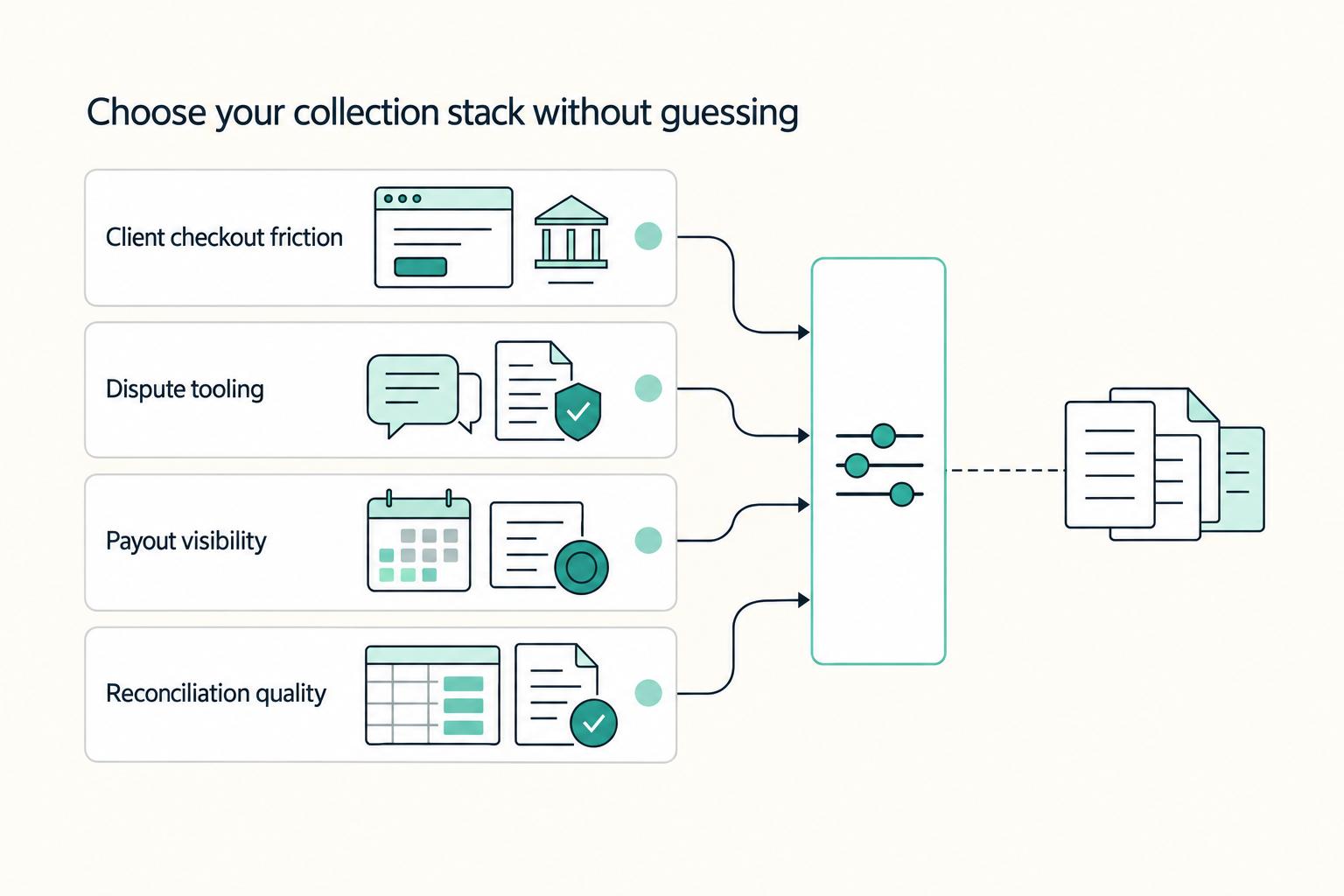
Should Your Freelance Business Accept Credit Cards?
Offer card payments, but stay in control of how money reaches you. The goal is not a smoother checkout screen. It is predictable cash you can use to run the business.
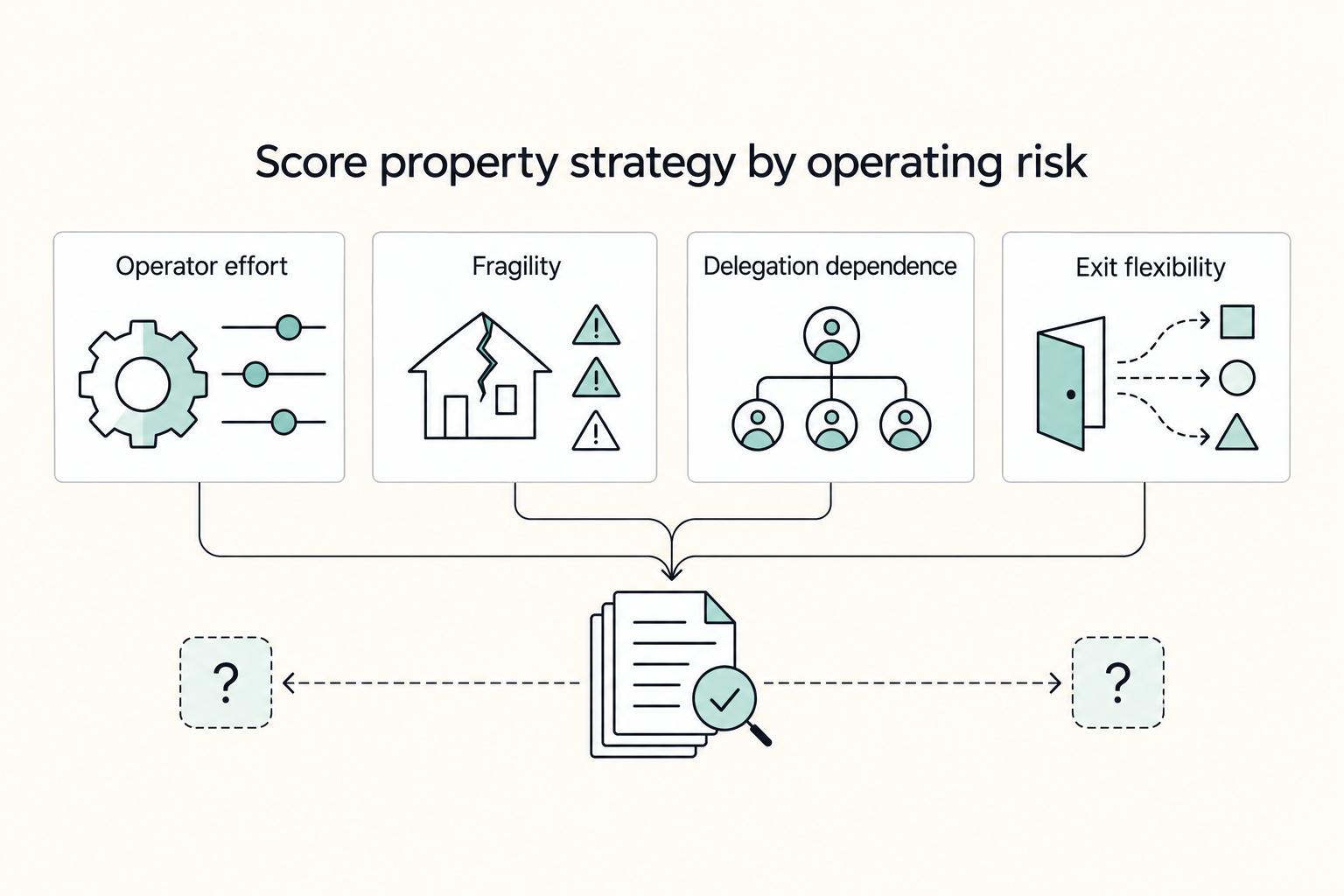
How to Invest in Real Estate as a Digital Nomad
**Run anything with money and moving parts like an operations system (cash, docs, delegation, and controls), not a "passive income" vibe.** Real life stress-tests weak spots. You change time zones, a client pays late, and something breaks at the worst moment. As the CEO of a business-of-one, your job is to build a setup that keeps working when you are not available on demand.
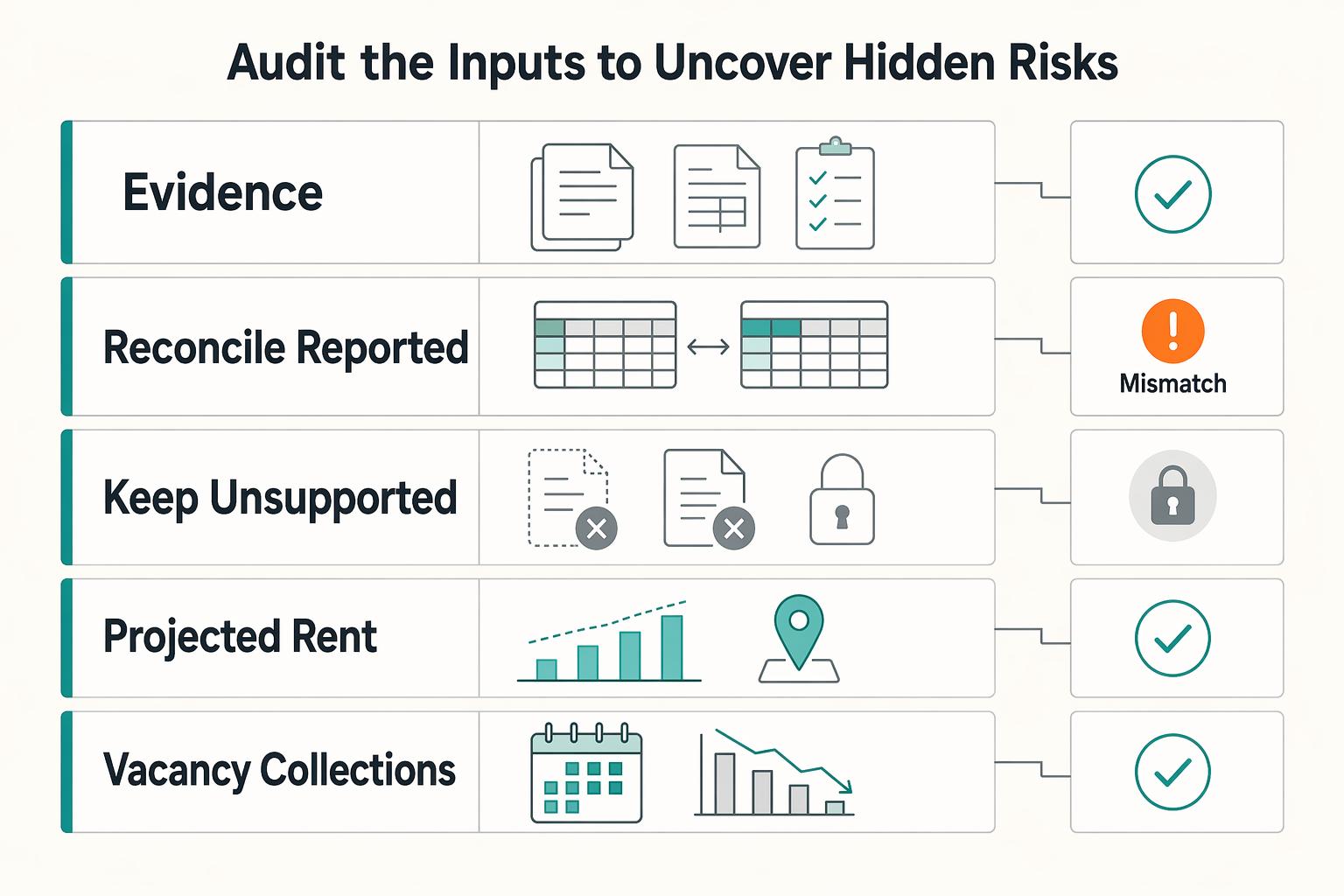
How to Calculate Cap Rate for a Rental Property
To calculate cap rate, divide **Net Operating Income (NOI)** by the property's **current market value**. That gives you an unlevered view of the asset's earning power, without mixing in loan terms or owner tax position.