
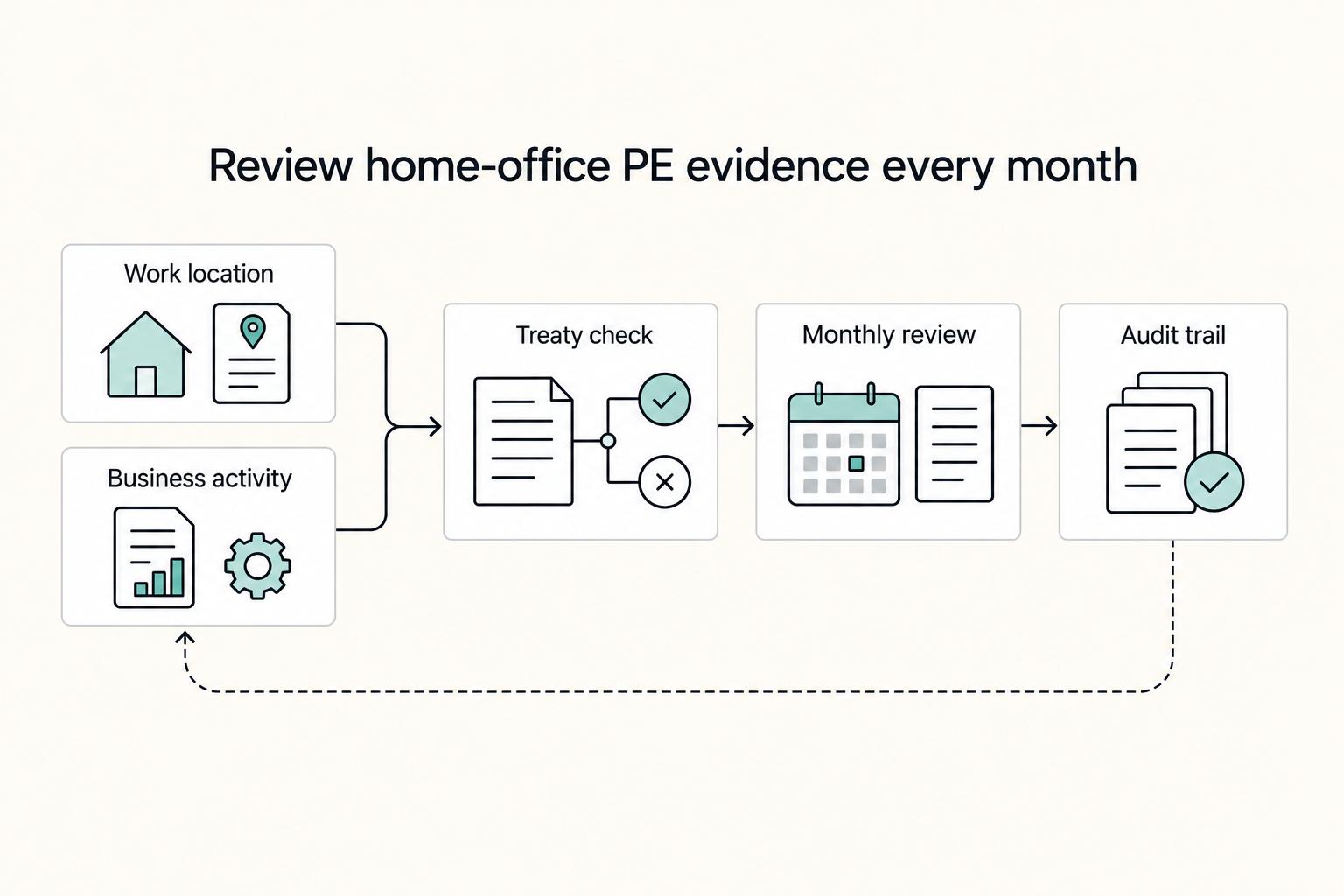
Quick Answer
Start with a conservative operating rule: treat home office permanent establishment risk as a monthly control process, not a year-end guess. Under Article 5, classify your current pattern, keep a country-level evidence log, and treat periods nearing 50 per cent of working time across 12 months as a trigger for deeper review. Escalate early when client delivery, negotiation, or decision-making is happening in-country.
Home office PE risk for consultants in 2026#
The tension is real. You want location flexibility, but you also need a defensible Article 5 (Permanent Establishment) position if a tax authority reviews your home office setup.
In 2026, that matters more because the OECD updated the Model Tax Convention Commentary on November 19, 2025 for remote work PE analysis. That update changed Commentary guidance, not treaty text itself, so treat it as an important framework, not a universal rule that overrides domestic law or every Tax Treaty outcome.
For practical decisions, frame home office PE risk around two questions:
- Is there a genuine commercial reason for being physically present in that country?
- Do the actual facts over time support that position?
That is why employee preference, talent retention, or office cost savings are not enough on their own. It is also why contract wording is weak if real work patterns point the other way. The analysis still turns on facts and circumstances, with actual working time carrying weight.
A key threshold to watch is 50 per cent of total working time over a rolling 12-month period. Reaching that level does not automatically create a PE, but it does trigger deeper analysis. Staying below it does not automatically remove risk.
Start with a practical routine. Classify monthly, keep a clean evidence checklist, and set clear escalation triggers for Remote Work Abroad. Track cross-border working time splits each month and base your review on actual working time and facts on the ground, not contract language alone.
Keep the scope clear too. Home office PE is only one risk stream. Dependent agent PE is separate and can be more significant, especially when someone is habitually involved in contract negotiation or conclusion from that country.
This explainer is operational, not legal advice. It is meant to help you make cleaner monthly calls, build a defensible record, and escalate early when facts are mixed. Country practice can still vary under each treaty.
Start with the terms that control your risk#
This is primarily a business tax question about whether your cross-border activity creates a taxable business presence.
PE and fixed place are not the same thing#
A Permanent Establishment (PE) is the tax concept that can trigger foreign corporate tax reporting, filing, and payment obligations. A Fixed Place of Business is one common path to PE: a physical, fixed place where business activity is carried on.
In traditional cases, that meant an office, branch, or factory. Remote work can blur the line when a home office starts to function like business infrastructure rather than personal convenience. That is why Article 5 (Permanent Establishment) is often the starting point for home-office analysis.
The OECD gives you the baseline, not the final answer#
Use the OECD Model Tax Convention and updated OECD Commentary as your baseline, including the 2025 update released on November 19, 2025. The guidance indicates that employee-driven remote work does not automatically create PE, while risk is higher when home working is required because no office is provided.
Use that as a framework, then confirm the outcome under the relevant Tax Treaty or, if no treaty applies, local tax law. OECD commentary informs the analysis. It does not override local enforcement rules.
Keep business tax and personal tax separate#
PE risk sits at the business level, and this section focuses on that business-level analysis.
Keep formal records on why the arrangement exists and whether home working is your choice or a business requirement. Also assess what you do there, not just where you sit. Contract-concluding or principal-role commercial activity can create PE risk even without a traditional office. For a step-by-step walkthrough, see The 'Permanent Establishment' Risk Mitigation Checklist.
Classify your setup with a green amber red table#
Use this table as a triage tool, not legal authority. Your color should reflect how complete and reliable your facts are, then be tested against official legal text where needed.
| Work pattern | Triage status (not a legal conclusion) | Immediate next action |
|---|---|---|
| Facts are clear, limited, and well documented | Green for monitoring | Log the business reason, keep calendar and travel records, and recheck if frequency or activity changes |
| Facts are mixed, recurring, or not well documented | Amber and unstable | Tighten documentation now, separate core vs support activity, and validate your position against official materials before the pattern hardens |
| Facts are incomplete, conflicting, or highly dependent on jurisdiction-specific legal wording | Red for immediate specialist review | Escalate to specialist review before relying on the classification for compliance decisions |
If your facts sit between amber and red, run it as red until a specialist confirms otherwise. That is a conservative operating rule, not a legal rule.
Keep the classification evidence-led#
Do not classify from labels alone. Classify from behavior: where you worked, what you did, how often, and whether there was a real commercial reason for that location.
For most consultants, a monthly pass can be a practical baseline:
- where you worked from
- what work happened there
- why that location was commercially necessary, or not
- whether any official source changed your read
When your call depends on legal wording, verify the official text. Some consolidated legal pages are explicitly marked authoritative but unofficial, and some rule documents include post-publication clarifications (ERRATA). Use unofficial summaries for orientation, then confirm the final wording in the competent official publication before relying on it.
Track time and activity the way tax authorities can audit#
Your risk rating is only as strong as your records. Keep a rolling 12-month log by country and update it weekly. Track what you actually did. PE review is fact specific, and there is no universal 30/90/183 day shortcut.
Actual conduct matters more than labels or contract wording. Some secondary guidance on the OECD 2025 update discusses a 50% working time benchmark over a 12-month period for a foreign remote location. Treat that as a risk signal, not a universal legal rule. If one foreign location starts nearing half of your enterprise working time, review it as a potential Fixed Place of Business pattern.
What your weekly record needs to show#
Keep the log simple enough to maintain and clear enough to audit later.
| Capture each week | Why it matters | Practical evidence to keep |
|---|---|---|
| Dates, country, and work location | Shows cross-border working time split across a rolling 12-month period | Calendar export, location history, or other digital footprint |
| Activity type and project or client | Supports facts-and-circumstances analysis of what was done where | Client meeting notes, project scope, deliverable notes |
| Invoice and payment link | Helps check whether billed work matches claimed location and timing | Invoices, billing records, payment timestamps |
If you do Remote Work Abroad in bursts, do not log a whole month as one line item. Split weeks by actual activity so your records reflect what happened.
Add the two-bucket activity map#
Tag each entry as either preparatory work or core revenue-driving work. This gives you a usable first-pass map for Fixed Place of Business and Permanent Establishment (PE) analysis without turning your log into a legal memo.
If a week includes both buckets, split it. A vague entry like "project work" can be weak if invoices and notes later show sustained billable delivery from one foreign location.
Reconcile monthly before errors harden#
A monthly reconciliation between your log, billing records, and payment timestamps can catch the problems that usually matter. Confirm that activity labels, billed work, and location history all line up.
When they do not, treat it as an evidence gap and fix it immediately while records are still easy to verify. Manual, outdated tracking is a common failure mode and can lead to compliance gaps, withholding errors, and double tax exposure.
If reconciliation shows one foreign location taking a growing share of billable work, or your digital footprint contradicts your log, upgrade your risk posture right away. For example, a record showing 60% of the year in one foreign home office is not something to leave unresolved.
Apply the commercial reason test without self-deception#
Use this commercial reason check as an internal control for Denmark PE risk. If the business benefits from your in-country presence, home office PE risk can rise even when your personal reason is genuine. Ask the hard question directly: is this foreign setup business-required, or mainly personal preference? If it is mostly personal, but your activity is still commercially useful in-country, treat that as elevated risk.
What makes the foreign presence look business driven#
In the Denmark-focused analysis, three checkpoints carry the weight: your job role, the company's commercial interest in your presence, and whether the work pattern is regular and planned. Those facts matter more than tidy wording alone.
Stronger business-driven patterns usually look like:
- management, sales, or other market-facing work performed from Denmark
- recurring interaction with local customers or local market development activity
- regular, planned work from Denmark rather than occasional ad hoc presence
The test is evidence, not plausibility. If your records show the company gets local value from you being there, it becomes harder to frame the setup as personal convenience.
Where people fool themselves#
The common failure mode is label-first thinking: contract language says "personal choice," but conduct shows sustained market-facing work from one country. A practical way to check this is to compare what your agreement says with your calendar, invoices, notes, and client activity.
For Denmark, that risk signal is explicit: management, sales, and other market-facing work from Denmark are more likely to create PE exposure, especially when the company benefits locally. So run a monthly evidence check across your contract, location log, calendar exports, prospecting or CRM notes, and invoices. Then answer one question: does the file support personal choice, or regular planned business use in-country?
A clear escalation rule#
Escalate early when your reason is personal but your activity is market-facing. Do not wait for year end and assume labels will control the result.
Danish administrative practice discussed in late 2025 has relied on the OECD Commentary 2017 baseline, and the OECD's 2025 update could shift interpretation. When facts are mixed, move sooner. If you cannot state the commercial purpose cleanly, but records still show in-country business benefit, get specialist review before filings. Related: How to Create a Financial Safety Net as a Freelancer.
Handle gray zones before they become expensive#
Gray-zone cases deserve conservative treatment. A lower time share can still carry PE risk when your real work pattern makes the foreign home office look like an operating base.
Working abroad for less than 50% of your hours over a 12-month period is often lower risk, but it is not a universal safe harbor. Once you are at 50% or more within a year, a detailed facts-and-circumstances analysis is expected. In both cases, actual conduct matters more than labels in a contract.
The useful test here is substance over calendar share. If sales, customer-facing delivery, or strategic decisions repeatedly happen from one fixed foreign home office, that can look more like business presence than occasional remote work. Preparatory activity is generally lower risk. Core revenue activity can draw more scrutiny.
The part-time trap#
"I only work abroad part-time" is not a strong defense if the part-time window contains the most commercial work. The 60%-of-year example shows how footprint can override formal wording, but you can still face hard questions below that level when high-value activity is concentrated in-country.
Two people can log similar foreign days and still present very different risk profiles. Internal planning and admin are not viewed the same way as customer-facing delivery, local market development, contract-signing authority, or strategic decisions tied to revenue.
Red flags to treat seriously#
These are the patterns that should move the file from "probably fine" to "needs review" if they repeat. No single item automatically creates a PE. Repetition and combination are what make the file harder to defend.
- repeated local prospecting or business development aimed at that country
- local contract activity, especially if you have signing authority
- recurring in-country delivery cycles run from the same home office
- strategic or commercial decision-making from that location
- records showing the business benefits from your in-country presence, not just tolerates it
What to verify each month#
Your strongest position is a clean record, not a clever narrative. Reconcile your location log, calendar, and invoice or milestone timing each month, then write a short note on why you classified that month as low, medium, or high risk.
Keep the note specific: country, work performed there, preparatory vs core activity, and whether local customers were involved. Save supporting material, including meeting notes, CRM entries, proposal drafts, signed scopes, and negotiation or delivery emails, with that note.
Optimize for defensibility. When facts are mixed, optimize for defensibility, not aggressiveness. If the foreign office use is regular and commercially important, escalate before filings instead of relying on a borderline interpretation.
Document uncertainty directly, record why you made each risk call, and escalate early when the evidence can support more than one interpretation. That is how you keep gray zones from turning into back taxes, interest, penalties, audit pressure, and reputational damage.
Check treaty and country variance before you finalize your position#
Do not finalize your position from OECD commentary alone. For home office permanent establishment risk, the OECD Model is a starting point, not the endpoint. A defensible answer starts with treaty text and any official interpretation, then checks domestic law and local administrative guidance where available.
| Step | Check | Detail |
|---|---|---|
| 1 | Treaty text | Pull the applicable treaty text for your residence and work-country pair and read the relevant PE provisions directly |
| 2 | Official guide | Check for an official interpretive guide, such as a Technical Explanation, before you lock your position |
| 3 | Domestic materials | Compare your treaty reading against domestic law and local administrative materials |
| 4 | Residency rules | If residency is unclear, check treaty residency rules, including Article 4, because outcomes can differ, including assignment to one state, or no state in some dual-resident cases |
Use one file per country, even if your work pattern looks the same. Before you apply one policy across Germany, France, and Switzerland, run the same sequence for each jurisdiction.
- Pull the applicable treaty text for your residence and work-country pair and read the relevant PE provisions directly.
- Check for an official interpretive guide, such as a Technical Explanation, before you lock your position.
- Compare your treaty reading against domestic law and local administrative materials.
- If residency is unclear, check treaty residency rules, including Article 4, because outcomes can differ, including assignment to one state, or no state in some dual-resident cases.
Before sign-off, keep a short treaty pack for each priority country. Include the treaty text, official interpretation if available, your domestic law interaction notes, and a one-page conclusion with explicit unknowns.
The failure mode to avoid is a one-size-fits-all OECD memo reused across markets. Treaty terms can control where they "provide otherwise," so finalize your position country by country.
Build a 30-day compliance setup as a consultant#
The goal is not a heavy compliance process. It is a simple 30-day planning cadence that makes your permanent establishment risk review repeatable, evidence-based, and easy to maintain.
| Week | Focus | Detail |
|---|---|---|
| Week 1 | Location policy | Define where you may work, what work you will and will not do while abroad, and what triggers a PE risk review |
| Week 2 | Documentation setup | Use a folder structure by country, month, and document type, and reconcile logs against invoices, billing dates, and meeting records at month end |
| Week 3 | Dry classification | Compare your stated business reason for being in-country with what you actually did, and escalate if the written rationale and your activity diverge |
| Week 4 | Recurring review | Lock in a recurring monthly review and pre-commit escalation triggers for recurring contract negotiation or contract finalization while abroad, work shifting from auxiliary support toward core delivery, unclear treaty or local-practice interpretation, or documentation no longer supporting your stated activity profile |
Week 1. Start by writing a one-page location policy you will actually use. Define where you may work, what work you will and will not do while abroad, and what triggers a PE risk review.
Make triggers activity-based, not just location-based. If your work is administrative, planning, or otherwise auxiliary in nature, record that clearly. If you negotiate and finalize contracts while abroad, treat that as an escalation event because dependent-agent behavior can increase PE risk.
Tie this policy back to your treaty files and local practice notes. Keep a short list of open questions instead of forcing certainty where facts are still unclear.
Week 2. Set up documentation before you need to defend it. Detailed, accurate records are essential if you later need to show activities were auxiliary rather than core business carried on through a fixed place of business.
Use a folder structure by country, month, and document type. Keep location logs, invoices, statements of work, calendar exports, meeting notes, and relevant client communications together. A simple naming pattern like 2026-03-12_France_ClientA_contract-call is enough. At month end, reconcile logs against invoices, billing dates, and meeting records.
Week 3. Run a dry classification of your current footprint before the next month starts. Compare your stated business reason for being in-country with what you actually did.
If paperwork says "remote support," but your activity shows contract negotiation or other non-auxiliary work, your risk profile may be moving. When your written rationale and your activity diverge, escalate instead of forcing a low-risk label.
Week 4. By week four, lock in a recurring monthly review and pre-commit your escalation triggers for specialist advice:
- recurring contract negotiation or contract finalization while abroad
- work shifts from auxiliary support toward core delivery
- treaty or local-practice interpretation remains unclear
- documentation no longer supports your stated activity profile
The goal is not perfection. It is early detection, clean documentation, and timely escalation before an ambiguous pattern hardens into a compliance problem.
Before month-end, set up one repeatable country-day and activity workflow with the Tax Residency Tracker so your classification log stays consistent.
Run a monthly 15-minute review and keep an audit trail#
A short monthly review can be a practical control, because PE risk decisions are easier to support with records than memory. Duration alone is not enough to classify risk, even when work is under six months.
Use one fixed checklist each time in your PE risk review:
- update country-day count
- reclassify the month's activity mix
- assess duration, activity type, and local interpretation together
- flag any shift toward revenue-generating activity for escalation review
What to record. Keep one dated monthly note with:
- your decision for the month (
low,watch, orescalate) - a short rationale tied to duration, activity type, and local interpretation
- links to your evidence pack: calendar, meeting notes, invoices, statements of work, and related records
- unresolved tax-risk questions to carry forward
This note is not a formal filing requirement. It is an internal audit trail. If signals are mixed, keep the issue open and escalate early. The costly failure mode is not just penalties, but later remediation costs.
Know exactly when to escalate to a specialist#
Escalate as soon as your facts shift from monitoring to likely core business delivery from a foreign home office, especially if the pattern is becoming long term. That is where home office permanent establishment risk moves from theoretical to practical, and if a PE exists, the host country may tax profits attributable to that presence.
| Trigger | Detail | Timing |
|---|---|---|
| Client delivery, decision-making, or recurring revenue work | Being performed from the foreign home office | Escalate now |
| Local prospecting, negotiation, or deal-closing activity | Can raise agent PE concerns | Escalate now |
| Country log, invoices, and payment flow | Suggest local business tax filings or registrations may be required | Escalate now |
| Treaty language, domestic law, or local authority expectations | Are unclear, and local advice should drive your decision | Before filing |
| Same profit analyzed in two places | Ask a specialist which double-tax relief options may be relevant | Escalate again |
Use a simple rule: keep preparatory work in your monthly log, but escalate when paid client delivery starts to happen in-country. Authorities assess economic reality, not just incorporation documents or contract wording, so activity mix matters as much as duration. Treat "under six months" as a weak signal, not a safe conclusion on its own.
Escalate now if your records show any of these shifts:
- client delivery, decision-making, or recurring revenue work is being performed from the foreign home office
- local prospecting, negotiation, or deal-closing activity is appearing, which can raise agent PE concerns
- your country log, invoices, and payment flow suggest local business tax filings or registrations may be required
Before filing, escalate if treaty language, domestic law, or local authority expectations are unclear. The OECD Model Tax Convention is a useful baseline, but local advice should drive your decision. Bring one clean evidence pack: location log, activity map, statements of work, invoices, calendar extracts, and your monthly classifications. If payments will continue in-country, confirm whether required local registrations should be completed before additional payments go out.
Escalate again when double-tax friction appears. If the same profit is being analyzed for tax in two places, ask a specialist which double-tax relief options may be relevant. The goal is not certainty. It is avoiding late, expensive remediation after positions harden.
Fixing mistakes after the fact#
If you missed home office permanent establishment risk, triage first and file second. A fast correction built on unclear dates or activity labels can create a second problem: inconsistent positions across countries and filings.
Reconstruct facts before choosing a fix. Build one dated timeline by country using your calendar, invoices, payment timestamps, statements of work, and client notes. Then test that timeline with an advisor against the rules that apply in each country.
Use a source-quality checkpoint while you do this. Verify procedural material against official legal sources where available. FederalRegister.gov states that its web display is not the official legal edition, its XML does not provide legal notice, and it links to a printed PDF on govinfo.gov. Also, do not rely on pages that now return "page not found," and confirm whether you are reading a proposed rule or a final rule.
Build one remediation path. Once the facts are stable, choose one correction path with your advisor based on the procedures that apply in each country. Keep the sequence tight: facts, position, then narrative.
Write a short remediation memo covering period reviewed, countries involved, activity mix, original filings, corrections, and open uncertainties. Use that same memo everywhere so your story stays consistent.
Raise cross-border disputes early. If two countries are reviewing the same profit, escalate early and ask whether treaty channels are relevant. It is easier to assess options when your fact pack is clean than after positions are already locked in.
Close the process gap. After remediation, make the review routine so the same miss does not repeat. A practical baseline is to make planning routine across phases, then apply that discipline to your monthly checks. Each month, reconcile country-days, activity type, invoicing, and payment flow, and log any question that needs escalation before the next filing cycle.
Keep the monthly note simple: what happened, how you classified it, and what needs escalation. This is the control that prevents year-end cleanup from becoming crisis work.
The practical takeaway for consultants#
Treat home office permanent establishment risk as an operating discipline: classify on a regular cadence, document continuously, and escalate early when facts are ambiguous.
If your pattern is amber, that is already practical. Under Article 5, focus on whether your setup is starting to look like a fixed place of business, and review dependent agent PE separately. Contract wording can support your position, but actual conduct is still what gets tested.
Start with OECD, finish locally. Use the OECD Model and Commentary as your starting framework, including the remote-work commentary update published on 19 November 2025. But that update changed commentary, not treaty text. Your final position still needs to be confirmed under the relevant treaty, domestic law, and local practice.
In borderline cases, treat the 50 per cent rolling 12-month checkpoint as a key indicator, not a guaranteed legal safe harbor. The updated framework indicates that if a key factor is missing, fixed-place PE will generally not arise, but outcomes remain fact-specific and jurisdiction-dependent.
Keep one evidence story. Use one consistent monthly record set: where you worked, what you did, and why your current PE position still holds. Reconcile your log with calendars, client records, invoices, and payment timestamps so your facts and commercial story stay aligned. If facts change mid-year, update your position then. Do not wait for filing season.
Be honest about commercial reason. A core self-check is whether there is a genuine commercial reason for being physically present in that country. Personal preference or office cost savings alone generally do not meet that standard, but lack of commercial reason does not automatically end PE analysis.
Use early escalation triggers:
- sustained in-country time patterns, especially near the 50 per cent rolling 12-month checkpoint
- unclear treaty or domestic-law outcome in the relevant jurisdiction
- business activity that may create dependent agent PE risk, since dependent agent PE is a separate lane
Use OECD concepts to classify, confirm locally under treaty and country practice, and let consistent records carry your position. Related reading: The Best Tea Kettles for a Home Office.
When you are ready to operationalize this with traceable payment and payout records, review the Gruv docs to map a compliant workflow for your setup.
Frequently Asked Questions
Does working from abroad automatically create a Permanent Establishment (PE)?
No. Remote work from another country does not automatically create a PE. The outcome is still based on facts and circumstances, especially whether the arrangement looks like a fixed place of business or includes in-country contract-concluding authority.
Is the OECD threshold a hard legal rule in every country?
No. The OECD framework, including the 50 percent working-time benchmark over any twelve-month period, is a reference point, not an automatically binding rule everywhere. The legal result depends on the treaty in force or, if there is no treaty, local tax law.
What evidence should a solo consultant keep each month?
At minimum, keep a dated, country-by-country log of where you worked, what activities you performed, and how working time was split. Keep supporting records for that log and reconcile them monthly so your tracking stays consistent.
If my setup looks amber, should I treat it as red?
Use a conservative operating approach. If the lower-risk position is not clearly defensible, escalate early, tighten records, and avoid optimistic labels. That is a risk-control choice, not a legal conclusion by itself.
Can I have no PE issue but still have personal Income Tax exposure?
Potentially. A no-PE position answers one corporate tax question, not every cross-border tax question. Review personal Income Tax exposure separately instead of assuming the PE analysis settles it.
When should I ask for professional advice instead of waiting for year-end?
Ask early when facts start to shift toward higher PE risk, including recurring in-country work or authority tied to contracts. Escalate before filing if foreign corporate tax reporting may be in play. Waiting until year-end usually reduces options because the fact pattern is already set.
What can still be uncertain even after reading the OECD Commentary?
Treaty wording, local implementation, and tax authority practice can still leave material uncertainty. The Commentary helps frame the analysis but does not eliminate jurisdiction-by-jurisdiction judgment calls. Borderline cases remain sensitive when working-time and commercial-reason factors point in different directions.
Try a related tool
Researched and edited by the Gruv editorial team. Gruv builds cross-border billing, payouts, and finance-operations software for global businesses.
Sources
Includes 2 external sources outside the trusted-domain allowlist.
- ecfr.gov/current/title-40/chapter-I/subchapter-J/part...trusted
- federalregister.gov/documents/2024/04/04/2024-06526/cyber-incide...trusted
- home.treasury.gov/system/files/131/Treaty-Portugal-TE-9-6-1994...trusted
- irs.gov/irm/part4/irm_04-019-015rtrusted
- nj.gov/cannabis/documents/rules/NJAC%201730%20Perso...trusted
- gov.uk/government/publications/ots-report-on-hybrid...external
- gov.uk/government/publications/returns-preparation/...external
Educational content only. Not legal, tax, or financial advice.
Related Posts

Digital Nomad Taxes in 2026 With a Defensible Filing Plan
With digital nomad taxes, the first move is not optimization. It is figuring out where you may be taxable, where filings may be required, and what proof supports that position.
How to Create a Financial Safety Net as a Freelancer
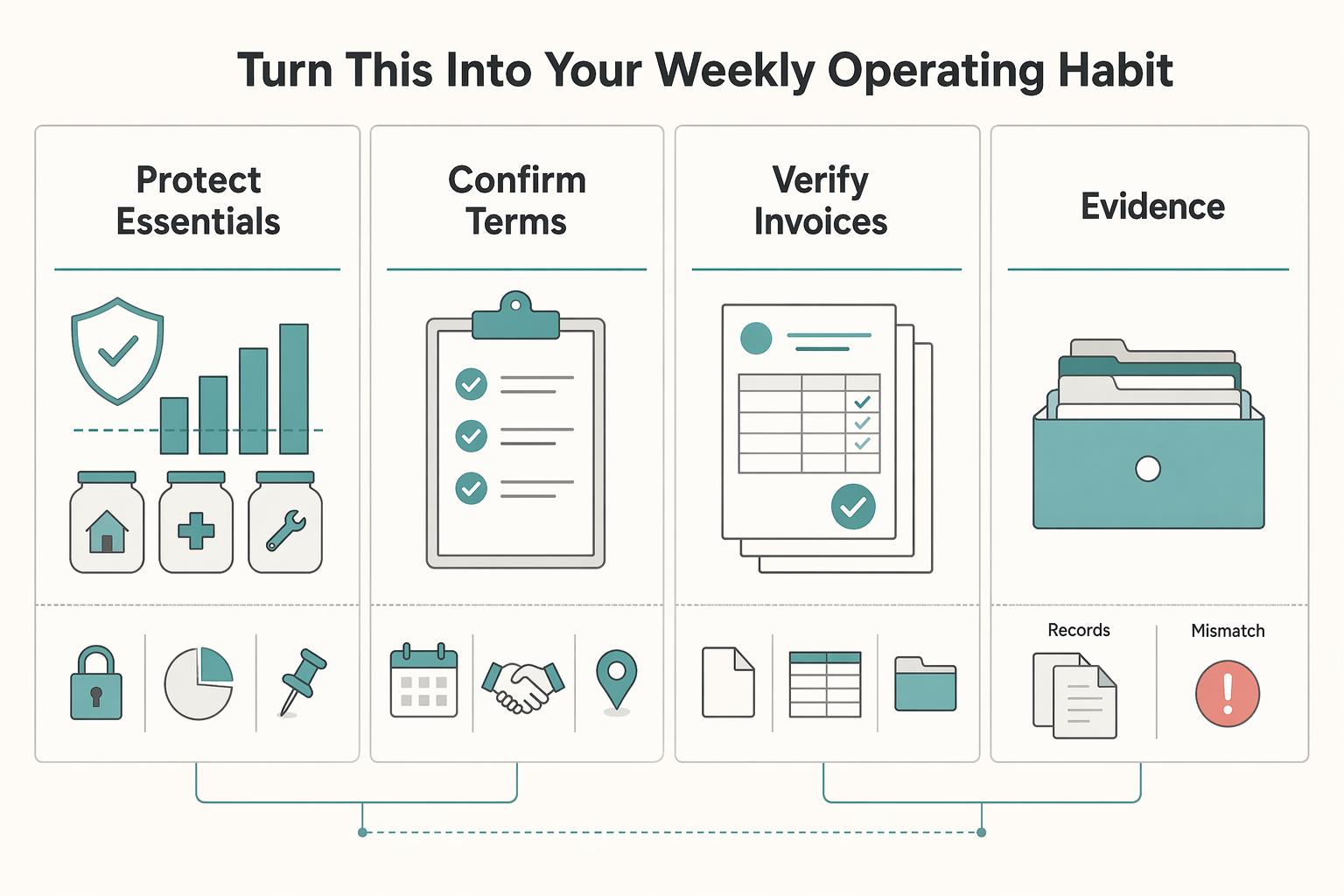
Your **freelance financial safety net** is more than a savings balance. It is the set of controls that lets you cover fixed obligations on time when receipts are uneven, and it keeps invoiced revenue separate from cash you can actually spend. The goal is not to predict every slow month. The goal is to reduce the chance that one late client payment turns into missed bills, tax pressure, or borrowing.
Permanent Establishment Risk for US Freelancers With One Large German Client
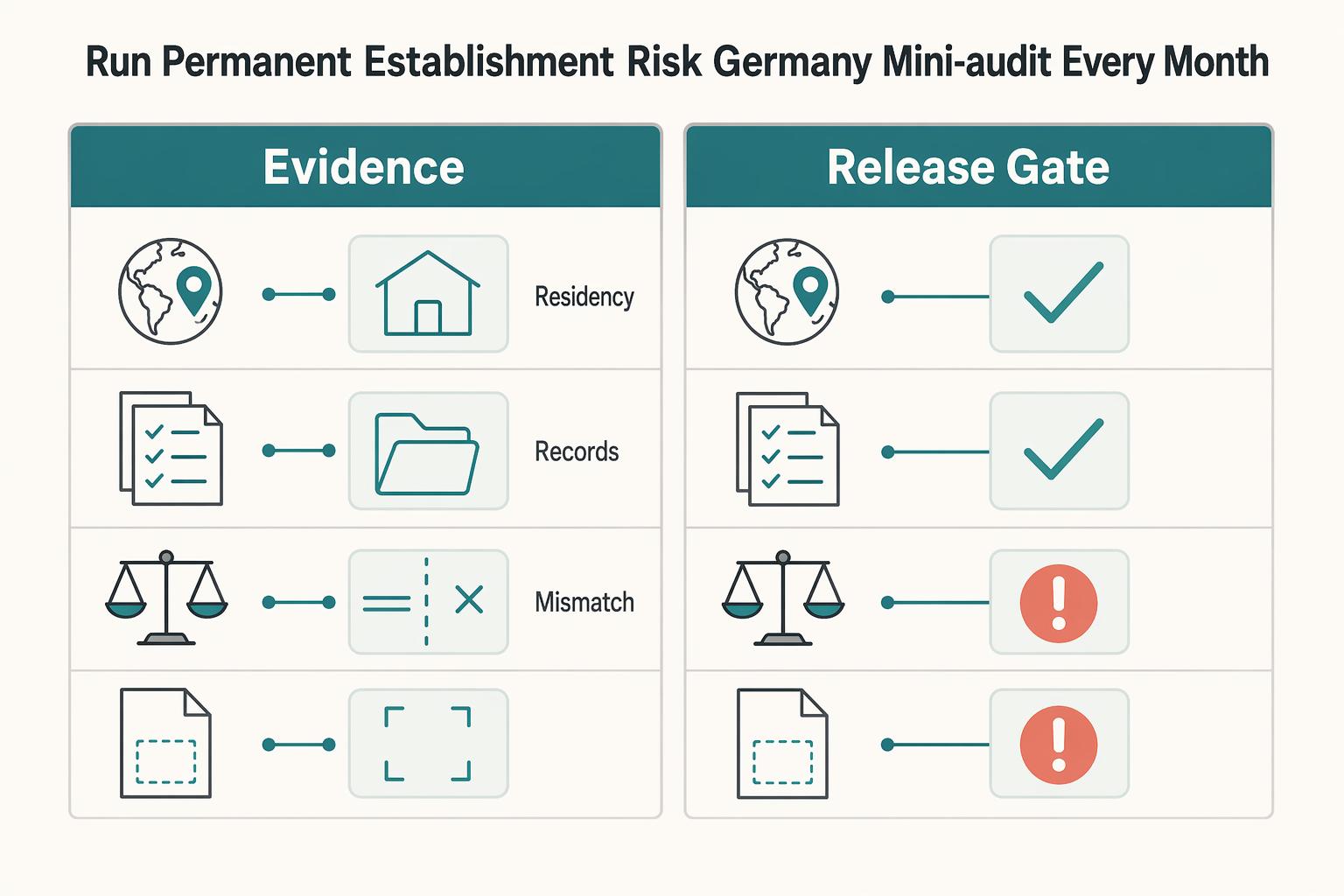
Your client’s concern can be straightforward: the contract says one thing, but the day-to-day record may start showing another. In permanent establishment risk germany, that mismatch can make a file harder to assess quickly and escalate for advice.