
Quick Answer
Use great man theory vs zeitgeist as a decision split: strengthen your agency while testing market pull. Start by locating your current quadrant, then act on the matching next move instead of relying on broad motivation. In practice, this means clarifying your offer, tightening delivery discipline, and checking real buyer signals before expanding services. The framework works best when you separate what you control from what you monitor and adjust in small cycles.
For the founder of a business of one, the practical answer is simple: your progress comes from both your own skill and choices and the market around you.
That is the practical value of the debate between the Great Man Theory and the Zeitgeist Theory. It gives you a way to separate what you control from what you need to read and respond to. Use it to think about agency, timing, risk, and growth in your work.
- The "Great Man" Theory is your personal agency. Popularized by historian Thomas Carlyle, this theory argues that history is decisively shaped by exceptional individuals. In your business, that maps to your hard-won expertise, your judgment under pressure, your reputation, and the way you solve problems. It is the value that depends on you, not on a passing market shift.
- The "Zeitgeist" Theory is market momentum. In contrast, thinkers like Herbert Spencer argued that events are mainly shaped by the "spirit of the times" or zeitgeist. The environment makes the person, not the other way around. In business, that means demand patterns, technology shifts, buyer behavior, and cultural change. It is the rise of AI, the move to remote work, or a platform change that alters how clients find and buy expertise.
Rely only on personal agency, and you can become a frustrated expert with no clear market. Chase trends without building defensible skill, and you become easy to replace. The real job is to manage the tension well. Build work that is distinct and trusted, then aim it where demand is already moving.
The Founder's Diagnostic: Pinpoint Your Position#
Start with the least flattering answer. In practice, durable progress usually requires both strong agency and clear market pull.
Before you place yourself in a quadrant, set a non-negotiable line for evidence. That matters because post-hoc rationalization can keep founders stuck. You tell yourself the market "almost gets it," or that a hot streak proves you have a moat, after the facts say otherwise. Use observable proof, not mood. Treat the four signals below as a practical self-check, not a validated model.
Quick self-audit#
| Signal | What to check |
|---|---|
| Offer clarity | Can a good prospect explain what you solve, for whom, and why it matters without hearing your full life story? |
| Demand quality | Are inbound leads asking for a specific outcome with real urgency and budget, or are you getting vague interest, "pick your brain" requests, and price shopping? |
| Delivery consistency | Do you finish projects cleanly with stable scope, usable process, and repeatable results, or do outcomes depend on heroic effort every time? |
| Trend exposure | Are clients already buying the adjacent shift you are positioned for, or are you reacting to headlines with no proof that your buyers care? |
Use this checkpoint before you label yourself. Compare what prospects praise you for with what they actually sign and pay for. Attention is not validation. In research terms, a listing or index entry is not the same as endorsement. In business terms, likes, reposts, and "this is brilliant" comments are not the same as qualified demand.
| Quadrant | Current signals you're seeing | Core risk | Immediate next move |
|---|---|---|---|
| Frustrated Genius | Your craft is strong. Past clients respect your thinking. Delivery is solid. But deals stall because the problem you want to solve is not urgent enough right now. Illustrative, not universal: a brilliant brand storyteller when buyers are funding revenue-linked messaging work, or a specialist 3D artist in a market asking for lighter, faster creative. | You may burn time and cash defending a position the market is not rewarding yet. | Pivot, then preserve. First, reframe your existing skill around a nearby problem buyers already fund. Second, test that positioning in your site copy, proposals, and discovery calls before rebuilding your whole brand. Third, keep audience or IP work alive in the background so you do not lose the original edge. |
| Lucky Beneficiary | Inbound is strong because you are near a hot tool, format, or channel. Buyers are curious and budgets appear quickly. But your method is thin, case studies are early, and your value is hard to separate from the trend itself. Illustrative example: AI-assisted content production or short-form editing tied to a platform spike. | Commoditization. As more people enter, you can become one more vendor with a familiar tool stack. | Turn momentum into depth. Use this demand window to document your process, narrow by outcome or buyer type, and collect proof that goes beyond novelty. Set clear boundaries now on what work you will not do under pressure, especially if the trend creates ethical or quality shortcuts. |
| Strategic Leader | Prospects seek you out for named expertise. Referrals arrive pre-sold. Your delivery is dependable, and current market shifts make your work more necessary, not less. | You stay too custom, become the bottleneck, and cap growth through your own availability. | Standardize and selectively scale. Tighten qualification, raise selectivity, document your method, and move repeated work into clearer offers, retainers, or reusable assets. This can reduce delivery chaos and make revenue less dependent on starting from zero each time. |
| Struggling Operator | Your offer is generic, leads are weak, pricing pressure is constant, and project outcomes depend on saying yes to whatever appears. Your skills no longer map cleanly to demand, and trend exposure is mostly secondhand. | Drift. You can stay busy enough to avoid change but not stable enough to grow. | Reset in sequence. Stop adding random services. Pick one market problem that appears both relevant and learnable, rebuild samples around that problem, and test small paid engagements before declaring a full reinvention. Cleaner positioning comes before bigger outreach. |
If you seem to sit between two boxes, choose the lower one unless you have written evidence that says otherwise. That rule can reduce self-deception, protect cash, and give you a cleaner operating priority. The point is not to win the label. The point is to identify what needs fixing first so growth becomes more predictable and less stressful.
If you want a deeper dive, read Ethical Considerations of Using AI in Creative Freelance Work.
Your Two-Pronged Strategy: Build Agency, Harness the Market#
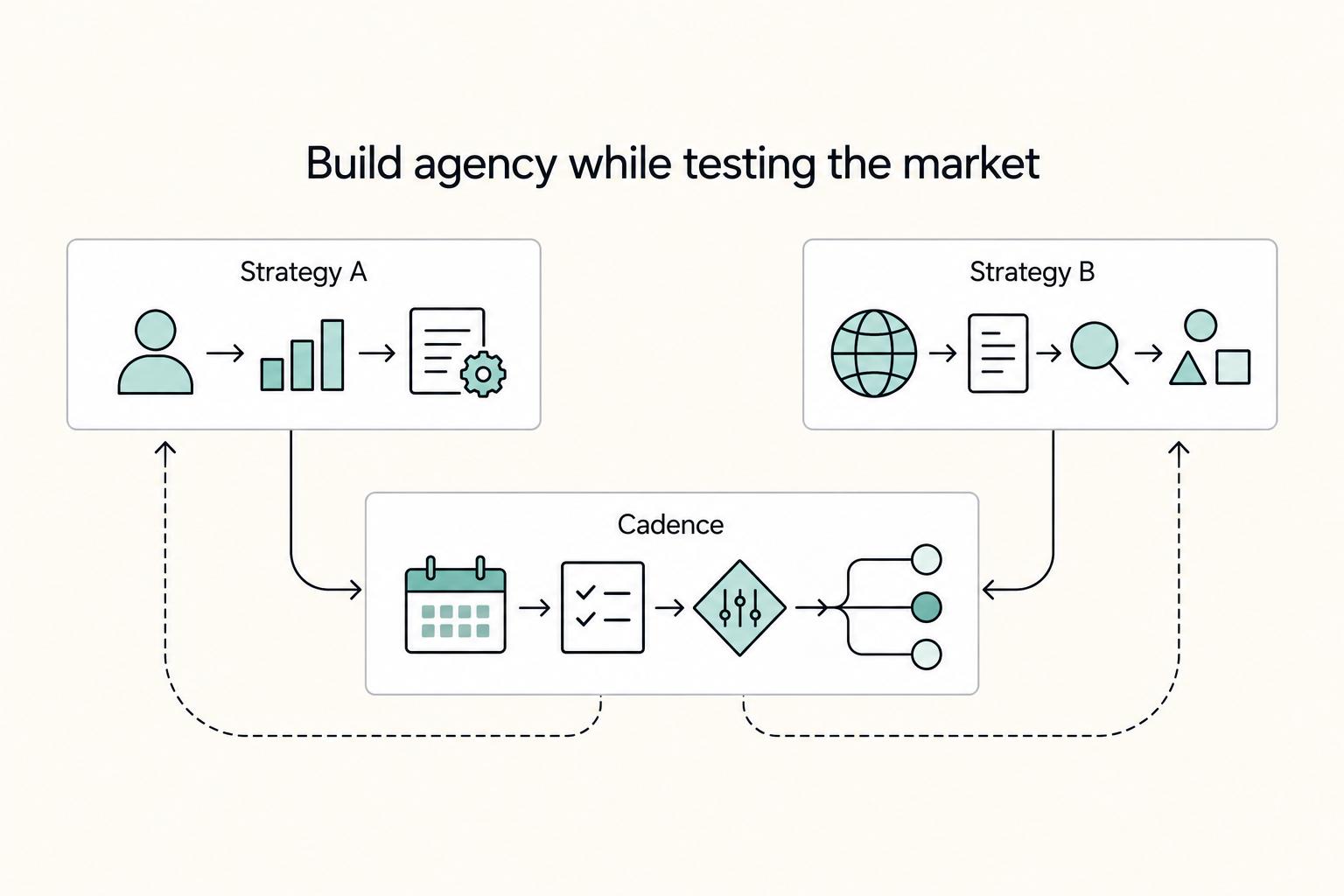
Once you know your quadrant, do not pick between self-improvement and trend-following. Run both tracks in parallel: improve what you control, and test what you are exposed to before you commit.
Use two operating rules: control vs exposure and evidence before commitment. In complex conditions, familiar leadership truisms can fail, so your plan should adapt to signals instead of relying on confidence alone.
| Agency action (control) | Market action (exposure) | Why it matters | What to do this cycle |
|---|---|---|---|
| Sharpen your offer around one paid problem, one buyer, and one outcome | Scan for repeated buyer pain across calls, proposals, and feedback | Clear offers are easier to trust than broad titles | Update your homepage headline, proposal opener, and call intro to name one urgent problem |
| Make delivery consistent and easy to evaluate | Track which requests are becoming standard in active deals | Reliability turns interest into repeatable demand | Standardize one project brief, one scope checklist, and one handoff template |
| Build visible authority from real work and clear judgment | Test whether your point of view matches current buyer priorities | Proof without relevance gets ignored; relevance without proof is fragile | Publish one short case note or teardown and log the responses you get |
Strategy A: Build Agency#
Treat agency as repeatable trust, not personal potential.
| Agency step | What it involves |
|---|---|
| Clarify positioning | Write a one-sentence offer with client type, problem, and outcome. |
| Filter for fit | Add intake checks for timeline realism, decision access, and scope fit so you do not accept work that breaks delivery. |
| Document execution | Keep a simple evidence pack with case examples, workflow steps, and revision/approval rules. |
| Be explicit about AI use | State where you use AI, where you do not, and how you review outputs before client delivery. |
Strategy B: Harness the Market#
Read the market without rebuilding your business around every headline.
| Market step | What it involves |
|---|---|
| Scan for durable signals | Prioritize patterns that repeat across real buyer conversations and live opportunities. |
| Run small tests first | Pilot a narrow offer or prototype, then expand only if evidence supports it. |
| Position for adjacent demand | Make small moves that fit your current strengths and likely buyer needs, instead of betting everything on one prediction. |
- Scan for durable signals: Prioritize patterns that repeat across real buyer conversations and live opportunities.
- Run small tests first: Pilot a narrow offer or prototype, then expand only if evidence supports it.
- Position for adjacent demand: Make small moves that fit your current strengths and likely buyer needs, instead of betting everything on one prediction.
Cadence: Run Both Tracks Continuously#
Each cycle, review signals, run one small experiment, refine one part of your offer, and document what you learned. This works best as ongoing calibration, not a one-time reset.
Related: How to apply the 'Jobs-to-be-Done' theory to your freelance services.
Conclusion: Become the Architect, Not the Passenger#
Do not choose sides in great man theory vs zeitgeist. Use it as a working comparison, then act on what is actually doable in your role. The useful split is simple: build what you control, monitor what you do not, and do not let either side become a master-key explanation for every result.
That brings you back to the diagnostic quadrants and the two-pronged strategy. If you recognized yourself as a Frustrated Genius or Struggling Operator, your next gains probably come from sharper positioning, cleaner execution, and stronger proof. If you looked more like a Lucky Beneficiary or Strategic Leader, protect quality and stay selective. Keep checking whether demand, tools, or buyer behavior are shifting under your current offer.
| Decision area | What you control | What you monitor | Checkpoint |
|---|---|---|---|
| Positioning | Offer clarity, scope, proof of results | Repeated buyer problems and language | Review your last 5 inquiries and note what problem people actually asked you to solve |
| Delivery | Execution quality, review discipline, authority signals | Rising client expectations and tool changes | Check revision churn, missed approvals, and where work needed extra supervision |
| Growth bets | Small tests, pricing moves, client selection | Demand shifts and changes in how buyers purchase | Run one low-risk offer test and log the outcome before changing more than one variable |
A good close here is prudence, or practical wisdom: right reasoning about what is doable. That means excluding impossible options, using memory to collect experience, and then commanding action. The failure mode is shortcut thinking: hunting for a master key and blaming everything on talent, or everything on the market. Before your next quarter, use this checklist:
- tighten one offer
- document one proof asset
- track one recurring market signal
- review one delivery risk
- make one deliberate decision, then measure it
You cannot fully control the market. You can control your positioning, your decision cadence, and your professional standards. You might also find this useful: How to apply the 'Long Tail' theory to your freelance niche.
Frequently Asked Questions
What does great man theory vs zeitgeist mean for your business?
Use it as a simple split between what you can control and what you cannot. The “great man” side focuses on individual agency, while the “zeitgeist” side focuses on socio-economic and cultural conditions. In practice, improve one part you own, then check whether your current market context is moving in the same direction.
Which matters more: personal skill or market timing?
In this framework, neither is the whole story. One explains individual contribution; the other explains context. Instead of picking one, build capability and test it against real demand signals in your market. | Question | Agency side | Context side | What you should do next | | --- | --- | --- | --- | | Why clients choose you | Your judgment and execution | Timing, demand, and buyer priorities | Separate what you can improve now from what you need to monitor | | Main risk | Overestimating individual impact | Ignoring your own execution quality | Change one variable at a time and review results | | Best use | Sharpening your offer | Deciding where to aim it | Match strong capability to problems buyers already recognize |
How do you tell signal from noise?
With a context-first lens, repeated patterns matter more than one-off events. A single request or post can be interesting, but it may not represent a broader shift. Treat recurring patterns as stronger signals than isolated anecdotes.
Can you be highly capable and still miss the market?
Yes, that is a key caution in this comparison. The individual-centered view is useful, but it can underweight socio-economic and cultural context. If outcomes lag, reassess market fit as well as execution quality.
How should this affect client selection and offer positioning?
Use the model to separate agency questions from context questions. Clarify what you can reliably deliver, then check whether the client’s timing and priorities align with that strength. This keeps positioning decisions tied to both execution and environment.
What about AI, workflow discipline, and compliance-aware delivery?
This theory comparison does not provide specific AI or compliance rules. Use it as a framing tool for agency vs context, then apply separate operational and legal guidance for delivery choices. If you work with EU client data, this companion guide on GDPR for Freelancers can help with that separate topic.
Should you treat this model as proven truth?
No. Treat it as a decision lens, not settled proof. Neither side is established here as a complete explanation of outcomes. Use it to frame choices, then validate with your own evidence.
Try a related tool
Researched and edited by the Gruv editorial team. Gruv builds cross-border billing, payouts, and finance-operations software for global businesses.
Sources
- annamaria.edu/wp-content/uploads/2025/12/Academic-Catalog-...trusted
- cs.jhu.edu/~kevinduh/a/multitarget-tedtalks/t/en-de/tok...trusted
- dam.brown.edu/people/mumford/BlogBook2.pdftrusted
- pmc.ncbi.nlm.nih.gov/articles/PMC3903122trusted
- pmc.ncbi.nlm.nih.gov/articles/PMC6818522trusted
- salmagundi.skidmore.edu/articles/1176-from-philosophy-to-powertrusted
- udallas.edu/about-ud/leadership/presidents-office/verita...trusted
- web.stanford.edu/group/archaeolog/cgi-bin/archaeolog/wp-conte...trusted
Educational content only. Not legal, tax, or financial advice.
Related Posts

GDPR Compliance Checklist for Freelancers Working With EU Clients
Start by separating the decisions you are actually making. For a workable **GDPR setup**, run three distinct tracks and record each one in writing before the first invoice goes out: VAT treatment, GDPR scope and role, and daily privacy operations.
Ethical Considerations of Using AI in Creative Freelance Work
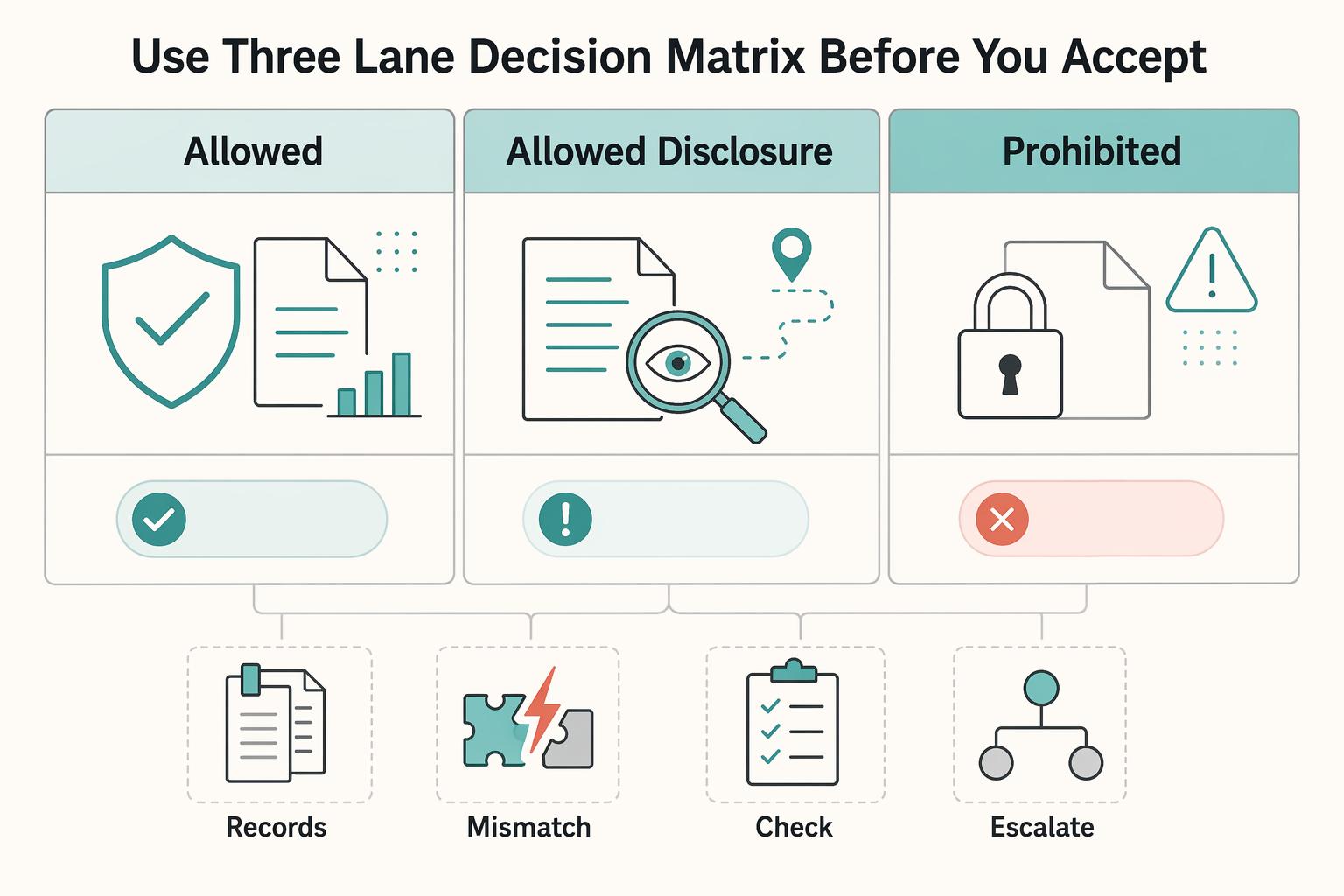
The ethics of AI in creative work shows up in delivery choices, not theory. Decide AI boundaries, disclosure expectations, and contract terms before work starts.

The Freelance Payment Penalty: A Modeled Audit of Platform Fees, FX Spreads, and Payout Delays
The money rarely disappears through a single, easy-to-spot fee. The real loss is stacked. A marketplace takes its commission, a processor adds a charge for international cards, a bank or payment company converts the currency at a spread, a platform holds the funds before release, and a wire sheds a little to intermediaries on the way in. Each layer looks defensible on its own, but the worker feels the combined result as a smaller deposit and a later payday.