
Quick Answer
Start by applying getting to yes for client negotiations in three moves: set BATNA and red lines before the call, negotiate structure before price during the call, and confirm scope, payment triggers, and liability text in the draft contract. This keeps pressure from driving concessions on core protections and gives you a clear basis to counter, revise, or walk away.
Negotiate the Terms That Control Real Project Risk#
A strong "yes" is not just a price agreement. You are negotiating the terms that control real project risk: scope, schedule, payment timing, responsibilities, and what is enforceable if things break down.
Principled negotiation here means solving the underlying problem instead of trying to beat the other side. For client work, that shifts the conversation from "Can you lower your fee?" to "What terms help both of us deliver with less risk?" BATNA is your best alternative if no deal is reached. Define it before talks begin so you are less likely to negotiate from pressure.
Before you negotiate, lock three things:
- Decision criteria
Use objective standards, not preference alone: scope clarity, turnaround requirements, revision load, dependencies, and comparable market context.
- Fallback options
Decide what you can trade without weakening delivery, such as timeline, meeting cadence, or deliverable mix.
- Deal-breaker boundaries
Write down terms you will not accept, especially vague scope, open-ended revisions, unclear payment triggers, or one-sided obligations.
| Approach | What leads the discussion | What gets missed most often | Likely tradeoff |
|---|---|---|---|
| Price-first | Rate or total fee | Scope detail, payment triggers, client responsibilities | Can speed agreement, but protections are often weaker if core terms stay vague |
| Protection-first | Scope, schedule, payment, obligations, then price | Pure speed | Can take longer upfront, but expectations and obligations are usually clearer |
A simple pre-call check tells you a lot. Do you have one written scope of work that defines project requirements and includes budget or delivery expectations? If not, risk rises. You may win on fee and still end up in disputes over scope or payment.
From there, the work becomes practical. You need a pre-negotiation audit, a way to run the live conversation, and a contract review process that turns verbal alignment into terms you can actually rely on.
You might also find this useful: How to Use the Pyramid Principle for Client Communication.
Stage 1: The Pre-Negotiation Audit: Fortifying Your Position#
Do this audit before the first call so you are not deciding under pressure. Pre-commit what you will accept, what you will counter, and what you will decline across email, calls, and redlines.
Negotiation is a problem-solving tool, not always the right tool. If commitment is weak, talks can slide into process paralysis, delay, distraction, or manipulation. Use this stage as a real go or no-go gate, not just prep.
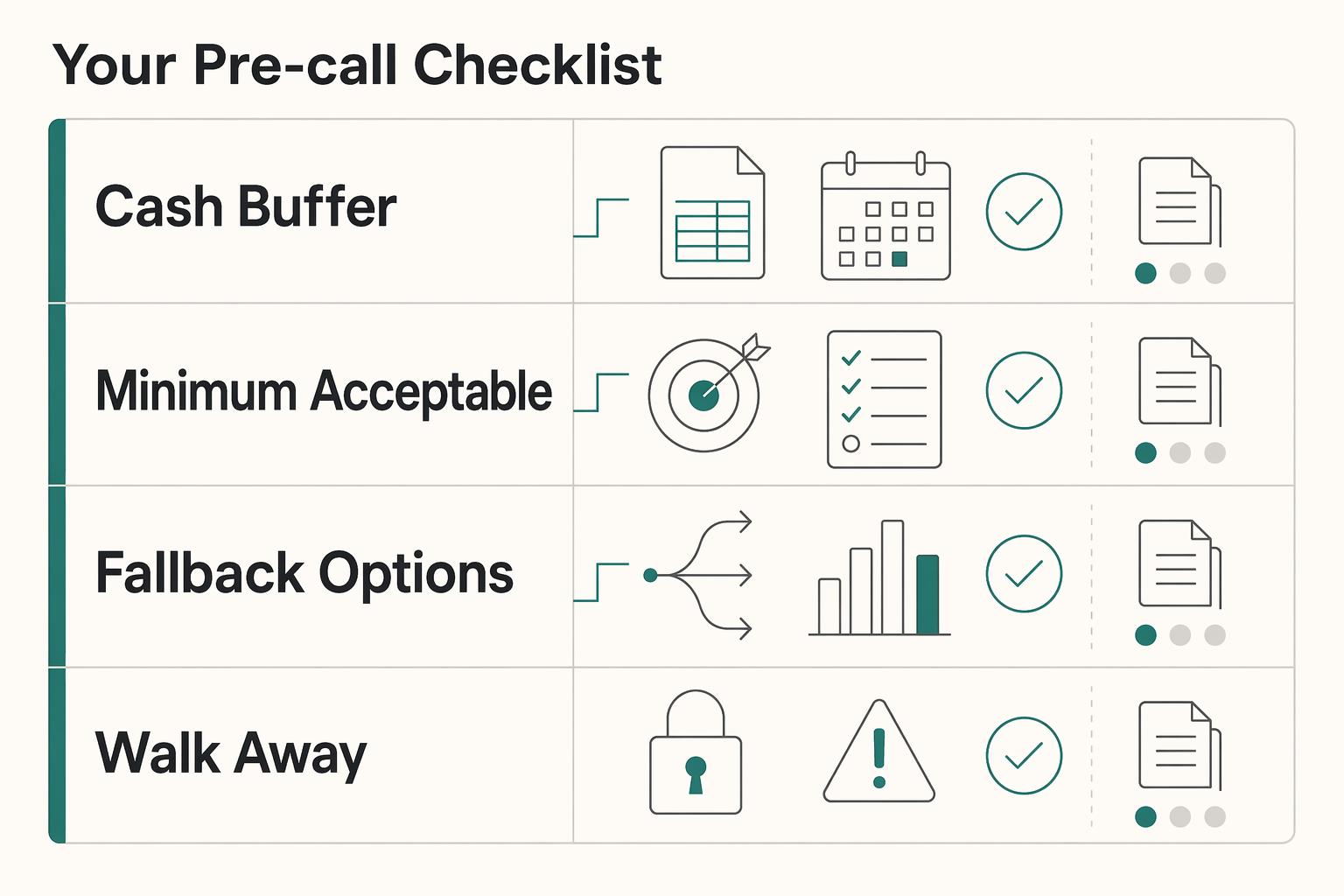
Your pre-call checklist#
Keep this to one page and fill it with verified details, not guesses. If someone else cannot read this page and predict your decisions, tighten it before the call.
| Checklist item | What to capture | Call use |
|---|---|---|
| Cash buffer status | [cash on hand, verified date] and [near-term fixed obligations] | Separate real deal fit from urgency pressure |
| Minimum acceptable deal terms | [minimum fee or structure], [payment timing you can operate under], [scope boundary], [revision/change process], [client approval responsibilities] | Define what you will accept |
| Fallback options | [phased delivery], [smaller deliverable set], [adjusted timeline], [meeting cadence change], [pilot then expansion] | Define what you will counter |
| Walk-away conditions | [no clear approver], [scope remains undefined], [pressure to start before written terms], [unreasonable risk transfer] | Define what you will decline |
- Cash buffer status
Record [cash on hand, verified date] and [near-term fixed obligations]. The goal is to separate real deal fit from urgency pressure.
- Minimum acceptable deal terms
Define [minimum fee or structure], [payment timing you can operate under], [scope boundary], [revision/change process], [client approval responsibilities].
- Fallback options
List what you can trade without weakening delivery: [phased delivery], [smaller deliverable set], [adjusted timeline], [meeting cadence change], [pilot then expansion].
- Walk-away conditions
State what ends discussion: [no clear approver], [scope remains undefined], [pressure to start before written terms], [unreasonable risk transfer].
BATNA in actual decisions#
Treat BATNA as a decision check, not a talking point. If core terms can be met through a different structure, you negotiate. If scope can be reduced and risk stays controlled, you counter. If core protections are removed, you decline.
That discipline can help protect judgment and relationship quality. In one negotiation research context, standing firm was linked to longer talks and more conservative outcomes. Because that evidence comes from a China auditor-client setting, treat it as a tradeoff to manage, not a universal rule.
Use the table below as a planning heuristic, not a guarantee.
| Dimension | Negotiating from urgency | Negotiating from prepared leverage |
|---|---|---|
| Starting posture | Immediate pressure drives choices | Predefined thresholds guide choices |
| Typical behavior | Early concessions, loose assumptions | Clarifying questions, explicit assumptions, documented tradeoffs |
| First concessions | Scope clarity, payment protection, timeline realism | Non-critical features, sequencing, format |
| Likely pattern | Faster motion can raise the risk of confusion or impasse | Slower start can create a clearer path to workable terms |
Build an objective criteria dossier#
Before serious discussion, prepare a short evidence pack you can defend. It should give you something firmer than "this is my preference" when the conversation gets tight.
Include:
- current market benchmarks from credible public sources
- scoped outcomes from your own prior work, without confidential details
- comparable service models or public pricing structures that explain your proposal logic
Keep claims current and checkable. Save links, note the date checked, and tie each point back to scope and dependencies. That keeps the discussion anchored in evidence instead of opinion.
For a step-by-step walkthrough, see What to Do When a Client Asks for a Discount.
Stage 2: The Conversation: Controlling the Narrative#
The goal here is not to win an argument on the call. It is to help your day-to-day contact get a safe, workable deal approved internally. In complex B2B buying, decisions are often made by a group with different priorities, so treat your contact as an internal champion, not necessarily the final authority.
Work with the champion and the approval path#
A useful early judgment is this: resistance is often process, not personal. If legal, procurement, finance, or security pushes back, map the constraint instead of reacting to it.
Before you trade any term, confirm:
- what is fixed policy versus business preference
- who reviews scope, payment, and support terms
- who can approve changes in writing within their process
If that path is unclear, slow the negotiation down. Otherwise, you can concede terms to someone who cannot authorize them.
Run the call in four moves#
A good call has a sequence. If you skip straight to price, or start countering language before you understand the approval path, you create work for yourself later.
| Move | Action | Example |
|---|---|---|
| Map constraints first | Ask which terms are non-negotiable policy and which are negotiable preferences | Fixed policy versus business preference |
| Find interests behind positions | Ask what risk or requirement a position is meant to address | "Net days" or "unlimited revisions" |
| Offer risk-reducing options | Default to structure changes before fee cuts | Milestones, scoped phases, explicit approval points, or staged rollout |
| Anchor in objective criteria | Use standards your contact can forward internally | Comparable service models, implementation scope, and clear assumptions |
- Map constraints first
Ask which terms are non-negotiable policy and which are negotiable preferences.
- Find interests behind positions
When you hear a position such as "Net days" or "unlimited revisions," ask what risk or requirement it is meant to address.
- Offer risk-reducing options
Default to structure changes before fee cuts: milestones, scoped phases, explicit approval points, or staged rollout.
- Anchor in objective criteria
Use standards your contact can forward internally: comparable service models, implementation scope, and clear assumptions.
Short talk tracks (adaptable)#
Use short, direct language your contact can answer without getting defensive:
- "Which part of this is fixed policy, and which part is preference?"
- "Who else needs to sign off on [payment timing / scope boundary / support terms]?"
- "What risk is this term trying to prevent?"
- "If the goal is risk control, I can propose a different structure."
- "Instead of changing the fee, let's align payment to defined milestones."
- "Before I revise, what format helps you get internal approval fastest?"
- "If new work appears, let's document it in writing so timeline and budget stay accurate."
After the call, send a short recap your champion can forward. Include agreed assumptions, open issues, and the next approval step.
Concession vs. risk-control alternatives#
When pressure shows up, avoid defaulting to the first concession request. Solve the concern in a way that still protects delivery, cash flow, or scope.
| Pressure point | Weak concession to avoid | Risk-control alternative | Primary protection |
|---|---|---|---|
| Scope expansion | "A few extras" inside current fee | Written change request/change order for work changes within contract scope | Scope control |
| Slower payment | Single end-loaded invoice | Milestone payments tied to defined objectives/deliverables | Cash-flow predictability |
| Faster approvals | Verbal or chat-only approvals | Named approver + written acceptance + written modifications | Approval flow clarity |
| Post-delivery help | Unlimited support | Defined support window or separate support add-on with boundaries | Post-delivery limits |
In formal procurement, written change orders and written modifications are standard control mechanisms, and only authorized contracting roles can execute them. That does not automatically govern your commercial contract, but it is a useful model for avoiding the familiar "we'll sort it out later" problem.
Keep objective criteria forwardable#
If your contact cannot reuse your reasoning internally, the negotiation gets harder than it needs to be. Give them material that can move through finance, legal, procurement, or a business sponsor without extra translation.
Use evidence that is easy to forward:
- comparable service structures
- included versus excluded implementation scope
- dependencies on client inputs and approvals
- risk-avoidance logic tied to clear process controls
Avoid hype and broad ROI claims you cannot verify on request. A simple test is this: could your contact forward your summary as-is to finance, legal, or procurement? If not, tighten it.
Related: How to apply 'Never Split the Difference' to your freelance negotiations.
Stage 3: The Contract: Codifying Your Win#
This is where the deal either holds or starts to unravel. The contract should match what was agreed, in clear language, with no gaps on payment, scope, risk, ownership, or exit.
| Contract area | What to confirm | Watch for |
|---|---|---|
| Payment terms | When you can invoice, what event triggers payment, and what counts as acceptance | Avoid vague trigger language like "client satisfaction" unless it is defined |
| Scope and change control | What is included, what is excluded, what client inputs are required, and how changes are handled | Require written approval for added work before it starts |
| Liability allocation | Read limitation of liability, indemnity, warranty, and insurance terms together | Avoid language that makes your responsibility unlimited or disconnected from your actual control |
| Intellectual property | What you already owned before the project, what is created for this client, and what rights each side receives | Avoid blanket transfer language that captures pre-existing methods, templates, or know-how unless that is intentional |
| Exit mechanics | Who can terminate, how notice is given, what pauses or continues, what gets paid, and what is handed over | Avoid termination language that allows immediate stop-work while leaving payment obligations unclear |
Contract negotiation often continues through email, redlines, and internal reviews. Treat this draft as your final control point. Check that your Stage 1 red lines and Stage 2 tradeoffs survived legal, procurement, finance, and internal edits. Reaching a mutually satisfying agreement is often challenging, and common ideas of a "good deal" can be incomplete, so pressure-test assumptions before signature.
Clause-level legal sufficiency is jurisdiction-specific. Treat exact enforceable wording as a local-law verification item unless it has been confirmed for your contract context.
Payment terms#
Payment language should work even for someone outside the project. A strong draft helps any reader answer three questions: when you can invoice, what event triggers payment, and what counts as acceptance.
Include the trigger, invoice basis, payer entity, and any approval dependency that could delay payment. Avoid vague trigger language like "client satisfaction" unless it is defined. Before you sign, confirm the trigger depends on steps you can actually complete and verify. For cross-border deals, verify local invoicing, tax, and late-payment rules before finalizing wording.
Scope and change control#
Scope should read like a boundary, not a theme. State what is included, what is excluded, what client inputs are required, and how changes are handled. If multiple documents apply, make the document priority explicit so conflicts can actually be resolved.
Avoid open-ended phrases that may expand delivery without updated fees or timing. Require written approval for added work before it starts, and make sure the final scope attachment and version references match the signed draft.
| Clause area | Risky clause wording | Protective clause intent (subject to local-law review) |
|---|---|---|
| Payment | "Payable upon client approval" | Define trigger, approver role, and acceptance process in writing |
| Scope | "Includes related services as needed" | Define included deliverables, exclusions, and client dependencies |
| Changes | "Minor requests are included" | Require written change approval before extra work starts |
| Liability | "Contractor is responsible for all losses" | Allocate responsibility clearly and proportionally |
| IP and exit | "Client owns everything; either party may end anytime" | Separate pre-existing materials from deliverables and define termination effects |
Liability allocation#
Liability language should allocate responsibility clearly, not create exposure you cannot reasonably control. Read limitation of liability, indemnity, warranty, and insurance terms together so one broad clause does not quietly override narrower protections elsewhere.
Avoid language that makes your responsibility unlimited or disconnected from your actual control. In cross-border contracts, enforceability and required limits can vary, so verify local requirements before finalizing.
Intellectual property#
Do not leave ownership to assumption. The contract should say what you already owned before the project, what is created for this client, and what rights each side receives.
Avoid blanket transfer language that captures pre-existing methods, templates, or know-how unless that is intentional. If you need portfolio use, confidentiality carve-outs, or license-back rights, include them in the signed terms. If personal data handling is part of delivery, confirm whether separate privacy terms are required in the relevant jurisdiction. GDPR for Freelancers: A Step-by-Step Compliance Checklist for EU Clients
Exit mechanics#
A workable exit clause makes an early stop predictable. It should tell you who can terminate, how notice is given, what pauses or continues, what gets paid, and what is handed over. If you cannot explain what happens step by step after termination, the clause is not ready.
Avoid termination language that allows immediate stop-work while leaving payment obligations unclear. For cross-border deals, verify any local notice, classification, or mandatory rule before final wording.
Use this pre-signature check before you approve the final draft:
- Confirm Stage 1 red lines are preserved in the actual contract text.
- Confirm Stage 2 concessions and approvals appear in the agreement or attached exhibits.
- Confirm final attachments, defined terms, and version references are consistent across all documents.
- For cross-border terms, flag each local-law dependency for verification instead of guessing, and keep placeholders until verified.
If you want a deeper dive, read How to Calculate Your Billable Rate as a Freelancer. Turn your negotiated terms into a practical draft before redlines begin with this freelance contract generator.
Conclusion: Treat Negotiation as Risk Control#
Treat negotiation as risk control, not just a rate discussion. In Getting to Yes-style client negotiations, you are not choosing between hard win-lose bargaining and giving in. You are trying to reach terms that work for both sides while protecting your business from avoidable risk.
The three-stage approach stays the same, and you can use it immediately:
- Before the call: set your floor, red lines, and supporting criteria, then do a quick self-check on your feelings and motivations so stress does not drive the conversation.
- In the call: separate people from the problem, ask what interest sits under the client's position, listen closely, and build options that create value for both sides.
- Before signature: confirm the written terms reflect what was agreed and that your limits are clear.
| Under pressure, you think | Decision you make | Consequence |
|---|---|---|
| "Just get the highest fee." | Trade protections to hold price | Better headline rate, weaker protection |
| "Keep the client happy at all costs." | Accept vague terms and delayed decisions | More execution risk and unclear boundaries |
| "Protect the business first." | Negotiate key terms with the fee | Clearer delivery and fewer surprises |
Minimum safe deal checklist before signature:
- Your limits and non-negotiables are explicit in writing.
- Key responsibilities and decision points are clear to both sides.
- Open items have an owner and a next step.
- You are agreeing because the deal fits your interests, not just to end conflict.
That is the practical standard: stay calm, separate people from the problem, and make sure the signed contract reflects the deal you actually intended.
We covered this in detail in A deep dive into the 'governing law' clause for a contract between a US freelancer and an Asian client.
When you are ready to operationalize the payment terms you just negotiated, review Gruv Payouts to see how status tracking and compliance-gated disbursements work where supported.
Frequently Asked Questions
What if the client seems to have all the power?
Use an interest-first sequence instead of positional pushback: acknowledge the constraint, ask what interest sits underneath it, propose one or two risk-balanced alternatives, then state your boundary. Set that boundary before the call using your BATNA so you are not deciding under pressure. If a required term crosses your red line, say so plainly and stop trying to force a fit.
What counts as objective criteria for your rate or terms?
Use standards that do not depend on your opinion: market benchmarks, comparable scopes, and outcome or risk-cost framing. Keep the pack small enough to use live, and only use comparables that match scope, seniority, geography, and deliverables. Before the call, prepare: A few market references showing typical pricing or professional norms. One comparable scope with deliverables, assumptions, and boundaries. One short value line tied to avoided risk, saved internal time, or a defined business outcome
How should you handle payment terms?
Treat payment terms as a core deal variable, not admin detail. In open-account structures, payment commonly comes 30, 60, or 90 days after delivery. If the client cannot change base terms, consider milestone billing and an early-pay incentive such as 2/10 net 30. Keep invoice triggers explicit so payment timing is tied to clear events, not vague approval language. | Option | Cash-flow impact for you | Client friction | Risk protection | |---|---|---|---| | Standard net terms after delivery | Payment commonly follows delivery and may run on 30/60/90-day windows | Often easier for buyers than prepayment | Lower seller protection than cash in advance; define acceptance and invoice triggers clearly | | 2/10 net 30 | 2% discount if paid in 10 days; otherwise full payment is due in 30 days | Can work when finance teams can pay early for discount | Can improve payment speed, but still depends on buyer payment behavior | | Milestone billing | Cash comes in as defined objectives are completed | Requires milestone definitions upfront | Stronger balance because payment is tied to completed objectives |
What should you do if the client says your terms are "not standard"?
Ask which exact term is non-standard and for which stakeholder: procurement, legal, finance, or business sponsor. That tells you whether you are solving a process limit, a risk policy, or simple habit. If they cannot name the concern, return to objective standards and the practical risk the clause creates for your business.
What changes when the engagement is cross-border?
Before signature, make contract currency, invoice currency, and the governing-law clause explicit. In the EU Rome I context (Regulation (EC) No 593/2008), parties can choose governing law, but that choice alone does not settle forum, enforcement, or tax treatment. Verify the jurisdiction-specific invoicing and tax handling that applies to you, such as UK VAT currency-display requirements where UK VAT applies, or U.S. functional-currency translation rules for U.S. taxpayers.
Try a related tool
Researched and edited by the Gruv editorial team. Gruv builds cross-border billing, payouts, and finance-operations software for global businesses.
Sources
- acquisition.gov/far/36.302trusted
- acquisition.gov/far/subpart-43.2trusted
- arpa-h.gov/sites/default/files/2025-05/StrategicInstitu...trusted
- curriculum.law.georgetown.edu/jd/jd-alpha-scheduletrusted
- irs.gov/individuals/international-taxpayers/foreign-...trusted
- law.cornell.edu/wex/contracttrusted
- pon.harvard.edu/daily/negotiation-skills-daily/six-guideline...trusted
- pon.harvard.edu/daily/negotiation-skills-daily/principled-ne...trusted
Educational content only. Not legal, tax, or financial advice.
Related Posts

GDPR Compliance Checklist for Freelancers Working With EU Clients
Start by separating the decisions you are actually making. For a workable **GDPR setup**, run three distinct tracks and record each one in writing before the first invoice goes out: VAT treatment, GDPR scope and role, and daily privacy operations.
How to Calculate a Freelance Rate You Can Actually Get Paid On
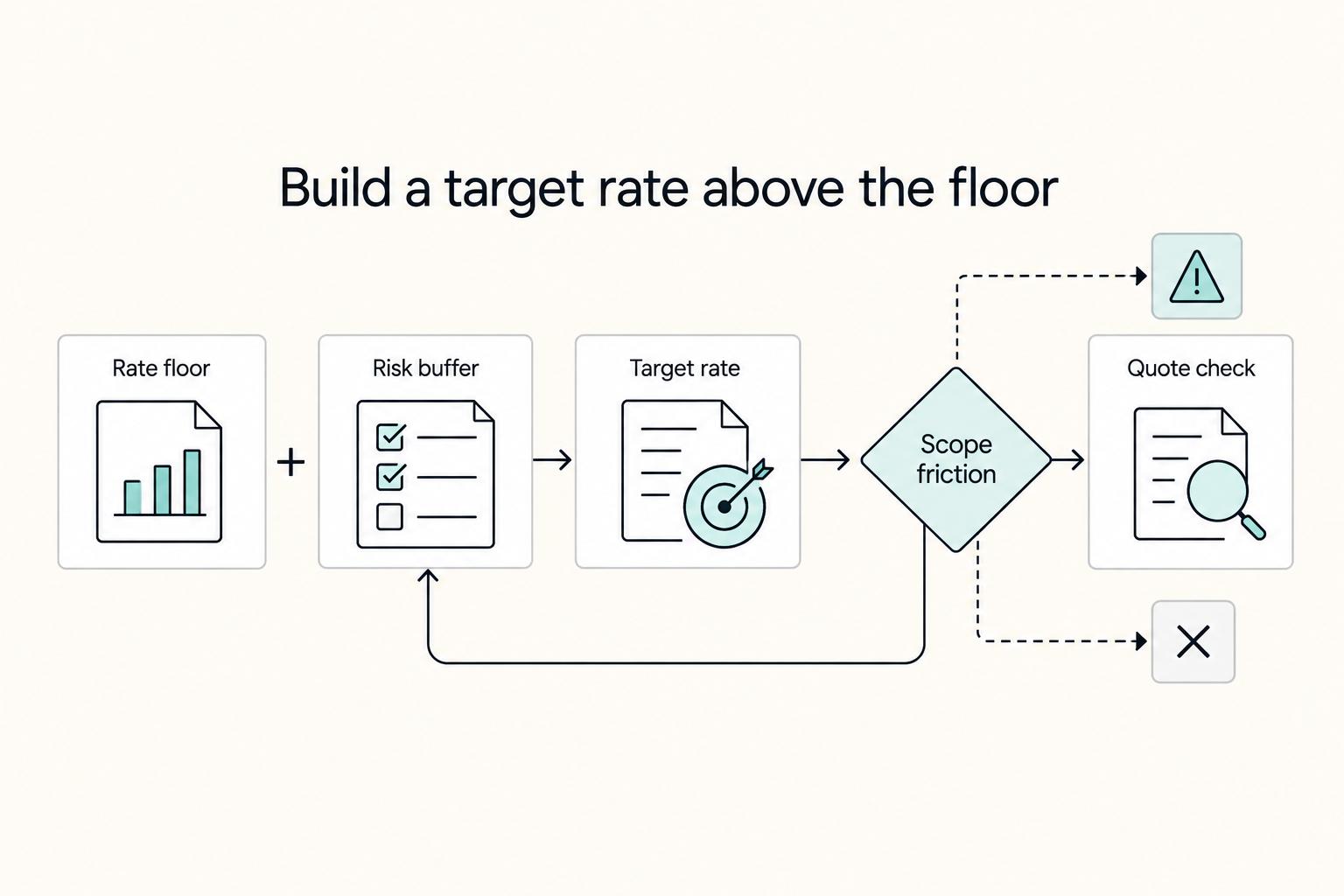
A workable rate is not the neat number a calculator produces. It is the number that still works after you account for real billable capacity, non-client time, scope drift, and the gap between sending an invoice and receiving cleared cash. Start with hourly math even if you do not plan to bill hourly, then turn that number into a quote with clear `payment terms`.
How to apply Never Split the Difference to your freelance negotiations
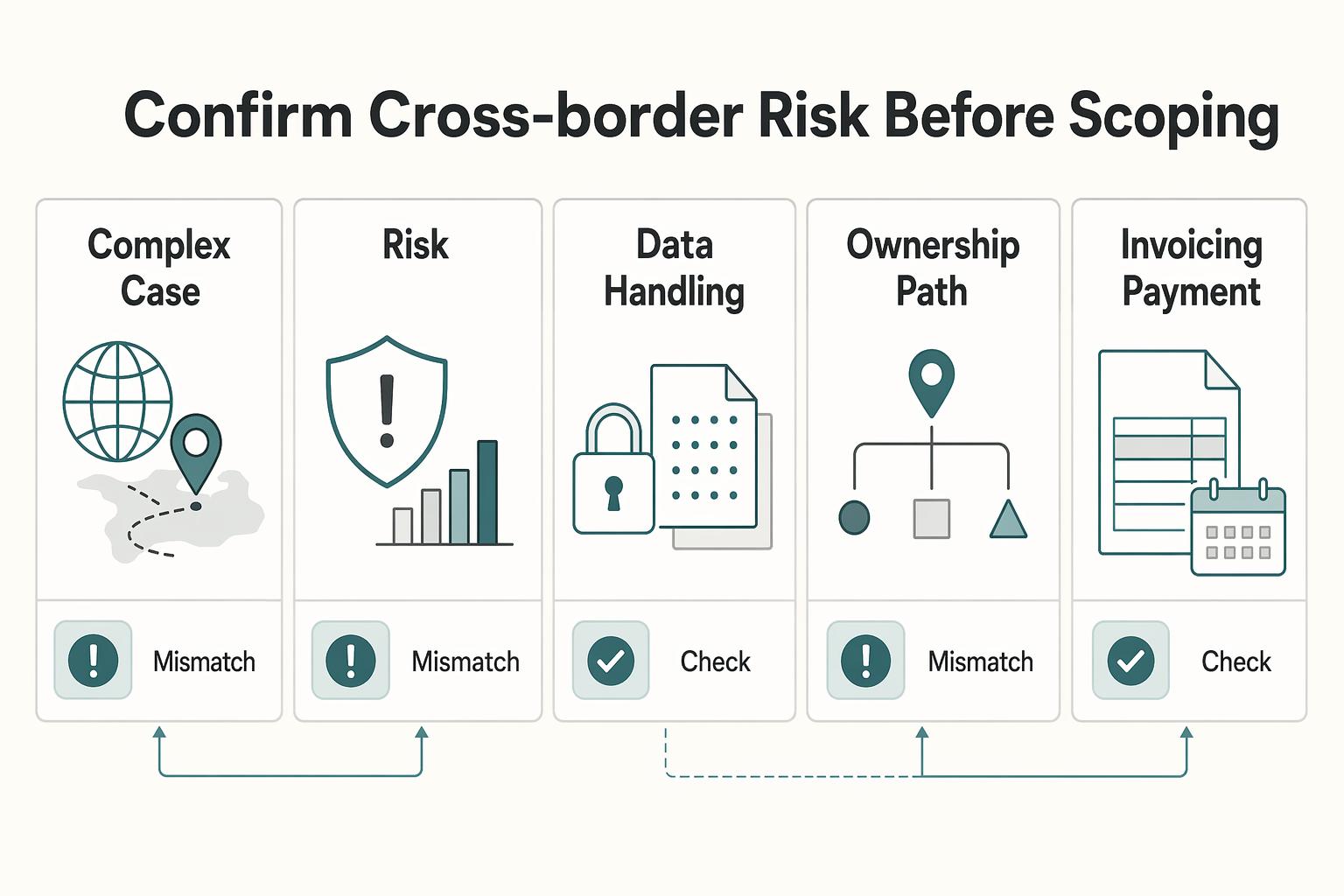
Most freelance negotiations go off track before anyone talks about price. The real work starts in the first conversation, when you figure out whether the client can actually buy, pay, classify, brief, and legally receive your work. Miss those basics, and the project can unravel later over approvals, payment, legal terms, or scope drift.