
Quick Answer
You can turn notes into revenue by treating them as a business asset: capture each note with a clear destination and confidentiality boundary, publish only after evidence and claim checks, and package repeated useful insights into bounded offers. The article organizes this into three phases that move from scattered notes to reusable authority, safer public teaching, and monetizable products or client work.
Your notes can become a business asset, but only if you treat them like one. The shift is not about buying new software. It is about deciding that the knowledge you already produce in client work, research, and day-to-day problem solving deserves structure, boundaries, and a path to reuse.
This blueprint shows that path in three moves. First, capture ideas so each note has a future job. Then publish with enough control that your thinking builds trust without creating avoidable risk. Finally, package what keeps proving useful so authority can turn into revenue. The goal is simple: move from scattered thoughts and disconnected files to a durable asset that supports a business-of-one.
Phase 1: The IP Greenhouse - Cultivate Your Expertise#
A durable asset starts at capture, not at publish time. Every note needs two things from day one: a business destination and a boundary. If you cannot say what the note might become and who can safely see it, it is not ready to keep in your working library.
A usable capture record is simple. Include one sentence for the idea, the source or trigger, the problem it helps solve, who it is for, the likely destination, a confidentiality flag, and the next action. Do not wait until a note is polished. Do insist that it is identifiable. Anonymous screenshots, half-titled voice notes, and copied fragments with no source are where reuse usually dies.
Classify notes before they pile up#
Classify each note when you capture it. That is the easiest way to avoid a messy backlog.
| Classification | Use when | Rule of thumb |
|---|---|---|
| Public education | It teaches a general principle without exposing client specifics, internal methods, or sensitive numbers. | If you can remove names, numbers, and account details and the lesson still stands on its own. |
| Product development | The idea repeats across projects and could become a checklist, template, diagnostic, workshop, or training asset. | If the note is useful across clients but gets stronger when you add your sequence, prompts, or templates. |
| Client-only implementation | It depends on confidential context, proprietary detail, or judgment you reserve for paid work. | If stripping context makes the note weak or misleading. |
- Public education if it teaches a general principle without exposing client specifics, internal methods, or sensitive numbers.
- Product development if the idea repeats across projects and could become a checklist, template, diagnostic, workshop, or training asset.
- Client-only implementation if it depends on confidential context, proprietary detail, or judgment you reserve for paid work.
For ambiguous notes, use a short rule instead of debating edge cases. If you can remove names, numbers, and account details and the lesson still stands on its own, it can live in public education. If the note is useful across clients but gets stronger when you add your sequence, prompts, or templates, move it to product development. If stripping context makes the note weak or misleading, keep it client-only. When in doubt, classify one level more privately.
Maturity matters too. A rough observation and a publishable page should not sit in your notes as if they are equally ready.
| Stage | What it is | Minimum proof | Next move |
|---|---|---|---|
| Seedling | Worth keeping, not yet reusable | Source or trigger, boundary chosen | Add example or link it to a real problem |
| Budding | Clear enough to reuse internally | Claim, short explanation, one example | Decide whether it becomes public, product, or client material |
| Evergreen | Stable enough to publish or embed in delivery | Wording checked, proof attached, confidentiality confirmed | Publish, package, or add to a client asset |
A strong checkpoint here is the evidence pack. Before a note moves past Seedling, verify the original source, capture the date, write your interpretation in your own words, and confirm the confidentiality flag still fits. That prevents a common failure mode later: publishing a claim you cannot support, or reusing a client-specific insight as if it were a universal rule.
Keep the garden maintained, not precious#
Structure helps only if you can maintain it. The greenhouse metaphor is useful because there is no single correct setup. USDA describes urban agriculture broadly, from community gardens to rooftop, indoor, vertical, hydroponic, aeroponic, and aquaponic operations. Your note environment is similar. Different shapes can work. The real tradeoff is control versus maintenance. More structure can protect your IP and improve reuse, but too much ceremony turns note-keeping into admin.
| Moment | What you do | What you check |
|---|---|---|
| Capture | Save fast and assign destination plus boundary | Is the note identifiable and linked to a real problem? |
| Review | Tighten wording, merge duplicates, add missing proof | Could someone else understand it without asking you for context? |
| Promote | Turn the note into a post, asset, or client deliverable | Is the evidence attached and is the sharing level still correct? |
Time pressure is a common failure mode. Good note habits often slip because busy schedules push maintenance work aside. If that is happening, reduce manual work before you add more categories. A simple capture template, auto-filled dates, and a required confidentiality field will do more for consistency than a beautifully designed archive.
If you are still deciding where capture should live, choose for ownership, exportability, and low-friction input before anything else. The Best Tools for Building a Digital Garden is useful here, but tool choice only matters after your destination and boundary rules are clear. In this first phase, the goal is not a prettier note stack. It is a cleaner intake process for future authority, products, and protected client work.
Phase 2: The Authority Engine - Publish Without Risk#
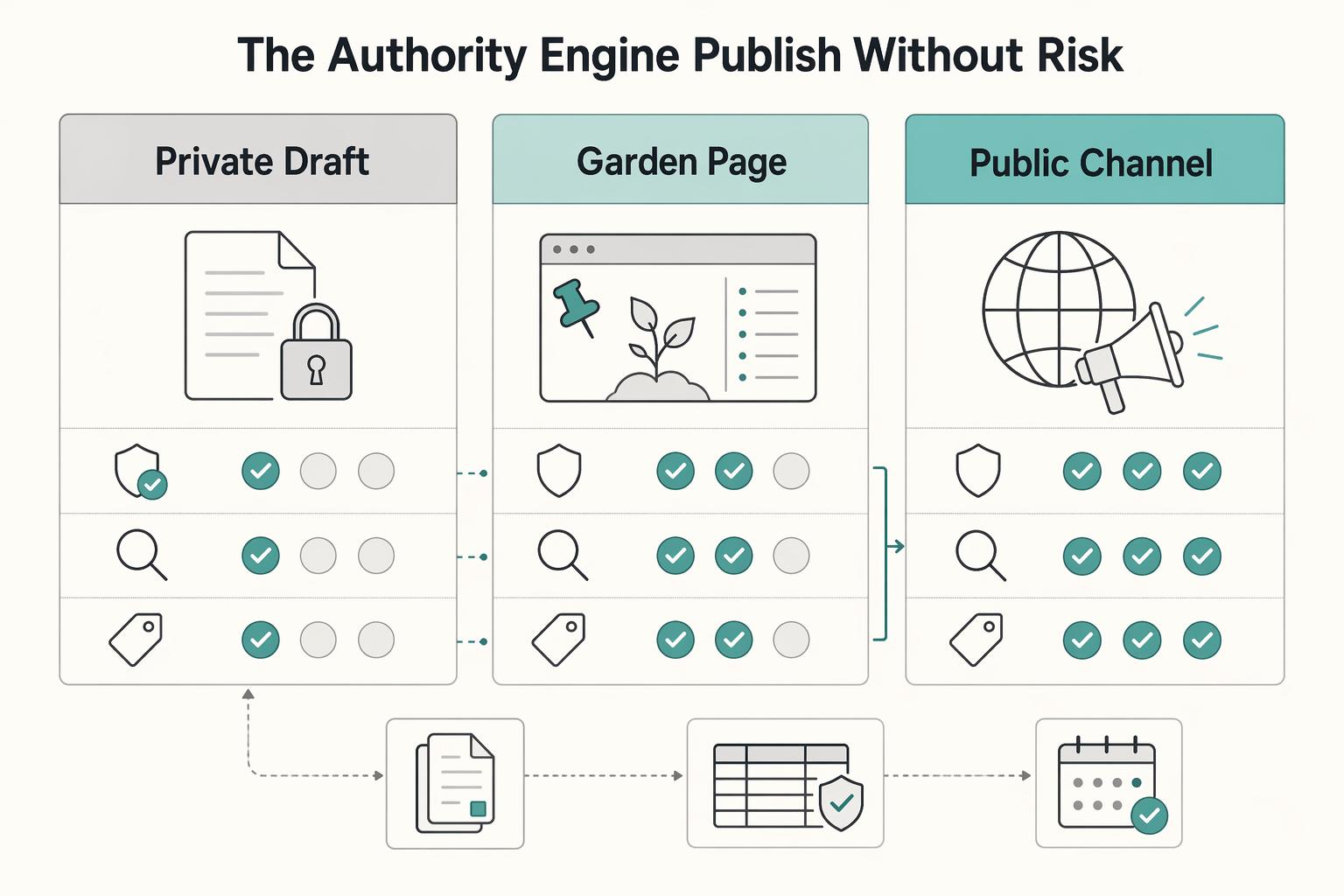
Once Phase 1 is in place, publishing should run as a control loop: pass confidentiality, then evidence strength, then claim label. If a draft fails any check, keep it private and fix the gap before release.
| Stage | Primary home | Use when | Release gate | Handoff |
|---|---|---|---|---|
| Private draft | Notes app, research file, client-safe workspace | The idea is early, client-shaped, or missing proof | Confidentiality: boundary is set. Evidence: source link, date, and your interpretation are attached. Claim label: marked as raw, untested, or working view. | Move to garden only if the lesson still works after removing client names, numbers, and proprietary context. |
| Garden page | Your digital garden | The explanation is stable enough to teach, define, or compare | Confidentiality: no client identifiers or reserved methods. Evidence: main claim is supported by an evidence pack. Claim label: directional insights are clearly labeled as such. | Move to public only as one narrow application, and route readers back to the specific garden page. |
| Public channel | Blog, newsletter, social post, talk | You are applying a durable idea to a current situation | Confidentiality: final public vs client-only check. Evidence: higher-stakes claims are verified against an authoritative artifact. Claim label: certainty matches proof, especially for forecasts or interpretation. | Keep scope tight: publish one claim path, not your full working archive. |
For policy, regulation, or compliance topics, raise the verification bar before you publish. Start on an official, secure website, then confirm the exact document and section you are using. Any current authoritative-source example must be verified from official records before publication or use. As a structure reference, GSA P100 separates federal laws, regulations, and standards from nationally recognized codes and standards, and from state and local codes; California materials also provide concrete checkpoints such as "Mandatory Requirements," "Compliance and Enforcement," and labeling sections like §10-111 and §110.6(a)5.
Your evidence pack should stay lightweight but explicit: source URL, capture date, authoritative artifact when relevant, your short interpretation, and your certainty label. Do not treat index or database inclusion as endorsement.
For independent professionals, the final pre-publish check is a boundary check: is this public education, or client-only implementation? If it is client-only, keep it in delivery. For an adjacent playbook, see A Guide to Using a 'Digital Garden' to Grow Your Freelance Business. Related: Digital Nomad Cybersecurity Blueprint for Client-Trusted Remote Work.
Phase 3: The Conversion Pipeline - Monetize Your Authority#
If authority is growing but revenue is not, treat monetization as a pipeline discipline, not a one-off launch. Classify the signal, take one bounded action, and package a clear offer.
Use this signal-to-action map so you are not guessing:
| Signal you observe | What it usually means | Next action |
|---|---|---|
| Repeat questions in comments, replies, DMs, or peer chats | The same confusion keeps resurfacing | Turn your standard answer into one scoped diagnostic, checklist, or short paid session |
| Consultation themes across discovery calls | A recurring problem is worth a fixed offer | Define one deliverable for that problem and list required client inputs before acceptance |
| High-engagement topics (saves, replies, return reads) | Readers want the next practical layer | Expand only the next needed step, not the entire topic |
| Sales-call objections on budget, timing, readiness, or scope | Fit is unclear or offer is too broad | Add a prerequisite gate or narrow the offer scope |
Do not sell a theme. Sell a bounded outcome: the problem you solve, the deliverable the buyer gets, and the qualification rule that keeps scope clean.
Use an idea-to-invoice packaging sequence#
Strong offers usually come from repeated evidence, not one burst of attention. Package in order so you do not jump from interest to a vague service.
| Step | What to do | Supporting detail |
|---|---|---|
| Collect evidence | Save repeat questions, consultation patterns, and objections behind the offer | Keep source notes, date observed, common questions, and your current interpretation |
| Scope the offer | Define what is included, excluded, delivered, and required from the buyer | Keep the outcome bounded and explicit |
| Add a gate | State who it is for and one prerequisite-style check | Example: required internal documentation or prior approval |
| Test small first | Run it as a fixed review, workshop, audit, or advisory block | Do this before expanding scope |
Keep an evidence pack per offer: source notes, date observed, common questions, and your current interpretation.
| Tier | Keep it here when | Move it out when | Verification placeholder |
|---|---|---|---|
| Public | It explains what/why without giving away paid implementation depth | Readers ask for decision-specific application | Define your threshold for when repeated demand is enough to package |
| Product | The problem repeats and delivery can stay standardized | Work starts requiring heavy customization or sensitive context | Define minimum buyer-readiness checks before purchase |
| Client-only | Value depends on proprietary judgment, confidential facts, or custom implementation | Only extract redacted principles, if any | Confirm confidentiality and contractual limits first |
Keep pipeline checks visible#
When pipeline volume is weak, conversion tweaks alone usually do not fix bookings. In one SaaS framing, misses in bookings tracked misses in pipeline coverage, and a stated 3.6x coverage vs 4.1x target was treated as a pipeline shortfall. Use that logic as an operating check: if coverage is below your target, fix top-of-funnel and offer fit before over-optimizing close-stage tactics.
Choose tools by durability, not novelty#
Choose architecture before features. Portability helps, but it does not replace a coherent chain from source notes to published insight to paid delivery.
Use this decision order: ownership, portability, publishing friction, then monetization support.
| Criterion | Decision question | Operational risk if weak |
|---|---|---|
| Ownership | Can you retain and control your core notes and artifacts? | Loss of control over business-critical knowledge |
| Portability | Can you export or move cleanly without breaking structure? | Lock-in and hard migrations |
| Publishing friction | Can you publish and update without process drag? | Inconsistent output and stalled cadence |
| Monetization support | Can the tool support qualification, offer pages, and handoff to delivery? | Lead leakage and scope confusion |
Related: A Guide to Using a 'Digital Garden' to Grow Your Freelance Business. You might also find this useful: The European Content Creator Blueprint for Cross-Border Client Work.
From Scattered Notes to a Scalable Asset#
Treat your notes as an operating asset: this is how your output becomes more predictable, your publishing becomes more scalable, and your decisions become more defensible. If your thinking is still split across bookmarks, read-later apps, and drafts, consolidate first: keep one hub for backlog and links, then create separate note pages only as you process items.
| Phase | Input | Action | Output |
|---|---|---|---|
| Phase 1 | Raw links, client questions, voice notes, rough ideas. | Move everything into one hub and label each item by destination: public education, product development, or client-only. | A reviewed queue instead of uncategorized capture. |
| Phase 2 | One reviewed note with a clear claim. | Turn it into a page with plain wording, supporting links, and confidential details removed. | One publishable note with support attached, not just opinion. |
| Phase 3 | Repeat questions, objections, replies, and call notes. | Log the pattern and attach source dates or concrete examples. | A candidate offer, FAQ, or delivery asset backed by an evidence pack. |
That shift is what makes this blueprint practical. You stop rebuilding the same explanation from memory, and one maintained note can support posts, proposals, client responses, or a paid deliverable later. You also keep a clearer trail of what you learned, what you published, and what stays private.
Use this weekly execution check:
- Phase 1 input: raw links, client questions, voice notes, rough ideas.
Action: move everything into one hub and label each item by destination: public education, product development, or client-only. Output: a reviewed queue instead of uncategorized capture.
- Phase 2 input: one reviewed note with a clear claim.
Action: turn it into a page with plain wording, supporting links, and confidential details removed. Output: one publishable note with support attached, not just opinion.
- Phase 3 input: repeat questions, objections, replies, and call notes.
Action: log the pattern and attach source dates or concrete examples. Output: a candidate offer, FAQ, or delivery asset backed by an evidence pack.
Keep one AI verification rule: match source strength to claim strength. If AI helps summarize, verify concrete claims against the full original version of record, because summaries may not be author-reviewed and limited-access pages can hide key detail. If you want a hard claim-confidence benchmark, verify the threshold from the original source records before publication or use.
Start this week by creating one hub page and processing a small backlog batch into labeled next actions. For practical companions, read A Guide to Using a 'Digital Garden' to Grow Your Freelance Business and The Best Tools for Building a Digital Garden.
Frequently Asked Questions
What is the business case for building a digital garden?
The article does not claim verified ROI or revenue evidence for digital-garden workflows. Its cautious business case is operational reuse: if the same questions keep coming up, a structured note system may reduce repeated rework. Treat that as a hypothesis until you validate it with your own data.
How do you know a note is ready to publish?
A note is ready to publish when it passes the same checklist every time. Confirm the boundary, attach the source, date, and your interpretation, and make sure the claim label matches the strength of the proof. If any check fails, keep it private and fix the gap first.
How do you know a note is ready to monetize?
The article does not give a proven monetization trigger. A practical sign is repeated questions or recurring themes that you can document with dates and examples. Keep claims modest until your own workflow shows direct evidence.
What should stay public, what should become paid, and what should stay private?
Use sensitivity and repeatability to decide. Public material should teach a general principle without client specifics, while repeatable ideas can move into product development. Keep confidential, proprietary, or judgment-heavy implementation private, and if you are unsure, classify one level more privately.
How should you choose tools and platforms?
Choose tools by ownership, portability, publishing friction, and monetization support. Check whether you can export cleanly, control your data, and move a note from draft to published without too much process drag. Compare options by backup control, upkeep burden, and what happens if you leave the platform.
How much maintenance should this take?
The article avoids rigid time targets. Instead, track retrieval speed, publish cadence, and rework rate. If publishing starts to stall, simplify the process before adding more structure.
What if someone copies your ideas?
The article does not provide a legal framework for copied ideas. Publishing dated work may help establish chronology, but it is not a substitute for contracts, access controls, or legal advice. A conservative approach is to publish principles and non-sensitive examples while keeping client-specific implementation private.
Try a related tool
Researched and edited by the Gruv editorial team. Gruv builds cross-border billing, payouts, and finance-operations software for global businesses.
Sources
- apps.dot.illinois.gov/eplan/desenv/030725/017-62N91/62N91-017.pdftrusted
- bendoregon.gov/wp-content/uploads/2025/12/Part-VI-_Appendic...trusted
- clark.wa.gov/community-development/residential-permitstrusted
- dep.nj.gov/wp-content/uploads/rules/rules/njac7_13.pdftrusted
- digipen.edu/showcase/news/how-student-team-slippers-grew...trusted
- energy.ca.gov/sites/default/files/2021-03/2019_Chapter%203...trusted
- extapps.dec.ny.gov/docs/permits_ej_operations_pdf/seqrhandbook.pdftrusted
- fs.usda.gov/emc/rig/documents/protocols/vegClassMapInv/E...trusted
Educational content only. Not legal, tax, or financial advice.
Related Posts

Georgia 1% Tax for Entrepreneurs Without Filing Surprises
Treat Georgia's 1% tax path as a compliance question first and a rate discussion second. The goal is a setup you can defend under review, not a shortcut that fails at filing time.
Build a Digital Garden That Supports Better Freelance Client Fit
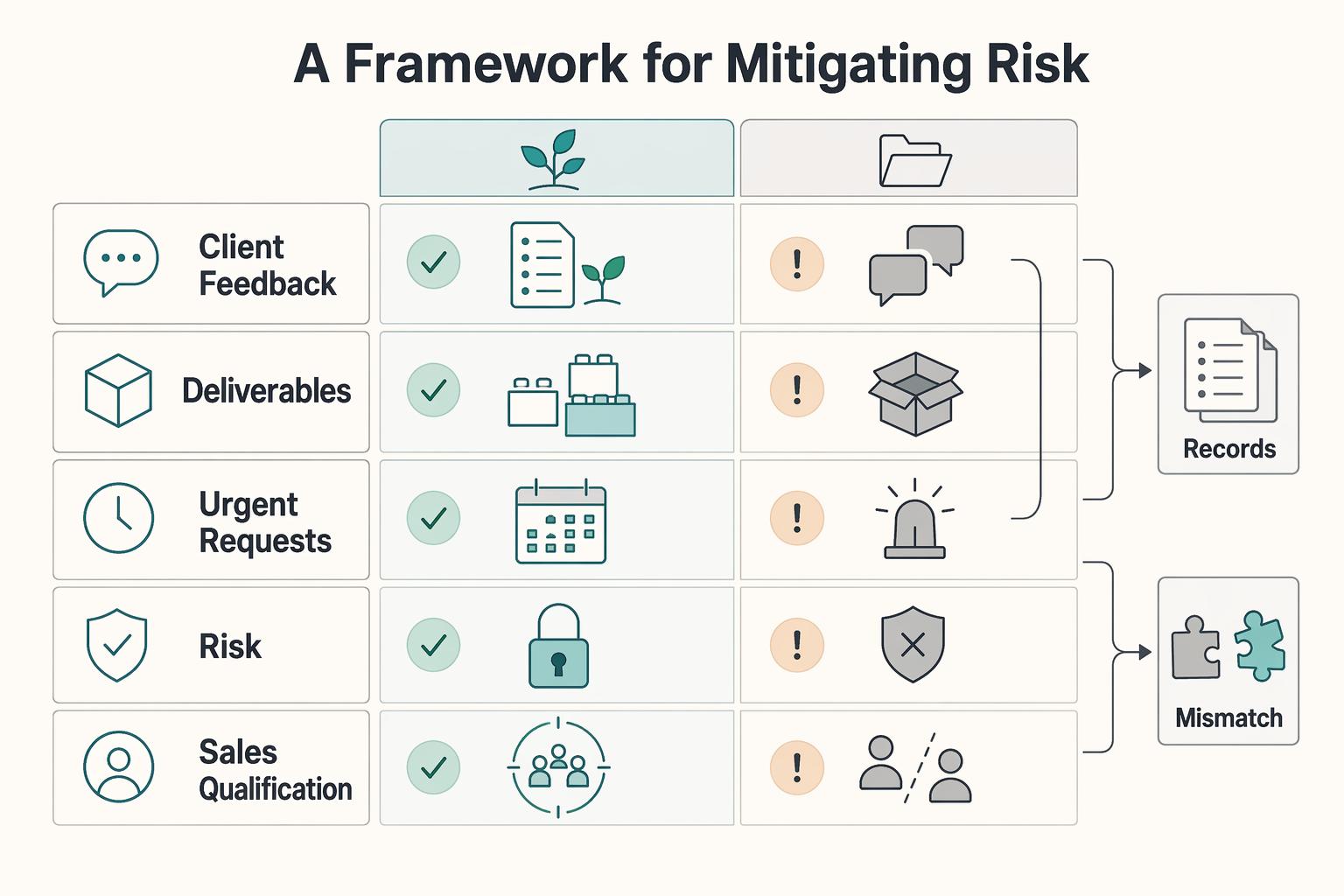
Treat this as an operating model you can test this week, not a promise that publishing alone will reduce disputes or raise your rates. The move is simpler: use a [public body of notes](https://timrodenbroeker.de/digital-garden) to make your terms, reasoning, and reusable knowledge easier for the right people to inspect before they hire you.
How to Choose the Best Digital Garden Tool for Your Business
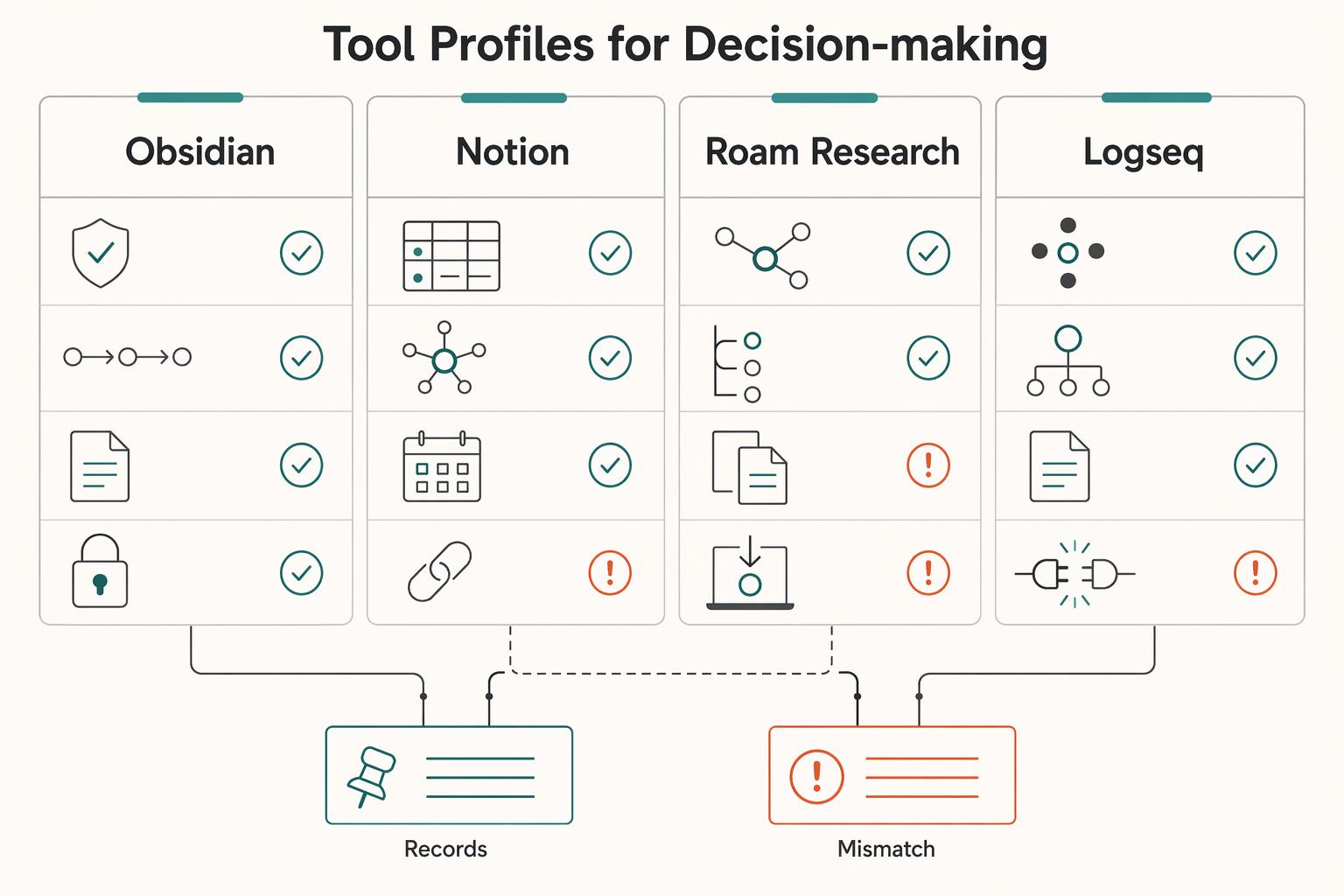
Your expertise becomes risky when delivery depends on memory. If the reasoning behind your recommendations, your best examples, or your client-specific judgment lives mostly in your head, more work does not just create more pressure. It changes the kind of failure you face. That is why people often choose the wrong fix and still feel overloaded.