
Quick Answer
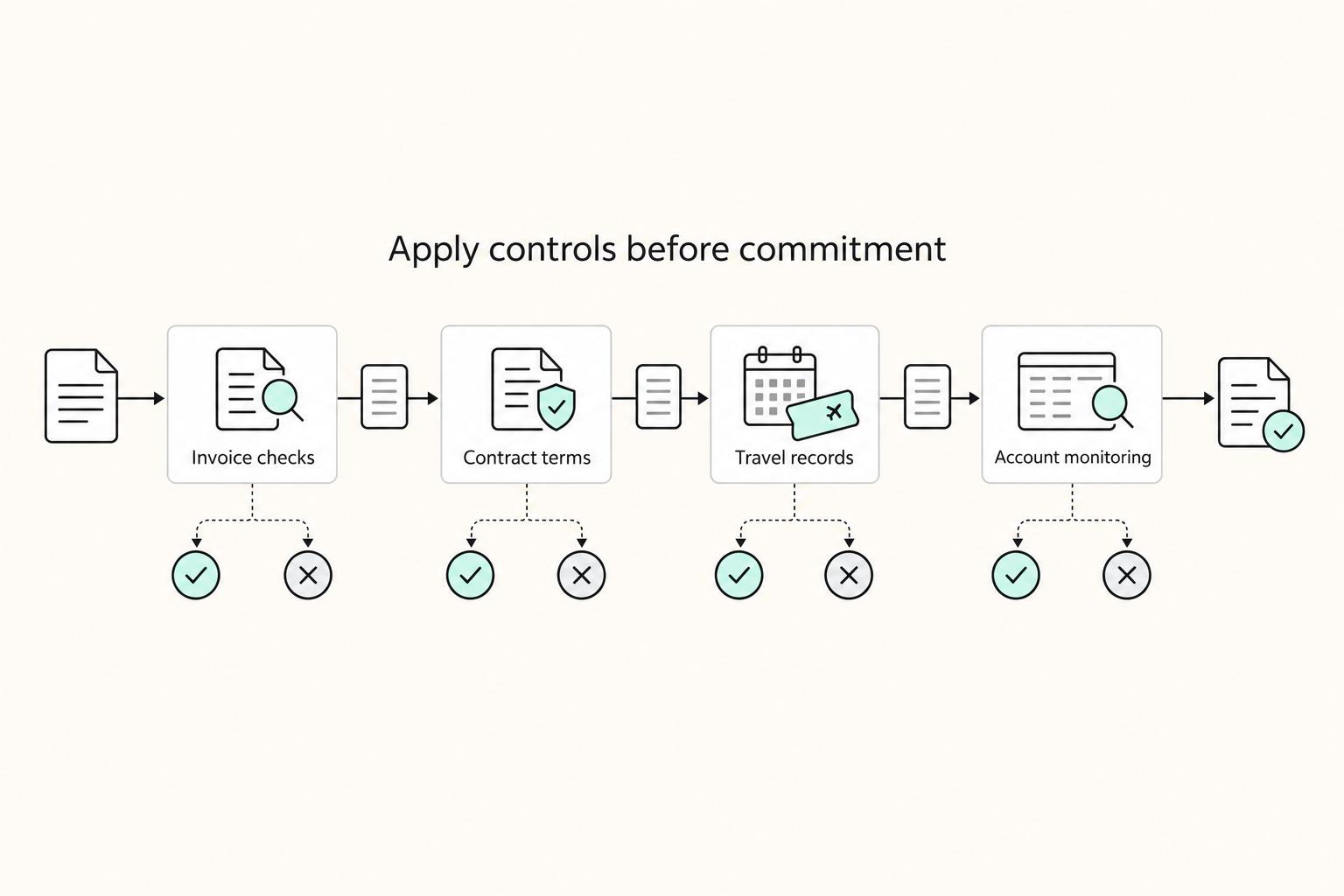
Use a pre-commit filter for stoicism for freelancers: decide only after you can verify the rule, define one fallback, and save proof. In practice, that means locking key terms before work starts, including governing-law choice where Rome I Article 3 applies, and treating missing evidence as an open risk rather than a completed task. A short weekly review keeps invoices, travel records, and unresolved contract items from drifting into expensive corrections.
Separate what you can verify from what you can only watch#
The most useful move in stoicism for freelancers is not abstract calm. It is a commitment filter. Before you say yes to a client, a flight, a bank account, or a tax position, separate what you can verify, document, and review from what you can only watch.
It sounds simple, but it changes decisions quickly. You do not control a client's approval chain, exchange-rate swings, or whether a tax authority updates guidance next month. You do control whether your invoice matches the rule you checked, whether your contract names the governing law before work starts, whether your travel log is current, and whether all foreign accounts sit in one place for review.
If a decision depends on something external going well, treat that as a risk to monitor, not as the reason to commit.
Use control as a commitment filter#
A good test is this: if you had to defend the decision six months from now, what proof would you want in the file? That question pulls you away from guesses and toward evidence.
For EU client work, invoicing is not just admin. It is a compliance checkpoint. EU VAT guidance says invoicing is compulsory for most B2B transactions, but specific national rules can still apply.
So the control point is not "send an invoice eventually." It is "verify the current invoicing requirement for this transaction, save the rule page or adviser note, then keep the final invoice PDF and any client billing instructions with it." One common failure mode is reusing an old invoice template from a different country and assuming the same fields still work.
Contracts follow the same logic. If your deal touches the EU, Rome I Article 3 states that a contract can be governed by the law chosen by the parties. That is a real decision point you can make before kickoff.
If the client wants to start work while governing law, payment timing, or acceptance terms are still vague, slow the start. You are not controlling whether a dispute happens. You are controlling whether the contract tells you what rules apply if one does.
If Denmark is involved, do not assume the same regime applies without checking the deal context. Rome I replaced the earlier Rome Convention across EU countries except Denmark, so a copied clause can create false confidence.
| External uncertainty | Internal control | Required evidence | Immediate next action |
|---|---|---|---|
| Client finance team rejects or queries your invoice | Transaction-specific invoice check before sending | Saved rule page or written advice, final invoice PDF, client billing instructions | Verify current EU and country-specific invoicing requirements, then update the invoice before submission |
| Contract turns messy after work starts | Governing-law and payment terms fixed in writing | Signed contract showing chosen law, payment dates, scope, and acceptance terms | Pause kickoff until the contract is complete and signed |
| Extra travel changes your tax position | Residency and presence tracking kept current | Running day log, passport stamps, boarding passes, accommodation records | Update your log after each trip and verify the current jurisdiction test before booking the next stay |
| Foreign accounts cross a reporting trigger without you noticing | Aggregate account monitoring on a set cadence | Master account list, monthly balances, screenshots or statements, filing note | Review all foreign accounts together, then confirm the current reporting threshold and filing timeline with the relevant tax authority |
What to monitor without anchoring on it#
You still need to watch the external side. Client payment behavior matters. Border rules matter. Tax guidance changes matter. The mistake is building your decision on hope that those variables will stay favorable.
For example, if you are a U.S. taxpayer relying on the IRS physical presence test, treat day counting as an evidence job, not a memory job. Your log, passport stamps, and flight records should agree. One easy miss is updating the count only at tax time, when the dates no longer line up cleanly and proof is scattered across apps and inboxes.
Keep it in your weekly rhythm#
The filter only works if you revisit it before small misses turn into bigger ones. Use a short review cadence so evidence gets captured while it is still easy to find:
| When | Action | Focus |
|---|---|---|
| Before any new client starts | Confirm invoice rules, governing law, and signed payment terms | Invoice rules; governing law; signed payment terms |
| After each trip | Update your location log and store proof of presence in the same folder | Location log; proof of presence |
| Once a week | Review receivables and any contract items still missing signatures or billing details | Receivables; missing signatures; billing details |
| Once a month | Review all foreign accounts together, save balance proof, and check the current reporting trigger and filing timeline again | Foreign accounts; balance proof; reporting trigger; filing timeline |
That is what "control" looks like in practice: less mood management, more proof on file. Related: Growth Mindset for Freelancers Who Want a More Stable Business.
Run a short pre-mortem before you commit#
Before you commit to a contract, trip, bank account, or invoice, run a short pre-mortem: define the likely miss, the control you will run, and the proof you will keep. If you cannot do all three, you are not ready to say yes.
Run the five-step check before you say yes#
Use the same sequence every time. If one step is missing, pause the commitment.
- Write the likely failure in one line. Keep it ordinary, not dramatic: invoice rejected, stay extension changes tax position, new account triggers reporting.
- Name the first warning sign. Define what you would see early if the risk is starting.
- Set one preventive control. Pick the action you can run now: verify a rule, update the day log, finalize signed terms, collect billing instructions.
- Choose a fallback path. Decide what you will pause, escalate, or rework if the warning sign appears.
- Assign owner and review date. If that owner is you, calendar the review before you commit.
Use trigger-to-action rows, not vague worry#
| Decision area | First warning sign | Preventive control | Fallback path | Owner | Review cadence |
|---|---|---|---|---|---|
| Travel and residency exposure | You extend a stay, add countries, or approach your day-count watchpoint | Update your log after each trip. If you use the IRS physical presence test, track against 330 full days in 12 consecutive months, with a full day as 24 consecutive hours. Save the rule used. | Pause extension or rebook timing until count and rule review are complete | You | After each trip and before long-stay changes |
| Foreign accounts and reporting | New foreign account, aggregate balances becoming unclear, or totals moving toward a trigger | Keep one master account list plus monthly balances. If you are a U.S. person, check aggregate value against the $10,000 FBAR trigger and note that FinCEN Form 114 is filed through FinCEN, not with your tax return. For other regimes, verify the current threshold from official/source records before using it. | Build the evidence pack, confirm if filing is triggered, and act before April 15 or automatic extension to October 15 | You, with advisor input if triggered | Monthly and at year-end |
| Billing and contract execution | Missing billing contact, repeated invoice corrections, unclear acceptance terms, or pressure to start before terms are complete | For covered contracts, set governing law explicitly under Rome I Article 3 before kickoff. Collect billing instructions up front. For EU B2B invoicing, include required fields, including a sequential number that uniquely identifies the invoice. | Pause kickoff or next milestone until signed terms and a correct invoice are in place | You | Before kickoff, at invoice issue, and on follow-up dates |
Keep verifiable controls searchable#
Store only the minimum proof needed to defend each decision later:
| Area | Minimum proof |
|---|---|
| Contracts | Signed agreement, governing-law clause, payment dates, acceptance terms, billing instructions |
| Travel | Day log plus passport stamps and booking records supporting the count |
| Banking/reporting | Master account list, statements or balance screenshots, filing notes |
| Invoicing | Rule page or adviser note used, plus final invoice PDF |
Keep retrieval easy: one folder per decision, with a filename pattern that includes date, client or jurisdiction, and document type. If you use OSS for VAT e-commerce, records must be electronically retrievable and kept for 10 years. FBAR records are generally kept for 5 years from the due date. If EU client work also involves personal data, use GDPR for Freelancers: A Step-by-Step Compliance Checklist for EU Clients.
Ready means you can name the warning sign, show the control, and open the evidence folder. Not ready means you are relying on memory, goodwill, or "we'll sort it out later."
If you want a deeper dive, read How to Deal with Imposter Syndrome as a Freelancer.
Build one dashboard covering travel, invoicing, contracts, and cash#
Build one dashboard that shows, at a glance, what changed, who owns it, what proof is attached, and what happens next. If a signal is visible but not practical, it is noise, not control.
Keep it to four modules: travel/residency, invoicing/receivables, contracts/compliance, and cash visibility. That is enough to turn the philosophy into repeatable operations.
| Module | Trigger signal | Owner | Evidence required | Immediate next step |
|---|---|---|---|---|
| Travel and residency | Itinerary change, stay extension, or approach to a day-count watchpoint; confirm the current day-count threshold with the relevant tax authority | You | Day log, travel records such as stamps or bookings, saved rule used, next review date | Recheck day-count exposure before confirming plans; pause changes until reviewed |
| Invoicing and receivables | New client onboarding, invoice issuance, repeated invoice corrections, or overdue status | You | Final invoice PDF, billing instructions, finance contact, invoice status, linked proof, next follow-up date | Verify required invoice fields, fix gaps, issue or follow up, and log the next action date |
| Contracts and compliance | Kickoff near with unsigned terms, missing governing-law choice, or changes in personal-data handling | You, with adviser input if needed | Signed agreement, governing-law clause, scope/payment terms, compliance record, linked proof, next review date | Pause kickoff or milestone until terms and required records are complete |
| Cash visibility | New account opened, material balance movement, or internal cash watchpoint hit; confirm the current reporting threshold with the relevant tax authority | You | Account list, current balances, expected receivables, reporting note, linked proof, next review date | Refresh cash view, check whether reporting may be triggered, and adjust collection or spending actions |
What to track, why it matters, and what to do#
Track travel changes early so you catch rule checks before you lock in dates. If your case involves the U.S. physical presence test, monitor against 330 full days in a 12-month period. If you rely on Schengen short-stay access, monitor 90 days within any 180-day period.
| Area | Key checkpoint | What to do |
|---|---|---|
| Travel | 330 full days in a 12-month period for the U.S. physical presence test; 90 days within any 180-day period for Schengen short-stay access | Track travel changes so you catch rule checks before you commit dates |
| Invoicing | EU VAT rules generally require invoices for most B2B supplies; invoice content includes a sequential number that uniquely identifies the invoice | Track invoicing from onboarding through payment and confirm those basics before issuance |
| Contracts and compliance | Governing law should be chosen in writing under Rome I Article 3; GDPR accountability requires being able to demonstrate compliance and maintain records of processing activities | Track contracts and compliance together because both depend on records you can show later |
Handle invoicing from onboarding through payment, not just "sent" and "paid." EU VAT rules generally require invoices for most B2B supplies, and invoice content includes a sequential number that uniquely identifies the invoice, so your process should confirm those basics before issuance.
Track contracts and compliance together because both depend on records you can show later. Where relevant, governing law should be chosen in writing under Rome I Article 3, and GDPR accountability requires being able to demonstrate compliance and maintain records of processing activities. If client work involves personal data, pair this with GDPR for Freelancers: A Step-by-Step Compliance Checklist for EU Clients.
Build sequence (compact)#
- Create one row standard for all modules: date, client/jurisdiction, status, owner, next review date, evidence link.
- Update at event time: onboarding, invoice issue, travel change, account update.
- Alert on exceptions first: missing billing contact, unsigned terms, day-count risk, unclear account totals.
- Run a fixed review rhythm you can sustain, and clear or escalate every open signal.
Each signal should link to stored proof and a review cadence so decisions are auditable, not memory-based. Keep the board lean enough to stay current. For a mindset companion, see Grit for Freelancers Means Building Systems, Not Just Willpower.
Conclusion: What you can still check when pressure hits#
Your fortress is not your mood. It is what you can still check, confirm, and do when pressure hits. One practical way to apply Stoic ideas in freelance work is simple: focus on what you can verify now, choose one fallback before you commit, and keep a short weekly review loop.
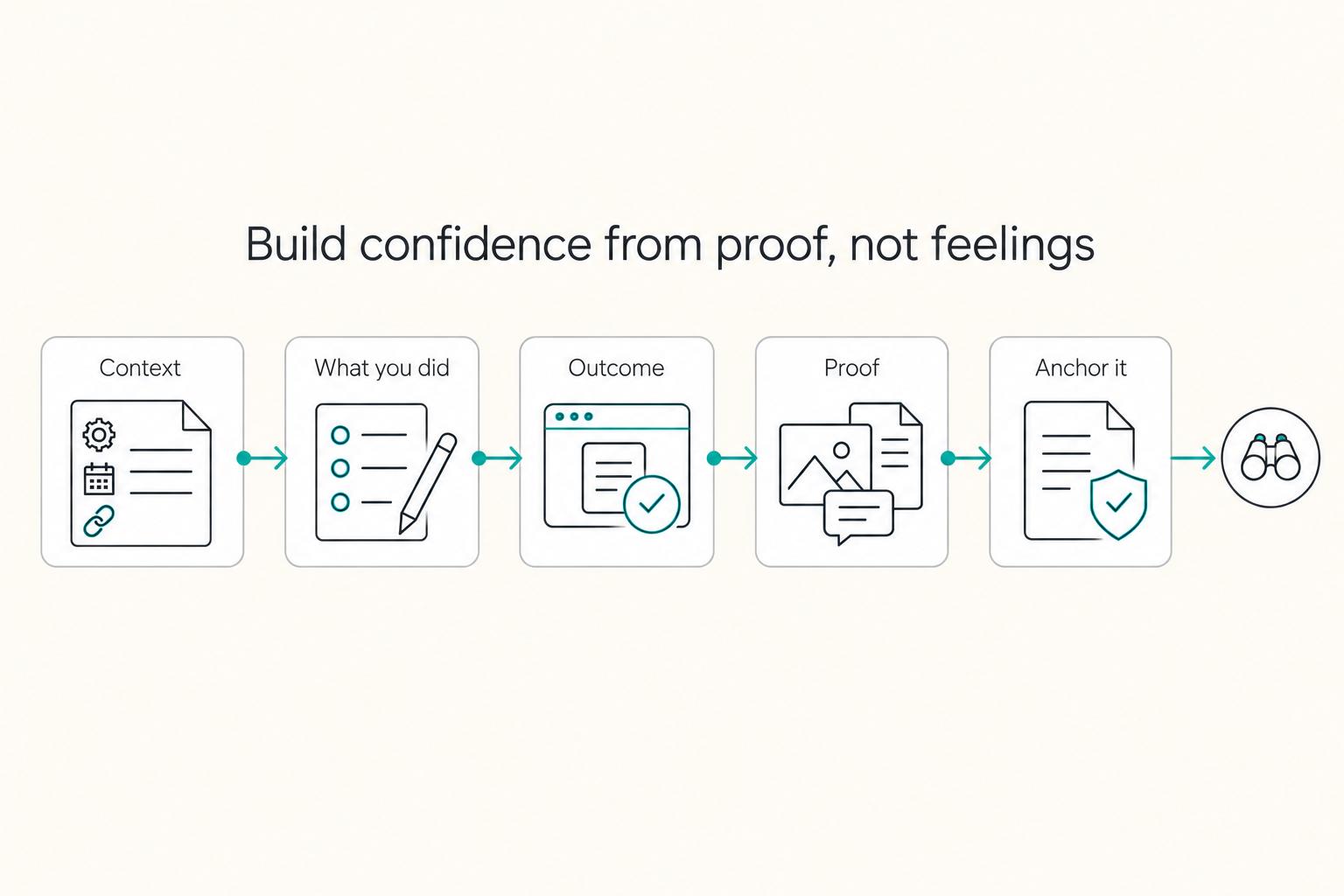
Start there whenever work feels noisy. Ask what is actually in your hands right now, then look for proof. That usually means the latest signed agreement, the approval that changed scope, the billing contact, and the current invoice version. If you cannot find the document or message that proves the decision, treat it as open risk, not settled fact.
If you need the operating logic in compact form, it is this:
- Principle: Narrow attention to inputs you can verify now.
- Control: Before you commit, name the most likely failure and one action that would catch it early.
- Proof: Save the email, approval, invoice, or note that shows what was agreed.
- Cadence: Review open risks, unpaid work, and blocked decisions on a fixed weekly rhythm.
One failure mode is making calm the goal. A coping trick may help for a while and then stop helping. When that happens, do not wait to feel composed before you act. Let the stress be there, then send the email, log the scope change, or set the next follow-up date.
Do these three things today:
- Open one active client folder and verify the latest agreement, approval, and billing contact.
- Write one short failure note for your biggest live risk and add one fallback action.
- Put one recurring weekly review on your calendar and name exactly what you will check.
For a step-by-step walkthrough, see the three-tier operating system for freelancers.
Frequently Asked Questions
How can stoicism for freelancers help with anxiety?
Treat anxiety as a decision signal, not just a feeling to manage. First separate what is outside your control from what you can check now: a missing approval, an unclear next step, an unpaid invoice, or weak evidence. Then open one live project and write a single if-then checkpoint for the thing bothering you most. | Situation | Reactive response | Controlled response | | --- | --- | --- | | Client goes quiet | Send a frustrated message | Check due date, invoice status, finance contact, and log the next follow-up date | | Scope starts drifting | Keep working and hope it settles | Pause, write the change, note cost or timing impact, and get written approval | | You feel overloaded | Push through from memory | Review your board, clear one red item, and save proof of what changed |
What are some Stoic techniques for financial stress?
Start with receivables visibility, not reassurance. An accounts receivable aging view helps you sort unpaid invoices by how overdue they are, so you can decide who needs a reminder, a correction, or escalation. Next move: review your open invoices and add one clear next action date to each.
How do you control what you can as a freelancer?
You control inputs you can verify: agreed scope, owner, evidence, and next review date. If a decision matters, capture the document or message that proves it, because good records help you run the business, not just defend it later. Next move: pick one client file and make sure the latest agreement, approval, and next checkpoint are all in one place.
Is this just about suppressing emotions?
No. The useful part is emotional regulation plus action: calm the response, then fix the condition that triggered it. If you only self-soothe, the same failure mode is more likely to return at the next missed payment or vague brief. Next move: name the stressor, assume the project failed, and write the most plausible cause.
How can you apply this to difficult clients?
Most hard client situations can get worse when scope changes live in calls and chat instead of written approval. Your contract or proposal should say how changes are initiated and approved, then each change should be documented before additional work continues. Next move: send a short recap on the latest scope shift and ask for written signoff before you proceed.
Try a related tool
Researched and edited by the Gruv editorial team. Gruv builds cross-border billing, payouts, and finance-operations software for global businesses.
Sources
Educational content only. Not legal, tax, or financial advice.
Related Posts

GDPR Compliance Checklist for Freelancers Working With EU Clients
Start by separating the decisions you are actually making. For a workable **GDPR setup**, run three distinct tracks and record each one in writing before the first invoice goes out: VAT treatment, GDPR scope and role, and daily privacy operations.
How to Deal with Imposter Syndrome as a Freelancer
**Freelance impostor feelings can flare when your work lacks clear, documented boundaries-even when you *do* have talent.** You're the CEO of a business-of-one, and your job is to turn shaky moments into repeatable operations.

The Freelance Payment Penalty: A Modeled Audit of Platform Fees, FX Spreads, and Payout Delays
The money rarely disappears through a single, easy-to-spot fee. The real loss is stacked. A marketplace takes its commission, a processor adds a charge for international cards, a bank or payment company converts the currency at a spread, a platform holds the funds before release, and a wire sheds a little to intermediaries on the way in. Each layer looks defensible on its own, but the worker feels the combined result as a smaller deposit and a later payday.