
Quick Answer
Escalate as soon as one event threatens both client delivery and getting paid. In the first pass, capture a dated incident log, confirm available cash, and list near-term obligations before you promise new timelines. Then pull your core evidence pack: signed agreement, latest invoice, payment confirmation, and key client messages. This turns a chaotic week into documented decisions you can defend during payout delays, disputes, or compliance checks.
What to check before a shock hits#
Use this guide as a practical response sequence for black swan events for freelancers, not a theory lesson. By the end, you should have a clear order for checking exposure and deciding what to do first.
I use the term Black Swan cautiously and as a working lens, not a formal definition. The framing available here is user-generated, so treat it as directional rather than authoritative. In that framing, a Black Swan is an event that seems understandable only after it happens, which creates a hindsight trap when time is tight. It also traces the term to an older belief that black swans did not exist until they were found in Australia.
If you work solo, many critical functions may sit with one person. This article treats resilience as a one-person continuity plan so your business stays usable when normal assumptions fail.
Run this readiness check now. You should be able to answer each point in minutes, using records you can access immediately:
- Verify your money position: available cash, unpaid invoices, and expected incoming payments.
- List active client obligations: next deliverable, deadline, and promised update.
- Test one backup route each for client communication, file access, and payment receipt.
If you need to hunt through old threads, switch accounts repeatedly, or rely on memory, treat that as a red flag. Under pressure, those gaps slow response and decision-making. Keep a small evidence pack ready: current contracts, recent invoices, payment confirmations, active deadlines, and key client contacts.
If you answered "no" or "not sure" on any check, do not start with new tools or a full rebuild. Start with a minimum response order: who to contact first, what must continue, and what can pause safely.
This article is operational guidance, not legal or tax advice. Rules for contracts, taxes, privacy, notices, and recordkeeping can vary by jurisdiction, so verify local requirements before you change terms, pause work, move funds, or send formal notices.
Keep one principle in view: absence of evidence is not evidence of absence. A quiet period does not prove you are ready. The goal is not to predict every shock, but to avoid preventable damage by responding quickly and with usable records.
What a Black Swan event means for freelancers#
Start by classifying the disruption before you react. For your business, treat an event as a potential Black Swan only if it passes all three tests: it is rare, it has major impact, and afterward people explain it as if it were obvious all along.
For day-to-day decisions, use a practical definition: a shock outside normal expectations that can change how you operate across more than one function. Taleb made the concept widely known in 2007, but the operating takeaway is simple: normal analysis may not predict a true shock, so prioritize containment over prediction.
Use this pass or fail check while facts are still moving:
- Rarity: Yesterday, would you have treated this as outside normal expectations, not routine volatility?
- Impact: Is it hitting multiple lanes at once, for example delivery, access, and collections, not just one isolated issue?
- Hindsight legibility: Are people now calling it obvious, even though they were not operating as if it were likely before?
If any answer is "no" or "not sure," treat it as volatility for now, log what changed, and watch how far it spreads.
| Situation | Signals | Likely business impact | Immediate posture |
|---|---|---|---|
| Routine volatility | Isolated issue, news or rumor noise, or sudden technical problems | Contained disruption | Triage, communicate clearly, keep normal operating terms |
| Potential Black Swan | Rare trigger, domino-effect disruption, multiple lanes impaired, hindsight narratives appear quickly | Continuity risk across the business | Escalate immediately, preserve cash, document changes, pause nonessential commitments |
Use historical shocks for pattern recognition, not prediction. Early 2020 included market declines of 30% or more within weeks. Cited crypto examples include one-day drops around 50% for Bitcoin and 70-90% for smaller coins in extreme conditions. The point is not to map those percentages onto freelance work. It is to recognize multi-system stress early.
Do not treat normal friction like a catastrophe by changing prices, promises, or client posture too soon. If this now looks like a possible Black Swan, the next step is risk mapping so you can see which function breaks first. Related: A Daily Stoic System for Freelancers.
Why freelancers get hit harder than companies#
If the same disruption can stop your delivery and your collections at once, you are often in a higher-risk position than larger firms. You are not just the person doing the work. You are also the payment follow-up, account access owner, and records function.
That is a structural exposure, not a personal failure. When you operate as a one-person business, the U.S. Census classifies businesses with no paid employees as nonemployer firms, so there is no built-in staffing redundancy. If you are a U.S. sole proprietor, owner exposure is tighter still. The IRS states a sole proprietorship has no legal identity apart from its owner, and business debts are the owner's obligations. Larger firms may be better able to spread shocks across teams and balance sheet capacity. You usually absorb the hit directly.
Where the gap shows up first#
The gap usually shows up first in buffer capacity, not brand size.
| Capability gap | Solo operator exposure | Larger-firm buffer | Your immediate mitigation move |
|---|---|---|---|
| Delivery continuity | Illness, lockout, or device failure can halt all active work | Work can be reassigned across staff or vendors | Identify your single point of failure now: person, device, account, or tool |
| Cash flexibility | Revenue pauses or payout delays can hit personal and business cash quickly | Often more reserves, credit options, and internal cash routing | Pull a current cash snapshot and split essential vs deferrable outflows |
| Collections leverage | Follow-up depends on your time and document quality | Often finance or legal teams and standardized collections processes | Confirm each open invoice maps to a signed contract, delivery proof, and due date |
| Compliance bandwidth | Recordkeeping is often deferred until pressure arrives | Often dedicated ops, admin, or legal support | Verify contracts, invoices, payment proof, and notices are stored and retrievable |
Cash runway is often where pressure appears first. JPMorgan research found 50% of small businesses operated with fewer than 15 cash buffer days. It is not freelancer-only data, but it is still a useful warning. If a client pauses work, a platform delays payouts, or an account is restricted, you have limited time to react.
Collections can be another clear gap. Larger firms often have more follow-up capacity and more formal collections processes. You may still have legal remedies, but they depend on clean records you can produce quickly. In the UK, late-payment statutory interest is 8% plus the Bank of England base rate. Under the EU late-payment framework, creditors can claim interest and a minimum fixed sum of €40 for overdue invoices. Those rights are harder to use if you cannot retrieve contract, invoice, delivery evidence, and payment history quickly.
Fast self-audit#
Before you choose tactics, check whether your operating basics are retrievable right now.
- Contracts: Can you retrieve the latest signed agreement for each active client in under five minutes?
- Invoice aging: Can you produce a current unpaid-invoice view by amount and due date?
- Payout and account notices: Can you pull recent reserve notices, payout-delay emails, or account restriction messages?
- Client concentration view: Can you rank clients by billed or expected revenue right now?
- Compliance records: If you process personal data, can you locate the records you keep to meet your obligations, including GDPR Article 30 records where applicable?
If one or more answers is no, that gap is an active risk condition. Next, map your business by function so you can see what breaks first: demand, delivery, payments, compliance, or personal capacity. For a step-by-step walkthrough, see Ikigai for Freelancers Who Want Purpose Without Business Chaos.
Map your risks by function before you choose tactics#
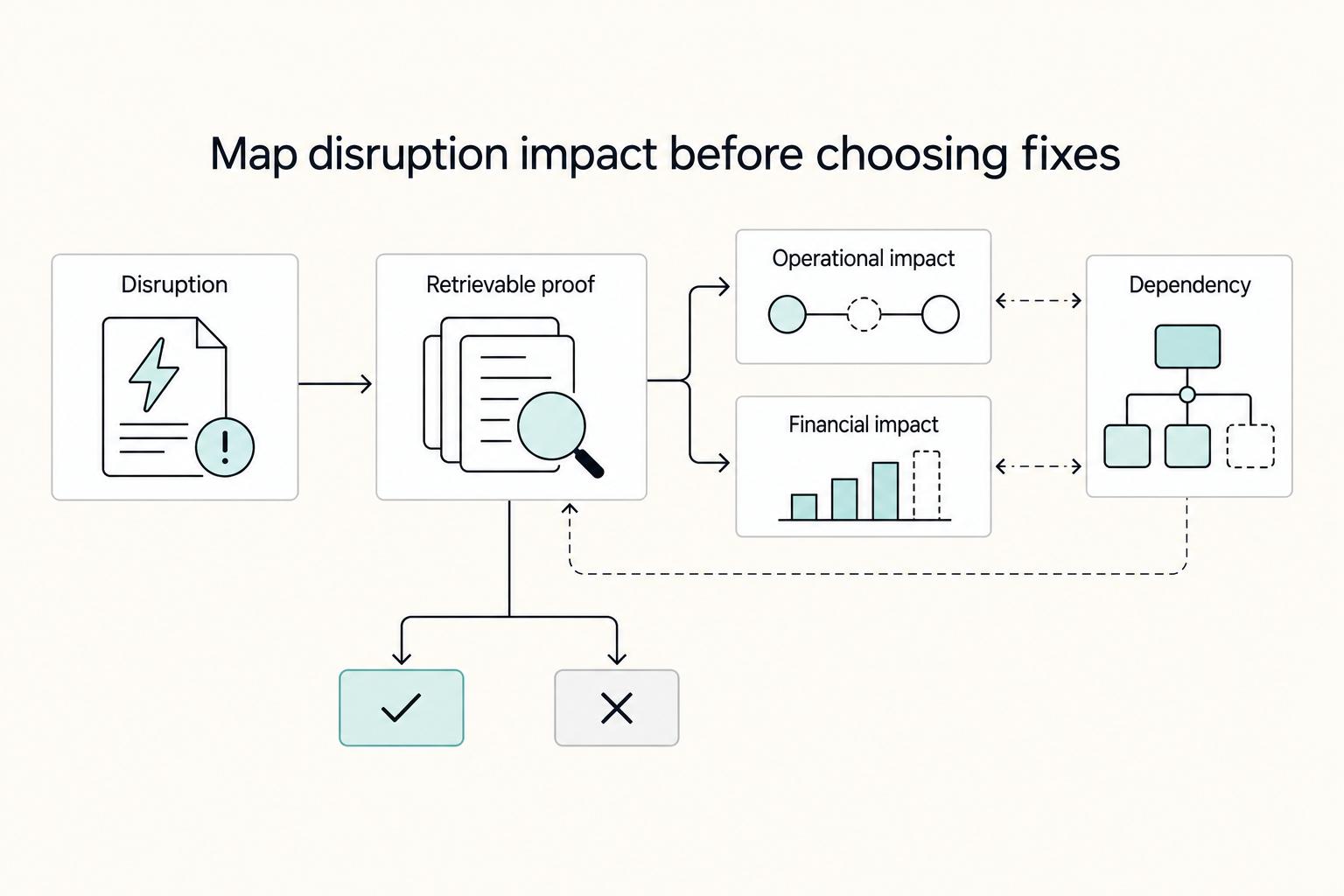
Do not jump straight to fixes. Start with a business impact analysis, or BIA: define the disruption, capture operational and financial impact, identify the dependency, and attach proof you can retrieve quickly.
It helps to keep operational interruption and cash-flow interruption on separate lines. If your laptop fails, that is delivery interruption. If payment is delayed or a payout is held, that is payments interruption. They can happen together, but they often do not share the same first action.
Build each risk entry the same way#
Use the same sequence for every row so your map still works under pressure:
- Define the scenario: link what must go right to what might go wrong.
- Capture impact: write one operational impact line and one financial impact line.
- Identify dependency: name the specific person, asset, account, vendor, or client input the lane depends on.
- Attach proof: keep written evidence you can pull in minutes, not assumptions in memory.
Use clear lanes and keep them distinct#
A five-lane template works well if it matches your operations.
| Lane | Example scenario | Leading signal you can observe now | Key dependency | Evidence to keep | Priority tier | First action owner |
|---|---|---|---|---|---|---|
| Demand | Main client delays renewal or freezes spend | Fewer briefs, renewal silence, slower approvals | Active pipeline, proposal history, sponsor access | Signed SOWs, renewal dates, budget-pause emails, CRM or proposal log | Tier 2 | You as owner-sales |
| Delivery | Tool outage, supplier failure, lost device, missing client input | Access errors, missed milestone, upstream delay notice | Working device, software access, alternate vendor, client feedback loop | Milestones, version history, outage notices, asset list, client messages | Tier 1 or 2 (based on billing timing) | You as owner-delivery |
| Payments | Invoice passes terms, payout hold, bank access issue | Aging worsens, remittance slips, reserve or restriction notice | Client AP action, bank or platform access, collections follow-up | Invoice, contract terms, delivery proof, statements, notices | Tier 1 | You as owner-collections |
| Legal and compliance | Missing contract, tax form issue, disputed term, records gap | Redlines stall, repeated form requests, blocked approvals | Signed documents, required records, outside review if needed | Executed contract, amendments, tax forms, approval emails, policy records | Tier 2 or 3 | You as owner-admin |
| Personal capacity | Illness, caregiving shock, burnout, account lockout | Slower response times, backlog growth, missed follow-ups | Access credentials, status notes, client extension path, recovery contacts | Calendar, task list, access instructions, device inventory, emergency contacts | Tier 1 if delivery and billing both stop | You as continuity owner |
Priority tier is your restoration order: highest combined operational and financial impact first.
Check the signal and the proof before you trust the row#
A row is only useful if the signal is observable and the proof is retrievable.
- Signal test: Is it observable now?
Replace vague signals like "market is worse" with something you can actually observe. If you use macro indicators, verify them against official release calendars before you log a value. Publication timing can change. Example markers: BLS lists the March 2026 Employment Situation release at Apr. 03, 2026, 08:30 AM; Census has shown a March 16, 2026 release rescheduled to April 1, 2026.
- Evidence test: Can you retrieve it quickly?
If proof depends on one inbox, one device, or one login, treat that as a dependency risk and mark it clearly.
Run one practical scenario drill#
Run one short drill instead of trying to predict every shock:
- Scenario: continuity and cash disruption pending selection
- Official indicator used: confirm the official indicator value from the official source
- Operational impact this week: affected workstream pending business-record review
- Financial impact this week: invoice or payment timing pending contract and billing-record review
- Critical dependency: dependency pending account, device, vendor, or document review
- MTD/RTO/RPO (if relevant): confirm recovery values from your operational records
- Proof pack: supporting records pending contract, invoice, delivery proof, account notice, or email-trail review
Then rank rows by combined operational and financial impact. Once that order is set, define trigger points so each row has a clear action threshold.
Set trigger points so decisions are not emotional#
Pre-commit your response before pressure hits: define the trigger, proof, and action for each lane. This helps you avoid escalating on noise and waiting too long once impact is already real.
In this framework, a weak signal is an observable occurrence. A confirmed trigger is the point where you can document impact with evidence and need to start response and recovery.
| Lane | Observable signal | Proof artifact you can retrieve fast | Immediate pre-decided action |
|---|---|---|---|
| Client | Renewal silence, repeated approval delays, or a pause note from the sponsor | Signed SOW, renewal date, email thread, project milestone list | Send a status update, confirm scope or timeline risk, and shift effort to active billable work per your rule |
| Payments | Invoice aging worsens, remittance slips, or payout access issues | Invoice, contract payment terms, delivery proof, account notice, statement | Start your collections sequence, confirm receipt with AP, and apply your prewritten unpaid-work rule |
| Compliance | Suspected loss, unauthorized access, or a client request that exposes a records gap | Incident notes, access logs, affected files list, records of processing activities | Open an incident log, contain exposure, and run your notification-assessment steps |
Weak signal vs confirmed trigger#
If you only have an observable signal, keep it on watch status. Once you can document impact, promote it to trigger status and execute the action immediately.
Keep these rules in one written continuity or incident-response document, not scattered notes. Act first, then log the decision trail: date and time, signal, proof, action, who was notified, and next review time. For client and payment lanes, log the exact message, deliverable or invoice affected, and response. For compliance, document facts, effects, and remedial action. If UK GDPR applies and you become aware of a personal data breach, reporting may be required within 72 hours where feasible.
Review and update this trigger playbook at least annually and after real disruptions. If you want to reduce snap-judgment bias while doing this, read the availability heuristic guide.
Execute the first 24 hours, 7 days, and 30 days in order#
When evidence is limited, sequence matters more than speed: verify first, label uncertainty second, and decide only on what is confirmed.
| Phase | What you do | What you document | Decision you must make by the end of the phase | Decision risk if skipped |
|---|---|---|---|---|
| First 24 hours | Capture only what is directly verifiable from the accessible source view, and flag that the source content is access-gated. | Visible metadata (RG, Dan. Black Swan.), date status (no date), displayed length (401 pages), and the access constraint (Sign up or log in to continue.). | Decide whether you have enough verified evidence to support any concrete recommendation yet. | Unverified assumptions can be presented as facts. |
| First 7 days | Attempt to obtain full-text access or additional usable evidence before expanding into operational guidance. | Access attempts, additional source checks, and a verified vs unverified claims log. | Decide which statements stay, which must be softened, and which should be removed until verified. | Unsupported guidance can be mistaken for validated practice. |
| First 30 days | Re-run the section against a complete evidence pack and keep only claims that are directly supportable. | Updated claim log, remaining uncertainty notes, and a final verification status for each major point. | Decide whether the section is publish-safe or should remain provisional. | Recommendations may overreach the available evidence base. |
On day 1, verify before you expand. Keep one working file that separates confirmed facts from assumptions, and treat anything without support as provisional.
By day 7, do not raise your confidence without new evidence. Mark unverified points plainly instead of filling gaps with inferred details.
Keep your evidence pack disciplined#
When material is access-gated, use a checklist that protects factual accuracy:
- Access note: record that substantive content is unavailable from the visible excerpt.
- Verified metadata: author/title line, date status (
no date), and page-count metadata (401 pages). - Non-evidence signals: platform popularity numbers (for example,
2,592 views) are not proof of validity.
By day 30, finalize only what is verifiable and keep unresolved items labeled as unverified.
Tighten contracts and payment terms before the shock#
Clause-level legal or collections guidance is not established, so treat what follows as a drafting checklist to verify before you rely on it.
Set your contract rules before work starts so you are not negotiating process during a disruption. Keep your contract, invoice template, and collections messages aligned so each step supports the next.
| Clause area | Define this before signing | Why it matters under stress | Operational match | If the client refuses this term |
|---|---|---|---|---|
| Scope change | Define what is included, what is out of scope, what counts as a change, and who approves added work before it starts. | Priority shifts can turn informal requests into billing disputes. | Use the same scope and approval language in proposals, SOWs, and change approvals. | Narrow deliverables, shorten term length, or reprice to reflect open-ended risk. |
| Payment timing | Define invoice trigger, due date, payment method, billing contact, and what happens if PO or portal prerequisites are missing. | Payment delays can start as process mismatch. | Match contract terms to invoice due dates and payment instructions every time. | Increase upfront payment, move to milestone billing, or delay start until billing process is usable. |
| Pause rights | Define when you can pause, what notice you give, what must be cured, and what restarts work. | You need clear written terms to stop delivery when blockers persist. | Mirror this wording in reminders and pause notices. | Reduce delivery exposure, limit handoff or access until invoices clear, or price for higher risk. |
| Termination effects | Define notice, what is payable at exit, treatment of approved work in progress, and closeout deliverables or returns. | Sudden project exits are easier to handle when obligations are predefined. | Use a standard closeout checklist tied to final invoice and handoff. | Tighten acceptance rules, bill more frequently, or avoid high-customization work with poor recovery options. |
Write for the invoice you will actually send#
Terms only help if your billing process shows that you followed them. Before you sign, compare the contract language, invoice template, and reminder sequence side by side. Billing trigger, legal entity name, billing contact or portal details, and scope reference should match.
If the client requires PO, onboarding, or a billing platform, capture that requirement in writing before work begins. Any jurisdiction-specific timing rule should stay marked as pending until it is verified from an official source, advisor guidance, or the governing contract.
Be careful with data terms, especially if you process client data#
Confirm substantive GDPR contract requirements with a qualified data-privacy adviser. Use this as a starting checklist, not a complete legal checklist:
- identify the parties' roles for the relevant processing
- describe subject matter, duration, nature, and purpose of processing
- note categories of personal data and data subjects
- define how instructions are issued and recorded
- state confidentiality and security expectations
- confirm whether subprocessor terms, assistance duties, return or deletion, or audit terms are needed
- assess whether cross-border transfer terms may apply based on where people, tools, and data are located
If you need implementation detail, use GDPR for Freelancers: A Step-by-Step Compliance Checklist for EU Clients.
Keep an evidence stack that supports collections#
Build a retrievable client file before problems appear. Minimum records to retain:
| Record | Keep | Mentioned use |
|---|---|---|
| Agreement | Signed agreement and any statement of work | Terms and scope support the first reminder |
| Scope changes | Approved change requests or written scope confirmations | Terms and scope support the first reminder |
| Invoices | Invoices sent, with date and delivery method | Invoice and portal records support re-send or escalation |
| Delivery proof | Proof of delivery, acceptance, or milestone completion | Delivery proof and approvals address scope or payment objections |
| Billing/portal records | Billing contact details, portal submission records, and PO references if used | Invoice and portal records support re-send or escalation |
| Correspondence | Reminder emails, payment promises, and dispute messages | Full correspondence supports final escalation decisions |
| Pause/termination notices | Pause notices, termination notices, and revised timeline confirmations | Full correspondence supports final escalation decisions |
Map records to escalation steps. Terms and scope support the first reminder. Delivery proof and approvals address scope or payment objections. Invoice and portal records support re-send or escalation, and full correspondence supports final escalation decisions. A practical test is whether you can find signed terms, the latest scope approval, the latest invoice, and delivery proof quickly.
Before finalizing your fallback terms, draft a cleaner scope, change-order, and payment clause set with the Freelance Contract Generator.
Keep compliance and records usable under pressure#
Records only help if you can retrieve the right file quickly and prove what it is. A common failure mode is weak traceability: unclear versions, missing source details, unmatched payments, or files split across tools.
Build one retrieval-ready client file#
Use one folder structure for every engagement so retrieval becomes routine, not improvised.
| Record type | Store this | Key metadata | Retrieval location |
|---|---|---|---|
| Contract file | Signed agreement, SOW, amendments, change approvals | Client legal name, project name, effective date, version date, signer names, file status | /Clients/Client-Name/01-Contract |
| Invoices | Final invoices sent, credit notes if any, portal submission export or send confirmation | Invoice number, issue date, currency, PO or project reference, sent date, delivery method | /Clients/Client-Name/02-Billing |
| Payment proof | Remittance email, bank confirmation, reconciliation note, card or transfer reference | Amount received, payment date, payer name, invoice number matched, account used | /Clients/Client-Name/03-Payments |
| Tax and compliance records | Tax forms, filed copies, working notes, authority guidance PDFs you relied on | Jurisdiction, period covered, form or record name, source URL, language, download or access date | /Clients/Client-Name/04-Tax-Compliance |
| Client communications | Approval emails, acceptance messages, scope changes, pause notices, dispute messages, data instructions | Sender, date, subject or project, decision made, action required, linked attachment or thread | /Clients/Client-Name/05-Comms |
Store metadata consistently in filenames, document properties, or an index sheet. If you cannot map one payment to one invoice and one client file, treat the record set as not retrieval-ready.
Verify the source before you save it#
For EU-facing documentation, use europa.eu as your authenticity check before you file a source as official EU material. The OSS Guides page states that all official European Union website addresses are in europa.eu.
When you save supporting guidance, keep provenance with the file: source URL, access date, language, and visible page details. On that page, the Explanatory Notes entry includes an English PDF with a displayed size of 1.83 MB, a date of 30 JULY 2021, and Other languages (22). Record which language version you used. If a source is outside europa.eu, do not store it as official EU authority.
Keep jurisdiction notes as documentation tasks#
For EU work, keep a short jurisdiction note in the client file and update it only after verification:
- VAT invoice fields pending official or advisor verification
- Records-of-processing items pending official or advisor verification
- Retention window pending official or advisor verification
If personal data processing is in scope, keep client instructions in the same file set as the related contract and delivery records. For implementation detail, use GDPR for Freelancers: A Step-by-Step Compliance Checklist for EU Clients.
For Canada, keep the same placeholder-based note:
- CRA documentation list pending official or advisor verification
- Retention window pending official or advisor verification
- Visitor-status limit pending official or advisor verification
This keeps your verification path intact instead of pushing you back onto memory.
Run a pass/fail retrieval drill#
Run a retrieval drill and score it pass or fail as an internal control, not "close enough."
- Pull one active and one closed client file. Retrieve: signed agreement, latest invoice, payment proof or open-balance note, one tax or compliance record, and one approval or pause message. Include the jurisdiction note when relevant.
- Mark pass in your process only if each file opens, sits in the expected folder, includes client, date, and status metadata, and links cleanly to related records.
- Mark fail if anything is missing, duplicated across conflicting versions, or missing source or provenance details.
- On any fail, fix it immediately: rename, add metadata, move to the correct folder, export missing email or portal proof, and log unresolved gaps before ending the drill.
That is the standard for this workflow: records you can trust when time and cash are tight.
Build single-person operational redundancy#
Focus this checklist on account access, since that is what the available evidence supports. Two concrete risks are clear: a familiar login option can disappear, and password recovery can depend on an email reset link.
| Lockout category | Set this up now | Common failure mode | Verification proof |
|---|---|---|---|
| Login route | Keep an alternate sign-in method that does not rely on a single provider | A familiar login option is no longer available | Successful sign-in through the alternate method |
| Password reset | Keep access to the inbox that receives reset links | Reset cannot be completed because the email inbox is unavailable | Reset link received and reset completed |
| Access gate | Keep working credentials available for required authentication | You are blocked at sign-in and cannot proceed | Successful authentication past the login gate |
Two lockout checks matter right away. Some recovery paths send a reset link by email, so if that inbox is locked, recovery fails. A familiar login route can also disappear without warning, so you need another sign-in path ready.
Use a simple test protocol#
- Pick one account you rely on.
- Test the fallback sign-in path, not just the default one.
- Trigger a password reset and confirm you can access the reset email.
- Mark pass only if you complete access or recovery without improvising.
- Save proof in your admin folder: screenshot or reset confirmation.
Keep the checklist tied to outcomes#
- Alternate sign-in routes reduce single-method lockout risk.
- Recovery email access is required for reset-based recovery.
- Passing both checks confirms you can clear the access gate when needed.
Reduce client concentration without wrecking delivery quality#
Run a monthly concentration check using records, not intuition. If one client is driving your current cash, near-term work, and most of your delivery time at once, treat that as a dependency signal and respond this month.
Run a monthly concentration check#
You do not need a fixed benchmark to do this well. Use the same repeatable check each month so you can see when healthy focus turns into concentration risk.
| Band | Revenue share signal | Pipeline share signal | Delivery load signal | Required response this month |
|---|---|---|---|---|
| Watch | Records show one client is important, but invoicing is still mixed across clients | Near-term work includes that client plus other signed work or active proposals | Delivery is meaningful, but you still protect time for pipeline work | Keep the check monthly. Keep at least one non-anchor acquisition channel active and move one outside opportunity forward. |
| Elevated | Records show growing reliance on one client for recent invoices | Most near-term booked work depends on that client continuing | Their work is repeatedly displacing outreach or proposal work | Protect business-development time on your calendar now. Advance warm prospects and start at least one non-anchor conversation or proposal. |
| Critical | Records show current cash collection is heavily tied to one client | Near-term income assumptions depend on extensions from that same client | Most working time sits with that account, so a pause could hit revenue and utilization together | Treat this as immediate dependency risk. Limit additional commitment to that account until alternative pipeline is active, and review your cash trigger points now. |
Use the table month over month, not as a one-time label.
Evidence checklist (monthly)#
Use all three signals together each month so the conclusion can be reconstructed from records later:
Revenue share: invoice totals by client from your accounting records or invoice log.Pipeline share: signed work only (signed SOWs, accepted proposals, confirmed renewals, confirmed extensions).Delivery load: calendar capacity, deadlines, recurring meetings, and active commitments.
If the judgment depends on memory or unsigned "likely" work, mark the check incomplete and rerun it with records.
Anchor client vs dependency: decide with criteria#
Use this as an internal decision rule, not a universal benchmark. An anchor can be healthy when it does not control all three signals at once, you still protect time for non-anchor pipeline, and outside demand is active now, not deferred. It becomes dependency when the same client funds the present, fills the near future, and consumes the hours you need to build alternatives.
Keep a minimum alternative pipeline active at all times:
- one secondary channel for new work
- warm prospects with recent contact
- active proposals or scoped conversations outside the anchor account
Keep optionality live#
Optionality has to show up in how you operate now, not in a future plan:
- Keep one secondary acquisition channel active each month.
- Keep warm prospects current with recent follow-up notes.
- Keep non-anchor proposals or scoped conversations moving.
- Keep a standing calendar block for business development.
If your records live in third-party platforms, confirm you can still access and export them. One visible failure mode is a login route disappearing ("Facebook login is no longer available") while email access remains ("Continue with Email"). That can break a repeatable monthly review if you rely on a single sign-in path.
Choose insurance and liability limits with real tradeoffs
Specific insurance choices, liability limits, premiums, deductibles, and claim-process steps should stay open until validated with topic-specific, authoritative documents.
Use a provenance-first check before you rely on external claims.
Put each risk in the right bucket#
| Failure scenario | Process first | Contract terms first | Insurance role |
|---|---|---|---|
| Relying on a source that is not clearly authoritative | Check whether relevant guidance is on an official .gov domain | Mark non-authoritative claims as unverified | Do not set coverage or limits from unverified claims |
| Relying on a source without a secure connection | Confirm https:// and the lock indicator before trusting the page | Treat insecure or ambiguous pages as unverified | Do not use unverified pages to justify policy decisions |
| Assuming database indexing means endorsement | Separate indexing from endorsement | Note that NLM inclusion does not imply endorsement | Avoid turning indexed content into prescriptive insurance guidance |
| Overextending what can be confirmed | Use the cited study only for its stated context | The cited paper is a qualitative study of developers during early COVID-19 months (published 2022 Jun 4; Empir Softw Eng 27(5):117) | Do not infer specific freelancer insurance standards from this excerpt alone |
Decide before you bind coverage#
Use the same sequence each time: verify source provenance, record what is confirmed, and label the rest as uncertain.
Before you bind coverage, confirm you can produce:
- Confirmation that any relevant government guidance is from an official
.govsite. - Confirmation that the page connection is secure (
https://and lock indicator). - A clear note that NLM database inclusion is not endorsement.
- An uncertainty log for any insurance-limit or claim-process statement not supported by this pack.
Verify coverage terms and limits with your insurer before binding a policy.
Conclusion#
You will not predict the next shock, and you do not need to. What you can control is whether you have already decided how to detect it, respond, recover, and prove what happened.
Preparedness helps keep one bad event from turning into a broader operational failure. The July 18, 2024 CrowdStrike outage is a reminder: low-frequency events can spread fast and still affect less than 1% of the total base. Your job is not perfect foresight. Your job is readiness when normal assumptions break.
If you keep four things from this guide, keep them current:
- Risk map: name exposure across demand, delivery, payments, compliance, and personal capacity.
- Trigger list: define when a routine issue becomes escalation, for example a missed payout, account lockout, near-term cash loss from a client pause, or anything that blocks both work and billing.
- Response checklist: start with facts, not promises: what happened, what is affected now, what you can still deliver, what to preserve, and who needs a status update.
- Review cadence: review the plan quarterly so it stays aligned with current clients, tools, and obligations.
Use one proof standard in every review: can you reconstruct the event end to end without guessing? You should be able to connect the agreement or scope change, invoice, payment trail, key communications, and supporting compliance or tax records into one consistent timeline. If those records do not connect quickly, treat that as a live retrieval risk, not an admin detail.
For events like this, the operating rule is simple: clear status beats optimistic guessing, and linked records beat scattered files.
If payout disruption is part of your risk map, evaluate Gruv Payouts or another setup on utility: status visibility when money stalls, payout traceability, and exports that support your evidence pack. Whether you use Gruv or another setup, those capabilities can help you keep collecting, communicating, and staying defensible when abnormal events hit.
Related reading: Crossing the Chasm for Freelancers Without Operational Chaos.
Frequently Asked Questions
What counts as a black swan event for freelancers?
The grounding material does not provide a freelancer-specific legal or technical definition. Use this as a working test (not source-verified): treat it as a major event when one shock disrupts both your delivery and your ability to collect cash. If the impact is that broad, escalate early instead of treating it like routine turbulence.
How do you tell a normal disruption from a major risk event?
There are no validated freelancer-specific thresholds, so use a practical filter. If normal scheduling and communication can contain it, treat it as a disruption. If it threatens core obligations or requires proof you may not be ready to produce, treat it as a major risk event. | Situation | Normal disruption | Major risk event | |---|---|---| | Delivery impact | Limited and recoverable with routine adjustments | Threatens core delivery continuity | | Cash impact | Temporary friction | Risks near-term cash collection | | Evidence pressure | Basic records usually suffice | You may need complete, linked records quickly | | Decision rule | Adjust and monitor | Escalate, document, and protect critical obligations |
What should you do first when something serious hits?
As an operating sequence (not excerpt-verified for freelancers), start by stabilizing facts before promises. Write a dated incident log, capture what is affected now, and confirm what you can still deliver. Then communicate only what you can support with evidence and current capacity.
How do you decide what to protect now and what to defer?
Use this as a prioritization heuristic. Protect work that keeps delivery, billing, and defensible records intact. Defer tasks that are useful but not critical to continuity or proof. If a choice is close, prioritize the item you would need first in a review, dispute, or claim. | Decision lane | Protect now | Defer now | |---|---|---| | Delivery and cash flow | Active delivery, invoicing, payment follow-up | Non-urgent optimization work | | Client communication | Clear status and scope confirmations | Nice-to-have polish | | Evidence readiness | Agreements, changes, delivery, billing, payment trail | Cleanup that does not improve retrieval | | Spend control | Tools needed to operate and recover records | Optional subscriptions |
How should you think about a cash buffer if no fixed number is reliable?
Use your own real outflows as the baseline, not a generic rule. Track how long current cash can cover essential obligations if inflow slows, and review that number on a set cadence. Any external benchmark should be verified from an official or advisor-approved source before use.
Which records need to be ready before a review, dispute, or claim?
Keep a complete chain that shows what was agreed, what changed, what was delivered, what was billed, and what was paid. One strict checkpoint pattern worth borrowing is that exceptions require documented authority before action (in municipal policy context, not freelancer-specific law). So your records should be retrieval-ready and linked. Store files in a primary location with backup, then test that you can produce the package quickly.
What is the most common failure when records are tested under pressure?
There is no established freelancer-specific "most common" failure. A verified failure mode in the available material is that response choices can create significant cost and downstream damage. In practice, fragmented records are a plausible risk, so fix retrieval gaps before the next shock.
Try a related tool
Researched and edited by the Gruv editorial team. Gruv builds cross-border billing, payouts, and finance-operations software for global businesses.
Sources
- bls.gov/schedule/news_release/empsit.htmtrusted
- buffalony.gov/CivicAlerts.aspxtrusted
- census.gov/programs-surveys/nonemployer-statistics.htmltrusted
- cisa.gov/sites/default/files/publications/Incident-Re...trusted
- csrc.nist.gov/pubs/ir/8286/d/upd1/finaltrusted
- csrc.nist.gov/pubs/ir/7621/r2/ipdtrusted
- dol.gov/agencies/whd/flsa/misclassification/rulemakingtrusted
- ecfr.gov/current/title-29/subtitle-B/chapter-V/subcha...trusted
Educational content only. Not legal, tax, or financial advice.
Related Posts

GDPR Compliance Checklist for Freelancers Working With EU Clients
Start by separating the decisions you are actually making. For a workable **GDPR setup**, run three distinct tracks and record each one in writing before the first invoice goes out: VAT treatment, GDPR scope and role, and daily privacy operations.
Canada Digital Nomad Visa Planning for Visitor Status and Work Permits
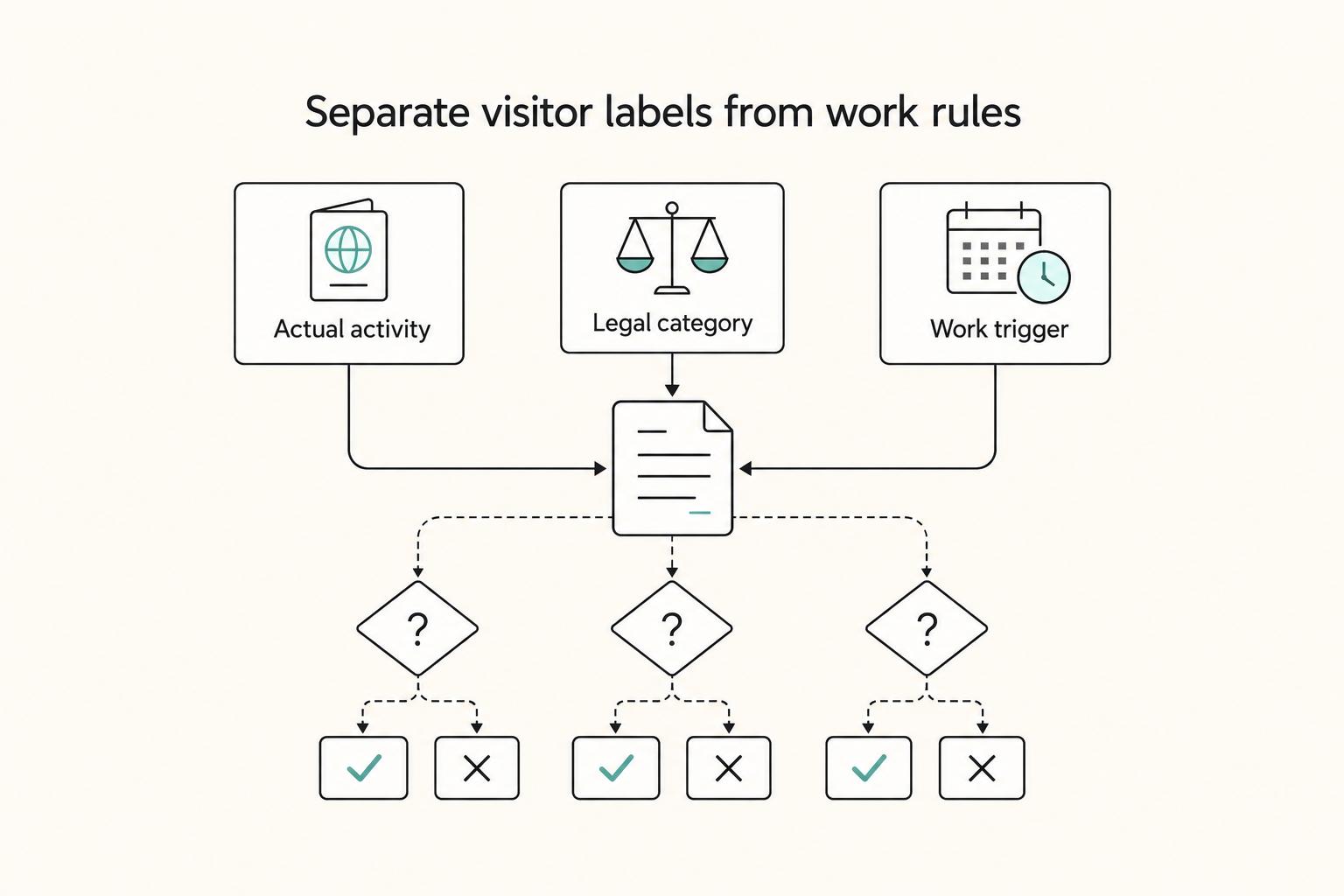
The phrase `canada digital nomad visa` is useful for search, but misleading if you treat it like a legal category. It is shorthand for existing Canadian status options, mainly visitor status and work permit rules, not a standalone visa stream with its own fixed process. That difference is not just technical. It changes how you should plan the trip, describe your purpose at entry, and organize your records before you leave.
How to Build an Antifragile Freelance Business: Financial Core, Compliance Firewall, and Shock Absorbers
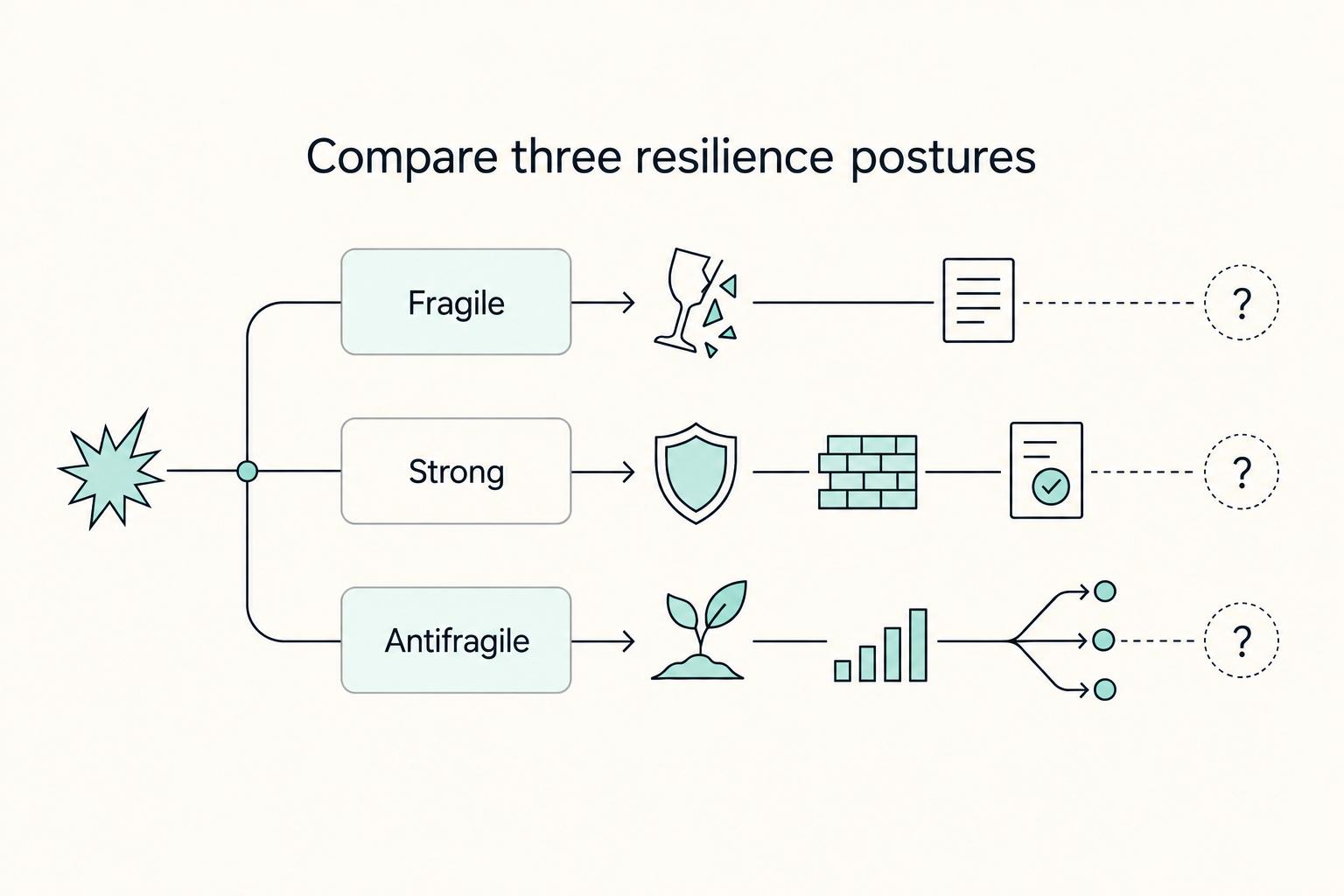
If you want an antifragile freelance business, design your operations to benefit from disruption, not just survive it. Resilience means you absorb a shock and recover. Antifragility, in Taleb's framing, means you improve because of volatility rather than merely endure it.