

Quick Answer
Start with one default rail and one backup, then lock fee owner, FX owner, and invoice currency before work begins. For recurring US-to-EU payouts, confirm live costs each send instead of reusing old assumptions: Wise lists pricing from 0.57% and says discounts begin above 25,000 USD per month. Mark payment complete only after two records match: sender transfer reference and recipient-side final EUR credit.
Net receipt over convenience: building a repeatable US-to-Europe payout process#
Paying Europe-based freelancers from the US works best as a repeatable cashflow process, not a one-time app choice. The goal is predictable receipt in the agreed currency with clear proof from invoice to settlement, so delays or shortfalls can be resolved quickly.
For freelancers, creators, and small teams, that means optimizing each payout for net receipt, speed, and reliability, not just sender convenience. Fees and FX movement can reduce what arrives, and weak tracking can slow recovery when something goes wrong.
- Choose for net receipt, not just convenience.
A route that is easy for the payer can still land short after transfer fees and currency conversion. Timing also varies by method. Some SWIFT payments can take 3-7 days, and some platform fees can reach up to 5%, so "sent" is not the same as "settled in the agreed currency." Before work starts, agree who covers fees, who absorbs FX cost, and the settlement currency.
- Keep setup practical and repeatable.
This guide focuses on a reusable operating approach for US-to-Europe freelancer payouts, not a one-size-fits-all legal structure. Rules can differ across EU countries, and generalized tax guidance can conflict, so confirm compliance expectations for each engagement. Standardized setup and documentation reduce manual handling risk, delays, and failed payments.
- Run one no-surprises payout loop every time.
Use the same sequence each cycle: invoice, confirm payment rail, validate account details, trigger payout, track status, confirm credit, and store records. A practical discipline is to keep both the sender-side transfer reference and the recipient-side final credited amount for each payout. That evidence makes it easier to investigate a stalled transfer, resolve short receipts, or troubleshoot payout-detail issues.
How to choose the right payment route#
Choose the route that gives you clear fees, predictable EUR delivery, and a usable recovery trail. If a method cannot do all three, it is a weak default for recurring payouts. If your case needs country-specific legal structuring inside the EU, escalate to legal or tax review rather than relying on generic platform claims.
- Rule out rails that do not fit the corridor
Start with fit: can funds move from a US bank account to an EU account directly, without workaround steps? ACH (Automated Clearing House) is often a false shortcut for this corridor because it is U.S.-only unless you also have U.S. banking access. ACH batch processing can still take up to two to three business days.
- Compare by net EUR received
Judge cost by what lands in EUR, not by what the sender sees in USD. Before the first live invoice, ask for a dry-run breakdown: sent amount, transfer fee, who covers FX conversion, and expected credited EUR. If that is not clear in writing, short-receipt disputes are harder to resolve.
- Require a real recovery path
Traceability matters as much as speed. Keep two records for every payout: the sender-side transfer reference and the recipient-side final credited EUR amount. Without both, investigating stalled or short payments gets slower.
- Validate documentation support early
For independent contractor payouts, do not assume Form W-8 or Form W-9 is always required in every scenario. Instead, confirm the payer can collect and store the correct IRS-related documents before recurring payments start. For ongoing work, document payment milestones and what happens if milestones are missed. Related: What to Do If You've Been Misclassified as an Independent Contractor.
Quick comparison of the top payout routes#
On the evidence in this section, Wise appears to be the clearest option for upfront fee and FX visibility. SWIFT, PayPal, and Revolut still need live verification before you treat them as predictable recurring rails.
| Route | Fee transparency | FX control | Settlement reliability | Dispute/hold risk | Operational complexity | Best for | Avoid when | Failure mode | Verification checkpoint |
|---|---|---|---|---|---|---|---|---|---|
| Wise | The service says pricing is upfront and you see the fee and exchange-rate breakdown before confirmation; public pricing starts from 0.57% (route-dependent). | It says it uses the live mid-market rate and shows conversion details before confirmation. | No guaranteed timing is stated here, so use transfer records as your reliability control. | Not quantified here; reduce ambiguity by relying on the live quote each time. | Standardizing payer and payee details can reduce friction. | Recurring EUR payouts where you want clear pre-send math and an audit trail. | You cannot use the route or product needed for your corridor. | Reusing stale assumptions: the provider says some routes can see small fee increases after pricing reviews. | Keep the pre-confirmation fee and FX details, transfer confirmation or reference, and final credited EUR proof in the receiving account. |
| Bank transfer via SWIFT | Confirm with the relevant authority. | Confirm with the relevant authority. | Confirm with the relevant authority. | Confirm with the relevant authority. | Verify with provider. | Cases where payer policy requires bank-wire rails. | You need evidence-backed, upfront EUR predictability from this section alone. | Incomplete sender and recipient records can make troubleshooting harder. | Keep initiation proof and transfer reference, then keep the final receiving-bank credit record for sent-vs-received checks. |
| PayPal | The company states this fees page applies to US-resident accounts; sender and receiver in different markets are treated as an international transaction. | Certain markets may be grouped together for international transaction rates, so confirm live details for your exact accounts. | No guaranteed timing is stated here. | Confirm hold rate with provider. | Reconciliation effort depends on your process. | Flows where both sides already use the service and you confirm live details each cycle. | You need maximum upfront fee and FX clarity for repeat cycles. | Assuming domestic-like outcomes when the transaction is international by the company's definition. | Save the transaction ID, visible fee and conversion details at payment time, and final receipt or credit proof. |
| Revolut | Confirm corridor-specific fees with the provider. | Verify live transfer details each time. | Confirm reliability with the provider. | Confirm hold and dispute behavior with the provider. | Verify with provider. | Existing payer-payee setups already aligned on one documented method. | First-time setup where you want the most evidence-backed path immediately. | Both sides assume a currency path without confirming live details. | Keep send confirmation or statement export and final EUR credit proof before treating it as recurring. |
For higher-volume use on Wise, check the live quote each cycle. Wise says discounts auto-apply after 25,000 USD (or equivalent), and the period resets on the first.
For a step-by-step walkthrough, see How to Pay US-Based Freelancers from the UK.
Wise is often the best default for transparent cross-border freelancer payouts#
If your priority is predictable, checkable payout math from a US bank account to an EU bank account, Wise is often a strong default. The advantage is not that it will always be the cheapest. It is that both sides can verify the numbers before the transfer is sent.
- Use the pre-send checkpoint every time
Wise says you can see the fee and exchange-rate breakdown before confirming a transfer, so the sender can verify the USD cost and expected EUR outcome before money moves. Save that pre-confirmation view. Then keep the transfer confirmation and final credited amount to make reconciliation straightforward.
- Treat visibility as the advantage, not "always cheapest"
Wise says it uses the live mid-market rate, and public send-money pricing starts from 0.57% while also stating fees vary by currency. For monthly invoices, that makes expectations clearer because both sides can validate the live quote before sending instead of debating the net amount afterward.
- Standardize one recurring flow instead of switching rails
This route is easier to manage when you stop treating each payout as a one-off and standardize one method instead of bouncing between legacy TransferWise habits, PayPal, and ad hoc bank transfer choices. It also positions pricing as usage-based with no subscription plans, which is practical for freelancers and small teams.
- Watch setup quality and corridor-specific pricing changes
This is not one universal rate. Pricing depends on currency and funding method, and the provider says some fees can increase after pricing reviews. It also lists fixed per-payment receiving fees in some cases, including 6.11 USD for receiving USD wire/Swift payments and 2.39 EUR for receiving EUR Swift payments. For higher volume, Wise says discounts start once monthly volume passes 25,000 USD (or equivalent). Confirm the live quote each cycle rather than relying on old assumptions.
Use Wise as the default only after one clean test payout. Then repeat the same controls each month: confirm live fee and FX, confirm recipient details, and archive payment records.
Bank transfer over SWIFT is best when transfer reliability matters more than speed#
Use a SWIFT bank transfer when the payer requires bank rails. For rail-performance questions, confirm details directly with the sending bank before you change your process.
Keep the decision evidence-first#
The practical handoff from the previous section is simple: wire choices are sometimes payer-driven. If accounts payable requires a bank transfer, confirm two things before the invoice due date: the payment reference that will be attached and the transfer proof the bank can issue after initiation.
If the rail changes, tighten your records. Keep the sender legal entity name, invoice ID, transfer confirmation, and recipient credit confirmation together so reconciliation stays clear if accounting questions come later.
Treat VAT setup as the higher-risk control point#
Once the rail is fixed, the harder problem is often not the transfer itself but whether the invoice and VAT position are documented well enough to survive review.
| VAT point | Detail |
|---|---|
| CBR | The EU VAT Cross Border Rulings (CBR) mechanism allows advance rulings on complex cross-border VAT transactions in the participating EU country where the taxable person is registered for VAT purposes. |
| Prior notification | File one prior notification in your Member State of establishment (MSEST). |
| EX number | VAT exemption starts only after MSEST grants the EX number and confirms it can be used. |
| Union turnover | Union turnover must not exceed EUR 100 000 in the current and previous calendar year. |
| Registration timing | Registration should not take longer than 35 working days, but it can take longer in specific cases, including when extra anti-evasion investigations are needed. |
For genuinely complex cross-border VAT treatment, the EU VAT Cross Border Rulings (CBR) mechanism allows advance rulings. Requests are submitted in the participating EU country where the taxable person is registered for VAT purposes. If you use the EU cross-border SME scheme, the checkpoints are specific:
- File one prior notification in your Member State of establishment (MSEST).
- VAT exemption starts only after MSEST grants the EX number and confirms it can be used.
- Union turnover must not exceed EUR 100 000 in the current and previous calendar year.
- Registration should not take longer than 35 working days, but it can take longer in specific cases, including when extra anti-evasion investigations are needed.
OSS can simplify reporting, but it does not replace regular VAT returns#
For covered cross-border supplies, One Stop Shop (OSS) allows registration in one Member State of identification. OSS VAT returns are additional and do not replace the regular VAT return. If you are paying European freelancers from US clients via bank transfer, align your payment evidence with your filing position by archiving:
- invoice and stated VAT treatment
- sender transfer confirmation
- recipient final credit confirmation
- any CBR, EX number, or OSS evidence supporting the invoicing basis
Related reading: The Best Way for a German Agency to Pay a US-Based Freelancer.
PayPal is best for convenience but weak on fee control#
If setup speed is the priority, PayPal can be a convenient path. If payout precision matters, it can be the weaker choice.
Best fit#
Use this route when the bottleneck is setup speed, not payout precision. For a one-off payment, this can be a practical choice when avoiding extra setup matters more than optimizing the final EUR received.
Where the tradeoff shows up#
The main issue is predictability before sending. PayPal defines an international transaction as sender and receiver in different markets, and notes that certain markets are grouped when international rates are calculated. In practice, that means you should not assume one simple US-to-EU pricing rule for every residency combination.
For comparison, the default route discussed earlier emphasizes pre-send visibility: live mid-market rate, an upfront fee, and a clear recipient amount. It also publishes pricing that can start from 0.57%, with volume discounts starting at 25,000 USD. The operational difference is visibility, not a guaranteed cheaper outcome in every case.
PayPal also states that even where some fees are waived, exchange rates or card-issuer or bank fees may still apply. If your agreement requires a specific EUR net amount, treat that uncertainty as a material risk.
Verification checkpoints that matter#
Before you send, do three checks:
- Confirm both account residency markets, since published rates apply by relevant market or region.
- Save the current fee page and printable PDF for your records.
- Note the page timestamp (Last Updated: February 19, 2026) as your decision checkpoint.
After sending, archive the invoice ID, payer legal entity, PayPal transaction ID, sent amount, received amount, and credited currency. If funds are later withdrawn to a bank, keep that confirmation too.
Recommendation#
Use PayPal when convenience is the priority and both parties accept variable fee and FX outcomes. For repeatable payouts with tighter net-amount control, consider a route built around clearer pre-send pricing visibility or a documented bank-transfer process.
Revolut and local-account style setups work when both sides align early#
These setups can work for repeat US-to-Europe contractor payments, but only if you agree the payout lane up front and keep using the same process each cycle. The appeal is familiarity; the risk is drift.
- Revolut-first setup: consider this when both sides already use Revolut for the same payout corridor and can stick to one agreed payout flow and currency-handling rule.
- Local-account style routing: use this when recipient familiarity is the priority. Payment behavior in Europe is shaped by both global platforms and strong local preferences, so one method may not feel equally "local" in every country.
Before the first payout, lock a minimum process: contractor invoice plus the tax form requested for the contractor's residency. In US-payer workflows, that is commonly W-8 or W-9. Treat that as a practical baseline, and have an accountant review the setup for case-specific compliance details.
The main failure mode is assuming one successful payment means the process is strong. If you do not agree the payout method and currency handling early, ad hoc changes mid-cycle become much more likely.
Lock terms before work starts to prevent fee disputes and late payout friction#
Many avoidable payout problems start in the commercial terms, not in the transfer tool. The cleanest fix is to lock payment terms in writing before work begins.
That matters because transfer costs are route-specific and can change over time. Wise says fees vary by currency, with pricing from 0.57% on its pricing table. It also says it uses the live mid-market rate plus an upfront fee, and notes that some routes and payment methods can increase after review.
- Lock four commercial fields before kickoff
Put the payment rail, invoicing currency, fee owner, and payout deadline in writing. Keep it explicit: Wise, SWIFT, PayPal, or Revolut; USD or EUR invoicing; who absorbs transfer fees; and when payment is due from invoice date. If Wise is the chosen rail, use the pre-confirmation fee and exchange-rate breakdown as your final check each time, and re-check the fee calculator before sending.
- Add a sender-detail mismatch pause rule
State one clear control: if sender details do not match agreed account records, pause payout until both sides confirm the destination bank details in writing. This helps keep account-change requests from turning into avoidable payment disputes.
- Pre-approve a backup rail with a fixed response window
Define what happens if the primary rail fails or is rejected. Name the backup rail in advance and set the response window for switching so cashflow does not stall. Keep commercial terms aligned across both rails unless both sides explicitly agree to a change.
- Require a mini evidence pack for every payout
Keep these four items together: invoice ID, payer entity name, transfer reference, and final credit confirmation. For payouts on Wise, also keep the pre-confirmation fee and exchange-rate breakdown. If useful, keep the regulator-standardized pricing view as a dated checkpoint. This is especially useful when route-level fixed fees apply, for example 6.11 USD for receiving USD wire/Swift and 2.39 EUR for receiving EUR Swift, or when monthly volume crosses 25,000 USD equivalent and a large-transfer discount may apply.
If fee ownership is unclear, treat that as unresolved terms and fix it before kickoff. Then verify live pricing before each transfer so the written agreement still matches the actual route.
Handle tax and compliance touchpoints without overclaiming certainty#
Commercial terms are not enough if the tax file is incomplete. Treat tax handling as fact-pattern dependent, not one-size-fits-all, and pause payment when key compliance details are still unclear.
- Collect the tax file before the first payout
Gather what your payer, payee, bank, or platform actually requires early, and confirm form expectations in writing before the invoice is due. That can include legal name, payer entity name, tax-residence details, invoice records, and any required tax forms for the process in scope. Use a simple release rule: no first payment until the form decision is confirmed and the account holder name matches the approved payout destination.
- Classify the recipient before assuming the tax result
Do not apply one blanket rule to every US-to-EU contractor setup. IRS treatment can vary by legal and tax profile, including citizenship or residency, so recipient classification has to come before payment decisions. For self-employed US citizens or residents, IRS rules for self-employment tax are generally the same whether they live in the US or abroad, and the cited threshold is net self-employment earnings of at least $400. In the cited scenario, self-employment tax is computed on Schedule SE and reported on Form 1040, and the foreign earned income exclusion does not by itself remove self-employment tax on net profit. By contrast, under the cited IRS rule, individuals who are neither US citizens nor US residents are not subject to US self-employment tax.
- Run a "confirm before payment" gate every cycle
Before each transfer, confirm three items: payer obligation, recipient tax profile, and any program-specific compliance gate from your bank, finance team, or payout provider. Keep the signoff short and explicit: paying entity, form on file, and whether recipient status changed since the last invoice. Keep this check lightweight but recurring, because cross-border compliance is not uniform; burden can vary by country, industry, and business size. If the fact pattern changes, re-verify instead of reusing old assumptions. Also watch timing risk: in the cited IRS context where compensation is not subject to withholding, estimated payments are generally due April 15, June 15, September 15, and January 15, and missing required estimated payments can trigger penalties. If responsibility is unclear before funds move, pause and escalate for jurisdiction-specific advice.
Run an invoice-to-settlement checklist every time#
Once tax and compliance are cleared, execution matters more than theory. Use the same invoice-to-settlement checklist on every payout so nothing gets lost between "sent" and "credited."
| Step | What the article says |
|---|---|
| Issue invoice | Include the invoice ID, payer entity name, currency, chosen method, and the destination EU bank account in writing before the due date. |
| Reconfirm costs | Do not assume last month's fees or FX result still applies. Recheck current pricing before sending. |
| Validate destination | Match the approved account holder name to the payout destination on file before money moves. |
| Collect initiation proof | Request sender confirmation with the method used, any available transfer reference or transaction ID, and transfer proof. |
| Track status | If payment stalls, follow the support or investigation process for the method used. Avoid resending before the first transfer's status is clarified. |
| Confirm credit | Treat sender-side completed as provisional until the recipient confirms funds were credited to the EU account. Record the final received amount in EUR against the invoice ID. |
| Archive pack | Keep the invoice, transfer proof, and settlement confirmation together so any dispute can be resolved quickly. |
-
Issue the invoice with the payment rail explicitly named. Include the invoice ID, payer entity name, currency, chosen method, and the destination EU bank account in writing before the due date. If you use bank transfer, wire transfer, PayPal, Wise, or Revolut, state which method applies to that invoice.
-
Reconfirm method and current costs before funds are sent. Do not assume last month's fees or FX result still applies. Wise says it shows the fee and exchange-rate breakdown before transfer confirmation, uses the live mid-market rate with a separate upfront fee, and lists sending fees from 0.57% (currency-dependent). Wise also says costs can change, so recheck current pricing, including the fee calculator, before sending. If volume is relevant, Wise says discounts start above 25,000 USD per month and reset on the first day of the month. For PayPal, remember "international" depends on sender and receiver market residency, not just currency.
-
Validate destination details and collect initiation proof. Match the approved account holder name to the payout destination on file before money moves. Then request sender confirmation with the method used, any available transfer reference or transaction ID, and transfer proof.
-
Track by method and escalate through that method first. If payment stalls, follow the support or investigation process for the method used. Avoid resending before the first transfer's status is clarified to reduce duplicate-payment risk.
-
Confirm credited receipt and log the final EUR amount. Treat sender-side "completed" as provisional until the recipient confirms funds were credited to the EU account. Record the final received amount in EUR against the invoice ID, since sent and credited amounts can differ by route fees. Wise, for example, publicly lists fixed receiving fees on some routes, including 6.11 USD for receiving USD wire/SWIFT and 2.39 EUR for receiving EUR SWIFT.
-
Archive one evidence pack per invoice. Keep the invoice, transfer proof, and settlement confirmation together so any dispute can be resolved quickly without turning into a cashflow issue.
Before you send the next invoice, run your options through the payment fee comparison tool so fee ownership and net EUR are explicit in writing.
Conclusion#
The setup that wins is operational, not theoretical: use one primary rail, one backup rail, and one repeatable check each invoice cycle. If you need to pay European freelancers for US clients reliably, consistency beats constant tool-switching.
- Standardize your default and fallback rails
Pick the normal method and the backup before the first payment is due. Different methods can produce meaningfully different total costs, so prioritize clear pre-send costs and traceability after the money is sent.
- Make terms explicit on every invoice
Set the payment rail, invoice currency, and fee and FX ownership in writing, then repeat those terms each cycle. If you need a specific EUR outcome, state that directly instead of assuming last month's conversion result will repeat.
- Verify completion in two steps
Treat sender-side "completed" as provisional. Confirm the transfer reference first, then confirm final credit and the credited EUR amount in the receiving account.
- Plan around known method tradeoffs
Bank transfers are common for larger amounts but can be slow for international payouts. In report-level estimates, PayPal's total payment-cost range (4.5-6.5%) is higher than Wise's (0.5-2%). SEPA-style routing to EUR accounts is one practical route in US-to-EU flows.
- Recheck corridor details before scaling volume
The cost spread between methods can be large enough to justify routine reviews before you scale, with reported annual differences of about $1,250-$3,250 based on method selection. If you want one operational flow for recurring cross-border sends with traceable statuses, review Gruv Payouts.
Frequently Asked Questions
What is the best way to pay European freelancers from the US?
There is no universal best method across every US-to-EU corridor. Use the method that makes total cost clear before confirmation and gives you a clear trace path if a transfer stalls. Wise says it shows the fee and exchange-rate breakdown before confirmation and uses the mid-market rate, which makes that check easier.
Wise vs PayPal vs bank transfer for EU freelancer payouts?
Compare methods by what matters most in your process: clear pre-send pricing, predictable credited amount, and traceability. Wise states sending fees can start from 0.57%, and pricing varies by currency and payment method; it also says discounts can start when you send over 25,000 USD (or equivalent). For any method, verify the expected credited amount before you send rather than relying on last month's result.
Who should pay transfer fees and FX costs?
Set fee and FX ownership in writing before work starts, and repeat it on each invoice. State whether the freelancer must receive a net EUR amount or whether fees and conversion can reduce the credited amount. Clear terms here can help prevent avoidable payout disputes.
Do US clients need Form W-8 or Form W-9 when paying overseas freelancers?
There is no blanket answer without the payer and payee facts. Confirm IRS reporting requirements before recurring payments. Separately, for self-employed U.S. citizens or residents, self-employment tax rules are generally the same whether living in the U.S. or abroad, and tax applies when net self-employment earnings are at least $400. Estimated payments may be required using Form 1040-ES when compensation is not subject to withholding.
How can I reduce delayed or failed international payouts?
Use one primary payout rail, validate recipient details before each send, and agree on a fallback method in advance. Keep the transfer reference or transaction ID for every payment and treat sender-side "completed" as provisional until the recipient confirms credit. Avoid resending before the first transfer is traced.
Should I invoice in USD or EUR?
Use the currency that gives the most predictable net outcome after fees and conversion for your specific route. Recheck pricing each time, since Wise notes that fees can change for some currencies and payment methods. Log the final credited EUR amount against the invoice so your records match actual cash received.
Try a related tool
Researched and edited by the Gruv editorial team. Gruv builds cross-border billing, payouts, and finance-operations software for global businesses.
Sources
- elibrary.imf.org/downloadpdf/display/book/9781484315224/97814...trusted
- europarl.europa.eu/cmsdata/296344/Study%20Tax%20barriers%20and%...trusted
- irs.gov/individuals/international-taxpayers/employee...trusted
- irs.gov/individuals/international-taxpayers/self-emp...trusted
- nycourts.gov/reporter//files/bv/09NY3d.pdftrusted
- oecd.org/content/dam/oecd/en/publications/reports/202...trusted
- paypal.com/us/digital-wallet/paypal-consumer-feestrusted
- sme-vat-rules.ec.europa.eu/sme-scheme/cross-border-sme-scheme_entrusted
Educational content only. Not legal, tax, or financial advice.
Related Posts

How LLC Owners Separate Business and Personal Finances
For an LLC, separating business and personal money is best treated as a weekly habit, not a one-time bank setup. It keeps records cleaner, cuts month-end cleanup, and creates clearer boundaries as the company grows.

What to Do If You've Been Misclassified as an Independent Contractor
Treat this as a protection problem first, not a label debate. If your work was treated as an independent contractor arrangement even though the relationship functioned differently, your first goal is to protect pay, rights, and records while you choose the least risky escalation path. You can do that without making accusations on day one, which often keeps communication open while you document what happened.
How to Pay International Contractors With Fewer Delays and Disputes
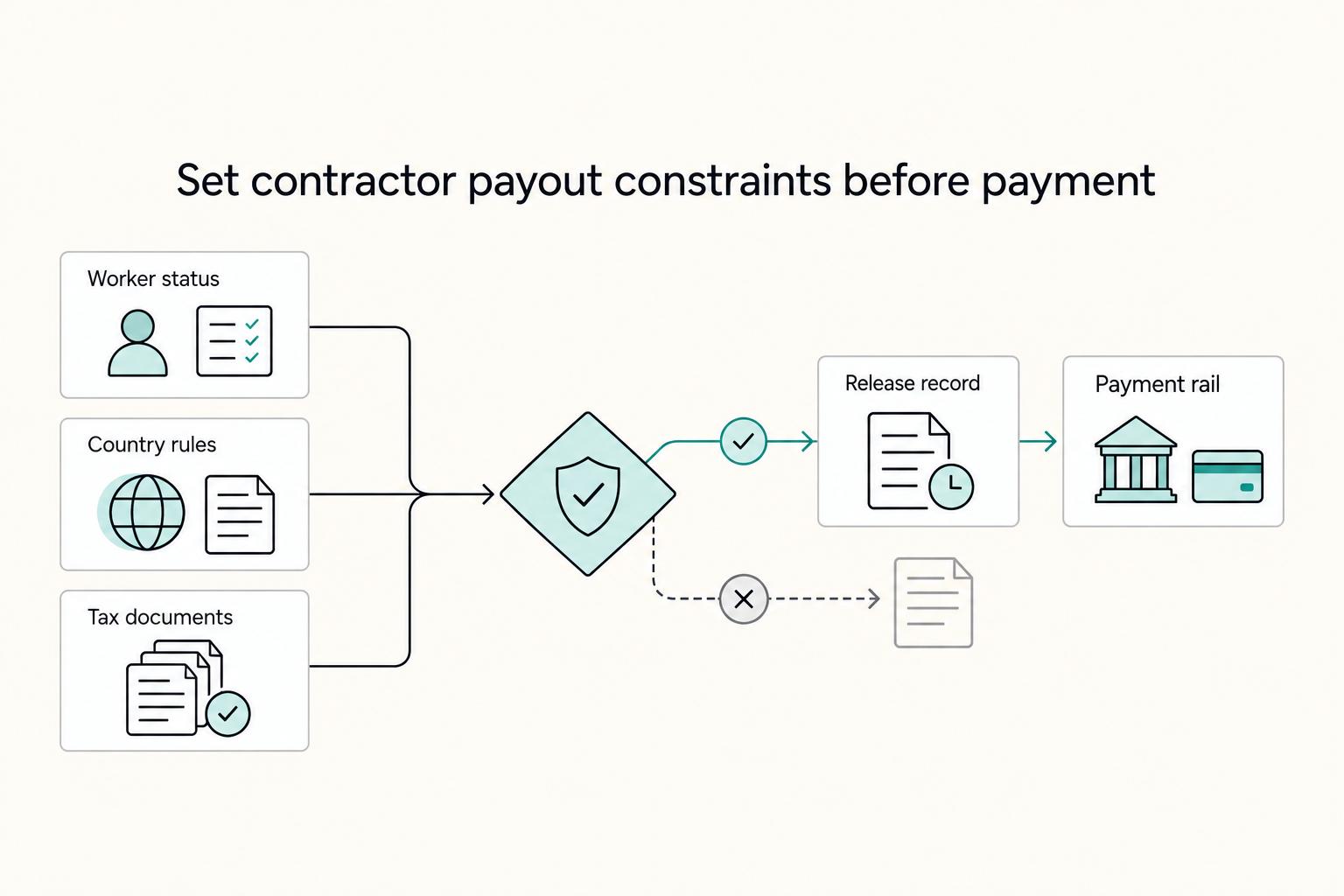
Paying international contractors reliably starts with compliance setup before the first invoice. Missed registration or filing steps turn routine payouts into delays and penalties.