
Quick Answer
Choose a model that protects cash first, then release partner money only after written gates are met. For a shared finances business partnership, that usually means documenting draw approvals, reserve rules, and exception handling in the operating agreement before pooling access. In slow-pay periods, use aging buckets (0-15, 16-30, 31-60) as a trigger to tighten payouts. Keep each transfer tied to reconciled records so distributions are based on verified surplus, not assumptions.
Start Here With the Risk You Are Actually Managing#
The core decision is operational: protect cashflow first, then decide what to share and what to keep separate. In a partnership with shared finances, avoid treating money as available before obligations and potential reversals are accounted for.
Protect cashflow before you talk about splits#
One of the first partnership decisions is how to split profits, but that only works if you have a clear definition of profit. If partner payouts happen before that definition is applied consistently, the payout rule can create risk instead of control.
An equal split can sound fair and still be the wrong fit. Profit allocation can vary based on partner responsibilities, compensation structure, and ownership stake, so the rule should match how the business actually runs.
Before any draw or distribution, confirm:
- How profit is defined for your partnership
- How responsibilities, compensation, and ownership affect allocation
- Whether payout terms are written in your operating or partnership agreement
If those answers are unclear, the money is not ready to split.
Use this guide if revenue arrives unevenly#
This guide is for partnerships where revenue timing is uneven. In that setup, the account structure is a control decision. It determines who can move money, when withdrawals happen, and whether records reflect reality.
A shared-finance setup can work, but only if you agree on what it is for and how it is governed. Define shared use and payout rules before pressure forces rushed decisions.
Your operating or partnership agreement is the anchor. Profit-sharing terms are typically documented there in writing, and that record helps reduce future disputes.
Keep the scope on operations, not household budgeting#
This is not household budgeting advice. It is about business account structure, bookkeeping, and partner accountability. IRS Publication 541 (12/2025) is useful for partnership tax context, but it is not a day-to-day playbook for payout permissions or cashflow controls.
A common failure mode is treating money rules as a check-the-box task instead of a core operating decision. If profit calculations, approvals, and withdrawal timing are not clearly defined, keep finances more separated until those rules are written down.
Choose the Structure by Risk Not by Preference#
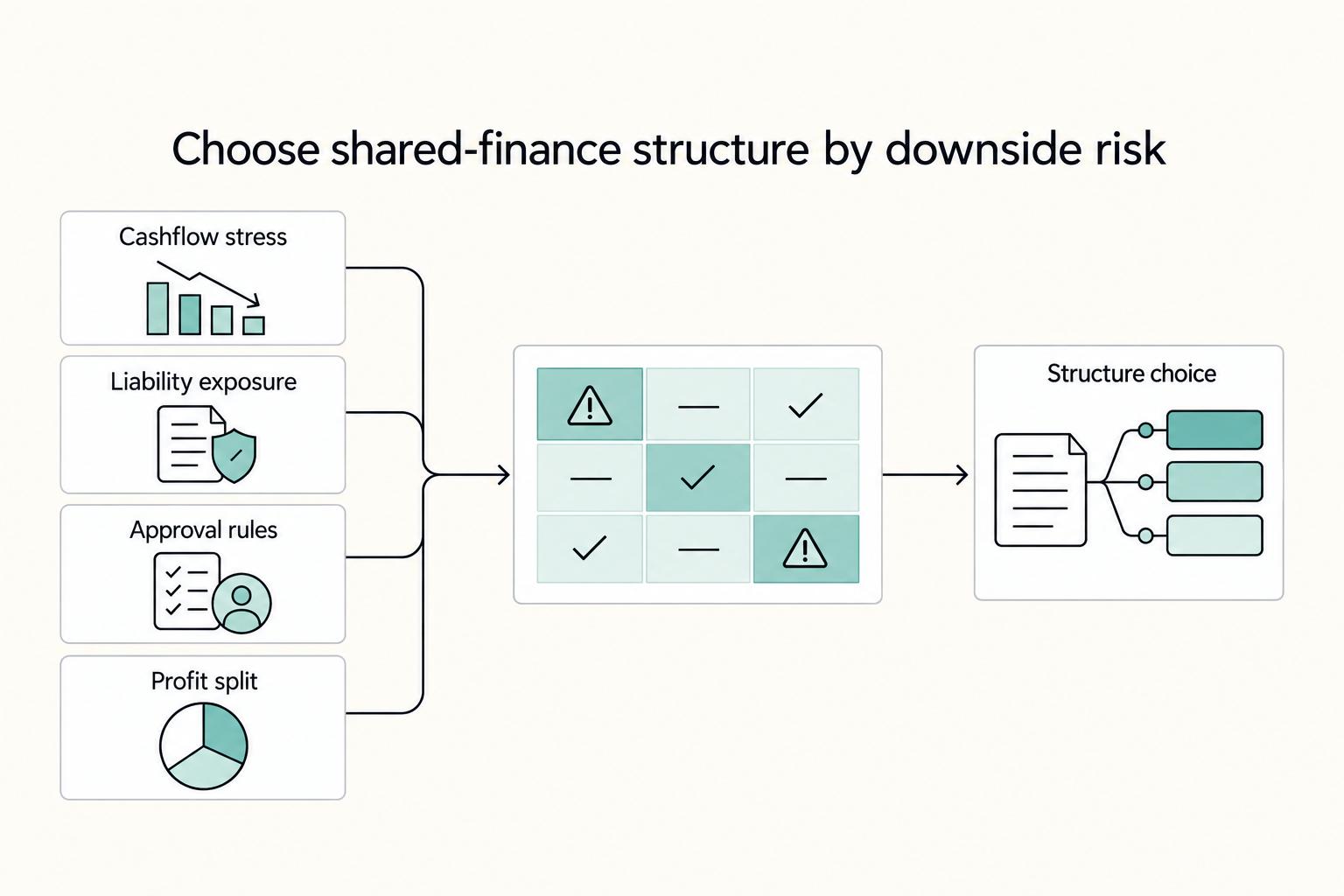
Choose the setup that protects cash flow and clarifies liability during revenue swings, not the one that feels easiest in a calm week. Before you decide how much to share, run these four tests.
| Test | What to verify | Grounded detail |
|---|---|---|
| Shared revenue, shared decisions | Revenue is actually pooled and partners make repeated decisions together | The SBA describes partnerships as the simplest structure for 2 or more people to own a business together. |
| Written terms before shared account access | Ownership interests, capital contributions, and whether contributed capital can be withdrawn are written down before pooling operating cash | Changing structure later can bring restrictions, tax consequences, or unintended dissolution. |
| Liability and control must be visible, not assumed | Liability exposure and cash-access terms are explicit | The SBA highlights 2 common partnership types (LP and LLP), and in an LP one general partner has unlimited liability while other partners have limited liability. |
| Clean bookkeeping beats convenience | Business activity stays separate from personal activity and routine transfers do not blur into reimbursements, profit draws, or added capital | Partnership agreements can be explicit, including ownership splits like 84% / 16% and capital contributions like $180,000. |
- Shared revenue, shared decisions
This fits partners who deliver work together, pool revenue, and make repeated decisions together. The SBA describes partnerships as the simplest structure for 2 or more people to own a business together. If revenue is not actually pooled, keep the arrangement narrower instead of applying full shared-finance rules.
- Written terms before shared account access
Avoid pooling operating cash until terms are documented in a partnership agreement or mutual contract. Structure is chosen before state registration, and changing it later can bring restrictions, tax consequences, or unintended dissolution. At minimum, write down ownership interests, capital contributions, and whether contributed capital can be withdrawn.
- Liability and control must be visible, not assumed
Pick based on liability exposure, not preference. The SBA highlights 2 common partnership types (LP and LLP), and in an LP, one general partner has unlimited liability while other partners have limited liability. When exposure is uneven, document control and cash-access terms explicitly instead of assuming equal access.
- Clean bookkeeping beats convenience
Prefer a setup that keeps business activity separate from personal activity and leaves a clear paper trail. Partnership agreements can be explicit, including ownership splits like 84% / 16% and capital contributions like $180,000. Without that clarity, routine transfers can blur into reimbursements, profit draws, or added capital. If any test fails, keep your funds more separated until the paperwork catches up.
Related reading: How to Handle an 'Earn-Out' in a Business Sale Agreement.
Compare the Five Shared Finance Setups Before You Pick One#
Pick the setup you can defend in a slow-pay month, not the one that feels easiest this week. A partnership works best when the agreement is explicit about decision-making, profit split, and exit process before money starts moving.
| Setup | Best for | Account structure | Profit distribution method | Downside risk | Review cadence |
|---|---|---|---|---|---|
| Pooled operating account with variable draws | Similar contribution and steady work | Shared partnership account defined in writing | Ownership split after current obligations are covered | Draw disputes if cash tightens | Set in the partnership agreement and revisit as needed |
| Reserve-first variable draws | Revenue is solid but invoice timing is uneven | Shared partnership account with reserve rules in writing | Distribute only after agreed obligations and reserve are funded | Conflict when reserve rules are vague | Set in the agreement and revisit when conditions change |
| Salary policy plus surplus draw | Partners want baseline predictability | Shared partnership account with a written salary policy | Salary policy first, surplus distributed after | Fixed payouts can create conflict when cash is tight | Set in the agreement and revisit when conditions change |
| Project-bucket payouts | Project-based delivery with variable costs | Shared account records with clear project tagging | Project costs first, remaining margin split | Inconsistent records can trigger disputes | Set per project in writing and revisit as needed |
| Reinvest-first capped draws | Growth-focused teams funding expansion | Shared partnership account with reinvestment rules in writing | Reinvestment first, capped draws after | Ad hoc withdrawals can trigger recurring conflict | Set in the agreement and revisit when conditions change |
Use the downside column as a risk check, not a tie-breaker. Common failure risks include partner mismatch, decision conflict, shared liability, and difficult exits. In a general partnership, partners can be personally responsible for company legal obligations and debts, so loose money rules can put personal cash at risk.
Use these checkpoints before you commit to a model:
- Pooled variable draws: If cash pressure quickly triggers disputes over draws, tighten written decision rules before staying on this model.
- Reserve-first variable draws: If no one can point to the written "fund this first" rule, this model is not ready.
- Salary plus surplus draw: If payout decisions are unclear when cash is tight, document who decides and how exceptions work.
- Project-bucket payouts: If project costs are not tagged consistently, expect disputes over profit split.
- Reinvest-first capped draws: If reinvestment is not clearly defined in writing, withdrawals can become a recurring conflict.
There is no single best model for every partnership. The right choice depends on how well you and your partner can follow clear written rules for decisions, profit split, and exits. For a deeper dive, read The Best Way to Handle Shared Expenses with a Freelance Collaborator.
Best for New Partnerships With Similar Income and Low Overhead#
When two partners contribute at a similar level, bills are predictable, and personal spending stays separate, a simple setup can work. One common approach is to use one business bank account for business inflows and costs, and keep personal spending in each partner's personal bank account. The advantage is simpler operations. The risk is that simple turns vague if the rules are not explicit.
Why this setup can work#
A simple structure can improve day-to-day visibility. It is easier to run shared bookkeeping and see what is available for profit distribution after current obligations are covered.
There is also a trust element. A 2020 article in Int J Environ Res Public Health frames a link between financial management behaviours, relationship quality, and overall life satisfaction. It is not specific to freelance partnerships, but it supports a practical point: day-to-day money habits can affect working relationships.
When it fits#
Use this model as a starting point when most of the following are true:
- Revenue timing is reasonably predictable.
- Fixed costs are limited and easy to track in one place.
- Both partners see contribution as broadly comparable.
- Personal spending remains separate, with exceptions documented.
Where it breaks first#
A common failure point is weak operating rules around partner draw timing and responsibilities. If one partner starts carrying more delivery or client load, a pooled setup can hide imbalance unless you review effort and payouts together.
Treat monthly profit distribution as a situational option, not a default. If timing or contribution starts to diverge, tighten the rules before you keep using this model.
Minimum controls to keep it healthy#
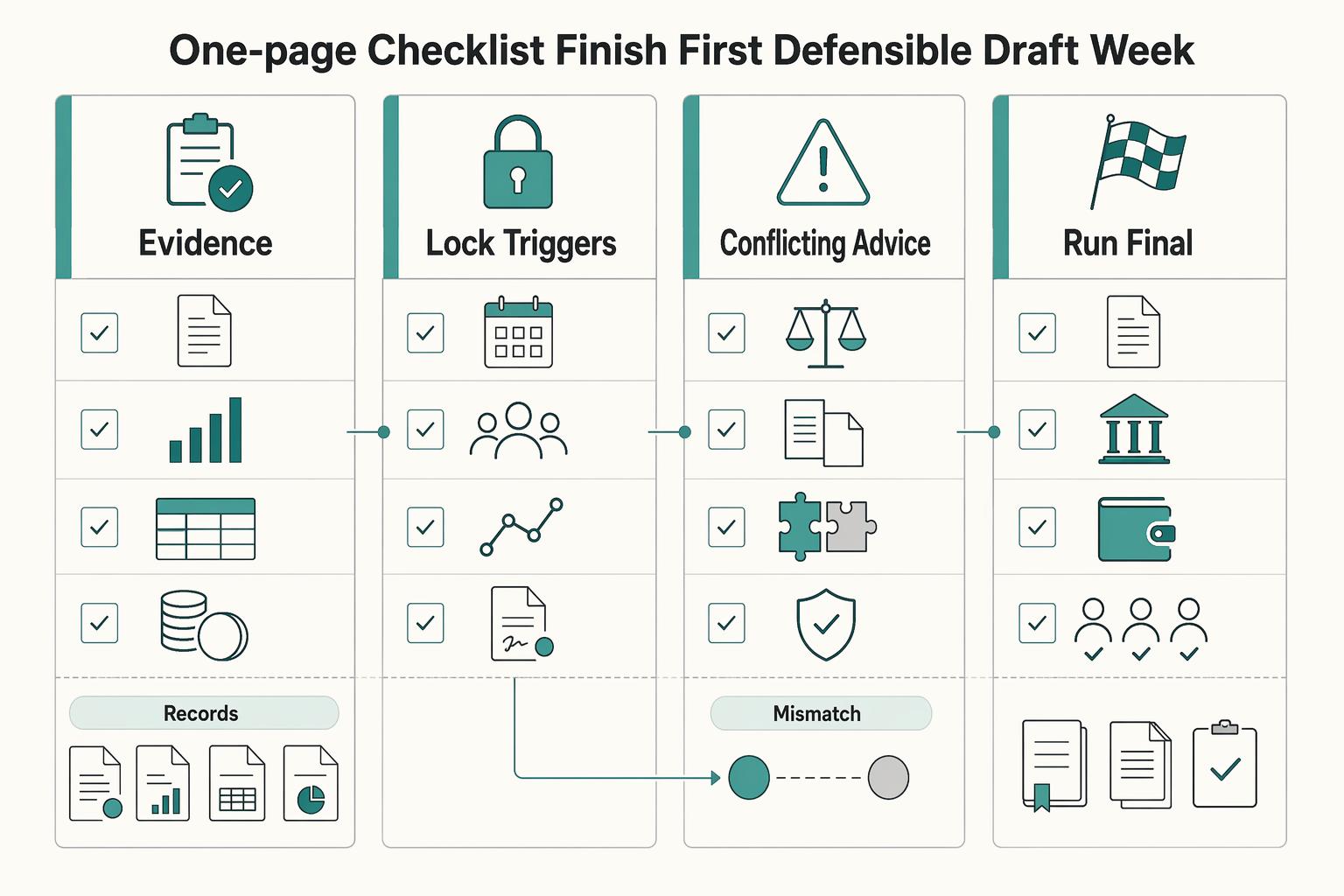
Before any distribution, reconcile the account, post shared costs, and make sure both partners are working from the same profit figure. Keep a simple record set for each payout: statement snapshot, expense support, and written approval of amount and date. A basic checklist can help keep these controls explicit.
One business source warns that weak foundations can lead to financial stress and tension. It is promotional content, so treat it as directional rather than definitive. The practical takeaway still holds: this model stays useful only when the operating rules are clear and consistently followed. For a step-by-step walkthrough, see The Best Business Bank Accounts for Freelancers.
Best for Uneven Revenue and Payment Delays#
When cash arrives unevenly, a reserve-first model can be a safer choice. Keep funds in the business account, cover current operating obligations first, and approve partner distributions only after those gates are met. This can fit teams with irregular invoice timing and delayed client payouts, and it gets harder when either partner needs fixed monthly personal withdrawals.
In uneven revenue cycles, the biggest risk is timing, not just total income. Cash can dip fast enough to delay bills or increase debt reliance, and feast-and-famine patterns are common in creative work.
Why this setup holds up better#
It protects cashflow before owner draws, which forces clearer decisions about what is actually available. Incoming cash is treated as operating fuel first, not immediate profit.
It also makes billing discipline visible. When distributions depend on what has been billed and collected, weak follow-up on invoice terms shows up quickly. A 2025 finance source reports that 45% of business leaders view revenue leakage as a systemic problem and links it to manual billing and weak visibility.
A common failure point is under-invoicing delivered work. If scope changes are done but change requests are not issued, billed hours can fall short of worked hours. In a shared partnership, that shortfall can show up later as a payout dispute, even though it started as a billing control problem.
What to write into the operating agreement#
Put the payout gate in the operating agreement, not in verbal expectations. Define that reserve funding and current obligations come before distributions, who approves payouts, and how late major client payments affect timing. Use concrete checkpoints:
| Item | What the article says | Record or check |
|---|---|---|
| Payout gate | Reserve funding and current obligations come before distributions | Put the payout gate in the operating agreement. |
| Payout approval | Define who approves payouts | Keep written approval of amount and date. |
| Late major client payments | Define how late major client payments affect timing | Review overdue receivables as of the same date. |
| Delivered work invoiced | Confirm all delivered work is invoiced, including approved scope changes | Use invoice status in the payout record. |
| Account review | Reconcile the account and review unpaid bills, current obligations, and overdue receivables as of the same date | Keep an account snapshot and obligations list. |
| Payout record | Keep a payout record for each decision | Account snapshot, obligations list, invoice status, and written approval of amount and date. |
In practice, you should:
- Confirm all delivered work is invoiced, including approved scope changes.
- Reconcile the account and review unpaid bills, current obligations, and overdue receivables as of the same date.
- Keep a payout record: account snapshot, obligations list, invoice status, and written approval of amount and date.
This matters most when pressure rises. Shared liability and conflicting opinions can make hard calls harder, so a written approval trail gives both partners an objective reference.
Best use case and tradeoff#
This can work for a two-partner studio with seasonal swings and occasional slow-paying clients: operations first, then distributions only after the reserve gate is satisfied. The tradeoff is slower or uneven personal payouts, but it can reduce ad hoc draws and bookkeeping confusion.
If collections are uncertain, do not distribute by calendar habit. Let the gate decide, not the date. We covered related spending controls in The Best Business Credit Cards for Freelancers.
Best for Mature Partnerships That Need Salary Stability#
This model is usually easier to run when the partnership can support predictable baseline pay and still keep partner draws tied to real surplus. A defined salary policy plus variable draw can separate day-to-day compensation from profit distribution. That can make transfers from the business bank account less likely to turn into pay-versus-profit arguments.
Why this setup works when the partnership has matured#
The split is straightforward: salary supports predictable personal cash needs, and draws handle upside when results allow it. Used carefully, this can improve planning and reduce friction around compensation decisions.
It also keeps compensation and ownership distinct. Your agreement can document ownership or partnership-interest percentages separately from pay terms. In one sample partnership agreement, interests are explicitly listed as 84% and 16%.
Treat this as a policy you can update, not a permanent formula. Review partner remuneration and profit-sharing approaches over time as the business evolves — whether change momentum persists long term remains an open question.
Where it breaks#
The first risk is overcommitting the fixed salary layer. If baseline pay only works in stronger periods, cashflow pressure can rise when collections slow.
The second risk is weak bookkeeping at close. If your books are behind or unreconciled, decisions about compensation versus surplus become less reliable.
Another failure mode is leaning on contributed capital to maintain pay. Sample agreement language includes a control that partners cannot unilaterally withdraw or reduce capital contributions. Operationally, treating capital as protected can help keep compensation funded from operations instead of capital backfills.
What to document before you use it#
Put salary policy, draw approval rules, and ownership percentages in the operating or partnership agreement, then keep a short periodic approval record. That written trail can help keep compensation disagreements from turning into ownership disputes. Keep the record pack compact:
- current period bank statement for the business bank account
- bookkeeping close to the same cutoff date
- unpaid bills and tax obligations list
- receivables snapshot, including overdue invoices
- written approval notes for salary payments and any partner draw
If a key artifact is missing, consider delaying the discretionary piece first.
Month-end execution#
Use this as an operating sequence template, not a legal standard.
| Sequence | What to review | Example artifacts | Caution flag |
|---|---|---|---|
| Reconcile books | Bank activity matches the ledger through one close date, with unexplained transfers resolved | Bank statement, reconciled ledger, close date noted | If records are not reconciled, draw decisions are higher risk |
| Fund obligations | Near-term bills, taxes, and committed operating costs are identified before discretionary payouts | Payables list, tax set-aside record, cash position summary | If obligations are unclear or underfunded, consider pausing discretionary draws |
| Approve salary | Salary policy aligns with current operating cash and written partner terms | Salary policy, partnership agreement, approval note | If salary would require tapping capital contributions, revisit amount or timing |
| Approve draw | Surplus remains after close and obligations, and partner approval is documented | Surplus calculation, partner approval memo, account snapshot | If surplus depends heavily on assumptions or uncollected invoices, delay release |
A practical operating rule is to treat salary as the planned baseline and release draws only after the close supports available surplus. For a separate look at card policy, see The Best Business Credit Cards for Hotel Points.
Best for Partnerships That Use Subcontractors and Project Pods#
If project staffing changes from job to job, align your internal tracking to each client project. One practical approach is to keep each client job or pod in its own cost bucket and record owner transfers separately from vendor payments. The goal is to preserve a clear record of project costs and owner-related transfers in your ledger.
Why pods change the money picture#
An Agile POD is a curated talent group with domain expertise, built with a flexible structure based on project needs. It typically has 6 to 8 members and roles such as Project Lead or Scrum Master, Tech Lead, Developers, and QA support.
The same source contrasts that with Scrum teams, which follow defined roles, rules, and routines. If your staffing shape changes from project to project, your internal project coding and review process can reflect that variability.
What good execution looks like#
For a video team, one internal pattern is one project code per client job, with subcontractor invoices mapped to that code and logged separately from owner transfers. A lightweight approval checklist can include:
- a named project or pod code
- service dates or a milestone description
- written approval from the project lead or designated reviewer
This can keep the path from invoice to payment easier to review at close. If you are still building your outside-talent process, Hiring Your First Subcontractor: Legal and Financial Steps is a useful companion.
Where this model breaks#
This model can break down when ledger tagging turns inconsistent after money moves. When vendor payments and owner transfers are recorded with vague descriptions, project-level cost visibility can drop.
It can also get harder to reconcile when business costs are paid from personal accounts and documented later. Cleanup is possible, but it can add review work and approval ambiguity.
When to choose it#
Consider this setup when outside talent is common and project staffing changes materially across jobs. If delivery is stable and costs rarely vary, a simpler operating model may be enough.
A useful reference point is FAR Part 31, titled "Contract Cost Principles and Procedures." You do not need to adopt federal rules here. At minimum, the title highlights the value of clear cost-tracking discipline. For the full breakdown, read Best Business Credit Cards for Airline Miles for Global Freelancers.
Best for Growth Partnerships Reinvesting Before Taking More Draw#
This model works when reinvestment decisions are real priorities, not just good intentions. It is strongest when partners agree in advance on what gets funded for growth and how profit distribution is handled.
- Best for: partnerships prioritizing reinvestment and reserves before increasing partner draw.
- Strengths: reinforces reinvestment discipline, can reduce ad hoc withdrawals, and supports resilience by building reserves.
- Tradeoff: it can feel restrictive if the operating agreement does not clearly define how reinvestment and distributions are approved.
Why this structure fits growth stages#
The core rule is simple: do not treat all surplus as immediately available personal cash. First, partners agree what stays in the business for reinvestment. Then they apply the profit-sharing rule to what remains.
That distinction matters. Profit-sharing defines how net profits are divided, and those terms are typically documented in an operating or partnership agreement. A straight percentage split can still apply here. If two partners each own 50% of the business, the split can still be 50% / 50% after an agreed reinvestment step.
How to run it without constant arguments#
The failure point here is usually not the idea of reinvestment. It is vague approval. Set the rules early and in writing so fewer decisions are made ad hoc. A practical structure is:
- agree the reinvestment items for that period
- document how remaining surplus is handled under your profit distribution rule
- keep that rule set in writing in your partnership or operating agreement
This record keeps reinvestment decisions collective. That matters in partnerships where two or more people share profits under agreement terms.
Where this model breaks#
This model can fail when "reinvest for growth" is left vague. If approval flow, categories, or distribution rules are unclear, strong months can turn into repeated negotiations.
It can also break down when growth spending is labeled after the fact instead of agreed beforehand. Profit-sharing models have real tradeoffs, and the right fit depends on your roles, risks, and goals. Choose this approach only if you can agree on reinvestment priorities and distribution rules in writing.
You might also find this useful: How to Handle Shareholder Distributions in an S-Corp.
Apply a 15 Minute Decision Rule and Lock It In Writing#
Do not overdesign this. Take 15 minutes, check actual cash in the bank, and choose a provisional model to test at the next close. The goal is not a perfect structure on day one. It is a workable rule you can explain and follow.
| Decision step | When it applies | Article detail |
|---|---|---|
| Pick the simplest structure your cash pattern can support | Use a simpler setup when it fits current cash flow and obligations | If timing is choppy, consider a reserve-first approach; if invoices keep slipping from 0-15 into 16-30 or 31-60 days, avoid loose payout habits. |
| Choose predictability or flexibility on purpose | Document a predictable payout approach when partners need stable personal income, or define stricter gates for variable draw | Examples include "books reconciled first" and "cash review before transfer." |
| Lock terms into written agreements | Put account use, approvals, draw rules, and exceptions in the Operating Agreement and mirror the same money terms in a separate partner contract | If a business expense is paid from a personal bank account, document it, approve it under your policy, and reimburse it on the schedule you set. |
- Pick the simplest structure your cash pattern can support
Use a simpler setup when it fits your current cash flow and obligations. If timing is choppy, consider a reserve-first approach with tighter control over partner draw. Check your aging report: if invoices keep slipping from 0-15 into 16-30 or 31-60 days, avoid loose payout habits.
- Choose predictability or flexibility on purpose
If partners need stable personal income, document a predictable payout approach in writing. If partners prefer variable draw, define stricter gates in writing, such as "books reconciled first" and "cash review before transfer." Either way, don't treat a strong month as free cash before upcoming obligations are funded.
- Lock terms into written agreements
Put account use, approvals, draw rules, and exceptions in the Operating Agreement, which governs how the company is structured, operated, and managed. If you also use a separate partner contract, mirror the same money terms so the documents do not conflict. Because LLC owners can modify default protections by contract, vague drafting can weaken safeguards and create room for opportunistic behavior.
Keep one non-negotiable internal rule: if a business expense is paid from a personal bank account, document it, approve it under your policy, and reimburse it on the schedule you set. Related: How LLC Owners Separate Business and Personal Finances.
Turn your agreed decision rules into clear draft language and review it together with the Freelance Contract Generator.
Install Controls That Prevent Disputes Before They Start#
Most partner disputes do not start with one dramatic event. They grow from unclear approvals and agreement terms that no longer match how decisions are made. Treat dispute prevention as part of operations, not cleanup.
- Use a consistent written process for partner payouts
Apply the same documented review process before distributions so payout decisions are clear and not based on informal assumptions.
- Define early-warning triggers and assign a point owner
Set clear internal triggers for when a finance decision needs review, then designate a point owner to monitor performance, keep communication active, and raise issues promptly. That structure helps resolve friction before it becomes a formal dispute.
- Document key money and decision terms in writing
Keep approvals and payout decisions documented so major transfers and decisions can be explained without guesswork. When trust is strained, clear written terms protect both partners better than memory.
- Keep agreement language explicit and aligned with operations
If compensation, profit distribution, control percentage, or decision rights change, review and update the governing agreement so terms stay clear. Ambiguity is where preventable disputes escalate, so keep terms explicit and current. If helpful, use How to Create a Buy-Sell Agreement for a Partnership as a starting point.
Pick the Structure That Survives a Bad Month#
There is no single best setup here. Choose the approach you can still run when pressure rises, with clear decision rules, documented accountability, and verifiable checkpoints.
- Choose for decision quality under pressure
Pick the model that still supports timely, informed decisions based on facts, goals, constraints, and risks, not just what feels easiest in a calm month. Treat any template as reference material, then tailor it to your real workflow.
- Write accountability into your process
If a rule matters in a rough month, put it in writing. Define who is responsible, what gets checked before action, how exceptions are recorded, and when rules are reviewed so everyone applies the same standard.
- Use concrete checkpoints before you revise the model
Do not rely on memory alone. Verify any filing or status your plan depends on and keep that check in your records. If a Connecticut business-opportunity exclusion filing is part of your plan, verify status in the License Lookup portal.
- Prioritize failure modes that hit both finances and people
Financial losses are tangible, and the emotional toll can linger longer. Reducing ambiguity early is practical risk control.
Your next move is straightforward: select one model, document the decision rules, assign accountability, and set the checkpoints you will use before revising. If you rely on a Connecticut exclusion filing, confirm it is filed and check status in the License Lookup portal before related decisions.
If you are evaluating operational options, explore Virtual Accounts and test fit against your documented rules.
Frequently Asked Questions
What is the best way to manage shared finances in a business partnership?
Start with a business checking account that is separate from personal accounts for business income and expenses, then document how approvals, reimbursements, and partner payouts are handled. That can keep records cleaner and reduce ambiguity around transfers. Before payouts, reconcile the account and confirm each transfer maps to a business record.
Should business partners combine all finances or keep some money separate?
Keep business funds in the business account and personal funds in personal accounts. FDIC guidance specifically supports maintaining a business checking account separate from personal accounts, and notes this helps delegate day-to-day banking without exposing personal finances. If personal accounts are used routinely for business activity, bookkeeping gets harder to verify.
How should partners split shared expenses when income is uneven?
There is no single required split method in this guidance, so use a written approach both partners approve. The practical priority is consistency and records for reimbursements or partner-funded costs. When a partner pays personally, log the receipt, business purpose, and reimbursement status so it is not confused with a draw.
Why should a business bank account stay separate from a personal bank account?
A separate business account improves clarity and control in day-to-day operations. It can also matter for deposit insurance treatment: qualifying business deposits at the same bank may be insured up to $250,000 separately from owners' personal accounts. As operations become more complex, separation makes records easier to manage and explain.
How do salary policy and partner draw work together without hurting cashflow?
Use a written internal policy and apply it consistently instead of deciding ad hoc each month. In U.S. partnerships, partners are not employees and should not be issued Form W-2, so keep partner compensation decisions distinct from employee payroll treatment. As an operating discipline, update books and confirm obligations before approving draws.
What should an operating agreement include for profit distribution and debt liability?
As a practical baseline, define who approves distributions, when they can occur, and what records are required for each decision. Keep that process aligned with partnership reporting obligations. The partnership files Form 1065, provides Schedule K-1 (Form 1065), and each partner reports their share on a personal return. For debt liability terms, use clear written language in the agreement rather than relying on informal assumptions.
Try a related tool
Researched and edited by the Gruv editorial team. Gruv builds cross-border billing, payouts, and finance-operations software for global businesses.
Sources
- acquisition.gov/far/part-31trusted
- acquisition.gov/far/part-2trusted
- ask.fdic.gov/fdicinformationandsupportcenter/s/article/Q-...trusted
- federalregister.gov/documents/2024/02/01/2023-25797/community-re...trusted
- fordlibrarymuseum.gov/library/document/0126/1489916.pdftrusted
- hudsonnh.gov/sites/default/files/fileattachments/board_of...trusted
- irs.gov/businesses/partnershipstrusted
- irs.gov/publications/p541trusted
Educational content only. Not legal, tax, or financial advice.
Related Posts

Hiring a Subcontractor for the First Time Without Costly Surprises
**Start with a risk-control sequence, not an ad hoc handoff.** As the Contractor, your goal is simple: deliver cleanly, control scope, and release payment only when the work and file are complete.
How to Create a Buy-Sell Agreement for a Partnership
**Treat your buy-sell agreement for partnership as core operating infrastructure, not paperwork for later.** Freelancers and consultants move fast on client delivery, but shared ownership risk keeps running in the background until one partner leaves, becomes disabled, goes bankrupt, or goes through a divorce.

The Freelance Payment Penalty: A Modeled Audit of Platform Fees, FX Spreads, and Payout Delays
The money rarely disappears through a single, easy-to-spot fee. The real loss is stacked. A marketplace takes its commission, a processor adds a charge for international cards, a bank or payment company converts the currency at a spread, a platform holds the funds before release, and a wire sheds a little to intermediaries on the way in. Each layer looks defensible on its own, but the worker feels the combined result as a smaller deposit and a later payday.