
Quick Answer
Start by matching pole type to how you actually hike, then verify the exact specs on the listing or manual before checkout. Adjustable telescoping poles suit mixed terrain because you can change length on climbs and descents, while Z-folding designs make more sense when compact carry is the hard requirement. If low carry weight is your priority, the article’s LEKI Cressida FX Carbon example is 17.2 oz at $230, but only if lock behavior and fit still match your route.
The best trekking poles are the pair that match your trip, your pace, and how much bulk or fiddling you will tolerate. Start with the job. A quick self-audit up front keeps you from buying a pair that looks great in a roundup and feels wrong on your actual route.
First, Define Your Mission Profile#
Once you know why you want poles, the choice gets much easier. Start with three quick filters: how you hike, where you hike, and what extra weight or hassle you can tolerate before poles stop being useful.
- How you hike: mostly hiking, mixed hiking and running, or mostly running with short hiking bursts?
- Where you hike: local day trails, steep mountain routes, or trips where the poles need to disappear onto a vest or small pack between climbs?
- What weight or fuss you can tolerate: extra bulk, added carry weight, or poles that may get in the way when you are moving at running speed?
If you expect a lot of hiking, poles usually become more valuable. If you mostly run, ask the harder question first: are they helping on steep sections, or just adding weight and fuss?
| Profile | Best use case | Top priority | Acceptable compromise | Likely pole type |
|---|---|---|---|---|
| Day hiker | Short hikes, regular trail use | Versatility and easy handling | Extra packed length and a bit more weight | Adjustable poles (often telescoping) |
| Fast and light | Trail running, ultralight efforts, steep race climbs | Packability | Less adjustability, more setup fuss | Foldable multi-segment poles |
| Long-trip traveler | Long hikes or mixed-use trips | Balance of versatility and packability | Slightly bulkier carry than the most compact foldables | Adjustable or foldable poles, based on carry needs |
Day hiker#
If your poles spend most of the day in your hands, do not over-optimize for the tiniest packed size. Prioritize versatility and easy handling first, then packed size.
The main compromise is carry bulk. That is usually acceptable because you are not trying to stash the poles on a running vest, and small packing penalties often matter less than everyday usability.
Fast and light#
For this profile, packability can decide the purchase. A February 23, 2026 running-focused guide tested only foldable trekking poles that runners could stow in or on a hydration pack. It noted that most telescoping designs did not pack down small enough and tended to be too heavy for that kind of carry.
Your priorities are a foldable multi-segment design, low carry burden, and quick stowability. The tradeoff is real. At many running speeds, poles may offer little benefit and can interfere with running form. If your route is mostly runnable terrain, skip them or carry them only for long climbs.
Long-trip traveler#
For long trips, focus on the same core tradeoff: versatility and packability. If you expect more hiking, poles tend to add more value. If much of your route is runnable, they may add little and can get in the way.
Names like Black Diamond and LEKI are useful as comparison checkpoints in light-and-fast contexts, not automatic answers. We will get to final picks later, but this profile filter helps separate a smart buy from a frustrating one.
One last checkpoint: the right poles are the ones that match your profile, not the ones that win the broadest roundup. That matters because current reviews are testing widely, from more than a dozen lightweight models across varied terrain to nearly 70 unique pairs assessed since 2012. Those results only help if you compare products inside the right lane. If you want a deeper dive, read Value-Based Pricing: A Freelancer's Guide.
The Performance vs. Risk Matrix: Decoding Critical Trade-Offs#
Once you know your mission profile, choose by verifiable risk, not by marketing claims. Score each option with the same checkpoints: Excellent, Good, Only Fair, Poor, or Don't Know. If you cannot verify a claim, mark it Don't Know and treat that as unresolved risk.
| Area | What to verify | If unclear |
|---|---|---|
| Material | Published pair weight, packed length, replacement-part availability, warranty/service steps | Mark the checkpoint "Don't Know" and treat it as unresolved risk |
| Lock mechanism | Reliability in dirt or moisture, adjustment with gloves, field serviceability | Mark it "Don't Know" and avoid paying for assumptions |
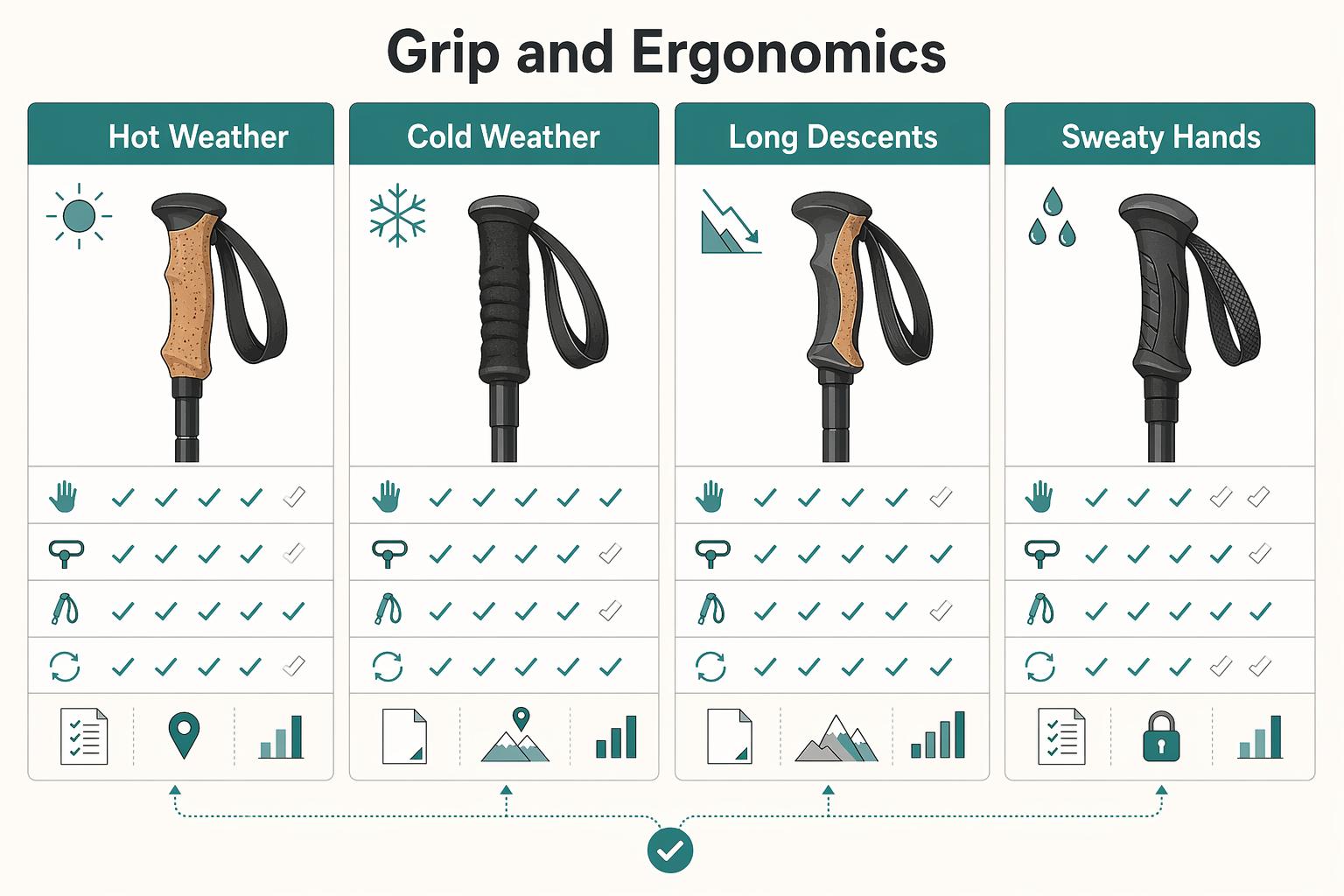
| Grip and ergonomics | Hand fit, control, strap comfort, repeatability over several position changes | Choose only what you can evaluate clearly and reject options that leave key checks in "Don't Know" |
Material#
Use material labels as a prompt for due diligence, not as an automatic answer. For both carbon fiber and aluminum, collect the same evidence before you buy.
| Material | Verify before checkout | If you cannot verify |
|---|---|---|
| Carbon fiber | Published pair weight, packed length, replacement-part availability, warranty/service steps | Score as Don't Know for that checkpoint |
| Aluminum | Published pair weight, packed length, replacement-part availability, warranty/service steps | Score as Don't Know for that checkpoint |
Your decision point is simple: pick the option with fewer unknowns in the checks that matter most for your profile.
Lock mechanism#
Treat lock selection as a quick risk checklist you can run in-store or from documentation:
- Reliability in dirt or moisture: Can you find clear care or maintenance guidance after wet or dirty use?
- Adjustment with gloves: Can you adjust it with the gloves you actually wear, without awkward effort?
- Field serviceability: Are there clear tensioning points, visible hardware, and usable instructions?
If any of these stay unclear, score them Don't Know and avoid paying for assumptions.
Grip and ergonomics#
Compare grip options by your own handling tests, not generic rankings. For each candidate, check hand fit, control, strap comfort, and repeatability over several position changes.
| Condition | What to test on any grip | Red flag |
|---|---|---|
| Hot weather | Grip control with dry and slightly damp hands | You need to over-grip to feel secure |
| Cold weather | Control and access while wearing your real gloves | You lose natural hand position or strap control |
| Long descents | Comfort under sustained light downward pressure | A pressure point develops quickly |
| Sweaty hands | Repeated repositioning over a few minutes | Control drops noticeably as moisture builds |
If this is your profile, choose this setup approach:
- Day hiker: choose the option you can evaluate clearly end to end, with easy adjustment and stable hand comfort.
- Fast and light: choose the option with the lowest carry burden you can still verify for packed length, on-trail control, and quick handling.
- Long-trip traveler: choose the option with the clearest published parts and service path, and reject options that leave key checks in
Don't Know.
Related: The Best Travel Backpacks for Digital Nomads.
The Global Readiness Audit#
For frequent travel, a pole setup is globally ready only if you can move it easily, get support from abroad, and keep it usable after normal wear or a single damaged part.
| Audit area | Verify | If not verified |
|---|---|---|
| Portability | Airline current cabin and checked-bag policy, packed length fit for your specific bag, fallback if cabin carriage is refused, recheck airport policy close to departure | No-go if transport still depends on "Don't Know" |
| Serviceability | Regional repair or service access, live spare-parts path, how warranty claims work when you are abroad, realistic turnaround expectations | Treat an unclear or domestic-only process as a risk |
| Total cost | Whether wear parts are clearly documented as replaceable and individual components are clearly identified in support docs | Failures are more likely to create downtime or full rebuy risk |
- Portability
Use a pre-trip checklist, not assumptions.
- Check your airline's current cabin and checked-bag policy.
- Confirm the pole's packed length fits the specific bag you plan to use.
- Plan a fallback if cabin carriage is refused at screening.
- Recheck airport policy close to departure because published rules can be amended by airport bulletins.
If you are transiting JFK, LaGuardia, Newark Liberty, New York Stewart, or Teterboro, use the Port Authority Airport Rules and Regulations on panynj.gov as your baseline checkpoint. The published document is issued April 1, 2025, with revisions shown effective 1/1/25, and it can still be updated through manager-issued bulletins. Confirm the current trekking-pole screening treatment with your airline, your departure airport, and any newer airport bulletins before travel. If you need direct confirmation, the document includes airport contacts, including JFK at (718) 244-4444.
- Serviceability
Treat serviceability as a written-proof check, not a brand-impression check.
- Confirm regional repair or service access near where you will be.
- Confirm a live spare-parts path.
- Confirm how warranty claims work when you are abroad.
- Confirm realistic turnaround expectations before you buy.
Keep it simple: save the relevant support pages, then send support one direct scenario question about an overseas failure. If the response is unclear or only points to a domestic process, treat that as a risk.
- Total cost
Use documentation quality as your proxy for long-term usability.
| Documentation signal | Practical impact | Long-term usability signal |
|---|---|---|
| Wear parts are clearly documented as replaceable | Routine wear is more likely to be manageable | Stronger |
| Individual components are clearly identified in support docs | A single failure is more likely to be isolated | Stronger |
| No clear parts or abroad-service documentation | Failures are more likely to create downtime or full rebuy risk | Weaker |
Use this quick filter before checkout:
- Go if you can verify transport checkpoints, packed-length fit, and a backup transport plan.
- Go if you can verify a usable from-abroad service path in writing.
- No-go if transport or service still depends on "Don't Know."
For a step-by-step walkthrough, see The Best GPS Watches for Hiking and Trail Running.
Strategic Recommendations: Top-Tier Assets#
Use your mission profile to choose a pole format first, then validate the exact current-year model before checkout. For 2026, prioritize shortlists from comparisons that explicitly report deflection testing (for example, 30 poles tested, or 10 Z-poles vs 20 telescoping poles measured for deflection), then confirm fit, portability, and support details on the specific product page or manual.
| Profile | Start with | Best for | Key strengths | Key compromises | Portability format | Serviceability signals to verify | Also consider |
|---|---|---|---|---|---|---|---|
| General trail user | A current 2026 telescoping pole from a guide that reports deflection testing | Day hikes and mixed terrain | Wide shortlist potential from tested comparisons | Skip this path if compact packed size is your top priority | Telescoping | Parts page, section diagrams, and a clear warranty process | A current 2026 Z-pole if pack size drives your decision |
| Fast-and-light hiker | A current 2026 carbon-focused model from a guide that prioritizes high strength and ultralight weight | Weight-conscious hiking and backpacking | Strong alignment with strength-to-weight priorities | Skip this path if your top concern is maximizing adjustment flexibility or travel simplicity | Telescoping or folding (verify per model) | Replaceable wear-part availability and regional support contact | A tested telescoping option if adjustability is more important |
| Travel-heavy trekker | A current 2026 Z-pole shortlist | Frequent flights and tight packing setups | Folding/collapsible format is the clearest portability advantage | Skip this path if fit setup or parts access is unclear on the exact model | Z-pole | Packed length, airport transport plan, and support route from abroad | A telescoping model if you want a simpler fit check |
If a roundup says it "may earn a commission," treat it as a lead, not a final verdict. Before you buy, verify:
- Fit range for your height and terrain use
- Lock mechanism reliability evidence on the exact model listing/manual
- Replaceable parts availability (tips, baskets, straps, lower sections)
- Warranty support region and a usable contact path where you travel
We covered this in detail in The Best Sleeping Pads for Backpacking.
Final Verdict: Invest in Control, Not Chance#
Choose the pole that fits your actual trip and removes avoidable failure points. Use this order: trip fit, lock reliability, shaft tradeoff, packability, then a quick check that replacement tips/baskets or spare-part support are clearly listed.
| Use case | Priority | Why it matters |
|---|---|---|
| Day hikes | Start with an adjustable pole and an external flip/flick lock | Easy, repeatable setup |
| Multi-day trekking | Prioritize comfort features you will use for hours, like grip extension, and keep adjustability high if your shelter setup depends on poles | Comfort features matter over long use and adjustability can affect shelter setup |
| Travel-heavy hiking | Prioritize folded length first, then confirm usable range and lock style | Folded size is a practical gate for travel |
Do one final spec check before you buy: confirm the exact lock type, collapsed size, and adjustment range on the product page or manual. Telescoping, three section with a stated range like 24 in to 53 in (61 cm to 135 cm) is practical; adjustable alone is not.
If low carry weight is your top priority, one listed carbon example is the LEKI Cressida FX Carbon at 17.2 oz and $230, but only if the lock and fit still work for your use. If you travel often, folded size is a practical gate, and 14 inches (35.6 cm) is an example of genuinely compact carry. Fixed-length poles can deploy very fast, but they trade away on-trail length changes.
| Pick logic | Best for | Key strength | Key compromise | Ideal user |
|---|---|---|---|---|
| Adjustable telescoping | Mixed terrain | Wide fit range and on-trail adjustment | Larger packed size | Day hiker who wants simple, flexible setup |
| Z-folding adjustable | Travel and compact carry | Easier luggage/day-pack fit | More design details to verify | Travel-heavy hiker balancing packability and fit |
| Fixed-length folding | Speed-focused use | Very fast deployment | No length adjustment | Hiker with a known fit and narrow use case |
- Day hikes: Start with an adjustable pole and an external flip/flick lock for easy, repeatable setup.
- Multi-day trekking: Prioritize comfort features you will use for hours, like grip extension, and keep adjustability high if your shelter setup depends on poles.
- Travel-heavy hiking: Prioritize folded length first, then confirm usable range and lock style.
Confirm your mission profile, shortlist models from LEKI, Black Diamond, or other brands with transparent specs, and verify serviceability details before purchase. You might also find this useful: How to Plan a Multi-Day Hiking Trip.
Frequently Asked Questions
Are carbon fiber trekking poles worth the extra cost?
There is no one-size-fits-all answer. Start with your hiking profile first: if you hike only a couple of times a year, you likely do not need a feature-heavy pair. If you hike often, go longer distances, or want more support and comfort, paying more for a tougher option can make sense.
Can you take trekking poles in carry-on luggage?
Do not assume anything here. Before every flight, treat the current airline and security rule as pending official verification, then save the airline or airport policy page on your phone so you can confirm the latest wording. If air travel is central to your setup, favor poles that pack down small when stowed, but treat compact size as convenience, not proof that security will allow them.
Telescoping vs. folding trekking poles?
If your priority is on-trail adjustment, start with an adjustable pole. If your priority is smaller packed size, compare the actual collapsed length and the exact section count on the listing, especially the two-section vs three-section choice. The label alone will not tell you enough, so verify how the pole stows before you buy.
What is the most durable and reliable trekking pole?
Buy for your hiking profile, not for a marketing claim. If you hike often, go farther, or expect the poles to provide real support, look for a tougher build and make sure the exact tip, grip, and basket suit your terrain. A red flag is any product page that hides the lock style or section count.
How do I choose the right size trekking poles?
Use the manufacturer guidance for the exact model, then make sure the pole gives you enough adjustment range for your terrain. That matters because adjustable poles let you change length for climbs and descents instead of forcing one fixed setup onto every trail. If you are unsure between options, verify the current size chart or manual on the specific listing rather than relying on a generic chart from somewhere else.
Do I really need trekking poles?
You need them when your hikes call for more support, not because every hiker does. Start with a quick self-assessment of frequency, distance, terrain, and how much support you want. If you do buy them, use the wrist straps correctly by threading your hand up through the strap and gripping both strap and handle, and use a non-slip lower grip on steeper terrain when you need to drop your hand position for more stability.
Try a related tool
Researched and edited by the Gruv editorial team. Gruv builds cross-border billing, payouts, and finance-operations software for global businesses.
Sources
- bart.gov/sites/default/files/docs/02_AppendixA_Comple...trusted
- deforestwi.gov/DocumentCenter/View/86/Chapter-15-Zoning-Cod...trusted
- documents.fresno.gov/WebLink/docview.aspxtrusted
- dodcio.defense.gov/Portals/0/Documents/CMMC/AssessmentGuideL2.pdftrusted
- dot.ca.gov/-/media/dot-media/programs/design/documents/...trusted
- fhwa.dot.gov/utilities/010604.pdftrusted
- highways.fhwa.dot.gov/sites/fhwa.dot.gov/files/2022-06/aging_drive...trusted
- news.ufl.edu/2020/02trusted
Educational content only. Not legal, tax, or financial advice.
Related Posts
Value-Based Pricing for Freelancers Under Real Payment Risk
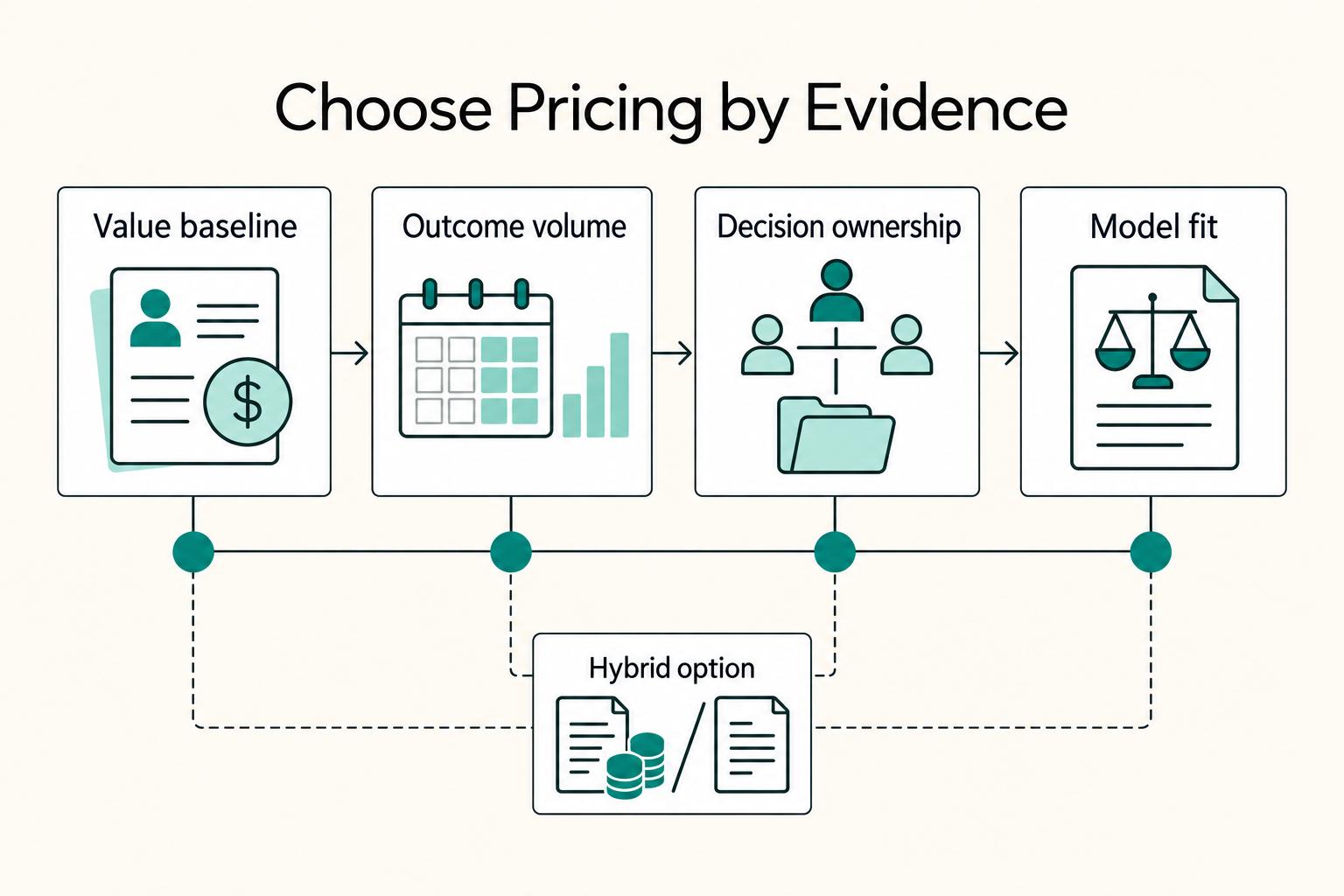
Value-based pricing works when you and the client can name the business result before kickoff and agree on how progress will be judged. If that link is weak, use a tighter model first. This is not about defending one pricing philosophy over another. It is about avoiding surprises by keeping pricing, scope, delivery, and payment aligned from day one.

The Best Travel Backpacks for Digital Nomads
Start by ruling out bad fits, not by chasing a universal winner. If a bag does not match how you move, how you work, or what you can comfortably carry, drop it early. That matters far more than one extra pocket or a slick product page.
How to Plan a Multi-Day Hiking Trip
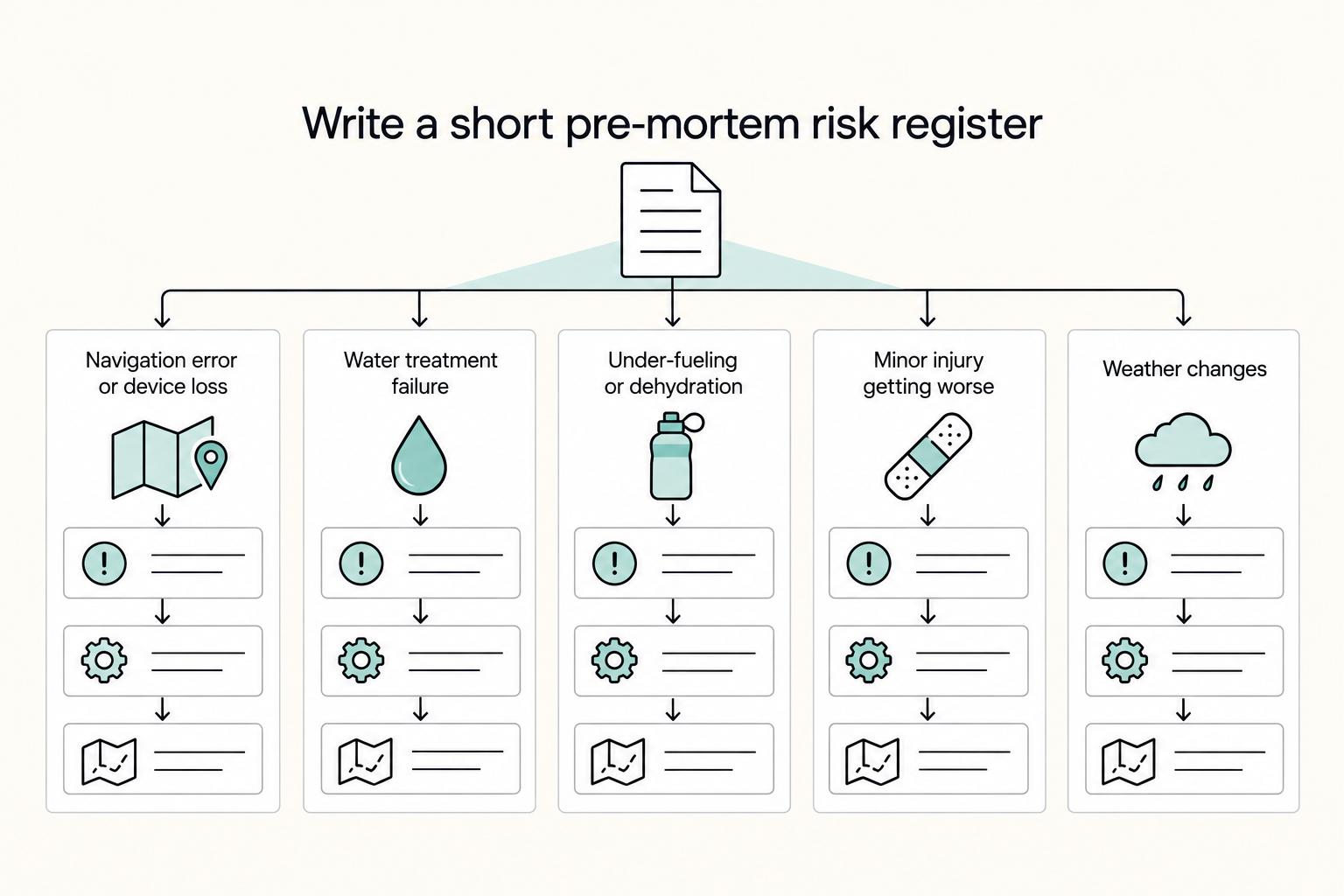
If you want to plan a multi-day hiking trip with fewer avoidable mistakes, treat it like something you build on purpose, not something you improvise the night before. By the end, you should have a practical phase-by-phase plan and a checklist mindset you can use right away.