

Quick Answer
Choose tax research software for the interpretations you actually handle: Checkpoint and CCH AnswerConnect support professional research, while CCH Axcess Tax supports preparation and compliance. For monitoring your own cross-border facts, use travel logs, applicable account-reporting records and invoice support. FEIE has U.S. status, foreign-income, tax-home and alternative residence/presence tests; FBAR applies to qualifying U.S. persons and foreign accounts. Seek specialist help with available records and gaps when rules, notices or deadlines require it.
Match Tax Research Software to the Job#
If you run a solo accounting practice, distinguish research for client advice from monitoring your own cross-border compliance facts. A professional research library can support recurring interpretation across a client portfolio. For your own travel, accounts and invoices, a lean tracking workflow may be enough, with specialist help when facts or rules are unclear.
- Cost mismatch
Compare costs for the actual job. CCH Axcess Tax is cloud tax preparation and compliance software for firms of all sizes, with pricing by quote. It is distinct from CCH AnswerConnect, a tax research product. Request a quote for the needed products, users and coverage before comparing costs with a personal monitoring workflow.
- Audience mismatch
Checkpoint is a research and guidance solution for tax and accounting professionals, with primary authority, editorial analysis and productivity resources. That can fit a solo accountant advising clients as well as a larger practice. If you are only monitoring your own cross-border facts, compare that research depth with the narrower tracking and occasional specialist support you actually need.
- Outcome mismatch
Your operational questions still matter. For a noncitizen assessing U.S. tax residence, the substantial presence test generally requires at least 31 days in the current year and 183 weighted days: all current-year days, 1/3 of the preceding year and 1/6 of the second preceding year. Exempt days, closer-connection exceptions and treaty positions need separate assessment. For FBAR, a U.S. person with a financial interest in or signature authority over foreign financial accounts generally must report when their aggregate value exceeds $10,000 at any time in the calendar year, even without taxable income. Also verify invoice rules where you bill, including the EU requirement for most B2B supplies. Keep travel logs, account balance histories and invoice support beside the authority you research.
| Decision point | Enterprise suite | Business-of-one tooling |
|---|---|---|
| Buyer | Firm, tax team, or accounting practice | Solo operator managing personal risk |
| Workflow | Research, citation trail, preparation/compliance workflow | Monitor, verify, escalate |
| Data burden | Broad jurisdiction libraries plus client files | Your travel days, account balances, and invoices |
| Practical output | Defensible memo or researched position | Alert, checklist, and "talk to a CPA now" trigger |
Use this filter before you buy: does the tool support the research decisions or compliance facts you actually manage? Research access and day-count or account monitoring serve different jobs; an accountant may need both. Start with the three monitoring areas below, then assess research depth separately against your client work.
Tier 1: What You Should Actually Be Researching - Your 3 Core Compliance Risks#
For a solo cross-border setup, most of the real risk sits in three places: travel days, total foreign-account balances, and the cross-border invoices you issue. Track them weekly. Reconcile them monthly against source records. Escalate when you are near a rule or deadline you have verified, your facts conflict across jurisdictions, or a bank or client asks for corrections you cannot defend confidently.
| Risk | What to monitor | Failure mode | Safe default action |
|---|---|---|---|
| Residency | Country-by-country day counts, FEIE eligibility logic, and applicable local residency rules | One itinerary change breaks more than one test | Log each border crossing the same day and verify the current rule before travel |
| FBAR | One account register, aggregated balances, early-warning balance estimates | "Small" balances add up or FX movement changes your position | Review monthly and trigger alerts below your internal warning level |
| Invoicing | Client billing details on file, jurisdiction-specific invoice requirements, invoice wording/template | Rejected invoices, payment delays, correction churn | Pause sending until requirements and wording are verified |
Residency risk#
Residency deserves attention because several rule systems can apply at once. If you are an eligible U.S. citizen or resident alien with foreign earned income, assess the foreign earned income exclusion (FEIE) using the foreign-tax-home requirement and either the physical presence test or the eligible bona fide residence test. Separately verify local tax-residence rules wherever you spend meaningful time; FEIE day counts do not decide foreign tax residence.
| FEIE physical-presence checkpoint | Detail | Note |
|---|---|---|
| Minimum days | 330 full days in foreign countries | Missing 330 full days fails this test unless a qualifying waiver applies; an eligible bona fide residence route is separate |
| Measurement window | 12 consecutive months | Days do not have to be consecutive |
| Full-day rule | 24 consecutive hours from midnight to midnight | Use passport and calendar evidence instead of memory |
| Tax-home link | FEIE eligibility is tied to having a foreign tax home | You still file a U.S. return reporting the income |
| Waiver path | Certain war or civil-unrest departures | IRS guidance includes a waiver path |
For FEIE physical presence, the test is explicit: 330 full days in foreign countries during 12 consecutive months. Those days do not have to be consecutive. A full day is 24 consecutive hours from midnight to midnight, so use passport and calendar evidence instead of memory.
Day counting alone is not enough. FEIE requires eligible U.S. status, foreign earned income and a foreign tax home, plus either the physical presence or eligible bona fide residence test. You still report the income on your U.S. return and claim the exclusion; it does not exclude self-employment tax. Use IRS guidance to organize an initial check and bring the result, travel log and unresolved facts to a CPA.
Do not assume a disrupted year mostly qualifies. Missing 330 full days fails the physical presence test unless a qualifying waiver applies, such as certain war or civil-unrest departures. An eligible bona fide residence test is a separate route, so a missed physical-presence threshold alone does not settle overall FEIE eligibility.
FBAR monitoring risk#
For a U.S. person, monitor foreign financial accounts in which you have a financial interest or signature authority. Keep one register with account status and balance history so you can assess the aggregate FBAR threshold and account inclusion. A payment platform is not automatically a foreign financial account; resolve uncertain account classification separately.
Monthly reconciliation helps catch gaps, but FBAR looks at whether aggregate reportable foreign-account value exceeded $10,000 at any time during the calendar year. Retain statements and other balance records that reveal peaks between monthly checks. Use the official instructions for valuation and conversion rather than treating an internal alert as the filing calculation.
Keep the evidence pack simple and consistent: statements or exports, account identifiers, and notes for opened or closed accounts. For due-date timing and extension updates, check FinCEN's FBAR page directly.
Invoicing risk#
Invoice compliance is usually an operations problem before it becomes a tax problem, because errors hit cash flow first. Specific invoice-field and tax-wording requirements are jurisdiction-specific, so verify what applies before you send. As a baseline, confirm the client billing details you have on file and align your template to the requirements you have validated.
Keep one folder per client with the contract or SOW, onboarding tax details, the issued invoice, and any corrected invoice. That record matters when a client changes billing entities, asks for wording changes, or disputes format after delivery.
The usual failure pattern is delayed payment followed by rushed resubmissions. If billing-country facts change mid-engagement, re-verify before issuing the next invoice instead of reusing the old template.
Related: How to Choose a Tax Preparer for Your Freelance Business.
Tier 2: A Lean Tool Stack That Answers Four Questions#
Once you know the core risks, your tool stack should get much smaller. Use a lean setup that helps you answer four questions quickly: what data you own, what changed, what action to take now, and when to escalate.
| Risk | Minimum viable tool capability | Common failure mode | Safe-default workflow |
|---|---|---|---|
| Residency tracking | Rolling day counter for FEIE physical presence (330 full foreign days in 12 consecutive months), where applicable, with separate notes for bona fide residence and local tax-residence tests | Counting from memory or trusting totals without assumptions | Log each crossing the same day, review weekly, and verify current test assumptions before new travel |
| Account-reporting monitoring | Register of foreign financial accounts in which a U.S. person has financial interest or signature authority, aggregate balance records and FBAR reminders | Looking at accounts one by one and missing the aggregate trigger | Reconcile monthly, preserve balance peaks between checks, and assess the $10,000 anytime-in-year aggregate trigger and applicable filing rules |
| Invoicing compliance | Client tax fields, VIES check capture, and templates that support reverse-charge wording | Reusing stale client details or issuing before VAT checks are complete | Validate before first invoice and again after billing-entity changes; hold invoice if treatment is unclear |
| Primary-source lookup | Direct path to IRS FEIE pages, Publication 54, Publication 901, IRS treaty index, and Treasury treaty text | Stopping at summaries instead of controlling text | Save source link + review date in your notes; escalate when treaty interpretation or conflicting country rules decide the answer |
Residency tracking#
Keep entry and exit dates by country in one record. For FEIE physical presence, monitor 330 full foreign days in a qualifying 12-month window alongside the separate foreign-tax-home and other eligibility requirements. A bona fide residence route and local tax-residence rules require different facts. Use alerts to plan travel or testing windows only after confirming which test applies.
Escalate when multiple residency frameworks conflict or country-specific tax-residence treatment matters and your tool cannot point you to controlling authority.
Account-reporting monitoring#
For a U.S. person with financial interest in or signature authority over foreign financial accounts, FBAR generally applies when aggregate value exceeds $10,000 at any time in the calendar year. Maintain account status and balance histories, including peaks between monthly checks. The filing deadline is April 15 with an automatic extension to October 15; plan for e-filing and assess any applicable exceptions.
| FBAR item | Detail | Note |
|---|---|---|
| Trigger | U.S. person, financial interest or signature authority, and aggregate foreign financial-account value exceeding $10,000 anytime in the calendar year | Assess account inclusion and applicable exceptions |
| Filing window | April 15, with automatic extension to October 15 | Plan for e-filing |
| Main record | One complete account register with status and balance history | Completeness matters more than sophistication |
| Review cadence | Monthly reconciliation | Preserve records of peaks between reviews; a monthly snapshot can miss the anytime-in-year trigger |
| Escalation | Account inclusion is unclear, balance history is incomplete, or the trigger is crossed | Escalate when you cannot defend the data trail |
Escalate when account inclusion is unclear, balance history is incomplete, or your aggregate trigger is crossed and you cannot defend the data trail.
Invoicing compliance#
Invoice tooling should protect cash flow by preventing avoidable rework. Maintain client legal and billing details plus VAT status, watch for failed or unavailable VIES checks and billing-entity changes, and decide whether to send, correct, or pause. Use VIES as a registration check for cross-border trade status, not as a full legal determination on its own.
Escalate when reverse-charge treatment is uncertain across transaction type or member-state handling, or when required invoice wording cannot be confirmed from primary rules.
Primary-source lookup#
When a tool returns "maybe," go to the primary text quickly. Keep a short bookmark stack: IRS FEIE pages, Publication 54, Publication 901, the IRS treaty index, and Treasury treaty texts. Treat phrases like "depends" or "see treaty" as a sign that summary material has done all it can do.
Escalate when treaty interaction or competing country positions determine the outcome.
Tool stack checklist#
- One live day counter updated the same day you cross a border.
- For U.S. persons, one foreign financial-account register covering financial interest or signature authority, monthly reconciliation, balance peaks and the $10,000 anytime-in-year aggregate FBAR trigger.
- One invoicing setup that stores VIES checks and supports reverse-charge wording.
- One primary-source bookmark stack for FEIE, treaty lookup, and country-level checks.
If those tools keep producing conflicting outcomes or leave treaty and residency questions unresolved, you have reached the limit of tooling. That is where Tier 3 begins, and escalating to an advisor becomes the safer default. You might also find this useful: The Best Tax Software for US Expats.
Before you move on, set up a single source of truth for day-count tracking so your residency checks stay consistent month to month. Tax Residency Tracker.
Tier 3: The Escalation Protocol - When to Call a Cross-Border CPA#
This is the line between monitoring and interpretation. Track and retain your own records for the three core risks, then escalate when the answer depends on cross-border interpretation. Tier 2 is for monitoring tax residency, FBAR-related exposure, and invoicing data. Tier 3 starts when judgment, not data collection, becomes the bottleneck.
Gather available records and mark gaps, but do not wait for a fully reconciled file to seek help with notices, deadlines, entity plans or uncertain treatment. Ask the advisor to distinguish initial triage and record cleanup from a final researched conclusion. Treaty interactions and conflicting country positions often need professional interpretation. The patterns below are escalation signals, not hard legal thresholds:
Consider escalating if one of these patterns appears#
| Scenario | Why self-service is risky | What to bring to advisor | How an advisor can help |
|---|---|---|---|
| Foreign entity setup | You are no longer just tracking compliance; you are choosing a structure with cross-border implications. | Proposed country, entity type you are considering, income sources, client locations, current residency log, and current invoicing setup. | Review whether the structure fits your facts and flag likely coordination and filing implications before you proceed. |
| Treaty conflict exposure | If your answer depends on treaty wording or potential double-tax outcomes, interpretation risk rises quickly. | Country-by-country date log, work-location timeline, income summary, relevant treaty text you found, and notes on where uncertainty starts. | Interpret treaty language against your facts and clarify your likely position on residency, sourcing, or double-tax exposure. |
| Multi-jurisdiction life changes | Moves, dual-base living, or major work-pattern shifts can break assumptions in your existing tracking setup. | Timeline of moves and travel, housing changes, client mix, and planned changes for the next year. | Help reassess your compliance approach and define what records to maintain going forward. |
| Official authority notices | Once a tax authority sends a notice, this is no longer just a research exercise. | Full notice, prior filings, account summary, residency log, and any prior correspondence. | Triage the notice and response deadline, identify missing evidence and help prepare a consistent response |
How to vet the advisor#
Use a fit check, not just a generic credential check:
- Ask which cross-border cases they handle that match your pattern.
- Confirm they actively cover the jurisdictions in your fact pattern.
- Confirm they work from client evidence packs, including residency logs, account records, and invoicing records.
- Treat it as a warning sign if they give confident structure or treaty conclusions before reviewing your dates and documents.
What to prepare before the consult#
Bring the records you have and clearly marked gaps so the advisor can scope both decisions and any reconstruction needed:
| Item | What to include | Qualifier |
|---|---|---|
| Timeline | Moves, travel, work locations, and business changes | Dated |
| Residency log | Available travel log and source records, with unreconciled periods marked | Evidence pack |
| Foreign-account summary | Gaps clearly marked | Evidence pack |
| Invoicing evidence | Relevant to the issue | Evidence pack |
| Decision questions | Short, prioritized list | Prioritized |
- A dated timeline of moves, travel, work locations, and business changes
- Your available residency log and source records, with unreconciled periods marked
- A foreign-account summary with gaps clearly marked
- Invoicing evidence relevant to the issue
- A short, prioritized list of decision questions
If records are incomplete, say that up front and ask what cleanup or additional evidence is needed. Available source records and known gaps are sufficient to start onboarding or urgent triage; a final tax position may require further verification. Do not postpone advice until the file is clean.
For a step-by-step walkthrough, see The Best Accounting Software for a Freelance Bookkeeper.
Conclusion: Build a Repeatable Way to Spot Risk Early#
Match research depth to your actual work while building a repeatable way to spot compliance risks, document facts and ask for help.
- Identify your highest-risk exposures
Start your own monitoring with a specific list: tax residency, applicable foreign-account reporting and invoicing. For client advice, assess the professional research library separately against the interpretations you handle.
- Monitor those risks consistently
Build an active tracking routine, not a stack of saved articles. Keep your records together, log what you checked in primary sources, and note when you checked it so issues surface earlier instead of at filing time.
- Escalate with available records and known gaps when needed
Set escalation triggers for complex questions, notices and deadlines. Bring available records, marked gaps and the exact open question to a specialist CPA; request cleanup or initial triage where needed. A final conclusion may need further evidence, but organized or reconciled records are not a prerequisite to asking for help.
Safe default: verify current requirements before you file, and update your tracker after major travel, account, or invoicing changes. If you want a practical starting point, Gruv tools can support parts of that process.
For a related walkthrough, see The Best Software for Calculating and Remitting Sales Tax.
Frequently Asked Questions
What is the difference between tax research software and tax preparation software?
Research software helps you interpret tax questions. Preparation software helps you calculate and file returns. Checkpoint and CCH AnswerConnect are positioned as research tools for tax professionals, while tax software is generally positioned around managing and filing taxes. If your issue is interpretive, like treaty or residency analysis, start with research. If the treatment is already clear, use prep software.
Do I need expensive tax research software as a freelancer?
If you only monitor your own compliance facts, a lean tracking and primary-source workflow may be enough. A freelancer or solo accountant whose client work repeatedly requires interpretation can benefit from professional research access. Compare coverage, citation trails and actual quoted cost against that work. Research tools, including assistive AI, support judgment rather than replacing a specialist where needed.
What are the best free tax research tools for U.S. expats?
For free tax research, start with primary IRS guidance, publications, instructions and the actual treaty texts for the question you are testing. The IRS Interactive Tax Assistant can help with supported questions. IRS Free File is a separate return-preparation and filing option, subject to partner eligibility rules. After a research check, record the page and date viewed, the fact tested and unresolved questions for follow-up.
How can I research my specific tax questions without being a CPA?
Use a simple 3-step loop: identify the risk, monitor it with your own records and primary sources, then escalate when interpretation risk appears. In practice, that means day logs for residency exposure, account summaries for FBAR exposure, and IRS tools or instructions for narrower filing questions, while keeping records that support items reported on your return. Escalate when treaty interpretation or competing residency positions enter the picture, and remember that you still remain responsible for return information even if you hire a preparer.
What is the single biggest tax risk for a digital nomad?
Residency exposure can be a major risk, but there is no universal country threshold. For a noncitizen assessing U.S. tax residence, substantial presence generally requires 31 current-year days and 183 weighted days: all current-year days, one-third of the preceding year and one-sixth of the second preceding year. Exempt days, closer-connection exceptions and treaty treatment need separate assessment. Other countries can use broader facts-and-ties tests. Seek help when ties overlap or facts are ambiguous.
Try a related tool
Researched and edited by the Gruv editorial team. Gruv builds cross-border billing, payouts, and finance-operations software for global businesses.
Sources
Includes 3 external sources outside the trusted-domain allowlist.
- irs.gov/businesses/international-businesses/united-s...trusted
- irs.gov/businesses/small-businesses-self-employed/wh...trusted
- taxation-customs.ec.europa.eu/taxation/vat/vat-businesses/invoicing_entrusted
- tax.thomsonreuters.com/en/checkpointexternal
- wolterskluwer.com/en/solutions/cch-axcess/taxexternal
- wolterskluwer.com/en/solutions/cch-answerconnectexternal
Educational content only. Not legal, tax, or financial advice.
Related Posts
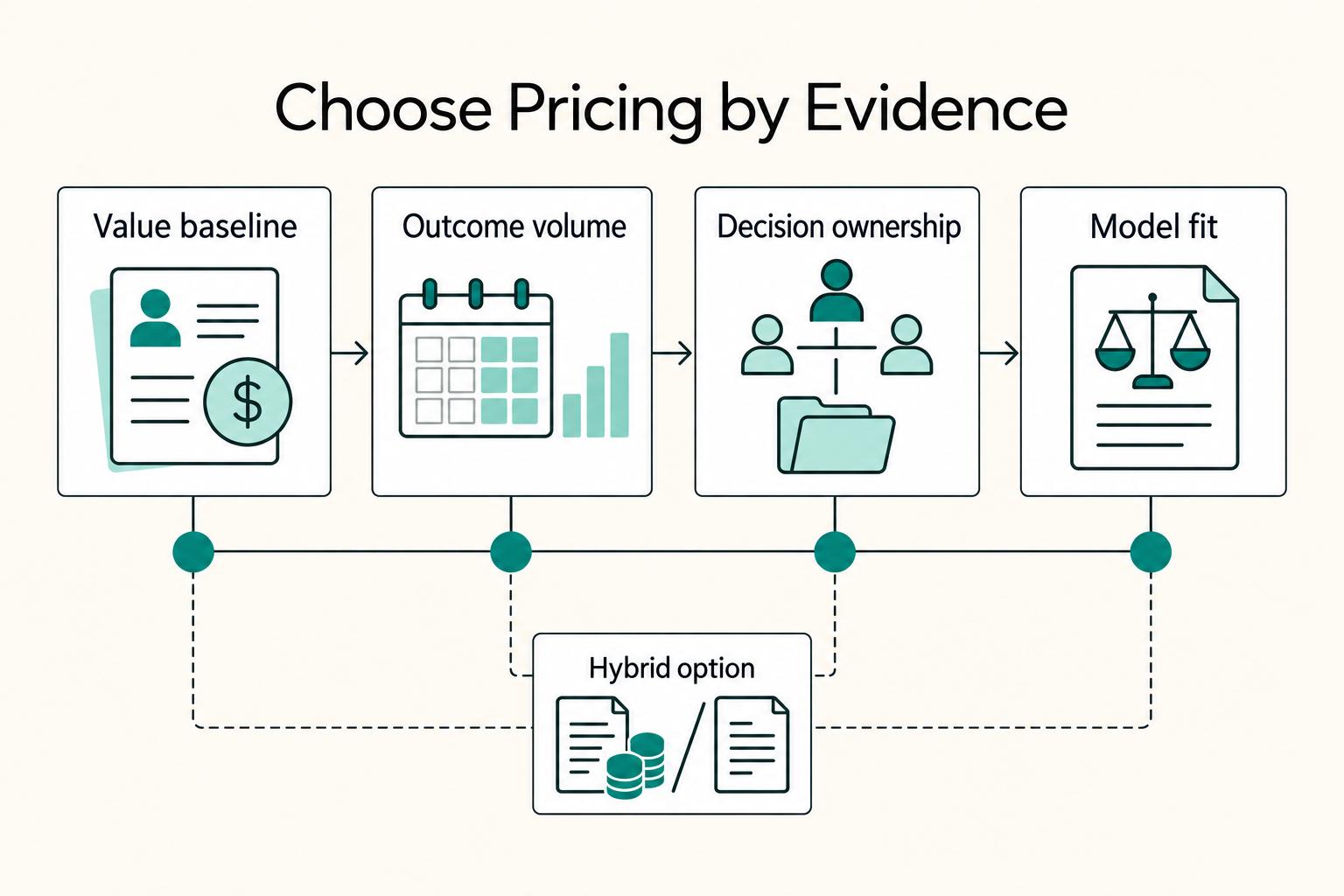
Value-Based Pricing for Freelancers Under Real Payment Risk
Value-based pricing starts with the client’s expected benefit and willingness to pay. It still needs a deliverable, scope and payment agreement you can perform. Use a discovery phase when the benefit or effort is too uncertain to support a defensible quote.

Best Accounting and Tax Advisors for U.S. Expats: Pick the Right Support Level
**Pick the support level that matches your compliance surface area, then evaluate providers on written scope and form coverage.** The common failure mode for most U.S. expats is not "forgetting to file." It is hiring the wrong help model, under-scoping what you actually need, and finding the gap when IRS filings and related reporting obligations hit the critical path. You run a business-of-one, and your tax workflow is part of the system.

How to Choose a Tax Preparer for Your Freelance Business
**Choose a tax preparer for freelancers by ranking compliance controls ahead of speed and price, then shortlist only candidates who can show strong documentation habits.**