
Quick Answer
The best choice depends on whether the platform fits your residency, tax, funding, and reporting needs before it fits your fee target. For Canadians who live, earn, or move across borders, start by confirming account eligibility, provider registration, FX costs, tax-document exports, and corporate or non-resident support. Compare management fees and ETF MERs only after those basics are clear.
Beyond the Fees: A Global Professional's Guide to Canadian Robo-Advisors#
Start with risk, not the sticker fee. If you earn, live, or move across borders, the first question is whether a platform fits your compliance duties, account eligibility, cashflow path, and recordkeeping needs. A lower management fee does not help much if you cannot keep the account, lose money on avoidable FX, or end up with records that are hard to file.
- Compliance fit first. Confirm your Canadian tax residency before you compare portfolios, since your filing obligations depend on residency status. Then verify the firm is properly registered, including CIRO oversight where applicable, and use the OSC registrant search where relevant before funding. A provider you can legally and practically use is the baseline.
- Check account eligibility early. Read the eligibility page before you apply, especially if you live abroad or split time between countries. Wealthsimple says you must live in Canada to open an account and says it is not licensed to hold accounts for Canadians living outside Canada (updated March 11, 2026). This can be a failure point.
- Map FX and cashflow friction. Trace how your money moves from client payment to invested cash. Wealthsimple discloses a 1.5% CAD/USD conversion fee for U.S.-listed trades in CAD accounts, and Questwealth discloses a 100 pips (0.01) markup for U.S. ETF conversions. CRA also expects foreign investment income to be reported in CAD, generally using the Bank of Canada rate for the day the amount arises.
- Stress-test documentation and protection. Prioritize statement exports and transaction history, not just app design. CRA requires you to keep tax records for at least six years and may request supporting documents later. Keep CIPF in perspective. It is custodial insolvency protection for eligible client property, not protection from market losses.
Use this sequence for the rest of the guide: qualify your constraints first, then compare platforms. The next step is a compliance audit, which can rule out costly mismatches before fees and features distract you.
If you want a deeper dive, read our 30-day Ho Chi Minh City move guide.
Your Non-Negotiable First Step: The Global Compliance Audit#
Do this before you compare platforms. Confirm that you can open, keep, and report the account correctly. If your tax status and filing path are not clear on paper, pause funding.
1. Lock down your current tax status first#
Put your facts on one page before you apply anywhere. Create a dated compliance note that includes:
- Your current country of residence
- Any recent move date and any expected move in the next 12 months
- Where you expect to file this year
- Which return should report your interest, dividends, and capital gains
Your checkpoint is simple. You can explain, in plain language, who taxes the account and why. If you cannot, stop and verify before you open or fund anything.
2. Run a U.S.-person risk screen before platform comparison#
If you are a U.S. citizen or green card holder, treat this as a separate verification gate. Confirm whether you could have FBAR reporting obligations and potential FATCA or PFIC exposure before you choose a provider. Use this quick screen:
| Item | What to confirm |
|---|---|
| U.S. return filing | Do you file a U.S. return? |
| Non-U.S. investment products | Do you hold non-U.S. investment products? |
| Foreign financial accounts | Do you have foreign financial accounts that could require FBAR reporting? |
| FATCA | Current thresholds and form requirements pending official/source verification. |
| PFIC | Confirm whether filing is required and which current forms apply. |
| FBAR | Confirm current reporting requirements and timing notices; FinCEN's FBAR page shows filing timing can change with event-based relief. |
Then record the current-year FATCA thresholds and form requirements, confirm whether PFIC filing is required and which current forms apply, and check FBAR reporting requirements and timing notices before you fund.
3. Verify non-residency rules directly with each provider#
Do not rely on assumptions here. Before you apply, get written answers from each provider on:
| Question | What it covers |
|---|---|
| Account-opening eligibility | Based on your current residency facts |
| What happens if you move abroad | Account status after a move |
| Contribution or maintenance constraints | Any limits after a move |
| Required declarations or status updates | What changes when residency changes |
Treat vague responses as risk. You need clear rules you can follow without guesswork.
4. Build treaty, withholding, and foreign tax credit execution before first income posts#
Once eligibility is clear, set up the filing path before the account starts generating income. Confirm whether treaty treatment applies to your situation, capture broker slips and year-end statements, and map those amounts into your filing process, including foreign tax credit handling.
If you file in the U.S., keep this structure in your checklist:
| Topic | Current requirement |
|---|---|
| Foreign Tax Credit | IRS says a credit is usually more advantageous than an itemized deduction. |
| Who claims it | Individuals, estates, and trusts claim it on Form 1116. |
| Income categories | Use separate Form 1116s by income category, with one category per form. |
| Currency | Report in U.S. dollars except where Form 1116 Part II says otherwise. |
| Excluded income | Do not claim a credit on income you excluded, for example excluded foreign earned income or housing costs. |
| Qualifying taxes | Do not assume all foreign taxes are creditable; Topic 856 says qualifying taxes must pass four tests, and some taxes still do not qualify. |
| Holding-period records | Keep records detailed enough to verify dividend-related holding-period conditions, including the 16-days-within-31-day rule tied to the ex-dividend period. |
We covered this in detail in The Best Personal Finance Apps for Canadians. Before you compare portfolios, run a quick residency check so your account setup and tax workflow stay aligned: Use the tax residency tracker.
Test each platform on funding, reporting, contribution control, and corporate fit#
Use a pass-fail operating test, not a fee-first shortlist. The right platform is the one that lets you fund on invoice timing, reduce conversion leakage, keep tax records usable, and invest retained earnings without account-structure surprises.
| Provider | Deposit rails documented | FX handling path | Exportable tax files | Manual vs automatic contribution controls | Corporate account support |
|---|---|---|---|---|---|
| Questwealth Portfolios / Questrade | Online bill payment is a recommended CAD rail; wire transfer supports CAD and USD; PAD is described as a popular method for USD and recurring deposits | Questwealth accepts cash transfers in CAD or USD at any time; investments cannot be transferred as-is into Questwealth accounts | Questrade says tax slips can be reviewed and downloaded in-client | Manual cash transfers any time; minimum to start Questwealth is $250 | Confirm current eligibility, supported account types, and document exports directly with provider |
| Wealthsimple Invest | Recurring CAD deposits from another bank account (weekly, bi-weekly, monthly) | If you get paid in another currency, confirm conversion path before funding; cited recurring-deposit docs are CAD-focused | Confirm current tax slip and transaction export options directly with provider | Recurring deposits supported; managed-investing deposits are described as automatically invested within 5 business days; non-registered accounts have no contribution or withdrawal limits | Corporate accounts supported for corporations; sole proprietorships and partnerships are excluded |
| RBC InvestEase | Funding from another financial institution by bill payment or linked bank account | Confirm supported funding currencies directly with provider | Confirm current tax slip and transaction export options directly with provider | Manual deposits or autopilot; RBC says chequing/savings contributions are processed in real time between 4:30am and 7:55pm; non-registered accounts have no contribution limits | Do not assume corporate support from current retail account pages; confirm directly |
| Justwealth | Confirm current funding rails directly with provider | Confirm supported currencies and conversion path directly with provider | Confirm current tax slip and transaction export options directly with provider | Confirm current manual and recurring contribution options directly with provider | Corporate onboarding asks for a business number and details for beneficial owners of 25% or more |
Once you have a shortlist, test it on four practical points: funding, reporting, contribution control, and corporate fit. That will tell you more than a basic fee comparison.
1. Funding flow#
Pass if you can name your funding rail, accepted currency, and typical timing before you open the account. That is what prevents funding delays and unnecessary conversion friction when invoices land irregularly.
Fail if your plan depends on moving positions later without checking transfer rules. Questrade states investments cannot be transferred as-is into Questwealth accounts. If your plan assumes an in-kind move into managed investing, redesign that path first.
2. Reporting quality#
Good reporting saves time at filing, and bad reporting creates clean-up work later. Pass if your tax records are accessible without support escalation. Questrade documents in-client tax-slip downloads, and you should confirm current export options with every provider before funding so your year-end process stays clean.
Fail if document access or exports are unclear. Vague reporting usually means more reconciliation work, slower filing, and more admin.
3. Contribution flexibility#
You want both control and automation. Pass if you can use manual and recurring contributions, because that lets you handle uneven cash months while still automating baseline investing when cashflow is steady.
Fail if you optimize only for autopilot. Registered account limits still matter. For example, CRA lists a 2026 TFSA annual limit of $7,000, while non-registered accounts at Wealthsimple and RBC InvestEase are described as having no contribution limits.
4. Corporate account fit#
This is where many otherwise suitable platforms fall out of the running. Pass if your legal entity is explicitly supported and your onboarding documents are ready before you apply. That gives you control over retained earnings without avoidable rework.
Fail if you treat "business account" as a generic label. Wealthsimple excludes sole proprietorships and partnerships from its corporate account support. Justwealth asks for business-number and beneficial-owner details (25% or more). Confirm current eligibility and requirements directly with each provider. If advice is part of the model, verify advisor or firm registration through CIRO's AdvisorReport. Also keep the protection boundary clear. CIPF coverage is custodial and does not protect against market losses.
Related: A Guide to Using a Financial Planner vs. a Robo-Advisor.
The Strategic Showdown: Choosing Your Platform with Confidence#
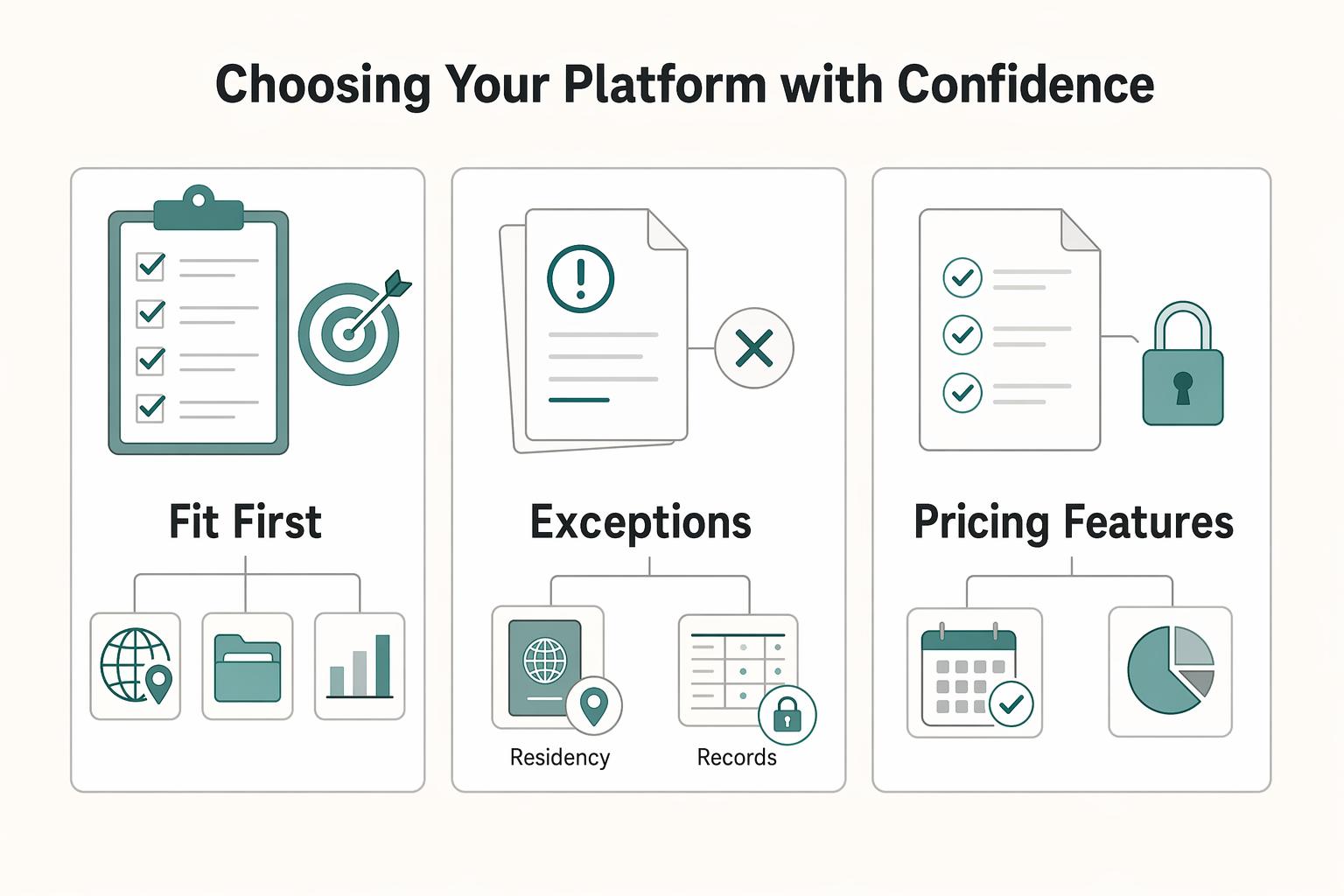
Choose by fit first, then verify details before you open anything. The reliable process is simple: define what you need, then test each firm on how it actually operates.
Start with your own constraints. Use a self-assessment checklist before any advisor conversations, then use your answers to determine what kind of advisor or platform you need. Ask firms about credentials, investment philosophy, and firm policies. Markets are unpredictable, so clear operating answers matter more than polished onboarding.
| Provider | When you might shortlist it | Account eligibility | Operating model | Support access | Portfolio flexibility | Reporting quality | Business account fit | Best fit if... |
|---|---|---|---|---|---|---|---|---|
| Candidate A | You want a simpler day-to-day workflow | Confirm current eligibility for your exact account and entity needs before opening | Confirm how deposits, investing timing, and automation work for your situation | Confirm current support channels, escalation path, and who handles account-specific questions | Confirm current portfolio options and any restrictions that matter to you | Confirm current tax-slip access and transaction export options | Confirm whether your legal entity is supported and what onboarding documents are required | ...you are time-constrained and want straightforward operations |
| Candidate B | You want to pressure-test cost and funding mechanics | Confirm current eligible account types and transfer limitations before moving money | Confirm funding rails, currency handling, and any minimums relevant to your deposit pattern | Confirm how support works in practice | Confirm current portfolio choices and any customization limits | Confirm current downloadable slips and transaction-history access | Confirm whether your business structure is supported now, not assumed from old pages | ...you are cost-sensitive and will verify details up front |
| Candidate C | You expect a less standard setup and want pre-opening clarity | Confirm current account availability for your situation | Confirm how onboarding works for more complex cases and what information is required | Confirm who you can speak to, when, and about which topics | Confirm current mandate or customization options if that matters to your case | Confirm which year-end documents and exports are available | Ask for the current business-account document list before applying | ...you run a more complex structure and want discussion before funding |
| Candidate D | You want a large-institution option in your shortlist | Confirm current account types and linking requirements | Confirm contribution methods, processing times, and how manual versus recurring deposits work | Confirm what can be handled digitally and what still requires direct support | Confirm current portfolio menu and limitations | Confirm statement, slip, and export availability directly | Do not assume business support from retail pages; verify it directly | ...you prefer institution-first familiarity |
| Candidate E | You want another comparator | Confirm current account availability and onboarding requirements | Confirm current funding methods and contribution controls | Confirm support channels and escalation options before opening | Confirm current portfolio options and how much choice you actually get | Confirm current tax-document and transaction export access | Verify business-account support and required documents directly | ...you want familiarity and are willing to verify details carefully |
That repeated "confirm" language is intentional. In practice, the real risk sits in unclear eligibility, support boundaries, and reporting access, not in marketing claims.
If a provider is vague on those basics, treat that as operating risk. Also plan for the support tradeoff: many people want advice but struggle to find affordable support.
Use this order to decide:
- Fit first. Define what you need before firm conversations.
- Operational fit second. Verify the funding path, document access, and support escalation before funding.
- Pricing and features last. Compare convenience, portfolio setup, and cost only after the first two steps are solid.
Follow that sequence and the shortlist usually becomes clear without guesswork.
You might also find this useful: Tax Implications for an Australian Resident Owning a US LLC.
The Final Verdict: Investing as a Strategic Asset#
Choose in this order: compliance first, operational fit second, platform last. That sequence helps you avoid opening an account you cannot fund smoothly, document properly, or maintain after a residency change.
1. Audit compliance first#
Your first priority is avoiding preventable tax and eligibility mistakes, not chasing returns. If you are a U.S. person with cross-border exposure or have a non-standard account setup, confirm your residency and tax posture before applying. For U.S. persons, PFIC reporting complexity can be a material risk, so review proposed holdings before you fund.
2. Confirm operational fit next#
Once compliance is clear, test the account against your real workflow. Ask support in writing which account types you can open, which statements and tax documents you get, and how deposits are processed. Then run a small test transfer first to catch funding or account-name issues early.
3. Compare platforms last#
Now compare tradeoffs, not brand labels. Check both fee layers together: management fee plus ETF MER. Third-party comparisons dated January 2, 2026 place common management-fee levels around 0.25% to 0.50% per year and typical all-in costs around 0.5% to 0.8% per year. They also show lower published management-fee tiers for Questwealth than Wealthsimple in some balance bands. In practice, those lower published tiers can fit a more fee-sensitive setup, while overall platform fit still depends on your workflow needs. Before opening, confirm current pricing, features, policies, and CIPF membership (or partner membership), since provider terms can change.
| Reader profile | Best-fit platform traits | Primary risk to verify before opening |
|---|---|---|
| Canada-based freelancer | Straightforward managed portfolio, simple recurring deposits, clear annual statements | CIPF status and exact funding/reporting workflow |
| Cross-border earner | Clear explanation of holdings and account workflow | Residency treatment and whether PFIC review is needed |
| Incorporated professional | Account process confirmed in writing, entity-name onboarding, year-end documentation | Corporate eligibility and required onboarding documents |
- Validate your residency and tax posture.
- Confirm account eligibility, document output, and protection status in writing.
- Test your funding path with a small deposit.
- Then fund the account that best fits your workflow and total-cost tradeoff.
For a step-by-step walkthrough, see The Best SRI Robo-Advisors for Freelancers Who Need Cashflow Stability First.
After you pick your investing setup, tighten your get-paid operations with one workflow for invoicing, balance tracking, and payouts where supported. Explore Gruv for freelancers.
Frequently Asked Questions
Can a non-resident Canadian use a robo-advisor?
Maybe, but do not assume eligibility stays the same after you move. Some major providers currently describe new-account access as Canada-only, so confirm in writing whether you can keep the account, trade it, or contribute. Also remember that non-resident TFSA contributions can trigger 1% per month tax until corrected.
What are the tax implications of using a Canadian robo-advisor while living abroad?
Start by confirming whether Part XIII withholding could apply to your account income and which non-resident slips you will receive. CRA lists a 25% Part XIII rate for taxable amounts paid or credited to persons in non-treaty countries. Ask support to map your residency status to the actual reporting output, then verify current withholding treatment.
Which Canadian robo-advisor is best for a U.S. citizen in Canada?
No single provider is automatically best. Choose based on cross-border tax fit, review the holdings before funding, and make sure the tax-document workflow works for your preparer. PFIC or Form 8621 reporting can matter in some cases.
How should I fund a Canadian robo-advisor with foreign currency?
Choose the funding rail first, because the currency path and processing times can matter more than small headline fee differences. Questrade lists online bill payment as CAD-only and wire transfers as CAD and USD, while PAD has different timing. If conversion happens inside the platform, confirm the FX fee in advance, and note that Wealthsimple states an FX conversion fee applies on top of its corporate exchange rate. Direct USD deposits are available for eligible USD investing accounts from a Canadian financial institution.
Are robo-advisor fees tax-deductible in Canada?
Sometimes. CRA Line 22100 can allow certain investment-management or advice-related fees in non-registered accounts, while fees tied to registered plans are excluded. Keep the annual fee documentation and use the exact statement with your preparer instead of estimating.
Do Canadian robo-advisors offer corporate investment accounts?
Some do, but verify current policy directly with support before you apply. Questrade documents corporate investment accounts, and Wealthsimple advertises corporate accounts with managed portfolios, but availability and entity requirements can change. Ask for the current onboarding document list and entity eligibility before you start an application.
What is the difference between a management fee and an ETF MER?
The management fee is the advisory charge, while the ETF MER is the fund-level ownership cost that also includes other expenses. In many robo-advisor portfolios, you pay both. Evaluate total cost as an additive figure.
Try a related tool
Researched and edited by the Gruv editorial team. Gruv builds cross-border billing, payouts, and finance-operations software for global businesses.
Sources
Includes 5 external sources outside the trusted-domain allowlist.
- fincen.gov/report-foreign-bank-and-financial-accountstrusted
- irs.gov/individuals/international-taxpayers/foreign-...trusted
- irs.gov/taxtopics/tc856trusted
- blackrock.com/no/individual/the-bid-podcastsexternal
- canada.ca/en/revenue-agency/services/tax/international...external
- canada.ca/en/revenue-agency/services/tax/individuals/t...external
- cipf.caexternal
- ciro.ca/office-investor/investing-basics/diy-vs-advi...external
Educational content only. Not legal, tax, or financial advice.
Related Posts

Ho Chi Minh City Digital Nomad Guide for a 30-Day Move (2026)
Ho Chi Minh City is a strong base if your priority is keeping work momentum while relocating. You get density, plenty of places to work from, and a social scene that can help you settle quickly. It is a weaker fit if your best days depend on calm streets, easy walking, and long stretches of quiet. In practice, Saigon tends to reward people who want convenience and activity more than retreat pace.
A Guide to Using a Financial Planner vs. a Robo-Advisor
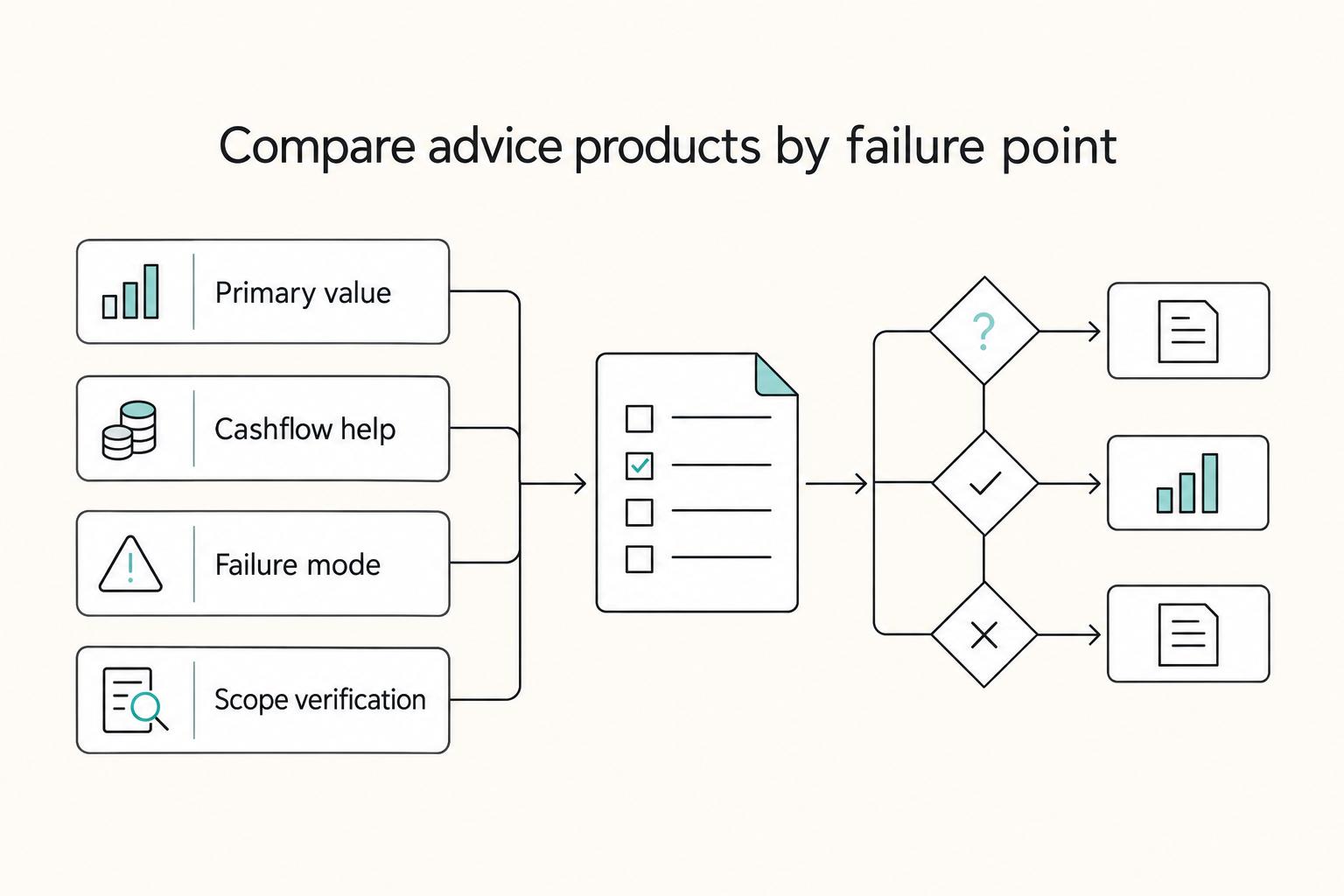
Make the decision that keeps your cashflow stable first, then choose the investing setup you can actually maintain. Do not start by debating portfolio optimization. Start by stress-testing the part of your finances most likely to break when you invoice clients: timing mismatches between incoming payments and outgoing obligations (rent, payroll, software, taxes).

Tax Implications for an Australian Resident Owning a US LLC
There is no one-size-fits-all shortcut for US LLC tax decisions across Australia and the United States. Setting up a US Limited Liability Company (LLC) is one step; getting the tax treatment right in both systems is where risk starts. If you are handling **australian owning us llc tax** decisions, treat this as a classification and documentation problem first, not a shortcut hunt. If you run a business of one, your job is to pick the defensible path and keep the paperwork tight.