
Quick Answer
Use three practical filters to choose property management software: validate compliance steps first, test day-to-day remote control second, and confirm month-end financial outputs last. In vendor demos, ask for one continuous record from tenant communication through maintenance closure and reporting handoff. Buildium is commonly a better fit when your priority is accounting clarity for a small to mid-sized portfolio, while AppFolio is often a stronger candidate when you already run a larger operation and need tighter execution visibility.
Beyond the Hype: Why Standard 'Best Of' Lists Fail the Global Professional#
Most "best of" roundups are not written for you. They assume a local DIY landlord optimizing for the lowest monthly cost, not a remote owner who needs control, compliance, and records that still make sense six months later.
- Lowest price misses your real cost
A cheap or free tool can become the most expensive option if it pushes hours of manual entry back onto you. The real question is not monthly price. It is the return on your time: how much admin disappears, how much risk stays contained, and who is accountable when something goes wrong. One mishandled security deposit can mean substantial penalties, so "low cost" is a weak signal for a professional buying decision.
- Feature counts hide the failure modes
A long checklist tells you very little if the pieces do not connect into one reliable record. "Accounting" means little if lease data, billing logic, and reporting do not line up, or if key reconciliations live in spreadsheets only one person understands. A better verification step is simple: ask to see the actual audit trail for tenant and vendor communication, along with exported reports that simplify Schedule E preparation and, if relevant, support foreign-account reporting readiness.
- Local-landlord assumptions break remote oversight
Generic rankings often treat software like a convenience app. You need remote control. That means centralized communication in one auditable trail and records another operator could follow without you explaining the setup over Zoom at 2 a.m.
That is why the rest of this article does not rank property management software by price or feature volume. It uses three practical filters instead: the Compliance Shield, the Remote Cockpit, and the Asset Ledger.
Related: How to Invest in Real Estate as a Digital Nomad.
Pillar 1: The Compliance Shield - Protecting Your Asset from 5,000 Miles Away#
Start with compliance. Treat it as your first filter, not a feature check, because one lease or deposit mistake can cost more than a premium subscription.
| Check | What to confirm | Record goal |
|---|---|---|
| Lease fit and e-sign workflow | Generate a lease for your property location, show editable fields, show version history, and show where the final signed lease is stored. | Carry the lease from draft to signed storage in one record. |
| Security-deposit controls | Show the move-out flow from deposit receipt to itemized deductions, receipts, tenant communication, statement delivery, and closure in the same file. Ask where timing rules are handled for your jurisdiction. | Track deposit activity as a full workflow, not a single line item. |
| Tax-report readiness | Export reports, trace rental income and expense detail, and isolate cross-border account activity cleanly for adviser review. | Support Schedule E preparation and foreign-account record tracking. |
| Audit trail quality | Show one end-to-end maintenance dispute, from first tenant message through vendor invoice and owner approval, with timestamps and linked files. | Keep communication, uploads, approvals, and status changes in one auditable trail. |
Use this checklist in every product demo:
- Lease fit and e-sign workflow
Confirm the platform can generate documents for your actual state and local jurisdiction, then carry that lease from draft to signed storage in one record. In the demo, have the rep generate a lease for your property location, show editable fields, show version history, and show where the final signed lease is stored. Red flag: "Our forms work nationwide" without a clear jurisdiction-specific workflow.
- Security-deposit controls
Confirm deposit activity is tracked as a full workflow, not just a single line item. In the demo, follow the move-out flow from deposit receipt to itemized deductions, receipts, tenant communication, statement delivery, and closure in the same file. Also ask where timing rules are handled for your jurisdiction, then verify the current deadline and penalty separately.
- Tax-report readiness (Schedule E and foreign-account tracking)
Confirm reports are exportable and detailed enough for real filing support, including Schedule E preparation and foreign-account record tracking for FBAR-related workflows. In the demo, export reports rather than screenshots, trace rental income and expense detail, and isolate cross-border account activity cleanly for adviser review. Verify the current reporting threshold separately.
- Audit trail quality
Confirm tenant and vendor communication, document uploads, approvals, and status changes stay in one auditable trail. In the demo, ask to see one end-to-end maintenance dispute, from the first tenant message through vendor invoice and owner approval, with timestamps and linked files.
Quick risk test: if a tenant disputes deposit deductions months later while you are abroad, can you open one record and hand over the lease version, receipts, messages, and accounting entries immediately? If not, this platform has not cleared Pillar 1.
Once a platform passes this compliance checklist, use the next pillar to judge day-to-day remote control before you rank options.
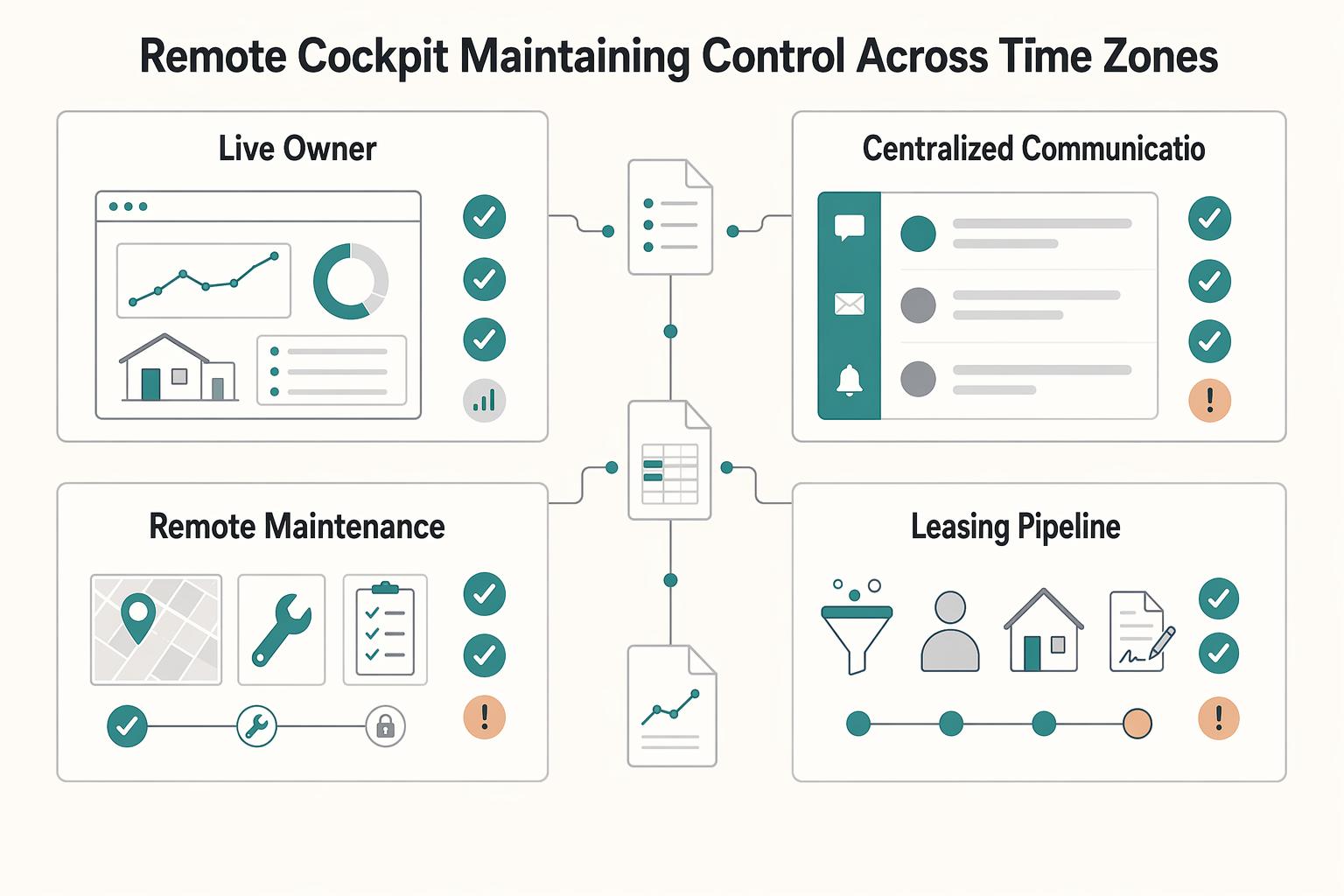
Pillar 2: The Remote Cockpit - Maintaining Control Across Time Zones#
Once a platform passes compliance, test control next: can you see what is happening, approve key decisions, and trace what happened while you are in another time zone? If not, you will get delayed surprises instead of clean oversight.
Use this operator checklist in demos:
| Capability | What to verify | Red flag |
|---|---|---|
| Live owner dashboard | From owner view, show one occupied unit, one vacant unit, one overdue balance, and one active work order. Then switch owner, manager, and vendor permissions so you can see who can approve, edit, or view only. | The dashboard is mostly after-the-fact reporting, or basic status checks still need exports. |
| Centralized communication log | Open one thread with a tenant message, staff reply, file upload, and status change in the same record. Confirm who can edit or delete entries and how timestamps appear across time zones. | Team members copy texts or emails into notes later, so the record is reconstructed after the fact. |
| Remote maintenance workflow | Confirm one full work-order path in one record: assignment checkpoint, documentation checkpoint, owner approval checkpoint, and payment checkpoint. | Vendors can be paid before completion evidence, invoice support, or final notes are attached. |
| Leasing pipeline visibility | Move one sample applicant from application to approved lease and show where data carries over. Confirm you can spot stalled applications and upcoming expirations in the same workflow view. | Staff re-enter applicant data at lease stage, or screening and leasing records are split. |
For maintenance specifically, run a simple end-to-end test: tenant submits a request with photos, staff assigns a vendor, the vendor adds an estimate and notes, you approve if needed, completion proof and invoice are attached, payment is released, then the ticket closes.
If this pillar is weak, reporting turns into cleanup work. That is why the next pillar looks at whether this operating visibility becomes better financial decisions.
We covered this in detail in The Best Expense Management Software for a Remote Team.
Pillar 3: The Asset Ledger - Treating Your Property Like an Investment#
If this pillar is strong, you can make faster, better decisions because every transaction lands in your books in a usable way. If it is weak, you get activity logs without reliable investment insight.
- Performance metrics that drive action
Start with a property-management chart of accounts built around the five core categories: Assets, Liabilities, Equity, Income, and Expenses. That structure keeps period-to-period comparisons clean and keeps daily bookkeeping aligned with year-end tax work.
Use NOI as your operating-performance signal. If occupancy looks stable but NOI trends down, investigate pricing, expenses, or coding quality before the issue compounds. Use cash-on-cash return as your capital-allocation signal. If one property absorbs more cash but returns less, review rent strategy, financing, or whether to keep allocating capital there.
What to verify in demo: ask the rep to code one rent payment, one security deposit, and one maintenance invoice, then show the resulting P&L and Balance Sheet. If a deposit posts to income instead of liabilities, or category edits break trend consistency, treat that as a ledger reliability risk.
- A due-diligence vault that works under pressure
You need more than storage. You need an asset-registry-style record where leases, invoices, photos, ownership records, and maintenance history stay preserved and easy to retrieve for compliance and decision-making.
Operational checklist:
- Capture documents at the unit or transaction level, not as loose uploads.
- Tag by property and document type so records stay filterable.
- Keep maintenance history attached to the same record trail.
- Verify controlled sharing for lenders, accountants, and partners.
- Test retrieval live: one signed lease, one HVAC invoice, and one maintenance thread.
If retrieval requires screen-hopping or file export cleanup, expect rework later during tax prep, refinance, or sale.
- Classification discipline that reduces filing-time rework
This is where software quality shows up at tax time. Your platform should help you separate operating expenses, capital expenditures, and liabilities cleanly so tax prep is a handoff, not a reconstruction project.
| Item type | Ledger classification | Evidence to attach | Treatment note |
|---|---|---|---|
| Routine repair | Expense | Invoice, work order, completion note | Verify the current treatment rule separately. |
| Capital improvement | Capital expenditure / asset-related category | Contract, paid invoice, before-and-after proof | Verify the current treatment rule separately. |
| Security deposit | Liability | Lease clause, receipt, deposit record | Record as liability, not income. |
The workflow is simple: code transactions correctly once, generate P&L and Balance Sheet from that structure, then hand your accountant categorized reports plus source documents for Schedule E preparation. Score Asset Ledger strength alongside Compliance Shield and Remote Cockpit in your final platform comparison. If you want a deeper dive, read Value-Based Pricing: A Freelancer's Guide.
How the platforms compare and what to verify in a demo#
The right platform clears Compliance Shield first, then proves you can run operations and books from one reliable record. If a demo cannot show compliance checkpoints, an auditable communication trail, and clean ledger output, treat that as a no-go.
| Platform | Compliance Shield (verify first) | Remote Cockpit (verify next) | Asset Ledger (verify last) | Best fit for you | Poor fit for you |
|---|---|---|---|---|---|
| Buildium | Verify local or state document handling, deposit liability treatment, and reminders for expiring records. | Trace one tenant issue from message to work completion without screen-hopping. | Run the 3-entry test: one rent payment, one security deposit, one maintenance invoice into P&L and Balance Sheet. | You want operations and books to stay connected as your portfolio grows. | You still need manual recoding or custom spreadsheets for accountant handoff. Verify current pricing separately. |
| AppFolio | Verify document control, task reminders, and whether move-in requirements are visible and timestamped. | Stress-test communications, approvals, maintenance, and onboarding history end to end. | Ask for month-end outputs before assuming reporting depth. | Your main pain is remote oversight and operational complexity. | The audit trail breaks during handoff, or pricing is unclear. Verify current pricing separately. |
| TenantCloud | Verify lease and compliance artifacts, deposit handling, and reminder coverage for your obligations. | Check practical workflow coverage: rent collection, agreements, renewals, inspections, maintenance, and expense tracking. | Confirm classification discipline and month-end reporting before scaling. | You want a lighter all-in-one start with connected core workflows. | Your accountant or operator still has to rebuild transactions manually. Verify current pricing separately. |
| TurboTenant | Verify post-signing controls: deposits, records, maintenance, and document retention. | Stress-test post-move-in workflow, not just lead capture and applications. | Treat ledger depth as unproven until you see live reports with attached source documents. | You intentionally want a lighter setup and documented workarounds. | You end up with patchwork integrations that add complexity. Verify current pricing separately. |
How to choose in the right order#
| Step | Pillar | Live demo task |
|---|---|---|
| 1 | Compliance Shield | Show centralized records and timely updates for compliance work such as fair housing, licensing renewals, COI tracking, and data privacy obligations. |
| 2 | Remote Cockpit | Show one full chain: tenant message, maintenance request, approval, completion note, and attached files. |
| 3 | Asset Ledger | Code one rent payment, one security deposit, and one invoice, then show the exact month-end reports and source documents your accountant or operator would receive. |
-
Start with Compliance Shield. Compliance work can include fair housing, licensing renewals, COI tracking, and data privacy obligations. A missed update or expired document can lead to penalties, delays, or reputational risk, so drop any tool that cannot centralize records and show timely updates.
-
Then test the Remote Cockpit. Ask for one full chain: tenant message, maintenance request, approval, completion note, and attached files. If the flow relies on fragmented dashboards or patchwork integrations, assume daily operations will degrade after onboarding.
-
Finish with the Asset Ledger. Have the rep code one rent payment, one security deposit, and one invoice, then show the exact month-end reports and source documents your accountant or operator would receive.
Four short buying notes#
Buildium is worth keeping in the running when your first question is what actually lands on the Balance Sheet. That usually means you are optimizing for fewer manual reconciliations, not feature polish alone. Walk if transaction-to-evidence traceability is weak.
AppFolio should pass a hard workflow demo before anything else. You are looking for clean, time-stamped operational history you can trust remotely. If exports and handoff evidence stay vague, treat that as a risk.
TenantCloud is viable when the basics stay connected in one place. Validate rent collection, agreements, renewals, inspections, maintenance, and expense tracking as one workflow, not separate checkboxes. If they disconnect, the cleanup cost shows up later.
TurboTenant needs a clear boundary test across the full tenancy lifecycle. It can work when you knowingly accept a lighter stack and document how audit-trail continuity is preserved after move-in. If that continuity depends on too many separate tools, complexity usually rises.
Edge cases matter, including mixed portfolios, local manager involvement, owner-occupied units, and cross-border tax constraints. The FAQ next handles those decision forks.
Conclusion: From Landlord to Remote Asset Manager#
You are not just buying software. You are choosing the operating setup that will hold your records, tenant activity, maintenance history, payments, and reporting together when you are nowhere near the property.
That is the shift that matters. The right platform lets you manage like an owner with standards, not a landlord chasing updates across inboxes and spreadsheets. In broad market roundups, brand names matter less than whether the platform can support daily control.
- Control Checklist: Your baseline is one place for the core jobs in this category: rent collection, lease management, maintenance tracking, tenant portals, and online payment processing. The real test is whether those records stay connected well enough that you can verify what happened without rebuilding the story manually later.
- Remote Cockpit: Remote control is not a nice extra. You need cloud access from multiple devices and a clear path for data to move into the other tools you already use. The real test is speed of oversight. If you cannot check core activity quickly from wherever you are, distance will turn into delay.
- Asset Ledger: Reporting has to support decisions, not just screenshots. Property performance reporting should let you review performance, occupancy, and related metrics in a way you can trust. The real test is financial visibility you can actually use at month-end.
Named vendors in market lists, including AppFolio, are useful fit-by-priority examples, not automatic winners. Use your own priority tests instead of brand shortcuts.
Final decision checks#
| Stage | What to check | Details |
|---|---|---|
| Before choosing | Quote, integrations, and full record chain | Check the quote against the directional $50 to $150 per month mid-range and $250 to $1,000+ enterprise bands, whether data integrates with your existing tools, and whether the vendor can show the full record chain in one demo. |
| During trial | Core workflow test | Run one payment, one maintenance request, one tenant portal action, and one performance report on both desktop and mobile. |
| Walk away if | Key warning signs appear | The product pushes you back into spreadsheets, the demo breaks across modules, or answers on pricing and data handoff stay vague. |
- Confirm before choosing: where your quote lands against the directional $50 to $150 per month mid-range and $250 to $1,000+ enterprise bands, whether data integrates with your existing tools, and whether the vendor can show the full record chain in one demo.
- Test during trial: one payment, one maintenance request, one tenant portal action, and one performance report on both desktop and mobile.
- Walk away if: the product pushes you back into spreadsheets, the demo breaks across modules, or answers on pricing and data handoff stay vague.
Use that checklist, keep the three pillars in order, and your next step becomes simple: test the platform like the system for the asset you already own.
Frequently Asked Questions
What should you check first if you manage from another state or another country?
Check whether the platform can act as one source of truth for your required records, tenant portal activity, maintenance and work orders, and accounting tools. You do not want a setup that pushes you back into spreadsheets. If the rep cannot show those core functions connected in one live demo, stop there and remove it from your shortlist.
When should you choose Buildium?
Choose Buildium when your portfolio is small to mid-sized and you do not want a minimum unit requirement to force your decision. One 2026 guide positions it for that range, says it does not require minimum unit counts, and lists pricing starting at $58/month. Use that for screening, but still verify the quote. If the demo cannot show clear accounting tools and a simple rent collection path that reduces manual steps, keep looking.
When should you choose AppFolio?
Choose AppFolio when you are evaluating fit for a larger operation with more moving parts. A 2026 guide lists AppFolio from $1.49/unit/month and notes a 50+ units minimum, so check size and budget fit before you get pulled in by a polished demo. If the tenant portal, mobile access, and maintenance handling look good but your quote, minimums, or handoff to accounting stay fuzzy, treat that as a buying red flag.
How should you compare Buildium and AppFolio side by side?
Use the table below to screen fit fast. Then make both vendors prove the same three actions live: one tenant interaction, one maintenance request, and one month-end accounting output. | Checkpoint | Buildium | AppFolio | | --- | --- | --- | | Portfolio fit | Better first look for small to mid-sized portfolios | Better first look if you already meet the 50+ units minimum | | Cost screen | One 2026 guide lists pricing starting at $58/month | One 2026 guide lists pricing from $1.49/unit/month | | What to test hardest | Accounting tools, report clarity, and rent-collection workflow | Mobile access, tenant portal use, and maintenance/work order handling | | Remote landlord risk | Books may still need manual cleanup if reports are weak | Operations may look smooth while pricing, minimums, or accounting handoff fit poorly | If either vendor refuses to show your exact use case and falls back on generic rankings, move on. Trust live verification more than list placement.
Can either platform work if your top concern is remote maintenance and tenant communication?
Yes, but only if the tenant portal and maintenance tools stay tied to the same record you will use later for oversight and reporting. Ask to see a resident message, a work order, status updates, and the final invoice without jumping through disconnected tools. If that chain breaks, you are buying patchwork, and patchwork gets worse after move-in.
What should you ask for before you sign a contract?
Ask for a live checklist that covers accounting tools, tenant portals, mobile access, customer support, pricing flexibility, and how the platform scales with your portfolio size and property type. For proof, request a live month-end walkthrough of reports and related records, not just dashboard screenshots. Also watch whether automated rent collection really collapses a manual process from many steps into one. If they cannot give you that package clearly, do not negotiate on hope. Ask for a trial, a deeper demo, or choose another platform.
Try a related tool
Researched and edited by the Gruv editorial team. Gruv builds cross-border billing, payouts, and finance-operations software for global businesses.
Sources
Includes 5 external sources outside the trusted-domain allowlist.
- admisiones.unicah.edu/scholarship/N7nPQZ/3OK067/appfolio_property-...trusted
- ash.harvard.edu/wp-content/uploads/2007/01/Full_Disclosure.pdftrusted
- pmc.ncbi.nlm.nih.gov/articles/PMC9535224trusted
- 2727coworking.com/articles/commercial-building-management-soft...external
- amerisave.com/learn/best-property-management-software-solu...external
- baselane.com/resources/property-management-chart-of-accountsexternal
- baselane.com/resources/15-best-landlord-software-platformsexternal
- gartner.com/reviews/market/property-management-softwareexternal
Educational content only. Not legal, tax, or financial advice.
Related Posts
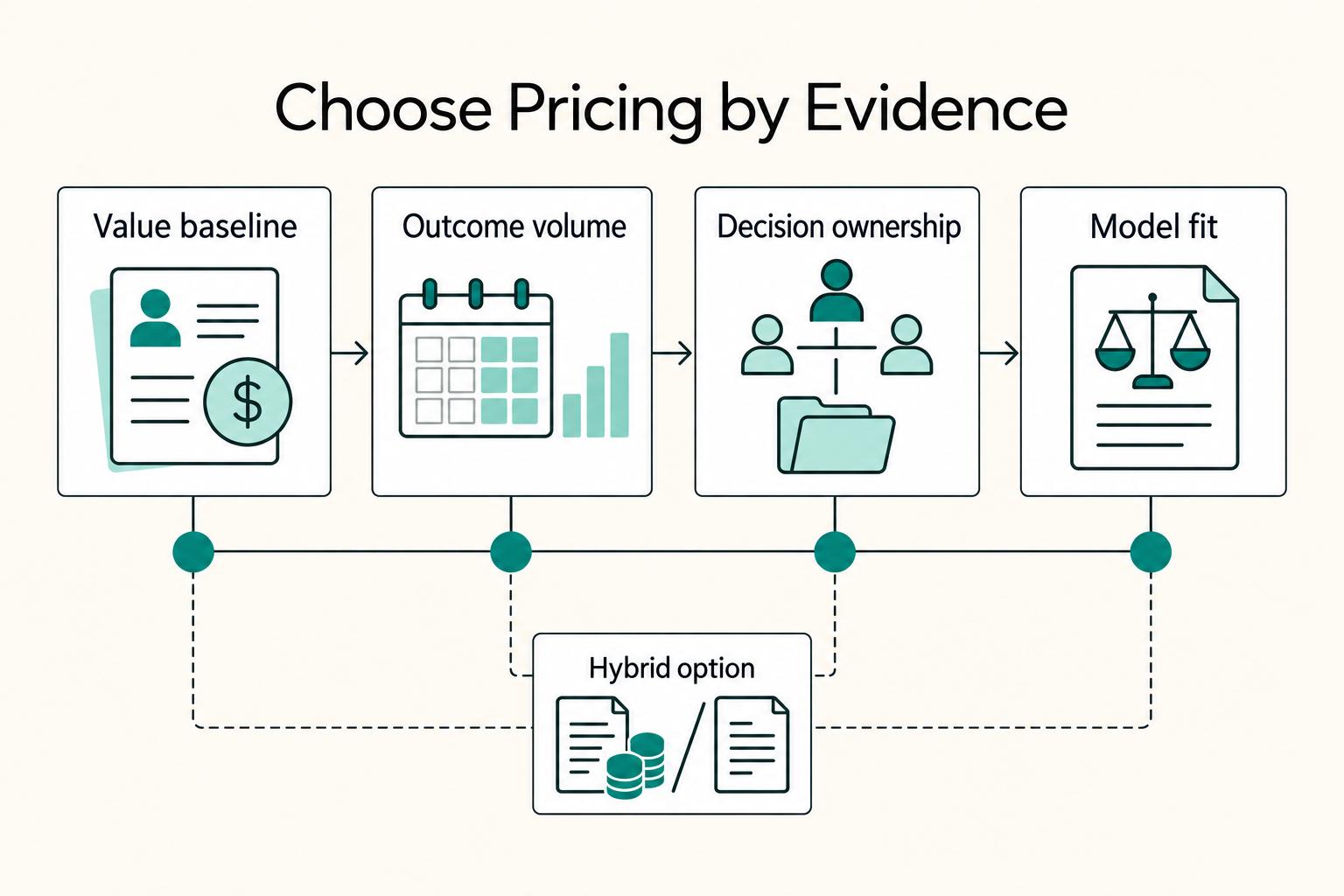
Value-Based Pricing for Freelancers Under Real Payment Risk
Value-based pricing works when you and the client can name the business result before kickoff and agree on how progress will be judged. If that link is weak, use a tighter model first. This is not about defending one pricing philosophy over another. It is about avoiding surprises by keeping pricing, scope, delivery, and payment aligned from day one.
How to Invest in Real Estate as a Digital Nomad
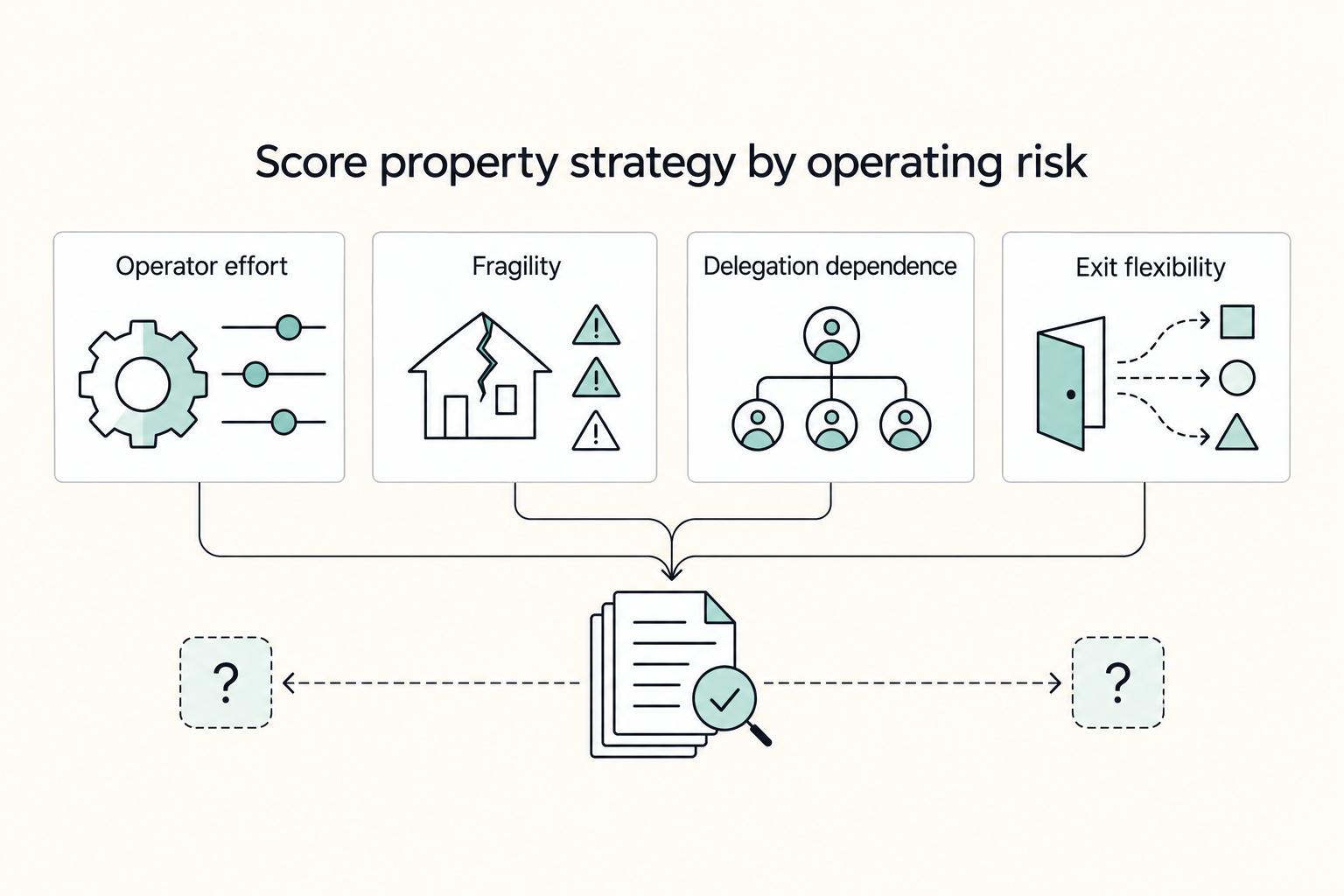
**Run anything with money and moving parts like an operations system (cash, docs, delegation, and controls), not a "passive income" vibe.** Real life stress-tests weak spots. You change time zones, a client pays late, and something breaks at the worst moment. As the CEO of a business-of-one, your job is to build a setup that keeps working when you are not available on demand.

Tax Implications for a UK Resident Owning a US LLC
When people search **uk resident owning us llc tax**, they often start with the wrong question. You do not win by chasing a clever position. You win by running a compliant system that can handle the way the US and UK classify LLC income differently, with records you can defend.