

Quick Answer
Pick the best podcasts for writers by tying one current weakness to one listening goal, then implementing one change the same week. The article’s method is a Diagnose -> Prescribe -> Act loop: identify whether your pressure point is pipeline stability, pricing confidence, operational control, or skill maintenance, choose the matching episode type, and apply one update to a live workflow. Set a review date so podcast time produces measurable business movement instead of passive consumption.
Module 1: Turn Listening into Four Operating Behaviors This Week#
Podcasts for writers help most when you use them as decision input, not background noise. The first shift is simple: stop showing up as the person who executes words on request, and start showing up as the person who helps clients make better content decisions.
Four operating behaviors to use this week#
| Behavior | Source | Grounded cue | Next use |
|---|---|---|---|
| Systems thinking | On Leadership | 220+ podcast episodes | Search for the people problem and add one intake question or approval step |
| Focused execution | ISACA: "How To Build A Following Around Your Ideas" | 24:34 runtime | Place it before an admin block, not inside your writing block |
| Resilience under uncertainty | Get Writing / choice podcast | "querying agents and hearing nothing back"; risk of "misaligned success" | Review pricing, scope, client fit, or availability promises |
| Strategic client leadership | Ragan's catalog / choice podcast | "Business Partner First, Communication Expert Second"; Episode 151; Mar 18, 2026 | Extract one question, one risk, and one recommended action for your next client call |
- Systems thinking
You need a repeatable way to handle predictable problems before they hit your calendar at full speed. That means spotting where work usually breaks down, such as vague briefs, mid-project scope changes, or revision rounds with too many voices, and deciding in advance how you will respond. The point is to stop solving the same issue from scratch every time.
Listen with intent instead of browsing at random. On Leadership has 220+ podcast episodes, which makes it useful when you need to search for the people problem in front of you, not just the craft topic you enjoy. If an episode helps you name a stakeholder issue, write down one intake question or one approval step to add before your next kickoff. If you cannot name that change, you listened for mood, not for action.
- Focused execution
Your best work usually slips when client communication, admin, and drafting all bleed into the same block of time. A CEO mindset protects your production time and gives clients a predictable response pattern instead of constant access. The gain is not longer hours. It is a cleaner split between deep work and maintenance work.
Short episodes help because they are easier to contain. ISACA's "How To Build A Following Around Your Ideas" shows a 24:34 runtime. That makes it a good bounded listen to place before an admin block, not inside your writing block. A common risk is productive procrastination, where you keep consuming advice instead of shipping the draft, follow-up, or proposal that matters.
- Resilience under uncertainty
Freelance pressure often shows up as silence, not drama. Get Writing points to a familiar pattern, "querying agents and hearing nothing back," and that same uncertainty shows up in client work when proposals go unanswered or prospects disappear after a good call. Learn to treat uncertainty as a signal to inspect, not a verdict on your value.
One useful check is emotional, not just operational. The choice podcast describes how high achievers can minimize emotions to stay productive. That can create disconnection from values and needs, and it names the risk of "misaligned success." If you are hitting deadlines but resenting every project, do not dismiss that as weakness. Review whether the problem is pricing, scope, client fit, or your own availability promises.
- Strategic client leadership
This is the posture that changes how clients read you. Ragan's catalog states the shift directly: "Mindset Shift: Business Partner First, Communication Expert Second." You are not just answering the brief. You are connecting the work to an outcome, challenging weak assumptions, and making the next decision easier for the client.
This is where chaptered listening helps. The choice podcast includes visible markers such as "0:00 Welcome And Guest Setup," plus episode numbers and dates like Episode 151 and Mar 18, 2026. That lets you check recency and jump to the segment you need. Their interview format is tied to written articles and positioned as conversation that goes beyond the page. Use it to extract one question, one risk, and one recommended action for your next client call.
| Freelance situation | Reactive response | Strategic response |
|---|---|---|
| Scope change mid-project | Say yes quickly and hope it fits later | Pause, define what changed, and confirm impact on deliverables, timing, or fee |
| Revision pressure from multiple stakeholders | Keep revising to reduce tension | Ask who has final approval and what standard defines "done" |
| Ambiguous brief | Start drafting to avoid delay | Return with clarifying questions tied to audience, goal, and decision owner |
| No response after proposal or pitch | Assume rejection or send repeated nudges | Review positioning, follow up once with a clear next step, then move on |
Quick implementation checklist#
- Pick one show for each need this week: stakeholder leadership, short-form idea building, uncertainty, and client advisory thinking.
- Use chaptered listening when available, and capture the episode number or date so your notes stay traceable.
- After each listen, write three lines only: problem spotted, behavior to copy, next client-facing change.
- Test one change in a real scenario, preferably an intake call, revision conversation, or proposal follow-up.
- Bring those notes into Module 2, because mindset only becomes durable when it turns into pricing, scope, and operating rules.
Related: Stripe vs. PayPal for International Freelancers.
Module 2: Make Each Engagement Clear to Run and Bill#
Once your mindset shifts, your next move is operational: make each engagement clear to run and clear to bill. Use a simple rhythm every time: define the deal before work starts, control changes while work is live, and close the file cleanly at the end. That structure matters even more when work is sourced through RFPs and buying committees, not just one relationship.
| Decision area | Risky default | Professional standard |
|---|---|---|
| Contracts | Rely on email threads and verbal alignment | Start with a written scope summary, agreement, and change log |
| Invoicing | Invoice late with little context | Invoice at agreed checkpoints tied to named deliverables or approvals |
| Cash management | Assume signed work means smooth payment | Review open invoices and project status on a fixed cadence |
| Client selection | Say yes to any promising lead | Qualify for clear goals, approval path, written process, and collaboration fit |
- Lock scope before kickoff
Your contract process is mainly scope control, not legal theater. Before kickoff, turn discovery notes into a short scope summary: deliverables, exclusions, approver, revision flow, change-request trigger, payment structure, termination handling, and IP handoff. Keep legal specifics as placeholders until you verify the wording for your jurisdiction with counsel, especially for termination and IP transfer.
If the work came through an RFP or committee, document who makes the final call and how approvals move. Keep a clean evidence trail: approved proposal, signed agreement, change log, and written approvals.
- Price the outcome, then protect that frame
Value pricing starts with specific discovery. Ask what outcome is expected, how success will be judged, what delay changes, who owns the decision, and what constraints already exist. Then present your proposal around outcome, approach, assumptions, and scope boundaries.
Protect the frame during negotiation. You can use hours for internal planning, but if the conversation defaults to hourly comparison, your work is being treated like a commodity. When that happens, either tighten the outcome definition or reassess fit. For a deeper walkthrough, see Value-Based Pricing: A Freelancer's Guide.
- Keep cash visible during delivery
You reduce stress when money and progress stay visible while work is active. Send invoices at agreed checkpoints, each tied to something the client can recognize and approve. Pair that with tight feedback loops: short status updates, clear review windows, and self-serve documentation for repeat questions.
Give clients more than one communication path for routine work, for example separate channels for feedback and admin, and keep onboarding/review instructions easy to access, such as a QR-linked page. In some markets, real-time estimate transparency may feel unusual, but it can reduce avoidable surprises.
- Screen clients as portfolio risk, not just pipeline volume
Because selling is part of your role, use a simple go/no-go filter in discovery. Ask: are goals clear enough to price, is there a real approval path, will they work from written terms, do they accept that scope changes affect fee or timing, and can they explain decision flow if multiple stakeholders are involved?
Then act on what you hear. Move forward when outcome, decision ownership, and process are clear. Slow down, narrow scope, or walk away when they resist written terms, expect free strategy before commitment, or add stakeholders without ownership. That is how you avoid staying busy while losing relevance.
We covered this in detail in The Best Grammar and Style Checkers for Professional Writers.
Module 3: Engineer Your Marketing for High-Value Client Acquisition#
To attract higher-value clients, make your marketing specific, testable, and actively maintained, not broad or set-and-forget.
- Define your niche by problem, buyer, and outcome.
Use a positioning statement that names all three: the client problem, the buyer type, and the business outcome. This is the practical way to "pick a place to focus" so your homepage, discovery calls, and proposals all sound like the same business.
- Use a repeatable referral workflow at project milestones.
There is no one exact referral script here, so use a simple workflow you can repeat: ask when a meaningful win is visible, and ask again at closeout when the client can describe results clearly. Ask the person closest to approvals or outcomes, and give forwardable context: who you help, what changed, and what kind of introduction is useful.
- Structure proposals as a strategic narrative, not a task menu.
There is no universally best proposal format here, but this sequence keeps your message coherent: diagnosis, approach, expected outcome, scope boundaries, then decision next step. If tasks appear before the client problem, you usually invite price comparison before trust.
- Publish inbound content with one stage and one action.
Treat each asset as a single-stage tool with one conversion action, for example book a call, request details, or reply. Do not assume an "evergreen funnel" will keep performing without updates; funnel performance can drop sharply, so track response and refresh assets over time.
| Asset | Weak version | Strong version |
|---|---|---|
| Positioning statement | Broad identity claim | Problem + buyer + outcome |
| Referral request | One-off favor ask | Milestone-based request with clear forwarding context |
| Proposal structure | Tasks first, then price | Diagnosis -> approach -> outcome -> boundaries -> next step |
| Inbound content intent | Publish for volume | One stage, one action, one metric |
Keep the operating layer minimal so this turns into action: a backlog plus a dashboard is enough. Use a backlog to track messaging/content experiments and a dashboard to monitor lead, inquiry, and conversion signals. Also close the research-to-message gap: if insight never reaches your website or proposal language, it is not helping acquisition.
- Fix first (now): rewrite your positioning message and place it in your homepage hero, LinkedIn headline, and proposal opener.
- Next: set two referral checkpoints in your delivery process and reuse the same forwarding context each time.
- Then: update your proposal template to the narrative sequence above.
- Finally: tag each content asset to one funnel stage and one conversion action, then review performance on a cadence.
For a step-by-step walkthrough, see The best 'notebooks' and 'pens' for writers.
Module 4: Become the Visionary - How to Scale Beyond Yourself#
Scale works when you act like an architect: keep the decisions that require your judgment, delegate repeatable execution, and productize outcomes clients repeatedly buy.
| Bucket | What fits here | Decision rule |
|---|---|---|
| Only you | Diagnosis, positioning, final approval | Keep them if those are still your differentiators |
| Someone else with instructions | Prep, research assembly, scheduling, invoice follow-up, first-pass production | Delegate once inputs and quality checks are clear |
| Repeatable offer | Messaging audit, workshop, or template library with named outputs and a scheduled review | Productize outcomes, not activity |
1. Decide what you keep, delegate, and productize. Review your last 10 projects and sort tasks into three buckets: only you, someone else with instructions, or repeatable offer. Keep diagnosis, positioning, and final approval if those are still your differentiators. Delegate prep, research assembly, scheduling, invoice follow-up, and first-pass production once inputs and quality checks are clear. Productize outcomes, not activity.
2. Turn your expertise into a buyable asset. Use one sequence: pick one repeatable outcome, package your method, define deliverables, and set a maintenance cadence you will actually run. If you help teams clarify messaging, the asset could be a messaging audit, workshop, or template library with named outputs and a scheduled review. Keep scope explicit. The same clarity that makes a Creative Penn episode useful, such as 15 practical tips, is what makes your offer easier to buy.
3. Build handoff infrastructure before you delegate. You do not need perfect documentation; you need coverage across lead intake, sales, delivery, finance, and support. A task is delegation-ready when inputs and outputs are visible, quality can be reviewed quickly, and failure cost is acceptable. For each handoff, include source files, a done definition, escalation rules, and a first-cycle review checkpoint. If you use podcast transcripts to draft SOPs, verify against the episode page or audio because long transcripts can include minor errors.
4. Choose a scale model by constraints, not hype. Treat this as an internal planning tool, not a market benchmark.
| Model | Control | Margin profile | Delivery complexity | Dependency on your personal time |
|---|---|---|---|---|
| Productized service | High | Medium to high | Medium | Medium |
| Cohort workshop or training | High | High when filled | High | Medium to high |
| Digital product or template pack | High | High after creation | Low to medium | Low |
| Membership or community | Medium to high | Medium, often recurring | Medium to high | Medium |
Do not assume a new model automatically stabilizes income. Creator revenue can swing from $0 for over three months straight to over $27,000 in under 30 days. Keep your safety net principle-based: separate business and personal reserves, verify current plan limits and filing deadlines before acting, and leave regulated thresholds pending until current plan terms, filing requirements, official records, or source records confirm them before use.
Execution sequence: tighten operations from Module 2, use Module 3 demand signals to choose one repeatable outcome, launch one asset, then test one delegation handoff before a bigger model shift. For a deeper playbook, read How to Write a Book to Establish Your Freelance Expertise.
Your Strategic Listening Plan for a Resilient Business#
Use a simple Diagnose -> Prescribe -> Act loop so each episode helps you fix one real bottleneck: pipeline stability, pricing confidence, operational control, or skill maintenance.
| Type | Use when | Grounded cue |
|---|---|---|
| Strategy | Your platform feels scattered and you need to choose one main channel | Resilient Writers Season 6 Episode 12 (Apr 03, 2025, 25:21) |
| Operations | You need stronger crisis readiness and industry relationships | BookSmarts Episode 49 (November 13, 2024, 21:28) |
| Business model / market shifts | Use the full audio when the page notes are only a basic, unedited summary | B2B Launcher Episode 320 |
| Craft | You have a live draft you can revise this week | Choose craft listening only when you can apply one technique now |
- Diagnose the bottleneck.
Write one sentence naming what is fragile right now. If leads are uneven, treat it as pipeline. If you are hesitating on scope or fees, treat it as pricing confidence. If admin breaks under load, treat it as operations. If your current draft work feels weak, treat it as skill maintenance.
- Prescribe the listening type (how to choose).
Pick one episode type based on that single bottleneck.
- Strategy: choose episodes that start with purpose before tools. Resilient Writers Season 6 Episode 12 (Apr 03, 2025, 25:21) is useful when your platform feels scattered and you need to choose one main channel.
- Operations: choose episodes about preparing for risks before they hit. BookSmarts Episode 49 (November 13, 2024, 21:28) fits when you need stronger crisis readiness and industry relationships.
- Business model / market shifts: use the full audio for B2B Launcher Episode 320, since its page says the written notes are only a basic, unedited summary.
- Craft: choose craft listening only when you have a live draft you can revise this week.
- Act on one change and set a review date.
Keep notes to four fields only: episode, bottleneck, one change, review date.
| Bottleneck | What to listen for | Implement now | Verify progress |
|---|---|---|---|
| Pipeline stability | Purpose-first platform planning, one main channel, and where email list focus may outperform visibility alone for book sales | Choose one primary platform and add one email-list path to your site, bio, or footer | You are publishing consistently on one main channel and the email-list path is live |
| Pricing confidence | Practical language you can use to frame uncertainty and decisions with clients | Update one line in your proposal or positioning | The revised line is in your active proposal template |
| Operational control | Risks to prepare for in advance and relationships to build before disruption | List 3 likely risks and 1 backup contact or option for each | The list exists and at least one outreach is scheduled |
| Skill maintenance | One technique you can apply to current work immediately | Revise 1 page, scene, or section this week | The change is visible in your current draft |
At week's end, review outcomes and keep your next listening cycle on the same bottleneck unless progress is clear. That keeps listening useful instead of passive. You might also find this useful: The best 'dictation software' for writers.
Frequently Asked Questions
What if you want the best podcasts for writers but do not know where to start?
Start with the problem in front of you, not a giant list. If you are stuck or inconsistent, try Write Now and pull one action into your calendar today. If you need deeper reflection on process, try In Writing with Hattie Crisell.
Which show helps most if you are preparing to query agents?
Choose The Shit No One Tells You About Writing. Listen for the critique logic in segments like Books With Hooks, then compare those notes against your own query letter and opening pages before you revise.
What should you pick for craft, not motivation?
Go to Between the Covers if you can give it real attention. The upside is depth. The failure mode is passive listening, so capture two or three craft observations and apply one in your next draft.
How do you choose between short and long formats?
Use short episodes when you need momentum and long-form literary radio show style interviews when you need depth. If your week is crowded, a 15-minute monologue is easier to convert into action than a two-hour conversation you never process.
How should you use this FAQ?
Treat it as loose categories, not a master ranking. Pick one show based on your current need, verify it is still a fit, and then move to the listening-plan section to turn what you hear into an actual practice.
Try a related tool
Researched and edited by the Gruv editorial team. Gruv builds cross-border billing, payouts, and finance-operations software for global businesses.
Sources
Includes 8 external sources outside the trusted-domain allowlist.
- booksmartspodcast.com/2024/11/13/episode-49-david-hetherington-on-...external
- bryansmeltzer.podbean.comexternal
- choice-online.com/podcastexternal
- coreywilkspsyd.com/38-harsh-truths-about-building-a-business-i-...external
- dirkverburg.com/leadership-2-0external
- isaca.org/isaca-digital-videos/podcasts/how-to-build-a...external
- loveasabusinessstrategy.com/podcast/love-as-a-resilience-strategy-with-d...external
- mattbyrom.com/msp-interview-matt-lernerexternal
Educational content only. Not legal, tax, or financial advice.
Related Posts
Value-Based Pricing for Freelancers Under Real Payment Risk
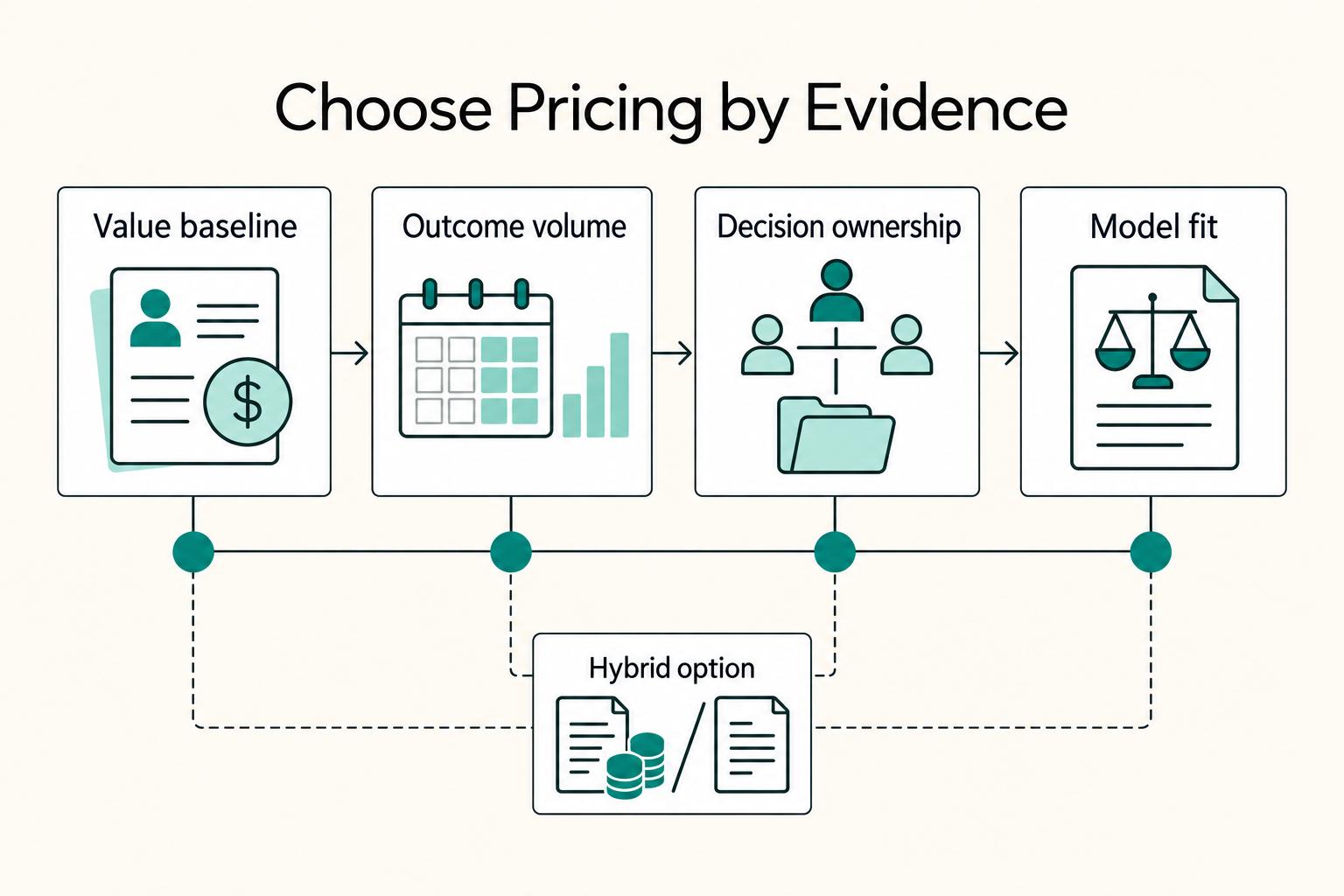
Value-based pricing works when you and the client can name the business result before kickoff and agree on how progress will be judged. If that link is weak, use a tighter model first. This is not about defending one pricing philosophy over another. It is about avoiding surprises by keeping pricing, scope, delivery, and payment aligned from day one.

How to Write a Book as a Freelancer Without Scope Drift
The book needs a defined job and a defined boundary before you draft. In this cycle, give it one job: either support your client book services, or strengthen your own authority book so your niche, offer, and sales conversations become clearer.

Stripe vs. PayPal for International Freelancers
**For an international Stripe or PayPal choice, pick the payment gateway that cuts your cashflow exposure first, then optimize fees.**