
Quick Answer
For freelancers and solo operators, the best OKR software is the tool you will actually review weekly and keep updated without friction. It should capture Objectives in one visible place, track measurable Key Results with current numbers, support a simple recurring review habit, and link goals to daily work. That can be a spreadsheet, an existing work hub, or a dedicated OKR tool.
Forget Team Tools: The Best OKR Software is Your Personal Operating System#
If you work alone, the best OKR software is usually the simplest personal execution system you will keep using. For a solo operator, that usually means the tool that helps you set direction, measure progress, and review it often enough to stay honest, even if that tool starts as a spreadsheet.
| OKR part | What it means | Simple test |
|---|---|---|
| Objective | A clear direction you set first | If it reads like a to-do item, it is probably too small |
| Key Results | Measurable outcomes that show whether the strategy is working | If a number cannot move up or down, it does not belong here |
| Planning window | Use a defined planning window and keep Objectives limited enough to remember | Name what you are not prioritizing until the next review cycle |
| Regular review | A recurring check-in to review each Key Result, update the current number, note what changed, and decide the next action | Catch slippage while you can still correct it |
- Objective means strategy
Start with the outcome you want to move toward, not a pile of tasks. The Objective is the clear direction you set first. The test is simple: if it reads like a to-do item such as "redo website" or "post on LinkedIn," it is probably too small. A stronger solo-business Objective is something like "build a steadier pipeline for higher-value client work." What matters here is direction. It tells you what counts in your current planning cycle before your calendar gets noisy.
- Key Results mean evidence
Your Key Results are the measurable outcomes that show whether the strategy is working. They are evidence, not activity. For the pipeline example, you might track "book 6 qualified intro calls," "send 8 proposals that match my minimum project size," and "close 2 repeatable retainer clients." Notice what is missing: "write content," "update portfolio," and "network more." Those actions may help, but they are not proof. If a number cannot move up or down, it does not belong here.
- Planning-window focus only works with tradeoffs
Use a defined planning window and keep your Objectives limited enough to remember without opening a dashboard. The real move is naming what you are not prioritizing. If your focus is pipeline quality and pricing, then a brand refresh, a new service page, or testing three new marketing channels may need to wait. This is where many solo businesses drift into busywork. You are not just choosing goals. You are choosing what gets less attention until your next review cycle.
- Regular review is your alignment check
In a team, "alignment" and "transparency" often turn into meeting language. On your own, they mean a recurring check-in. On each check-in, review each Key Result, update the current number, note what changed, and decide the next action. Also check for drift: did your actual week move the Objective forward, or did client delivery and admin pull you elsewhere? Goals set in January and ignored until December usually fail because the operating process is missing. The difference is cadence. Regular check-ins catch slippage while you can still correct it.
Your personal OKR tool does not need much, but it does need to do four things well. It should capture Objectives in one visible place, track measurable Key Results with current numbers, support a simple recurring review habit, and connect those goals to your daily work without heavy setup.
If a tool cannot do those four things with low friction, the real cost is not the subscription. It is the overhead you will stop maintaining.
You might also find this useful: The Best E-Discovery Software for Small Businesses.
The Personal OS in Action: De-Risking Your Solo Career#
Treat this as a quarterly operating playbook: each pillar should reduce a different business risk and force a weekly decision. Keep revenue, pipeline, and expertise only if each one is tied to a top priority, measured with outcome-based Key Results, and reviewed without turning your process into admin-heavy bureaucracy.
At the beginning of the quarter, set your pillar OKRs. Two weeks later, run an alignment check for orphaned OKRs, overlap, and activity-only Key Results. If a goal cannot be tied to a priority, or two goals chase the same outcome, you are creating the appearance of strategy without making a real choice.
| Pillar | Risk reduced | Leading indicator | Lagging indicator | Typical execution mistake |
|---|---|---|---|---|
| Revenue | Cash instability | Proposals sent that match your offer and minimum price rules | Collected revenue versus the target metric | Tracking activity instead of collected cash, pricing quality, or margin |
| Pipeline | Feast-or-famine swings | Qualified conversations with a clear next step | Signed work scheduled for the next period | Counting raw leads instead of fit and progression |
| Expertise | Commoditization risk | Market-facing proof assets shipped (case studies, portfolio examples, published insight) | Better-fit inbound demand and pricing conversations | Treating learning as completion, not differentiation proof |
Revenue#
Your revenue pillar should make income more predictable, not just make you work harder. Set an Objective such as: "Make this quarter's revenue more resilient." Use outcome Key Results tied to records, for example:
- Collected revenue reaches the target metric.
- Average project value reaches the target metric.
- Non-billable time drops to the target metric.
In your weekly review, make one decision: volume, pricing, or waste reduction.
Pipeline#
Your pipeline pillar should protect future income, not fill your calendar with random marketing tasks. Set an Objective such as: "Build next quarter's pipeline with qualified demand." Use movement-based Key Results, for example:
- Qualified conversations reach the target metric.
- Proposals sent to minimum-fit buyers reach the target metric.
- Signed starts for the next period reach the target metric.
In your weekly review, decide whether to tighten targeting, increase outreach, or improve conversion quality.
Expertise#
Your expertise pillar should strengthen your market position in ways buyers can see. Set an Objective such as: "Sharpen a service angle I can show and sell." Use proof-based Key Results, for example:
- Portfolio proof assets published reach the target metric.
- Before/after examples tied to your service promise reach the target metric.
- One higher-value offer is refined and tested with updated positioning.
In your weekly review, decide whether your learning is producing visible proof that supports differentiation and pricing conversations. If pricing is part of that shift, Value-Based Pricing: A Freelancer's Guide is a useful next read.
This week, run it like this:
- Confirm one Objective per pillar from your quarter priorities.
- Keep only 2 to 3 measurable Key Results per pillar.
- Do a two-week alignment check for orphaned, overlapping, or activity-based OKRs.
- In your next weekly review, update each KR, note what changed, and pick one next action per pillar.
Related: A Guide to OKRs (Objectives and Key Results) for Company Goal Setting.
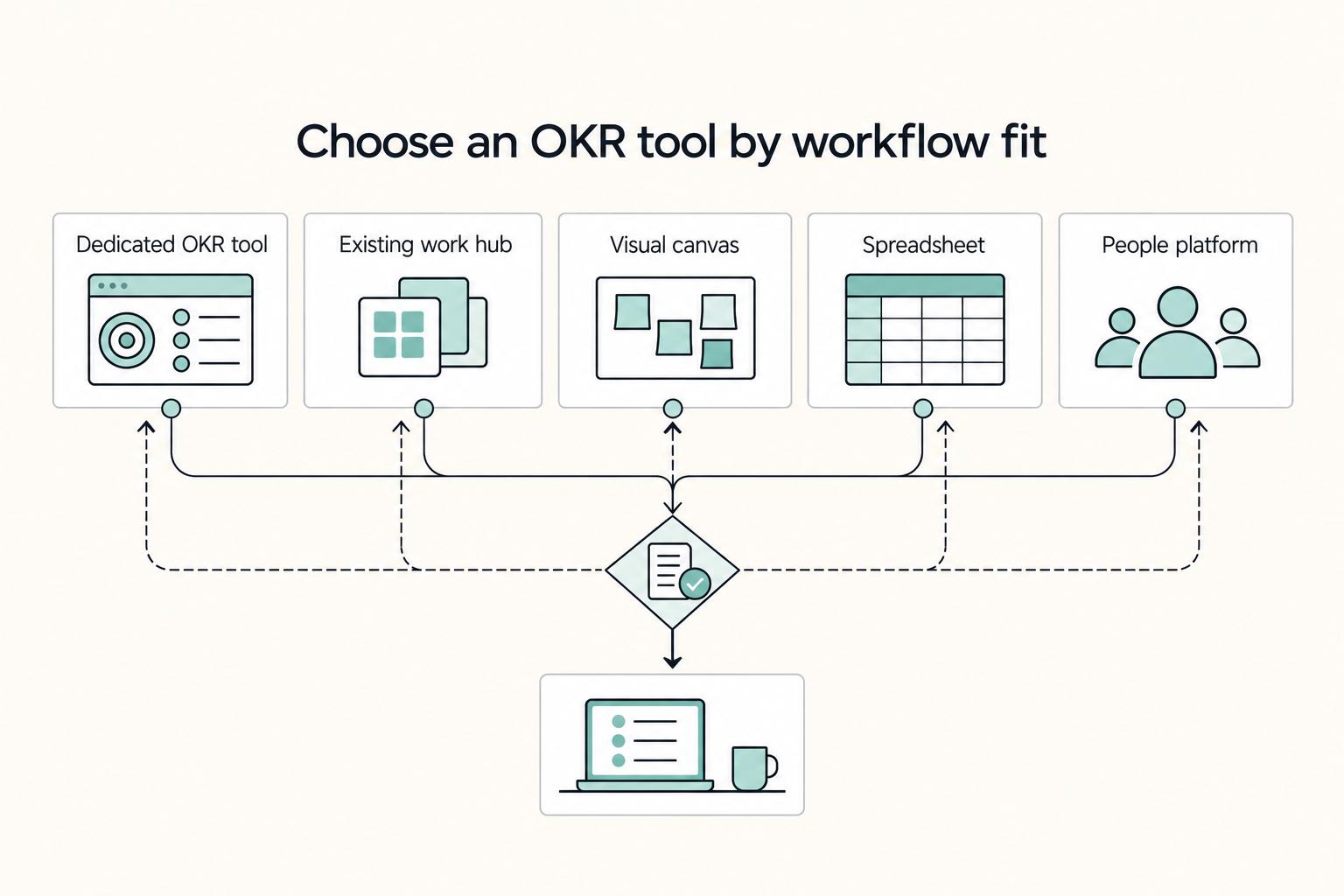
Choose an OKR Tool by Workflow Fit#
Choose your command center by workflow fit, not feature volume. For a solo operator, the right tool is usually the one you can set up in under 30 minutes, update weekly without friction, and connect directly to real execution.
Use this quick selection framework:
- Start with your existing workflow anchor, where you already plan and execute work.
- Run one real weekly update, not just a demo setup.
- Keep the tool only if each KR clearly links to day-to-day work and evidence.
Rankings can help, but treat them as directional. Some comparison pages are published by vendors, so your own weekly-use test matters more than list position.
| Tool family | Best-fit user | Setup effort | Ongoing maintenance load | Reporting clarity | Integration depth | Common failure mode |
|---|---|---|---|---|---|---|
| Dedicated OKR tool such as Tability or Koan | You want clean OKR structure and regular check-ins | Low to medium | Low | High for goals, medium for surrounding work | Usually medium, verify your required connections | Goals are tidy, but execution lives elsewhere |
| Existing work hub such as Notion, Asana, or ClickUp | You already run daily work in one platform | Medium | Medium | Medium to high, based on your views | Often strongest when this is your anchor | Tasks get tracked, but outcomes blur |
| Visual canvas such as Miro or Milanote | You think in maps and relationships | Low | Medium | Medium | Usually light, verify what must sync | Strategy is clear, status updates get fuzzy |
| Spreadsheet such as Google Sheets or Excel | You want full control of data and formulas | Medium | Medium to high | High if designed well | Light by default | Manual links and status updates become chaotic |
| People platform such as Lattice or 15Five | You may hire soon or already use it elsewhere | Medium to high | Medium to high | High for structured reviews and visibility | Varies, verify against your stack | People-process overhead outweighs solo needs |
Pick your profile quickly#
| Profile | Start with | Best when | Watch out |
|---|---|---|---|
| Purist | A dedicated OKR tool | You want the OKR method to stay clean | Avoid turning OKRs into a to-do list |
| Pragmatist | Notion, Asana, or ClickUp | Your work already lives in one platform | Each KR should point to the project, proposal list, invoice view, or asset that proves progress |
| Visual Thinker | Canvas tools | You decide faster when you can see relationships | Update KR status weekly without rebuilding the board |
| Data-Driven | Spreadsheets | You trust numbers more than interfaces | The tradeoff is maintenance as ownership, links, and progress tracking expand across multiple OKRs |
- Purist: You want the OKR method to stay clean.
A dedicated OKR tool is often enough when you track a few quarterly Objectives and measurable KRs. Its advantage is structure, which helps you avoid turning OKRs into a to-do list.
- Pragmatist: You want one place for planning and execution.
If your work already lives in Notion, Asana, or ClickUp, start there first. The key test is linkage: each KR should point to the project, proposal list, invoice view, or asset that proves progress.
- Visual Thinker: You decide faster when you can see relationships.
Canvas tools are useful when mapping strategy is your strength. Keep one strict checkpoint: can you update KR status weekly without rebuilding the board?
- Data-Driven: You trust numbers more than interfaces.
Spreadsheets give you control, formulas, and trend visibility. The tradeoff is maintenance as ownership, links, and progress tracking expand across multiple OKRs.
The enterprise caveat, clearly#
Platforms like Lattice and 15Five can work for solo use in specific cases, especially if you already use them or expect near-term hiring. They are overbuilt when your actual need is narrow: one quarterly cycle, one weekly check-in rhythm, and direct KR-to-execution linkage.
| Setup piece | Include |
|---|---|
| Objective tracker | Quarter label plus your three pillars (revenue, pipeline, expertise) |
| KR status view | Baseline, current value, target, and one evidence link per KR |
| Weekly review template | What changed, what proves it, and your single next action |
Before committing, run one real trial: create one Objective and 2 to 3 KRs in under 30 minutes, then complete one weekly update using actual evidence. If the workflow feels overloaded or disconnected from execution, move on.
To turn the decision into action fast, configure only these first:
- Objective tracker: quarter label plus your three pillars (revenue, pipeline, expertise).
- KR status view: baseline, current value, target, and one evidence link per KR.
- Weekly review template: what changed, what proves it, and your single next action.
If a tool cannot support those basics cleanly, it is not your command center. It is another place to type goals.
If you want a deeper dive, read How to Use OKRs for Freelance Goal Setting and Performance Tracking.
Manage Your Week Like an Asset Review#
Manage your week like an asset review, not a task dump: the tool is tactical, but your operating discipline is strategic. You should be able to say whether this week improved revenue quality, pipeline resilience, delivery proof, or pricing strength.
| Dimension | Reactive mode | Asset-management mode |
|---|---|---|
| Focus | You optimize urgent requests and this week's tasks | You protect and grow revenue, pipeline, and capability across the quarter |
| Metrics | You count hours and completed tasks | You track one Objective and 2 to 3 Key Results with evidence |
| Planning horizon | You plan to the next deadline | You review weekly progress against quarterly outcomes |
| Risk controls | You notice issues after performance drops | You monitor concentration risk, stalled outreach, and weak proof early |
| Execution habit | You work from inbox and urgency | You run a recurring review and adjust priorities from evidence |
If you are still comparing tools, keep your judgment in the driver's seat. Marketplace rankings may use verified reviews, independent research, and objective methods, and some listings are still sponsored, so read transparency labels, check the last-updated date, and test likely failure points yourself. Two common friction points to test early are weaker mobile progress checks and limited dashboard/report customization.
Use this four-step handoff from the rest of the article:
- Define asset goals. Choose what you are building this quarter: steadier pipeline, higher rates, stronger delivery proof, or deeper capability.
- Map goals to OKR outcomes. Write one Objective and 2 to 3 measurable Key Results.
- Run your recurring review. Update current status and attach evidence.
- Adjust based on proof. If review stays unclear or slow, switch command centers early.
Choose your command center, enter your first Objective, and run your first review cycle. For a step-by-step walkthrough, see The Best HRIS Software for Small Businesses. Want to confirm what's supported for your setup? Talk to Gruv.
Frequently Asked Questions
How can a freelancer use OKRs?
Use OKRs to track business outcomes, not just project activity. Set one quarterly Objective for the goal you want to achieve, then add a few Key Results that measure progress with a clear metric or milestone.
What is the best OKR software for personal goals?
For personal goals, the best option is the one you will review regularly and keep updated without friction. Start with the simplest tool that lets you record one Objective with measurable Key Results, track progress clearly, and review status without hunting through unrelated work.
How do I set OKRs to increase my freelance income?
Start with a quarterly Objective tied to revenue quality, not just busyness. Then use outcome-based Key Results such as signing new clients at your updated rate, expanding existing engagements to higher-value scope, and reducing unpaid admin or scope creep. Treat activities like pitching as tasks unless you are measuring the result they produced.
Is there a free OKR tool for an individual?
Yes. Google Docs or Sheets are a sensible starting point because they let you learn the method without the complexity of a larger platform. A simple Sheet with Objective, Key Result, current value, and evidence link is enough to begin.
How often should a solopreneur review their OKRs?
Quarterly is the standard cycle for setting and reviewing OKRs, and many solo businesses add a short weekly check-in between quarterly reviews. Longer-term annual goals can work if you also add bi-annual strategic check-ins. The real failure mode is setting vague goals and skipping regular reviews.
Try a related tool
Researched and edited by the Gruv editorial team. Gruv builds cross-border billing, payouts, and finance-operations software for global businesses.
Sources
Includes 8 external sources outside the trusted-domain allowlist.
- airfocus.com/blog/best-okr-software-toolsexternal
- capterra.com/p/158539/Perdoo/reviewsexternal
- jeffgothelf.com/blog/okr-faq-top-10-questions-about-objectiv...external
- monday.com/blog/project-management/work-management-soft...external
- mooncamp.com/blog/best-okr-softwareexternal
- nextagile.ai/blogs/okr/okr-software-toolsexternal
- okrinstitute.org/faqs-okrsexternal
- okrstool.com/blog/okr-softwareexternal
Educational content only. Not legal, tax, or financial advice.
Related Posts
Value-Based Pricing for Freelancers Under Real Payment Risk
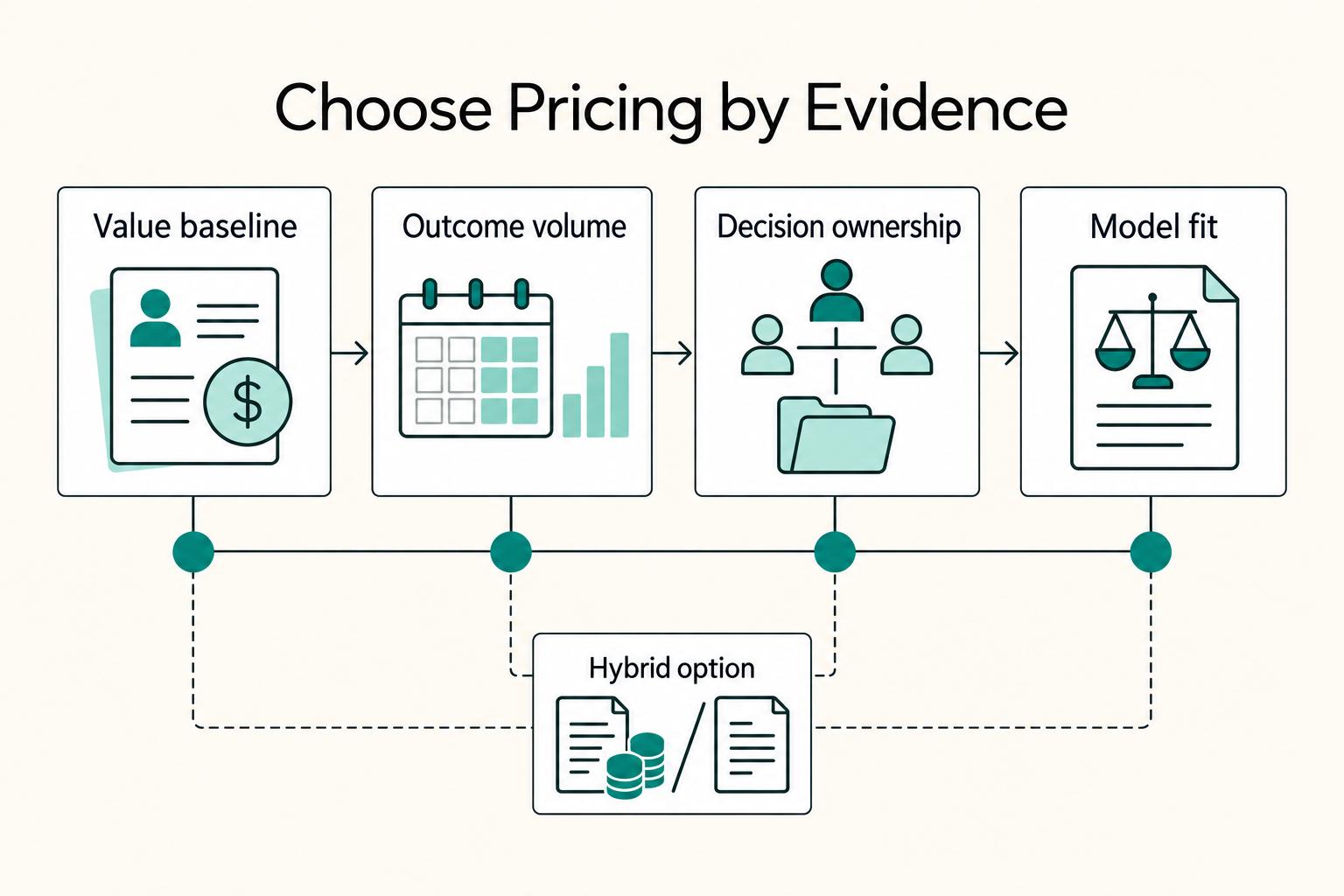
Value-based pricing works when you and the client can name the business result before kickoff and agree on how progress will be judged. If that link is weak, use a tighter model first. This is not about defending one pricing philosophy over another. It is about avoiding surprises by keeping pricing, scope, delivery, and payment aligned from day one.

Use OKRs to Run Your Freelance Business Week to Week
You know the pattern: you work all week, stay busy, ship client work, and still end Friday unsure whether the business actually moved forward. That is not a motivation problem. It is a visibility problem. A freelancer-grade system works when you stop judging yourself by effort and start running the business on decisions, evidence, and measurable outcomes.
How to Run OKRs for Company Goal Setting Without Losing Focus
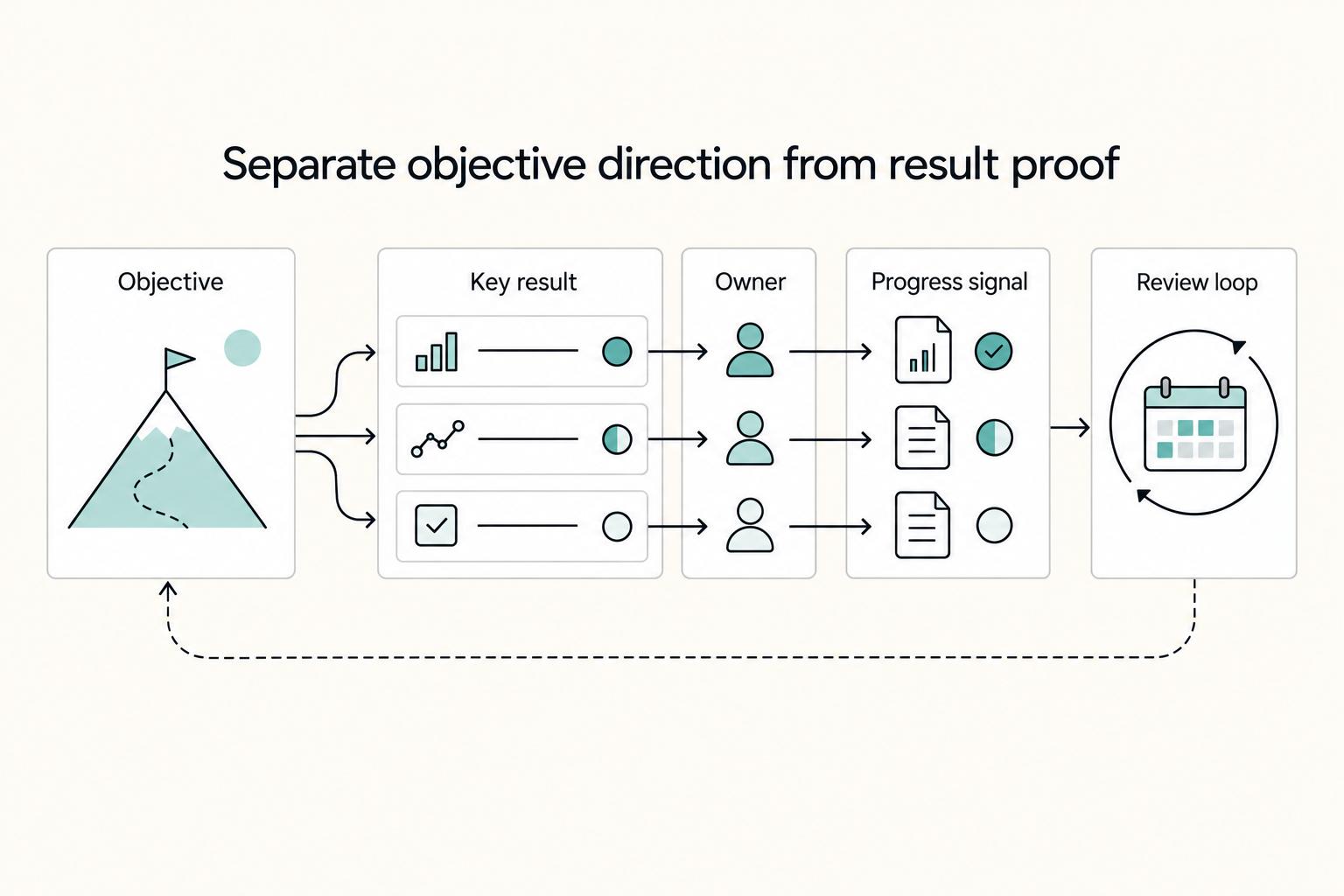
OKRs work when they create clarity, not more paperwork. For an independent professional, that means turning ambition into a short list of measurable outcomes with clear ownership, visible progress, and regular control points. You should be able to tell whether the business is actually moving.