
Quick Answer
Choose the best meal prep containers by matching them to your day type, then validating reliability before you scale. For mixed schedules, a two-kit setup usually works better than forcing one container to handle both fridge storage and commuting. Keep one repeatable meal size plus a smaller side format, and run pre-purchase checks for lid/base care rules, fit, and leak performance. Label on prep day and rotate FIFO so your lunches stay predictable.
The High-Performance Meal Prep System: A Strategic Framework for Reclaiming 5+ Hours of Billable Time Per Week#
Meal prep is a logistics decision, not a motivation project. You are not trying to cook more. You are trying to remove the noon decision, cut mid-day scrambling, and make lunch more predictable when your schedule gets noisy.
Audit the week you actually live#
Start by auditing the week you actually live, not the one you wish you had. Before you compare meal prep containers, write down three things: where you usually eat, how often meals get transported, and the longest gap between washes. Those details tell you what to test first.
Your first checkpoint is simple: by noon, did you already know what you were eating, or were you still opening the fridge, checking delivery apps, or assembling something between calls? If lunch still depends on a fresh decision, your setup may not be carrying enough of the load.
A second checkpoint is reliability under pressure. If delayed meetings regularly cause you to skip prepared meals, the issue may be setup fit, not discipline: awkward sizes, a container you do not trust in a bag, or too many mismatched pieces to grab quickly.
Match your setup to your work pattern#
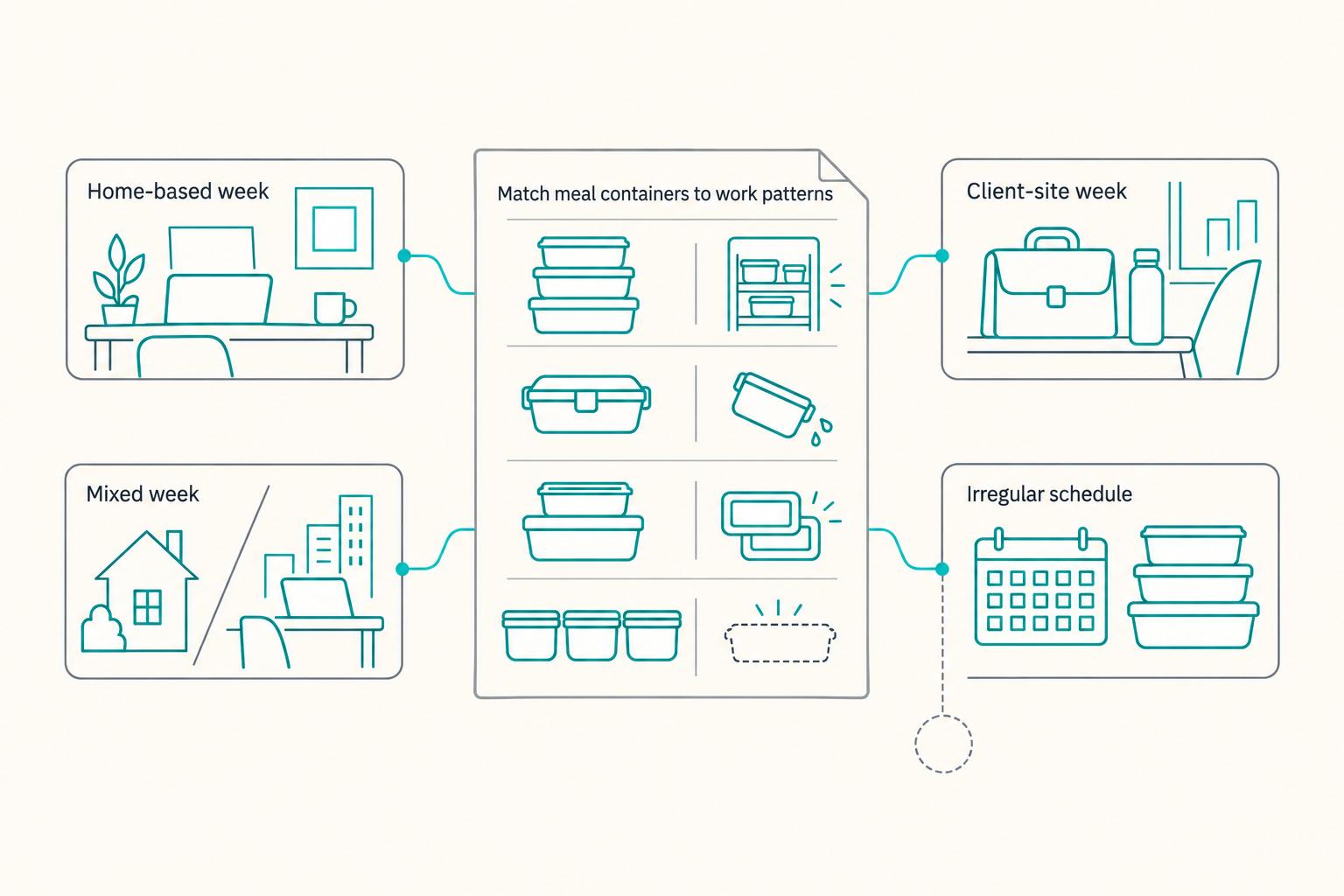
Match your setup to your work pattern first, then narrow product choices.
| Freelancer work pattern | Container system fit | Common failure mode | Practical tradeoff |
|---|---|---|---|
| Mostly home-based, steady desk days | Standardized stackable home set | Fridge clutter from mixed sizes makes meals harder to spot | Better storage and reheating flow, less portable |
| Frequent coworking or client-site days | Lightweight carry set focused on secure transport | Spill risk can make you stop bringing meals | Easier to carry, may be less pleasant for at-home reheating |
| Mixed week split between home and outside work | Two-kit setup with one home set and one carry set | Trying to make one container do every job | More pieces to manage, potentially less daily friction |
| Irregular schedule with long wash gaps | Smaller standardized rotation sized for your wash cycle | Running out of clean containers leads to takeout fallback | Requires tighter quantity control, avoids overbuying |
Choose the smallest repeatable setup that still covers your hardest days. If your week is mixed, a two-kit approach can be easier than forcing one format into both fridge duty and commute duty.
Verify reliability before you trust the setup#
Build reliability checks into the setup before you trust it. Verify care instructions for the base and lid separately, because those parts can have different limits. Also confirm that a container fits your fridge shelf, lunch bag, and usual meal volume before committing to a full set.
Keep food safety in the routine, but do not guess at the numbers. Verify handling and storage thresholds against current authoritative guidance before using them in your routine. Then write those rules where you prep so they become part of the routine, not something you try to remember.
This week, keep the pieces you reach for without thinking, change the formats that create clutter or transport stress, and stop storing meals in containers you avoid using. Once those constraints are clear, choosing hardware is simpler. If travel is part of that pressure, How to Stay Healthy and Fit While Traveling may help. For a broader business lens, read Value-Based Pricing: A Freelancer's Guide.
Assembling Your Operational Hardware: Choosing the Right Containers#
The right meal prep containers for you are usually a small system with clear roles, not one big matching set. Decide based on where your setup fails now, then validate the product before you buy multiples.
Choose based on the failure you need to prevent#
Start with the point where your routine breaks.
If you mostly eat at home, prioritize stackable, repeat-size containers that keep meals visible and easy to reheat. If you regularly carry meals, prioritize secure closures and test performance with your real foods, especially soups and sauces where leaks are most disruptive. If your week is mixed, use two kits: one for home storage and one for transport. If cleanup friction is the blocker, reduce format variety first and standardize lid patterns before changing materials.
Use a buy-or-avoid decision matrix#
| Setup choice | Best use context | Primary risk | Maintenance burden | Replacement-part path | Choose this when | Avoid this when |
|---|---|---|---|---|---|---|
| Standardized home set | Mostly home lunches, batch storage | Fridge disorder from mixed sizes | Low to moderate | Verify exact-lid availability for that line/SKU | You want simple storage and repeat portions | Transport stress is your main issue |
| Carry-focused set | Commutes, coworking, client-site days | Leaks during movement | Moderate (seal checks matter) | Verify exact replacement closure parts for that SKU | Spill prevention is your top priority | You rarely transport meals |
| Two-kit setup | Mixed home + transport week | Overbuying and tracking too many pieces | Moderate | Easier when each kit uses limited formats | One format keeps failing across contexts | You will not maintain two clear roles |
| Vented transport option | Fried foods in transit | Texture loss in fully sealed storage | Similar to carry sets | Confirm vented version exists for the exact line | Crispness matters on travel days | Meals are mostly liquid-heavy |
If you cannot name the job of each container type, you are still browsing, not selecting.
Run this pre-purchase checklist before bulk buying#
| Check | What to verify | Note |
|---|---|---|
| Spec check | Material, lid design, temperature rating, and intended use; check base and lid guidance separately | Confirm compatibility with your microwave or warmer at the product level |
| Fit check | Shelf fit, bag fit, and meal-volume fit | Make sure containers are practical in daily use |
| Leak check | Test a sample with your actual menu items | Do not buy in bulk until it handles them without leaking |
| Replacement check | Replacement lids or parts for the exact line/SKU | Do not assume cross-brand fit or automatic availability |
- Spec check
Confirm material, lid design, temperature rating, and intended use. Check base and lid guidance separately, and confirm compatibility with your microwave or warmer at the product level.
- Fit check
Check shelf fit, bag fit, and meal-volume fit so containers are practical in daily use.
- Leak check
Test a sample before buying in bulk, and confirm it handles your actual menu items without leaking.
- Replacement check
Verify replacement lids or parts for the exact line/SKU. Do not assume cross-brand fit or automatic availability.
Standardize the smallest kit that covers your week#
Keep the core tight: one main meal size, one smaller side size, and one small format only if sauces or toppings repeatedly cause problems. Standardized sizes support consistent portions, reduce lid mismatch, and make labeling and rotation easier for FIFO use.
Add extras only to solve recurring failures, then document your verified handling and storage rules where you prep. Once this hardware is stable, you are ready for the next section's cook-once workflow. If snack gaps are still breaking your day, A Guide to Healthy Snacking for a Productive Workday is a useful companion. Related: The Best Calendar Apps for Freelancers Who Juggle Multiple Projects.
Run a Weekly Prep, Pack, and Review Routine#
This works when you run it like a simple weekly system: one prep block, one night-before packing habit, and one short review to fix what failed.
| Stage | Do this first | Then do this | Failure signal | Quick fix |
|---|---|---|---|---|
| Step 1 Plan components | Check what you already have and map lunches for the week | Pick core components, optional add-ons, and one backup meal | You shopped, but weekday lunches are still unclear | Reduce scope: one base, one to two proteins, two produce options, one add-on |
| Step 2 Prep in sequence | Stage containers, matching lids, labels, and fridge space before heat starts | Cook low-attention items first, then prep other components during that time | Cooking ends and packing setup is still not ready | Reset the order and stage everything before cooking |
| Step 3 Portion and label | Portion with clean tools on prep day | Label on the same day and store using your verified rules | You cannot tell what to eat first, or meals get ignored | Date every container and place first-eat items where they are easiest to see |
| Step 4 Pack by day type | Decide tomorrow's day type the night before | Pack for home, commute, or overload days | Morning packing feels rushed, messy, or skipped | Pre-pack at night and keep one backup ready |
Build from components, not full recipes#
Keep the plan reusable: core components, optional add-ons, and one backup meal for overloaded days. That structure gives you variety without restarting from scratch each day.
If you use multiple container sizes, assign fixed jobs so decisions stay fast. Example: 3.4 cup for a full lunch, 1.75 cup for a side or split portion, and 1 cup for toppings or snacks. The point is not one "best" setup for everyone; it is a clear default use for each size.
Prep in friction-proof order#
Set up first, then cook. Put out containers and lids, clear shelf space, and place labels where you portion food.
Before the first pan is hot, you should already know where each finished component goes. Keep separation practices consistent from prep through storage when needed. For cooling, storage timing, and reheating, verify the relevant timing and temperature guidance from official food-safety sources before using it in your routine.
Portion and label on the same day#
Portioning and labeling on prep day prevents guesswork later in the week. Date labels make first-in-first-out behavior practical when your schedule gets busy.
A small starter kit can still work well if you give each piece one job. If a 6 piece set cannot cover your five workday lunches, treat that as a signal to simplify the menu or reduce how many separate components you are packing.
Pack for tomorrow, then review failures weekly#
Pack for the day you actually have. On a home day, keep components separate and assemble later. On a commute day, pack the night before and do a real seal check for anything leak-prone. On an overloaded day, use your backup meal immediately instead of defaulting to delivery.
| Day type | Default approach | Note |
|---|---|---|
| Home day | Keep components separate and assemble later | Pack for the day you actually have |
| Commute day | Pack the night before | Do a real seal check for anything leak-prone |
| Overloaded day | Use your backup meal immediately | Use it instead of defaulting to delivery |
End the week with a quick review: what got eaten first, what sat untouched, and what was annoying to pack. Change one variable next week based on the failure signal. If snack gaps are still breaking your plan, read A Guide to Healthy Snacking for a Productive Workday. For reflection habits that support consistency, see The Best Digital Journaling Apps for Freelancers.
Your System is Your Freedom#
A good container system should stay quiet in the background and let your workday run. You are aiming for consistency, not perfection.
| Weekly check | Pass | Fail | Corrective action |
|---|---|---|---|
| Decision friction | You open the fridge, spot lunch fast, and grab your full meal kit in one motion | You hesitate, open multiple containers, or cannot tell what to eat first | Reduce to fewer sizes, add clear date labels, and run a smaller core set for another week before buying anything new |
| Carry reliability | Your planned meal makes the same trip you actually take, without forcing a last-minute food decision | You avoid carrying it, it leaks, or it only works at home | Move any non-spill-proof piece to prep/storage duty and reserve transport duty for pieces that pass your real commute test |
| Waste and risk control | Older meals are easy to identify; current storage/reheating limits pending official food-safety/source verification | You have mystery containers, duplicate prep, or meals aging out unnoticed | Relabel, rotate first in first out, and discard anything you cannot verify |
Use the table as your weekly scorecard. Start with the first failure, not every failure at once.
Start with decision friction. If lunch is hard to spot or grab, reduce to fewer sizes, add clear date labels, and run a smaller core set for another week before buying anything new. If portions still miss the mark, keep adjusting; finding your fit can take a few weeks.
Then check carry reliability. If a piece leaks, feels risky in transit, or only works at home, move it to prep/storage duty and reserve transport duty for pieces that pass your real commute test.
Finally, check waste and risk control. If you have mystery containers, duplicate prep, or meals aging out unnoticed, relabel, rotate first in first out, and discard anything you cannot verify.
Run one simple loop each week: use your current setup, log the friction points, remove one failure source, and repeat. Do not add new tools until the current system is stable.
Your next operational step is to decide what fills this system each week: How to Create a Meal Plan to Save Time and Money. If you need scheduling support, use The Best Calendar and Scheduling Apps for Freelancers. Need help deciding your next step? Talk to Gruv.
Frequently Asked Questions
How many containers do you actually need?
Buy for your week, not the bundle. Count your home meals, carry meals, and the longest gap between washes, then size your kit to cover that gap first. Check your last two workweeks and see whether you actually ran out of meal-size containers or whether you were using the wrong sizes.
Should you choose glass or plastic?
Treat this as a use-context choice, not a universal winner. If your schedule is mixed, consider testing a home set plus a separate carry set so each use case is easier to manage. | Decision point | Glass first | Plastic first | | --- | --- | --- | | Use context | Preference-based | Preference-based | | Seal reliability | Choose only if lids stay tight after repeated dishwasher cycles | Choose only if lids stay tight after repeated dishwasher cycles | | Prep fit | Choose sizes and compartments that match what you prep | Choose sizes and compartments that match what you prep | | Cleanup routine | Better if it is dishwasher-friendly and not hand-wash-only | Better if it is dishwasher-friendly and not hand-wash-only | Test one lunch in your real bag this week before you commit.
Are premium containers worth the price?
Only if they fix a failure you already have. The checkpoints that justify extra cost are lids that stay reliable after many dishwasher cycles, compartments that match what you prep, and stackability that keeps the fridge usable. Pick one pain point and buy one unit or one small set to test, not a full bundle.
How do you pick the best meal prep containers without guessing on safety claims?
Verify in order: check the official product listing, read the packaging or care insert, inspect product markings on the base and lid, then contact support if anything is missing or conflicts. For general labeling context, prioritize official sources first. Check each part separately for the exact use you need. Any timing, temperature, or use limit must be confirmed from current official product or food-safety guidance before you rely on it. Screenshot the listing now, then confirm the markings when the container arrives before first use.
What should you do when your setup keeps failing in real life?
Start with the first problem that breaks lunch: leaks, poor seals, bad compartment fit, or cleanup drag. If a lid gets loose after repeated dishwasher use, demote that piece from sauce or soup duty. Replace the failing lid or reassign that one container today instead of replacing the whole set.
Try a related tool
Researched and edited by the Gruv editorial team. Gruv builds cross-border billing, payouts, and finance-operations software for global businesses.
Sources
- ams.usda.gov/sites/default/files/media/HarmonizedGAPProgr...trusted
- arcadiaca.gov/Document%20Center/Government/City%20Clerk/Ag...trusted
- dec.alaska.gov/media/15450/fsp-app-b-sops.pdftrusted
- ecfr.gov/current/title-34/subtitle-B/chapter-III/part...trusted
- epa.gov/system/files/documents/2024-03/san-benito-an...trusted
- fda.gov/media/84201/downloadtrusted
- fda.gov/media/110822/downloadtrusted
- fsis.usda.gov/inspection/compliance-guidance/labeling/labe...trusted
Educational content only. Not legal, tax, or financial advice.
Related Posts
Value-Based Pricing for Freelancers Under Real Payment Risk
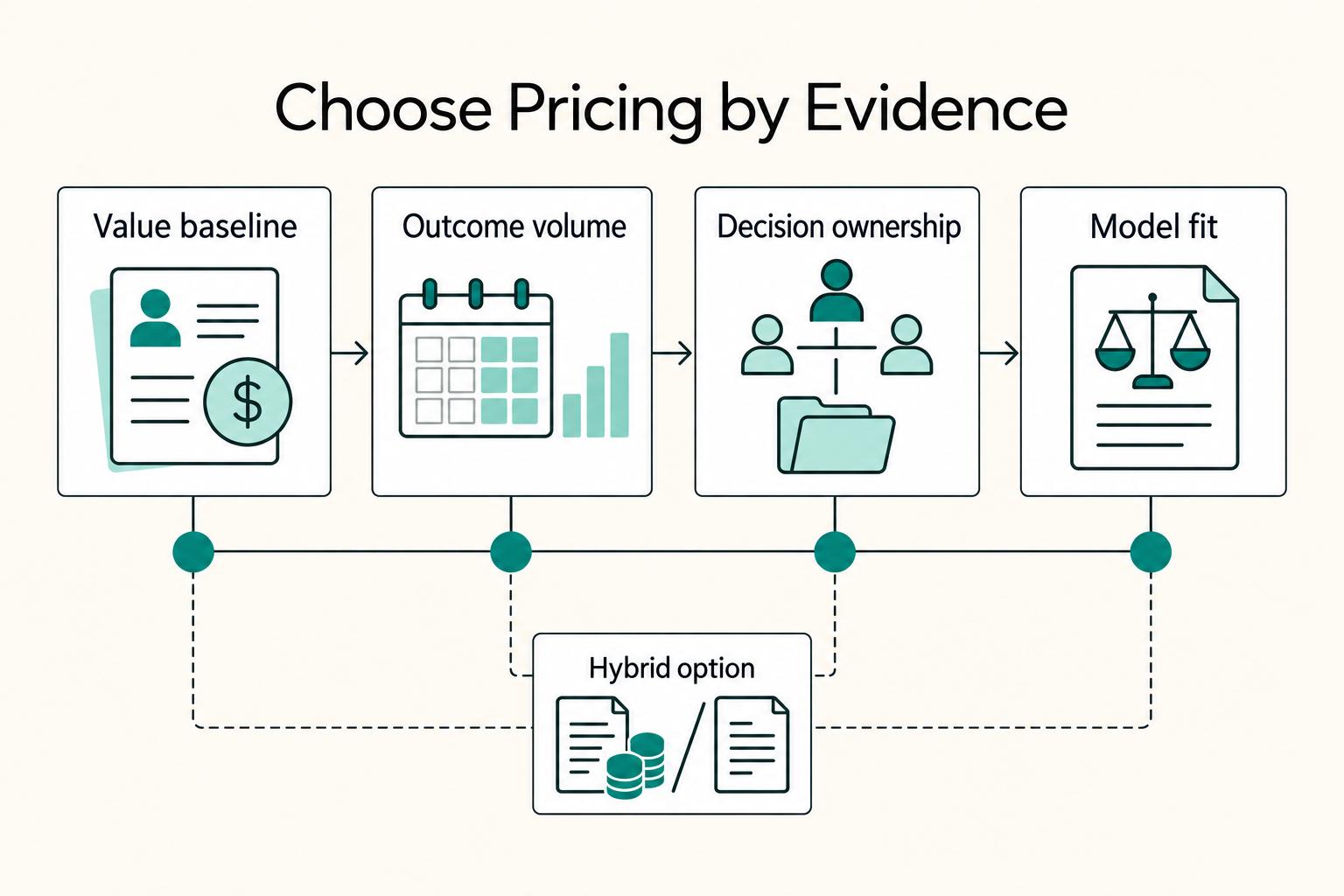
Value-based pricing works when you and the client can name the business result before kickoff and agree on how progress will be judged. If that link is weak, use a tighter model first. This is not about defending one pricing philosophy over another. It is about avoiding surprises by keeping pricing, scope, delivery, and payment aligned from day one.

How Remote Professionals Stay Healthy During Long Stays Abroad
Use this sequence before workload, housing, and travel friction make health tasks harder to execute. If you are traveling for months, treat this as four pass-fail gates. A gate is closed only when you have a written output you can verify.
Healthy Snacks for Work That Support a Productive Day
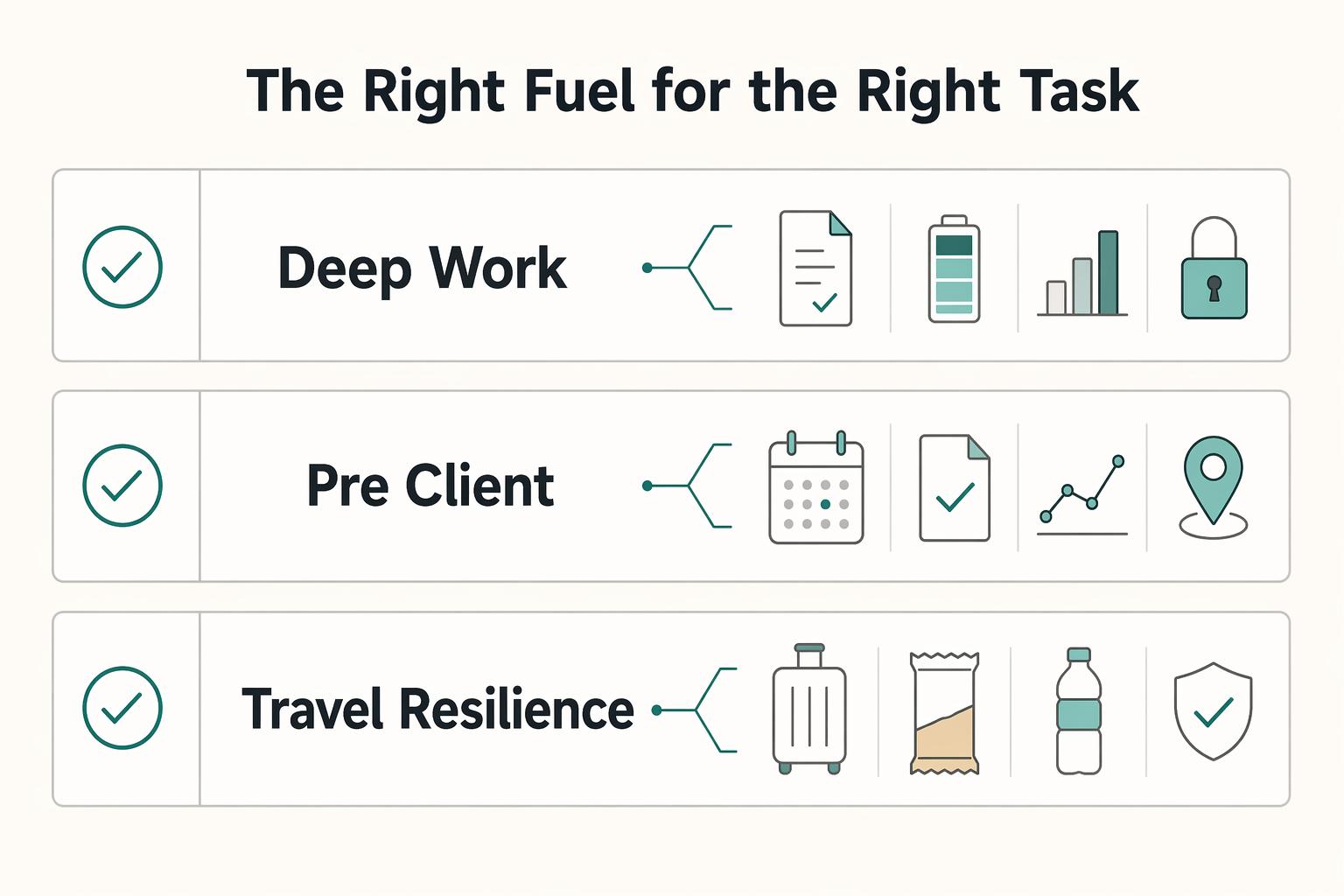
If your food choices happen only when you are already hungry, distracted, or rushing, you are making those decisions under pressure. This is not just a discipline problem. It is also a decision-load problem. Unplanned eating often shows up at the exact moments when your attention is already split.