
Quick Answer
Start with a three-layer banking map for the best international bank accounts: keep reserves in a home-base bank, run collections and FX through one multi-currency hub, and open a local account only when local rails are mandatory. For U.S. persons, monitor the $10,000 aggregate foreign-balance trigger for FinCEN Form 114, keep monthly statements, and calendar April 15 with the automatic October 15 extension.
Why Your Current Banking Setup Is a Ticking Compliance Bomb#
Fees are rarely the first problem. The real risk is that each account type sends different compliance signals. The wrong mix can cut off access to cash right when you need to pay people or deliver for clients.
Before you open anything new, start with the accounts you already use. Audit what each one is actually doing for you.
| Account type | Reporting visibility | Freeze/access risk | Residency signal strength | Documentation readiness |
|---|---|---|---|---|
| Home-country bank | Usually easiest to reconcile in your main filing jurisdiction; for U.S. persons, typically not part of FBAR if domestic | Lower for routine business use, but reviews can still happen | Low foreign-residency signal | Strong statements, bank letters, ownership proof |
| Fintech wallet or EMI | Easy to miss in cross-border reporting; confirm entity location and whether balances count as foreign financial accounts in your case | Can increase when activity changes or reviews trigger; safeguarding is not deposit insurance | Usually weaker than a local bank account, but still evidence of economic activity | Mixed; export quality and official account details often require manual capture |
| Local foreign bank | Highest ongoing admin for cross-border reporting and annual evidence collection | Access risk varies by institution; onboarding and compliance checks are often heavier | Stronger tie in some jurisdictions, especially with housing, day count, or local work patterns | Usually solid official records, but expect tax ID, address proof, and source-of-funds requests |
1. Cross-border reporting exposure#
This risk is easy to underestimate because nothing feels urgent until filing season. If you hold foreign accounts and, if you are a U.S. person, aggregate value exceeds $10,000 at any point in the year, FBAR filing is triggered on FinCEN Form 114, due April 15 with automatic extension to October 15. Joint accounts add work because each owner reports the full value.
| FBAR item | Detail |
|---|---|
| Filing trigger | If you hold foreign accounts and, if you are a U.S. person, aggregate value exceeds $10,000 at any point in the year |
| Form | FinCEN Form 114 |
| Due date | April 15 |
| Automatic extension | October 15 |
| Joint accounts | Each owner reports the full value |
| Record retention | 5 years from the FBAR due date |
What can break: Year-end can turn into a records scramble, and non-filing can carry civil or criminal consequences. Do this quarter: Keep one foreign-account register with account name, number, institution name/address, owner, and monthly statements. Retain records for 5 years from the FBAR due date.
2. Tax residency exposure#
Treat account choice as one residency signal, not the whole test. Residency exposure usually comes from a combination of ties, not one action, so a local bank account can matter without automatically making you resident.
| Jurisdiction | Rule mentioned |
|---|---|
| UK | Automatic test at 183 days |
| New York | Statutory residency can apply at 184 days with other conditions |
| California | Applies its own residency tests and taxes residents on worldwide income |
Day-count rules differ by jurisdiction. The UK automatic test is at 183 days. New York statutory residency can apply at 184 days with other conditions. California applies its own residency tests and taxes residents on worldwide income.
What can break: You may need to defend your residency position after income has already been earned and moved. Do this quarter: Keep a travel log, housing log, and a one-page residency-ties memo for each jurisdiction where you spend meaningful time. Treaty tie-breakers can help in dual-resident cases, but they run in sequence and may require authority negotiation.
3. Account-freeze exposure#
If you handle serious business volume, do not treat a consumer-style wallet as your main operating account. Large B2B inflows, sudden volume shifts, or unclear transaction purpose can trigger reviews or access restrictions at some providers.
What can break: Funds can become inaccessible or delayed just as payroll, contractor payments, or tax obligations are due. For payment firms and EMIs, safeguarding is required but not equivalent to direct deposit-insurance protection. In the UK, FCA safeguarding-rule changes take effect 7 May 2026, and payment and e-money balances are still not directly covered by FSCS. In the U.S., stored balances in payment apps may lack federal deposit insurance.
Do this quarter: Route primary client receipts to a bank account with deposit protection where available. Use fintech rails for conversion and payout rather than long-term storage.
4. Permanent establishment exposure#
PE questions usually show up after your operating pattern starts to look established, not only when you rent an office. Risk can arise through a fixed place with permanence or through an agent with authority to conclude contracts.
| Review point | Section detail | Evidence mentioned |
|---|---|---|
| Fixed place with permanence | Risk can arise through a fixed place with permanence | Proof that any workspace is temporary |
| Agent with authority to conclude contracts | Risk can arise through an agent with authority to conclude contracts | Service agreement; invoicing-entity details |
| Where contracts are negotiated and signed | Review where contracts are negotiated and signed | Service agreement; travel calendar |
| Where work is habitually performed | Review where work is habitually performed | Travel calendar; proof that any workspace is temporary |
What can break: Local business-tax questions can arise where you assumed you were operating only temporarily, and client onboarding may slow while your structure is reviewed.
Do this quarter: Review where you negotiate and sign contracts, where work is habitually performed, and whether anyone acts for you with contract-closing authority in-country. Keep an evidence pack with your service agreement, invoicing-entity details, travel calendar, and proof that any workspace is temporary. This is jurisdiction-specific, and treaty interpretation continues to evolve, including the OECD Model update approved 18 November 2025, with revised editions slated for 2026.
If you want a deeper dive, read Automating Your Freelance Finances: A Zapier Workflow for Connecting Stripe.
A Three-Layer Setup: Core Cash, Cross-Border Movement, Local Access#
The practical answer is not a single do-everything account. Use a three-layer setup instead. Give each layer a clear job. Layer 1 protects core cash, Layer 2 handles cross-border movement, and Layer 3 is local-only when truly necessary.
That separation matters. When each layer has a defined role, you are covering a different failure mode. Blur those roles, and you recreate the same compliance and access problems that come from an ad hoc mix of accounts.
| Layer | Primary use | Acceptable balance posture | Compliance visibility | Freeze exposure | When to avoid |
|---|---|---|---|---|---|
| Layer 1: Home-base bank | Main client receipts, reserves, tax cash | Keep core capital and critical operating cash | Clear baseline records for your main filing context | Reviews can still occur, so keep fallback routes | Avoid using it as your only cross-border operations tool |
| Layer 2: Multi-currency hub | Foreign collections, conversions, international payouts | Keep working balances, not long-term reserves | Stronger if you keep foreign activity centralized and documented | Large B2B transactions can trigger freezes during review | Avoid mixing personal spending, reserve storage, and business flows |
| Layer 3: Local access account | Local rails only (for obligations that truly require in-country banking) | Keep the minimum practical local balance | Adds local administrative evidence you must track | Reviews can still occur | Avoid opening "just in case" |
1. Layer 1 home-base bank#
This is your continuity layer. It should receive major payments and hold the cash you cannot afford to lose access to if another provider pauses activity for review.
Its job is stability, not flexibility. Use it for core receipts, reserves, and tax cash, but do not force every international movement through it. That reduces the chance that a large B2B payment lands on a consumer-grade platform and gets locked during review.
Setup checklist:
- Account type: Match real use, business for business receipts.
- Must-have capabilities: Reliable incoming transfers, stable online access, clear statements.
- Documentation habit: Save monthly statements, ownership records, and account correspondence in one place.
- Escalation path: Keep an alternate payment route for urgent obligations.
2. Layer 2 multi-currency hub#
This is your movement layer. It should collect foreign currency, handle conversions, and support international payouts with a transaction trail you can explain later.
The discipline here is simple. Keep it active, documented, and light on idle cash. It is useful because it centralizes foreign activity, but it is usually better for movement than for long-term reserves. Used well, it keeps records from being scattered across multiple tools and makes cross-border reporting and review responses easier.
Setup checklist:
- Account type: Multi-currency setup that supports the currencies and corridors you actually use.
- Must-have capabilities: Clear receiving details, payout reliability, exportable records, and workable transaction thresholds.
- Documentation habit: Tag transactions by client, invoice, and purpose as you go.
- Escalation path: Maintain a fallback payout route and keep invoice and source-of-funds files ready.
If you are a U.S. person, remember that FBAR applies when combined foreign account balances exceed the $10,000 aggregate threshold.
3. Layer 3 local access account#
Open this layer only when local rails are genuinely required. If you can meet the obligation through Layers 1 and 2, you usually do not need to add a local account or the admin that comes with it.
When you do need one, keep its purpose narrow and its balance light. That keeps the account useful without turning it into your default operating base. It also helps you avoid forcing local obligations through tools that may not meet in-country requirements.
Setup checklist:
- Account type: Local account only for required local payments.
- Must-have capabilities: Domestic transfers, local card access, official statements.
- Documentation habit: Keep onboarding records and a short note on why the account is necessary.
- Escalation path: Keep Layer 1 and Layer 2 as your backbone so local issues do not stop your whole operation.
Guardrail: opening a traditional foreign bank account can be used as evidence in tax residency analysis, and operating patterns can contribute to PE exposure. Verify the local rule before you act.
Related: A Guide to Opening a Multi-Currency Bank Account with HSBC Expat.
After you map your three layers, run your account mix through the FBAR calculator to spot reporting exposure before your next filing cycle.
Conclusion: You Are the Architect of Your Financial Freedom#
The right international banking strategy is a system, not a single account. Assign clear roles so cash flow keeps moving, records stay clear, and one provider issue does not disrupt everything.
- Separate account roles. Keep core capital in your home-base bank, run cross-border transactions through your global hub, and use a tactical local account only when local rails are essential. Clear roles make your account history easier to explain and maintain.
- Keep your local footprint light. Opening a traditional foreign bank account can be used as tax-residency evidence, so avoid opening one by default. Use local accounts when there is a real operational need, not as your standard setup.
- Route payouts for resilience. Large B2B transactions can trigger freezes on consumer-grade platforms, so do not use one account as both your payout rail and long-term cash vault. Send major receipts to the layer meant to hold core capital, and keep transaction balances in your movement layer.
What to change now#
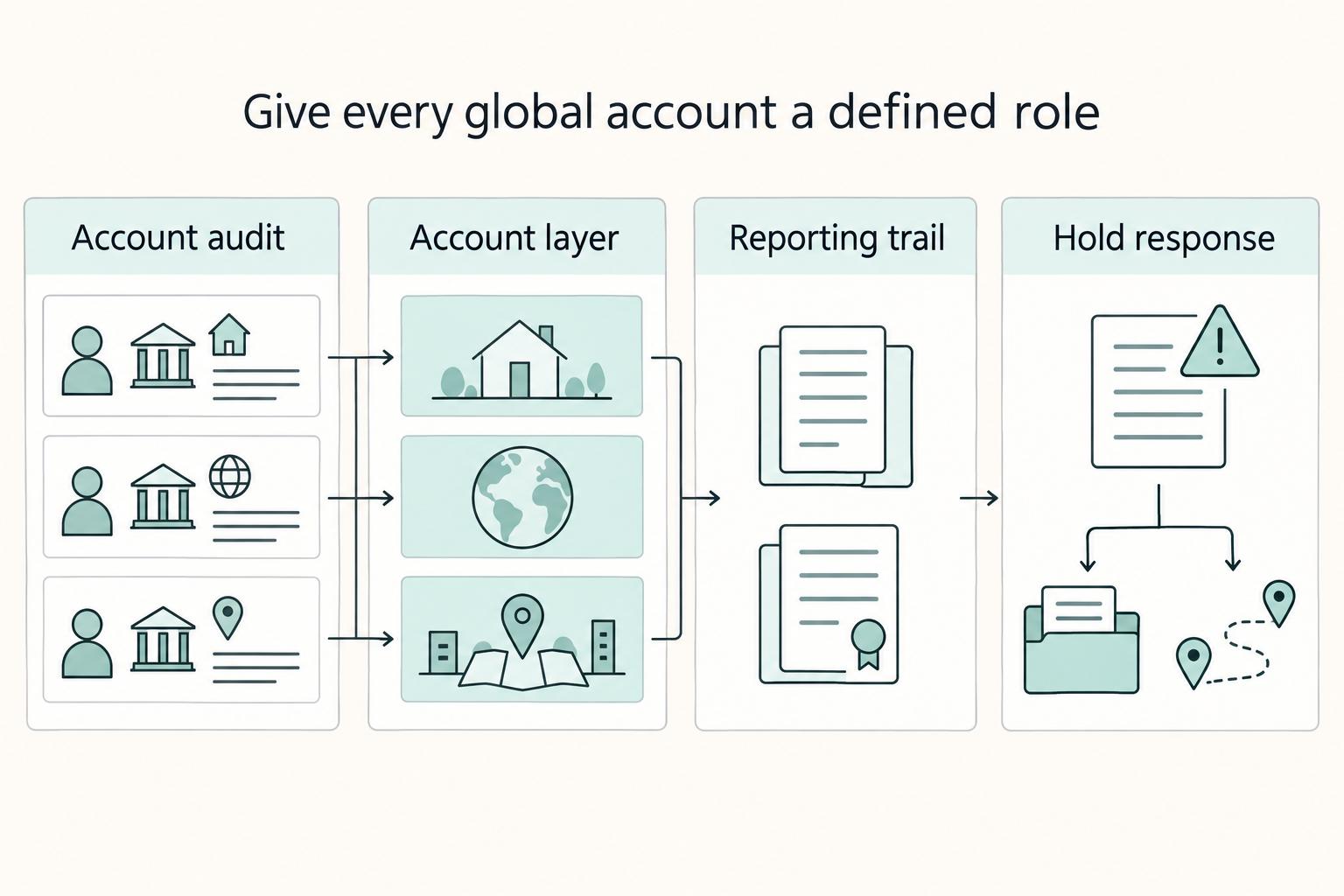
- Audit your current accounts and note each account's real job, owner, jurisdiction, and whether it holds core capital or operating cash.
- Assign each account to one layer: home-base bank, global hub, or tactical local account.
- Document your reporting trail with opening records, statements, self-certifications, and balance history; for any filing trigger you rely on, verify the current threshold and note it in your file.
- Set an escalation path for holds so you can send required invoices, contracts, IDs, and counterparty details quickly, with a backup payout route ready.
You do not need a perfect setup. You need one you can explain, verify, and run consistently. Then confirm jurisdiction-specific rules before you act.
You might also find this useful: The Best Bank Accounts for Kids and Teens.
If you want to operationalize this setup with invoicing, payout tracking, and audit-ready records in one workflow, explore Gruv for freelancers.
Frequently Asked Questions
What is the best bank structure for a US expat to simplify FBAR reporting?
Use one primary foreign-account hub instead of scattering activity across multiple tools. For U.S. persons, FBAR can be triggered if the aggregate value of foreign financial accounts exceeds $10,000 at any point in the year, so consolidation can make tracking easier. Keep monthly statements, track your peak combined balance, and calendar April 15, with the automatic extension to October 15 as your fallback.
Does using Wise or Revolut complicate US tax filing?
It can if you treat these accounts as separate from your reporting process. For FBAR purposes, an account at a financial institution located outside the United States is generally a foreign financial account. Export balances regularly, keep opening documents, and monitor annual peak value across all foreign accounts together.
Which international bank account is best for proving Foreign Earned Income Exclusion (FEIE)?
No single account proves FEIE on its own. In practice, the outcome depends on the rule set you qualify under and whether your records stay consistent. Keep statements, invoices, card activity, and travel logs aligned month by month so your file supports your position.
Can my bank account choice affect my tax residency status?
Yes, but usually as one factor rather than a standalone trigger. Residency tests are jurisdiction-specific and often rely heavily on day-count rules, so account choice should be treated as one data point among others. Keep your onboarding self-certifications and open local accounts only when local payment rails are actually needed.
Are funds held in Wise or Revolut insured?
Usually not in the same way as a bank deposit account when the provider is non-bank. For non-bank providers, protection is typically safeguarding. That is different from direct deposit-compensation treatment when the provider itself fails, and outcomes can vary by failure scenario. In some scenarios, eligible customers may have protection if the bank holding safeguarded funds fails. Verify the firm’s legal status on the FCA Register and keep only operational balances there.
Is an offshore bank account the same as an international account?
No. In practice, “international” usually describes cross-border function, while “offshore” depends on legal and tax context that varies by jurisdiction. Use accounts for operational payment needs, assume onboarding creates reporting visibility, and avoid secrecy-style framing.
Try a related tool
Researched and edited by the Gruv editorial team. Gruv builds cross-border billing, payouts, and finance-operations software for global businesses.
Sources
- consumerfinance.gov/about-us/newsroom/cfpb-finds-billions-of-dol...trusted
- fdic.gov/resources/deposit-insurance/understanding-de...trusted
- federalreserve.gov/publications/files/usbranch.pdftrusted
- federalreserve.gov/publications/files/usb_p3.pdftrusted
- ftb.ca.gov/file/personal/residency-status/index.htmltrusted
- irs.gov/businesses/small-businesses-self-employed/re...trusted
- irs.gov/newsroom/details-on-reporting-foreign-bank-a...trusted
- oecd.org/en/publications/the-2025-update-to-the-oecd-...trusted
Educational content only. Not legal, tax, or financial advice.
Related Posts
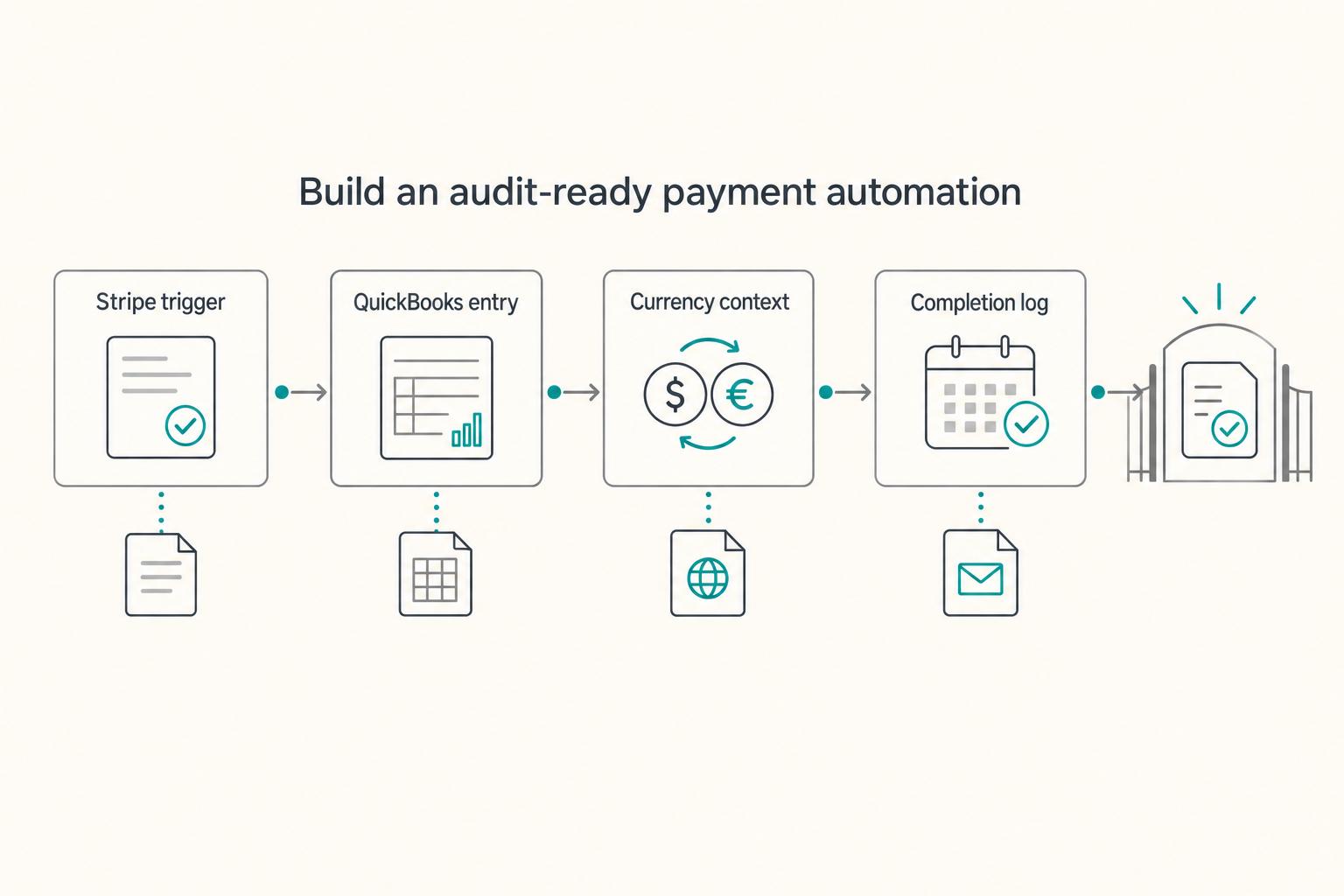
Automating Your Freelance Finances: A Zapier Workflow for Connecting Stripe, QuickBooks, and Wise
Cleaner books and fewer month-end fire drills come from sequence, not software. Run this in the right order: structure, compliance, accounting architecture, then automation.
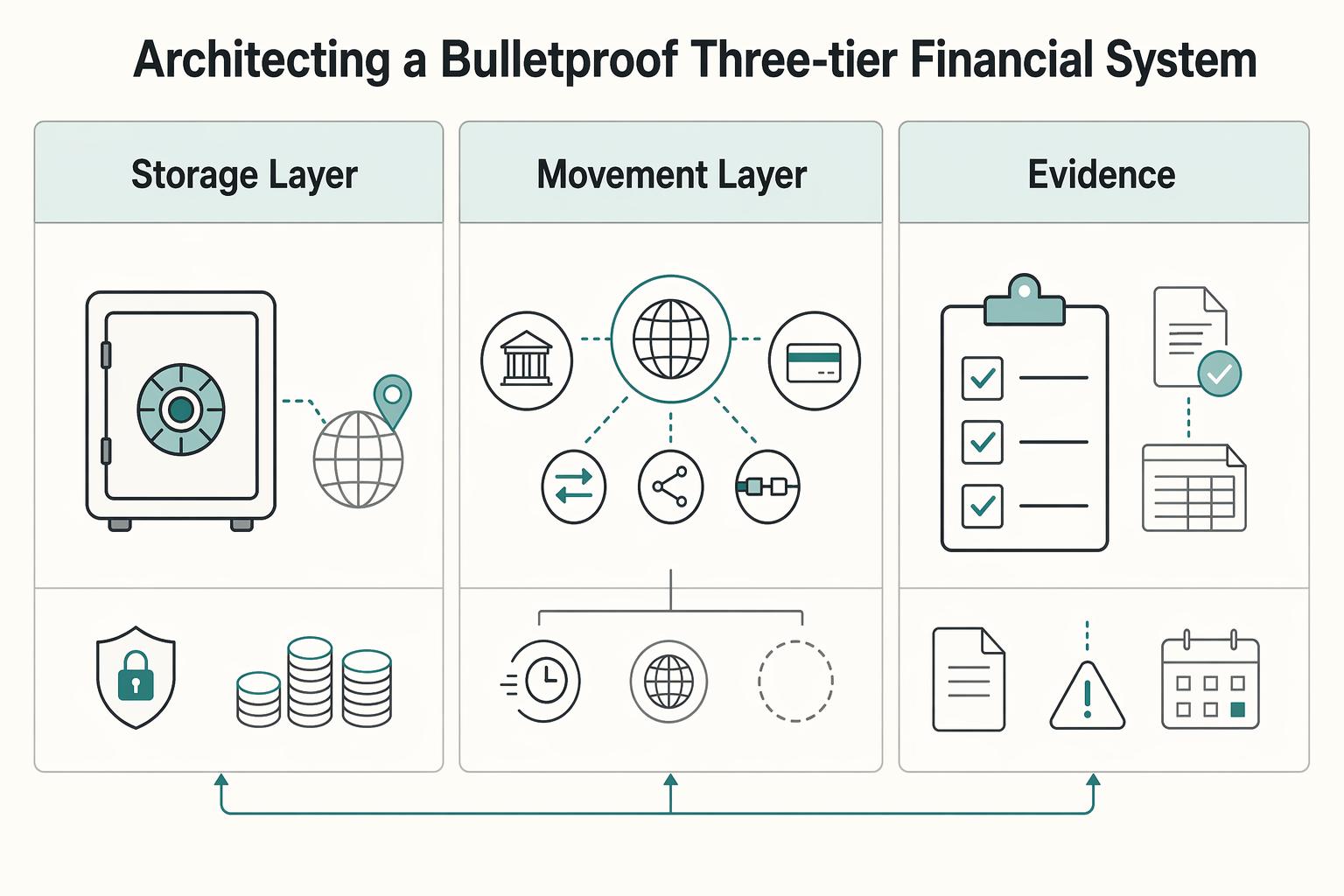
Using an HSBC Expat Multi-Currency Account Without Single-Point Payment Risk
One account is rarely enough for international client cash flow, because you are asking one provider to do three different jobs: store capital, move money, and support compliance across accounts. A better approach is to assign each job to the right tool:

The Freelance Payment Penalty: A Modeled Audit of Platform Fees, FX Spreads, and Payout Delays
The money rarely disappears through a single, easy-to-spot fee. The real loss is stacked. A marketplace takes its commission, a processor adds a charge for international cards, a bank or payment company converts the currency at a spread, a platform holds the funds before release, and a wire sheds a little to intermediaries on the way in. Each layer looks defensible on its own, but the worker feels the combined result as a smaller deposit and a later payday.