
Quick Answer
Start with a controlled spreadsheet or a dashboard that supports your actual records. Track invoice readiness, overdue balances, cleared unrestricted cash, payment costs, project contribution and owner hours. Keep held money and proposals outside spendable cash. Choose Klipfolio, Databox or Geckoboard only after testing the sources, formulas, refresh and plan terms you need.
Build a dashboard around invoices, available cash and collection decisions#
A global freelancer needs to know which invoices to send, what cash is available, which receipts need reconciliation and what to collect next. Company-wide dashboard templates can supply useful components, but adapt their definitions and sources to those decisions.
Start with a small financial view you can reconcile. Below, the three sections cover required checks, project economics and forward cash planning. The tool comparison helps you choose between a controlled spreadsheet and a dashboard connected to your existing records.
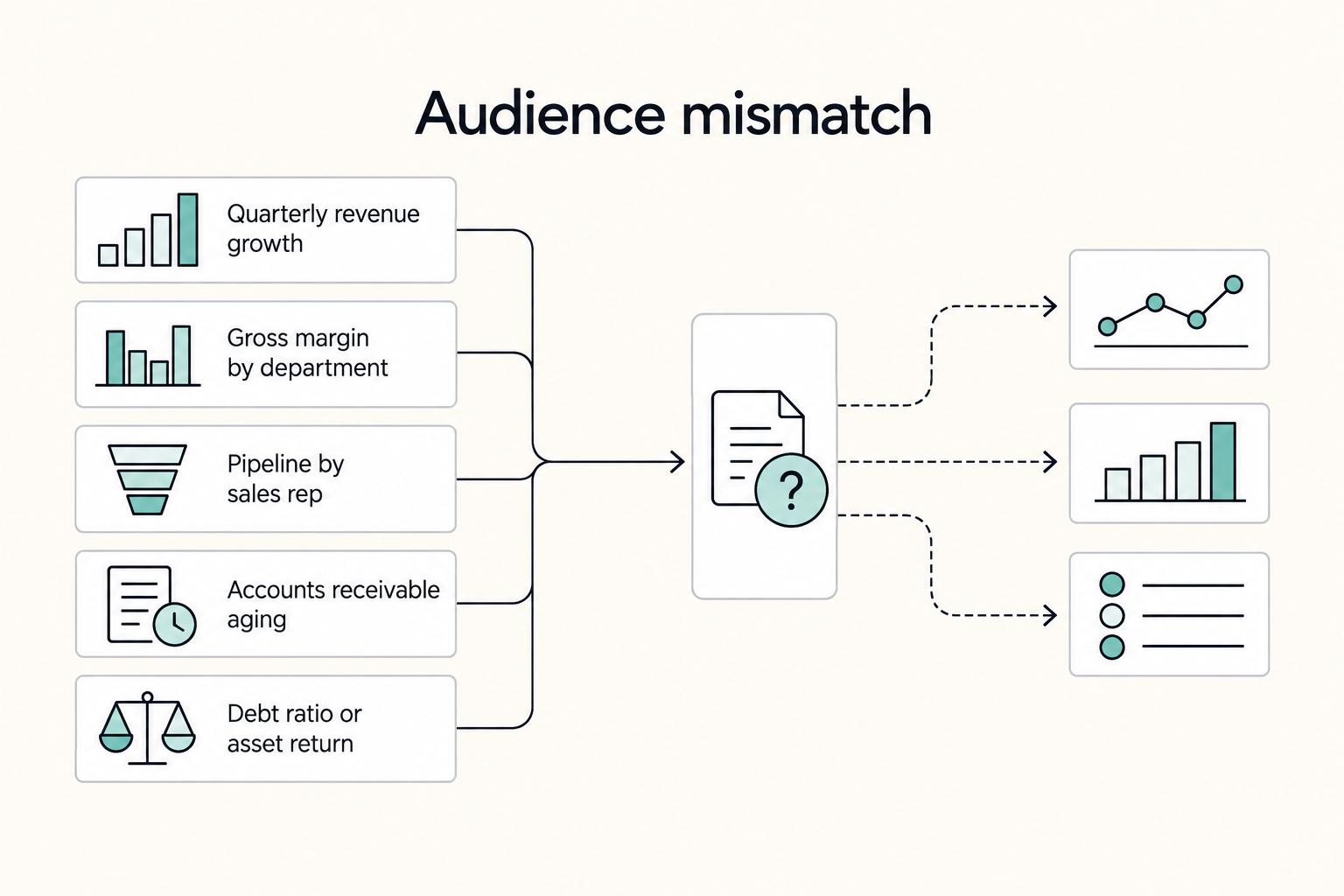
Audience mismatch#
A department-level view can hide a solo operator’s immediate problem: a large invoice is overdue, a processor balance is unavailable, or a currency conversion has reduced the bank credit. Accounts-receivable aging remains useful at any business size; connect it to the next collection action.
A useful dashboard should match its user and support drill-down, but many default setups start with generic business metrics. For you, page one should show the few signals that change this week's decisions. If a metric does not help you decide whether to invoice, travel, follow up, or hold back cash, it probably does not belong on the first screen.
| Corporate team KPI | Business-of-one risk KPI |
|---|---|
| Quarterly revenue growth | Cash collected vs. cash still outstanding |
| Gross margin by department | Project contribution after payment and direct delivery costs |
| Pipeline by sales rep | Client concentration by revenue share |
| Accounts receivable aging | Keep aging, then add disputed amount, named collection owner and next action date |
| Debt ratio or asset return | Days remaining before a key travel, residency, or filing deadline after verification |
If you want help picking those first-screen measures, use this guide on how to set and track KPIs for your freelance business. The goal is not more metrics. It is better decisions from fewer metrics.
Risk exposure you cannot see early enough#
This is the bigger gap. Corporate dashboards optimize for reporting performance, while your bigger risk is exposure you cannot see early enough. That might be a missing record, an unverified total, or a requirement you forgot to check.
Define a decision for each metric. An overdue invoice prompts a client follow-up; a missing bank credit prompts a transfer trace; an unverified tax treatment prompts a scoped review. For a weekly meeting, ask what needs action before the next review, rather than waiting for a perfect month-end report.
Each risk metric should trace back to records you can check quickly. If you cannot trace a number to a document, it is not a control.
The common failure mode is false reassurance. Dashboards become unreliable when data is over-reported, under-reported, missing, late, or incomplete. One stale entry can make the whole screen look safe when it is not.
Overbuilt tooling#
For a one-person business, the problem is often not too little tooling but too much of the wrong tooling. Many team-oriented platforms prioritize shared visibility and connector depth. That can add setup work without improving your next decision.
You do not need ten panels and thirty filters. You need a short list of trusted indicators you will actually maintain. More elaborate tools can hide weak inputs behind polished charts, while a simpler dashboard with manual checkpoints can be more dependable.
A useful test: select one overdue invoice and one bank receipt, then trace both back to source records. Can you explain their amounts, state and next action? Fix missing inputs and definitions before deciding whether another tool is worth maintaining.
Related: Best Excel Financial Modeling Tools by Tier: Auditing, Automation, and Scenario Analysis.
Three Connected Pillars Tied to One Decision Loop#
Use three connected views: required checks, project economics and cash planning. Each signal needs a source, calculation, timestamp and next action. Importing a figure can be automated; changing invoice tax treatment, releasing funds or acting on a disputed receipt still needs the applicable approval and evidence.
| Pillar | What it does | Outcome |
|---|---|---|
| Required checks | Shows invoice readiness and any applicable travel/reporting review | Resolve the specific missing evidence |
| Project economics | Separates revenue, payment costs, delivery costs and owner time | Identify underpriced or costly work |
| Cash planning | Separates bank cash, unavailable balances and expected collections | Choose what to collect and when spending is supportable |
- Required checks
Keep unresolved invoice details and applicable legal deadlines visible. A green flag means the defined check has evidence, not that the dashboard certifies all compliance.
- Project economics
Measure what each project earns after direct costs, alongside how much cash has actually been collected. These figures answer different questions and should remain separately labeled.
- Cash planning
Plan from cleared, unrestricted cash and explicitly labeled expected receipts. Do not treat a proposal, unpaid invoice or held processor balance as money available to spend.
View 1: Required checks and invoice readiness#
Start with invoice readiness: customer details, agreed scope, applicable tax treatment, billing date and evidence. Add travel and account-reporting registers when they apply to your situation. You can build cash and profitability views alongside those checks; collecting country-day data is not a universal prerequisite for every invoice.
A traveling freelancer may need physical-presence records for several different rules. A person subject to foreign-account reporting may also need account histories. Keep these separate from invoice status so one incomplete travel record does not automatically block an otherwise valid invoice.
1. Multi-jurisdiction day counter#
If you work across borders, keep arrival/departure evidence as it occurs. Review the actual tax, stay and work-permission rules that apply to you; days alone do not establish residency or permission to work.
Use fields for jurisdiction, arrival, departure, supporting record, applicable rule, counting method and last review date. For example, the U.S. substantial presence test uses a weighted multi-year count with exceptions. The foreign earned income exclusion physical-presence test uses 330 full days in foreign countries during a qualifying 12-month period and is only part of exclusion eligibility. These are different tests, not a universal 183-day travel allowance.
| Control to track | What you record | What to verify before relying on it |
|---|---|---|
| Tax residency day-count test | Days present, entry/exit evidence, tax-year period | Confirm the current rule window from the official source |
| Visa or stay-limit window | Rolling or fixed stay count, permit/passport basis | Confirm the current stay-limit window with the immigration authority |
| Home-country presence or exclusion test | Days in/out, qualifying period, trip interruptions | Confirm the current rule window with the tax authority |
When any jurisdiction is approaching a verified limit, move it into active review: re-check the source, save the rule artifact, and log your verification date.
2. Aggregate account-balance monitoring#
Foreign-account reporting depends on the person and account scope. U.S. FBAR guidance applies to a U.S. person with financial interest in or signature/other authority over foreign financial accounts when aggregate value exceeds $10,000 at any time during the calendar year. It is not a filing trigger for every freelancer receiving an international payment.
For ordinary cash planning, convert current account balances into your chosen reporting currency, with the rate and timestamp shown. Exclude restricted funds from spendable cash. For any applicable filing, retain the historical account values and use that filing’s valuation method; a current dashboard total is not a filing-ready annual maximum.
Avoid unmanaged spreadsheet sprawl. Informal Excel workflows can create silos and slow response when balances move quickly. If you use a spreadsheet, treat it as a controlled register with import timestamps and clear ownership.
Check that every relevant account and history is included. Flag missing feeds and incomplete coverage rather than displaying zero. Keep reporting eligibility, applicable threshold and filing valuation separate from the live cash total; confirm them before relying on a filing alert.
3. Pre-send invoice control list#
Before requesting payment, verify the invoice facts and any required legal/tax treatment. Keep the evidence with the issued invoice. The travel and account registers can flag related questions, but do not by themselves determine customer tax status or invoice wording.
- Client tax status check: Confirm whether the client is a business or consumer, where they are established, and which tax-status evidence is required for this deal.
- Invoice wording check: Confirm tax treatment and invoice language against the current verified rule for that jurisdiction.
- Evidence retention check: Store contract, SOW, billing details, tax-status proof, verification records, and the final issued invoice in one place.
- Delivery proof check: Keep the send log, portal receipt, or equivalent timestamped delivery record.
If client status or tax treatment is unclear, pause and verify before sending. For a recurring cadence around these controls, use Digital Nomad Financial Review Checklist for Compliance, Cash Flow, and Resilience. You can also use How to Set and Track KPIs for Your Freelance Business.
The dashboard should distinguish ready-to-send invoices from those needing a specific fact checked. Give each exception an owner and next review date so an unresolved label does not become a permanent backlog.
For applicable travel records, use a separate Tax Residency Tracker and show reviewed exceptions in the main view. A tracker does not make a legal residency determination.
View 2: Project economics and cash reconciliation#
Answer three separate questions: what did the project earn, what cash has reached the bank, and how much owner time did it require? Then check how dependent the business is on one payer.
1. Net receipts and project contribution#
Use an invoice-to-bank bridge for collected cash: gross amount paid, refunds, actual payment costs, conversion and final bank credit. Keep unpaid receivables outside that bridge. For project contribution, subtract direct delivery costs from earned revenue net of payment costs, using a consistent tax-exclusive basis. Neither net bank receipts nor contribution is automatically final accounting profit.
Use this as a reusable waterfall template:
| Invoice-to-bank bridge | What to verify |
|---|---|
| Gross amount collected | Payment matched to the invoice; separate any sales tax collected |
| Less refunds | Actual refund references, without double-counting credits already netted |
| Less platform/processor fees | Statement detail; avoid subtracting a combined fee twice |
| Currency conversion | Actual conversion amount and bank credit; do not subtract an embedded spread again |
| Less transfer charges | Only charges not already reflected in net amount |
| Net bank credit | Matched amount, currency and bank-credit date |
| Timing shown separately | Collection, availability and bank-credit dates; delay is not a cash deduction |
Worked example, with no invoice tax or currency conversion: $2,000 collected less a $100 refund, $60 processing and $10 transfer cost yields $1,830 bank cash. If direct subcontractor costs are $400, project contribution is $1,430 before overhead and income tax. A five-day payout delay changes cash timing, not the $1,830 bridge; record actual borrowing cost separately if incurred. For FX, use the actual conversion rate and final credit once rather than subtracting the rate’s embedded spread twice.
A financial data platform helps only if it centralizes information you would otherwise stitch together manually. Prioritize data quality, integrations, real-time reporting, and security. Then check the practical part: migration help, training, and usability. If the system is too complex for regular use, adoption drops and this pillar stops being reliable.
2. Effective hourly rate#
For an internal effective hourly measure, choose a numerator and label it. One useful measure is project contribution before owner compensation divided by all owner hours spent winning, delivering, revising, invoicing and collecting that work. Do not subtract a notional owner wage from the numerator and then present the remaining amount as the owner’s hourly earnings.
Using the $1,430 contribution above, 20 delivery hours plus two proposal hours and three admin hours gives 25 total hours and $57.20 per owner hour before overhead and tax. Including only delivery would display $71.50 and hide the acquisition/collection effort. Compare similar work using the same formula before deciding to reprice, tighten revisions or automate invoicing. See Value-Based Pricing: A Freelancer’s Guide.
3. Client concentration risk#
A profitability view is incomplete if it ignores concentration. Profitability can get fragile when too much depends on one payer. Track each client's share of trailing collected revenue, current receivables, and near-term booked work. The decision it drives is whether to protect the relationship, cap exposure, or shift time into pipeline development now.
Use policy bands based on your own risk rules instead of generic internet cutoffs:
- Define a trailing period, such as the last three completed months, and the denominator: total collected revenue excluding taxes and refunds.
- Illustration: if one economic payer supplied $6,000 of $10,000, concentration is 60%; this is arithmetic, not a universal risk limit.
- Choose an internal warning level and action based on expenses, cash buffer and replacement pipeline. Until chosen, show the percentage as unclassified rather than green.
Measure concentration by true economic parent, not just visible labels, so split departments or subsidiaries do not hide single-client risk. For KPI cadence and governance, align this meter with your broader system in How to Set and Track KPIs for Your Freelance Business.
For a step-by-step walkthrough, see Financial Metrics That Matter for Your Business.
View 3: Cash forecast, pricing and admin work#
Keep a forward view alongside the reconciled history. Separate spendable bank cash from uncertain receipts, then use pricing and admin reviews to improve future outcomes.
1. Cash-flow pipeline#
Forecasts are inherently uncertain. Treat every line in the pipeline as a forward-looking statement based on current expectations, and label uncertainty explicitly. If a number is not tied to a signed contract, issued invoice, milestone owner, or established payment pattern, mark it lower confidence and plan conservatively.
Keep one current pipeline view, and give each item both a confidence label and a next action. This helps reduce spreadsheet-only failure modes that often appear as operations grow: broken forecasting, version-control confusion, and time lost consolidating data instead of acting.
| Pipeline item | Evidence pack to verify | Confidence | Next action |
|---|---|---|---|
| Cleared unrestricted bank cash | Reconciled bank balance, known commitments and exclusions | Available as of the stated time | Subtract committed expenses and required reserves. |
| Invoiced accepted work | Invoice, acceptance record, due date, client history and dispute status | Expected; still unpaid | Follow up using a base and delayed collection date. |
| Approved unbilled milestone | Acceptance, contract and planned invoice date | Expected after invoicing and collection | Issue the invoice; do not count it as cleared cash. |
| Proposal or verbal opportunity | Proposal stage and next agreed sales action | Uncommitted | Exclude from committed spending; include only in an upside scenario. |
Illustrative weekly plan: $3,000 spendable bank cash less $2,000 committed outflows leaves $1,000 before future receipts. A $1,500 accepted invoice due Friday would raise that to $2,500 if collected, but the delayed-payment case remains $1,000. A $4,000 proposal contributes zero to the committed case. A processor balance on hold belongs in a separate unavailable line, with its release uncertainty. This makes the collection action and the consequence of delay visible.
2. Pricing review loop#
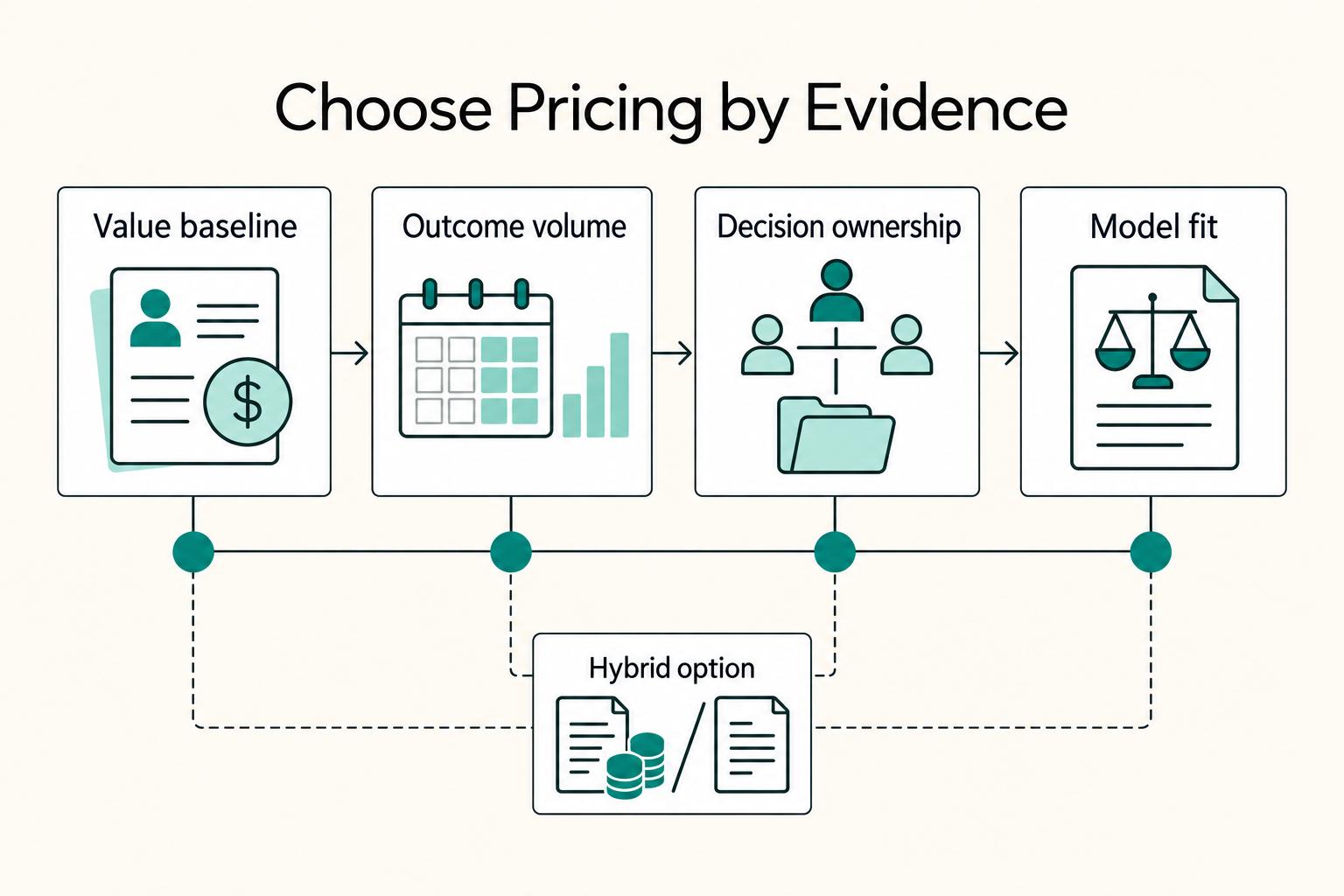
Treat pricing as a repeatable loop, not a yearly gut check. Track realized project value, compare it to the effective hourly result from Pillar 2, then decide whether to reprice, re-scope, or reposition. Use this decision logic:
- If realized value and effective hourly result are both strong, test higher pricing on similar work.
- If client value is strong but hourly result is weak, fix scope, revisions, or approval flow before raising price.
- If both stay weak across the same offer, reposition or retire that offer.
A practical evidence set for each cycle can include final invoices, change orders, time logs, and approval emails tied to revisions or delays. For a deeper method, see Value-Based Pricing: A Freelancer's Guide.
3. Admin-friction scorecard#
Admin friction can eat margin and delay cash, so treat it as measurable. Score it by category, owner, and cadence, then fix the bottlenecks that delay cash or delivery first.
| Category | Owner | Cadence | What to track | Likely action |
|---|---|---|---|---|
| Proposals and contracts | You | Weekly | Hours spent, close-delay days | Standardize templates, tighten approval flow |
| Onboarding and asset collection | You or assistant | Weekly | Missing inputs, start-date slippage | Add intake checklist and deadline gates |
| Invoicing and collections | You or bookkeeper | Weekly | Time spent chasing payment, average delay | Automate reminders, tighten invoice timing |
| Receipt capture and tax prep | You or bookkeeper | Monthly | Cleanup hours, rework from errors | Simplify capture process, reduce manual re-entry |
Choose a tool by the records and calculations you need, not the number of connectors. A controlled spreadsheet may be enough for a small monthly volume. If imports and shared review consume substantial time, test one invoice, one refund, one conversion and one bank receipt in a dashboard before committing. Verify access controls, refresh lag, export options, current plan limits and maintenance work.
| Option | Verified starting point | When to consider it | Check before buying |
|---|---|---|---|
| Controlled spreadsheet | Manual imports, formulas and source links you maintain | Low volume and a short weekly review | Version history, protected formulas, missing-data flags and backup. |
| Klipfolio Klips | Documented file, connector and custom data-source workflows | You need a custom invoice/fee view assembled from several sources | The exact source format, refresh behavior and formula maintenance. |
| Databox | Google Sheets integration and documented business-data integrations | You need a repeatable dashboard over supported accounting and custom data | Current plan entitlement, sheet connection limits and refresh cadence. |
| Geckoboard | Google Sheets integration for displaying selected metrics | You want a compact monitoring view over already-prepared numbers | Who computes and reconciles the sheet values; display alone does not fix accounting. |
Current primary documentation: Klipfolio data sources, Databox Sheets guide and Geckoboard Sheets integration. These are candidates for different workflows, not a tested best-to-worst ranking. Ask each vendor to demonstrate your sample records and current plan terms; this article does not claim a benchmark or a universal cheapest plan.
Run one weekly review with a source and action for each exception#
At each review, reconcile recent bank receipts, send ready invoices, follow up overdue amounts and inspect missing or stale feeds. Then update the base and delayed-payment forecast. Keep each action beside the invoice or transaction that caused it.
Useful reports stay consistent across weeks. Keep your metric definitions, avoid counting one receipt at both processor and bank stages, and distinguish money held from money available. You can improve the workflow in a spreadsheet before investing in a dashboard subscription.
Review pricing and admin time after the cash exceptions. The three views stay connected through their source records:
- Required checks: resolve specific invoice and applicable reporting questions.
- Project economics: reconcile collections and measure contribution with delivery and owner-time inputs.
- Cash planning: act on overdue invoices and compare expected receipts with a delayed-payment case.
If you need the operating model behind these metrics, start with What Is a Financial Identity and Why Do Nomads Need One?.
If you want to reduce payment admin after building your dashboard, review one workflow for invoicing and global collections: Explore Gruv for freelancers.
Frequently Asked Questions
What should a freelancer's financial dashboard track?
Track ready-to-send invoices, overdue receivables with next actions, cleared unrestricted cash, unavailable processor balances, net receipts, direct project contribution, effective owner hourly return and client concentration. Include applicable legal-review exceptions separately. Each metric needs a definition, source, timestamp and action owner.
How do you create a financial dashboard for a digital nomad?
Build it in a practical order instead of copying a corporate template. Start with inputs you can collect and organize reliably, then expand your KPI views, because data collection is often a major implementation bottleneck. Assign one source of truth per metric, set a weekly review, and keep the supporting records tied to each KPI.
What are the most important KPIs for a solo business?
For a solo business, start with available cash after commitments, overdue invoice amount, net bank receipts and contribution per owner hour. Add concentration and collection-delay trends when they change a decision. Keep proposals and held funds out of spendable cash; measure invoice tax and owner time consistently across projects.
Is there a dashboard that can track tax residency and reporting limits for me automatically?
A dashboard can display reviewed rules and recorded dates, but a connector does not prove residency or filing eligibility. Relevant tests can use different periods, exceptions and account-valuation methods. Keep source evidence, a rule-specific calculation and a review date; show unknown or stale inputs as exceptions rather than an automated clearance.
What's the difference between a financial dashboard and accounting software?
Accounting software is your historical book of record, while a dashboard is your decision layer that combines accounting, workforce, and operational metrics. For most solo operators, the clean setup is clear metric ownership, formulas, and review cadence across both systems.
Try a related tool
Researched and edited by the Gruv editorial team. Gruv builds cross-border billing, payouts, and finance-operations software for global businesses.
Sources
Includes 3 external sources outside the trusted-domain allowlist.
- irs.gov/individuals/international-taxpayers/substant...trusted
- irs.gov/individuals/international-taxpayers/foreign-...trusted
- geckoboard.com/product/data-sources/google-sheetsexternal
- help.databox.com/guide-using-google-sheets-with-databoxexternal
- support.klipfolio.com/hc/en-us/articles/215547078-Introduction-to-...external
Educational content only. Not legal, tax, or financial advice.
Related Posts
Value-Based Pricing for Freelancers Under Real Payment Risk
Value-based pricing starts with the client’s expected benefit and willingness to pay. It still needs a deliverable, scope and payment agreement you can perform. Use a discovery phase when the benefit or effort is too uncertain to support a defensible quote.

How to Set and Track KPIs for Your Freelance Business
Better decisions matter more than more metrics. The practical goal is to finish each review knowing what to change next, who owns that change, and when you will verify whether it worked.

How to Find and Secure Public Speaking Gigs as a Freelancer
Freelance speaking gets more predictable when every lead moves through the same sequence: discovery, qualification, relevant outreach, written terms, delivery, and proof capture. That sequence turns random wins into a booking process you can repeat.