
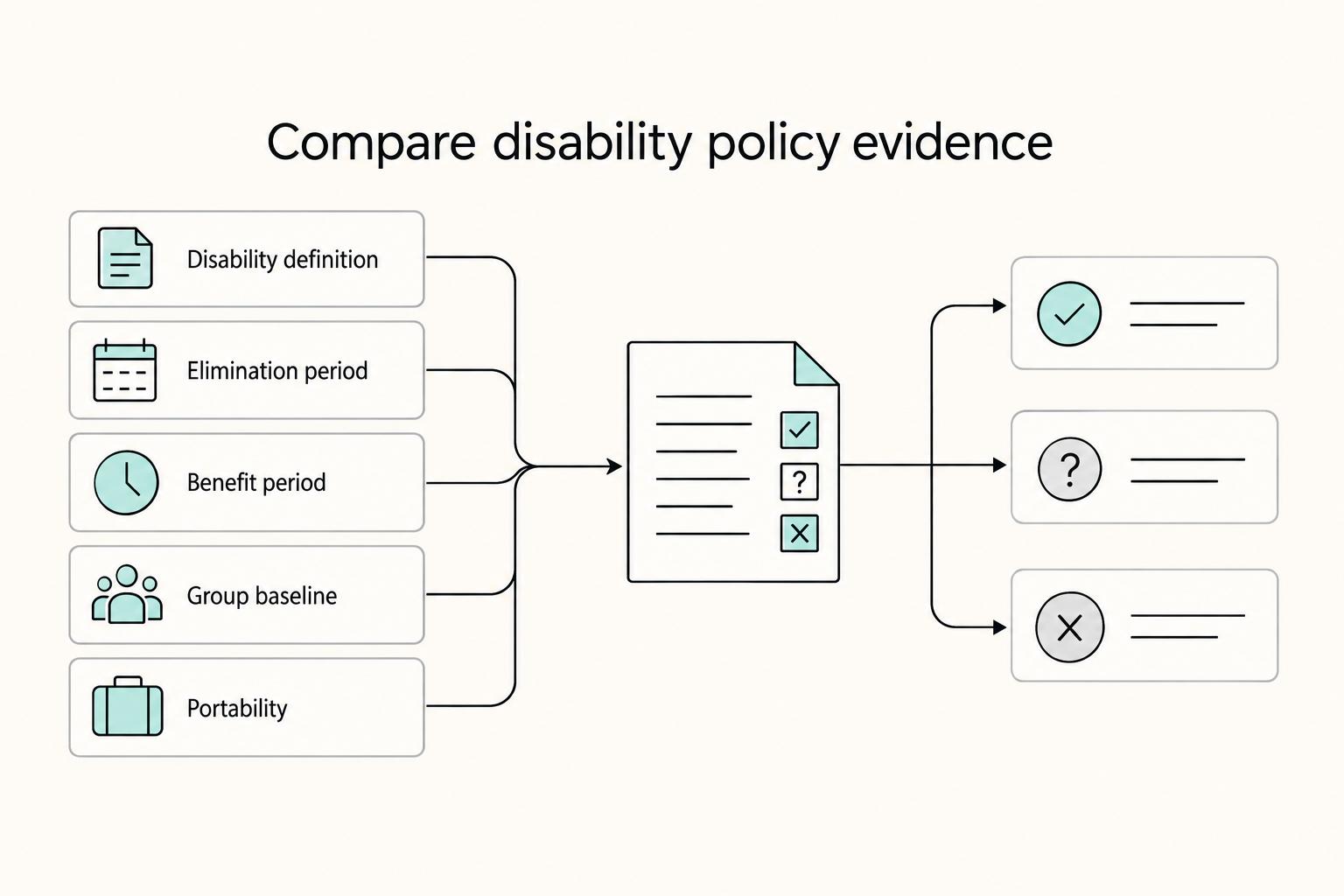
Quick Answer
Start with a shortlist, then choose from verified contract terms. For high earners, the best disability insurance companies are the carriers that match your occupation wording, waiting-window tolerance, and duration needs under one normalized quote frame. Use publisher lists for discovery only, confirm exclusions and rider language in writing, and test each option against your reserves and existing group coverage before treating premium as a deciding factor.
The best disability insurance companies for high earners who cannot afford income gaps#
Start with the income-gap problem, then use carrier rankings to build a shortlist you will verify with matched quotes. That order matters. A polished ranking page cannot tell you whether an option actually fits your obligations, cash reserves, and work pattern.
As you compare options, keep the comparison frame fixed across every quote. If assumptions or terms change between quotes, treat the result as not like-for-like. If you want terminology context before quote review, read What is an 'Own-Occupation' Disability Insurance Policy?.
Start with your fixed obligations#
Before you compare companies, write down the monthly costs that continue even if your work pauses: housing, debt service, insurance, family expenses, and ongoing business commitments.
Use that total as your stress test. If a quote setup would force you to miss payments or liquidate assets, the quote is a mismatch even if the headline premium looks lower.
Use rankings as inputs, not answers#
Public ranking pages help you build a shortlist, but they do not make the final decision for you.
Money’s long-term disability page shows both the value and the limits of a public ranking. It is a list of 5 companies, dated Feb 21, 2023, and organized by “best for” categories instead of naming one overall winner. It also discloses that financial considerations may influence how brands are displayed, marks some entries as “Our Partner,” and states that not all brands are included.
| Input | What it helps with | What it cannot tell you |
|---|---|---|
| Category ranking page | Gives you a starting shortlist and a quick view of editorial grouping | Does not determine which contract fits your income pattern or cash-reserve reality |
| Surface comparison table | Lets you scan fields like A.M. Best Rating, Year Formed, Coverages Offered, and States Available | Does not validate the exact policy language in your quote |
| Matched quote set | Enables true like-for-like comparison on the same applicant profile | Breaks down if you change the comparison frame between quotes |
Keep the comparison frame fixed across all quotes. Once that frame moves, the price comparison stops being clean.
What to verify before you trust a shortlist#
Once a public list helps you narrow the field, switch from discovery mode to verification mode. Use this checklist:
- Confirm ranking context: “best for” category labels, disclosure language, and whether entries are marked “Our Partner.”
- Check surface facts separately: A.M. Best Rating, Year Formed, Coverages Offered, and States Available.
- Treat as unverified until quote review: partner placement and any broad “best overall” claim.
- Keep comparisons like-for-like: use the same comparison frame across options before deciding.
The rule is simple: build the shortlist from public sources, but make the decision from matched quotes and documents you can explain line by line. Related: A Guide to Disability Insurance for Freelancers.
Who this list is for and how the companies were selected#
This article is for people comparing disability options and deciding how much to rely on group coverage versus individual coverage. Before you compare quotes, frame the decision around your current coverage mix and where a group plan could still leave gaps.
It is not for people who plan to rely on group disability coverage without checking the plan documents. Group coverage can be useful as temporary protection or as a supplement, but it can still leave real gaps. At minimum, review partial-disability treatment and whether terms can be changed or canceled by the sponsor or insurer.
Selection follows a two-stage filter. First, use a group-versus-individual comparison to identify potential coverage gaps. Second, screen each quote for contract quality, including policy ownership, premium stability, specialty-specific coverage, and fit alongside any group coverage. If a lower premium depends on weaker terms, it gets downgraded.
This is a methodology-driven list, not a market-share list. It helps you build and pressure-test a shortlist. It does not prove one insurer is best for every occupation, state, or underwriting profile, and it does not replace specimen-contract review. Evidence limits: this framing is based on one AMA-vs-individual source (published August 21, 2013), so treat it as a gap-check framework, not a full market ranking.
If you want a deeper dive, read Canada's Digital Nomad Stream: How to Live and Work in Canada.
The criteria that matter most for high earners#
Use the same order every time: claim eligibility first, then waiting-period risk, then payout horizon, then price. When a quote looks cheaper, it can be because it is harder to qualify for, pays later, or stops sooner.
Own-occupation#
Start here because this definition controls whether a claim qualifies. In plain language, own-occupation means you qualify when injury or sickness prevents you from doing the duties of your occupation.
That wording changes payout because some contracts use a stricter standard tied to whether you can do any gainful work you are qualified for. If the language shifts away from your actual job duties, treat it as a downgrade before you look at premium.
Elimination period#
The elimination period is the waiting window before benefits begin, commonly 30, 60, 90, or 180 days. This is one of the clearest cashflow tradeoffs in the contract. Shorter waits usually cost more, while longer waits push more risk back onto you.
Set this from cash you already have, not expected future income. If your real runway is shorter than the waiting window, the quote is asking you to self-fund a gap you may not actually be able to carry.
For variable income, use this screen before you compare premiums:
- List essential monthly obligations: housing, food, utilities, transport, debt minimums, insurance, and non-negotiable family support.
- Compare that total with the quoted monthly benefit. As a planning anchor, individual disability benefits are often around 60% of pre-disability earned income, while many LTD plans are framed in a 40% to 60% range.
- If there is uncovered exposure during the elimination period and no clear cash source, reject the quote.
Benefit period#
The benefit period is the maximum time benefits can be paid during a covered disability. Even if a claim is valid, payments can still stop while your income loss continues if the duration is too short.
Do not optimize for premium until the payout length matches your real interruption risk.
Group baseline and portability#
Treat employer coverage as a baseline to verify, not a complete solution. Group coverage can end when employment ends, and portability or conversion windows can be short, often 1-2 months. Some plans use a 31-day conversion deadline.
The practical sequence is straightforward: verify group plan terms and portability first, then add supplemental coverage only for documented gaps. Check the plan document for replacement level, disability definition, separation rules, portability or conversion availability, and deadlines.
Do not treat SSDI as equivalent to private own-occupation coverage. SSDI uses a strict federal disability standard, and the SSA fact-sheet snapshot lists an average disabled-worker benefit of $1,581 per month (December 2024).
Exclusions and pre-existing conditions#
Read exclusions early because they shape what may not be covered, and covered-disability language differs by policy. This matters at claim time. If covered conditions are unclear, claim outcomes are unclear.
The NAIC notes some policies may cover accident-related disability but not illness. That is a reject signal when your risk profile needs both. Pre-existing conditions can also affect underwriting or exclusions, so require exact policy or rider wording before you compare price.
Use this pass-fail screen before premium discussions:
| Criterion | Pass (advance) | Fail/hold (reject or pause) | Why it changes payout |
|---|---|---|---|
| Disability definition | Tied to your occupation’s duties | Shift toward any gainful work standard | Harder claim qualification |
| Elimination period | You can self-fund the full waiting window from reserves | Waiting window exceeds proven runway | Forced self-funding before benefits |
| Benefit period | Duration matches your interruption risk | Duration ends before likely exposure ends | Payments may stop while loss continues |
| Group baseline | Group terms verified in plan documents | Reliance on assumptions | Hidden gaps at claim time or job change |
| Portability and exclusions | Portability or conversion rules and exclusions are clear | Portability unclear, deadlines missed, or coverage language vague | Coverage may lapse or fail when needed |
Final rule: do not advance a lower-cost quote if weaker contract language reduces claim qualification or materially increases what you must self-fund during the waiting window. This pairs well with our guide on The Best Business Travel Insurance for Digital Nomads and Executives.
Quick comparison table of the most-cited providers#
Use this table to triage your shortlist, not to pick a winner. Public comparison pages may disclose partner fees, note that financial considerations may influence how brands are displayed, and state that not all brands are included. That makes list position a lead signal, not decision proof.
The keep-or-drop decision belongs to the quote packet and contract wording you verify, not to publisher order.
| Provider | Likely fit profile | Contract elements to verify first | Common uncertainty areas | When to keep or drop from your shortlist |
|---|---|---|---|---|
| Guardian | Candidate to assess only after quote-level verification | Occupation definition, elimination period, benefit period, exclusions | Publisher ranking/order is not decision-grade evidence | Keep only if verified terms match your comparison frame. Drop if key terms stay unclear or cannot be matched. |
| Principal | Candidate to assess only after quote-level verification | Occupation definition, elimination period, benefit period, exclusions | Financial considerations may influence display order on list pages | Keep only if verified terms match your comparison frame. Drop if key terms stay unclear or cannot be matched. |
| Ameritas | Candidate to assess only after quote-level verification | Occupation definition, elimination period, benefit period, exclusions | List-page coverage may be incomplete | Keep only if verified terms match your comparison frame. Drop if key terms stay unclear or cannot be matched. |
| The Standard | Candidate to assess only after quote-level verification | Occupation definition, elimination period, benefit period, exclusions | Disclosure details can change how list placement should be interpreted | Keep only if verified terms match your comparison frame. Drop if key terms stay unclear or cannot be matched. |
| MassMutual | Candidate to assess only after quote-level verification | Occupation definition, elimination period, benefit period, exclusions | List placement is a starting point, not proof of best fit | Keep only if verified terms match your comparison frame. Drop if key terms stay unclear or cannot be matched. |
If one quote looks cheaper, stop and confirm that the structure is actually matched. Price differences can reflect different contract design, not a true like-for-like advantage.
Before you compare premiums, follow this sequence:
- Normalize assumptions across all quotes. Set one benefit target, one waiting window, one payout horizon, and one occupation definition. Leave unresolved approved amounts or benefit cap ranges marked as pending carrier confirmation until the quote packet verifies them.
- Request the same proof set from each carrier. Review quote packet details, contract or specimen wording, exclusions, and rider schedules.
- Check source-page disclosure and scope. If the page says partner fees may apply, financial considerations may influence display, or the list is incomplete, use it for shortlist building only and review the linked disclosure before making keep-or-drop decisions.
- Compare premium last. If assumptions are not matched, the premium comparison is not decision-grade.
That keeps the table useful for triage while the real decision stays tied to verified contract language and your actual income-gap risk.
Best disability insurance companies for high earners in 2026#
Read this section as a shortlist framework, not a winner list. Keep each carrier you are considering in one like-for-like quote process, then decide only from matched quote documents and policy forms.
A quick caution before you use any roundup page: it may show Paid Placement, state that affiliate commission can affect placement or order, and also claim editorial independence. Use that mix for discovery only, not selection. Ignore nearby partner promos when you evaluate insurance terms.
| Quote lane | Best-fit role in your process | Definition quality | Waiting period flexibility | Benefit duration options | Rider flexibility | Underwriting fit | What to verify before deciding |
|---|---|---|---|---|---|---|---|
| First quote | Baseline benchmark | Not established from public ranking pages | Not established from public ranking pages | Not established from public ranking pages | Not established from public ranking pages | Not established from public ranking pages | Policy or specimen wording, exclusions, elimination period, benefit period, rider schedule |
| Second quote | Anchor comparison | Not established from public ranking pages | Not established from public ranking pages | Not established from public ranking pages | Not established from public ranking pages | Not established from public ranking pages | Same normalized inputs as other quotes; confirm issued terms match the quote packet |
| Third quote | Challenger after two anchors | Not established from public ranking pages | Not established from public ranking pages | Not established from public ranking pages | Not established from public ranking pages | Not established from public ranking pages | Full form language, exclusions, rider schedule, not summary copy |
| Fourth quote | Consistency check | Not established from public ranking pages | Not established from public ranking pages | Not established from public ranking pages | Not established from public ranking pages | Not established from public ranking pages | Exact claim-trigger wording, start timing, and payout endpoint in the form |
| Fifth quote | Final cross-check before cutdown | Not established from public ranking pages | Not established from public ranking pages | Not established from public ranking pages | Not established from public ranking pages | Not established from public ranking pages | Issued quote comparability to your normalized frame, not brand familiarity |
First quote (baseline)#
Start here as your baseline quote. The weak spot is assuming the first quote becomes your standard before you check form language. Verify policy or specimen wording, exclusions, elimination period, benefit period, and rider schedule.
Second quote (anchor)#
Use this as your second anchor to test whether structure changes under matched inputs. The weak spot is treating a lower premium as better when terms are not fully matched. Verify the same benefit target, waiting window, payout horizon, and rider requests, then confirm the approved terms in the form.
Third quote (challenger)#
Use this as a challenger once two anchor quotes are in place. The weak spot is relying on marketing-level summaries. Verify full policy wording, exclusions, and rider schedule line by line.
Fourth quote (consistency check)#
Add it as a consistency check across a fourth quote. The weak spot is treating broad positioning as contract evidence. Verify what must happen for benefits to start, when they start, and how long they continue, in actual form language.
Fifth quote (final cross-check)#
Use this as a broader cross-check before final selection. The weak spot is letting brand familiarity substitute for matched terms. Verify that the issued quote matches your normalized comparison frame.
From here, move to execution:
- Set one fixed comparison frame across every quote: same benefit target, waiting window, payout horizon, and rider requests.
- Collect the same proof set from each carrier: quote packet, specimen or policy form, exclusions, and rider schedule.
- Review the source-page advertiser disclosure and note Paid Placement and affiliate-disclosure signals before you infer anything from list order.
- Compare premium last, and drop any quote that cannot be verified on matched terms.
You might also find this useful: The Best Workers' Compensation Insurance Companies.
Guardian and Principal decision split for variable-income professionals#
From the available evidence, the reliable takeaway is that disability insurance is framed as important for doctors, and contract-specific comparisons still need document-level verification. WCI #365 features Dr. Tyler Scott with Dr. Jim Dahle discussing disability insurance, including Tyler's disability story, and the page includes a transcript you can use as a verification checkpoint.
1. Guardian and Principal contract wording stays unverified until you verify the policy documents#
Treat both carriers' claim definitions as unknown here until you verify the quote packet, specimen form, and issued policy language. Use "own-occupation" as a verification question, not an assumption.
2. Waiting-period and benefit-structure details stay unverified until you verify the policy documents#
Treat specific waiting period options, benefit durations, monthly limits, exclusions, or rider differences for Guardian or Principal as unconfirmed until you review the documents. Add those details to your comparison only after document review.
| Carrier path | Disability definition | Waiting period flexibility | Benefit duration flexibility | Monthly benefit fit | Exclusions and rider notes |
|---|---|---|---|---|---|
| Guardian | Treat as unverified; confirm exact form wording in quote and issued materials | Treat as unverified; confirm current options in quote and issued materials | Treat as unverified; confirm current options in quote and issued materials | Treat as unverified; confirm against current earnings basis and target | Treat as unverified; confirm in the same document set |
| Principal | Treat as unverified; confirm exact form wording in quote and issued materials | Treat as unverified; confirm current options in quote and issued materials | Treat as unverified; confirm current options in quote and issued materials | Treat as unverified; confirm against current earnings basis and target | Treat as unverified; confirm in the same document set |
3. Non-negotiable decision checkpoint#
Do not declare a Guardian-vs-Principal winner yet. Make the call only after matched assumptions and issued-policy terms are verified line by line.
Ameritas and The Standard when your priority is contract flexibility#
Treat this as a verification-first decision, not a cheap-fallback decision. Lock the core contract language first, then adjust cost levers.
Use the same assumptions across both carriers and verify exact wording in specimen forms and issued policies. If you want a quick refresher on wording, see What is an 'Own-Occupation' Disability Insurance Policy?.
| Comparison point | Ameritas | The Standard |
|---|---|---|
| Monthly benefit target | Same target as your other quotes | Same target as your other quotes |
| Own-occupation wording | Verify exact wording in specimen form and issued policy | Verify exact wording in specimen form and issued policy |
| Waiting period | Same assumption before price comparison | Same assumption before price comparison |
| Benefit period | Same assumption before price comparison | Same assumption before price comparison |
| Rider flexibility | Option set pending carrier/policy verification | Option set pending carrier/policy verification |
Ameritas#
Keep Ameritas in the mix as a normalized quote, then verify specimen forms, endorsements, exclusions, and issued policy wording before deciding.
The Standard#
Keep The Standard in the mix as a normalized quote under the same assumptions, then verify specimen forms, endorsements, exclusions, and issued policy wording before deciding.
Claims handling approach can affect outcomes. The available excerpt is sponsored Liberty Mutual content, dated January 4, 2016, and warns against both aggressively managed claims and fast-track claims. Confirm the exact contract wording first. Then check whether the claims process is built for stakeholder consensus among the disabled employee, treating physician, employer, and insurer, and whether consulting physician specialists are part of the process.
Protect core contract language first, then adjust waiting period or optional features once the carrier quote and policy form verify the available options.
Need the full breakdown? Read The Best Travel Insurance for Digital Nomads in 2026.
When MassMutual, Mutual of Omaha, or Assurity can still win#
Move to this second round only if the first-round quotes still do not produce a clear contract fit. Treat carrier-level outcomes as unknown until quote documents are verified. The goal is not a bigger brand name. The goal is the best-issued contract match for your work, cash buffer, and interruption risk.
Ranking pages can still help at this stage, but only as shortlist input. The Forbes page is presented as a ranking page and includes an Advertiser Disclosure. It says it can earn commissions from partner links, says commissions do not affect editorial evaluations, and shows Audited & Verified: Jul 25, 2025, 11:30am. Use that as a recency and sourcing checkpoint, then decide from quote documents.
Keep the same comparison terms fixed before you compare any challenger quote, and define each term from the quote documents you receive:
- Own-occupation wording
- Elimination period
- Benefit period
- Rider fit
- Option set pending carrier/policy verification
| Carrier | Best-fit profile | Contract strengths | Common risk flags | What to verify before accepting a quote |
|---|---|---|---|---|
| MassMutual | You still do not have a clear winner after normalizing first-round quotes | Count only strengths shown in issued policy language | Brand recognition can reduce document-level scrutiny | Confirm own-occupation wording, elimination period, benefit period, exclusions, and any option set shown in carrier or policy materials |
| Mutual of Omaha | You want one more quote under the same comparison frame | Count only strengths shown in issued policy language and endorsements | Ranking visibility can create false confidence before terms are verified | Confirm specimen or issued wording, rider fit, any mismatch between quote summary and final contract, and any option set shown in carrier or policy materials |
| Assurity | You still have unresolved contract-fit tradeoffs and need one more normalized option | Count only strengths shown in issued policy language | Headline differences can hide weaker fit if assumptions are not aligned | Keep assumptions aligned, then verify wording, endorsements, and any option set shown in carrier or policy materials |
MassMutual#
MassMutual can win when the issued contract resolves a mismatch left by first-round quotes.
Where fit breaks is usually simple: summaries and rankings get treated as if they were controlling policy language. Confirm own-occupation wording, elimination period, benefit period, exclusions, and endorsements; keep any optional-feature set pending until carrier or policy materials verify it.
Mutual of Omaha#
Mutual of Omaha can win when it is compared on the same assumptions as your other offers.
Fit breaks when ranking visibility replaces line-by-line contract review. Confirm the exact eligibility wording, benefit start conditions, payout duration terms, and endorsements; keep any optional-feature set pending until carrier or policy materials verify it.
Assurity#
Assurity can win when it is the best-issued contract match after the same normalized comparison process.
A common failure mode is letting optional-feature changes shift real coverage without noticing. Confirm quote summary against issued policy wording, endorsements, and exclusions; keep optional-feature choices pending until carrier or policy materials verify them.
Choose the best-issued contract match, not the most visible brand.
How to stack short-term, long-term, group, and supplemental coverage#
Build your stack by separating timing gaps from amount gaps. Then verify each layer in the plan documents so you fix real gaps without creating accidental overlap.
| Layer | Role in your stack | Gap type covered | Dependency on other layers | What to verify in plan documents |
|---|---|---|---|---|
| Group disability insurance | Employer-provided baseline disability income coverage | Usually amount gap first; timing can still be affected by elimination periods | Often your starting layer if you are employed | SPD or certificate: disability definition, elimination period, verified monthly cap, verified benefit duration, offsets, portability or conversion terms, claim filing steps, and denial/loss triggers |
| Long-term disability insurance | Core protection for a prolonged inability to work | Amount and long-duration income gap | Often depends on your cash reserves or short-term coverage during the elimination period | Policy or specimen: exact disability wording, elimination period, benefit period, exclusions, riders, offsets, issued-policy endorsements |
| Short-term disability insurance | Early bridge for a temporary covered health event | Timing gap | Can bridge the elimination period before long-term benefits begin or until you return to work | Plan or policy: verified waiting period, verified maximum payment window, covered-condition wording, coordination with long-term coverage |
| Supplemental disability insurance | Extra income layer on top of existing disability coverage | Amount gap | Usually depends on a base long-term layer already being in place | Policy or enrollment materials: whether it supplements group LTD, verified benefit amount, exclusions, portability, what happens if employment ends |
| Leave protections such as FMLA or PFML | Job protection or leave wage replacement during qualifying leave | FMLA is not disability income coverage; PFML may help with timing in qualifying cases | Depends on employer status, state rules, and eligibility | Employer leave policy and state program rules: verified eligibility rules, verified duration, verified wage replacement, notice and claim deadlines |
| Workers’ compensation | Separate path for work-related injury or illness | Not a general disability-income gap tool | Independent from your non-work disability stack | State workers’ compensation notices: verified injury reporting rules, employer reporting steps, and state claim-process requirements |
Group coverage is your baseline, not your answer#
Start with your group plan because it defines your baseline, not your full protection. Request your SPD, since participants are entitled to it at no charge. Use it to confirm participation and claim-filing mechanics.
Do not stop at the headline benefit. Check the disability definition, elimination period, cap, offsets, duration, portability terms, and any denial/loss triggers so you can measure the real gap.
Long-term coverage is the anchor#
If your main risk is a prolonged income loss, long-term coverage should be the anchor of the stack. This is the core long-duration layer, and policy definitions can vary in ways that materially change a claim.
Focus on the elimination period as a self-insurance tradeoff. A longer wait can lower premium, but only if your reserves or bridge coverage can truly carry that period.
Short-term coverage and leave protections are bridge tools#
Short-term disability is a bridge for temporary inability to work from a covered health event. Its role is to cover an early period of income loss, not to replace multi-year income.
Keep leave protections separate from disability insurance. FMLA is job-protected unpaid leave, with health-benefit continuation while on leave. PFML is wage replacement in qualifying leave cases under applicable rules. There is no federal private-sector entitlement to paid family and medical leave, and some states have their own programs. Verify current eligibility and duration details before you rely on either.
Supplemental coverage should close an amount gap, not patch a weak structure#
Supplemental disability belongs in the stack only after you document an amount shortfall in the base coverage. Its purpose is to close the difference between existing long-term benefits and the income level you actually need.
Do not use supplemental coverage to hide a weak base contract. Confirm exactly what the supplemental layer depends on and whether it still works if your employment status changes.
Keep workers’ compensation and SSDI outside this stack logic#
Workers’ compensation is a separate work-injury system, not part of your non-work disability stack. It should not be used to solve non-work income-loss risk.
SSDI follows its own federal eligibility rules and generally includes a five-full-consecutive-month waiting period before entitlement (unless an exception applies). Verify current rules before you use SSDI in private cashflow bridge assumptions.
A clean way to build the stack is to follow this order:
- Inventory current benefits first: group disability, short-term disability, leave policies, paid leave, and any individual policy already in force.
- Mark each gap as timing or amount.
- Prioritize core long-duration protection next.
- Add a bridge layer only where the elimination period creates a real cash shortfall.
- Add supplemental coverage only where a documented amount gap remains after base-plan review.
- Keep your SPD, policy, certificate, endorsements, and claim instructions together so decisions stay document-based.
Quote collection and verification checklist before you buy#
This is a pre-purchase execution plan, not a premium-shopping exercise. Normalize every quote, verify contract behavior in writing, and confirm your cashflow still works if you cannot work.
| Checklist step | What you standardize or collect | What you verify in writing |
|---|---|---|
| 1. Build one normalized quote frame | Same monthly benefit target, waiting period, payout duration, and rider set, confirming each assumption at the quote level | Every carrier used the same assumptions before you compare premiums |
| 2. Require a full comparison packet | Specimen policy or policy summary, rider pages, exclusions and limitations language, application copy, benefit schedule | Disability definition, exclusions, limitations, rider terms, claim triggers, and benefit coordination language |
| 3. Stress-test your no-benefit window | Savings plan, business reserves, household burn, other written coverage already in force | When benefits can start under written terms, what you must self-fund, and what claim documentation is required |
| 4. Cross-check existing coverage | Group plan SPD or certificate, short-term terms, supplemental terms if any | Overlap, offsets, caps, elimination-period interaction, and whether the policy closes a timing gap or amount gap |
| 5. Run a final go/no-go gate | One-page summary for each finalist | Payout amount, start timing, duration, and overlap behavior |
1. Build one normalized quote frame#
Force every carrier into one quote shape before you compare anything. Use one fixed frame across all finalists: monthly benefit target, waiting period, payout duration, and rider set. Keep any unresolved field marked as pending quote verification until you confirm the exact design.
Keep rider differences explicit. Riders are policy add-ons that customize coverage, so they can materially change policy behavior. If the rider set differs, restate the quote on your exact frame before it stays in consideration.
2. Require the full comparison packet, not a summary sheet#
Collect the written packet you would actually rely on at claim time, not just a sales summary. At minimum, keep the disability definition, exclusions, limitations, rider terms, claim triggers, and benefit coordination language in one file for each finalist.
If a material term is not in writing, treat it as unresolved. Understanding what you are buying is the first layer of protection, and costly mistakes happen when buyers do not understand what the policy will and will not do. That matters even more with individual disability insurance, because it is a private policy you own and pay for yourself.
3. Stress-test your no-benefit window using written terms only#
Test how you will fund the period before benefits are payable. Use your real obligations, available reserves, and any written coverage already in force.
Keep the test strict. Rely on policy language, not verbal assurances. Confirm three things in writing for each finalist: what triggers a claim, when benefits may begin, and what documents you must provide. Do not model only catastrophic accidents. The plan should also hold if a common illness limits your ability to work.
4. Cross-check each quote against your group plan#
If you already have employer coverage, compare each individual quote directly to your SPD or certificate. The goal is coordination, not accidental duplication.
Check definition, elimination period, duration, caps, offsets, and supplement language. Then state plainly what the individual policy is fixing: definition risk, duration risk, timing gap, amount gap, or portability risk.
5. Apply a hard go/no-go gate before signing#
Reduce each finalist to a one-page decision sheet with the core contract terms and interaction notes. Keep claims procedure details in the same file.
Do not buy until you can clearly explain payout amount, when it starts, how long it lasts, and how it overlaps with your existing coverage.
Related reading: Best Medical Evacuation Insurance for Remote Travelers.
After you collect comparable quotes, tighten the non-insurance side of your safety net with repeatable invoicing and payment workflows from the Gruv tools hub.
Mistakes that make high earners overpay or underinsure#
Once quotes are normalized, many mistakes come from contract decisions, not brand recognition.
Use these terms consistently before you compare anything:
- Contract fit: whether the policy’s disability definition and occupation standard match the duties you actually perform for income.
- Risk target: the income you need to protect so critical obligations stay funded during a work stoppage.
- Group coverage limits: plan-document constraints that affect what is paid, when it is paid, and how claims are handled.
- Coverage gap test: whether your cashflow survives the waiting period and partial-disability scenarios before full benefits begin.
| Common mistake | What you might assume | What to check in contract language | Better decision rule |
|---|---|---|---|
| You pick a familiar brand first | “Well-known means better protection” | Disability definition, occupation wording, exclusions, rider terms | Keep only quotes with the same contract shape, then compare price |
| You optimize premium before defining need | “Lower premium is automatically efficient” | Waiting period, residual or partial-disability language, benefit duration, income-at-purchase basis | Set your risk target first, then test the quote against it |
| You assume employer coverage closes the gap | “My group plan already covers this” | SPD or certificate terms, offsets, claim procedures, tax treatment | Treat group coverage as one layer and document the remaining gap |
You are buying the name instead of contract fit#
This mistake creates real coverage risk because disability definitions vary by policy, and wording can determine whether a claim is payable. Some contracts focus on inability to perform your occupation, while others require inability to do any gainful work for which you are qualified. Verify the exact disability trigger, occupation language, and exclusions in the policy language. Before buying, restate each finalist on one fixed frame: benefit target, waiting period, payout duration, and rider set.
You are choosing price before setting your risk target#
This can leave essential obligations underfunded even when the premium looks efficient. Your coverage gap test should include both the waiting period and a partial-income scenario, because residual benefit language can fill income shortfalls when you can still work, but not fully. Verify when benefits can start, what loss qualifies, and how the policy ties benefits to income at purchase. Before buying, write down the income amount you must protect, then treat anything above that as optional design.
You are assuming group coverage closes the gap#
This can leave you underinsured. Group coverage limits and procedures are set by plan documents, and offsets can reduce what is paid. Verify your SPD or certificate before relying on group coverage, including claim procedures and timing.
Tax treatment can also change your net payout. Benefits are generally not taxable if you paid premiums yourself on an after-tax basis, but benefits are fully taxable when premiums are treated as employer-paid through a cafeteria plan. Disability claims are generally decided within 45 days after the plan receives the claim, with a possible extension up to 30 days. Before buying, compare the individual policy against the group plan line by line and document the exact gap the individual policy is meant to close.
The bottom line for choosing the right insurer#
Make the final decision from contract fit, not brand familiarity. A list of the best disability insurance companies is only a shortlist. The right pick is the policy you can verify in writing and explain clearly.
- Disability definition
This is your trigger test. Verify the exact policy wording for what must happen before benefits are payable, then restate that trigger in plain language. If you cannot explain what loss of work capacity would qualify you, treat that quote as a mismatch.
- Elimination period
This is your wait-window test. Check the stated waiting window and whether your liquid reserves can carry it. If the wait is longer than you can realistically self-fund, treat that quote as a mismatch.
- Benefit period
This is your payout-horizon test. Confirm how long benefits can continue and whether that horizon matches the interruption length you are planning for. If you are comparing duration examples or price anchors from publisher roundups, label them as unverified until the quote packet confirms the actual terms.
- Shortlist versus final selection
Rankings are input, not proof. Before you give list position any weight, check sponsorship and compensation disclosures such as Paid Placement and affiliate-commission notes that can affect appearance or order. If a carrier is winning on placement or branding rather than matched contract terms, move it back to shortlist status.
Before signing, run this self-check:
- Can you explain the trigger for benefits in one sentence?
- Can you explain the wait before payments start?
- Can you explain how long payments can continue?
- Can you name what risk is still exposed during the wait or after benefits start?
If you cannot answer all four without guesswork, keep comparing.
For a related checklist-style example, see The Best International Moving Companies for Digital Nomads.
After you pick the policy that fits your downside risk, you can pair it with a clearer way to invoice and get paid globally through Gruv Merchant of Record for freelancers, where supported.
Frequently Asked Questions
Which disability insurance companies are named most often for high earners?
Use repeat mentions across publisher lists to build your shortlist, not to make your final decision. CNBC names Guardian, Mutual of Omaha, and Assurity among top providers, and also includes MassMutual, The Standard, and Principal in its comparison set. Forbes says it evaluated 9 long-term individual policies and includes Mutual of Omaha, MassMutual, Ameritas, Assurity, and Principal. Request quotes from repeatedly named carriers, then keep only the ones whose contract terms match your risk target.
Is the largest insurer by market share automatically the best choice?
No. The decision should come from contract language because disability definitions vary by policy. If you cannot explain your disability definition, elimination period, benefit period, and exclusions in plain language, do not choose based on brand size.
How should I choose between Guardian, Principal, Ameritas, and The Standard?
Put each quote on one fixed comparison frame before you look at price. Match occupation wording, own-occupation language, elimination period, benefit period, and key exclusions across all options. If one quote is cheaper because definitions are narrower or payout duration is shorter, treat it as a different product.
What is the practical difference between short-term and long-term disability insurance?
The practical difference comes down to contract timing terms. Focus on the elimination period and benefit period together: the elimination period is the waiting time from disability start until benefits are payable, and the benefit period is how long benefits may continue once they begin. Start with your cashflow risk and choose terms your reserves can carry without disrupting core obligations.
When is paying a higher premium worth it for own-occupation coverage?
Own-occupation means your policy can treat you as disabled when you cannot perform the duties of your own occupation. Some policies use stricter language and may require that you be unable to perform any suitable job based on your training, education, and experience. If your income depends on specialized duties, paying more can be worth it, but only after you verify the exact wording in your policy documents. For more detail, see What is an 'Own-Occupation' Disability Insurance Policy?.
Can freelancers rely on employer group disability insurance alone?
Not always. Many people use group and individual coverage as separate layers. Group disability coverage is offered through an employer or other group and is often cheaper, while individual coverage is a policy you buy directly to close gaps. Start with your SPD, then confirm how premiums are paid, because IRS treatment differs when premiums are employer-paid versus paid by you after tax.
How do elimination period and benefit period change your real-world cashflow risk?
Your elimination period is the waiting time from disability start until benefits are payable, and your benefit period is how long benefits may continue once they begin. Set the elimination period to what your liquid reserves can realistically carry without disrupting core obligations. Set the benefit period based on how long an income interruption could affect your fixed costs.
Try a related tool
Researched and edited by the Gruv editorial team. Gruv builds cross-border billing, payouts, and finance-operations software for global businesses.
Sources
- aging.senate.gov/imo/media/doc/2112003.pdftrusted
- aspe.hhs.gov/reports/exiting-market-understanding-factors...trusted
- des.wa.gov/sites/default/files/2023-08/iric-manual-fina...trusted
- dfs.ny.gov/industry_guidance/circular_letters/cl2008_cl...trusted
- dol.gov/sites/dolgov/files/ebsa/about-ebsa/our-activ...trusted
- dol.gov/agencies/wb/featured-paid-leavetrusted
- ecfr.gov/current/title-29/subtitle-B/chapter-V/subcha...trusted
- ecfr.gov/current/title-20/chapter-III/part-404/subpar...trusted
Educational content only. Not legal, tax, or financial advice.
Related Posts
Canada Digital Nomad Visa Planning for Visitor Status and Work Permits
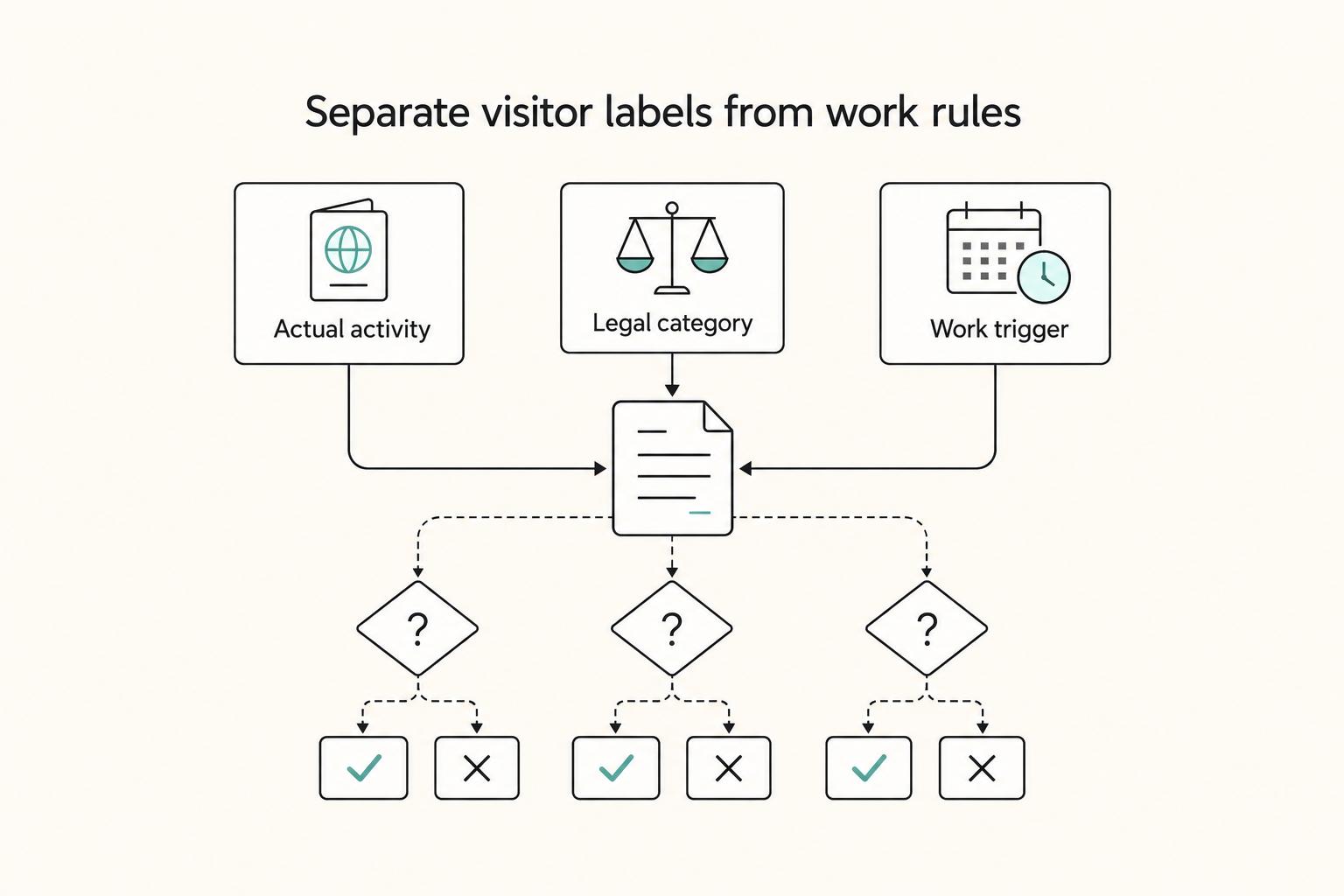
The phrase `canada digital nomad visa` is useful for search, but misleading if you treat it like a legal category. It is shorthand for existing Canadian status options, mainly visitor status and work permit rules, not a standalone visa stream with its own fixed process. That difference is not just technical. It changes how you should plan the trip, describe your purpose at entry, and organize your records before you leave.
Disability Insurance for Freelancers Who Need Reliable Cashflow
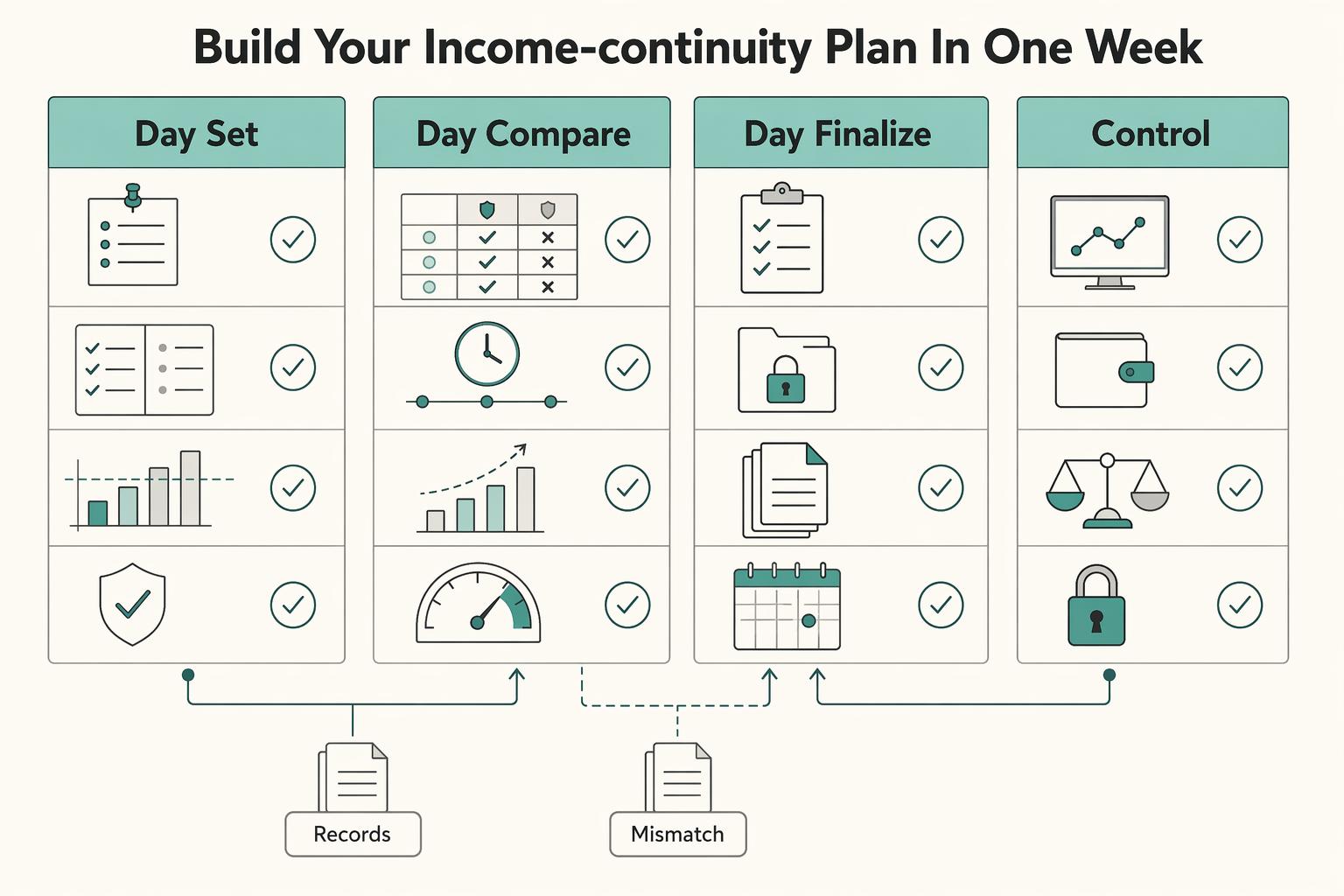
When your work stops, revenue can drop fast. The real job is not finding the cheapest quote. It is building an income-continuity plan that still works when billable hours disappear.

The Freelance Payment Penalty: A Modeled Audit of Platform Fees, FX Spreads, and Payout Delays
The money rarely disappears through a single, easy-to-spot fee. The real loss is stacked. A marketplace takes its commission, a processor adds a charge for international cards, a bank or payment company converts the currency at a spread, a platform holds the funds before release, and a wire sheds a little to intermediaries on the way in. Each layer looks defensible on its own, but the worker feels the combined result as a smaller deposit and a later payday.