
Quick Answer
Use the best creative brief templates as an operations record, not a planning worksheet: lock scope language, mirror labels into the Statement of Work, define acceptance by observable handoff, and route feedback through one approver. Add a written change-request path before extra asks appear, then keep delivery receipts and approval notes tied to invoice lines. That setup reduces scope drift and makes payment conversations easier to resolve.
What makes a brief hold up through review and invoicing#
The most useful creative brief templates are the ones that still hold up after kickoff, through review rounds, and when you send the invoice. Treat the brief as the project's control record, not just a strategy document. It should carry the same scope logic into your Statement of Work, approvals, change notes, and billing support.
A creative brief does set strategy, but the practical test is simpler: can someone use it as the shared reference when the project gets messy? If not, it is too loose. Since briefs are often only one or two pages, every field has to earn its place by helping you control scope, define done, route decisions, or support records later.
Finalize it during initiation, not after work starts. Then use the kickoff meeting to check conflicts, restrictions, deadlines, and client-supplied inputs before production begins. That extra pass is often where you catch vague wording that later turns into unpaid work. It also lets you confirm that everyone is reacting to the same document version, not a draft from an earlier thread.
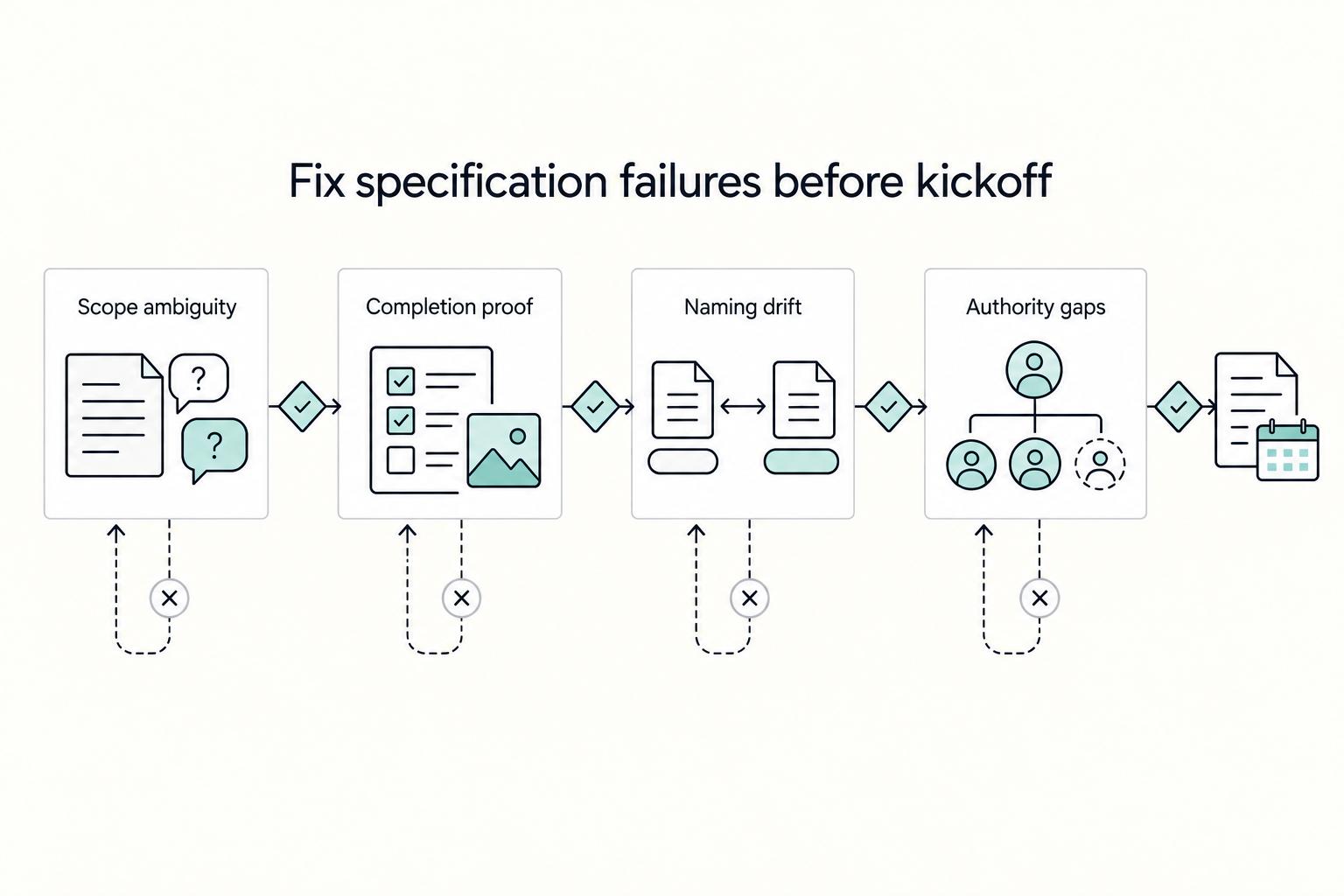
Fix the four failure points before kickoff#
These four failure points usually show up before the project is even underway. Tighten them now, and the rest of your paperwork has a better chance of staying aligned.
| Failure point | Weak wording | Controlled wording | Check |
|---|---|---|---|
| Scope ambiguity | "Landing page design." | "One desktop and one mobile landing page mockup in Figma; copywriting, development, and analytics setup excluded; client supplies final copy and brand assets." | A third party should be able to tell where the work stops. |
| Vague completion | "Make it feel more premium." | "Deliver approved homepage mockup as a Figma link plus exported PNG using approved brand colors and final client-supplied copy." | You should be able to point to a file, link, delivery receipt, or approval message. |
| Naming drift | Brief says "brand refinement," SOW says "phase two," invoice says "creative services." | All documents say "Brand refinement: homepage and about page visual update." | A billed line item should be traceable back to the approved brief language in seconds. |
| Weak authority | Comments come through email, Slack, and side messages from different stakeholders. | "Client approver: Jane Smith. Feedback submitted as one consolidated comment set per review round via email." | If feedback arrives from other people, route it back through the named approver. |
- Scope ambiguity
Write the deliverable as a visible output. Include exclusions and dependencies instead of using a broad service label. Before: "Landing page design." After: "One desktop and one mobile landing page mockup in Figma; copywriting, development, and analytics setup excluded; client supplies final copy and brand assets." Quick check: a third party should be able to tell where the work stops. If they cannot identify what is excluded or what the client must provide, your scope boundary is still weak. A simple test is to ask what happens if the client does not provide the required inputs on time. If the brief does not make that dependency visible, you may end up absorbing delay and extra coordination as if they were already included.
- Vague completion
Define acceptance with an observable handoff or approval event, not taste-based language. Borrow a useful model from SOW practice. Describe required results so performance can be assessed against clear standards. Before: "Make it feel more premium." After: "Deliver approved homepage mockup as a Figma link plus exported PNG using approved brand colors and final client-supplied copy." Practical test: you should be able to point to a file, link, delivery receipt, or approval message. If "done" depends on a feeling, the finish line can keep moving. The easiest way to pressure-test this field is to imagine the final invoice. If you cannot show exactly what was handed over and what event marked approval, your acceptance language still needs work.
- Naming drift
Use one approved label for each work item across the brief, SOW, folders, review threads, and invoice lines. Before: brief says "brand refinement," SOW says "phase two," invoice says "creative services." After: all documents say "Brand refinement: homepage and about page visual update." Check this before kickoff: if a billed line item cannot be traced back to the approved brief language in seconds, expect questions later. This matters most when a project has more than one deliverable or more than one review round. Minor wording changes seem harmless, but they make it harder to prove what the client approved and what a later invoice line refers to.
- Weak authority
Name who can approve and how feedback must arrive. This is not a legal requirement, but it is one of the cleanest operational controls you can add. Before: comments come through email, Slack, and side messages from different stakeholders. After: "Client approver: Jane Smith. Feedback submitted as one consolidated comment set per review round via email." What to enforce: if feedback arrives from other people, route it back through the named approver instead of absorbing it. Otherwise revision history fragments fast. That routing step is where a lot of solo creatives lose control. The issue is not only extra comments. Once you respond to scattered messages, you quietly accept multiple decision-makers without ever agreeing to that change.
Keep only the fields that help you decide later#
A useful brief is selective. Keep a field because it will settle a later question, not because the template designer left a box for it.
| Template field | Use this field when... | What it controls | Evidence to keep |
|---|---|---|---|
| Deliverables and exclusions | you need a clear scope boundary | what is included, excluded, and dependent on client input | final brief, SOW line, input checklist |
| Acceptance criteria | you want a verifiable finish line | what counts as complete and billable | delivery link, exported files, approval email |
| Approval owner and feedback path | multiple stakeholders may comment | whose decision counts and where comments belong | named approver record, consolidated feedback trail |
| Change request section | extra asks are likely once drafts appear | how added work affects timing and cost | written scope change, revised fee, updated due date |
Keep those records together. Supporting business documents can include invoices, receipts, and related project records. Retain them as long as needed to substantiate your income and deductions. In practice, that means storing the final brief, SOW, approval notes, delivery proof, and any change approvals in one project folder.
The point of that folder is speed as much as compliance. When a question comes in later, you should be able to move from the invoice line to the approved deliverable name, then to the delivery proof, without hunting across apps. If your brief contains a field that does not help make that chain of evidence clearer, it is probably decorative rather than useful.
If you need help tightening the document before you hand it off, How to write a 'Creative Brief' for a design project is a useful next step. Once the brief is solid, test whether it keeps its authority when approvals, changes, and invoicing begin.
Put control, security, and authority into your document handoff#
The handoff fails when your brief, SOW, change notes, and invoice records describe the same work differently. Use this checklist to keep one version of the truth from kickoff through billing.
- Finalize scope language before kickoff
Lock the brief during initiation, before production starts. Write each deliverable as an observable output, and include exclusions plus required client inputs in the same entry. Verification prompt: Can a third party see exactly where the work stops and what the client must provide? If not, tighten the wording first. If you need a faster drafting framework, use How to write a 'Creative Brief' for a design project.
- Mirror deliverable labels into the SOW and invoice
Keep the same deliverable names across the brief, SOW scope, folders, review threads, and invoice line items. Your SOW should state the task range and expected deliverables with timing using the same language, not renamed labels. Verification prompt: Can each invoice line be mapped directly to an approved deliverable in seconds? Clear invoice descriptions also matter in formal contexts. For example, UK VAT guidance requires enough detail to identify the services provided.
- Define the change-request path before the first extra ask
Set one written path for scope changes: what changed, who approved it, and the impact on timeline and fee. Verification prompt: Did the change get documented before the work moved forward? If added work shows up first in chat, pause and convert it into a written change note.
- Centralize proof artifacts in one project file
Keep the final brief, SOW, approvals, delivery evidence, receipts, and change approvals together. A practical recordkeeping standard is simple: your system should clearly show income and expenses and support the related items. Verification prompt: Can you answer in under a minute what was approved, what changed, and what was delivered? Build this file during the project, not after delivery.
Early warning signs and immediate fixes
- Invoice line labels are shortened or renamed: restore the approved deliverable label everywhere.
- Feedback arrives outside the named approval path: route it back through the designated approver.
- Extra requests are handled informally: document and approve the change before execution.
For pricing alignment after scope and approval controls are in place, see Value-Based Pricing: A Freelancer's Guide.
Conclusion: You Are the Architect#
If you keep one habit from this article, make it this: treat the brief as the drawing set for the job, then keep every later document aligned to it as the project evolves. The strongest templates are the ones you can still use at kickoff, during approvals, and when you send the invoice.
-
Set scope before production starts, then refine it as needed. Start the brief during initiation, and make sure it states objectives, constraints, deliverables, and the boundaries around the work. The test is simple. If someone outside the call history cannot tell what is included and where the work stops, the brief is still too loose.
-
Match names across the brief and the Statement of Work. Your SOW should map tasks, deadlines, and responsibilities, so keep the same deliverable labels in both documents, word for word. Label drift creates avoidable confusion. "Homepage design" in the brief turns into "creative services" on the invoice, and you end up explaining work you already defined once. Keep the same naming logic in your folders and review threads too so the record stays readable from kickoff through billing.
-
Name one approval owner and one change path. Decide who consolidates feedback, how approval is given, and what triggers a written change request before any extra work starts. This is where control shows up in real projects. Informal edits in email threads feel small, but they are how agreed scope and pricing drift. A named approver and one feedback path prevent the project from turning into a collection of side conversations.
-
Tie proof to invoice lines and keep the file. Save the final brief, accepted SOW, approval email or notes, delivery record, change requests, invoices, and proof of payment in one project folder. Retrieval matters as much as retention. A file you cannot search quickly will not help much when you need support for a payment question.
If your current template cannot do those four things, replace it. Choose your brief by control and billing readiness, not by visual polish. If you need to tighten the document itself, start with How to write a 'Creative Brief' for a design project.
You might also find this useful: Best Brand Guideline Templates for a Business of One. If you want a deeper dive, read Value-Based Pricing: A Freelancer's Guide.
Frequently Asked Questions
How do you write a brief that actually prevents scope creep?
Document the scope, deadlines, deliverables, and key boundaries in the brief before production starts. Review it with stakeholders at kickoff, lock the current version as the shared reference, and treat any new task without a matching timeline or budget adjustment as a written change request. If something comes up mid-project, compare it against the brief instead of deciding from memory whether it feels “close enough.” That is where the brief earns its keep, because you can check the listed output, exclusions, and client dependencies instead of debating intent.
What is the highest-value part of the brief for a solo creative?
For many solo creatives, the highest-value section is the one that defines what you will deliver, who approves it, and what counts as done. That is the part that can protect your time when feedback starts arriving from extra people or when an invoice line needs to point back to approved work. Clear deliverables and one named approver often do more day-to-day control work than broad strategy language. It can also reduce decision drag because you spend less time sorting comments, second-guessing whether the work is complete, and defending invoice descriptions later.
How do you connect the brief to the SOW and the invoice?
Use the same deliverable names in all three documents, word for word. Your Statement of Work is often where services and deliverables are formally described, so it should mirror the brief instead of relabeling the project. Before kickoff, compare the brief and SOW line by line, then reuse those labels on the invoice and keep the approval email, accepted ticket, or delivery receipt that shows the work was completed. A simple check is to start with the invoice and work backward until each line points to the same approved deliverable in the SOW and the brief.
Is a creative brief legally binding on its own?
Do not treat the brief as a substitute for your contract. Put formal terms and modification language in the signed agreement or SOW, then use the brief to guide scope and approvals. If the client wants to change contract-level work, document the modification and confirm price before execution whenever you reasonably can. Operationally, the safest approach is to let the brief explain the work while the contract or SOW carries formal terms. If you need a legal determination, get advice for your jurisdiction.
What records should you keep for approvals, changes, and invoicing?
Keep an orderly project folder tied to your books with the final brief, accepted SOW, approval notes, delivery records, change requests, invoices, and proof of payment. At minimum, make sure the records show the payee, amount, proof of payment, date, and description, and keep the approval and delivery trail close to the invoice it supports. Record-retention windows vary by jurisdiction and tax situation, so verify the rules that apply where you operate. The practical standard is retrieval: you should be able to produce the final brief, the accepted scope, the change trail, and proof of delivery without rebuilding the history from memory.
How do you choose between template options?
Choose the template that helps you document objectives, messaging, stakeholders, distribution, scope, deadlines, and deliverables in a way you can still use during billing and approvals. Skip any template that leaves no room for a named approver, a change path, and the details needed to clarify what is and is not included, even if it looks polished. If you need help building those fields, use How to write a 'Creative Brief' for a design project as your next step. A good way to compare templates is to ask what later project question each one can answer, such as who approves, what the client needed to provide, and what counts as done.
Try a related tool
Researched and edited by the Gruv editorial team. Gruv builds cross-border billing, payouts, and finance-operations software for global businesses.
Sources
Includes 2 external sources outside the trusted-domain allowlist.
- acquisition.gov/far/subpart-46.5trusted
- acquisition.gov/far/8.405-2trusted
- ato.gov.au/businesses-and-organisations/gst-excise-and-...trusted
- buy.gsa.gov/api/system/files/documents/Sch_70_SOW_PWS_Ta...trusted
- irs.gov/businesses/small-businesses-self-employed/re...trusted
- irs.gov/businesses/small-businesses-self-employed/wh...trusted
- archisoup.com/the-architecture-design-briefexternal
- asana.com/resources/how-write-creative-brief-examples-...external
Educational content only. Not legal, tax, or financial advice.
Related Posts
Value-Based Pricing for Freelancers Under Real Payment Risk
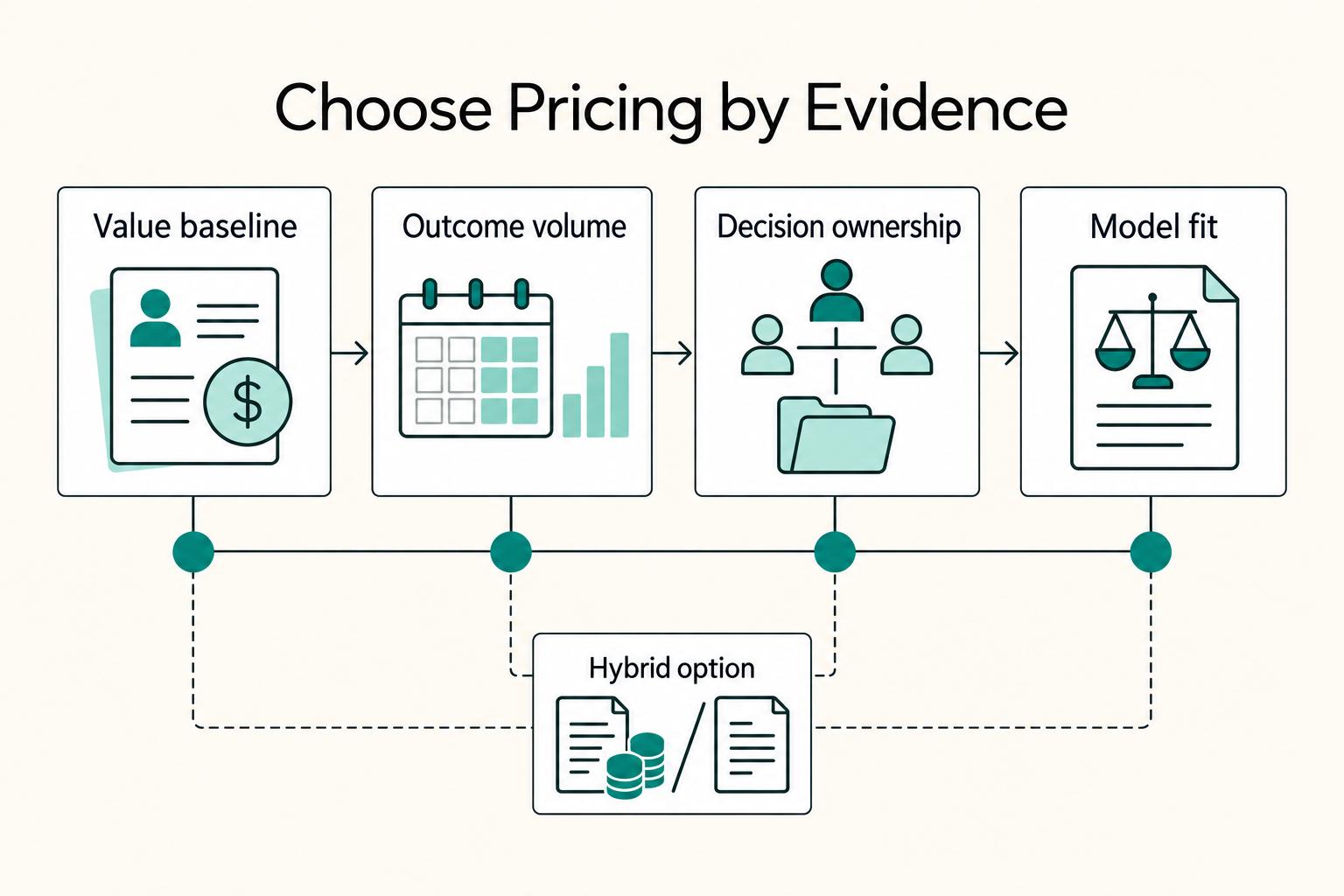
Value-based pricing works when you and the client can name the business result before kickoff and agree on how progress will be judged. If that link is weak, use a tighter model first. This is not about defending one pricing philosophy over another. It is about avoiding surprises by keeping pricing, scope, delivery, and payment aligned from day one.

Germany Freelance Visa Application Path for Freiberufler and Gewerbe
Choose your track before you collect documents. That first decision determines what your file needs to prove and which label should appear everywhere: `Freiberufler` for liberal-profession services, or `Selbständiger/Gewerbetreibender` for business and trade activity.
How to Write a Creative Brief for a Design Project
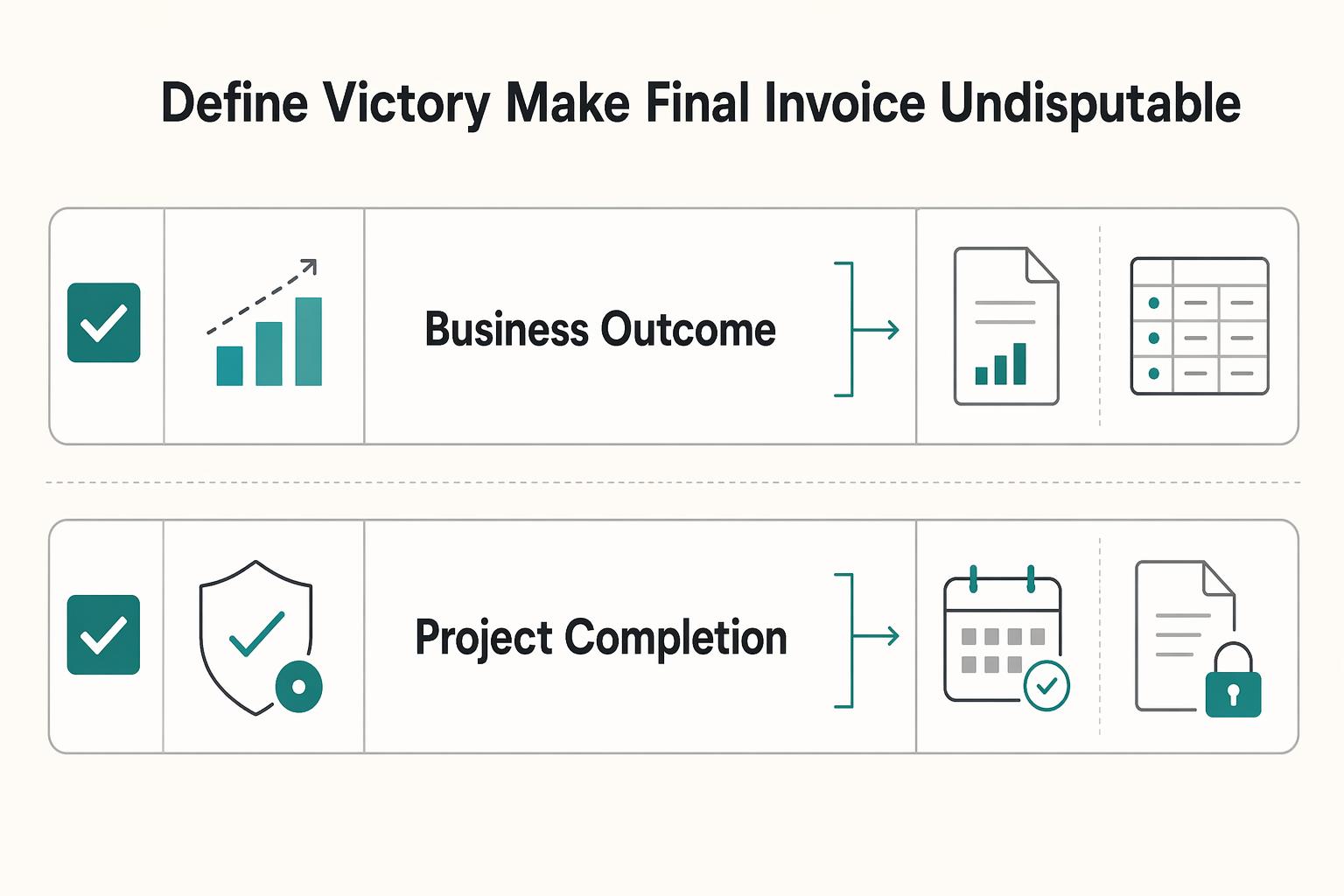
To write a creative brief as a solo expert, define three things before kickoff: the value of the work, the scope in countable terms, and what completion looks like. The brief is not paperwork. It sets the strategic, practical, and commercial terms of the job. Done well, it aligns stakeholders early, gives you a reference when feedback drifts, and makes it easier to defend scope, timelines, and payment.