
Quick Answer
Choose cities with a monitor-first filter, not headline rankings. For the best cities for airbnb investment europe, this article’s direct rule is to clear local licensing, zoning, and night-cap checks first, then confirm your VAT path through OSS, the cross-border SME scheme, or a VAT Cross-border Ruling if treatment is unclear. If those checkpoints are unresolved, keep the city on hold even when demand narratives look strong.
Why cashflow reliability and permit stability should lead your city shortlist#
If you are trying to choose among cities for Airbnb investment in Europe, start with a stricter question: which city still works when a slow month, a permit delay, or a tax admin issue hits your cashflow? There is probably no single Europe-wide winner for every freelancer, creator, or small team, so this guide favors reliability over headline ROI.
-
Cashflow protection comes first. A city only matters if the base case survives friction, not just peak-season optimism. That is why this shortlist is built for owner-operators who need monthly income they can plan around, plus a fallback if demand softens. The practical test is simple: if your model cannot absorb admin delays or payout timing pressure, a market that looks exciting on paper is already too risky.
-
We will separate stronger inputs from weaker inputs. The comparison below clearly distinguishes supported evidence from lower-confidence inputs. Where the evidence is strong, we will say so. Where it is thin, anecdotal, or mixed, we will label it lower confidence instead of pretending you have a clean ranking. City picks often go wrong when readers blend hard market data with forum chatter and treat them as equal.
-
Cross-border admin belongs in the investment case. If your setup crosses EU borders, paperwork and timing can change whether a city is actually workable. Under the cross-border SME scheme, your Union turnover in the current and previous calendar year must not exceed EUR 100 000, and the registration process after prior notification should not take longer than 35 working days. Under OSS, a taxable person can register in one single Member State for VAT declaration and payment on qualifying cross-border sales and services within the EU. If your VAT treatment is unclear, VAT Cross-border Rulings (CBR) allow advance rulings on complex cross-border transactions, and the request is filed in the participating EU country where you are registered for VAT purposes.
Those details do not create a city ranking by themselves, and they do not apply the same way to every short-term rental structure. They do give you a practical rule: if cross-border tax treatment is still unclear, put the city on hold and verify it before you underwrite returns.
Keep a small evidence pack from day one: your VAT registration details, any prior notification receipt, your Union turnover calculation, and the assumptions behind your payout timing. The cities that make sense are the ones that can stand up to that level of scrutiny and still protect your downside.
We covered this in detail in The Best Digital Nomad Cities for Entrepreneurs and Startups.
How to choose cities that fit your risk tolerance#
Choose for reliability first: if your base-case cashflow is not dependable, the city is not a fit yet.
| Route | When it fits | Filing or contact | Timing or status |
|---|---|---|---|
| Cross-border SME scheme | Union turnover in the current and previous calendar year must stay below EUR 100 000 and below each relevant national annual threshold | Prior notification goes through your Member State of establishment (MSEST); MSEXE is where you seek the exemption | Registration should not take longer than 35 working days after receipt; treat the route as usable only after EX number confirmation |
| OSS | Qualifying cross-border sales and services within the EU | Register in one single Member State / one Member State of identification for VAT declaration and payment | Used for eligible cross-border declaration and payment in one Member State |
| VAT Cross-border Ruling (CBR) | Complex cross-border transactions or unclear VAT treatment | Request is filed in the participating EU country where you are registered for VAT purposes | Allows advance rulings; in multi-company cases, one company should file on behalf of the others |
- Start with investor fit before city fit.
This approach is for owner-operators who want predictable income and can handle operating admin. If you want passive exposure and cannot absorb delays or compliance work, cross those markets off early.
- Use one scorecard across every city.
Keep the same five checks for each option: demand, ADR plus occupancy together, short-term rental regulations, seasonality, and acquisition cost. Treat ADR and occupancy as a pair, not as separate winners.
- Apply two hard gates before ranking.
Do not rank any city until licensing rules are clear and zoning/night-cap limits are tolerable. If either point is unclear, keep that city on hold.
- Run a cross-border VAT reliability check when your setup spans EU countries.
For the cross-border SME scheme, Union turnover in the current and previous calendar year must stay below EUR 100 000, and you must stay below each relevant national annual threshold. After prior notification, registration should not take longer than 35 working days. The MSEST is your contact point, the MSEXE is where you seek the exemption, and you should treat the route as usable only after EX number confirmation. If VAT treatment is still unclear, pause ranking and assess OSS or a VAT Cross-border Ruling first.
A city should still work when occupancy dips and admin friction shows up, not only in peak season. For related cashflow controls, see Should Your Freelance Business Accept Credit Cards? and try the free invoice generator.
The comparison table you should build before ranking any city#
Do not rank these cities yet; build one evidence table first and treat unknowns as a hard stop. Confirm city-level ADR, occupancy, seasonality, purchase cost, and local STR licensing, zoning, and night-cap rules for London, Paris, Rome, Madrid, Lisbon, Porto, Valencia, Prague, Budapest, Bucharest, Athens, Colmar, Xgħajra, and Ohrid before proceeding.
| City | Best-for investor profile | Regulation posture | Demand stability | Seasonality risk | Purchase-cost pressure | Confidence level of available data | Known vs unknown | Decision |
|---|---|---|---|---|---|---|---|---|
| London | Any profile that waits for verified local compliance | Verify locally | Unknown | Unknown | Unknown | Low | EU VAT process facts available; local STR rules, demand, and costs require local verification | Monitor: verify licensing, zoning, and night-cap rules first |
| Paris | Any profile that waits for verified local compliance | Verify locally | Unknown | Unknown | Unknown | Low | EU VAT process facts available; local STR rules, demand, and costs require local verification | Monitor: verify licensing, zoning, and night-cap rules first |
| Rome | Any profile that waits for verified local compliance | Verify locally | Unknown | Unknown | Unknown | Low | EU VAT process facts available; local STR rules, demand, and costs require local verification | Monitor: verify licensing, zoning, and night-cap rules first |
| Madrid | Any profile that waits for verified local compliance | Verify locally | Unknown | Unknown | Unknown | Low | EU VAT process facts available; local STR rules, demand, and costs require local verification | Monitor: verify licensing, zoning, and night-cap rules first |
| Lisbon | Any profile that waits for verified local compliance | Verify locally | Unknown | Unknown | Unknown | Low | EU VAT process facts available; local STR rules, demand, and costs require local verification | Monitor: verify licensing, zoning, and night-cap rules first |
| Porto | Any profile that waits for verified local compliance | Verify locally | Unknown | Unknown | Unknown | Low | EU VAT process facts available; local STR rules, demand, and costs require local verification | Monitor: verify licensing, zoning, and night-cap rules first |
| Valencia | Any profile that waits for verified local compliance | Verify locally | Unknown | Unknown | Unknown | Low | EU VAT process facts available; local STR rules, demand, and costs require local verification | Monitor: verify licensing, zoning, and night-cap rules first |
| Prague | Any profile that waits for verified local compliance | Verify locally | Unknown | Unknown | Unknown | Low | EU VAT process facts available; local STR rules, demand, and costs require local verification | Monitor: verify licensing, zoning, and night-cap rules first |
| Budapest | Any profile that waits for verified local compliance | Verify locally | Unknown | Unknown | Unknown | Low | EU VAT process facts available; local STR rules, demand, and costs require local verification | Monitor: verify licensing, zoning, and night-cap rules first |
| Bucharest | Any profile that waits for verified local compliance | Verify locally | Unknown | Unknown | Unknown | Low | EU VAT process facts available; local STR rules, demand, and costs require local verification | Monitor: verify licensing, zoning, and night-cap rules first |
| Athens | Any profile that waits for verified local compliance | Verify locally | Unknown | Unknown | Unknown | Low | EU VAT process facts available; local STR rules, demand, and costs require local verification | Monitor: verify licensing, zoning, and night-cap rules first |
| Colmar | Any profile that waits for verified local compliance | Verify locally | Unknown | Unknown | Unknown | Low | EU VAT process facts available; local STR rules, demand, and costs require local verification | Monitor: verify licensing, zoning, and night-cap rules first |
| Xgħajra | Any profile that waits for verified local compliance | Verify locally | Unknown | Unknown | Unknown | Low | EU VAT process facts available; local STR rules, demand, and costs require local verification | Monitor: verify licensing, zoning, and night-cap rules first |
| Ohrid | Any profile that waits for verified local compliance | Verify locally | Unknown | Unknown | Unknown | Low | EU VAT process facts available; local STR rules, demand, and costs require local verification | Monitor: verify licensing, zoning, and night-cap rules first |
Use the same admin check in each row before moving from "monitor" to "invest now":
- confirm whether your cross-border VAT path is straightforward or unclear
- if using the cross-border SME scheme, confirm Union turnover is below EUR 100 000 in the current and previous calendar year and that relevant national thresholds are met
- after prior notification, plan around a process that should not exceed 35 working days
- if VAT treatment is unclear, decide whether OSS is enough or whether a VAT Cross-border Ruling (CBR) is needed; CBR requests are filed where you are VAT-registered and must follow that country's national VAT-ruling conditions
This keeps "known" and "unknown" separate: EU VAT tools can reduce admin friction, with OSS presented as reducing red tape by up to 95%, but they do not replace local licensing, zoning, or night-cap verification. You might also find this useful: The Best Cities for Airbnb Investment in the US.
Premium hubs with stronger demand but tighter constraints#
Treat London, Paris, and Rome as advanced options until your compliance workflow is proven. Demand, occupancy, ADR, licensing posture, zoning limits, and cap rules are unverified at city level here, so the decision should rest on your execution capacity, not market narrative.
- London
Best for: an operator with local support, a cash buffer, and time to verify address-level eligibility before underwriting.
Pros:
- It rewards a local-first diligence process instead of assumption-led underwriting.
- It is a useful stress test of whether your compliance system can hold up before you scale.
Cons:
- Verify London licensing, zoning, night-cap, ADR, and occupancy data before committing.
- Without that evidence pack, projected reliability is still assumption-heavy.
Limited-time freelancer use case: you have one candidate unit and can collect permit guidance, zoning confirmation, and dated proof files before pricing the listing.
- Paris
Best for: an EU-based operator who can run disciplined VAT administration and keep documentation current.
Pros:
- If eligible, the cross-border SME scheme allows one prior notification in your Member State of establishment and can issue an EX number for selected Member States.
- If SME does not fit, OSS allows registration in one Member State of identification and includes record-keeping and audit guidance.
Cons:
- VAT simplification does not prove that a specific Paris address is lawful for short-term rental use.
- Confirm city-level licensing, zoning, and cap rules for Paris before committing.
Limited-time freelancer use case: one EU entity and one target property, with enough runway to absorb up to 35 working days if SME registration applies.
- Rome
Best for: a single-entity EU operator willing to keep the deal in monitor mode until local eligibility is verified.
Pros:
- The same SME mechanics apply, including the EUR 100 000 Union turnover cap and EX-number pathway.
- OSS can still centralize VAT registration in one Member State of identification when activity spans Member States.
Cons:
- These VAT routes do not confirm local short-term-rental eligibility for a Rome property.
- In multi-company cases requiring a VAT Cross-border Ruling, one company should file on behalf of the others, which can add coordination overhead.
Limited-time freelancer use case: a one-company deal where you keep a lean file: local rule page, zoning proof, any cap condition, and your VAT route note.
If your buffer is thin and your compliance handling is weak, do not make London or Paris your first launch based on demand assumptions alone. Bigger markets can help occupancy when verified, but policy friction and operating complexity can still erode reliability.
This pairs well with our guide on The Best Digital Nomad Cities for Food Lovers.
Mid-cost cities that balance demand and execution#
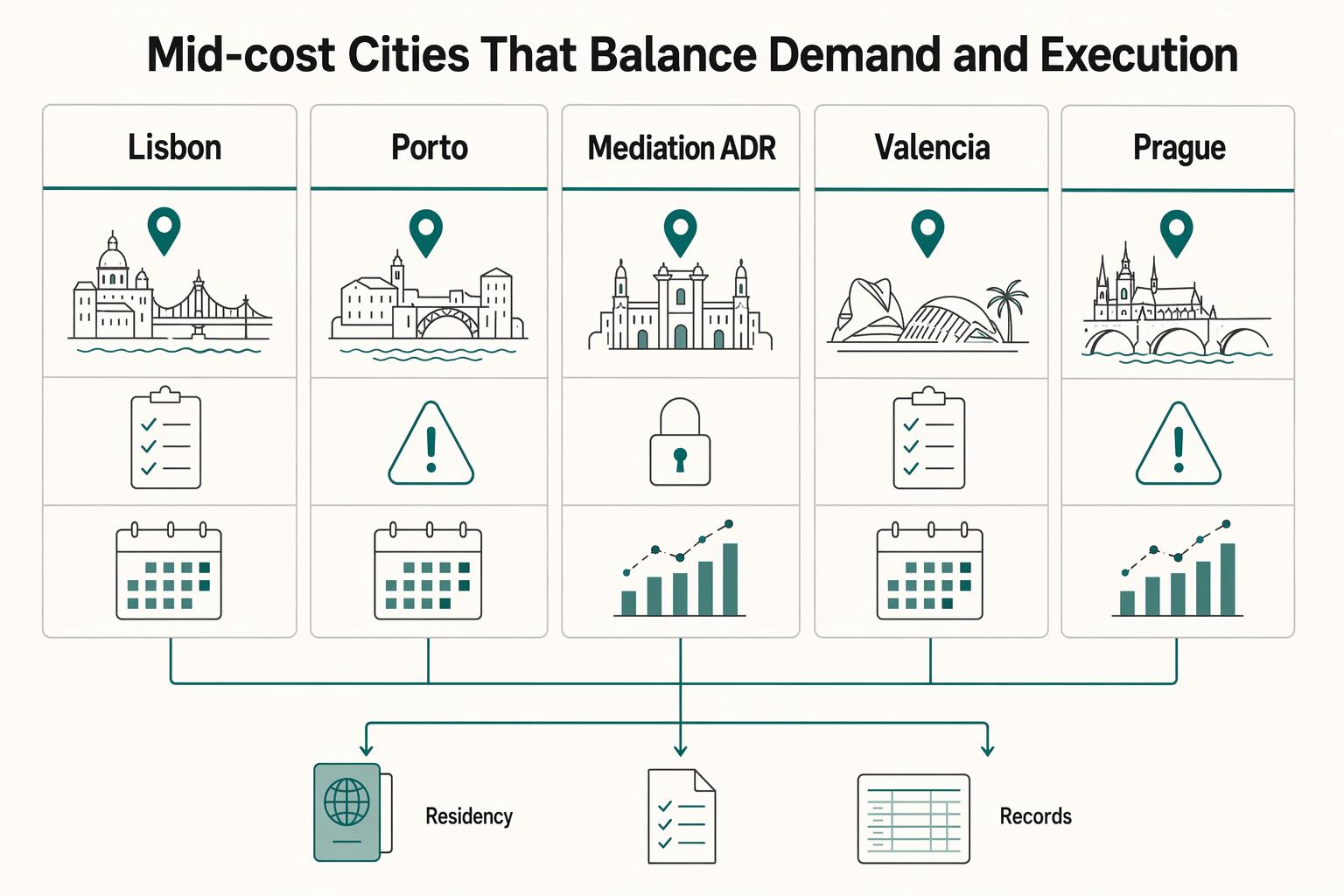
Use Lisbon, Porto, Madrid, Valencia, and Prague as verify-first options, not as a fixed ranking. City demand, licensing, zoning, and night caps require local verification, so your edge comes from confirming local legality and choosing one workable VAT path: cross-border SME scheme, OSS, or, for complex structures, a VAT Cross-border Ruling.
| City | Best for | VAT/admin note | First 90 days |
|---|---|---|---|
| Lisbon | Single-entity EU operator willing to sequence compliance before launch | If Union turnover stays below EUR 100 000, the cross-border SME scheme may allow one prior notification in your Member State of establishment (MSEST); if SME does not fit, OSS can keep qualifying VAT declaration and payment in one Member State | Permit file first, then listing assets, then one primary OTA plus one backup channel; keep a priced 12-month rental fallback |
| Porto | Budget-sensitive first launch in Portugal without assuming Lisbon outcomes transfer | Same VAT decision tree as Lisbon; under the SME route, your MSEST is the contact point with other Member States | Verify unit-specific rules, save dated rule-page captures, then publish listing; start with conservative channel-mix assumptions and underwrite a long-term fallback |
| Madrid | Operator prioritizing execution stability over lowest entry price | Qualifying cross-border VAT activity can still be handled through OSS in one Member State | Permit readiness, listing build, pricing controls, then add a second channel only after month-one payout reconciliation is clean |
| Valencia | Spain exposure with tighter acquisition discipline than a Madrid-first path | In OSS context, the EUR 10 000 EU-wide threshold affects how urgent full cross-border setup is | Confirm license path, zoning fit, and any cap before furnishing; launch one OTA plus a repeat-stay direct path; keep a long-term lease scenario underwritten |
| Prague | EU operator adding a non-Iberian option while keeping compliance structured | SME or OSS may keep admin simpler; for complex cross-border treatment, a VAT Cross-border Ruling can be relevant, and requests are filed in the participating EU country where you are VAT-registered | Legal checks before deposits, listing assets after rule confirmation, OTA-led launch first, and a documented medium/long-term fallback |
If your own demand validation points to steadier year-round bookings, test Madrid or Lisbon first. If entry-cost pressure is your main constraint, test Porto or Valencia first. Treat Prague as a non-Iberian diversification option only after the same rule checks.
- Lisbon
Best for: a single-entity EU operator willing to sequence compliance before launch. Pros: if Union turnover stays below EUR 100 000, the cross-border SME scheme may allow one prior notification in your Member State of establishment (MSEST), and registration should not exceed 35 working days after receipt; if SME does not fit, OSS can keep qualifying VAT declaration/payment in one Member State. Cons: none of this confirms Lisbon address-level STR legality, zoning fit, or cap conditions. First 90 days: permit file first, then listing assets, then one primary OTA plus one backup channel; keep a priced 12-month rental fallback.
- Porto
Best for: a budget-sensitive first launch in Portugal without assuming Lisbon outcomes transfer. Pros: same VAT decision tree as Lisbon; under the SME route, your MSEST is the contact point with other Member States. Cons: local licensing and zoning can still break the model at address level. First 90 days: verify unit-specific rules, save dated rule-page captures, then publish the listing; start with conservative channel-mix assumptions and underwrite a long-term fallback.
- Madrid
Best for: an operator prioritizing execution stability over lowest entry price. Pros: qualifying cross-border VAT activity can still be handled through OSS in one Member State; useful if you want one flagship unit instead of scattered pilots. Cons: VAT simplification is not operating permission, and neighborhood assumptions are not proof of eligibility. First 90 days: permit readiness, listing build, pricing controls, then add a second channel only after month-one payout reconciliation is clean.
- Valencia
Best for: Spain exposure with tighter acquisition discipline than a Madrid-first path. Pros: same VAT framework as Madrid; in OSS context, the EUR 10 000 EU-wide threshold affects how urgent full cross-border setup is. Cons: confirm whether Valencia is cheaper, easier, or less seasonal than Madrid before committing. First 90 days: confirm the license path, zoning fit, and any cap before furnishing; launch one OTA plus a repeat-stay direct path; keep a long-term lease scenario underwritten.
- Prague
Best for: an EU operator adding a non-Iberian option while keeping compliance structured. Pros: SME or OSS may keep admin simpler for straightforward setups; for complex cross-border treatment, a VAT Cross-border Ruling can be relevant, and requests are filed in the participating EU country where you are VAT-registered. Cons: confirm Prague licensing, zoning, and cap rules before proceeding. First 90 days: legal checks before deposits, listing assets after rule confirmation, OTA-led launch first, and a documented medium/long-term fallback.
Across all five, the common failure is reusing one city's assumptions in another without address-level proof. Your minimum evidence pack should include a dated local-rule capture, zoning confirmation, any cap or restriction note, your chosen VAT path, and a fallback lease option. If one item is missing, keep the city in monitor status and test whether a long-term fallback still protects the deal. For process design, see The Best Cities for a Workation in Europe.
Budget and speculative picks that need stricter downside controls#
Treat this entire group as monitor-first: when evidence is thin, you should underwrite with tighter assumptions, smaller capital exposure, or no deal.
- Budapest
Budapest does come up in places like r/digitalnomad as a lower-budget idea, but that is still not strong comparable evidence. One grounded admin point is that Hungary appears in the participating-country list for VAT Cross-border Rulings (CBR), which can help with complex cross-border VAT treatment. That does not validate local short-term-rental legality, zoning, or operating restrictions for a specific address.
- Bucharest
Bucharest should stay in the same lower-confidence bucket until you verify the basics yourself. If you use the cross-border SME scheme, your Union turnover must stay within EUR 100 000 and within the target state's national or sectoral threshold. If either the VAT path or local rental-rule evidence is missing, keep it unapproved.
- Colmar
Colmar may look attractive as a lower-budget alternative, but the evidence depth here is uneven. OSS can simplify VAT administration, including registration, declaration, and payment flow, but admin simplicity is not investment proof. Do not move forward without your own demand pattern and downside case.
- Xgħajra
Xgħajra needs strict downside controls because small-data errors can become expensive quickly. Malta is listed among participating countries for CBR, which is relevant only for genuinely complex cross-border VAT setups. Your go/no-go still depends on verified local operating rules and a fallback plan you would accept.
- Ohrid
Ohrid is a speculative pick and should be modeled with the strictest downside assumptions. A low-entry narrative is not enough without repeatable demand evidence and a workable fallback. VAT tools like OSS or CBR do not replace that proof.
Before moving any of these cities forward, require all three: a verifiable demand pattern, workable short-term-rental regulations documented for the exact unit, and a viable long-term rental fallback. If you choose the SME route, wait for the EX number before treating the VAT setup as complete.
Related: How to Invest in Real Estate as a Digital Nomad.
Rules for regulation and downside risk before you buy#
Use a strict pass-fail order before you touch the numbers: licensing rules, zoning, night caps, then economics.
- Legal fit first
Verify the exact unit and address first, not the city narrative. If you cannot confirm permit steps, required documents, and allowed use for that property type, stop. VAT tools like OSS, the cross-border SME scheme, and VAT Cross-border Rulings can help with VAT administration, but they do not replace local property permissions.
- Treat strict regulation as a pricing input
Strict short-term rental rules are not an automatic no; they are a timing and cost variable you need to price in. Your base case should still hold after permit delays, added admin work, and fewer usable nights. If you rely on the cross-border SME scheme, run that gate separately: prior notification goes through your Member State of establishment, Union turnover must stay within EUR 100 000, and processing can take up to 35 working days.
- Move weak setups to a monitor list
Push a city to "monitor" when the permit path is unclear, enforcement signals are inconsistent, or the model only works in peak months. Keep dated rule captures, a concrete permit document checklist, and a record of who confirmed each requirement. Do not treat forum posts or old host advice as current rules.
- Define one exit trigger before buying
Set one clear condition that forces a pivot to long-term rental rather than a forced sale. Examples include permit denial, launch delay beyond your cash buffer, or economics failing once peak-month assumptions are removed. If the trigger is not clear in one sentence, the downside plan is not ready.
Need the full breakdown? Read The Best Digital Nomad Cities for Remote Teams and Meetups.
Turn city choice into a reliable get-paid operating system#
Once a city clears the legal filter, make cash movement predictable. The goal is simple: every euro should map to a control, a reserve decision, and a document trail you can verify at month end.
| Workflow | What to include | Key details | Timing or trigger |
|---|---|---|---|
| Income map per property | Platform payouts, direct-booking invoices, deposit or cleaning collections, and taxes collected for remittance | Keep the same matching fields every cycle: booking ID, gross, fees, tax collected, net paid | Set invoice timing, expected receipt timing, reserve allocation, and a reconciliation checkpoint |
| Separate collection rails | Invoicing, payment links, or Virtual Accounts (where enabled) to separate direct-booking flows from marketplace payouts and keep entities or properties segmented | OSS uses one Member State of identification; the cross-border SME scheme requires prior notification through your Member State of establishment | Build in the SME timing and limits: up to 35 working days and the EUR 100 000 Union turnover ceiling |
| Exception handling | Delayed credits, returned transfers, and payout holds | Confirm expected payout notice, transfer reference, beneficiary details, and posting status; keep the return advice, original booking or invoice record, and corrected details in one file | If VAT treatment is unclear on a planned cross-border transaction, pause reissue and resolve it from your records or request a VAT Cross-border Ruling before execution |
| Month-end evidence pack | One folder per property per month | Booking statements, payout records, invoices, fee breakdowns, bank receipts, and ledger exports | The file should show what was booked, what was paid, what was withheld, and what still needs follow-up |
- Build one income map per property
List each money path - platform payouts, direct-booking invoices, deposit or cleaning collections, and taxes collected for remittance, then assign one rule per path: invoice timing, expected receipt timing, reserve allocation, and reconciliation checkpoint. Keep the same matching fields every cycle, including booking ID, gross, fees, tax collected, and net paid, so exceptions show up before cash is reused.
- Use separate collection rails when cross-border complexity is real
If your Gruv setup includes invoicing, payment links, or Virtual Accounts, where enabled, use them to separate direct-booking flows from marketplace payouts and keep entities or properties cleanly segmented. For VAT operations, keep the gates distinct: OSS uses one Member State of identification for eligible cross-border declaration and payment, while the cross-border SME scheme requires prior notification through your Member State of establishment and exemption only after the EX number is granted. Build timing and limits into your plan: the SME process can take up to 35 working days, and eligibility includes the EUR 100 000 Union turnover ceiling.
- Predefine exception handling before failures happen
Treat delayed credits, returned transfers, and payout holds as standard workflows, not ad hoc incidents. Start each case by confirming the expected payout notice, transfer reference, beneficiary details, and posting status, then keep the return advice, original booking or invoice record, and corrected details in one file. If VAT treatment is unclear on a planned cross-border transaction, pause reissue and resolve it from your records or request a VAT Cross-border Ruling before execution.
- Close each month with an evidence pack, not just a balance check
Maintain one folder per property per month with booking statements, payout records, invoices, fee breakdowns, bank receipts, and ledger exports. This matches OSS record-keeping expectations around records, invoices, and bad-debt relief. A complete file should let you answer, quickly and defensibly, what was booked, what was paid, what was withheld, and what still needs follow-up.
Conclusion#
The right answer is rarely the city with the loudest ROI story. It is the market you can launch legally, run calmly, and still carry through a weak month without breaking cashflow.
-
Choose operating fit over headline appeal. A city only belongs on your shortlist if its demand pattern, regulatory posture, and fallback option match how you actually work. If you have limited time, thin reserves, or no appetite for permit back-and-forth, a market with slightly lower upside but clearer rules is usually the stronger choice. The real test is repeatability: you want a base case that still works after taxes, fees, payout timing, and one bad month, not just a peak-season model that looks good in a spreadsheet.
-
Treat missing evidence as a stop sign, not a rounding error. If local operating rules or VAT treatment are unclear, pause and verify before you rank anything. A practical checkpoint is to save the exact official rule page, application form, and guidance document in your deal folder, then separate those confirmed facts from forum chatter and scraped demand estimates. The common failure mode is forcing a decision with partial information, then discovering that your building type, district, or ownership structure is handled differently from the summary you relied on.
-
Call a city "best" only when the controls are clear. For cross-border operators, that means checking whether your tax admin is manageable. If your setup raises a complex EU VAT question, a VAT Cross-border Ruling can be requested in the participating EU country where you are registered for VAT, under that country's national ruling conditions. If OSS applies, remember it has covered broader VAT registration and payment flows since 1 July 2021, including record keeping, audits, and leaving the scheme. If you expect to rely on the cross-border SME scheme, the Union turnover ceiling is EUR 100 000, member-state thresholds still matter, and the registration process should not take longer than 35 working days after receipt of prior notification, so do not underwrite as if approval is instant.
That is the real filter here. A city earns that label only when you can show clear rules, clear evidence, and a workable downside path. That includes a long-term rental fallback and a monthly evidence pack with booking statements, payout records, fee breakdowns, and audit-ready exports. If you cannot document those controls yet, the honest decision is simple: monitor it, do not force it.
Related reading: Best Nomad Cities for History Buffs Who Plan Long Stays.
Frequently Asked Questions
What actually makes a city one of the best cities for Airbnb investment in Europe?
A city can earn that label when demand, rules, and downside fit together. High booking interest alone may not be enough if licensing is unclear, zoning may block your unit, or a slow month would strain cashflow. The practical differentiator is reliability: you want a place where your base case still works after fees, taxes, and permit friction.
Is high occupancy enough to choose a city?
Usually not. Occupancy without room rate, seasonality, acquisition cost, and compliance cost can still produce weak returns or ugly cash gaps. A practical check is to model one bad month, not one peak month, and confirm you could still cover fixed costs and keep your reserve intact.
Are strict-regulation cities always a bad Airbnb investment?
Not automatically. Strict rules are a pricing and execution input, not an instant rejection, but they can raise the cost of mistakes. If the permit path or tax treatment is unclear, pause and verify before you commit capital. For a complex cross-border VAT issue, a VAT Cross-border Ruling can be requested in advance for planned transactions between participating EU countries.
How should I pick between London, Lisbon, and Prague if my budget is limited?
Do not choose by brand name or tourist buzz. Put all three on one sheet and compare the same items: purchase or lease cost, permit lead time, furnishing budget, monthly reserve target, and your fallback long-term rental option. If a delayed launch would break your first 90 days, that city is too tight for your budget even if its demand story sounds stronger.
What should I verify first about licensing rules, zoning, and night caps?
Start with pass-or-fail questions: can this address legally operate as a short-term rental, does zoning allow it, and is there a nights limit that changes your underwriting. Save the actual municipal page, application form, and any host guidance PDF in your deal folder, because relying on summary sites can miss building-type or district-level differences. If your setup crosses EU VAT lines, also check whether OSS fits your case, since taxable persons are only required to register in one single Member State for eligible cross-border VAT declaration and payment.
How do I compare cities fairly when data sources are incomplete or inconsistent?
Separate verified facts from directional estimates. Official rule pages, your financing terms, and your own expense assumptions belong in the “known” column; scraped occupancy numbers and forum claims belong in “unknown until checked.” If you may rely on the cross-border SME scheme, remember the Union turnover ceiling is EUR 100 000, the prior notification goes through your Member State of establishment, and the process should not take longer than 35 working days after receipt, so build that timing into your launch plan instead of assuming instant eligibility.
Try a related tool
Researched and edited by the Gruv editorial team. Gruv builds cross-border billing, payouts, and finance-operations software for global businesses.
Sources
Educational content only. Not legal, tax, or financial advice.
Related Posts
Should Your Freelance Business Accept Credit Cards?
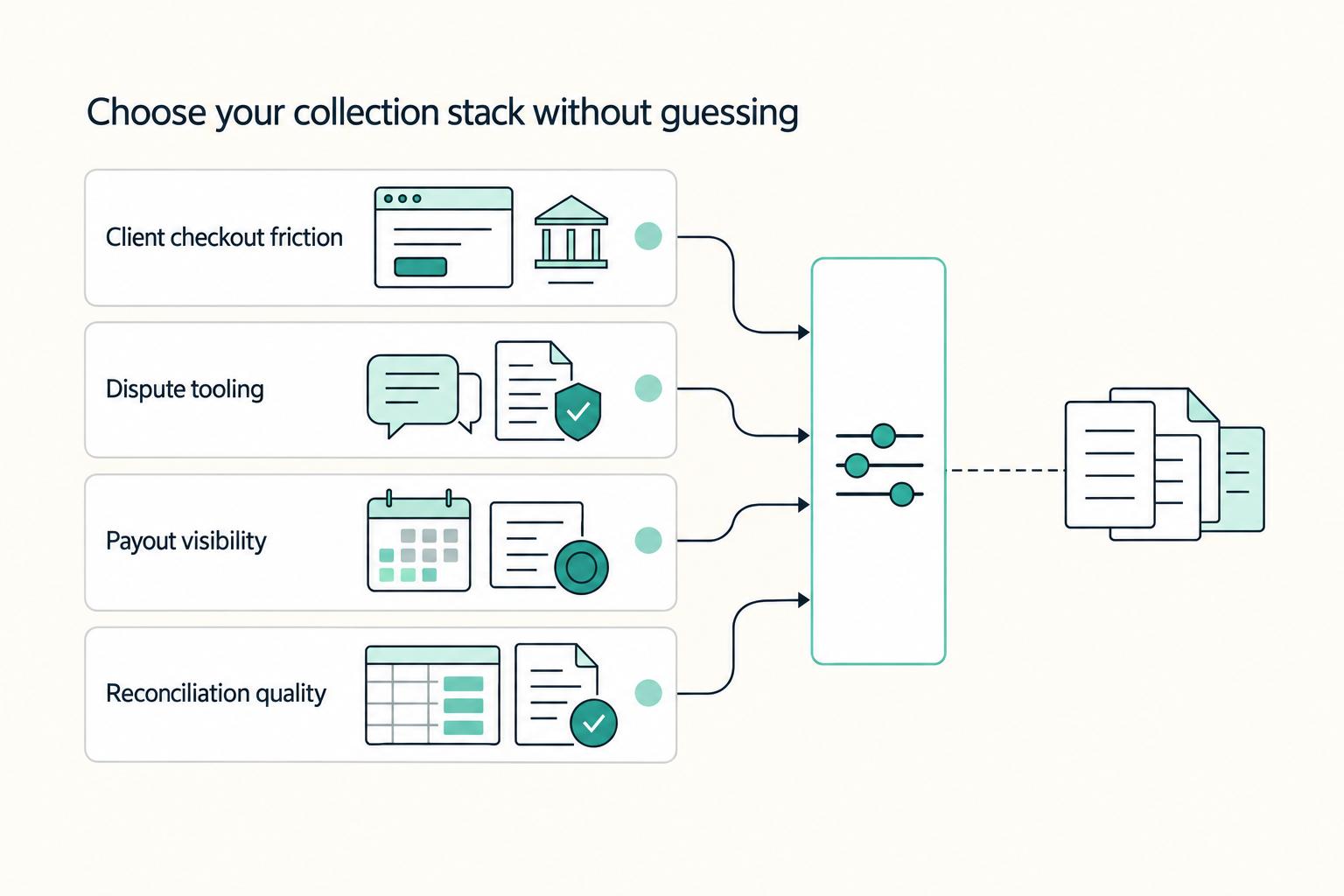
Offer card payments, but stay in control of how money reaches you. The goal is not a smoother checkout screen. It is predictable cash you can use to run the business.
How to Invest in Real Estate as a Digital Nomad
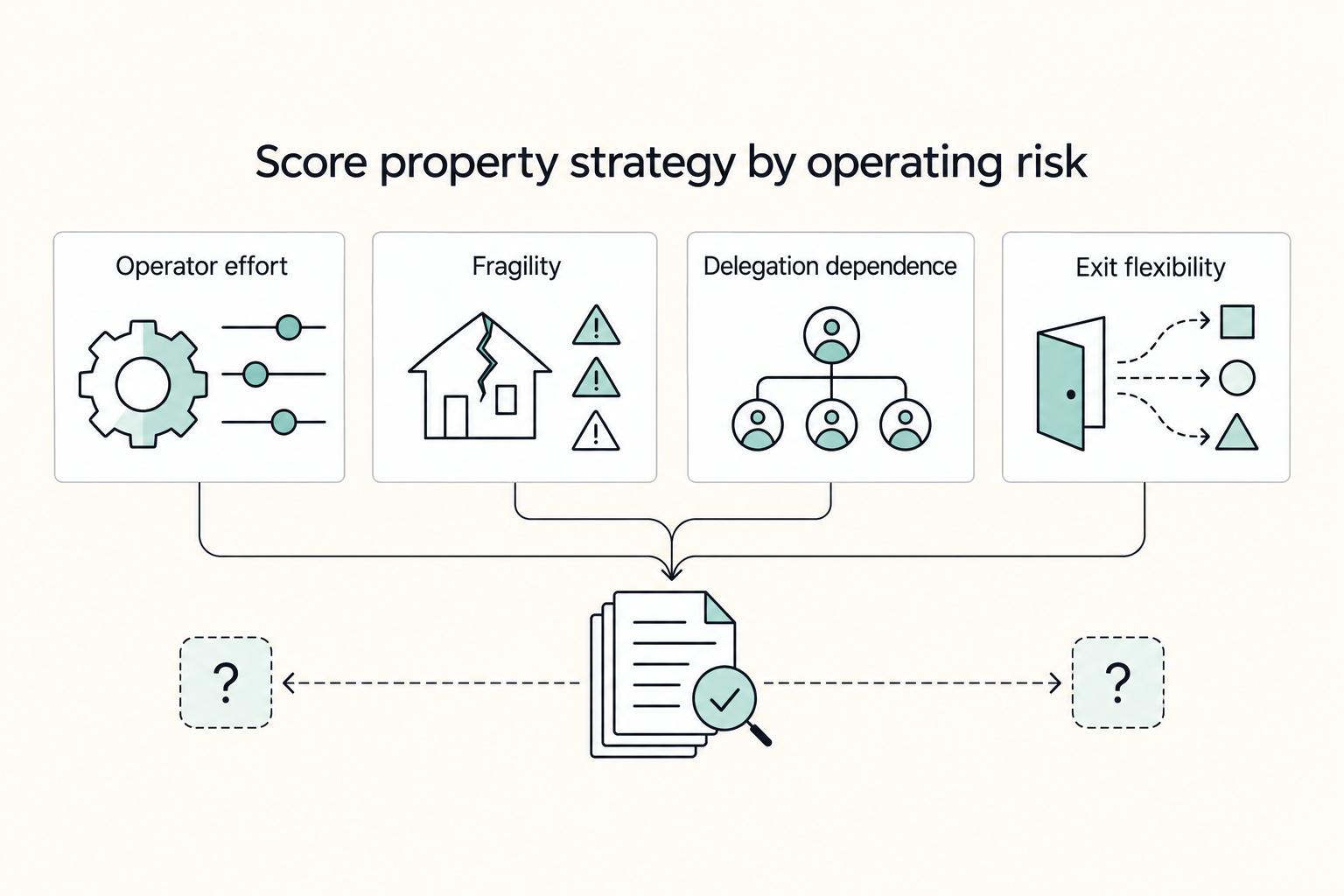
**Run anything with money and moving parts like an operations system (cash, docs, delegation, and controls), not a "passive income" vibe.** Real life stress-tests weak spots. You change time zones, a client pays late, and something breaks at the worst moment. As the CEO of a business-of-one, your job is to build a setup that keeps working when you are not available on demand.
The Pros and Cons of Short-Term vs. Long-Term Rentals
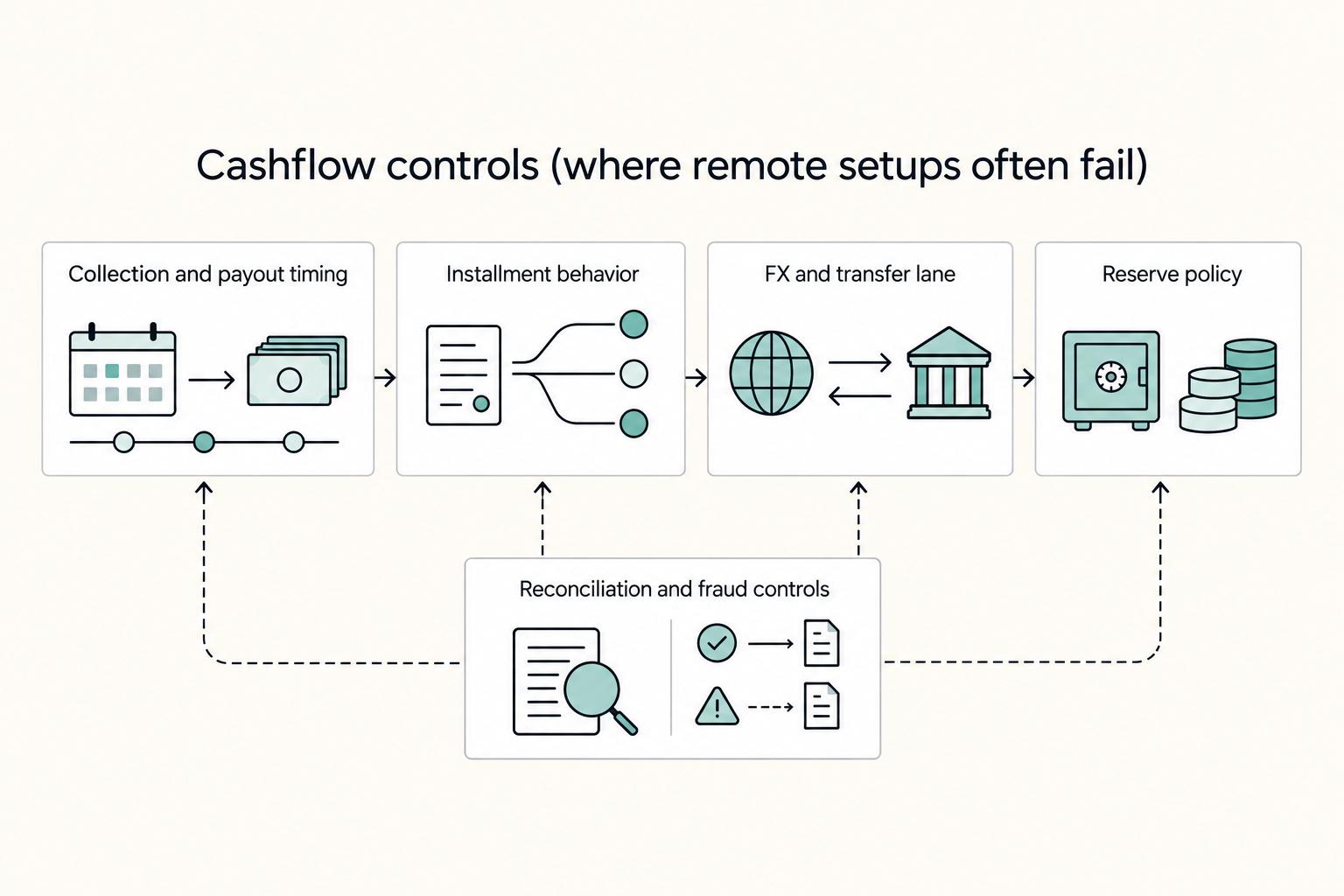
You are probably not chasing the biggest headline revenue number. You want rent that arrives, stays collected, and does not turn into a second job or a cross-border tax headache. For an owner living internationally, the real choice between a short stay and a long-term lease is about risk first. Which model gives you lower compliance exposure, less remote operating drag, and more cash left after fees, taxes, and reporting?