
Quick Answer
Choose a vacation rental channel manager only after it proves reliable two-way syncing on your core OTAs and shows clear API versus iCal connection types. For most independent operators, the safest pick is the one you can migrate cleanly with test bookings, cancellation checks, and visible sync history, not the one with the most marketing claims. Shortlist tools like Lodgify, Hostaway, Smoobu, DiBooq, Avantio, and Guesty only after you get written channel mappings and a documented escalation path.
Choose a channel manager like an operator, not a marketer#
If you are comparing the best channel managers for vacation rentals, start with failure prevention, not feature envy. The right tool is the one least likely to create sync surprises across your core channels when a booking lands at the worst possible time. A channel manager matters because it keeps rates, availability, and reservations aligned in real time. Even small mistakes can turn into lost revenue or double-booking risk when you are running lean.
- Start with the risk you actually own.
For an independent host, the real question is not "Which tool has the nicest dashboard?" It is "Which tool is least likely to create sync mistakes across your connected OTAs and booking platforms?" Key differentiator: fewer calendar and inventory errors across connected channels matter more than a long feature list you will never use.
- Judge live operating behavior, not homepage language.
Vendor pages all promise smoother distribution. What matters is whether the product clearly supports a two-way connection between your property management side and the OTA side. In practice, you should verify how updates move for rates, availability, and reservations, and whether the tool shows timestamped sync status or error alerts when something breaks. Key differentiator: reliability signals beat marketing claims. If a vendor cannot clearly explain what is API-based, what falls back to iCal, and how failed updates are surfaced, treat that as a red flag.
- Pick for the migration outcome, not just the subscription decision.
The right choice is the one whose tradeoffs you understand before go-live. Your goal is not just to buy software. Your goal is to migrate without putting active bookings or guest experience at risk, especially in the first days when manual edits and automation can clash and create hidden drift. Key differentiator: choose the option you can implement cleanly. Keep a basic evidence pack from day one: listing IDs, channel mappings, screenshots, timestamps, OTA confirmation messages, and support ticket numbers. If a connection misfires later, that record matters.
- Treat unknowns as part of the decision.
The operating case for channel managers is supported here, including centralizing listings across multiple OTAs and reducing manual work, with relevant guidance published on 12 December 2024 and 4 November 2025. What is not verified here is exact Airbnb, Vrbo, Booking.com, or Expedia API coverage for each vendor, measured sync latency, or support quality during a real outage. Key differentiator: clear unknowns protect you from bad assumptions. Reddit and r/AirBnBHosts can help you form questions, but they should not be your proof. If a detail matters to your operation, ask the vendor to show it before you commit.
Who this list is for and how the picks are scored#
This shortlist is for operators moving from manual OTA updates to structured software with channel sync, and the goal is lower sync risk, not a bigger feature list.
| Criterion | What to check | Evidence limit |
|---|---|---|
| OTA coverage | A named OTA matrix for your core channels | Claims such as over 400 channels are directional signals, not proof of real-world performance |
| API integration depth | What is API-based, what falls back to iCal, and how updates move for rates, availability, and reservations | Current information does not verify exact Airbnb, Vrbo, Booking.com, or Expedia API coverage for each vendor |
| iCal fallback quality | Which OTA connections are calendar-only iCal and whether iCal is backup only | Verify API-versus-iCal benchmarks and iCal lag windows independently |
| Sync reliability signals | Timestamped sync status or error alerts when something breaks | Measured sync latency is not verified in the current evidence |
| Onboarding effort | Mapping, relinking, cutover, and rollback steps before go-live | Migration effort is unknown until onboarding and cutover steps are documented |
| Support escalation path | A documented escalation route and the evidence support needs on first contact | Support quality during a real outage is not verified |
- Best fit
Best for independent hosts and smaller operators replacing manual channel upkeep with a more reliable operating setup. The practical win is clear mapping, visible sync status, and fewer surprises when updates fail.
- Not ideal
If you need a full enterprise stack beyond channel distribution, treat this list as a starting point, not a final platform decision. In that case, broader suites (including options such as Guesty) may be a better fit depending on your operating complexity.
- How the picks are scored
We score against six operating criteria: OTA coverage, API integration depth, iCal fallback quality, sync reliability signals, onboarding effort, and support escalation path. Public evidence does not validate all six equally: HotelTechReport says its channel-manager methodology has run since 2017 and uses verified hotelier reviews, product deep dives, and a proprietary HTScore, while some tooling is only available to verified hoteliers. Treat publisher labels like "best for strong API" and broad-connectivity claims (for example, "over 400 channels") as directional signals, not proof of real-world performance.
- Decision rule
If your core channels support API connections, treat API-first connectivity as mandatory and use iCal as backup only. If a vendor cannot clearly show what is API-based, what falls back to iCal, and how sync errors surface, keep that pick provisional. Related: The Best Software for Managing Short-Term Rentals.
Minimum features every credible option must pass#
If a tool cannot meet these four basics, remove it from your shortlist.
| Feature | What to verify | Red flag |
|---|---|---|
| Two-way core sync | Rates, availability, and reservations align across Airbnb, Vrbo, Booking.com, and Expedia | Demo only shows blocked dates updating |
| Change handling | One modification and one cancellation handled end to end | Process depends on manual spreadsheet checks |
| API vs iCal labeling | Each OTA connection is identified as API or calendar-only iCal | Vendor cannot map connection type by OTA |
| Sync health and support path | Sync status/history, connection-failure alerts, and a documented escalation route | You cannot confirm what synced, when it synced, and what failed |
- Two-way core sync
A credible vacation rental channel manager should keep rates, availability, and reservations aligned across major OTAs, including Airbnb, Vrbo, Booking.com, and Expedia, rather than acting as a simple calendar import. Key differentiator: if a demo only shows blocked dates updating, treat it as partial until they can show reservation and price changes moving correctly too.
- Change handling when bookings move fast
Weak integration depth becomes costly when cancellations, guest modifications, or last-minute bookings happen, because delayed updates raise double-booking and forced-cancellation risk. Key differentiator: ask to see one modification and one cancellation handled end to end; if the process depends on manual spreadsheet checks, treat that as a red flag.
- Clear API versus iCal labeling
You should be able to verify which OTA connections are true API integrations and which are calendar-only iCal connections, since they do not behave the same way. Key differentiator: if a vendor says it "integrates with major channels" but cannot map connection type by OTA, keep that option provisional.
- Visible sync health and a support path
Reliable operation means updates stay aligned and calendar state stays accurate, with clear sync status/history, connection-failure alerts, and a documented escalation route when something breaks. Key differentiator: if you cannot quickly confirm what synced, when it synced, and what failed, you will end up reconciling channels by hand under peak booking pressure. Related reading: The Best Air Purifiers for a Home Office.
Quick comparison table before the deep dive#
Treat this as a screening tool, not a final ranking. In the current evidence pack, what is verified is the methodology context, not tool-by-tool capability: one ranking source says its research goes back to 2017 and references verified hotelier reviews, product deep dives, and HTScore (with some content gated to verified hoteliers), and another source presents a 2026 six-product comparison format. That is useful context, but it does not verify per-tool API depth, iCal role, OTA coverage, or migration effort.
| Tool | Best for | API integration coverage | iCal integration role | OTA breadth | Migration complexity | Notable unknowns | Confidence | When to shortlist / When to skip |
|---|---|---|---|---|---|---|---|---|
| Lodgify | Undetermined; ask the vendor to define target fit | Unknown; require channel-by-channel proof | Unknown; ask which OTAs are calendar-only | Unknown; request a named OTA matrix | Unknown until onboarding and cutover steps are documented | Modification/cancellation handling, sync history visibility, escalation path | Low for tool specifics; methodology context is verified, feature details are not | Shortlist if demo maps connection type per OTA and shows timestamped sync status; skip if answers stay high-level |
| DiBooq | Undetermined; ask the vendor to define target fit | Unknown in current pack | Unknown in current pack | Unknown in current pack | Unknown until mapping, relinking, and rollback steps are explained | Error alerts, onboarding ownership, failed-sync evidence trail | Low for tool specifics; treat vendor-page claims as unverified until documented | Shortlist if you get a written channel matrix and test plan; skip if escalation/support remains vague |
| Smoobu | Undetermined; ask the vendor to define target fit | Unknown in current pack | Unknown; confirm whether iCal is backup-only or routine for some OTAs | Unknown; do not assume parity without proof | Unknown until a sample migration checklist is provided | Two-way reservation behavior, rate update timestamps, channel-depth detail | Low for tool specifics; current pack does not verify buying-critical behavior | Shortlist if they show one rate change and one cancellation end to end; skip if proof is only marketing copy |
| Hostaway | Undetermined; ask the vendor to define target fit | Unknown in current pack | Unknown in current pack | Unknown in current pack | Unknown until scope, timeline, and reconnection steps are explicit | Channel-specific depth, modification handling, support route on broken connections | Low for tool specifics; no independently verified capability detail in excerpts | Shortlist if you can inspect sync logs and escalation workflow; skip if OTA behavior is not mapped clearly |
| Avantio | Undetermined; ask the vendor to define target fit | Unknown in current pack | Unknown in current pack | Unknown in current pack | Unknown until import dependencies and go-live controls are documented | Audit visibility, cutover sequence, failed-mapping surfacing | Low for tool specifics; assume nothing beyond documented proof | Shortlist if onboarding includes a clear cutover checklist; skip if migration controls are unclear |
| Guesty | Undetermined; ask the vendor to define target fit | Unknown in current pack | Unknown in current pack | Unknown in current pack | Unknown until migration scope and manual steps are shown | Connection health visibility, mapping ownership, post-go-live support handling | Low for tool specifics; channel behavior is not verified in current evidence | Shortlist if you receive written answers on sync monitoring and OTA-specific connectivity; skip if complexity is high and proof is thin |
The key signal here is where the unknowns remain. A credible vendor should close them quickly with a channel matrix, onboarding checklist, and product screens that show API versus iCal by OTA.
Before the deep dive, ask each vendor for one live proof set: OTA connection type by channel, a sync-status/history view with timestamps, and one documented booking modification plus one cancellation flowing correctly. If they can only point to ranking tiles, badges, or polished product pages, keep them provisional.
Buying on familiarity instead of proof is where cutovers usually get expensive. Keep written answers, screenshots, and any support ticket IDs in your procurement folder before go-live.
Best channel managers for vacation rentals by operating scenario#
Start with the operating problem you need to solve first. In the current evidence pack, Lodgify and Hostaway have the clearest scenario signals; Smoobu, DiBooq, and Avantio should stay provisional until you get OTA-by-OTA proof.
A channel manager only helps if it truly centralizes listing and booking updates across your channels. Real-time sync is meant to reduce double-booking risk, but you should still validate connection type, sync timestamps, and how modifications and cancellations actually flow.
- Lodgify for direct booking plus core OTA sync
Lodgify is the clearest fit here if you want direct booking and channel distribution in one tool. A 2026 comparison positions it as "Major OTAs + Direct booking." Use that as a shortlist signal, not a final decision. Ask for channel-by-channel connection details and a live sync history view before you commit. The same table shows 4.8★★★★★ and 3,186 reviews, but treat that as unverified until you confirm it independently.
- Hostaway for multi-listing growth and heavier controls
Hostaway is the strongest scale-oriented option reviewed here. The same 2026 comparison lists 26+ direct OTA integrations and a sync claim of up to 30 minutes. Those are useful indicators, but still table-level claims. Confirm which integrations are direct for your own stack, then test one rate change, one cancellation, and one booking modification end to end.
- Smoobu for smaller teams that want simpler channel workflows
Smoobu is a reasonable shortlist candidate for lean operations. Do not assume verified operational depth, especially for deeper OTA behavior. Treat it as provisional until a demo proves two-way reservation handling, cancellation flow, and availability updates in practice.
- DiBooq for expanding your shortlist beyond familiar brands
DiBooq is best treated as a comparison candidate, not a presumed fit. The signal is shortlist presence, while scoring transparency and operational detail remain unclear. Ask for a written channel matrix, onboarding checklist, and clear ownership of channel mapping during setup.
- Avantio for side-by-side fit testing before contract lock-in
Avantio fits as an alternative to test against common defaults. Rely on proof, not positioning. Require OTA connection type by channel, last-sync timestamps, and one documented cancellation flow before signing. For a step-by-step walkthrough, see The Best Password Managers for Families.
API integration versus iCal integration and where each breaks#
For core channels, treat API integration as the default and iCal as a deliberate fallback.
- API integration for core OTAs
Ask first whether each channel connection is true API integration. In the evidence, weaker integration depth is tied to delayed rate and availability updates, which can increase double-booking and forced-cancellation risk. Keep the check practical: ask the vendor to show a live reservation update, a cancellation update, and a rate or availability update moving through your actual channel mix with visible timestamps.
- iCal integration for lower-risk fallback use
iCal can be a workable fallback for lower-priority channels, but it should not be treated as equivalent to deeper connections. Avoid assuming parity from a generic "calendar sync" claim; verify actual iCal lag windows, failure rates, and API-versus-iCal benchmarks with the vendor. The break point is usually time-sensitive changes, where thinner sync can create downstream distribution errors that affect guests, owners, cleaning schedules, and accounting.
- A simple decision rule for your shortlist
If a listing is high-demand, turns frequently, or you reprice often, require API integration for that channel. Reserve iCal for lower-risk inventory where thinner sync is less likely to create costly conflicts. As you scale from Airbnb/Vrbo into broader distribution, this matters more, not less. Whether you manage one property or one hundred, request a written channel matrix that labels each connection as API or iCal before you sign.
Migration checklist that prevents overbookings in the first 30 days#
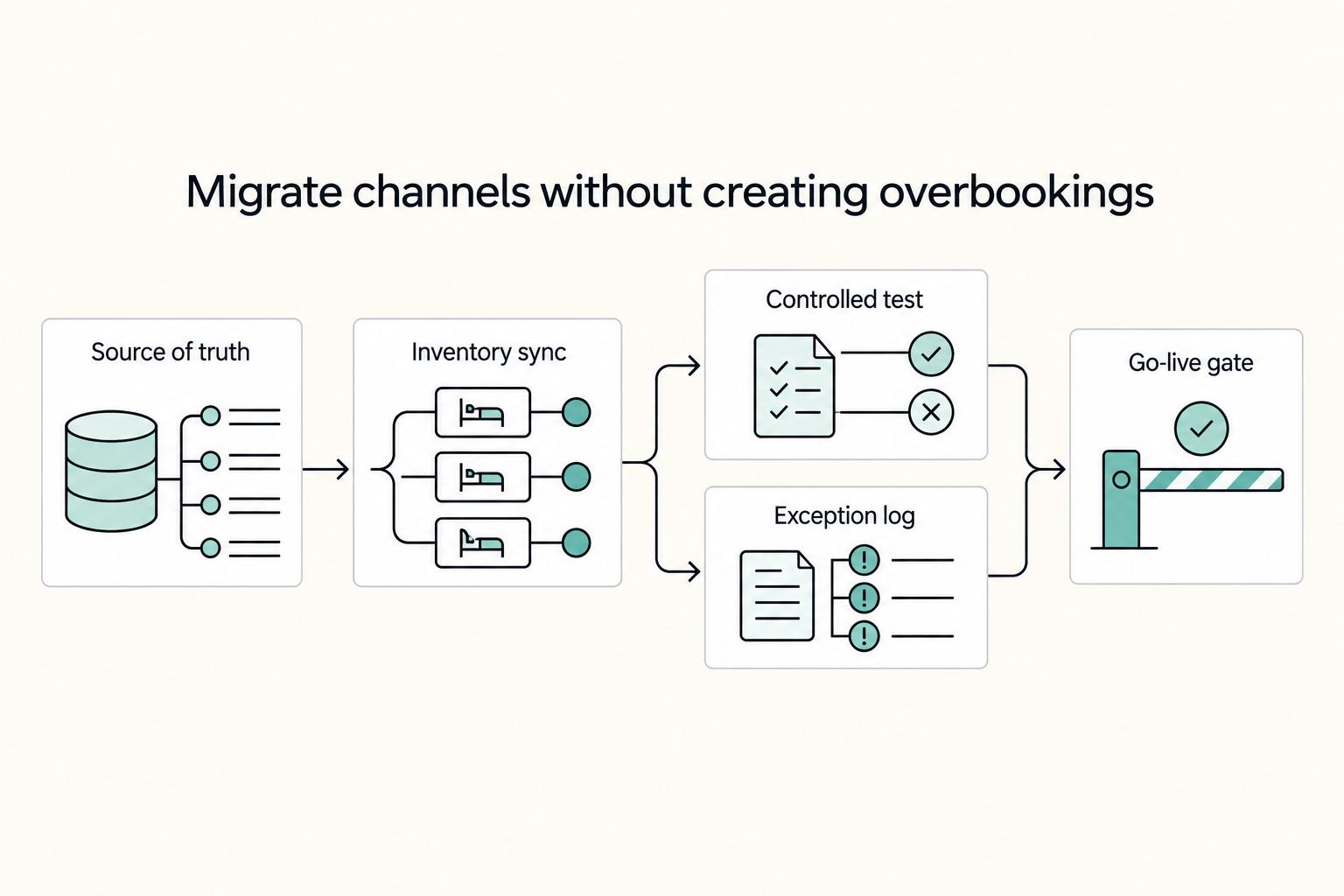
Overbookings in the first 30 days are usually process failures, not tool failures. Run migration with one source of truth, controlled tests, and a clear evidence trail.
| Phase | Required action | Stop rule or record |
|---|---|---|
| Pre-migration inventory | Build a complete listing map in the PMS and match each listing to its exact channel ID | If more than one place can still edit the same dates, treat that as a blocker |
| Controlled tests | Run one booking, one cancellation, and one rate change on each priority channel | If any update lags, drops, or only partially syncs, pause rollout and escalate |
| Go-live sequence | Freeze manual edits, use a written channel-switch order, watch high-impact listings first, and check sync logs on a fixed cadence | Keep rollback steps written in advance with clear ownership |
| Verification pack | Keep settings screenshots, booking and cancellation timestamps, OTA confirmations, sync-log captures, and support ticket IDs | Use the folder for dispute handling and post-mortem review |
- Pre-migration inventory
Build a complete listing map inside your PMS before cutover: every unit, rate plan, and live channel connection. Because channel management software is meant to centralize inventory, rates, and availability across OTAs and other distribution points, your setup should make one system the source of truth for availability, rates, restrictions, and reservation status.
Match each listing to its exact channel ID (Airbnb, Vrbo, Booking.com, Expedia). If more than one place can still edit the same dates, treat that as a blocker.
- Controlled test transactions
Before full go-live, run controlled tests on each priority channel: one booking, one cancellation, and one rate change. Confirm each event in both places (PMS and OTA view), including timestamps and the final calendar/rate result.
If any update lags, drops, or only partially syncs, pause rollout and escalate before moving to the next channel.
- Defined go-live sequence
Cut over with manual edits frozen. In 2026, manual calendars and spreadsheets are not a reliable operating path, and mixing manual edits with automation increases conflict risk during launch.
Use a written channel-switch order based on your risk profile, watch high-impact listings first, and check sync logs on a fixed cadence during early go-live. Keep rollback steps written in advance with clear ownership so you are not improvising during a live incident.
- Verification pack for disputes and review
Keep a simple evidence folder from day one: settings screenshots, booking/cancellation timestamps, OTA confirmations, sync-log captures, and support ticket IDs.
Use it for both dispute handling and post-mortem review so you can identify whether the root cause was source-of-truth confusion, a connection issue, or manual edits outside the channel manager.
Common failure modes and the red flags to catch early#
Most overbooking risk starts as unclear operations, not a single broken sync. If a vendor is vague about how connections work or who owns support steps, treat that as an early warning.
- "Deep connectivity" with no clear per-channel behavior
Treat broad connectivity language as a red flag until the vendor explains, in writing, how updates behave across your channels. If answers stay high level, assume you still have operational risk hiding in the gaps.
- No usable escalation workflow for persistent connection errors
A support promise is not the same as a process you can execute during an incident. If the handoff steps and required evidence are unclear, your team will spend critical time collecting basics while the issue is still live, which keeps you reactive instead of early.
- Manual edits mixed with automation
This is a common way hidden calendar drift starts across Airbnb and Vrbo. Keep one source of truth, limit direct channel edits, and document exceptions up front. A proper audit often uncovers surprising time-sinks, so map every step in your guest and property lifecycle and mark where manual edits still happen.
Pick the system you can operate on your worst week#
Choose the system you can run correctly under pressure, not the one with the best demo. The right pick gives you centralized control, dependable sync behavior, visible exceptions, and a support path that can own problems quickly.
Reliability under stress#
Start with one core test: can you manage rates and availability from one dashboard and see inventory update across channels when bookings change. If that behavior is not dependable in your own flow, the rest of the feature set is secondary.
Use the same staged checks with every vendor:
- one availability block update
- one rate change
- one new reservation
- one reservation change
Pass/fail is simple: you can see what changed, when it changed, and where a sync exception sits without guesswork.
Support and exception handling#
When sync breaks, clear ownership matters more than extra features. Ask how escalation works, what evidence support needs on first contact, and who owns resolution when OTA behavior and integration behavior do not match.
Keep an evidence pack from day one:
- screenshots
- timestamps
- listing IDs
- reservation references
- support ticket IDs
Unknowns are a decision signal#
If core details are unclear, pause the decision. Use external rankings and verified-review research as inputs, not as proof of fit for your exact vacation-rental workflow.
Do not treat broad distribution reach as enough on its own. Some providers may distribute across 5-50 partner sites, but breadth is not the same as operational fit. Commit only when your OTA mix, connection behavior, migration checkpoints, and support ownership are testable end to end and documented in writing.
Frequently Asked Questions
What is the difference between API integration and iCal integration for vacation rental channel managers?
API integration is generally the standard to prefer because two-way API connections are positioned as critical for full automation and reliability. iCal is calendar-based, so it can be a useful fallback, but it is often more limited than API and better treated as backup connectivity rather than your primary setup for high-demand listings. Your checkpoint is to ask for an OTA-by-OTA matrix that labels exactly what is API and what is iCal for availability, rates, reservations, and changes.
What minimum features should every channel manager include before I shortlist it?
At minimum, you want central control of listings plus real-time sync for availability, pricing, and reservations across your core channels. It should also show sync status clearly enough that you can tell what updated, when it updated, and where an error sits. If a vendor cannot explain how cancellations or modifications flow, or cannot show the support path when a Booking.com or Airbnb connection breaks, skip it.
Which channel manager is best for a small portfolio versus a scaling operation?
For a small portfolio, favor the tool that is easiest to operate correctly every day, even if it has fewer broad-suite features. In practice, that means weighting usability, direct booking support, and clean channel syncing above feature volume. For a scaling operation, the criteria shift toward property size, integrations, automation, support, and scalability. Even then, verify connection depth and support ownership instead of buying the market narrative.
How do I reduce overbooking risk during migration week?
When a booking happens on one platform, connected-channel availability can be updated across other platforms to reduce overbooking risk, and API integrations are emphasized for full automation and reliability. Before migration week, ask each vendor for written cutover, rollback, and support procedures.
How should I evaluate Lodgify, Hostaway, Smoobu, DiBooq, Avantio, and Guesty when pricing details are unclear?
Treat unclear pricing as incomplete risk, not a minor sales nuisance. Reported claims include Hostaway enterprise contracts with a $500 setup fee and Lodgify with a 1.9% booking fee on a lower entry tier, but those are not enough to treat as verified current pricing across plans, regions, or contracts. Ask each vendor for the current plan sheet, setup fees, contract term, booking-fee rules, onboarding charges, and what support tier is included. If they will not put that in writing, move them down your list.
What should I do when OTA sync errors appear after go-live?
Stop making casual manual edits first, because mixed edits make diagnosis harder. Identify whether the issue affects availability, rates, or reservations, then note the channel, listing ID, reservation reference, and the exact time the mismatch appeared. Send support the full packet on first contact instead of a vague “sync is broken” message. If the error persists, pause risky changes like last-minute repricing until the connection is stable again.
Try a related tool
Researched and edited by the Gruv editorial team. Gruv builds cross-border billing, payouts, and finance-operations software for global businesses.
Sources
Includes 4 external sources outside the trusted-domain allowlist.
- centralstate.edu/sites/default/files/2025-03/2025-2026_academ...trusted
- fire.pppl.gov/fy12_doe_nnsa_detail.pdftrusted
- govinfo.gov/content/pkg/CHRG-110hhrg39912/html/CHRG-110h...trusted
- sec.gov/Archives/edgar/data/1990354/0001104659240541...trusted
- aeve.ai/best-channel-managers-short-term-rentals-2026external
- airhost.sg/blog/practical-knowledge/channelmanagers-com...external
- coaxsoft.com/blog/best-channel-managers-for-vacation-rent...external
- eviivo.com/trade-secrets/best-vacation-rental-channel-m...external
Educational content only. Not legal, tax, or financial advice.
Related Posts
Value-Based Pricing for Freelancers Under Real Payment Risk
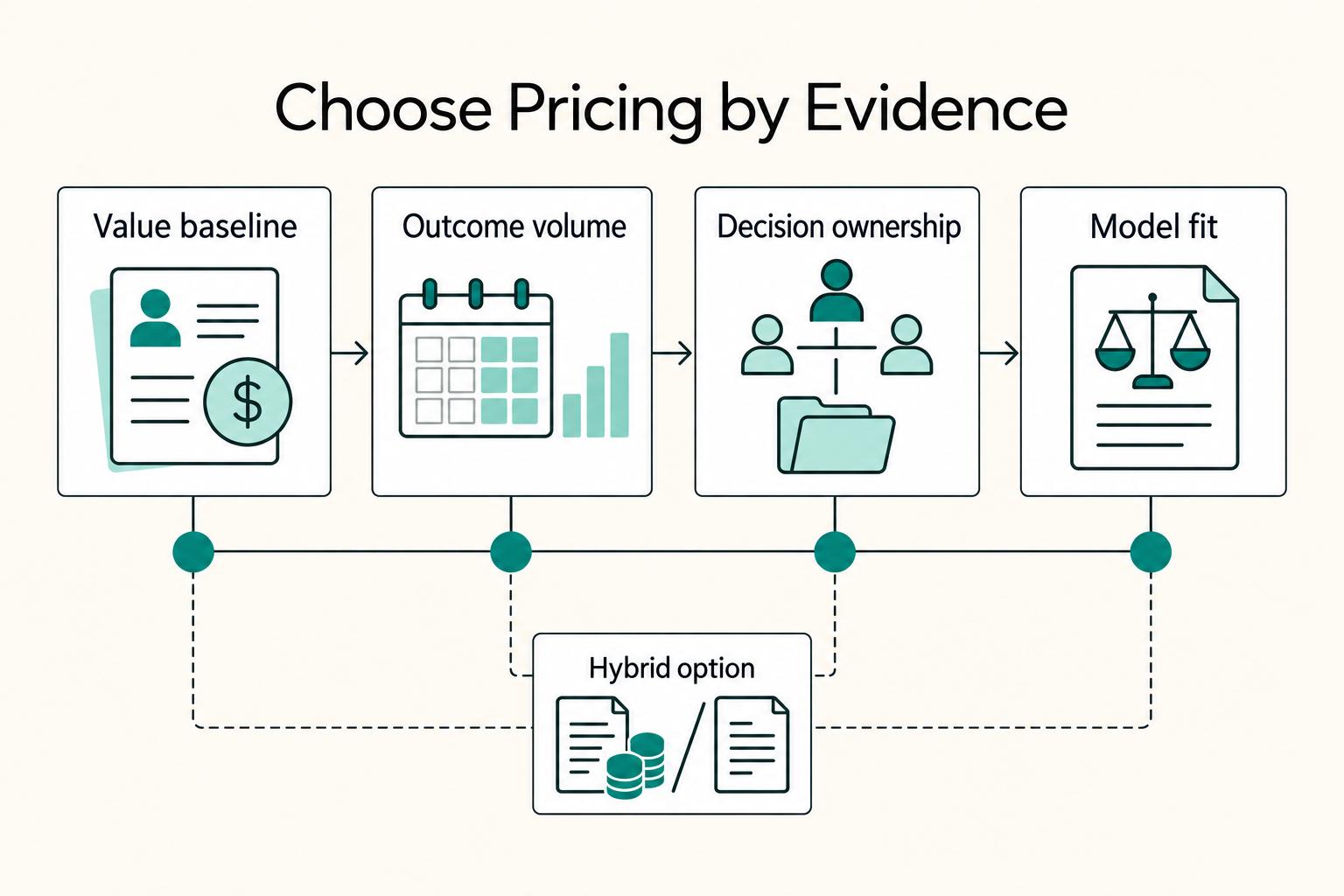
Value-based pricing works when you and the client can name the business result before kickoff and agree on how progress will be judged. If that link is weak, use a tighter model first. This is not about defending one pricing philosophy over another. It is about avoiding surprises by keeping pricing, scope, delivery, and payment aligned from day one.
The Best Software for Managing Short-Term Rentals
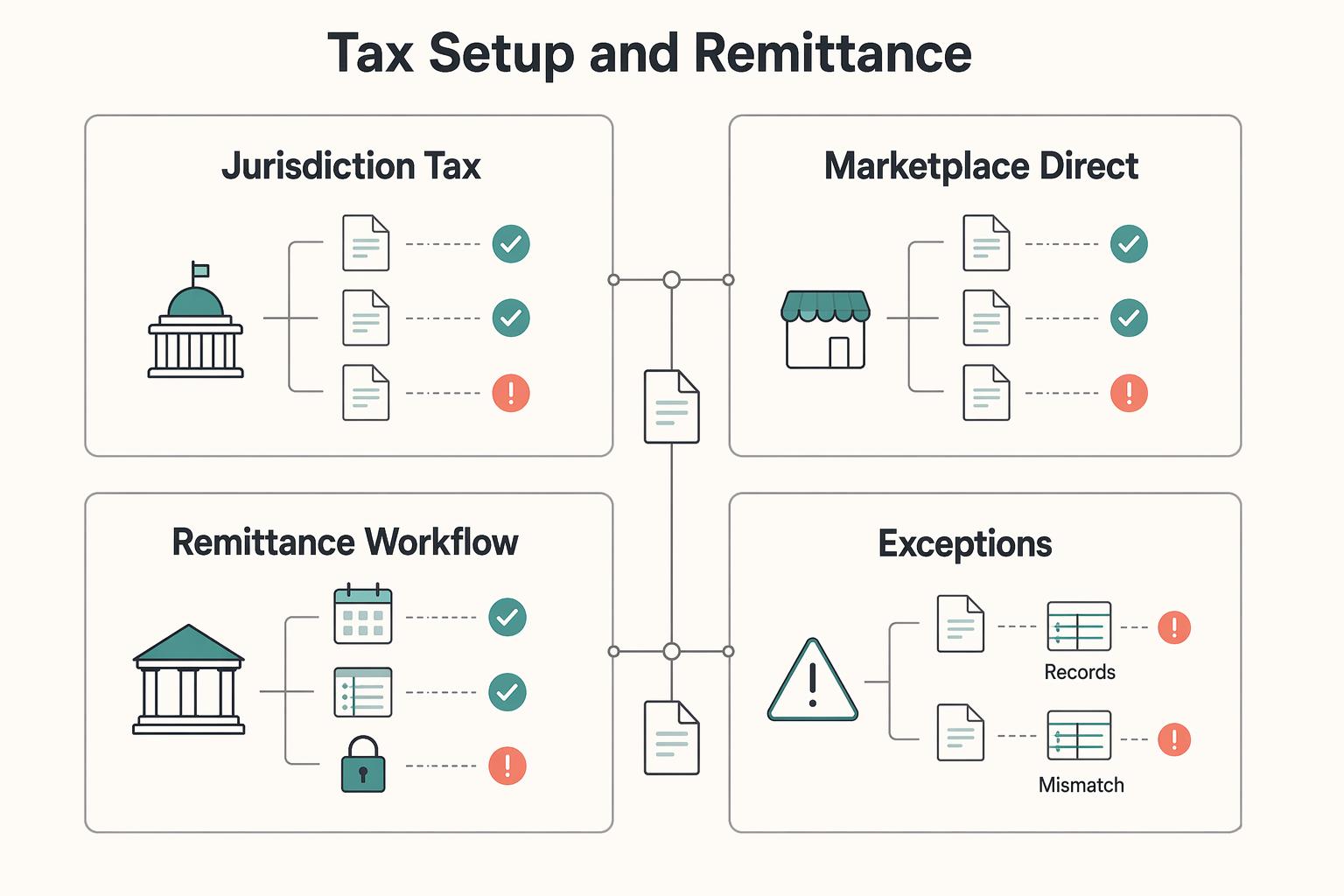
If you own or manage a short-term rental, your job is not just answering guest messages and turning over a property. You are managing an income-producing asset. The real work is protecting cash flow, reducing operating mistakes, and making sure one missed detail does not turn into a booking issue or a compliance problem.
Vrbo vs. Airbnb: A Comparison for Property Owners
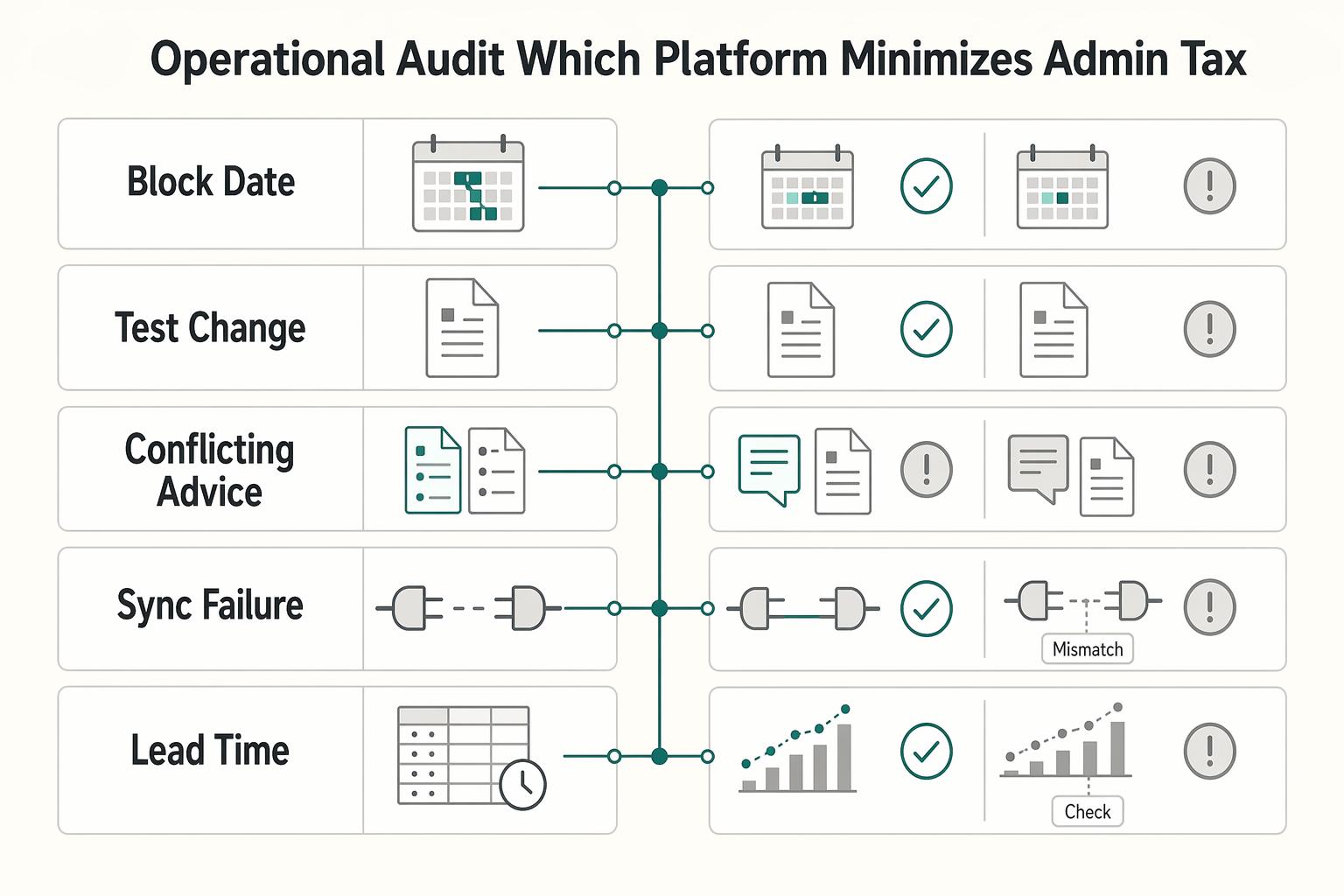
For a professional short-term rental operator, choosing between Airbnb and Vrbo is not about brand preference. It is a portfolio decision that affects revenue, operating load, and risk. If you treat your property like a real business, the comparison has to go well beyond surface fee checks.