
Quick Answer
Match your choice to your trip first, then compare stoves inside that lane. For best backpacking stoves, start with your profile (fast and light, all-weather, or camp-cook), then shortlist models such as MSR PocketRocket 2, Soto WindMaster, or a Jetboil system based on wind behavior, simmer control, and pot stability. Before buying, confirm pressure-regulator details on the current spec sheet, carry independent backup ignition, and test your exact stove-pot-fuel setup on a shakedown cook.
Your Cook System is Not a Gadget; It's Your Life-Support#
Treat your stove as life support, not a casual gear pick. When you are cold, wet, tired, or pinned in camp by weather, hot water supports warmth, hydration, and food. The right stove is the one you can trust in your conditions, not the one that looks fastest on a product page.
| Factor | Key question | Grounded note |
|---|---|---|
| Reliability | Will it light and keep running when you need it? | If a stove uses a piezo igniter, carry stormproof matches anyway; dependable manual backup matters more than built-in convenience. |
| Environment fit | What conditions will it face? | Wind, cold, altitude, and group size can change what works best; in cold weather or with low fuel levels, check for a pressure regulator. |
| Fuel strategy | Can you reliably buy, carry, and use the fuel? | Canister, liquid fuel, and alternative-fuel stoves solve different problems, and availability matters for international travel or small-town resupply. |
| Redundancy | What is your backup and are local rules met? | Build in a second way to start the stove and verify fire restriction language; some land units only allow portable stoves with a contained fuel source and an on-off switch. |
You will make a better decision if you treat stove choice as a sequence instead of a spec check. First, define your trip profile. Next, audit the risks that can break your plan. Then build the full cook setup around that reality. That order gives you clearer purchase criteria and a setup matched to your trip.
-
Reliability. Start with the simplest question: will it light and keep running when you need it? If a stove uses a piezo igniter, carry stormproof matches anyway. The real differentiator is dependable manual backup, not built-in convenience.
-
Environment fit. Wind, cold, altitude, and group size can change what works best in the field. If you expect cold weather or low fuel levels, check whether the stove has a pressure regulator because it helps keep boil performance more consistent. Choose for the weather you will actually face, not the trip you hope to have.
-
Fuel strategy. Canister, liquid fuel, and alternative-fuel stoves solve different problems, and fuel availability matters if you are traveling internationally or resupplying in small towns. The right fuel is the one you can reliably buy, carry, and use legally.
-
Redundancy. Build in a second way to start the stove, and verify local fire restriction language before you leave. Some land units only allow portable stoves with a contained fuel source and an on-off switch that can immediately extinguish the flame. Backup and rule compliance keep small mistakes from turning into real problems.
One hard red flag before you go further: never use a stove inside a tent or enclosed space. CPSC says it is aware of at least 12 deaths since 2020 from carbon monoxide poisoning associated with camping equipment. If your water plan depends on boiling, remember the CDC guidance is 1 minute for clear water, or 3 minutes above 6,500 feet.
With that baseline set, the next step is to sort yourself into the right stove category before you compare models. If you are also refining the rest of your kit, read The Best Travel Backpacks for Digital Nomads.
Step 1: Define Your Operational Profile#
Pick your profile before you compare models. There is no single stove that fits everyone, so match your choice to your trip reality first.
| Profile | Mission | Trade-off | Recommended stove type | Best for |
|---|---|---|---|---|
| Fast and light | Keep weight and packed size low | You usually give up some simmer finesse and larger-pot stability | Compact upright canister stoves | Solo hikers, thru-hikers, boil-focused meals |
| All-weather, risk-focused | Better cold and wind performance, plus serviceability | More weight and more complexity | Weather-focused canister setups, and in true cold, liquid fuel systems | Shoulder-season travel, exposed camps, colder conditions |
| Camp-cook and small-group | Improve simmering control, cookware stability, and cooking comfort | More bulk and weight | More stable systems that prioritize control over minimum packed size | Pairs, small groups, basecamp-style weekends, people who cook real meals |
Use this quick self-check:
- Trip style: Are you moving daily, traveling in shoulder season, or setting up camp and cooking more?
- Expected weather: Mostly mild, consistently windy, or cold enough that fuel pressure is a concern?
- Cooking style: Boil-only, simple one-pot meals, or regular simmering and pan cooking?
- Group size: Solo, two people, or a small group with larger pots?
- Weight vs control: Are you minimizing every ounce, or willing to carry more for stability and cooking control?
Write down your usual pot size, meal style, and worst likely weather. That usually makes your lane clear.
Fast and light profile#
If your priority is miles and quick hot water, this is usually the right lane.
- Mission: Keep weight and packed size low.
- Trade-off: You usually give up some simmer finesse and larger-pot stability.
- Recommended stove type: Compact upright canister stoves.
- Fit examples: MSR PocketRocket line.
- Best for: Solo hikers, thru-hikers, boil-focused meals.
- Not ideal for: Larger pots, more involved cooking, or trips where stove stability is a top concern.
All-weather, risk-focused profile#
If you expect wind, cold, or higher consequence from stove failure, optimize for reliability over minimal weight.
- Mission: Better cold and wind performance, plus serviceability.
- Trade-off: More weight and more complexity.
- Recommended stove type: Weather-focused canister setups, and in true cold, liquid fuel systems.
- Fit examples: Soto WindMaster and MSR PocketRocket models as canister options to compare for cold/wind behavior; liquid fuel when cold reliability is the priority.
- Best for: Shoulder-season travel, exposed camps, colder conditions.
- Not ideal for: Fair-weather trips where lowest weight and lowest cost are the main goals.
If you go liquid fuel, commit to maintenance: field service can include cleaning fuel pathways, replacing seals, lubricating the pump cup, and swapping the main valve.
Camp-cook and small-group profile#
If meal quality matters nearly as much as mileage, carry more stove for better cooking control.
- Mission: Improve simmering control, cookware stability, and cooking comfort.
- Trade-off: More bulk and weight.
- Recommended stove type: More stable systems that prioritize control over minimum packed size.
- Fit examples: Jetboil options as integrated-system candidates.
- Best for: Pairs, small groups, basecamp-style weekends, people who cook real meals.
- Not ideal for: Ounce-counted trips and boil-only routines.
Next, pressure-test your profile against the environmental risks that usually break stove plans in the field. For a step-by-step walkthrough, see The Best Sleeping Bags for Backpacking in 2026.
Step 2: Conduct a Backcountry Risk Audit#
Use this audit to define failure points before you compare stove models. Check cold, wind, and ignition risk in that order, then write down your minimum requirements.
| Risk | What can happen | What to verify | Control |
|---|---|---|---|
| Temperature risk | Weaker flame, slower boils, or harder starts when you need heat most | Whether the exact canister model has a pressure regulator and whether remote-canister models support inverted canister operation | Keep canisters warm before use; if cold and high elevation are normal conditions, liquid fuel is the more reliable lane |
| Wind risk | Slower cooking and higher fuel burn; a 100 g canister for a solo weekend may stop being enough in exposed camps | Burner protection, pot-to-burner coupling, and system shielding | Add fuel margin and keep safe operating space; one stove manual specifies 1.2 m side clearance and 1.5 m top clearance from flammable materials |
| Ignition risk | Altitude pressure changes can make piezo ignition harder | Your primary ignition method and an independent backup | Carry a separate lighter or matches and keep backup ignition in a waterproof container |
- Temperature risk
If your trip includes cold mornings, cold camps, or high elevation, assume canister pressure can drop and stove output can weaken. In practice, that shows up as a weaker flame, slower boils, or harder starts when you need heat most.
Your first control is stove design: confirm whether the exact canister model has a pressure regulator to help maintain output as pressure falls. Treat that as support, not a complete fix, because freezing conditions can still push pressure below what a regulator can maintain.
Your second control is fuel handling: keep canisters warm before use, for example in your jacket or sleeping bag, instead of leaving them on cold ground. If cold performance is a regular need, evaluate remote-canister models that support inverted canister operation for more consistent output. If cold and high elevation are normal conditions for your trips, liquid fuel is the more reliable lane.
- Wind risk
Treat wind as a fuel-risk multiplier, especially at elevation. Your stove may still run, but with slower cooking and higher fuel burn, so baseline assumptions like a 100 g canister for a solo weekend may stop being enough in exposed camps.
Compare wind performance by hardware, not marketing:
- Burner protection: look for shielding details like a wind-blocking lip.
- Pot-to-burner coupling: favor tighter, more controlled pot alignment.
- System shielding: enclosed burner + integrated pot systems are built for windy, cold conditions.
When you add field shelter, keep safe operating space around the stove. One stove manual specifies 1.2 m (4 ft) side clearance and 1.5 m (5 ft) top clearance from flammable materials.
- Ignition risk
Built-in ignition is convenience, not redundancy. Use piezo as primary if you want, but carry an independent backup because altitude pressure changes can make piezo ignition harder.
Use a simple reliability setup:
- Primary ignition: your normal method, such as built-in piezo.
- Independent backup: separate lighter or matches.
- Storage practice: keep backup ignition in a waterproof container so it still works in wet and cold conditions.
Before you move to stove selection, you should have three decisions written down: your cold-weather requirement (regulator-only vs colder-weather fuel setup), your wind/stability minimums (protection, coupling, shielding), and your primary + backup ignition plan. Related: A Guide to Backcountry Cooking.
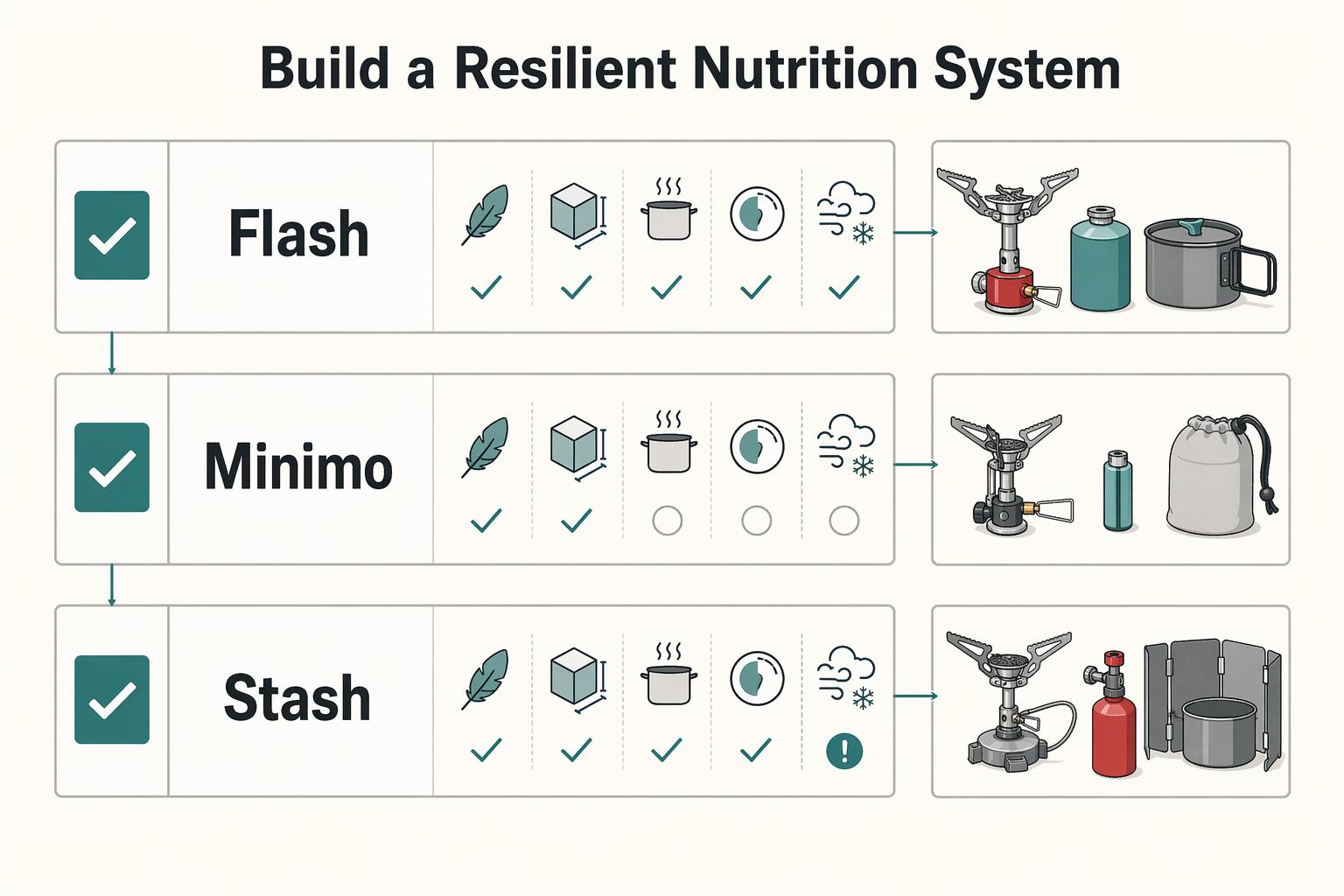
Step 3: Build a Resilient Nutrition System#
Build your cook kit around your Step 1 profile, not a universal winner. Keep your decision tied to the same field criteria: weight, packed size, boil-first versus cook-first use, simmer control, and how the setup holds up in wind and cold.
If your profile is fast-and-light with mostly mild conditions, the MSR PocketRocket 2 is a practical canister-stove fit. If you want to push weight and cost down further, the BRS-3000T (about 1.4 ounces, often less than $20) can fit an ultralight setup. It is the wrong fit if you want fewer tradeoffs or more margin in exposed conditions.
If your audit says wind is your main constraint, the Soto WindMaster is a strong fit; one tested assessment described it as stable, quick-boiling, and notably wind-resistant. If wind and colder conditions are both in play, keep the MSR PocketRocket Deluxe on your shortlist and verify the current specs for the features you care about, especially pressure regulation, ignition approach, and pot support design. If you choose only by brand family without checking those details, you are likely choosing the wrong setup.
For integrated systems, pick by how you actually cook:
| Jetboil option | Best fit | Boil-first vs cook-first | Flame control | Wind behavior | Packability | Pot format |
|---|---|---|---|---|---|---|
| Flash | You mostly boil water | Boil-first | Verify current valve behavior if you also cook | Check system shielding on the current model | Compare packed volume with your actual kit | Confirm included pot size for your meal plan |
| MiniMo | You want one integrated system for more than boiling | More cook-first friendly use case | Verify fine-control behavior on current specs/manual | Check how it performs in your likely camp exposure | Compare against your shelter-season loadout | Confirm pot shape/size works for stirring and eating |
| Stash | You prioritize Jetboil's compact/lightweight integrated format | Mostly boil-first for many users | Verify control range for your menu | Validate performance expectations for exposed camps | Compact packability is the core reason to pick it | Confirm volume before replacing a larger pot |
Use this complete-system checklist so the stove choice matches the rest of your plan:
- Fast and light: PocketRocket 2, or BRS-3000T only if you accept the tradeoffs; compact solo pot/mug format; canister plan with extra margin if wind is likely; independent backup ignition stored dry.
- Wind and shoulder season: Soto WindMaster or a verified PocketRocket Deluxe configuration; stable pot setup or integrated format; fuel margin for slower or wind-affected boils; independent backup ignition.
- Boil-first or cook-first camp kit: Jetboil model matched to meal style; integrated pot as core format; fuel margin for exposed camps; at least one no-cook meal option.
Run contingencies the same way every time. If ignition fails, switch to your independent lighter or matches immediately. If heating fails, move to no-cook or ready-to-eat meals for that block. Keep water treatment independent from stove function by carrying a filter or chemical treatment. You might also find this useful: The Best Water Filters and Purifiers for Backpacking.
Conclusion: Your Stove is Not a Purchase; It's a Policy#
If you are still deciding, stop looking for one winner and start checking whether a stove fits the way you actually travel. The point is not owning the flashiest setup. It is giving yourself fewer surprises and a clearer plan for making hot food or water when you need it.
-
Profile first. Your first filter is mission type, not brand. If your trips regularly include elevation above 3,000 feet, put that in your buying criteria from the start, because cooking may need changes in time, temperature, or recipe. Buy for your normal trip, not your fantasy trip.
-
Audit the conditions that change cooking. Altitude changes behavior at the pot, not just on paper. As atmospheric pressure drops, water boils at lower temperatures. At 7,500 feet, water boils at about 198°F, so foods that depend on boiling or simmering can take longer. If your route is high, expect longer cook times and plan meals around that.
-
Choose the full cook setup, not just the burner. The stove, pot, lid, fuel, and meal style all have to work together. High altitude areas are also prone to low humidity, which means more moisture loss during cooking. Covering food helps retain it. The right setup supports the meals you will actually make.
-
Do one final buy check. Before you purchase, confirm four things in one sentence each: your mission type, expected conditions, cooking strategy, and moisture plan. If any answer is vague, keep shopping. The differentiator is confidence you can explain, not confidence you borrowed from a review.
From here, move out of research mode. Build your pack list, run a shakedown cook with the exact pot and meals you plan to carry, then adjust your setup before the trip instead of during it. We covered this in detail in The Best Sleeping Pads for Backpacking.
Frequently Asked Questions
Should you pick an MSR PocketRocket 2 or an integrated stove for a long trip?
Start with your cooking style, not the logo. The provided stove source shows the MSR Pocket Rocket 2 in real use on a 1,200 mile backpacking trip from Montana to the Pacific Ocean, and it treats canister and integrated stoves as a separate comparison category, but it does not settle a current spec-level winner. For a real purchase, compare conditions, strengths, trade-offs, packed weight, pot volume, and verified current efficiency data before you buy.
Do pressure regulators matter when you are choosing among the best backpacking stoves?
Do not assume which named stoves have a regulator; do not infer it from a product family name or from older reviews. Make "regulator confirmed on the current spec sheet" a hard checkpoint.
How should you judge wind performance without getting fooled by vague reviews?
Treat wind claims as unproven until you can tie them to the current stove design and a current test. In practice, evaluate your exact setup in the conditions you expect and verify current performance data instead of repeating stale numbers.
Should you rely on a built-in igniter?
This guide does not evaluate igniter reliability, so avoid making this a deciding factor by itself. Verify current model documentation and test your setup before you leave if ignition reliability is critical for your trip.
What are the most common failure points in a canister stove setup?
Do not assume a verified ranked list of failure points exists; the honest answer is to inspect the whole setup rather than chase internet folklore. Do a practical pre-trip check with your exact stove, canister, pot, and ignition setup, and choose a system you can inspect, assemble, and troubleshoot easily.
Can you fly with a stove or fuel canisters?
Do not assume the answer from old blog posts, including this one. You need to verify the airline, airport security authority, and destination rules for your exact item before travel. If you fly often, favor a setup you can clean, pack, and replace fuel for at the destination without depending on last-minute exceptions.
Is an integrated stove automatically more efficient than a separate canister stove?
No, you should not treat that as settled unless you have current, verified data for the exact models you are comparing. Do not assume a hard percentage claim is safe to rely on; this is exactly where outdated numbers spread fast. Compare conditions, strengths, trade-offs, and best-fit user, then verify current weight, packed size, and efficiency data instead of trusting recycled specs. If you are still split between two options, go back to your operational profile and risk audit. In practice, Step 1 and Step 2 usually break the tie faster than one more round of stove shopping.
Try a related tool
Researched and edited by the Gruv editorial team. Gruv builds cross-border billing, payouts, and finance-operations software for global businesses.
Sources
- archives.federalregister.gov/issue_slice/1985/8/2/31506-31583.pdftrusted
- cdc.gov/natural-disasters/psa-toolkit/boil-water-adv...trusted
- cpsc.gov/Safety-Education/Safety-Education-Centers/Ca...trusted
- cpsc.gov/s3fs-public/SafetyAlert_5008_CampingEquipmen...trusted
- epa.gov/sites/default/files/2019-02/documents/rtc-2-...trusted
- federalregister.gov/documents/2014/02/03/2014-00409/standards-of...trusted
- fs.usda.gov/r04/humboldt-toiyabe/fire/fire-restrictionstrusted
- fsis.usda.gov/food-safety/safe-food-handling-and-preparati...trusted
Educational content only. Not legal, tax, or financial advice.
Related Posts
Value-Based Pricing for Freelancers Under Real Payment Risk
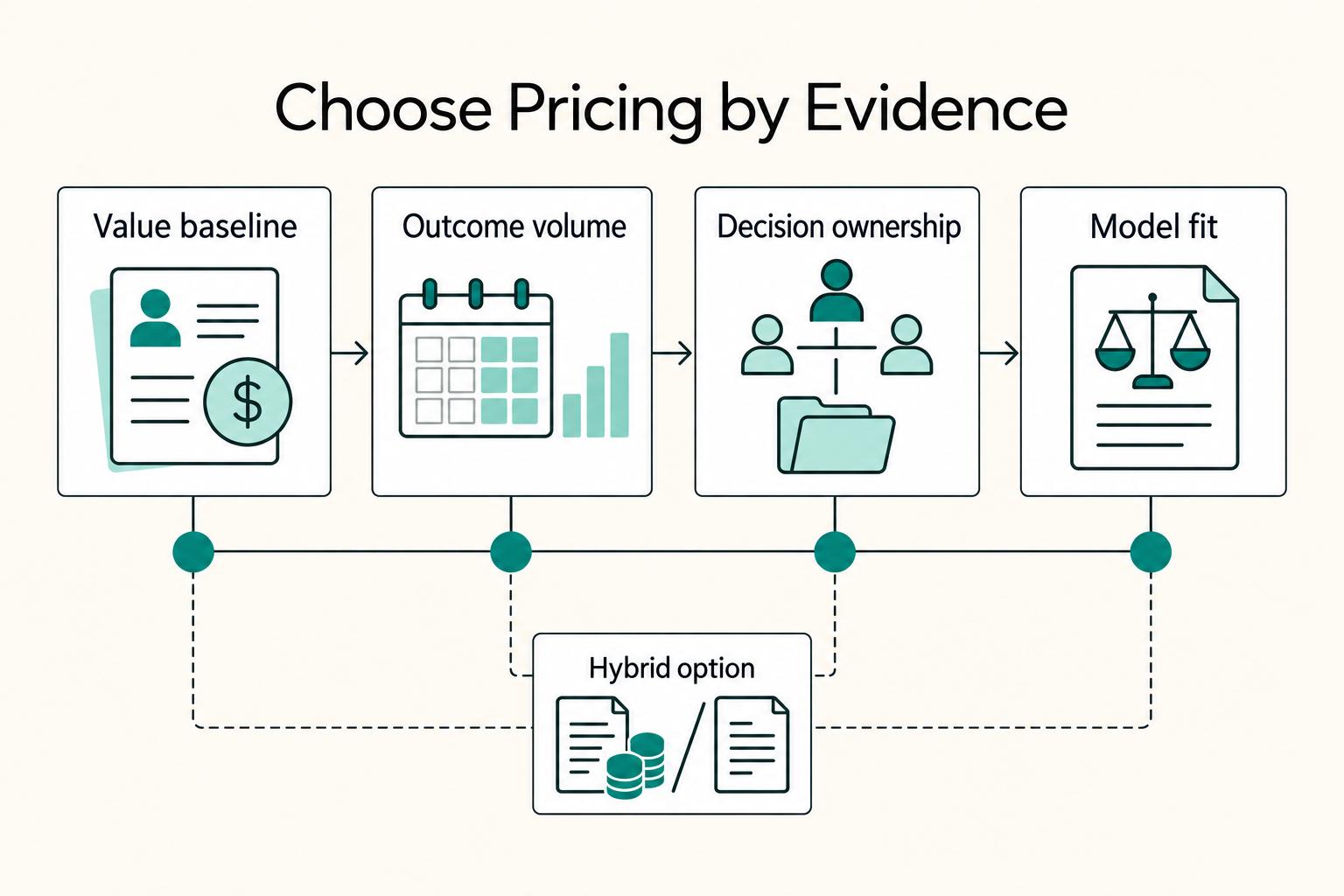
Value-based pricing works when you and the client can name the business result before kickoff and agree on how progress will be judged. If that link is weak, use a tighter model first. This is not about defending one pricing philosophy over another. It is about avoiding surprises by keeping pricing, scope, delivery, and payment aligned from day one.

The Best Travel Backpacks for Digital Nomads
Start by ruling out bad fits, not by chasing a universal winner. If a bag does not match how you move, how you work, or what you can comfortably carry, drop it early. That matters far more than one extra pocket or a slick product page.
Backcountry Cooking for Multi-Day Hikes Without Meal Failures
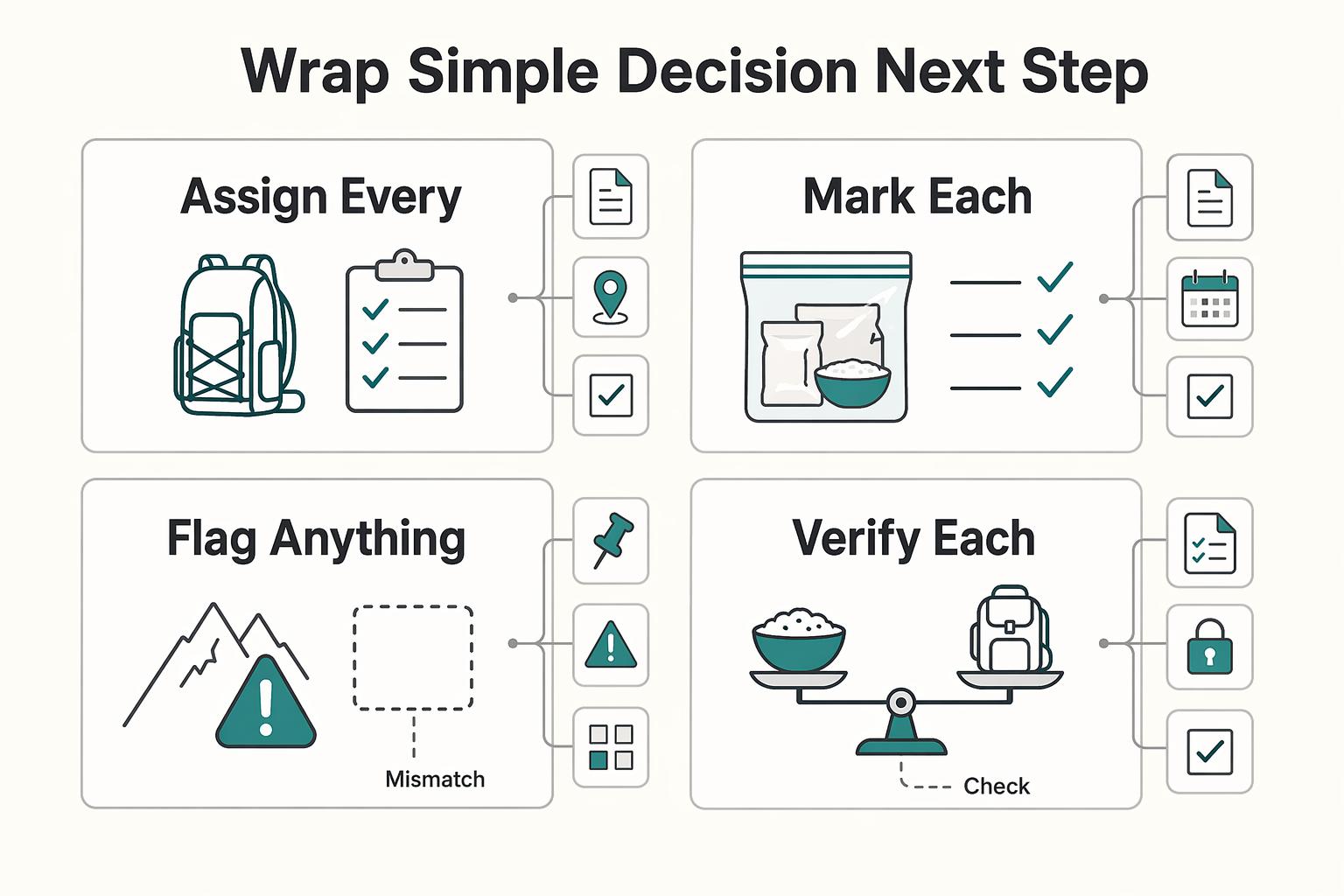
Backcountry cooking is a planning problem before it becomes a food problem. Start by thinking about the tradeoffs you will actually feel on trail: carried weight, water needs, fuel use, cleanup, and how much effort you can handle when you reach camp tired.