
Quick Answer
Start with the best at-home workout equipment that solves your main bottleneck first: time, space, progression, or recovery. In most small spaces, a compact strength base like adjustable dumbbells, bands, or a bodyweight plan is the practical first move, with resilience and travel add-ons layered in later. Use a pre-buy check for schedule fit, storage friction, progression room, and portability so each purchase supports consistent training instead of becoming clutter.
Start from your weekly plan, then build the kit in three tiers#
If you're choosing at-home workout equipment for a small space, start with your weekly plan, not a product list. The goal is a setup you'll use consistently so you can work toward the CDC weekly target: 150 minutes of moderate activity or 75 minutes of vigorous activity, plus 2 days of muscle-strengthening work, without filling your home with low-use gear.
This framework is for independent professionals who need training that stays practical and repeatable. The core idea is simple: consistency and effort drive results, and you can make progress at home with weights, bands, or bodyweight.
| Decision point | Random equipment buying | Asset-stack approach |
|---|---|---|
| First purchase | Trendy or impressive gear | Tools that make your 2 weekly strength sessions easier to complete |
| Space use | Single-purpose items pile up | Each item earns space through versatility or portability |
| Typical outcome | More gear and less follow-through | Fewer tools, a clearer plan, and better consistency |
- Tier 1: Core Performance Engine
Pick the minimum tools that let you train quickly and repeatably in a small space. This can improve time efficiency and reduce setup friction.
- Tier 2: Resilience and Risk Mitigation
Add options that help you keep training when schedule, energy, or joint tolerance changes. This can support more consistent strength work across real-life weeks.
- Tier 3: Optimization and Portability
Use portable tools and simple tracking to split sessions and stay on plan during travel or heavy work periods. This can help maintain continuity when routines get disrupted.
Before you buy anything, do one quick check: map your two weekly strength sessions, where each item will live, and what you will use on travel weeks. If you can't tie a purchase to that plan, it is probably clutter, not the right setup.
If you want a deeper dive, read The Best Ergonomic Gear for Your Remote Work Setup.
Tier 1: The Core Performance Engine (How to Maximize Your Time ROI)#
Once your two weekly strength sessions are mapped, keep Tier 1 simple. Choose the setup you can start quickly, store cleanly, and repeat without overthinking. In a small space, that usually means a compact manual base first and tech only where it removes real friction.
What qualifies as your core engine#
Your core performance engine is the smallest setup that reliably gets your main strength sessions done with low friction. In practice, start with a manual gym kit base, then add selectively.
| Option | Setup friction | Workout guidance quality | Footprint flexibility | Total cost of ownership | Better fit when |
|---|---|---|---|---|---|
| Manual gym kit base (non-electronic) | Low once your base is set | Depends on your plan or app | Usually high if you keep the kit minimal | Varies by what you buy; confirm prices before you commit | You want a base that works on its own |
| Compact free-weight base with adjustable dumbbells | Medium, then low once equipment has a fixed home | Medium, based on your own plan or app | High; adjustable dumbbells are compact and space-saving | Varies; watch for durability and limited-weight tradeoffs | You want versatility and can run a simple plan yourself |
| Stationary bike as an add-on to a manual base | Medium | Low to medium, based on your plan | Depends on model and room setup; check the specs against your room | Varies by bike and upkeep; confirm both before you commit | You want safe, comfortable steady sessions and accept tradeoffs like lower calorie burn or seat discomfort |
If you want a setup that still works without paid software, start with a manual kit. If decision fatigue is your main blocker, add guidance deliberately. Tech should support your base, not replace it.
Choose your default workout path#
Consistency can drop when there are too many choices. Set one default path you can repeat every week.
- Pick two fixed session templates, such as Session A and Session B.
- Decide your guidance level now: built-in coaching if you stall on exercise selection, or a saved simple plan if you do not.
- Set a low-friction start rule: if setup feels cumbersome, simplify the setup.
- Confirm your setup can cover push, pull, squat, and hinge patterns before buying.
Use a renter-friendly screen before you buy#
Before you compare models, screen the room. A setup that looks efficient online can still be a poor fit if it needs mounting you can't use, creates noise issues, or blocks how you live and work in the space.
- Check mounting needs against your lease and wall constraints before purchase.
- Rehearse clearance in the actual room so the setup works in use, not just on paper.
- Screen for noise and vibration if you share walls or floors, or train early or late.
- Assign a storage home for every item so gear does not spill into walkways or work zones.
- Check room flow after setup: doors, desk access, and normal movement should still work.
One last filter: prefer reviews that mention flaws, not just benefits. That is how you catch tradeoffs early, including durability limits, weight limits, or the risk that a tech buy becomes unused clutter. If you rely on product roundups, remember that some publishers disclose affiliate commissions on product links.
Related: How to Integrate Calendly with Your Website.
Tier 2: The Resilience & Risk Mitigation Layer (How to Insure Your Primary Asset)#
After Tier 1, add tools that can help you train with better control and fewer setbacks. In a small space, the goal is straightforward: make load progression manageable, keep movement quality high, and make recovery easy to repeat so you can sustain strength work on 2 days/week across major muscle groups.
| Equipment type | Primary training risk it can help manage | Space and storage demands | Best user profile |
|---|---|---|---|
| Adjustable dumbbells | Form breakdown from oversized load jumps or limited exercise options | Compact overall in many home setups; needs a consistent storage spot and clear lifting area | You want full-body strength options without a full rack |
| Functional trainer option | Inconsistent setup or low control on movements where guided paths help | Can require more dedicated space and usually fixed placement | You want guided movement paths and repeatable cable patterns |
| Mobility tools | Skipped recovery, stiffness, and reduced range that can make sessions harder to execute | Low storage demand; works best when kept visible | You sit for long hours or need a low-friction recovery routine |
Adjustable dumbbells#
For most small-space setups, adjustable dumbbells are often the first resilience upgrade. They replace multiple fixed pairs while staying compact, which gives you broad strength coverage without turning your room into a full gym.
Choose based on control, not marketing: look for quick weight changes, manageable jumps between settings, and a shape that works across presses, rows, split squats, and carries. Keep them in a fixed, easy-access location so setup friction stays low.
Use a conservative load rule: start with a weight you can control for 12 to 15 repetitions, then increase slowly only while technique stays clean. If the jumps are too large for pressing or shoulder work, that is a practical red flag.
Free weights are useful, but not automatically superior. Both free weights and machines can build strength effectively, so the case for dumbbells here is mainly space efficiency and versatility.
Functional trainer option#
A functional trainer can make sense if you have a permanent training corner and enough clearance to use it comfortably. The advantage is more controlled positioning and a predictable load path, which can make repeatable movement easier.
This makes the most sense when you want consistent rows, presses, pull-throughs, face pulls, and anti-rotation work with less setup variability. If guided movement helps you keep form cleaner, this tier may improve continuity.
Screen hard before buying: confirm placement in your real room, confirm lease or mounting constraints, and confirm lighter settings are usable for your current level. If it blocks normal room flow or duplicates what Tier 1 already covers, skip it.
Mobility tools#
Keep this pillar simple and visible. A foam roller can support short-term range-of-motion improvement and short-term pain relief, which can make it easier to show up for sessions consistently.
Treat mobility gear as support, not a guarantee. Evidence for injury prevention is limited or inconclusive, so use it to improve readiness and consistency, not as a fix for poor loading or degraded technique.
A light elastic band or tube is a practical add-on in small spaces: portable, low-cost, and effective enough to support warm-ups, accessory work, or travel continuity.
Minimum viable resilience kit#
If you want a simple Tier 2 build, keep it to the essentials:
| Component | Use | Note |
|---|---|---|
| Adjustable dumbbell set | Fits your current program and allows gradual progression | [verify range and increment pattern] |
| Optional functional trainer | Only if you have fixed placement, real clearance, and lease-friendly setup | Check mounting or placement needs before you buy |
| Foam roller | Keep visible and use regularly | Check preferred length and firmness before you buy |
| Light elastic band or tube | Warm-ups, joint prep, and travel backup | [verify resistance level] |
| Written load rule | Use loads you can control for 12 to 15 reps | Progress slowly only when technique stays consistent |
That gives you progression, recovery support, and a travel backup without overbuilding the room.
You might also find this useful: The Best Air Purifiers for a Home Office.
Tier 3: The Optimization & Portability Toolkit (How to Achieve Data-Driven Gains & Global Readiness)#
Use Tier 3 only if it improves your weekly decisions or helps you stay consistent while traveling. If Tier 1 and Tier 2 already keep you training, this tier is optional.
This layer matters most when your schedule shifts, you cross time zones, or you spend enough nights away that your routine breaks. It is also where restraint matters. Even in 2026 roundups, smart-home-gym pricing can be high. For example, Tonal 2 was listed at $4,295. Avoid adding tools that do not solve a real problem for your space, style, and goals.
Use wearables as a decision aid, not a decision maker#
Use a wearable if it helps you spot patterns, not if it pushes you to overreact to one score. Prioritize repeatable signals like sleep patterns, general recovery trends, and how those readings line up with your actual sessions.
Trust the device only after you see consistency over time. If readings regularly clash with how you feel and perform, treat that data as partial input, not a command.
If data is missing or inconsistent, use a simple fallback check: how you slept, how sore or stiff you feel, and how your warm-up feels. Recovery still happens during rest, so if readiness looks low, adjust the session instead of forcing intensity.
When buying optimization tools, prefer review sources that clearly show when they were updated and how they were reviewed.
Run a simple readiness check#
If this helps, use it as a practical framework once a week, then run a quick version before each workout. The point is to guide decisions, not to follow a validated formula.
| Signal | Signs | Action |
|---|---|---|
| Green | Sleep and warm-up feel normal, and your trends look stable | Keep your planned session and progress only while technique stays clean |
| Yellow | Travel, poor sleep, soreness, or unclear data is present | Keep training, but reduce complexity or effort with simpler movements, fewer hard sets, or a shorter session |
| Red | Multiple signals are off, and warm-up confirms low readiness | Switch to a fallback session such as a walk, mobility, light band work, or a technique-only circuit |
Use the labels to make a practical adjustment, not to build a more complicated system.
Pack for the trip you actually have#
Pack for your real constraints, not your ideal routine. Travel gear should be versatile, durable, and easy to use in the room you actually have.
| Item | When to pack it | Use case |
|---|---|---|
| Loop band or tube | Short trips, carry-on travel, uncertain setup | Warm-ups, light strength, accessory work |
| Mini band | Trips where stiffness from sitting is likely | Activation, quick mobility, joint prep |
| Jump rope | When ceiling height and floor impact are workable | Short conditioning sessions |
| Suspension trainer | Longer trips where you want more exercise variety | Full-body bodyweight strength with a secure anchor point |
| Compact foam roller | Longer stays or high sitting or travel load | Short-term range-of-motion and pain-relief support |
Check the setup before you pack. If an item needs anchor points, floor space, or low noise, confirm that in advance so it does not become dead weight.
Choose a minimalist or expanded kit#
Pick one kit per trip to avoid overpacking.
- Minimalist kit: One loop band or tube plus one mini band. Best when baggage space is tight and you need a reliable baseline routine.
- Expanded kit: Start with the minimalist kit, then add one larger item, such as a suspension trainer or compact foam roller, for longer stays with better setup conditions.
For frequent travel, the practical choice is the gear you will actually pack, set up quickly, and use consistently when your normal routine is disrupted.
For a step-by-step walkthrough, see The Best Smart Home Devices for an Airbnb.
If you're building a travel-ready routine, keep your cash flow just as portable with the free invoice generator.
The Strategic Decision: Building Your Asset Stack#
The best at-home workout equipment is the setup you can use consistently with your real schedule, space, and travel pattern. Start with fit-to-life decisions first, then add gear only when your routine is stable.
Ask one practical question first: what fails first in your routine right now - time, space, strength progression, or recovery? Your answer usually tells you where to start.
| Starting path | Best fit | Tradeoffs | Space impact | Commitment required |
|---|---|---|---|---|
| Portable-first | Travel-heavy weeks, changing locations, shorter sessions | Progress can depend on what setup is available where you are | Low | Moderate, because you need a repeatable travel habit |
| Strength-first | You want muscle-strengthening work at home at least 2 days/week and clearer progression | Can require dedicated storage and is less portable | Medium | High, because progression depends on scheduled sessions |
| Recovery-first | You need a low-friction restart point | Not enough on its own to meet full weekly aerobic and strength targets | Low | Low to moderate, if it leads back into regular training |
Follow the tiers in order#
Pick one starting tier, not all three. A minimum viable kit can stay small: body-weight training is a valid base, and resistance bands are a practical small-space option because they are affordable, versatile, and easy to use. If you travel often, bands are also portable enough for a carry bag.
Before you buy more, lock in the operating plan: where gear will live, when you will train, and whether your week can realistically support at least 150 minutes of moderate activity or 75 minutes of vigorous activity, plus muscle-strengthening work at least 2 days/week. If your days are fragmented, split sessions into 10- to 15-minute blocks.
Use this pre-buy check#
Use this checkpoint before any purchase:
| Check | Question |
|---|---|
| Daily schedule fit | Do you have specific workout times in your week? |
| Storage friction | Can you store and access the setup without disrupting daily living space? |
| Progression potential | If you start slowly, can this setup still challenge you as you build up? |
| Portability needs | If you travel, can this kit go with you and still work where you stay? |
If several answers are weak, start with less equipment and a simpler plan.
For another small-space buying example, see The Best Tea Kettles for a Home Office.
Once your fitness stack is set, tighten the operational side of your solo business with Gruv's tools.
Frequently Asked Questions
What should you buy first if your space is tight?
Start with multi-use strength tools, especially adjustable dumbbells. Adjustable dumbbells combine multiple weight options into one compact set and are a practical fit for apartments or storage-limited rooms. Choose this path when you want broad training coverage without giving a full room to one machine.
How much space do you actually need for a usable home setup?
Measure first, then buy. A common planning reference for larger setups is about 100-150 square feet, roughly 10' x 10' to 10' x 15', but that is not a universal requirement. Use this as a checkpoint when deciding what part of your home can support regular training.
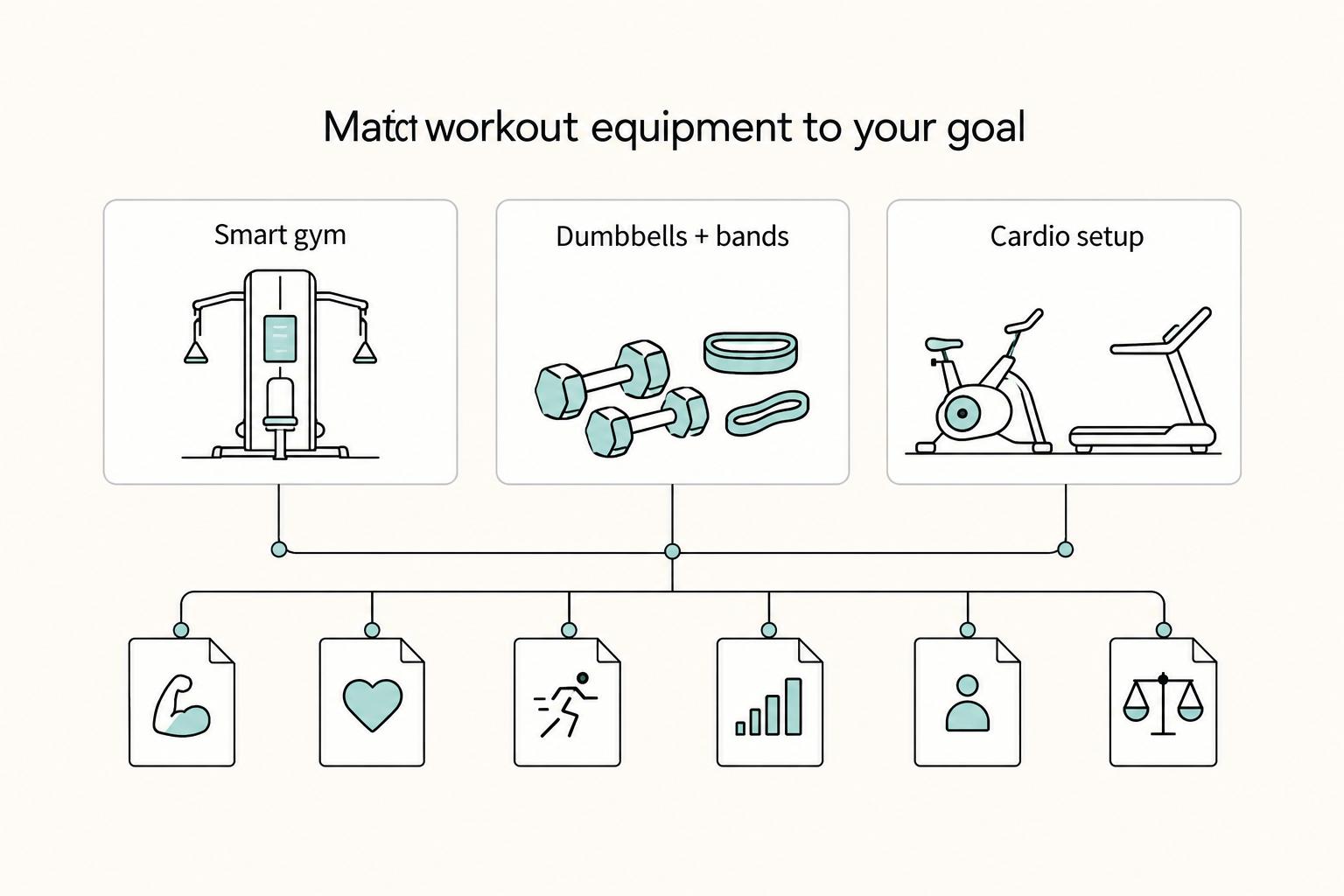
Should you choose a smart gym, adjustable dumbbells plus bands, or a cardio-first setup?
Choose based on your primary goal and your real routine, not product hype. Use this quick comparison to narrow your shortlist before you compare specific models. | Buyer choice | Space fit | Training coverage | Convenience | Likely tradeoffs | |---|---|---|---|---| | All-in-one smart gym | Varies by model and whether you can dedicate a fixed training zone | Varies by model | Varies by setup and routine | Compare space fit and included features before buying | | Adjustable dumbbells plus bands | Strong fit for apartments and storage-limited rooms | Supports multiple training uses | High because weight changes are quick and storage is simple | Progress depends on picking a setup that matches your goals and current level | | Cardio-first setup | Depends on the machine footprint | Best when endurance is the primary goal | Can be convenient if it fits your routine | If it does not match your main goal, it is more likely to go unused |
Are smart home gyms worth it for a busy schedule?
They are most useful when lack of time and convenience are the main barriers to consistency. A home setup can reduce travel time and recurring gym-fee friction, but only if you use it consistently. Decide after you confirm the option fits your space and routine.
What is the better small-space priority: cardio or strength equipment?
If you can buy only one category first, start with the option that matches your primary goal. In small spaces, versatile strength tools such as adjustable dumbbells can support multiple training uses in a compact footprint. Choose cardio first when endurance is your clear primary goal.
What helps lower injury risk when you are training at home?
Match equipment to your current fitness level and avoid overly advanced gear at the start. Buying advanced equipment too early can create overwhelm and increase injury risk. Start simpler and progress gradually.
What belongs in a travel-friendly kit?
Keep the kit minimal and easy to use in the contexts where you actually train. If your setup is hard to use in real life, it is more likely to sit unused and become clutter. If travel is a frequent constraint, see How to Stay Healthy and Fit While Traveling.
Try a related tool
Researched and edited by the Gruv editorial team. Gruv builds cross-border billing, payouts, and finance-operations software for global businesses.
Sources
Includes 2 external sources outside the trusted-domain allowlist.
- cdc.gov/physical-activity-basics/adding-adults/what-...trusted
- cdc.gov/healthy-weight-growth/physical-activity/gett...trusted
- health.harvard.edu/heart-health/create-a-customized-home-workou...trusted
- odphp.health.gov/sites/default/files/2019-09/Physical_Activit...trusted
- pmc.ncbi.nlm.nih.gov/articles/PMC5225122trusted
- pmc.ncbi.nlm.nih.gov/articles/PMC12067725trusted
- acsm.org/resistance-training-guidelines-update-2026external
- garagegymreviews.com/best-smart-home-gym-equipmentexternal
Educational content only. Not legal, tax, or financial advice.
Related Posts

How Remote Professionals Stay Healthy During Long Stays Abroad
Use this sequence before workload, housing, and travel friction make health tasks harder to execute. If you are traveling for months, treat this as four pass-fail gates. A gate is closed only when you have a written output you can verify.
The Best Ergonomic Gear for Your Remote Work Setup
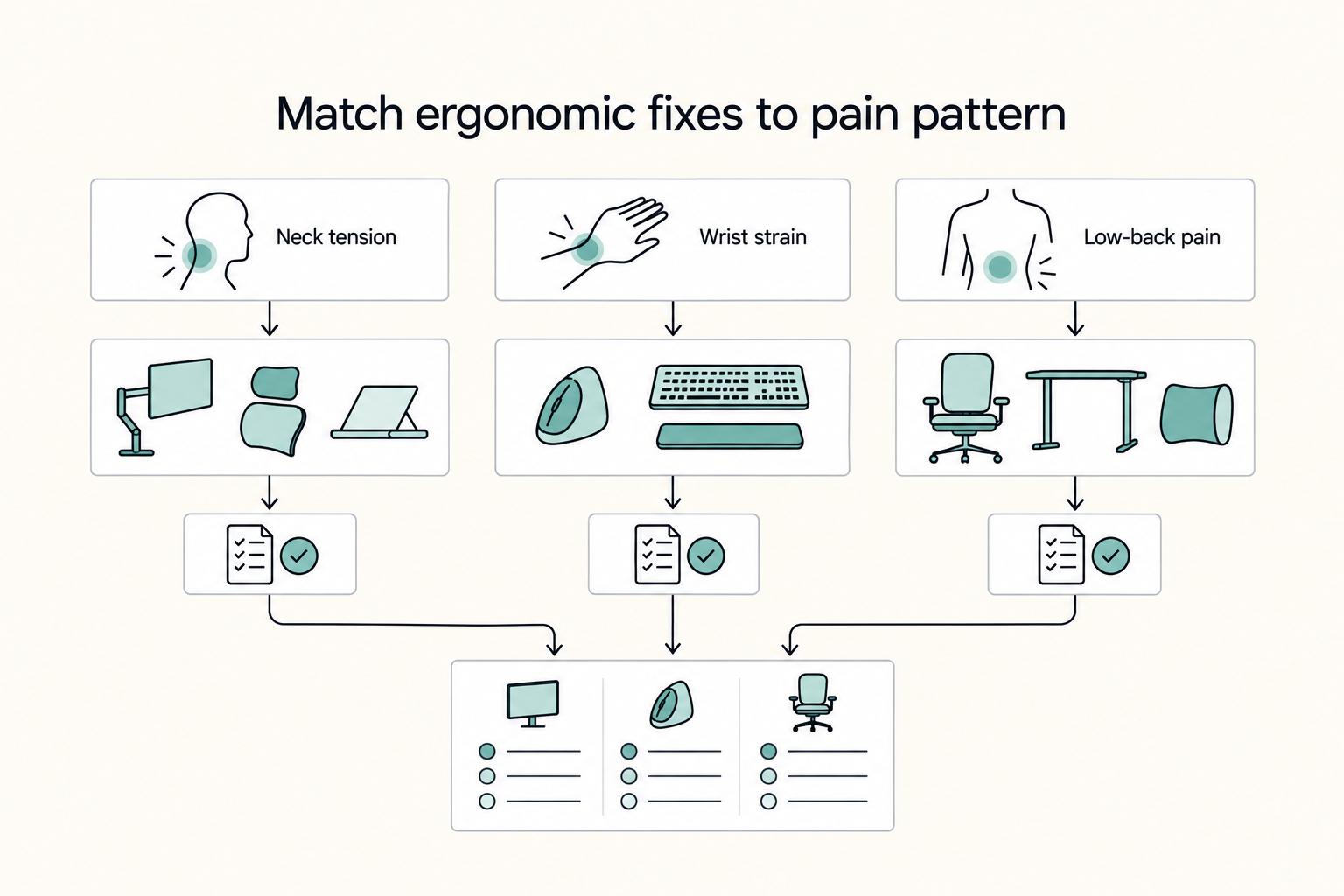
**Treat your ergonomic remote work setup as operating infrastructure, not a comfort splurge.** When posture breaks down, delivery quality and scheduling usually break down right after. Start by setting a baseline that protects your body and your business before you compare products.

How to Integrate Calendly with Your Website
Start with a simple three-step launch sequence: choose the embed path that fits the page, lock in your real availability, then validate the booking flow before you publish. That turns a Calendly embed into a client-facing booking process, not just a design element on the page.