
Quick Answer
Choose the best ats for startups by testing proof, not polish. Start with your risk profile, then require one live walkthrough from application to final disposition and handoff. Confirm user attribution, timestamps, role permissions, and visible retention or deletion behavior in-product. Score each demo as Pass, Conditional, or Fail, and move forward only when critical controls hold up under that check.
Your First Hires Are a Liability Until Proven Otherwise. Here's How to De-Risk the Process.#
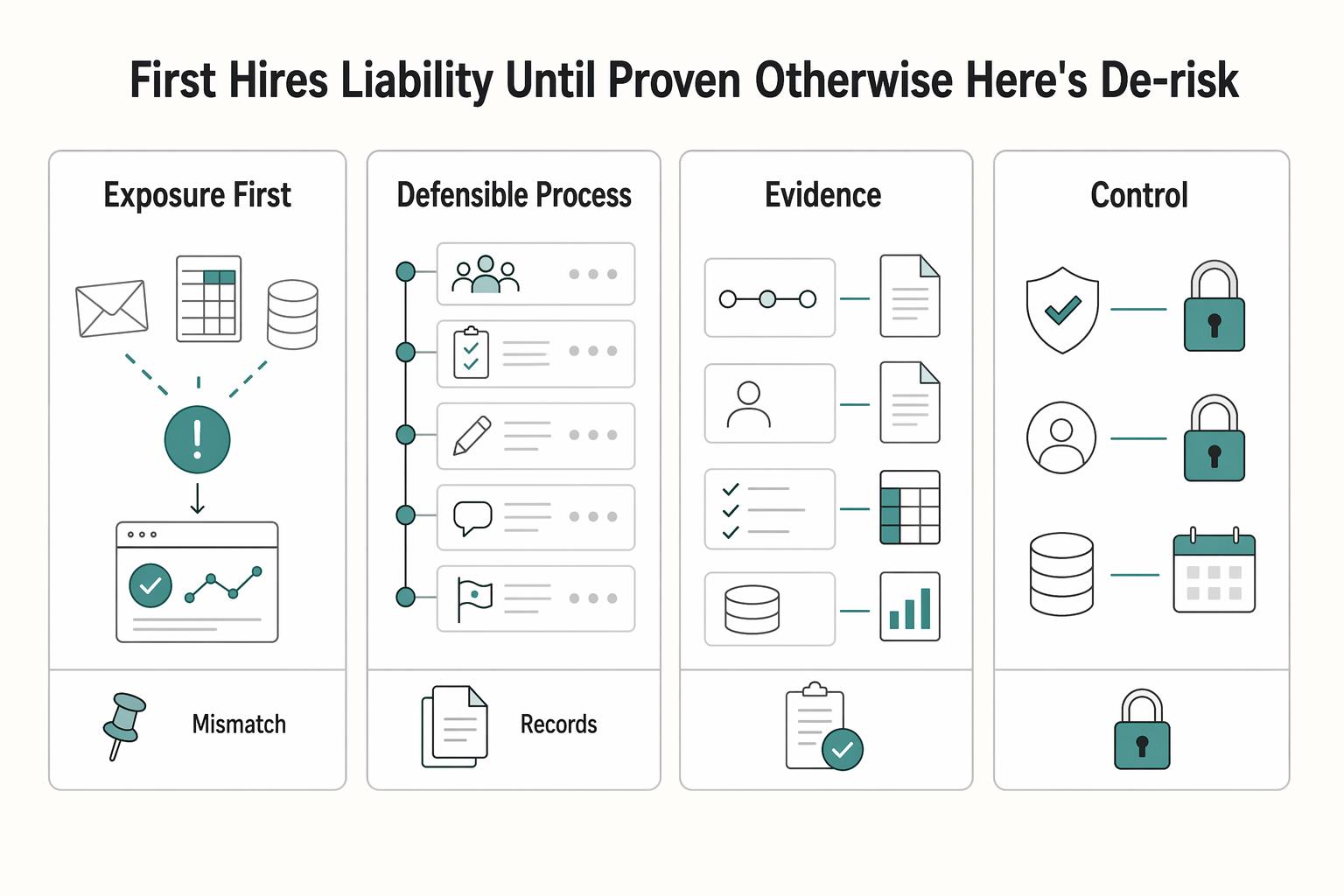
If you are comparing the best ats for startups, start with exposure, not features. Your first few hires create habits, records, and decision patterns that are hard to unwind later. The real question is not "which tool looks fastest?" but "which process stays defensible when someone asks why a decision was made, who touched the record, and what happened to the candidate's data?"
A defensible process is one you can repeat and support with records. That means clear stage history, consistent evaluation criteria, attributable notes, and evidence that candidate data was handled intentionally rather than scattered across inboxes, spreadsheets, and chat threads. Benchmarks on bad hire cost vary, so do not anchor on a number you have not verified. The practical risk is easier to see: inconsistent interviews, missing records, and weak proof when a dispute lands.
- Exposure first
Early hiring can create more risk than most founders expect because speed hides inconsistency. One interviewer uses a scorecard, another relies on memory, and a third keeps notes in email. Risk often shows up in process quality before it shows up in reporting. If hiring is moving fast, your recordkeeping standard needs to be tighter from day one.
- Defensible process
A hiring process becomes defensible when it is repeatable and supported by records during disputes. If different interviewers apply different standards to different candidates, your decision logic changes person to person. Every stage should have a purpose, every evaluation should map to known criteria, and every disposition should leave enough history behind to explain what happened without asking people to reconstruct it later.
- System of record
Your applicant tracking system should first act as the system of record: the place that preserves a usable history of hiring decisions, status changes, and candidate data handling. Retrieval is the test. If you cannot pull a clean candidate timeline, see who changed status, and verify what records exist from application through closeout, you do not have a reliable record base.
- Control layer
The same tool should also work as your control layer, where stages and evaluation criteria are standardized so candidates are assessed consistently. Constraint matters more than polish. A sleek dashboard does not help much if core controls are unclear or records are hard to trust. Before you sign, require one live walkthrough from application to final disposition and handoff.
Use that walkthrough as your red-flag test, especially for free tools. If a vendor cannot clearly explain auditability, compliance controls, and how its records would help in a hiring dispute, treat it as a temporary option at best, and only if records stay centralized and verifiable. Weak records and thin controls are survivable right up until you need proof.
This guide follows that order: first define your liability profile, then map the hiring path you actually need, and only after that compare tools on trust, control, and evidence quality.
Step 1: Assess Your Startup's Core Hiring Liability Profile#
Set your liability profile before demos: define what your hiring process must consistently capture and prove, then evaluate ATS options against that standard. This matters early, because manual handling can break down fast when one posting draws high application volume.
| Risk domain | Process check | ATS/vendor check | Proof step |
|---|---|---|---|
| U.S. hiring controls | Standardized stages, consistent screening flow, repeatable reviewer behavior | Configurable stages/forms, controlled reviewer access, clear status history, preserved notes, exportable hiring records | Verify current state/local and contractor-related requirements before go-live |
| Global privacy and data governance | Defined consent handling, retention decisions, deletion handling, controlled data access | Consent capture points, retention controls, deletion workflows, access logs you can review | Ask for a live walkthrough of consent capture, retention configuration, and deletion or restriction requests |
| Industry-specific buyer risk | Who approves access, how hiring decisions are documented, how vendor controls are reviewed | Security attestations, audit-trail integrity, role-based access controls, vendor governance materials, integration depth with HRIS, payroll, and background-check tools | Ask for evidence you can use in customer, auditor, or security reviews |
Use the checklist in this order:
- U.S. hiring controls
Treat consistency as the first control, not an afterthought.
- Confirm in your process: standardized stages, consistent screening flow, and repeatable reviewer behavior. - Confirm in the ATS: configurable stages/forms, controlled reviewer access, clear status history, preserved notes, and exportable hiring records for internal review. - Keep one open check in your rollout plan: confirm current state, local, and contractor-related requirements before go-live.
- Global privacy and data governance
If you handle candidate data across regions, governance has to be operational, not just policy text.
- Confirm in your process: defined consent handling, retention decisions, deletion handling, and controlled data access. - Confirm in the ATS: consent capture points, retention controls, deletion workflows, and access logs you can review. - Ask for a live walkthrough: where consent is captured, where retention is configured, and how deletion or restriction requests are processed.
- Industry-specific buyer risk
In regulated or security-sensitive environments, ATS selection is also a vendor-governance decision.
- Confirm in your process: who approves access, how hiring decisions are documented, and how vendor controls are reviewed. - Confirm in the ATS/vendor package: security attestations, audit-trail integrity, role-based access controls, and vendor governance materials. - Confirm cross-system integrity: integration depth with HRIS, payroll, and background-check tools, so your hiring record stays cohesive.
Keep one tradeoff in view: an ATS can centralize and organize hiring workflows, but it does not replace early sourcing. Related: What to Do If You've Been Misclassified as an Independent Contractor.
Step 2: Map Your "Autonomy-First" Hiring Workflow#
Define your hiring workflow before you evaluate tools, then reject any product that cannot keep that workflow consistent and defensible in one record.
| Stage | Define upfront | Verify in live walkthrough |
|---|---|---|
| Application intake | What counts as a qualified applicant, which screening criteria stay consistent, and how early dispositions are documented | Candidate history shows status and decision changes clearly, with attributable records across the stage |
| Interview evaluation | Standardized stage order and evaluation criteria, plus where interview notes and score inputs are recorded | The same candidate record preserves stage progression and evaluation records without gaps |
| Final disposition and handoff | Who owns final decisions, how closeout is recorded, and who owns handoff responsibilities | One end-to-end flow from application to final disposition and handoff is visible and reviewable |
- Stage 1: Application intake
Decide your intake rules first, then apply them consistently. If early decisions live in side channels like email threads, the process becomes hard to defend and hard to repeat.
- Stage 2: Interview evaluation
Standardize how candidates are assessed, not just how interviews are scheduled. Your ATS should act as both the control layer, with consistent stages and criteria, and the system of record, with a complete, reviewable candidate history.
- Stage 3: Final disposition and handoff
Treat closeout as an explicit workflow step with named ownership. Before signing, require one live walkthrough from application to final disposition and handoff.
These workflow decisions become your selection requirements in Step 3: complete candidate history, consistent stages, clear ownership, and verifiable records.
Step 3: Ditch the Feature List - Use a "Trust & Safety" Scorecard#
Use your Step 1 and Step 2 requirements as a weighted filter, not a feature checklist. If a tool cannot prove it works as a defensible system of record, remove it from your shortlist. Score trust and defensibility first, then feature depth.
| Criterion | Weight (set before demos) | Why it matters | Pass check | Fail check | Demo proof prompt |
|---|---|---|---|---|---|
| Compliance posture | Critical | You need controls that match the GDPR or U.S. workflows you actually run. | Vendor shows clear handling for retention, deletion, and access restrictions in your scope. | Answers stay at policy slides or future promises, without product or documented evidence. | "Show deletion workflow evidence." "Show retention settings, or where they are governed." "Show access controls tied to candidate data." |
| Audit-trail defensibility | Critical | If a decision is challenged, your defense is the record. | You can follow one candidate end-to-end with visible user attribution and timestamps. | History is partial, unclear, or not usable as a defensible record. | "Show me the exact audit log path." "Open one candidate history and show who changed status and when." |
| Workflow control fit | High | The system should enforce consistent stages and evaluation flow. | Vendor demonstrates your stage model in-product and preserves complete candidate history through final disposition. | Stage controls are inconsistent, or history cannot be reliably tracked end-to-end. | "Run our stage flow live from application to final disposition." "Show the full candidate timeline across each stage." |
| Integration and governance fit | High | Handoffs should stay controlled and verifiable. | Vendor demonstrates ATS-to-HRIS handoff and role-based permission granularity in-product. | Integration is described in slides only, or permissions are too coarse for your workflow. | "Show the HRIS handoff, not the logo slide." "Show permission granularity by role." |
Treat unverified claims as Conditional, not Pass, until evidence is provided.
Right after each demo, mark each row Pass, Conditional, or Fail while details are fresh. Move only tools that pass all critical rows to the next stage, and carry at most one conditional option with specific evidence due.
The Glaring Compliance Blind Spot: Is a "Free" ATS an Asset or a Liability?#
A free ATS is an asset only if it works as a defensible system of record; otherwise, it is a liability. Screen for record quality and control evidence first, and only then compare price.
| Control area | Acceptable for your stage | Disqualifying gap |
|---|---|---|
| Audit trail | You can retrieve one candidate's full activity history with user attribution and timestamps. | History is partial, editable without trace, or split across inboxes and spreadsheets. |
| Access control | You can show role-based access and who can view sensitive candidate details. | Access is broad, informal, or unclear about who can view/export data. |
| Data handling | You can show how retention and deletion actions are handled for your U.S., GDPR, or industry-specific obligations. | The answer is deferred, unclear, or unsupported by a visible record. |
System of Record Test#
Run these checks in the live product, not a slide deck:
| Check | Ask to see | Confirm |
|---|---|---|
| History retrieval | Open one rejected candidate from application to final disposition. | Each material action is attributable and timestamped. |
| Access evidence | Access logs (or equivalent access history) for that record, plus current role permissions. | Who could see what, and when. |
| Deletion or retention proof | One completed deletion or retention action and the remaining record state. | Evidence in product behavior, not policy-only language. |
Treat speed and AI claims as conditional until these controls are verified. Total cost is not just subscription price: weak controls can force manual re-entry at handoff and create cleanup risk later. If a free tool fails these checks, use it only as a temporary option, then move only survivors into your Trust & Safety scorecard.
Stop Buying a Tool, Start Building a System#
If you have not defined the hiring record you need, you are not ready to compare vendors. The core decision is not interface polish. It is whether your process stays consistent and reviewable as more people touch candidate records.
| Decision area | Tool first | System first |
|---|---|---|
| What you evaluate | Feature list and UI polish | Risks, stage rules, and record requirements |
| How you implement | Team adapts to default setup | Tool mirrors your intake, decisions, and handoffs |
| What usually breaks | Fragmented tracking, buried feedback, candidate loss | Clearer closeout and fewer process gaps |
Use this practical sequence:
- Define your risk profile
Start with the failures you cannot absorb: candidate loss, inconsistent decisions, or weak closeout records. Manual, inbox-and-spreadsheet hiring often breaks down as posting volume rises, so write this down before demos.
Output: a one-page risk memo with required records, required approvers, and a clearly marked budget line to complete after vendor costs are verified.
- Write the workflow you expect the tool to mirror
Put your real process on one page and name the fields. At minimum, define a status taxonomy such as New, Screening, Interview, Offer, Hired, Rejected, who can move each stage, and what evidence must exist before each move. If rejection handling matters, require a trigger tied to Rejected so follow-up is not left to memory.
Output: a stage map with owners, move rules, and required evidence. For a practical hiring example, see How to Hire Your First Salesperson.
- Run one live scenario and capture proof
In the demo, have the rep move one candidate from application through interview to rejection or hire and closeout while you watch the record update. Confirm the workflow view, including Kanban View if used, still preserves stage history and decision context.
Output: a pass/fail checklist from one end-to-end scenario.
After selection, keep a simple operating cadence: assign one owner for setup and one for final closeout, document stage-move rules, and review on a recurring schedule plus whenever drift appears. Drift signals are practical: candidates falling through gaps, feedback getting buried, or teams reverting to manual side channels.
Frequently Asked Questions
How do you choose an ATS that lowers hiring risk?
Start by treating the tool as the record of what happened, not just a prettier hiring board. In the demo, ask to open one rejected candidate from application to final disposition and verify timestamps, user attribution, current permissions, and one completed deletion or retention action. If the rep can only describe these controls in policy language and cannot show them in the product, you are looking at unproven risk, not a missing feature.
When is a free ATS enough, and when should you pay?
A free tool can be acceptable when hiring is still light and simple, especially in the "under 50 hires annually" range cited by one small business guide, but only if it passes the same record, access, and retention checks as a paid product. Move up when more than one person is touching candidates, when stage visibility breaks down, or when people start emailing candidates different things and no one can tell which message is current. Pricing is noisy across the market, with some startup guides citing roughly $19 to $99 per month, some saying many tools start around $200 per month, and higher-priced tools at $500+ with enterprise tools around $10,000+ per year. Treat list prices as directional until vendor verified.
How should employee and contractor pipelines differ?
Keep the decision paths separate enough that your team collects the right records, assigns the right owner, and avoids a dead end at offer stage that later forces manual re-entry. If the engagement itself is blurry, fix that before tool setup and review What to Do If You've Been Misclassified as an Independent Contractor. | Hiring path | Primary record focus | Typical review | Final handoff owner | | --- | --- | --- | --- | | Employee | Role brief, interview notes, scorecards, offer decision | Structured interviews and approval for an ongoing role | Hiring manager plus people or ops | | Contractor | Scope summary, evaluation notes, engagement details | Scope, commercial terms, and approval to engage | Hiring manager plus finance or ops | | Shared closeout | Complete candidate history and final disposition | Confirm record is complete before handoff | One named owner for closeout | The big failure mode is a standalone ATS trap where the process stops at offer and someone retypes data into onboarding, payroll, or HR. That manual re-entry is where compliance gaps, delayed onboarding, and lost momentum tend to show up.
Which hiring metrics actually matter first?
Start with a small set of metrics your tool can report consistently, such as time to fill, stage conversion, source quality, and offer acceptance. If one turns in the wrong direction, inspect the stuck stage, approval lag, or interviewer response time before blaming the market. Also remember that an ATS mainly tracks inbound applicants. It does not replace early sourcing, so weak source quality may be a sourcing problem as much as a reporting problem. For a practical role example, see How to Hire Your First Salesperson.
Can an ATS reduce bias in hiring?
It can support more consistent evaluation, but it does not create fairness on its own. The useful test is simple: open one closed role and confirm interviewers used the same scorecard and criteria instead of free-form notes scattered across email or chat. If judgment is still ad hoc, the software is only storing inconsistent decisions more neatly.
What should you verify before you sign?
Run one live scenario from start to finish in the same session: job posting, candidate tracking, stage changes, rejection, closeout, and the handoff after hire. Then ask for the compliance proof that matters to your situation, such as GDPR Article 17 retention handling, localized tax form collection, or right-to-work verification across jurisdictions. If the answers depend on slideware, future roadmap promises, or "our team can configure that later," pause the deal until you see product-level proof.
Try a related tool
Researched and edited by the Gruv editorial team. Gruv builds cross-border billing, payouts, and finance-operations software for global businesses.
Sources
Includes 7 external sources outside the trusted-domain allowlist.
- gsa.gov/system/files/2018_P100_Final_5-7-19_compress...trusted
- aitable.ai/blog/stop-paying-for-ats-build-hiring-pipelineexternal
- appintent.com/software/human-resources/applicant-trackingexternal
- arc.dev/employer-blog/13-best-ats-for-startups-ashby...external
- deel.com/blog/7-best-ats-for-smbs-startups-2026external
- deel.com/blog/ats-for-startupsexternal
- dover.com/blog/best-ats-for-small-businessexternal
- fugo.ai/blog/best-applicant-tracking-systems-for-sma...external
Educational content only. Not legal, tax, or financial advice.
Related Posts
Value-Based Pricing for Freelancers Under Real Payment Risk
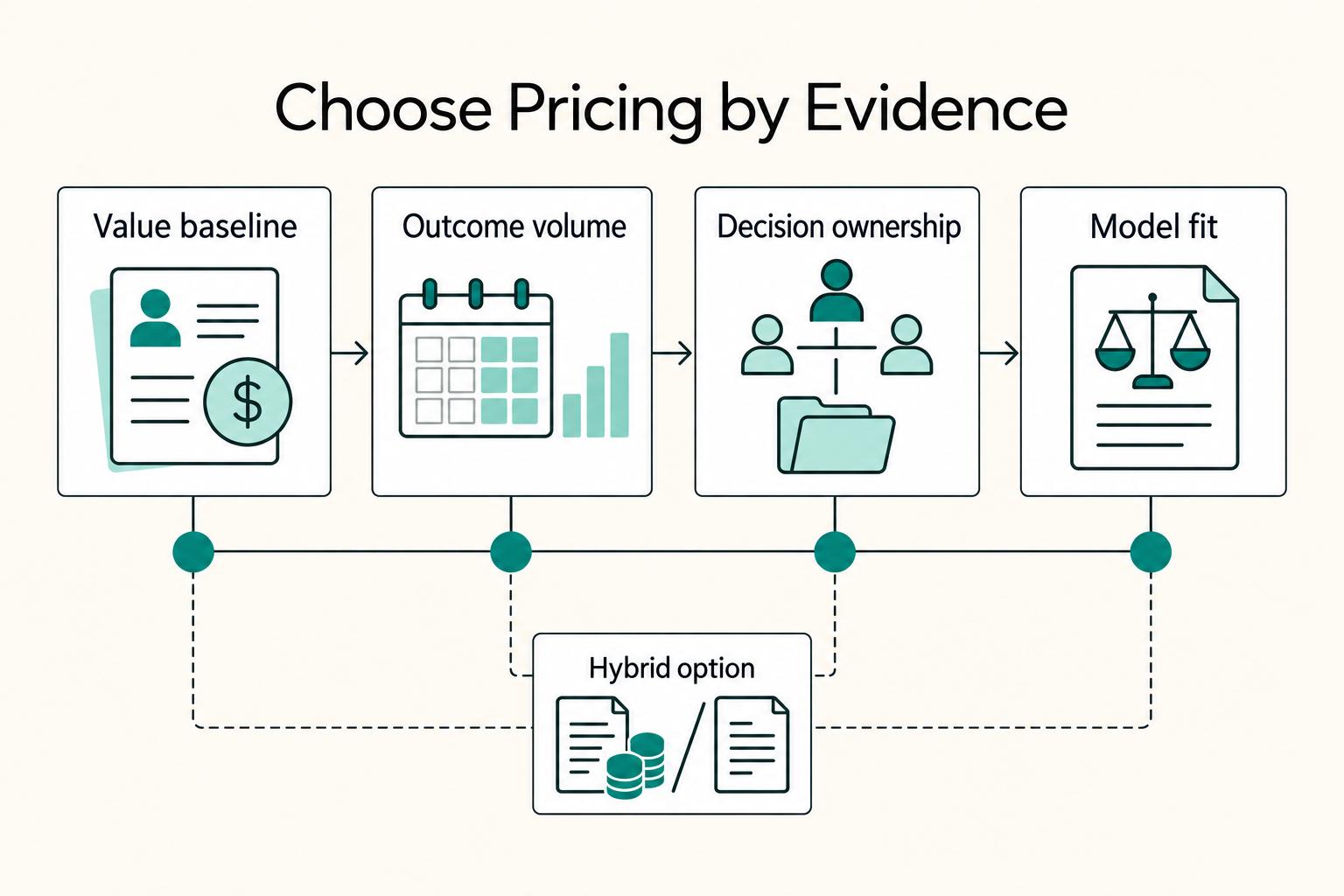
Value-based pricing works when you and the client can name the business result before kickoff and agree on how progress will be judged. If that link is weak, use a tighter model first. This is not about defending one pricing philosophy over another. It is about avoiding surprises by keeping pricing, scope, delivery, and payment aligned from day one.

What to Do If You've Been Misclassified as an Independent Contractor
Treat this as a protection problem first, not a label debate. If your work was treated as an independent contractor arrangement even though the relationship functioned differently, your first goal is to protect pay, rights, and records while you choose the least risky escalation path. You can do that without making accusations on day one, which often keeps communication open while you document what happened.
How to Hire Your First Salesperson
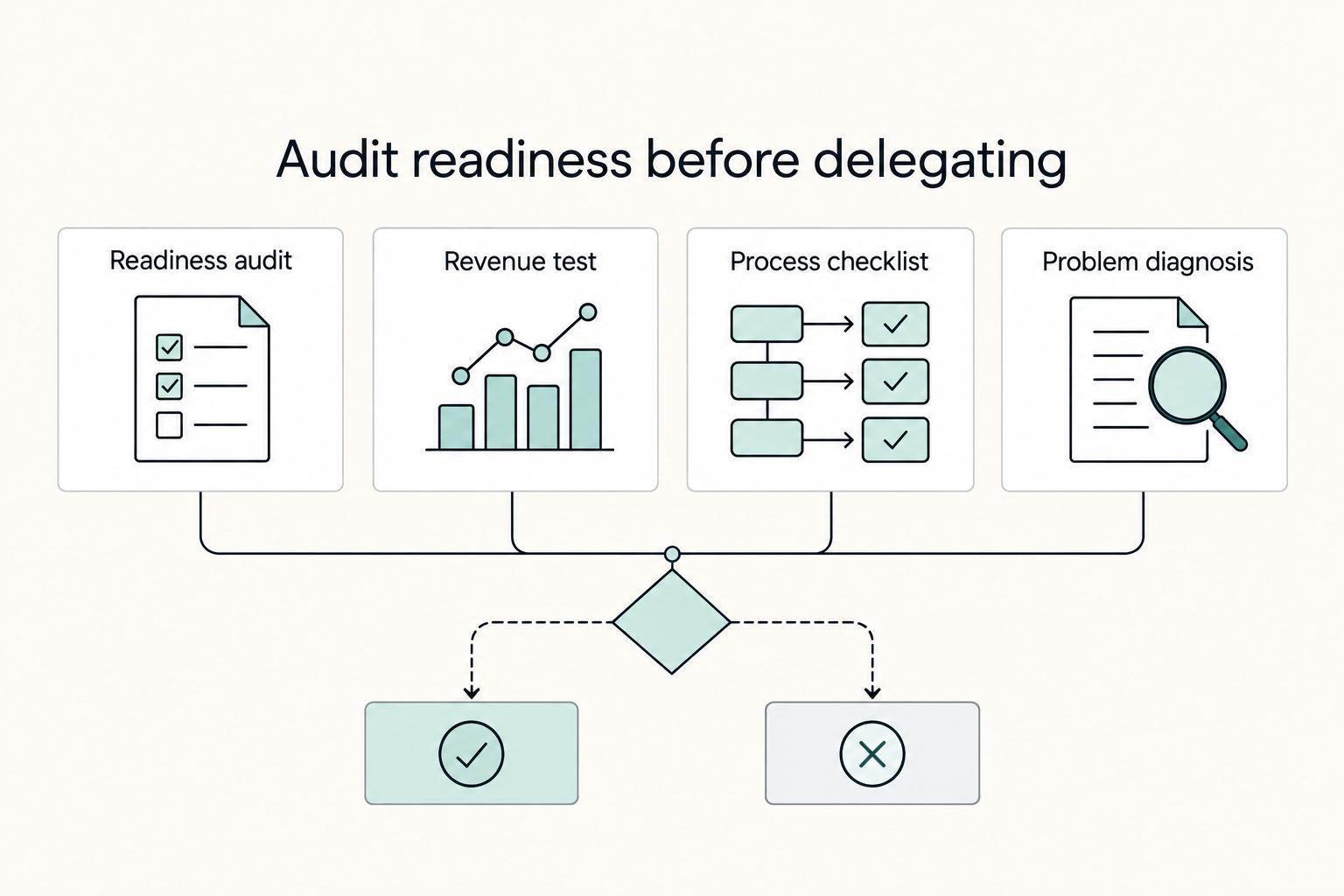
The decision to bring on your first salesperson begins not with a job description, but with a hard look in the mirror. This hire is an investment that goes far beyond salary; it's a strategic commitment of cash, time, and trust. Get this wrong, and you risk not only a significant financial loss but also damage to your brand and morale. Get it right, and you build the foundation for scalable growth.