
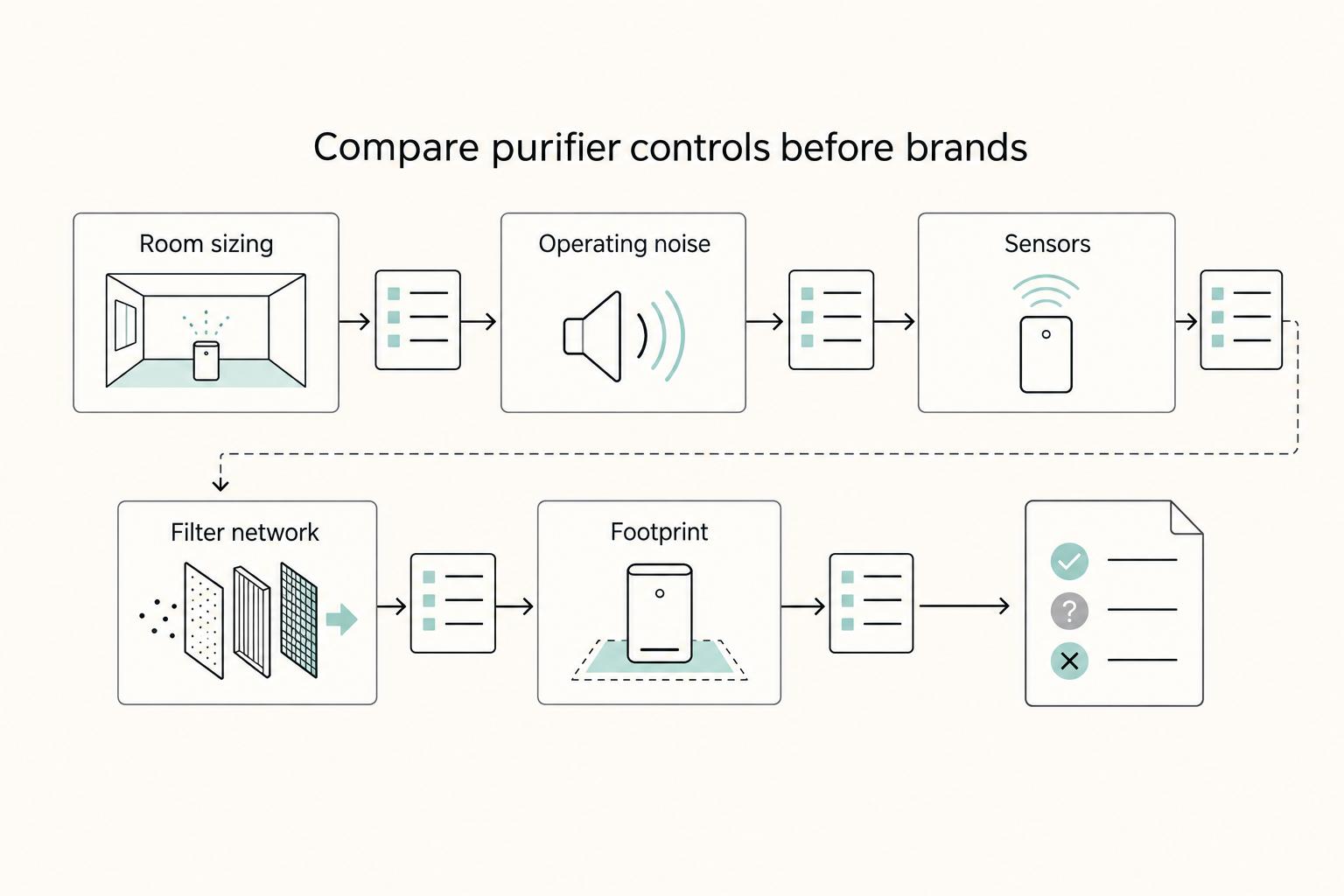
Quick Answer
Yes. Pick a unit only after you identify whether your room problems are mainly particles, odors, allergens, or stale-air buildup. Keep models that publish smoke CADR and clear room-basis assumptions, and use AHAM’s two-thirds rule for first-pass sizing, with a size-up when ceilings exceed eight feet. Treat “HEPA-type” wording as a warning sign, confirm replacement filter SKU and interval before checkout, and compare noise at the fan speeds you actually use for calls and focus work.
Your Home Office Air Quality Is a Business-Critical Metric#
Your home office air is an operating input, not a wellness extra. It affects how clearly you think, how steadily you work, and how reliably you deliver over a full day.
Poor indoor air quality is associated with headaches, fatigue, trouble concentrating, and irritation. In solo work, that can show up as performance swings: slower response, shorter focus blocks, and workdays that drift off plan. Four exposure patterns are practical to track in a home office:
- PM2.5
PM2.5 means fine inhalable particles that are 2.5 micrometers and smaller. Some particles in this range can get deep into the lungs, and some may enter the bloodstream. In practice, watch this risk when particle levels rise and you notice irritation or reduced focus.
- VOCs
Volatile organic compounds are gases emitted from certain solids or liquids. Many indoor products can emit VOCs. Indoor concentrations can run up to 10 times higher than outdoors, and immediate effects can include irritation, headaches, nausea, or loss of coordination.
- Allergens
An allergen is a usually harmless substance that triggers an immune overreaction in sensitive people. Common home-office triggers include dust mites, pollen, pet allergens, and mold. The work impact is practical: allergy flare-ups and lower comfort during deep work or calls.
- Ventilation-related buildup
When too little outdoor air enters, pollutants can build up indoors. CO2 can be a ventilation clue, but it should not be treated as standalone proof of overall air quality. If your room feels stuffy after closed-door sessions and your focus drops, ventilation may be part of the issue.
Start with source control before hardware. Filtration and ventilation help, but they are supporting levers. No portable cleaner removes every pollutant. A HEPA unit is strong for particles, but it is not a complete fix for gas-heavy VOC issues.
| Exposure source | Likely effect on your workday | What to monitor next |
|---|---|---|
| Elevated particle levels (PM2.5) | Slower response, reduced task accuracy, irritation | Symptom timing and PM2.5 trends, if available |
| VOC-emitting products/materials | Headaches, eye/nose/throat irritation, nausea, reduced coordination | Odors after cleaning or setup changes |
| Dust mites, pollen, pet allergens, mold | Allergy flare-ups and lower comfort | Seasonal patterns, cleaning cycle, pet access, damp spots |
| Closed room with little fresh air | Stuffy feeling, fatigue, declining attention | CO2 trends as a clue, window habits, room seal, HVAC airflow |
Before you shop, track what happens over a normal workweek, not only on the worst day. Those patterns give you a better decision base than brand hype and set up the protocol in the next section. For a step-by-step walkthrough, see Best Office Plants for Air Quality in Your Home Office.
Diagnose Your Pollutant Profile, Compare Verified Specs, Then Price Upkeep#
Use this order every time: diagnose your pollutant profile, compare verified specs, then price ongoing upkeep. That sequence keeps you from buying a unit that sounds good in reviews but does not fit your room or your operating routine.
Start with your pollutant profile#
Do not start with brand names. Start with what is actually in your air. Indoor conditions can be affected by smoke, vapors, mold, and chemicals from paints, furnishings, and cleaners. The first decision is matching the purifier to the source profile below.
| Likely source profile | What it does to your workday | What this means for purifier requirements |
|---|---|---|
| Traffic pollution, smoke, or cooking carryover | Irritation, mental drag, room never feeling fully fresh | Prioritize particle filtration. If odors linger, include carbon filtration because carbon stages are used to trap odors from pets, cooking, gases, and smoke. |
| New furniture, paint, or frequent cleaning products | Odor-linked discomfort, irritation after setup or cleaning changes | Treat this as a vapor- or chemical-heavy profile: prioritize carbon filtration instead of relying on HEPA wording alone. |
| Pollen, pets, dust, other allergens | Congestion and recurring symptom days that break focus | Prioritize consistent particle capture and a filter-maintenance routine you will actually follow. |
| Damp areas, musty odor, poor ventilation | Stale room feel and recurring indoor-air issues | A portable purifier may help with suspended particles, but it may not resolve moisture or building ventilation problems. Address the room issue directly. |
Verify the specs that matter#
Once you know the profile, verify the specs. Build a small evidence pack from manufacturer pages, current manuals, and replacement-filter listings. Use review roundups to build a shortlist, but not as final proof; many are monetized with affiliate commissions.
| Metric | Why it matters | What to verify | How to use this when comparing models |
|---|---|---|---|
| HEPA filtration integrity | HEPA is commonly treated as the gold standard for capturing particles like dust, smoke, and pet dander. | Confirm exact filter language on the product page or in the manual. Do not treat "HEPA-type" as verified true HEPA performance. Confirm replacement filter SKU availability. | For particle or allergen profiles, keep only models with clear HEPA wording and easy replacement access. |
| CADR plus room size | CADR is a comparison metric that should be used alongside room square footage. | Verify both CADR and room coverage are disclosed, and make sure the claims can be compared on the same basis. | If a model claims large coverage but does not publish CADR, rank it below models that publish both. |
| Carbon filtration stage | Carbon filtration is used to trap odors from pets, cooking, gases, and smoke. | Verify a carbon stage exists and whether it is replaceable. | For odor-, smoke-, or vapor-heavy profiles, move carbon-equipped models up your shortlist. |
| Real operating noise | "Quiet" claims may apply at low speed rather than the speeds you will use while working. | Check noise disclosures by fan speed in manuals or spec sheets, and cross-check with reviewer notes on normal use. | Compare models at the speeds you will actually run during focus blocks and calls. |
| Sensor and auto-mode reliability | Sensors can help with convenience, but vague claims are easy to oversell. | Verify what the sensor measures and how auto mode changes fan behavior. | Treat sensors as a tie-breaker. Do not pay extra if performance details are vague. |
A useful review-quality checkpoint is whether the review explains how testing was done. For example, one 2026 roundup reported feedback from 13 panel testers across 18 contenders. That is more decision-useful than anonymous star ratings, but you should still verify current specs and replacement parts yourself.
Price the ongoing upkeep#
A good shortlist can still become a bad purchase if upkeep is fuzzy. Convert each finalist into a simple operating-cost checklist before you buy. The goal is not just a good first month, but a unit you can keep running correctly.
| Cost item | What to record | Article note |
|---|---|---|
| Purchase | Base-unit price and whether the filter configuration you need is included or optional | The goal is not just a good first month, but a unit you can keep running correctly. |
| Filters | Replacement set price and interval | HEPA filters typically last six months to a year, so delayed replacement is a real performance risk. |
| Energy | Current power-use or annual-energy figure from the product listing or manual | Record this before estimating cost. |
| Maintenance cadence | Prefilter cleaning steps, filter reset steps, replacement SKU, and replacement interval | Document upkeep so it is repeatable. |
If any of those items is unclear at checkout, treat that as a risk, not a minor detail.
Following these three steps gives you a shortlist based on your pollutant mix, verified specifications, and realistic upkeep, not guesswork. If you want a deeper dive, read Value-Based Pricing: A Freelancer's Guide. After you map your workspace risks and maintenance plan, add expected purifier and filter costs to your net-cost planning and use the Home Office Deduction Calculator if it helps your process.
Decoding the Data: Selecting Your Performance Hardware#
Pick the unit with the clearest verifiable specs, not the strongest marketing. If a model does not clearly publish smoke CADR, room-sizing basis, operating-noise detail, and replacement-filter info, treat it as a weak option for home-office use.
Use this comparison matrix before you compare brands#
Use this as a fast screen before design, app features, or review scores start driving the decision.
| Criterion | What you should verify | Why it matters for your workday | Good sign | Red flag |
|---|---|---|---|---|
| CADR and room sizing | Smoke CADR, stated room size, and whether the model appears in the AHAM Verifide directory | Higher CADR generally means faster cleaning and a larger serviceable area. Undersizing leaves you working in stale air longer. | Published smoke CADR plus AHAM Verifide listing (independent third-party testing) | Large coverage claim with no CADR, or timed claims you cannot map to your room |
| Operating noise | Noise figures by fan mode in the manual or product page, not just one "quiet" number | You need enough airflow during deep-focus blocks and video calls without constant distraction. | Mode-by-mode noise detail you can match to real use | Only a minimum dB number with no medium- or high-mode context |
| Sensor and auto-mode quality | What the sensor measures, what triggers fan changes, and whether the app shows useful history | Good automation reduces manual adjustments when indoor conditions change during the day. | Clear behavior, such as Coway AP-1512HH auto-adjusting fan speed from dust-sensor readings, or Blue Pure 311i Max PM2.5 tracking with app or Wi-Fi | "Smart" claims with no pollutant detail, unexplained color indicators, or app controls that are only remote on or off |
| Filter network | Exact HEPA wording, replacement SKU availability, replacement interval, and carbon stage if needed | Performance drops fast if replacement filters are unclear, hard to buy, or easy to delay. | Clear HEPA language and published cadence, for example, Coway AP-1512HH filter set up to 6 months; Levoit Core 300-series filters every 6 to 8 months | "HEPA-type" wording, unclear replacement parts, or no interval guidance |
| Footprint and design fit | Dimensions, intake and exhaust placement, cable routing, and visual fit on camera | Placement and airflow affect results. Appearance affects on-camera professionalism. | Fits where airflow is unobstructed and looks consistent with a client-facing workspace | Placement forced behind furniture, blocked airflow, or a temporary-looking setup |
Size for the room you actually work in#
A common sizing mistake is shopping for the whole home instead of the room where the unit will actually run. Portable air cleaners are designed for a single room or area, and CADR should be sized to the room where you will use the unit.
| Sizing reference | Figure or claim | Article note |
|---|---|---|
| AHAM 2/3 Rule | Target tobacco-smoke CADR at least equal to 2/3 of room area | For a first pass. |
| AHAM example room | 10' x 12' (120 sq ft) needing smoke CADR of at least 80 | Coverage math assumes an 8-foot ceiling. |
| Ceilings above 8 feet | Size up | Common coverage math assumes an 8-foot ceiling. |
| Coway AP-1512HH | Coverage up to 361 sq ft | Brand coverage claims are not always directly comparable. |
| Blue Pure 311i Max | 439 sq ft/12.5 min, 1,054 sq ft/30 min, 2,107 sq ft/1 hour | Compare only after checking assumptions and converting to like-for-like room use. |
Use AHAM's 2/3 Rule for a first pass: target tobacco-smoke CADR at least equal to 2/3 of your room area. AHAM's example is 10' x 12' (120 sq ft) needing smoke CADR of at least 80. If your ceiling is above 8 feet, size up, since common coverage math assumes an 8-foot ceiling.
Treat this as baseline sizing, not a total-removal promise. No air cleaner eliminates all indoor pollutants, and brand coverage claims are not always directly comparable. Coway AP-1512HH lists coverage up to 361 sq ft. Blue Pure 311i Max lists timed cleaning claims (439 ft²/12.5 min, 1,054 ft²/30 min, 2,107 ft²/1 hour). Compare only after checking assumptions and converting to like-for-like room use. If you want a tighter near-desk target after baseline sizing, apply the same comparison method to the room where you actually work.
Treat smart features as convenience, not proof#
Smart features are useful when they reduce routine effort. They are not proof of air-quality accuracy. Levoit Core 300S-P lists app scheduling, timers, and voice control, which can help with pre-call ramps and end-of-day shutdowns.
For sensor readouts, use a trust-but-verify rule. NIST cautions against blindly accepting consumer-grade sensor readings. EPA also notes limited indoor performance information for some low-cost monitors. In practice, check whether fan behavior actually changes when conditions change, for example, cooking carryover or an open window. If it does not, treat the smart layer as limited.
Buyer checklist before recommendations and FAQs#
Before you move on to specific models or FAQs, make sure the basics are settled.
| Check | What to confirm | Qualifier |
|---|---|---|
| Smoke CADR | Smoke CADR and room-size basis | Ideally through AHAM Verifide. |
| Ceiling height | Whether ceilings are over 8 feet | If ceilings are over 8 feet, size up. |
| Noise | Noise by mode, not just the lowest dB claim | Levoit's 22 dB low figure still needs normal-use context. |
| Filters | Replacement filter SKU and interval | Check whether a carbon stage is specified if odors or smoke carryover matter. |
| App or sensor features | Whether app or sensor features provide real operational detail | Not just remote power control. |
If you cannot confirm these basics, keep the model off your shortlist. This keeps the decision tied to daily performance, not just a polished product page. Related: How to Stay Healthy and Fit While Traveling.
The Strategic Imperative: Investing in Your Cognitive Capital#
Treat your choice among the best air purifiers for home office as an operating decision, not a gadget purchase. You are aiming for more consistent working conditions in a room where air quality can change over the day. You are not buying guaranteed productivity gains or a complete fix for all indoor pollutants.
- Focus reliability
If your work depends on sustained attention, improving air quality can be a practical risk-control step. EPA reports Americans spend about 90 percent of their time indoors, and some indoor pollutant levels are often 2 to 5 times higher than outdoors. The evidence is mixed, so read it that way. A multicountry study of 302 office workers across six countries over 12 months linked higher PM2.5 and lower ventilation with slower response time and reduced accuracy in office settings. A controlled chamber study at 3,000 ppm vs 900 ppm CO2 found no statistically significant CO2-only effect. The practical takeaway is potential for steadier focus, not certainty.
- Maintenance effort
The right unit is the one you will maintain consistently. Verify the basics: HEPA is a common mechanical filter type in portable cleaners, and CADR shows how much filtered air a unit delivers. AHAM's rule of thumb is to target CADR at least two-thirds of your room area. Before you buy, confirm the exact replacement filter SKU, replacement interval, and current availability. EPA's Guide to Air Cleaners in the Home, 2nd Edition can be a useful final check.
- Ongoing ownership cost
Handle this like any recurring operating input. ENERGY STAR estimates a standard room air cleaner running continuously uses about 501 kWh per year, and certified models can be up to 56% more energy-efficient. Add filter replacements and your real fan-mode usage during work, then decide whether the ongoing cost fits your routine.
Next step: confirm your likely air-quality risks, pick a purifier profile that matches your room and risk pattern, and set a maintenance cadence you can actually keep. If fit, filter support, or ownership cost is unclear, keep shopping.
You might also find this useful: The Best Ergonomic Gear for Your Remote Work Setup. If you want to tighten the rest of your home-office operations with the same checklist mindset, explore Gruv's Tools library.
Frequently Asked Questions
Do air purifiers actually help your work focus?
They can help address indoor air issues when you match the device to your actual pollutant source first. EPA notes indoor air can contain health-relevant pollutants from both outdoor and indoor sources, including particles (PM2.5, PM10) and gases, including VOCs. Before you buy, identify the likely source in your workspace, then choose a unit type based on that source instead of a generic “best” claim.
How do you choose one quiet enough for calls?
There is no one-size-fits-all answer, so verify real-world performance in your own setup. Compare fan modes based on how you will actually run the unit during calls, and if those details are missing, treat that as uncertainty. After setup, run a short test call from your normal desk position to confirm the sound profile.
What is the real annual cost?
Treat cost as unit price plus ongoing filter replacements. Verify the replacement filter model, schedule, and current availability from the manufacturer before estimating yearly cost. Also check whether your home plan includes both a portable cleaner and furnace or HVAC filters, since EPA guidance covers both.
Are premium brands actually worth it?
Only if a higher-priced model provides clearer, verifiable fit-for-use details for your room and routine. Compare models on the same criteria and avoid paying extra when core performance and maintenance details are unclear.
Where should you place it, and how often should you change the filter?
Use the manufacturer’s placement and replacement instructions as your baseline, and track the exact filter model and schedule at purchase so maintenance stays predictable. Since indoor air conditions vary from home to home, re-check performance and filter status regularly in your actual workspace. Quick check before you buy: confirm your likely pollutant source, then verify the model and filter details for your home setup. Review EPA’s Guide to Air Cleaners in the Home, 2nd Edition as a neutral baseline.
Try a related tool
Researched and edited by the Gruv editorial team. Gruv builds cross-border billing, payouts, and finance-operations software for global businesses.
Sources
- cdc.gov/respiratory-viruses/prevention/air-quality.htmltrusted
- energystar.gov/products/air_cleanerstrusted
- energystar.gov/products/air_purifiers_cleaners/key_product_...trusted
- epa.gov/indoor-air-quality-iaq/guide-air-cleaners-hometrusted
- epa.gov/indoor-air-quality-iaq/what-hepa-filtertrusted
- niehs.nih.gov/health/topics/agents/indoor-airtrusted
- nist.gov/publications/consumer-grade-iaq-sensors-limi...trusted
- osha.gov/indoor-air-qualitytrusted
Educational content only. Not legal, tax, or financial advice.
Related Posts
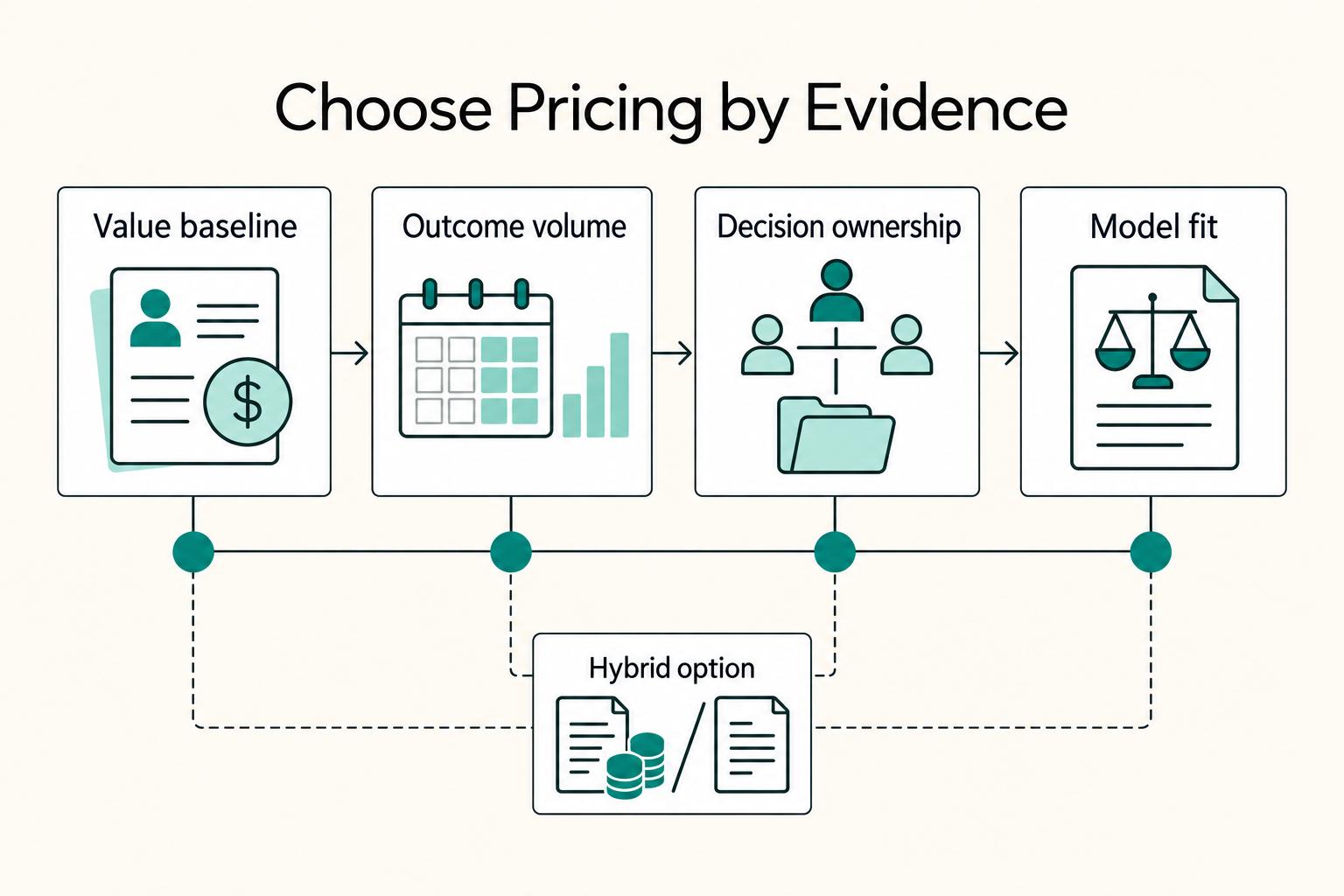
Value-Based Pricing for Freelancers Under Real Payment Risk
Value-based pricing works when you and the client can name the business result before kickoff and agree on how progress will be judged. If that link is weak, use a tighter model first. This is not about defending one pricing philosophy over another. It is about avoiding surprises by keeping pricing, scope, delivery, and payment aligned from day one.

How Remote Professionals Stay Healthy During Long Stays Abroad
Use this sequence before workload, housing, and travel friction make health tasks harder to execute. If you are traveling for months, treat this as four pass-fail gates. A gate is closed only when you have a written output you can verify.
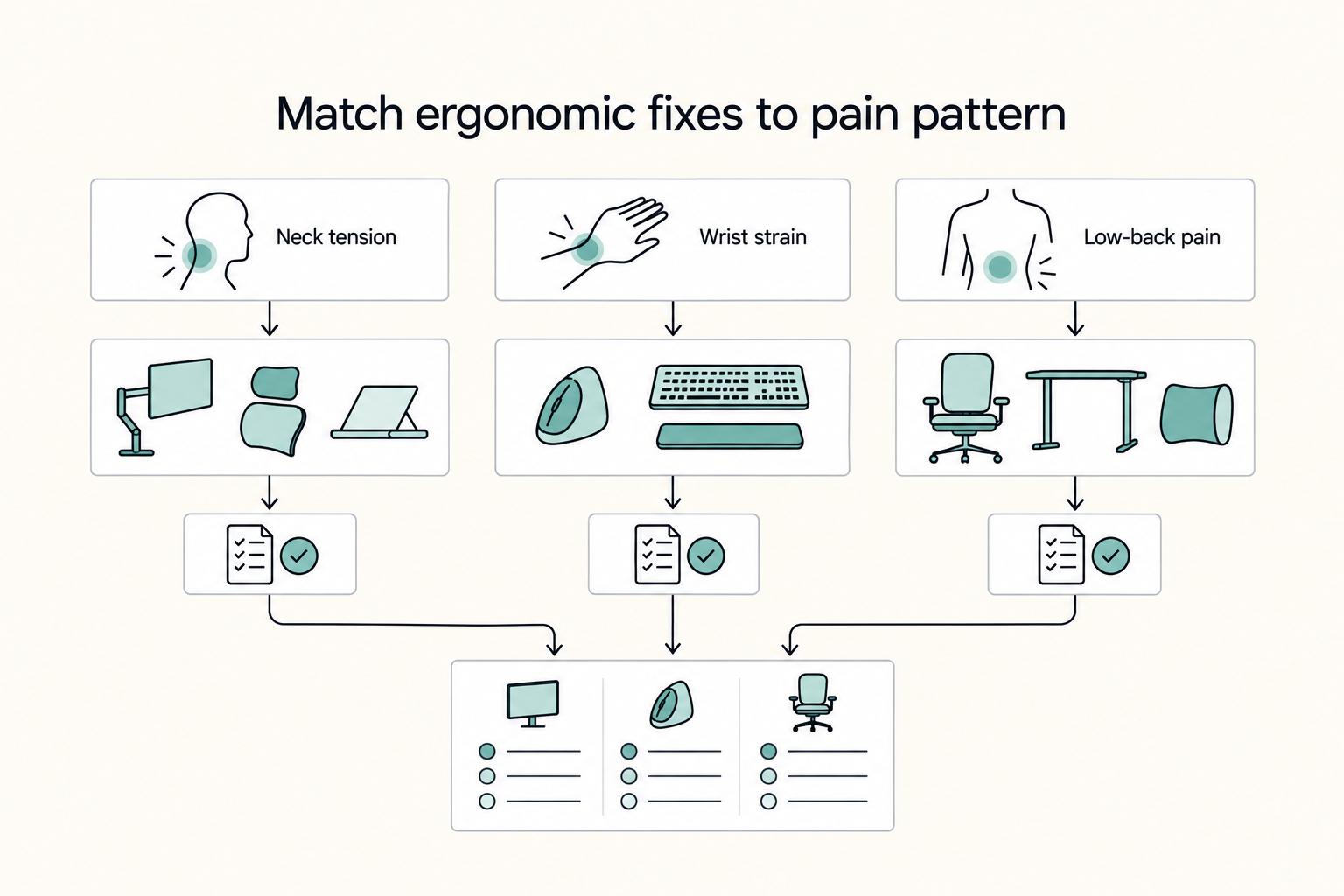
The Best Ergonomic Gear for Your Remote Work Setup
**Treat your ergonomic remote work setup as operating infrastructure, not a comfort splurge.** When posture breaks down, delivery quality and scheduling usually break down right after. Start by setting a baseline that protects your body and your business before you compare products.