
Quick Answer
Prioritize misclassification risk over fear of being “fired.” For an independent contractor, the at-will employment doctrine is usually not the operating model; your relationship should run through a services contract with clear scope, deliverables, and termination mechanics. At-will is broadly presumed for employees in the U.S., with Montana treated differently, but that employee baseline does not replace contractor contract terms. The practical move is to keep contract language and day-to-day behavior aligned so your engagement stays business-to-business.
Why At-Will Applies to Employees and Misclassification Is the Key Risk#
If you are a true contractor, at-will employment is not the default. Your relationship with the client should be business-to-business, and a key risk is misclassification, not just contract termination.
At-will applies to employees. In the U.S., employment is presumed at-will in every state except Montana. That means either side can usually end the relationship at any time for any or no reason, unless the reason is illegal or a contract changes that default. A contractor relationship should work differently. The client should control the result of your work, not how you do it, and termination should follow the contract terms.
| Signal | At-will employment relationship | Independent contractor relationship |
|---|---|---|
| Control | Employer typically directs work details | Client generally controls the result, not the details of performance |
| Economic reality | Worker is economically dependent on the employer | Worker is in business for themselves |
| Termination mechanics | Default rule may allow either side to end the relationship at any time | Exit rights should come from the service contract, notice terms, and scope |
| Tax handling | Business generally withholds and deposits income, Social Security, and Medicare taxes | Business generally does not have to withhold or pay those taxes on contractor payments |
This distinction matters because once a relationship is recharacterized as employment, status often becomes the main dispute. Tax and compliance fallout can follow. Under IRS rules, a business that misclassifies without a reasonable basis may owe employment taxes for that worker. Under the FLSA, the core question is economic reality: are you in business for yourself, or economically dependent on the hiring party?
A common red flag is a mismatch between paper and practice. If your agreement says "independent contractor" but the client sets your hours, directs your methods, and pays you like payroll, the label will not carry the relationship on its own. Before you get into formal tests, check these basics:
- Your contract defines services, deliverables, and contract-based termination terms.
- Your payment flow looks like contractor billing, not wages with withholding.
- The client evaluates output, not your day-to-day methods.
- You operate as a separate business, not as regular staff.
Related: A guide to the 'Constructive Receipt' doctrine for US taxpayers.
The Misclassification Test: Are You a Business or a Disguised Employee?#
A practical self-check is simple: does the relationship operate like an outside service engagement, or like managed employment?
For U.S. wage-and-hour analysis, use current Department of Labor guidance effective March 11, 2024, now in 29 CFR Part 795. Under the FLSA, employers are responsible for classification decisions, but your own self-check still matters. Misclassification can leave workers without minimum wage and overtime protections when an employment relationship exists.
Use this practical audit as a risk screen, then verify your status assumptions against current DOL guidance.
| Practical area | Signals of lower risk | Signals of higher risk | Helpful checkpoint |
|---|---|---|---|
| Current guidance | You are using the current federal framework. | You are relying on outdated guidance. | Confirm the current rule in 29 CFR Part 795. |
| Classification process | The employer has clearly assessed worker status under the FLSA. | Worker status has not been clearly assessed. | Confirm who made the classification decision and when. |
| Protection risk | Status assumptions have been checked against current DOL materials. | Status assumptions have not been checked, creating wage-and-hour risk. | Validate assumptions with DOL Fact Sheet 13. |
A common failure point is using old assumptions. The 2024 final rule rescinded the prior 2021 independent-contractor rule, so older checklists can mislead.
That is why the next step is contract design. Before you move on, run a quick self-audit: are you using current guidance, and has your status been clearly reviewed? Then validate your assumptions against DOL Fact Sheet 13 and, if needed, read What to Do If You've Been Misclassified as an Independent Contractor. If you want a deeper dive, read Germany Freelance Visa: A Step-by-Step Application Guide.
Building Your Contractual Firewall: 5 Clauses Every Agreement Must Have#
Your contract should reinforce one clear point: the client is buying outcomes from your business, not hiring and managing you as staff. The label alone will not decide classification. No single factor controls. These clauses need to work together to reduce control, permanence, benefits, and other employee-like signals.
Clause intent at a glance#
| Clause family | Contractor-safe wording intent | Employee-like wording risk |
|---|---|---|
| Contractor status | States you are an independent business and that no employee benefits apply | Calls you part of the internal team, includes benefit-like terms, or relies on label-only protection |
| Scope of work | Defines services, deliverables, milestones, and acceptance by results | Frames an ongoing role with daily duties, reporting lines, fixed hours, or detailed work methods |
| Termination mechanics | Ends the services agreement by completion, notice, or breach | Uses at-will or "fire at any time" employment-style language |
| IP allocation | Uses explicit signed ownership or assignment language for defined deliverables | Assumes client ownership is automatic without proper transfer language |
| Non-exclusivity | Preserves your right to work for other clients, with narrow conflict or confidentiality limits | Broadly blocks outside work or requires approval for other clients |
The five clauses#
1. Contractor status language State plainly that you are an independent contractor, not an employee. Also make clear that employee benefits do not apply, because benefits and relationship structure are part of classification analysis. Avoid PTO, severance, bonus eligibility, internal titles, or manager-reporting language anywhere in the agreement set.
| Clause | Include | Avoid |
|---|---|---|
| Contractor status language | State that you are an independent contractor, not an employee, and that employee benefits do not apply | PTO, severance, bonus eligibility, internal titles, or manager-reporting language |
| Outcome-based scope of work | Define deliverables, timing, and acceptance while keeping control of your methods | "Serve as X manager," fixed staff-style hours, or instruction-heavy duty lists |
| Business-style termination mechanics | Use completion, fixed term, material breach, nonpayment, or notice-based termination | "Terminate employment at will," "dismiss at any time," or indefinite wording with no structure |
| IP allocation logic | Use explicit, signed IP language for deliverables or clear signed assignment language for final paid deliverables | "Client owns everything automatically" without signed transfer terms or using "work made for hire" as a catch-all |
| Non-exclusivity guardrails | Preserve the right to work for other clients, with narrow conflict or confidentiality limits | Blanket non-competes, open-ended approval requirements, or availability commitments that effectively block other engagements |
2. Outcome-based scope of work Define what you will deliver, by when, and how acceptance works, while keeping control of your methods. The contract should confirm accountability for output without giving the client the right to direct each step of performance. Avoid role framing such as "serve as X manager," fixed staff-style hours, or instruction-heavy duty lists that read like a job description.
3. Business-style termination mechanics Use commercial exit mechanics: completion, fixed term, material breach, nonpayment, or notice-based termination. That keeps the relationship in a services-contract lane instead of employment language. Avoid "terminate employment at will," "dismiss at any time," or indefinite wording with no structure. If you need a model for cleaner offboarding terms, see How to Handle Termination of an International Contractor.
4. IP allocation logic Use explicit, signed IP language for deliverables. By default, authorship starts with the creator unless valid work-for-hire conditions are met, and commissioned work-for-hire treatment requires signed written language. If work-for-hire is uncertain, use clear signed assignment language for final paid deliverables. Avoid assuming "client owns everything automatically" without signed transfer terms, or using "work made for hire" as a catch-all.
5. Non-exclusivity guardrails Preserve your right to serve other clients. Narrow conflict-of-interest and confidentiality limits can make sense, but broad restrictions on outside work can look like control. Avoid blanket non-competes, open-ended approval requirements for new clients, or availability commitments that effectively block other engagements.
Before you sign#
Read the whole agreement set as one package, not as separate files. A clean contractor clause in the master agreement will not help much if the SOW or procurement forms read like an offer letter. Use this quick check across the master agreement, SOW, and procurement attachments:
- Contractor status is clear, and no section adds benefits, leave, internal titles, or manager reporting.
- Scope is deliverable-based, not role-based, and does not hand over control of hours or methods.
- Term and termination end the services agreement, not "employment"; current enforceability standard pending official/legal verification.
- IP language is signed and specific on final deliverables, background IP, and any work-for-hire wording after category check.
- Non-exclusivity is preserved, with only narrow confidentiality or conflict limits; state-specific restriction review pending official/legal verification.
If one clause supports independence but the rest read like staff terms, fix that mismatch before you sign. For a step-by-step walkthrough, see What is a 'Restrictive Covenant' in an Employment Agreement?.
Before you send your next agreement, stress-test your scope, termination, and independent-contractor language with the Freelance Contract Generator.
Operational Discipline: How You Act Is as Important as What You Sign#
A good contract helps, but your day-to-day recordkeeping is what keeps the arrangement clear. If the agreement says project-based services but the work becomes indefinite and undocumented, that mismatch can create risk later.
Start with one practical checkpoint: keep the engagement tied to a written agreement with a defined term, milestone end, or completion point. By contrast, the baseline at-will framing assumes indefinite employment without a written contract, and an employer may terminate for good cause, bad cause, or no cause at all.
| Day-to-day area | Keep this explicit in writing | Drift to correct quickly |
|---|---|---|
| Engagement term | A written agreement with a defined duration or completion point | No written term, or work continuing indefinitely without updates |
| Scope and changes | Milestones, deliverables, and change approvals documented as they occur | Scope expands informally with no written checkpoint |
| Decision records | In formal personnel processes, keep recommendations tied to personal knowledge or records | Important decisions based on assumptions with no record trail |
| Legal baseline checks | Treat at-will as a baseline that has been narrowed over time by statutory and common-law protections | Treating one doctrine as static or universally controlling |
Four habits that keep the record straight#
1. Define the term up front Use a written agreement that states duration, milestone end, or completion point. If the work continues, renew or amend the writing instead of letting it run open-ended.
| Habit | What to do | Follow-up |
|---|---|---|
| Define the term up front | Use a written agreement that states duration, milestone end, or completion point | If the work continues, renew or amend the writing instead of letting it run open-ended |
| Document changes as they happen | Confirm changes to scope, deadlines, or responsibilities in writing | Keep a clear trail of what changed, when, and who approved it |
| Keep records grounded in what you can verify | Anchor statements and recommendations in personal knowledge or records in formal personnel contexts | This record-first habit reduces preventable disputes |
| Recheck legal assumptions periodically | Avoid relying on older guidance without confirming whether later legal changes broadened coverage | At-will doctrine has been narrowed over time by statutory and common-law wrongful-discharge protections |
2. Document changes as they happen When scope, deadlines, or responsibilities shift, confirm the change in writing. Keep a clear trail of what changed, when, and who approved it.
3. Keep records grounded in what you can verify In formal personnel contexts, anchor statements and recommendations in personal knowledge or records. Even outside that context, this record-first habit reduces preventable disputes.
4. Recheck legal assumptions periodically The doctrine has been narrowed over time by statutory and common-law wrongful-discharge protections. Avoid relying on older guidance without confirming whether later legal changes broadened coverage.
A script for declining employee-style perks#
Thanks for including me. To keep our agreement aligned, I should stay outside employee programs and internal review processes. I am fully available for project meetings, milestone reviews, and anything needed to deliver the work on time.
Weekly self-check#
Use this as a simple drift test while the engagement is active. If anything drifted, correct it in writing this week:
- Does the current work still map to a written agreement with a defined end point?
- Did we document any scope or timeline changes in writing this week?
- Are key statements and recommendations supported by personal knowledge or records where applicable?
- Are we relying on any older legal guidance that should be revalidated?
- If anything drifted, did we correct it in writing this week?
You might also find this useful: The Self-Employment Tax Trap: How Totalization Agreements Can Save US Expats Thousands.
The Global Professional's Edge: Mitigating Cross-Border Risk#
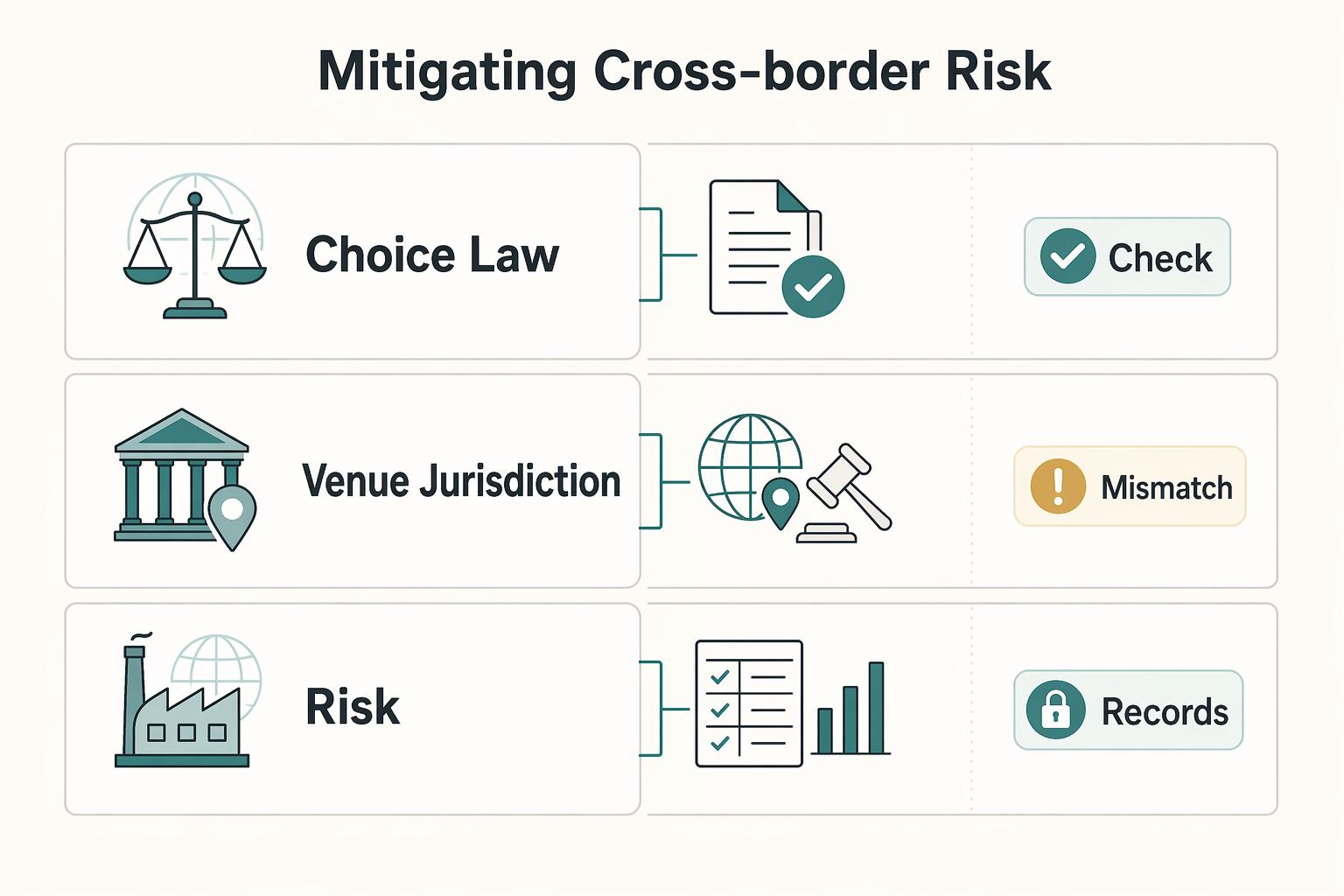
Cross-border deals need cleaner drafting than domestic ones. Before you sign, separate three controls that often get blurred together: Choice of Law, Venue/Jurisdiction, and Permanent Establishment (PE) risk. Each does a different job, and one vague clause will not cover all three.
| Topic | What it governs | Why it matters | What to negotiate | If missing |
|---|---|---|---|---|
| Choice of Law | Which law typically interprets the contract | Often shapes how scope, payment, breach, and interpretation are analyzed | Your home law where possible, or a neutral law both sides can work with | You may spend time and cost arguing applicable law before the core dispute |
| Venue/Jurisdiction | Where disputes are heard and which forum may have authority | Can drive practical enforcement, cost, and dispute pressure | A forum you can realistically access, with clear exclusivity language if agreed | Disputes can be pushed into a forum you did not plan for |
| Permanent Establishment risk | Whether work patterns and authority can create taxable business-presence risk | Affects tax and operating risk, not just contract wording | Clear authority limits, service scope, and approval boundaries | Your record can drift toward agency-like or integrated operations |
Read these together, but do not treat them as substitutes. Choice of law and venue can help with contract disputes, but they do not by themselves decide tax, PE, or employment-law outcomes.
Treat PE as protection for both sides#
PE boundaries protect both the client and you. In U.S. treaty framing, PE generally involves a fixed U.S. place of business. Risk can also arise through a dependent agent in the United States who habitually exercises authority to conclude binding contracts. Treaty language generally excludes activities limited to preparatory or auxiliary functions, but do not assume your work fits that category without checking. That is why your contract should set authority limits that match the real engagement:
- State independent contractor status only if it matches the real working relationship, and state that no partnership, agency, or employment relationship is intended.
- State you cannot conclude, sign, or amend contracts that bind the client.
- Define services in a clear SOW and keep approval boundaries explicit.
- Reserve final commercial approvals, customer or vendor commitments, and legal sign-off to the client.
Also, do not read "no PE" as "no U.S. tax risk." The IRS material notes that U.S. trade-or-business scope can be broader than PE scope.
Verify sources before relying on them#
Cross-border work already creates enough uncertainty, so source discipline matters. The IRS transaction unit TRE/9450.06_02(2014) (last updated 09/03/14) is background and explicitly not binding legal authority. For FederalRegister.gov research, verify against an official Federal Register edition or PDF before you rely on web text as controlling.
Cross-border negotiation checklist#
| Issue | Action |
|---|---|
| Governing law, venue, and authority limits | Separate them in the draft |
| Customer-facing work | State clearly that you cannot bind the client or conclude contracts on its behalf |
| Scope and approvals | Tie them to the SOW so delivery stays service-based, not representative |
| Travel, onsite work, or secondment-style arrangements | Check immigration, employment-law, income-tax, social-security, and corporate-tax obligations in both home and host countries |
| Country-specific thresholds | Current country-specific tax threshold pending official/tax verification. |
This pairs well with our guide on What is a 'Garden Leave' Clause?.
You Are the Architect of Your Autonomy#
The throughline is simple: keep the engagement in a business-to-business lane so at-will dynamics are less likely to define the relationship.
- Contract structure: Define services, deliverables, and termination under contract terms, not open-ended employment language. Do this: maintain one current file with the signed agreement, SOW, change orders, invoices, and written approvals, and keep terms consistent across all of them.
- Operating behavior: Make your records show output-based service delivery, not employee-style control. Do this: tie approvals to deliverables, invoice through your business setup, and avoid workflows centered on attendance, internal hierarchy, or employee channels.
- Risk mindset: Treat sudden term changes as a control point, not routine admin. Do this: when rates, scope, exclusivity, or termination terms change mid-engagement, require a written amendment and reasonable advance notice before changes take effect so you can evaluate options.
At-will employment is common and broad in U.S. practice, though not unlimited, and workers may be pushed to accept less favorable, non-negotiable terms tied to continued work. Take-it-or-leave-it mid-term changes are a practical warning sign because sudden new terms can undermine bargaining leverage.
Use this quick autonomy checklist:
- Contract and SOW clearly define services, deliverables, and termination terms.
- Invoices, approvals, and communications consistently show a business-to-business relationship.
- Language stays consistent: services agreement, SOW, invoice, termination under contract.
- Mid-term changes are handled through written amendments, not informal messages.
If a cross-border client asks you to shift into payroll-style processes, sign employee policy sets, or accept immediate contract changes, pause. Get legal review in the relevant jurisdictions before continuing. For a related perspective, see The Future of 'Financial Identity': How AI will help nomads get loans.
If you want a cleaner way to invoice international clients and keep payout status visible where supported, review Gruv for freelancers.
Frequently Asked Questions
What is the difference between an at-will employee and an independent contractor?
In practice, the practical shortcut is employment-context wording versus business-to-business contract wording. This is a working lens, not a substitute for jurisdiction-specific legal classification. What to do now: keep your signed agreement, SOW, invoices, and a short operating record together for legal review.
How do I prove I am an independent contractor?
Treat this as a documentation-and-counsel question under the law that applies to your situation. What to do now: keep one client file with the agreement, changes, invoices, approvals, and operating records; if risk is rising, review What to Do If You've Been Misclassified as an Independent Contractor.
Can an independent contractor be fired at will?
In contract language, frame the issue as termination under contract terms and verify the governing law before action. What to do now: review your termination clause and store the latest signed version where you can retrieve it quickly.
Does at-will employment apply if I have a formal contract?
One supported verification step is defined-term hygiene: FAR Part 2 states definitions are incorporated by reference, and it also says definitions can change by part, subpart, or section context. What to do now: check for term consistency across your contract, SOW, and operating records.
Which state is not an at-will state?
This section does not validate a current 50-state rule set, so a fixed state list is not safe to publish here. For any state-specific answer, verify the current rule against official state sources or counsel before use. What to do now: save the official state source URL, access date, and why that rule matters to your contract.
What are the main exceptions to the at-will employment doctrine?
This section’s approved sources do not validate a current exceptions list you can rely on as law. One candidate law-review source in the research set was inaccessible, so it cannot support legal claims. For live matters, verify directly from current official sources and legal counsel in the relevant jurisdiction. What to do now: build a verification file with the current state rule, the governing document language, and dated source captures.
How careful do I need to be with legal definitions from templates and government materials?
Be careful with both scope and version. FAR Part 2 says its definitions are incorporated by reference, but it also says other FAR sections may define terms differently for their own scope. Copying one definition without checking context can distort meaning. What to do now: log source version metadata when available, for example FAR Part 2 shows FAC Number 2026-01 and Effective Date 03/13/2026.
Try a related tool
Researched and edited by the Gruv editorial team. Gruv builds cross-border billing, payouts, and finance-operations software for global businesses.
Sources
- acquisition.gov/far/part-2trusted
- bls.gov/opub/mlr/2001/01/art1full.pdftrusted
- copyright.gov/circs/circ30.pdftrusted
- dol.gov/agencies/whd/fact-sheets/13-flsa-employment-...trusted
- dol.gov/agencies/whd/flsa/misclassificationtrusted
- ecfr.gov/current/title-29/subtitle-B/chapter-V/subcha...trusted
- eeoc.gov/prohibited-employment-policiespracticestrusted
- eeoc.gov/laws/guidance/enforcement-guidance-reasonabl...trusted
Educational content only. Not legal, tax, or financial advice.
Related Posts

Germany Freelance Visa Application Path for Freiberufler and Gewerbe
Choose your track before you collect documents. That first decision determines what your file needs to prove and which label should appear everywhere: `Freiberufler` for liberal-profession services, or `Selbständiger/Gewerbetreibender` for business and trade activity.

What to Do If You've Been Misclassified as an Independent Contractor
Treat this as a protection problem first, not a label debate. If your work was treated as an independent contractor arrangement even though the relationship functioned differently, your first goal is to protect pay, rights, and records while you choose the least risky escalation path. You can do that without making accusations on day one, which often keeps communication open while you document what happened.
How to Handle Termination of an International Contractor
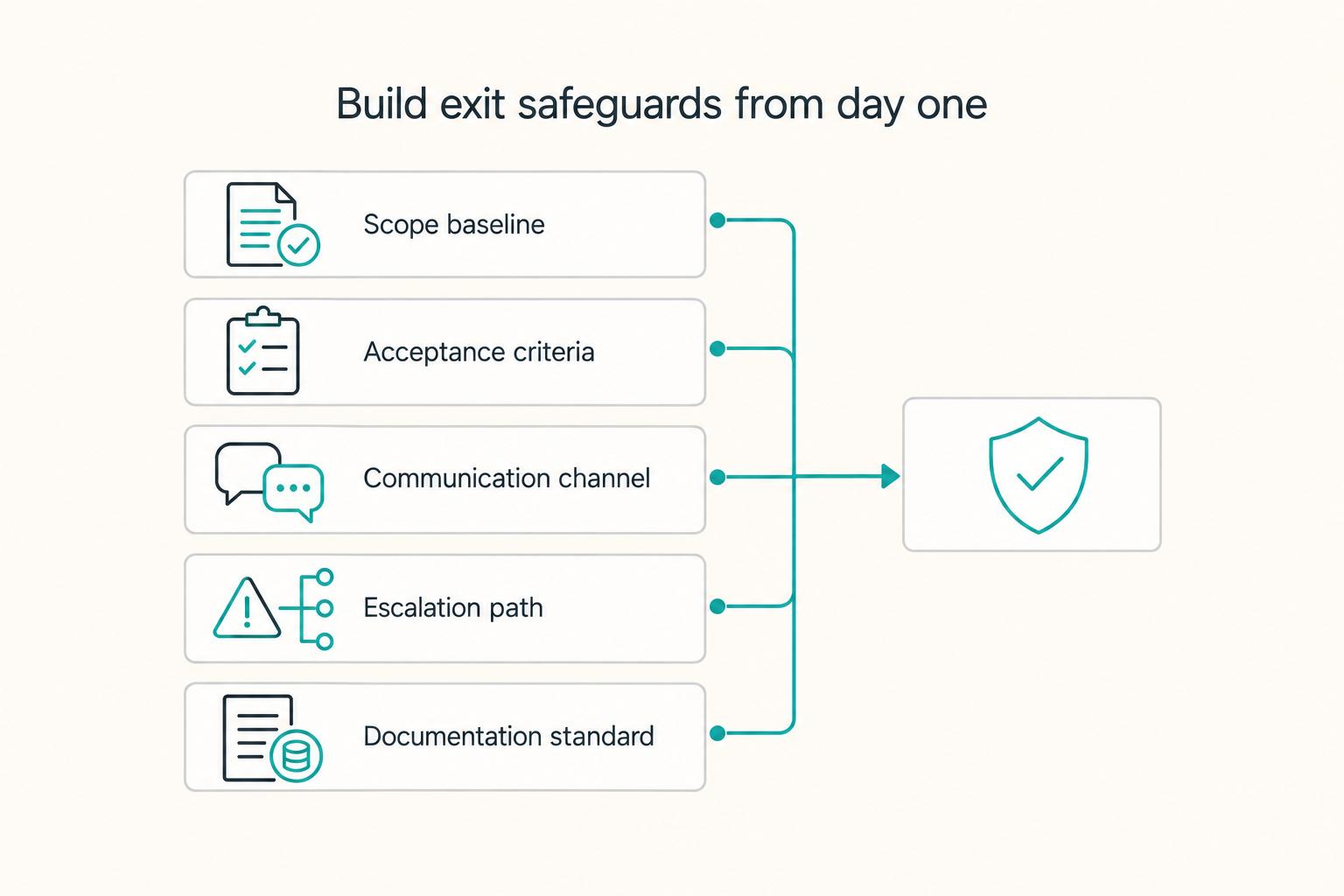
When you terminate an international contractor, treat it as a controlled legal and operational event, not a one-off conversation. A messy exit can trigger five risks at once: