
Quick Answer
Use the anchoring effect in freelance negotiations by opening with a complete proposal, not just a fee. Lead with your value case, then set clear delivery boundaries and operating terms so the client sees what they are buying and how the project runs. When budget pushback appears, recheck outcome and scope first, then offer a reduced version of work rather than a disconnected discount. This keeps control, protects margins, and reduces later payment or revision friction.
Anchor price, scope, and terms before you send the proposal#
Before you send a proposal, do not anchor only the fee. Opening terms shape where agreements tend to land, so use the proposal to set expectations across three areas: price, scope, and terms. Think of it as a pre-send check against fuzzy deliverables, payment friction, and avoidable disputes about how the work runs.
A price-only anchor can land a number while leaving process and relationship risk unmanaged. Research on negotiation highlights three levers in difficult conversations: framing, process, and empathy. In practice, your proposal is where framing starts, process gets written down, and expectations become easier to align early.
| Decision area | Price-only anchor | 3-point anchor |
|---|---|---|
| Negotiation control | Conversation centers on your rate alone | Conversation starts with rate, delivery boundaries, and working terms |
| Delivery clarity | Deliverables, revisions, or approvals may stay implied | Inclusions, exclusions, and change handling are stated up front |
| Payment and workflow expectations | Invoice timing and pause points may stay undecided | Payment timing, dependencies, and delay triggers are defined |
Follow this sequence to build your proposal:
- Anchor point 1: price. Tie the fee to the outcome the client is buying, not only a loose estimate of hours.
- Anchor point 2: scope. Name what is included, what is excluded, and what happens if the brief changes.
- Anchor point 3: terms. State expectations for payment timing, approvals, communication, pauses, and project exit.
Use this simple checkpoint before you send: if a client could read your proposal and still ask "What exactly do I get?", "When do I pay?", or "What happens if we change direction?", your anchor may be incomplete. Put those answers in the proposal itself, not across calls and email threads.
Related: How to apply 'Game Theory' to your freelance pricing and negotiations.
What is the Anchoring Effect (And Why Most Professionals Get It Wrong)#
Anchoring is the tendency for people to adjust from the first reference point they see, not from a neutral baseline. In a freelance negotiation, your opening proposal sets that reference point, and later discussion usually moves around it.
Where most professionals go wrong is treating anchoring as "start high and hope." That is not a strategy. A credible anchor connects your price to scope, value, and terms from the start.
Weak anchor (easy to push down): "Budget is somewhere around this number, depending on how it goes."
Strong anchor (harder to distort): A clear opening position that states what is included, what is excluded, how changes are handled, and which operating terms apply.
This is why first framing matters as much as first price. Opening terms can shape where the agreement lands, and if you use a range, both endpoints can influence how your offer is read. Range construction still matters: if it is too wide or too extreme, it can hurt the conversation instead of helping it.
Specificity can signal preparation, but do not present it as a universal rule. If you plan to reference a study for precise-number effects, verify the primary evidence first.
Before you present your anchor, confirm you have:
- a clear value rationale for the fee
- scoped deliverables, exclusions, and revision limits
- negotiation guardrails for timing, approvals, and change requests
For a step-by-step walkthrough, see Using Nudge Theory in Freelance Proposals and Pricing.
Anchor Point 1: How to Anchor Price to Business Value, Not Your Time#
Anchor your fee to business value first, and use hours as an internal profitability check, not the headline. If you lead with time, you invite time-and-rate comparisons; if you lead with outcomes, risk, and defined delivery, you keep the discussion on business impact.
Build the value case before you name the fee#
Use this proposal test before you present a number:
Price justification = business outcome + downside risk avoided + delivery scope + confidence assumptions
Treat this as a decision framework, not a fixed formula. Your proposal should state each part clearly:
- Business outcome: what changes if the project works
- Downside risk avoided: what loss, delay, error, or exposure is reduced
- Delivery scope: what you will deliver, and the limits
- Confidence assumptions: what the client must provide for results to be realistic
If someone can read your proposal without the fee and still understand the commercial case, your anchor is likely defensible.
| Hour-based framing | Value-based framing |
|---|---|
| Buyer perception | Purchased capacity |
| Negotiation power | Pressure on rate and time |
| Margin protection | Efficiency can reduce realized margin |
Use an evidence checklist before sending#
Do not claim value you cannot connect to the brief. Confirm at least one of these with client-provided context:
| Evidence type | What to confirm | Examples |
|---|---|---|
| Revenue impact | which business metric could move | conversion, retention, renewals |
| Cost reduction | which expense or internal effort could drop | rework, manual steps, support load |
| Risk reduction | which costly issue becomes less likely | delays, data problems, launch risk |
When a claim needs external validation, label it "supporting source pending verification" until the source is checked.
Package options without detached discounts#
Tiered packages help only when each tier changes what the client gets. If price goes down, scope or support must also go down (deliverables, access, review cycles, support level). Do not offer a lower fee for the same work.
Choose point vs range after your value case is clear#
Once your value case is clear, you can present a point offer or a range offer. Reported research found that range offers were not viewed worse than point offers, and in some cases were viewed more positively; outcomes depend on how the range is designed, not a single rule.
Keep your hourly model in the background as a floor check. If you need to set that floor first, use how to calculate your billable rate as a freelancer.
Related: How to apply 'Never Split the Difference' to your freelance negotiations.
Anchor Point 2: Define Where the Work Starts and Stops, in Writing#
If you want your price to hold, define where the work starts and where it stops in writing. A clear quotation or SOW should state the proposed work, deliverables, estimated timeline, pricing model, and assumptions so both sides can see what is included and what becomes a change.
Lock the scope boundary in writing#
Use one consistent set of terms across your quote, contract, and invoice. If labels change between documents, you create avoidable room for disputes.
| Scope element | What to state |
|---|---|
| Deliverables included | List of included deliverables |
| Artifact/format for each deliverable | File format for each deliverable |
| Assumptions | pricing assumes a defined interview count and confirmed access to systems, data, assets, or codebase; client inputs are accurate and complete; a defined revision limit; review participation includes a named approver |
| Client dependencies | client provides approvals, source files, credentials, and feedback needed to proceed; client confirms a primary decision-maker or approval path; delays in required inputs may move delivery dates |
| Out of scope unless added by change order | extra pages/features/channels/formats not listed above; additional meetings or stakeholder rounds beyond stated scope; implementation/migration/training/localization/QA/launch support unless specified; new requests caused by changed goals or late inputs |
If you want paste-ready language, use this scope boundary block:
- Deliverables included: List of included deliverables
- Artifact/format for each deliverable: File format for each deliverable
- Assumptions: pricing assumes a defined interview count and confirmed access to systems, data, assets, or codebase; client inputs are accurate and complete; a defined revision limit; review participation includes a named approver
- Client dependencies: client provides approvals, source files, credentials, and feedback needed to proceed; client confirms a primary decision-maker or approval path; delays in required inputs may move delivery dates
- Out of scope unless added by change order: extra pages/features/channels/formats not listed above; additional meetings or stakeholder rounds beyond stated scope; implementation/migration/training/localization/QA/launch support unless specified; new requests caused by changed goals or late inputs
Adapt exclusions by service type:
- Design: new collateral production files not listed in deliverables
- Development: support for third-party tools not listed in the SOW
- Consulting: extra stakeholder interviews beyond the stated research plan
| Vague scope | Anchored scope |
|---|---|
| Revision risk | Feedback can expand without a clear limit |
| Timeline drift | Dates rely on unstated inputs |
| Approval friction | Approval path is unclear |
| Profit protection | Extra work gets absorbed informally |
Make "done" testable#
"Client is happy" is not a completion standard. Define completion with objective acceptance criteria that a third party could verify.
- Delivered artifacts: list the final outputs (for example, final strategy memo, final copy deck, final design package, working staging feature, recorded training session)
- Approval workflow: name who approves and how (for example, acceptance by email from the project lead in response to final delivery)
- Handoff condition: state what closes the engagement (for example, source files transferred, final report delivered, repository access granted, approved final document shared)
Before you send, run one check: can someone outside the project confirm completion from the document alone?
Use change control before new work starts#
Scope changes are normal; unmanaged scope changes are where margin is lost. Include a non-negotiable change-order clause so added work is documented and billable.
- Trigger conditions: new deliverables, extra revisions, changed assumptions, additional stakeholders, delayed client inputs that force rework, timeline compression requests
- Required documentation: requested change, reason, scope impact, timeline impact, price impact, dependency changes
- Re-estimation path: pause affected work, assess impact, issue revised quote or SOW addendum
- Approval rule: do not start changed work until both sides approve in writing
Set a quote validity period (for example, a 30-day window) to create a clear decision deadline and a clean checkpoint to revisit assumptions if the start date shifts. This is not bureaucracy; it is how you carry clarity into the contract and invoice with fewer errors and fewer "while you're in there" additions.
Anchor Point 3: How to Anchor Terms to Guarantee Cash Flow and Mitigate Risk#
Once scope is clear, your terms determine whether the project is stable or reactive. If payment, communication, and exit rules are vague, the client's process will usually become the default. In negotiation, process is a primary lever, so define it early and in writing.
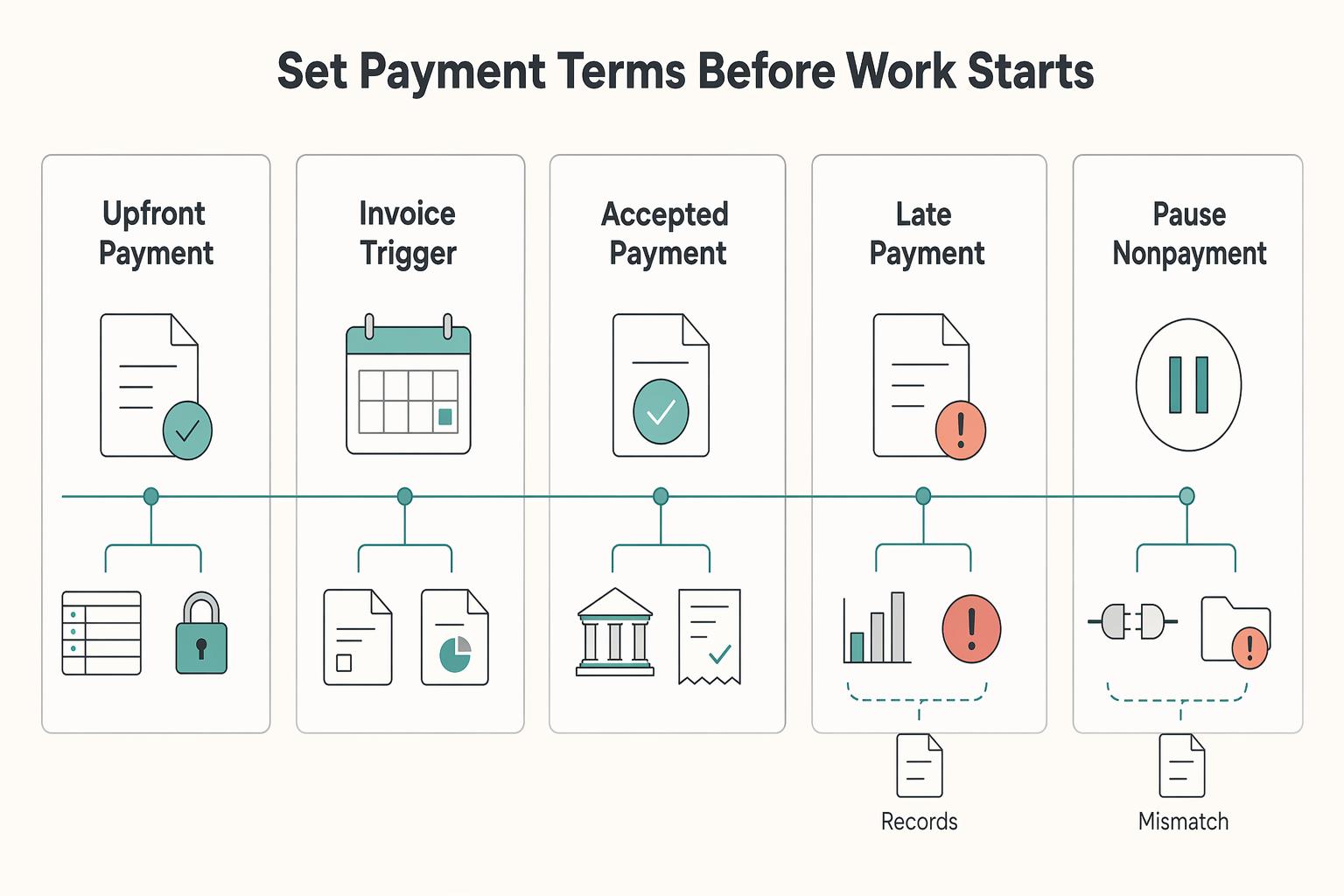
Set payment terms before work starts#
Do not leave money and approvals for "contract cleanup later." In your proposal or SOW, make the billing workflow explicit so finance and delivery teams can follow it without guesswork.
| Term | What to define |
|---|---|
| Upfront payment due | Amount or percentage due upfront |
| Invoice trigger | for example, on signature / on project start / on milestone approval |
| Accepted payment method | bank transfer / platform / other verified method |
| Late-payment handling | Late-payment handling and any fees |
| Pause-on-nonpayment rule | Nonpayment grace period and pause trigger |
| Primary communication channel | email / shared board / approved chat tool |
| Response expectation | Expected response time |
| Approval route | named approver or documented approval path |
If you want a checklist you can drop into the proposal, use:
- Upfront payment due: Amount or percentage due upfront
- Invoice trigger: for example, on signature / on project start / on milestone approval
- Accepted payment method: bank transfer / platform / other verified method
- Late-payment handling: Late-payment handling and any fees
- Pause-on-nonpayment rule: Nonpayment grace period and pause trigger
- Primary communication channel: email / shared board / approved chat tool
- Response expectation: Expected response time
- Approval route: named approver or documented approval path
Quick check: if someone outside the sales call reads this, can they tell what is due, when it is due, and what unlocks the next phase? If not, tighten the wording.
| Unanchored terms | Anchored terms |
|---|---|
| Cash-flow predictability | Payment timing follows client habit |
| Project control | Work starts and expands informally |
| Dispute risk | Decisions live in scattered messages |
Tie communication to decisions, not chatter#
Set communication as a workflow agreement, not a loose expectation. Use one primary written channel for decisions, one meeting cadence, and named approval points by phase or deliverable, especially when stakeholders are cross-border.
Then require decision records in that same channel within the agreed update window. Also name who consolidates team feedback and whose approval is final. Without that structure, delays turn into rework, and rework turns into a scope or billing dispute.
Make termination protection executable#
A kill-fee clause only works if the triggers and settlement steps are explicit. Define trigger events (for example, client cancellation, an indefinite pause beyond the cancellation window set in the agreement, or another verified stop condition), then define what is billable at termination: completed work, committed non-cancellable costs (if applicable), and a termination fee set in the agreement.
Also define handoff and rights after settlement. State what materials are delivered once outstanding amounts are paid, and whether any usage or transfer of rights waits for full payment. Keep a single termination record: notice, work log, final invoice, and handoff list.
The Professional's Defense: What to Do When a Client Tries to Lowball You#
When a client sends a much lower number, treat it as either a negotiation tactic or a real budget limit, then follow a clear decision path. Do not react to the number alone. Confirm whether they are changing scope, outcome, or risk ownership before you change anything.
A low offer is not automatically a bad deal. It is a signal. If they can tie their number to a smaller outcome, you may have a workable reduced version. If they cannot, bring the conversation back to your original value case.
Read the lowball before you answer it#
Acknowledge the number without validating it, then ask how they got there. That helps you separate budget reality from price testing.
Use a short reply:
"Thanks for sharing that. To check fit, can you walk me through how that figure maps to the scope and outcome we discussed?"
If the answer is vague, return to scope and outcomes:
"For the scope on the table, the investment is tied to the outcome, the risk reduced, and the work required to deliver it. If those priorities are unchanged, the investment stays aligned to that result."
Use this checkpoint before you counter: can they state what stays in scope, what comes out, and who approves a revision? If not, treat it as pressure, not a complete counteroffer.
Return to value, then make a clean choice#
Keep your response sequence simple: acknowledge and reframe, restate value, then offer scope-based options.
Reusable template:
"I understand the budget concern. For the scope on the table, the investment supports the agreed outcome and reduces the stated risk. If your budget is different, the next step is to revise scope rather than dilute delivery. I can send a revised scope for review once the decision path is confirmed."
This keeps you out of reactive haggling and protects deal quality. A signed deal is not a win if the scope, economics, or risk profile no longer work for you.
Before you send options, check your BATNA (Best Alternative To a Negotiated Agreement). If the revised path still creates unacceptable risk, your best move may be to decline.
Trade scope, not price#
If the budget is real, put the tradeoffs in writing.
| Option | Investment | Included scope | Removed scope | Risk impact | Best fit |
|---|---|---|---|---|---|
| Full engagement | Full investment | Core scope and supporting deliverables | None | Lowest delivery risk; fullest outcome coverage | Client needs the full outcome |
| Reduced scope | Reduced investment | Highest-priority deliverable only | secondary phase, extras, and handoff support | Higher risk or slower progress in the affected area | Client needs progress within a tighter budget |
| Advisory-only | Advisory-only investment | Advisory deliverable only | implementation, training, and ongoing support | More execution risk stays with client team | Client has internal capacity to execute |
Keep the original proposal, the client response, and your revised options in the same written thread so scope decisions stay traceable.
Do not do this in the moment:
- Do not defend your price emotionally.
- Do not counter-anchor with a random number.
- Do not reduce price without removing scope.
- Do not accept "we'll sort it out later" instead of written revisions.
Used this way, a lowball becomes a filter: either there is still a workable fit, or the deal is telling you to walk away.
Related: The 'Getting to Yes' framework for client negotiations.
Conclusion: You're Not Negotiating a Task, You're Architecting a Partnership#
Once you stop treating price, scope, and terms as separate skirmishes, your proposals get more stable. The point of negotiating is not to win one number. It is to align expectations early, reduce ambiguity, and give both sides a clearer path for delivery and payment.
That is why this is really partnership design, not just sales technique. Negotiation exists because your outcome depends on the client's choices and cooperation too, so a good proposal has to do more than quote a fee. It should define the work boundary and state operating terms clearly enough that fewer things are left to memory, assumption, or later argument.
Done well, this can mean fewer misunderstandings, clearer boundaries, and less friction once work starts.
Preparation is easy to skip. Before your next proposal, define what is negotiable and what is not, and use a simple checklist. One useful checkpoint is whether you understand the client's industry and market position well enough to tailor milestones and explain why the work is structured the way it is. A common failure mode is conceding too much because you want to avoid conflict. If you drop price without revising scope or terms, you can get short-term agreement at the cost of later tension.
Apply this on your next proposal:
- Value: Add a short value case statement with the target outcome, key assumptions, and why the work matters now.
- Scope: Write included deliverables, explicit exclusions, and the change request process in plain language.
- Terms: State payment timing, approval points, and what happens if the project pauses or ends early.
If one of those three elements is missing, the deal may still be unstable. Fix that before you send the proposal, not after the work starts.
Frequently Asked Questions
How do you respond to a lowball offer without sounding defensive?
Acknowledge the number, then ask how it maps to scope, outcome, and approval authority. If the client cannot say what stays in, what comes out, and who can approve changes, you likely do not have a usable counteroffer yet. Use this line next: “If that budget is fixed, I can revise scope to match it. If the original outcome is still the goal, the investment stays tied to that scope.”
Should you make the first offer, or wait for the client?
If scope, timing, and the decision-maker are clear, anchoring first can help set the reference point before the client does. If those basics are still fuzzy, do not rush out a number just to keep momentum. Anchor the scope first, then price it. A practical guardrail is to wait on a fee proposal until you can name the deliverable, the boundary, and the approval path in writing.
How do you justify a higher freelance rate to a client?
Avoid defending your price by walking through your hours line by line. Tie the fee to the result, the risk you reduce, and the work needed to deliver it, then show that logic in the proposal itself. Your next move is to add a short section called something like “Why this investment” with three items only: target outcome, key assumptions, and exclusions. If you need help with the base math, start with How to Calculate Your Billable Rate as a Freelancer.
What terms should you negotiate besides price?
Common terms to clarify in writing include scope boundaries, revision limits, the change order process, payment timing, termination protection, and IP ownership. Keep the wording operational: “Included deliverables,” “Not included,” “Change requests require written approval,” “upfront payment terms,” “cancellation terms,” and “rights-transfer trigger.” Before you send the contract, do one check. If a task, revision, or ownership trigger is not written down, it is more likely to be disputed later.
Should you open with a single number or a range?
A single number can work when the project is tightly defined and you want a firm reference point. A range can be smart in some cases, and research suggests range offers can be viewed just as positively as point offers. The catch is that your range has to map to real differences in scope, speed, or support. Before sending, write one sentence for the low end, midpoint if used, and high end so each number buys something specific.
What is the difference between value-based pricing, anchoring, and a range offer?
These get mixed together all the time, but they solve different problems. Use the table below to keep them separate before you draft your proposal. | Term | What it is | What you control | Common mistake | | --- | --- | --- | --- | | Value-based pricing | How you decide what the work is worth based on outcome, impact, or risk reduced | Your pricing logic and the business case behind it | Calling it “value-based” without showing what value you are pricing | | Anchoring | The act of putting the first credible reference point into the negotiation | The opening frame, wording, and order of information | Treating anchoring as “say a big number first” without scope support | | Range offer | An opening offer presented as a span instead of one number | Whether the range backs down, brackets, or bolsters your point offer | Giving a range that has no clear scope difference, so the client shops the lowest figure | Label these separately in your own materials: one note for pricing logic, one for the opening number or range, and one for what changes if the client pushes on budget. That separation makes anchoring easier to use without weakening your position.
Try a related tool
Researched and edited by the Gruv editorial team. Gruv builds cross-border billing, payouts, and finance-operations software for global businesses.
Sources
Includes 2 external sources outside the trusted-domain allowlist.
- business.columbia.edu/insights/chazen-global-insights/anchor-negot...trusted
- columbia.edu/~da358/publications/Tandem_anchoring.pdftrusted
- ofac.treasury.gov/faqs/updatedtrusted
- pon.harvard.edu/daily/negotiation-skills-daily/types-of-nego...trusted
- pon.harvard.edu/tag/in-negotiationtrusted
- repository.upenn.edu/bitstreams/c08112ac-d50a-4798-893a-cfe5d0568...trusted
- askamanager.org/2019/06/share-your-salary-negotiation-succes...external
- crowdspring.com/blog/marketing-anchoring-effectexternal
Educational content only. Not legal, tax, or financial advice.
Related Posts

GDPR Compliance Checklist for Freelancers Working With EU Clients
Start by separating the decisions you are actually making. For a workable **GDPR setup**, run three distinct tracks and record each one in writing before the first invoice goes out: VAT treatment, GDPR scope and role, and daily privacy operations.
How to Calculate a Freelance Rate You Can Actually Get Paid On
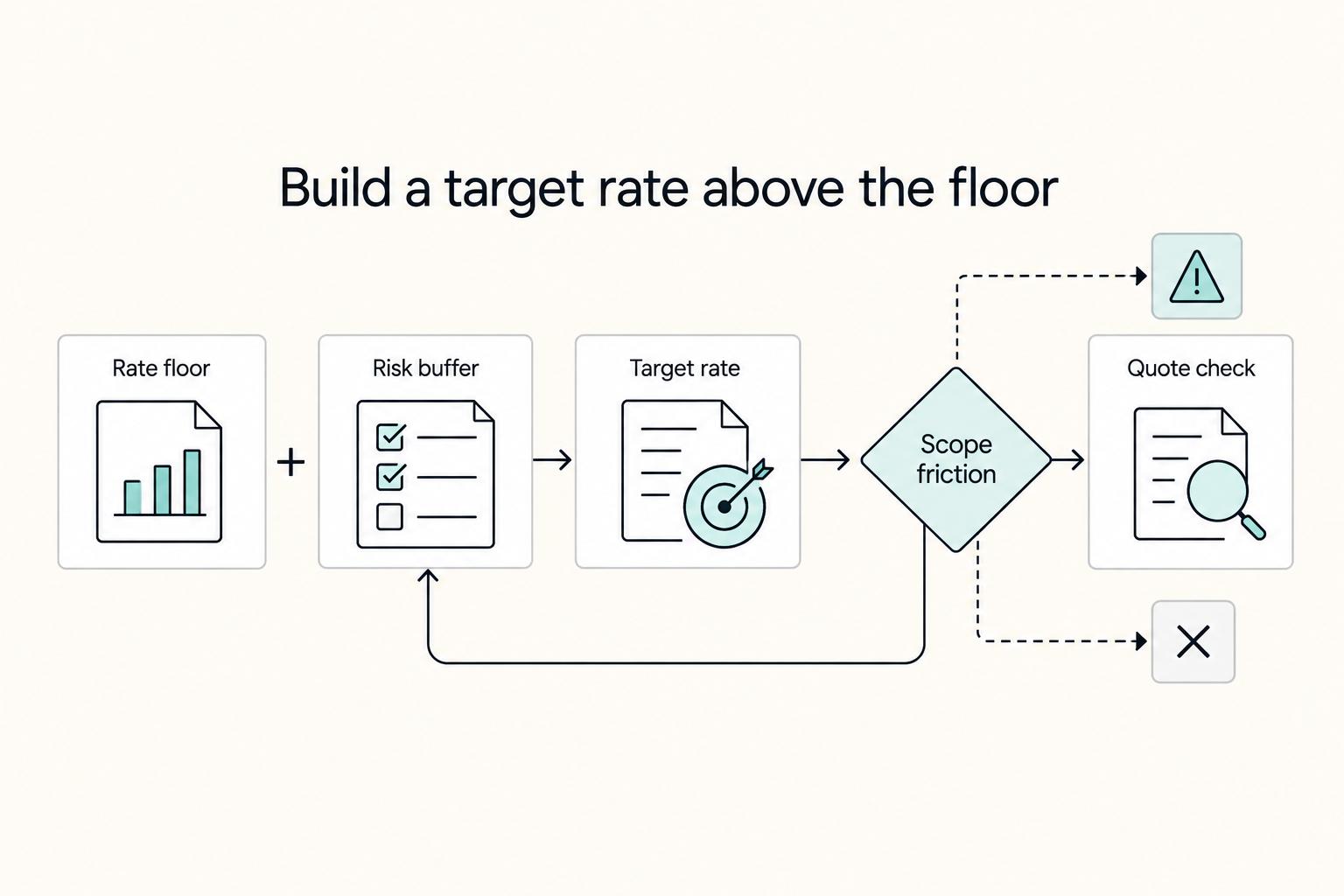
A workable rate is not the neat number a calculator produces. It is the number that still works after you account for real billable capacity, non-client time, scope drift, and the gap between sending an invoice and receiving cleared cash. Start with hourly math even if you do not plan to bill hourly, then turn that number into a quote with clear `payment terms`.
How to apply Never Split the Difference to your freelance negotiations
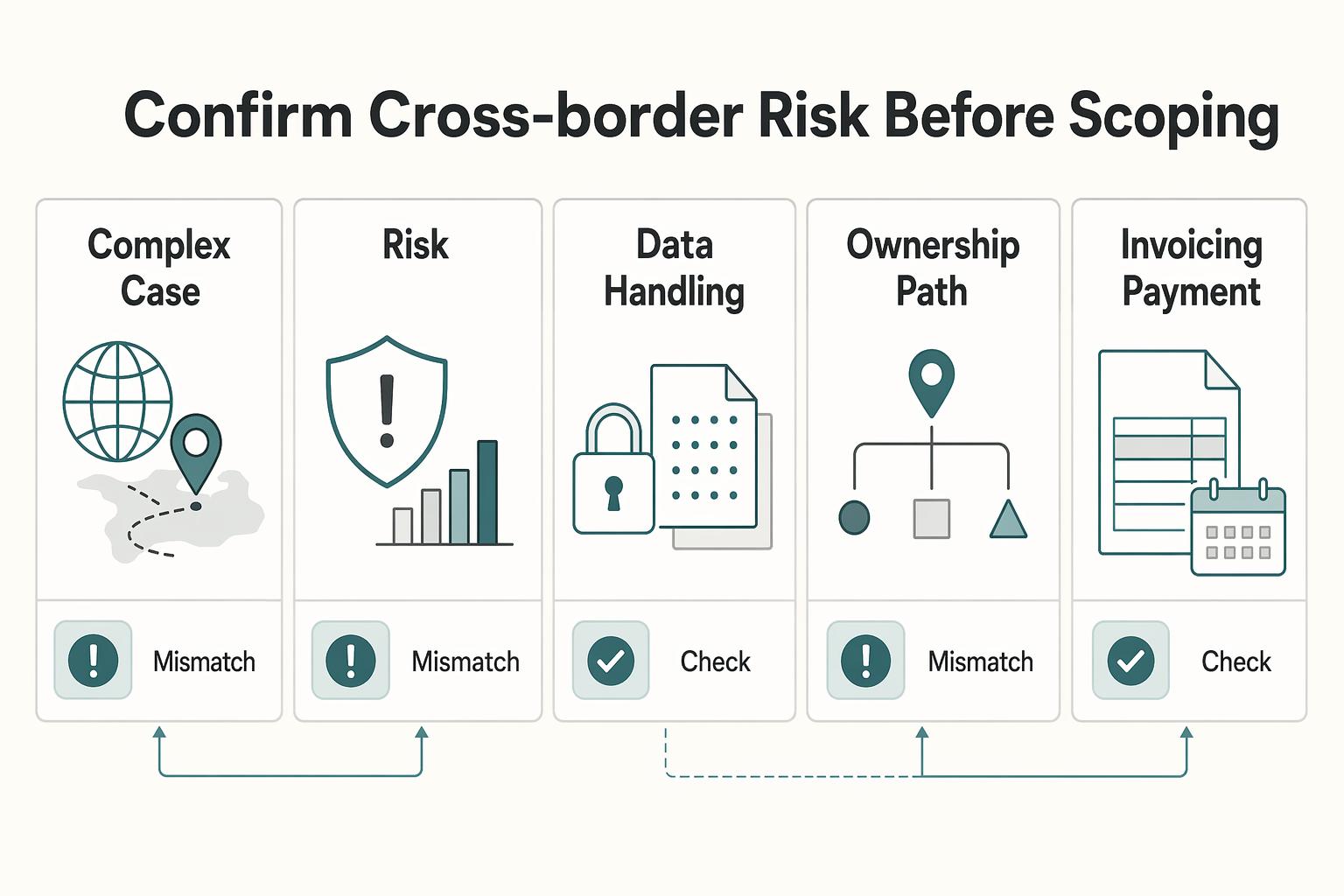
Most freelance negotiations go off track before anyone talks about price. The real work starts in the first conversation, when you figure out whether the client can actually buy, pay, classify, brief, and legally receive your work. Miss those basics, and the project can unravel later over approvals, payment, legal terms, or scope drift.