
Quick Answer
Yes - apply for LTR only when one BOI category clearly fits your real work setup and you can maintain it through the 5 years + 5 years structure. Build a file that reconciles passport data, tax returns, employer proof, and any required translations, then move from qualification endorsement to visa issuance without changing location midstream. If your case depends on uncertain employer evidence, unclear tax treatment, or unresolved dependent rules, pause and use DTV, Non-Immigrant B, or Smart Visa instead.
Phase 1: The Go/No-Go Framework#
Make the go or no-go call before you start collecting documents. Move forward only if you clearly fit one LTR track today and can keep meeting that track's conditions for the full 5 years + 5 years structure, if extended.
The LTR is category-driven, and the criteria were refreshed in the 2025 revision cycle. Start by putting yourself in the right lane, because that choice determines both eligibility and the evidence you will need.
Quick eligibility screen (pass/fail)#
| Your real situation | Closest route | Pass if | No-go signal |
|---|---|---|---|
| Remote employee of a foreign company | Work-from-Thailand Professionals (LTR) | Employer is publicly listed, or a private company with at least 3 years of operation and combined revenue of USD 50 million in the last 3 years. Confirm current income and document thresholds in the latest BOI criteria/forms. | Employer cannot prove the listing or revenue history, or your setup is effectively contractor-based |
| Independent professional / freelancer | Often not a clean LTR fit unless you qualify under another official LTR group | You clearly qualify under another official LTR group | Multi-client income with no qualifying employer entity for the remote-employee lane |
| Highly skilled applicant for a Thai-based role | Highly-Skilled Professionals (LTR-H) | Role is with a qualifying employer in a targeted industry. Confirm current salary and employer criteria in the latest BOI criteria/forms. | Your real work model is still foreign remote work, or the targeted-industry basis is weak |
Before you do anything else, pressure-test the employer gate. If you are using the Work-from-Thailand lane, get usable proof early: either listing details or auditable revenue evidence. If that proof is not available, treat it as a decision signal, not a document problem to fix later.
If LTR is no-go, choose the fallback that matches your work reality#
If LTR does not cleanly fit, switch to the route that matches how you actually work.
| Work reality | Route | Key details |
|---|---|---|
| Remote worker / freelancer | DTV | Covers digital nomads, remote workers, and freelancers; 5-year validity; multiple entries; 180 days per entry; 10,000 THB fee |
| Thai employment | Non-Immigrant B | Initial stay of up to 90 days; work begins once your work permit is granted |
| Startup founder path | Smart Visa | Framed around startup entrepreneurs post-2025; one listed maintenance threshold is 600,000 Baht plus 180,000 Baht per dependent held for at least three months |
In practice, use the table above as your routing rule: choose DTV if you are genuinely remote or freelance, Non-Immigrant B if you will work for a Thai employer, and Smart Visa only if your facts really fit the startup-founder path.
Tax reality before you proceed#
Tax should not be the reason you force a weak category fit. The 17% rate is tied specifically to Highly-Skilled Professionals on employment income, not to all LTR holders.
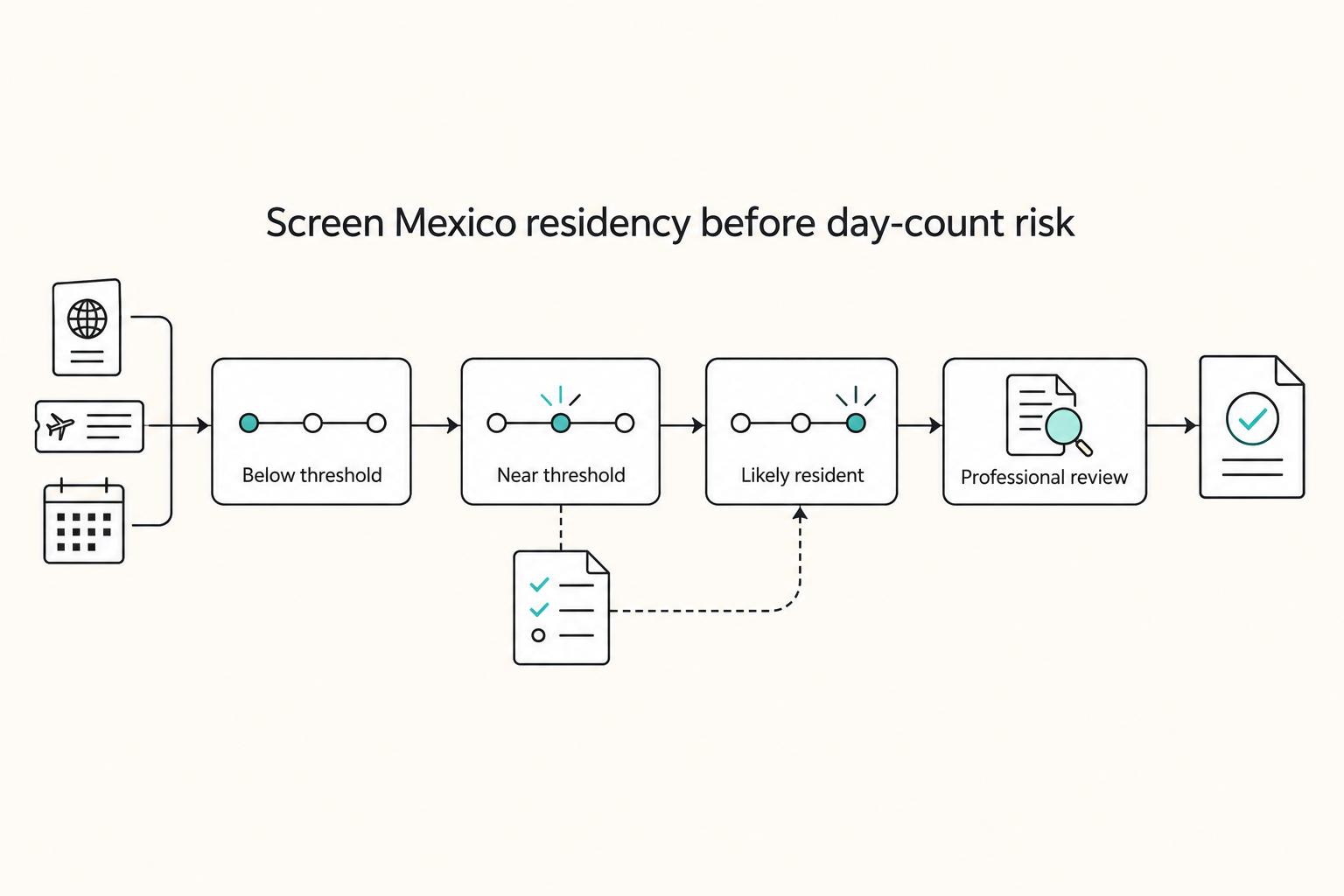
If you stay in Thailand for more than 180 days in a calendar year, Thai tax residency questions come into play. Build that into your decision at the start, not after approval. For deeper context, see Digital Nomad Tax Residency in Thailand for 2026.
| Scenario | Income source and employer location | Tax residency interaction | Compliance burden | Decision note |
|---|---|---|---|---|
| Work-from-Thailand Professional | Foreign employment income; foreign employer must pass BOI employer gate | More than 180 days can trigger Thai tax residency. Verify current tax treatment in the latest official guidance. | Cross-border filing review plus category-fit checks | Do not assume 17% applies |
| Highly-Skilled Professional | Employment income from a qualifying employer in a targeted industry | More than 180 days can make you a Thai tax resident; 17% is category-specific. Verify current tax treatment in the latest official guidance. | Thai payroll and local tax coordination | Best fit when your job is truly Thai-based |
| DTV / Non-B / Smart fallback | Depends on visa and work structure | Day count still matters once you exceed 180 days | Often more fragmented because visa and tax status are separate | First legalize your actual work model |
What you gain vs what you must maintain#
The upside is real, but only if you can keep the qualifying facts clean after approval.
| Type | Item | Detail |
|---|---|---|
| Gain | Long-stay structure | 5 years + 5 years (if qualifications are maintained) |
| Gain | Reporting | 1-year reporting instead of standard 90-day reporting |
| Gain | Re-entry | Re-entry permit exemption |
| Maintain | Conditions | Every condition and requirement must be maintained during the length of the visa |
| Maintain | Employer or company fit | Employer or company fit must stay valid, not just at filing |
| Maintain | Work arrangement | Work arrangement must continue matching the approved category |
| Maintain | Dependents | Dependent scope should be verified before planning, because official sources are not fully aligned |
That is the tradeoff: the benefits are meaningful, but BOI also expects the qualifying conditions to stay in place during the full visa term. If your employer setup, work arrangement, or dependent assumptions are likely to shift, treat that as a warning before you apply.
If your lane is clearly valid and maintainable, move to Phase 2. If not, stop here and use the visa route that matches how you actually work. If you want a deeper dive, read The 2026 Global Digital Nomad Visa Index for 50+ Countries.
Phase 2: The Compliance Dossier#
Your goal in Phase 2 is to submit a file that is easy to review and hard to question. Build it as evidence, not narrative. Every claim should map to one official document, with matching names, dates, and entities across the full pack.
Start from the exact category document pack you are using, then version-control it. Required-document packs are date-stamped, including versions marked As of 06 Nov 2025. Save the exact PDF version you relied on and label your files to match that version. If a document is not in Thai or English, include a certified or notarized translation from the start.
Core terms you need to read literally#
These terms do real work in the process, so read them literally, not as loose summaries.
- BOI: The Office of the Board of Investment, the authority named in LTR qualification-endorsement submission and review.
- QEL: The Notification of qualification endorsement for Long-Term Resident Visa, used after endorsement for visa-issuance steps.
- Targeted industry: A defined industry list used in the Highly-Skilled Professional route, not a universal test across all LTR categories.
- Proof-of-income evidence: Official personal income tax returns filed with state authorities.
Evidence matrix#
Treat each file as proof of one specific claim. Documents that are individually valid can still trigger follow-up when they do not line up with the rest of the record.
| Required document | Who issues it | What claim it supports | Common mismatch risk | Current rule to verify |
|---|---|---|---|---|
| Passport biodata page | Passport authority | Identity, nationality, base application record | Name format differs across tax and employer records; missing biodata can trigger Document Request status | Current requirement pending official BOI/immigration verification |
| Official personal income tax returns | State tax authority where filed | Income claim for your selected LTR route | Net vs gross confusion, missing pages, tax period mismatch | USD 80,000 per year in the past 2 years or USD 40,000 average in the past 2 years appear in current packs; verify your category's current requirement |
| Employer or company qualification evidence | Employer, public market record, or corporate finance record | Category fit tied to employer or company | Evidence belongs to parent, affiliate, or client instead of your actual employing entity | Current requirement pending official BOI/immigration verification |
| Role, employment, or category-fit evidence | Employer, contracting entity, or other official issuer | Your work arrangement matches your chosen route | Role titles, dates, or entity names conflict across CV, contract, and tax records | Current requirement pending official BOI/immigration verification |
| Targeted-industry support (Highly-Skilled only) | Employer or supporting corporate material | Industry fit for the Highly-Skilled route | Assuming "tech" alone is enough when business activity does not map cleanly to the targeted list | Applies only to Highly-Skilled applicants |
| Certified or notarized translations | Certified translator or notary route in your jurisdiction | Usability of non-Thai or non-English documents | Partial translation, missing stamps, or selective page translation | Required when originals are not in Thai or English |
BOI sequence and decision gates#
This is where a good file either stays clean or starts to unravel. Work in sequence.
| Step | Focus | Grounded rule |
|---|---|---|
| 1 | Lock category fit | Confirm your Phase 1 route still matches your real work setup before you upload anything |
| 2 | Apply industry fit only where required | Use targeted-industry evidence only if you are applying as Highly-Skilled Professional |
| 3 | Align work-history evidence line by line | Make sure dates, employer names, role titles, and income periods agree across all documents |
| 4 | Submit complete, then respond fast to requests | If requested items are not provided within 30 days, the application may be rejected |
| 5 | Plan for timeline variability | Official materials reference 17 working days and 20 business/working days once documents are complete, and longer if additional documents are requested |
If evidence is incomplete, use a fallback path. Pause, obtain the missing official record, or switch to a route you can document cleanly. Also remember that endorsement is not the final step. After QEL, you still need to update information and upload additional documents for visa-issuance pre-approval.
Choose your visa-issuance location carefully. Once you submit documents for that location, the location cannot be changed. If you choose issuance at TIESC in Bangkok, you must be physically in Thailand. If you entered Thailand after May 1st, 2025, required-document packs may ask for the Thailand Digital Arrival Card (TDAC).
Insurance pass or fail#
Insurance is a document test as much as a coverage decision. BOI materials also list alternatives, including Thai social security or qualifying deposit evidence, so verify the live rule before you rely on any one route.
| Checkpoint | Pass | Fail |
|---|---|---|
| Coverage scope | Official LTR insurance threshold pending BOI/immigration verification; policy wording should clearly support Thailand coverage | Vague travel wording or caps that do not clearly meet the rule |
| Exclusions | Pre-existing condition limits, waiting periods, and carve-outs are explicit and acceptable for your case | Material exclusions discovered only after purchase |
| Direct billing | Thai provider network or direct-billing process is clear | Reimbursement-only model with no practical emergency path |
| Renewability | Terms support practical renewal without hidden residency or age barriers | First-year policy that becomes unusable at renewal |
| Claim process | Required documents, emergency contact path, and process steps are clearly stated | No clear process or ad hoc-only claims handling |
If you use the insurance route, keep the full policy wording and payment confirmation in your dossier, not just the certificate. If you use the deposit alternative, verify the current 12-month period rule before you treat it as settled.
Before you submit, pressure-test your paperwork sequence with this practical checklist: Visa Cheatsheet for Digital Nomads.
Phase 3: Deadline Management and Clean Handoffs After Approval#
After BOI approval, the work becomes deadline management and clean handoffs. Pick the right issuance path, submit complete documents quickly, and finish onboarding before small misses turn into compliance problems.
Stage-by-stage workflow (approval to live status)#
| Stage | Decision point | What must be ready before you submit | Timing marker | If processing stalls |
|---|---|---|---|---|
| 1. Endorsement received | Can you complete issuance inside the endorsement validity window? | Qualification endorsement result details, passport details, appointment plan | 60 days validity for the endorsement result | If the window is missed, restart qualification endorsement. |
| 2. Choose issuance location | Thailand (TIESC) or overseas? | Location-specific issuance documents and travel or status plan | Processing window pending official BOI/immigration verification | Resolve location choice first; once submitted, issuance location cannot be changed. |
| 3. Thailand issuance route (if TIESC) | Are you physically in Thailand, and is current visa status compatible? | Proof of presence in Thailand and any required visa-status cleanup (for example, NON-B termination if required) | Processing window pending official BOI/immigration verification | Pause and clean up status before filing location documents. |
| 4. Document review loop | Can you answer document requests completely and quickly? | Clean, matching records (names, dates, entities, insurance wording, handoff documents) | Published markers include 17 working days processing and about 20 business days for endorsement notification after complete documents; request responses may be due within 30 days | Treat delays as a signal to reconcile and resubmit requested documents quickly. |
Budget planning framework (not one all-in number)#
Do not plan this around one headline fee. Use separate cost buckets and verify each amount at filing time, because official channels can differ by issuance route and process step.
| Cost line | Required | Planning note | Amount to use |
|---|---|---|---|
| Government visa fee | Yes | Confirm by issuance channel at filing time. | Current official fee pending BOI/immigration verification |
| Digital Work Permit fee | If you will work in Thailand | Separate from visa issuance fees. | Current official fee pending BOI/immigration verification |
| Advisor/legal support | Optional | Case-dependent based on filing complexity. | Advisor quote pending case review |
| Translation/notarization/document handling | Case-dependent | May apply depending on document language and filing requirements. | Translator or notary quote pending document review |
| Health insurance | Category-dependent | Travel insurance is not accepted for Work-from-Thailand documentation, and coverage must be at least 50,000 USD. | Premium quote pending policy selection and official coverage verification |
| Post-arrival setup | Variable | Banking, deposits, transport, and first-month admin buffer. | Budget amount pending city, housing, and arrival plan |
Onboarding operations checklist#
Once the visa is issued, move quickly on the items that affect work authorization, reporting, and day-one admin.
Immediate actions
- If you will be employed in Thailand, apply for the Digital Work Permit via the LTR system after visa issuance.
- Store core records together: visa record, endorsement result, insurance documents, and arrival record.
- If your arrival is after May 1, 2025, keep TDAC details ready (paper TM.6 has been replaced).
- Confirm local bank requirements at branch level before you schedule account-opening tasks.
Recurring compliance actions
- If you stay in Thailand longer than one consecutive year, complete the annual address report (TM.95).
- After re-entry, reset your annual-report planning date from the latest arrival date.
Risk controls for common execution failures#
Most execution failures are not legal gray areas. They are missed windows, incomplete files, or slow follow-up.
| Failure | What it causes | Corrective step |
|---|---|---|
| Missed endorsement window | You lose the current endorsement path | Reapply for qualification endorsement. |
| Incomplete issuance handoff documents | Delay and possible rejection risk | Reconcile names, dates, and entities across the file, then respond completely within the request window. |
| Delayed post-arrival onboarding | Work and reporting friction, plus possible penalties | Activate required onboarding steps immediately and calendar recurring reporting deadlines. |
For a step-by-step walkthrough, see Planning a Thailand O-A Long-Stay Visa Without Avoidable Delays.
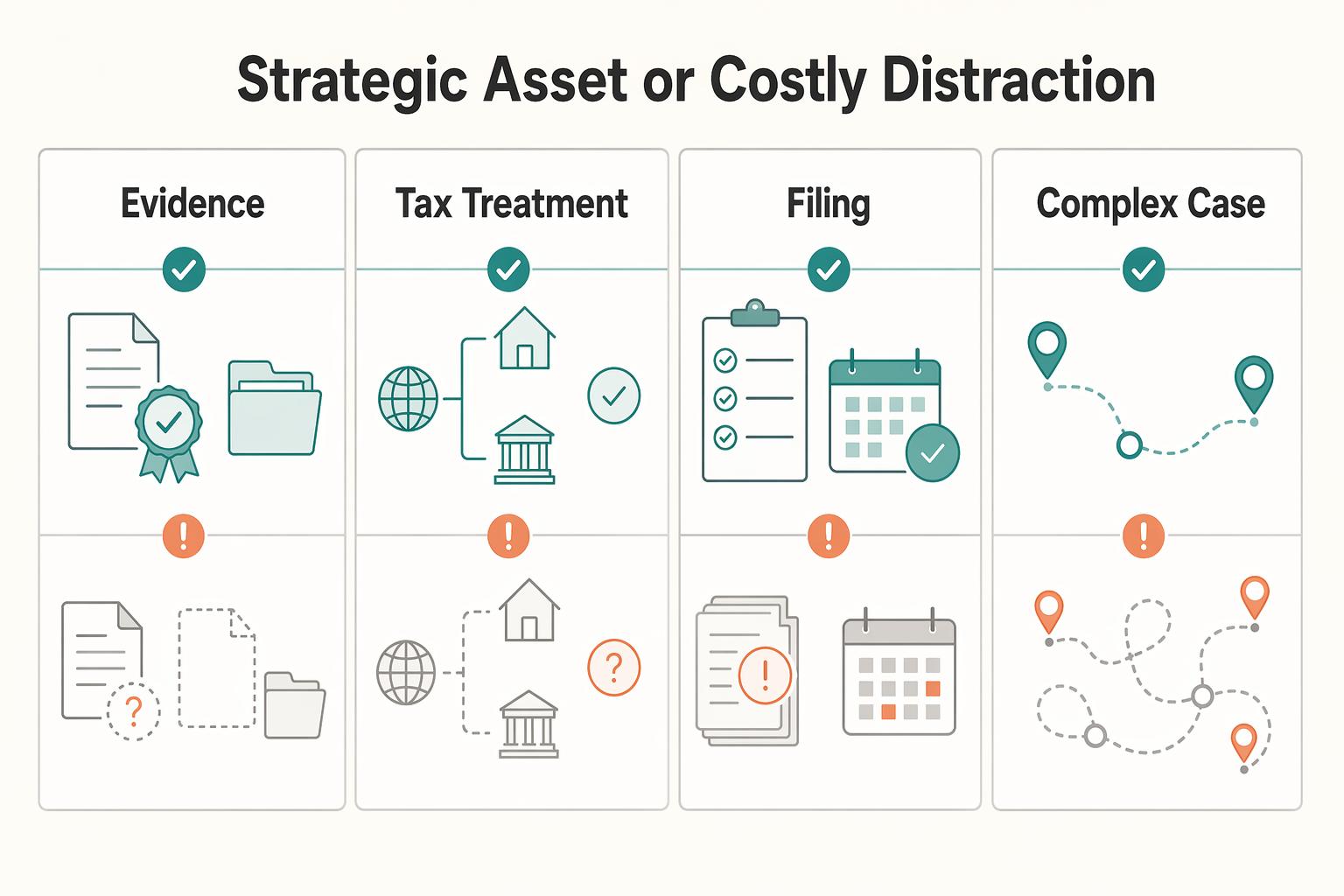
The LTR Visa: Strategic Asset or Costly Distraction?#
The LTR visa is useful only if it gives you reasonably predictable residency, work, and tax operations that you can actually maintain. It becomes a distraction when the admin burden is high, eligibility is fragile, or the net benefit is still unclear.
In practice, a good fit means you can pass qualification endorsement, keep meeting the conditions for the visa term, handle recurring reporting, and explain your likely tax treatment by category. A weak fit means you are relying on assumptions, incomplete documents, or category and tax expectations that may not hold.
| Decision criterion | Strategic asset if this sounds like you | Costly distraction if this sounds like you |
|---|---|---|
| Category-fit risk | You clearly fit one LTR stream under current BOI criteria and can evidence that fit. | You are trying to force a near-match or using older criteria instead of the current framework. |
| Tax-treatment fit by visa category | You have confirmed category-specific treatment (for example, the 17% rate is tied to Highly-Skilled Professionals, not all categories). | You are assuming "LTR tax benefits" apply the same way across categories. |
| Eligibility durability | You can maintain required conditions across the visa term, not just at filing. | Your employer setup, contract structure, or income pattern may change soon. |
| Documentation readiness | Your proof chain is internally consistent and ready for follow-up document requests within the stated response windows. | Your records are incomplete or likely to break if BOI asks for additional documents. |
| Ongoing reporting load | You can run annual reporting on schedule, including the stated filing window and re-entry timing effects. | You are treating approval as the end of compliance. |
| Relocation execution complexity | You have already checked work-permit timing and verified dependent rules against the latest official criteria. | You are proceeding with unresolved family or document complexity, or with unverified dependent assumptions. |
| Budget/time tolerance | You can absorb a published baseline process window and potential extensions if extra documents are requested. | Your plan only works if everything is approved on a fixed timeline with no follow-up requests. |
Use this self-audit now:
- Proceed when your category fit is durable, your documents reconcile, your compliance workload is realistic, and your fallback plan is clear if facts change.
- Pause when any threshold or policy detail still needs live verification, especially category criteria, tax treatment, or dependents, or when your evidence pack is not submission-ready.
- Choose an alternative path when your outcome depends on assumptions you cannot currently support, such as employer qualification uncertainty or tax expectations that fit a different LTR category.
You might also find this useful: Thailand's Long-Term Resident (LTR) Visa for Professionals. If Thailand LTR still feels borderline after this framework, compare alternative long-stay routes before you commit: Visa Options for Digital Nomads.
Frequently Asked Questions
How do you prove income if you are freelance or independent?
If you are self-employed, match official tax filings to contracts, invoices, and bank credits for the same period. Then confirm the current threshold and any exceptions with BOI before filing. A practical rejection risk is inconsistent evidence: claimed income that does not align across filed returns and payment records.
Can you qualify if you work for a startup or smaller foreign company?
Maybe, but only if your employer evidence matches the current BOI standard. If you are targeting the Work-from-Thailand Professionals route, get employer registration and financial records first, then confirm eligibility with BOI before building the full file. A common failure mode is assuming preliminary company information is enough when submit-ready company documents do not satisfy BOI.
Does the 17% tax rate apply to all of your income once you hold the visa?
No. Treat tax as category-specific, not visa-wide. Private guidance ties 17% to qualified professionals, so split your review into three parts: your visa category benefit, your Thai tax residency status, and whether income is foreign-sourced or locally paid. The common mistake is treating foreign and local income as automatically identical. For deeper context, see Digital Nomad Tax Residency in Thailand for 2026.
What should you budget for the application?
Budget by line item, not by a single headline number. The consular page lists a USD 1,600 visa fee, but total costs can also include insurance, translation, notarization, advisory support, and post-arrival setup depending on your case. Consider professional review when your case includes status cleanup, dependents, or cross-border tax exposure, because those can add cost or delay.
Can you bring your family with you?
Possibly, but only after BOI confirms current dependent rules for your case. Prepare relationship and identity records that match passport details and required language and format rules before submission. A practical failure mode is inconsistent supporting documents, so escalate to legal review early if your file is not straightforward.
What happens if your facts change after approval?
Changes can affect compliance, so treat them as material. If your employer, role, income pattern, or residence facts change, keep supporting records and confirm category impact with BOI or qualified counsel before the next reporting cycle. Private guidance describes LTR reporting as annual rather than every 90 days, but you should verify the live reporting route after issuance.
Try a related tool
Researched and edited by the Gruv editorial team. Gruv builds cross-border billing, payouts, and finance-operations software for global businesses.
Sources
Includes 7 external sources outside the trusted-domain allowlist.
- govinfo.gov/content/pkg/FR-2012-05-04/pdf/FR-2012-05-04.pdftrusted
- image.mfa.go.th/mfa/0/91fPdh6NtO/VISA_Information/DTV_Revise...external
- image.mfa.go.th/mfa/0/YykHYtRMc8/Visa/SMART_LTR/LTR.pdfexternal
- ltr.boi.go.th/documents/PPT_Tax_Essentialsfor_LTR_Visa_Hol...external
- ltr.boi.go.th/documents/Required-docs-Work-From-Thailand-P...external
- rd.go.th/english/6045.htmlexternal
- sites.google.com/view/siamlegal1/immigration/ltr-visa-thailandexternal
- smart-visa.boi.go.th/smart/document/related/Announcement_of_the_O...external
Educational content only. Not legal, tax, or financial advice.
Related Posts

The 2026 Global Digital Nomad Visa Index for 50+ Countries
Start with legal fit, not lifestyle filters. The practical order is simple: choose a route you can actually document, then decide where you want to live. That single change cuts a lot of wasted comparison work and stops you from falling in love with places that were never a real filing option.

London, UK: A Guide for Expats and Remote Workers
Get two calls right early and the rest of the move gets easier: how you'll be in the UK, and where you'll work when conditions are less than ideal. Make those decisions before you lock dates or prepay a long stay. If you book first and sort the basics later, admin and work reliability usually collide in your first week.
Digital Nomad Tax Residency in Thailand for 2026
Low-stress compliance in Thailand comes from early decisions and clean records, not last-minute cleanup. Most costly problems start as small assumptions about visas, day counts, and money movement that stack up over time.