

Quick Answer
Track admin minutes by category for four weeks, count one-off work and calculate admin hours as a share of total working hours. Separately compare billed revenue with all working time to understand gross hourly yield. Improve recurring rework first and keep required records; a time budget does not excuse unfinished obligations.
The second job freelancers never planned for#
Freelancer administrative burden is the work around delivery: preparing agreements, invoicing, following up on payments, organizing records and meeting applicable obligations. Measure it alongside client work so pricing and scheduling reflect the time the business actually takes.
Keep the measurement light. A task category, actual minutes and a short note about rework are usually enough for a time log. Keep supporting records where they are needed for payments, contracts or filings; an inbox cleanup does not need a separate evidence pack.
Administrative time can reduce the hours available for delivery or rest. It can also protect revenue by getting invoices out and resolving questions. The useful distinction is necessary work versus avoidable repetition, not whether every non-billable minute is waste.
Start with a four-week baseline:
- Track actual working time for four weeks, including admin and other business activity.
- Use a few consistent categories and tag one-off work separately.
- Mark repeated attempts so you can identify rework.
- Review one useful change and the time it costs to maintain.
Use a weekly admin budget as a planning estimate, not permission to leave required work unfinished. If time exceeds it, identify whether the cause is a one-off event, higher workload or repeated rework. Complete urgent obligations and adjust capacity before adding more client commitments.
If you want a deeper dive, read Automating Your Freelance Finances: A Guide to Tools and Workflows.
Define what counts as admin work before you try to reduce it#
Use a small set of categories consistently. Track actual time, including interruptions and repeat attempts. Keep marketing, training and other business time visible as separate categories so the denominator is honest.
| Category | Examples |
|---|---|
| Contracts and compliance | Agreements, required status or documentation checks |
| Tax records | Applicable forms, bookkeeping and filing preparation |
| Payments | Invoices, reminders, receipts and reconciliation |
| Coordination | Scheduling, feedback consolidation and approvals |
Record both recurring tasks and one-off events, tagging the latter separately. Excluding a long tax-preparation session or onboarding project would understate the actual burden; separating it helps explain an unusually busy week.
For mixed tasks, choose a primary category or split the minutes if the distinction is useful. Do not count the same time twice. Add detail only when it changes a decision.
Review totals by category and mark repeated work separately. A necessary filing may take a long time without being a process failure; chasing missing invoice references three times is a clearer improvement candidate.
Build a simple admin time ledger that reveals the real cost#
For four weeks, record actual time spent on delivery, administration and other business activity. Use a timer or short entries close to the task. A consistent rough log is more useful than a detailed system you cannot keep up.
| Ledger field | What to record |
|---|---|
| Date and task | When the work happened and what you did |
| Category and minutes | Actual elapsed time, counted once |
| Recurring or one-off | Tag unusual events without omitting their time |
| Rework note | Repeated attempt or avoidable correction |
| Next action | Only when the task or underlying issue remains open |
Record actual minutes or use a consistent small increment. Rounding many short tasks up to 15 minutes can inflate the total. Keep this internal measurement separate from the billing increments agreed with clients.
Calculate administrative share as admin hours divided by total working hours for the same period. Include admin in that total and explain which other activities are included. Report one-off work separately, but keep it in the overall total.
Worked example: the difference between a quoted rate and a gross hourly yield.
| Illustrative weekly work | Hours |
|---|---|
| Client delivery | 30 |
| Administration | 6 |
| Sales | 4 |
| Total working time | 40 |
Suppose a week includes 30 client-delivery hours, six admin hours and four sales hours: 40 working hours altogether. If the 30 hours produce 1,800 currency units of billed revenue, the client-hour rate is 60, the admin share is 15%, and the gross yield across all working hours is 45. These are illustrative figures, not a freelancer benchmark.
If a process change removes two admin hours with revenue unchanged, 1,800 divided by 38 is about 47.37 per working hour. This is a time-efficiency improvement, not new cash. It excludes expenses, tax and collection delays. Only additional paid work would turn freed capacity into extra billed revenue.
Keep task completion separate from the underlying business outcome. Sending a scheduled reminder can finish that follow-up task while the invoice remains unpaid and needs another dated action.
When pricing, account for the admin your service needs as well as delivery, expenses and non-working time. Do not multiply every saved minute by your quoted rate and call the result income; saved time may become rest or unfilled capacity.
Separate legal exposure from routine friction so you escalate correctly#
Some uncertainty needs specialist review, while ordinary processing needs a clearer routine. A disputed classification, unfamiliar filing obligation or material contract question is different from a missing invoice reference.
For U.S.-linked work, record jurisdiction anchors early so routing stays clear. Note whether the issue may involve tax or labor authority exposure, and do not guess jurisdiction-specific tests from memory.
Escalate a consequential question when you cannot establish the applicable rule or resolve conflicting records, especially near a deadline. Routine document retrieval and corrected data entry can usually be handled through the existing process. Record the question and urgency so the adviser can answer something specific.
Before starting or renewing work, confirm scope, invoicing, termination, confidentiality and agreed rights. Where classification is relevant, the actual relationship matters alongside the agreement; changing its title does not settle status.
When review is needed, use both lenses. Legal review checks exposure and enforceability. Commercial review checks whether scope, payment logic, and delivery terms still work in practice.
-
Date openedand trigger event -
Counterpartand role -
Risk tag(for example: worker misclassification, payment dispute, contract ambiguity) -
Jurisdiction anchorwhen relevant -
Next action, owner, and due date -
Statusand closure note with supporting evidence -
What changed and when
-
Which contract clause or record is affected
-
What decision is needed
-
What deadline is driving urgency
Cross-border work can introduce additional documentation and payment questions. Identify the particular country, account, arrangement or filing fact that creates the question instead of treating every foreign client as the same risk.
Keep agreements, invoices, receipts and filing support organized so you can retrieve the record when needed. Use a structure you can maintain; speed of retrieval alone does not determine legal sufficiency.
- Tax documents and signed records used for that client relationship
- A running payment log tied to your ledger
- The working inputs you rely on for tax prep
- Supporting evidence for each payment: request, proof, and matching ledger record
For some U.S. taxpayers, Form 8938 reports specified foreign financial assets and is attached to the income-tax return. The test depends on the taxpayer and covered assets, not merely having a foreign client. It does not replace FBAR.
Form 8938 thresholds vary by filing status and qualifying residence abroad, with year-end and any-time tests. If no income-tax return is required for the year, Form 8938 is not required. Separately, U.S. persons with a financial interest in or signature authority over covered foreign accounts generally need FBAR when aggregate value exceeds $10,000 at any time in the calendar year, subject to exemptions.
Check reporting requirements when your circumstances change and in time to prepare the applicable annual filings. Store the account and valuation records needed for the relevant test. An unresolved question needs prompt advice and a deadline plan, not an indefinite stop on routine client work.
At close, try retrieving a record you actually need, such as an invoice and its matched receipt. If you have to search several tools, fix the storage or reference problem. There is no need to reconstruct a complete tax file for every client each month.
Fix payment operations that quietly create rework every month#
Use one invoice path from issue to receipt and reconciliation. Log failures or unmatched payments as exceptions rather than asking the client for an acknowledgment before the workflow can proceed.
| Invoice step | Required action |
|---|---|
| Issue invoice | Use agreed terms, due date and payment instructions |
| Track due date | Follow up according to the agreed terms and circumstances |
| Check receipt | Verify status in your own bank or provider |
| Reconcile | Match the receipt, fees and any remaining balance |
| Handle exceptions | Record a failure, short payment or reversal with a next action |
Do not mark an invoice paid merely because a client sends a screenshot or says a transfer was initiated. Check receipt through your own bank or provider and match it to the invoice. Record pending, failed or reversed payments separately; receipt and reconciliation do not make every rail immune to later reversal.
Retain the invoice, receipt reference and reconciliation note where needed to answer a payment question. Avoid duplicating the same record in several trackers.
Where a particular payout or onboarding program requires verification before an action, complete that check at the appropriate stage. Do not turn program-specific requirements into a blanket rule for every freelancer invoice.
Keep a visible exception queue with clear states. This keeps items from disappearing between reminders:
- Sent and not yet due
- Overdue with a scheduled next action
- Transfer pending or unmatched
- Failed, returned or reversed
- Received and awaiting reconciliation
Give each exception a next action and date. If it remains unresolved, follow the relevant route: a client reminder, provider trace, corrected reference or specialist advice. A missed internal date does not automatically require stopping all work.
Decide what to automate, delegate, or keep manual#
Route each admin task with one rule: score the downside if it goes wrong, how often it repeats, and how much context it needs, then choose automate, delegate, or keep manual.
Task choices: repeated work can use automation, clear procedures can be delegated, and consequential judgments need direct review.
| Task profile | Best mode | Control to keep |
|---|---|---|
| High frequency, low judgment | Automate | Keep a simple approval checkpoint for sensitive actions |
| Clear steps, moderate judgment | Delegate | Hand off with a documented checklist and named owner |
| High judgment or high downside | Keep manual | Require direct review before completion |
Delegate with clear instructions, access limits and a return condition for exceptions. Share only the client or financial information the helper needs. Review sensitive outputs before they are submitted or used.
Compare a tool’s setup time, subscription cost and ongoing review against the work it would remove. For example, three setup hours to save 30 minutes weekly take six weeks to recover in time alone, before allowing for maintenance or fees. Do not automate a rarely repeated task solely because the feature exists.
Keep cross-border checks proportional to the actual arrangement#
Confirm the client entity, invoice requirements, currency, payment method and fees before billing where those facts affect the invoice. Identify applicable tax documentation from the actual payer, payee and transaction. A country-wide matrix or backup rail is not a universal prerequisite to sending an invoice.
Keep a short record of the facts you need for this engagement. Add a source or review note when a country-specific rule matters; do not build rows for countries you do not work in.
| Engagement fact | What to confirm |
|---|---|
| Payer and invoice | Entity, billing details, due date and required invoice fields |
| Payment | Currency, method, fees and who can trace a failed transfer |
| Documents | Forms or records required for the actual relationship |
| Uncertainty | Specific unresolved question and the deadline for resolving it |
A U.S. information-reporting form does not decide worker status. Receiving a 1099, having a foreign client or calling yourself a freelancer does not establish the correct classification under every applicable law. Resolve a real status question through the appropriate review.
Treaty questions depend on residence, source of income and the particular provision, not only the client’s country. If U.S.-Canada facts create such a question, this treaty guide can help organize the information for tax review.
For a new payment arrangement, check what to do if a transfer fails and which party can initiate a trace. Use the provider’s actual requirements. A fallback may be useful, but it is not always available or required.
If a required step is unresolved, hold the affected action and resolve it promptly. Other work can continue when appropriate; uncertainty does not itself extend a filing or payment deadline.
Each week, compare admin hours, workload and repeated attempts. Then choose a useful change: improve an invoice template, agree a feedback window or remove duplicate entry. Track whether it actually reduces time without leaving important work undone.
Keep exceptions short: issue, next action, date and any blocking dependency. A solo business rarely needs a separate owner field on every routine task; add one when another person is involved.
Set an internal review trigger such as two repeated invoice-reference errors. Correct the cause when it appears. These are planning choices, not legal thresholds or proof that all future errors are prevented.
Remove a step if it costs time without serving a clear purpose. Protect the checks that support required records or significant decisions.
At month-end, reconcile invoices and receipts and check for missing required records. Review account-reporting inputs where they actually apply, using the relevant annual filing tests.
Do not convert every tax question into a monthly filing exercise. Calendar the real deadlines, retain the required support and get help early if the applicable rules are unclear.
Where a trusted person may need to cover an absence, document the location of records and urgent next actions. Limit access to what that person needs rather than sharing every client and tax file.
The point is control not perfection#
Use the four-week log to decide what is worth changing. Keep the required work, simplify repeated steps and remove tracking fields you never use.
A small continuity note can prevent an absence from turning into a missed deadline: where records live, which actions are urgent and who may handle them. Keep the note current and access limited.
Compare time and unresolved work after the change. Lower hours with more missing records is not a useful saving. If a one-off task distorted the week, inspect the recurring work separately. Use realistic capacity and expense assumptions when calculating your freelance rate.
Frequently Asked Questions
What is freelancer administrative burden in practical terms?
It is the recurring non-billable work around the client work that keeps projects moving and records in order. In practice, that can include tracking jobs, monitoring progress, and following payment status alongside delivery work. Tasks tied to payment tracking and core recordkeeping usually sit inside this load.
Why does admin work feel like a second job even when client work is stable?
Because it keeps recurring alongside delivery work. Even when client work is stable, you still have to handle compliance, payment follow-up, and recordkeeping. Since that work sits outside billable delivery but still has to be done, it can feel like a second role.
Which tasks usually consume the most non-billable time each week?
Measure your own tasks before ranking them. Payment follow-up, scheduling, invoice preparation and recordkeeping are useful categories to inspect, but there is no established universal order in this article. Track minutes and repeat attempts to find your largest burden.
How can I reduce admin load without increasing compliance or tax risk?
Start with one clear tracking method before adding new tools. Keep job and payment status current in one place, then review on a fixed weekly cadence. This can improve visibility, but it does not replace country-specific tax or legal guidance.
What should I track weekly to keep admin from spilling into billable time?
Track admin minutes by category, total working hours, overdue actions and repeated work. Keep one-off events tagged separately but included in the total. Review the log briefly so tracking does not become another large task.
What parts of freelancer admin advice are still uncertain or country-specific?
Tax, worker-status, invoice and retention requirements depend on the relevant jurisdiction and facts. Provider documentation requirements depend on the service and program. General time measurement can be reused; legal conclusions cannot be copied blindly between engagements.
When should I escalate to a tax professional or lawyer instead of troubleshooting alone?
Escalate when a decision could change your legal exposure, filing position, or contract terms and the answer is still unclear. Escalate when records conflict and you cannot verify the correct version before a deadline. If two interpretations could lead to different consequences, hand it off early enough for a qualified reviewer to influence the outcome.
Try a related tool
Researched and edited by the Gruv editorial team. Gruv builds cross-border billing, payouts, and finance-operations software for global businesses.
Sources
Educational content only. Not legal, tax, or financial advice.
Related Posts

Automating Freelance Finances Without Losing Cashflow Control
Automate repeated administrative steps while keeping invoice, payment, settlement and available-cash records distinct. A scheduled invoice saves work; it does not guarantee collection or make funds available.
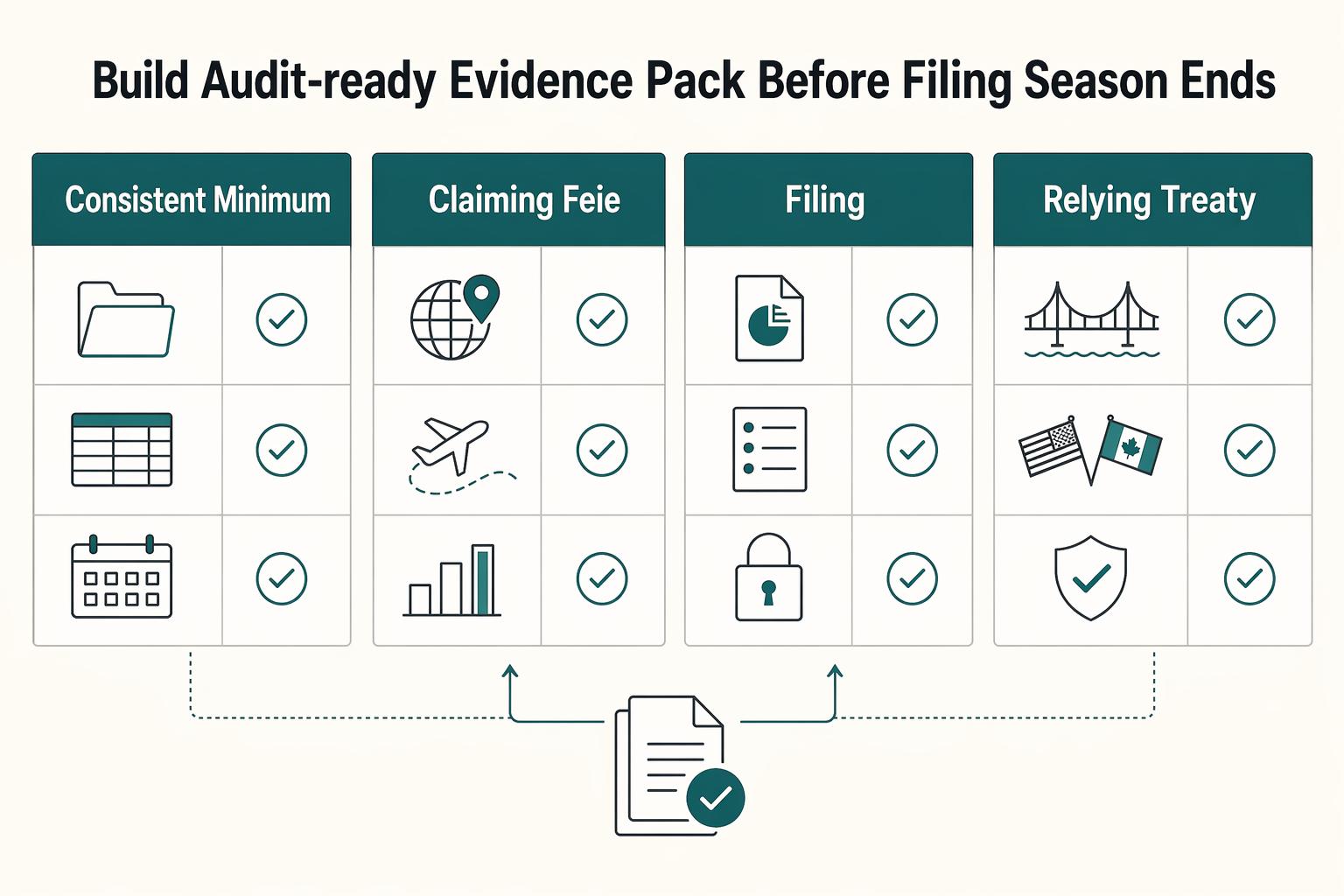
U.S.-Canada Tax Treaty Filing Workflow for Freelancers
If you are working through the us-canada tax treaty freelancer question, lock down the facts before you choose forms. That is a practical way to reduce double-tax risk. Confirm residency and work location first, then test what the treaty can and cannot coordinate. The treaty can help reduce double taxation, but it does not erase domestic filing duties.
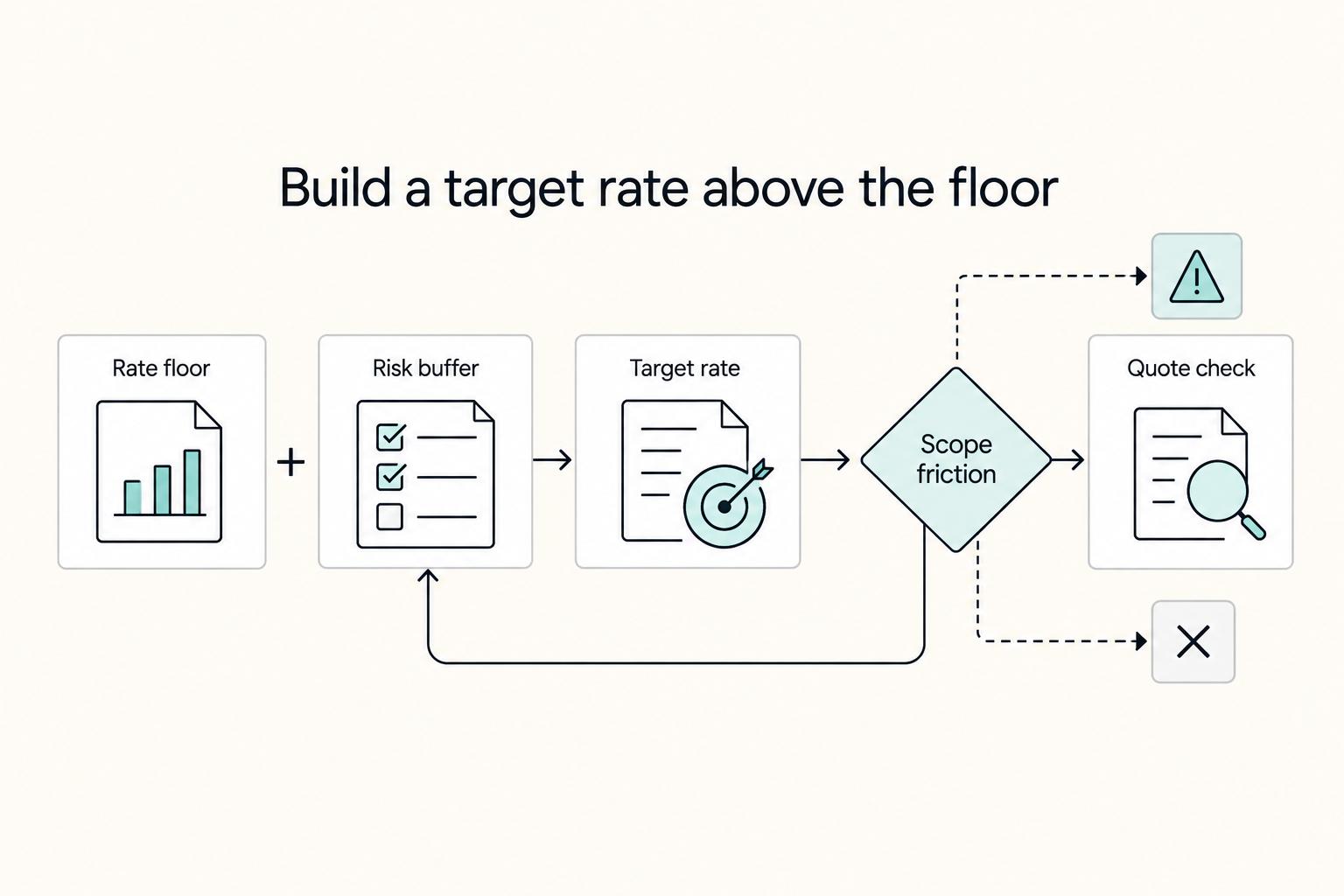
How to Calculate a Freelance Rate You Can Actually Get Paid On
A workable rate is not the neat number a calculator produces. It is the number that still works after you account for real billable capacity, non-client time, scope drift, and the gap between sending an invoice and receiving cleared cash. Start with hourly math even if you do not plan to bill hourly, then turn that number into a quote with clear `payment terms`.