

Quick Answer
Define recoverable and excluded losses, then choose and calculate the cap: its fee base, covered documents, trigger date, and aggregate or per-claim scope. Align carve-outs, indemnities, defense costs, service credits, payment remedies, and dispute terms. Compare the final execution copy with the approved redline before signing, then preserve signed originals and notice records.
Set a liability position before negotiating the cap#
A liability clause sets which losses can be recovered and how much can be claimed. For a freelance developer, the useful starting point is the project risk: a failed acceptance test, an IP complaint, a data incident, or an unpaid invoice. Agree which risks the contract covers before choosing a cap number.
- Baseline position: what is excluded entirely, what is capped, and what is carved out.
- General cap: the contractual maximum exposure for claims inside the main limitation.
- Separate risk track: a way to handle excluded loss categories and monetary exposure as distinct drafting decisions.
- Fallback: a pre-approved alternative you can offer if your primary term is rejected.
Use a one-sentence opening#
A useful opening is: “I propose defined excluded losses, a general cap for ordinary breach, and separate treatment for any named higher-risk category.” Before exchanging redlines, prepare the following:
- Map where disputes are likely to start. Check scope, acceptance, payment, and termination together. Define acceptance as acknowledgment that delivered services meet contract requirements, then state when acceptance occurs in your deal, such as at delivery, after testing, or after a review window.
- Set the contract stack before debating percentages. State which documents form the agreement and the order of precedence if MSA and SOW terms conflict.
- Route pushback by issue. If the client pushes for a higher cap, identify the driver and address that issue on a separate risk track when appropriate.
- Prepare one fallback before the call. Keep exact replacement language ready so you are not drafting high-impact liability text live.
Decide the sequence before the cap number#
| Decision point | Negotiate cap number first | Set structure first |
|---|---|---|
| Deal speed | Can feel faster at first | Can take more setup at the start |
| Exposure clarity | Can be lower, because the number is debated before claim categories are settled | Can be higher, because you define what is inside and outside the cap first |
| Redline control | Can be weaker, because risk can expand through other clauses while the cap headline stays in place | Can be stronger, because comments stay anchored to an agreed liability framework |
In Drax Energy Solutions Ltd v Wipro Ltd [2023] EWHC 1342 (TCC), the court interpreted a software-services MSA cap as a single total limit, considering both the liability clause and surrounding provisions. The first-year formula used 150% of estimated full-year charges. On the assumptions before the court, this produced roughly £11.5 million against claims of about £31 million. This was a preliminary interpretation decision, not a finding that all alleged losses were proved. The practical lesson is to state the cap structure and formula across the MSA and SOWs.
Keep a negotiation record you can defend#
Keep one evidence pack: the latest draft, issue log, approval notes, and fallback language. Update it each round when you send comments, receive revised language, or approve concessions. If someone else cannot reconstruct the negotiation history from that file set, tighten the record before you proceed.
In practice, that means the file set should let a reviewer answer four questions without digging through email chains: what your starting position was, what changed, who approved the change, and where the final wording landed. Use a simple operating rule: for every material liability move, save the marked-up draft, the clean draft, and the note that explains why the change was accepted or rejected. If the other side introduces a new carve-out or changes a cap formula input, log it as its own issue rather than burying it in general redline traffic.
After you settle structure, you can use the SOW generator to keep project documents aligned.
Define losses and test the cap#
Treat this as two separate approvals: first, which loss categories are excluded or allowed, and second, how the monetary cap applies to claims that remain.
If you approve those as one blended decision, you can end up with a clean headline cap but broader exposure in the clause details. That is why the loss buckets come first and the money discussion comes second.
Define the loss buckets before you debate money#
Use plain language, but tie every internal example to the exact contract labels:
- Direct loss: under English law, commonly losses arising naturally in the ordinary course from the breach; the facts and drafting still matter.
- Indirect or consequential loss: English-law treatment depends on contractual context and remoteness. A label alone does not settle whether a particular cost or lost profit is excluded.
- Incidental damages: UCC section 2-715 describes certain reasonable expenses following a seller’s breach in a goods transaction. Article 2 is not automatically the law for a custom software-services contract; check the applicable state law and transaction.
- Named loss exclusions: if the intention is to exclude lost profit, revenue, or data-restoration costs, decide that explicitly rather than assuming “consequential” captures each category. Some lost profits can be direct losses.
These categories vary by governing law and contract type. Transocean v Providence [2016] EWCA Civ 372 illustrates why the contract’s specific loss definition and wider allocation of risk matter. Test your actual project examples against the draft wording, including any named exclusions.
Before you negotiate the cap, add two short notes beside the clause: expected excluded examples and expected claimable examples.
- If those examples cannot be mapped cleanly to the draft wording, pause and tighten the language first.
A useful discipline here is to test your examples in one sentence each. If you say a cost should be excluded, point to the actual label in the clause that excludes it. If you say a cost should remain claimable, point to the wording that keeps it inside the core remedy set. That simple exercise flushes out negotiation shorthand that sounds aligned but is not yet in the paper.
Run a cross-clause review, not a clause-only review#
A consequential-damages waiver can fail in practice when another clause puts the same exposure back in. Review the full contract set, including the main agreement, order forms, and attachments, in this order:
| Clause area | What to check | What to note |
|---|---|---|
| Indemnity | Check whether "all losses" or similarly broad terms sit outside the waiver or cap | If the interaction is unclear, mark it unresolved |
| Service levels and service credits | Confirm whether service credits are the exclusive remedy for SLA failure or whether broader damages remain available | Note whether broader damages remain available |
| Payment remedies | Read late-payment, chargeback, refund, and setoff terms together with the liability clause | Broad repayment language can recreate broader exposure than intended |
| Termination | Check survival and end-of-term recovery language | Note any term that reopens broad cost or loss recovery |
Focus on defined-term consistency across documents. Losses, Damages, Claims, and Liability should operate the same way everywhere.
Do this as a document sequence, not as a memory exercise. Start with the liability clause, then move clause by clause through each recovery path and write a yes, no, or unresolved note next to each one. If a payment clause says amounts are recoverable "notwithstanding any other provision," or a schedule uses broader recovery language than the MSA, fix that immediately. You are looking for paths that let the same loss category re-enter under a different label.
Test the cap structure before signoff#
Your second approval is how the cap behaves across multiple claims.
| Structure | What to test before signoff | Exposure pattern it can create |
|---|---|---|
| Single aggregate cap | Whether one total ceiling applies across all claims, and whether related clauses follow the same model | One overall bound, if drafting stays consistent |
| Per-claim cap | How the draft distinguishes separate claims from related claims | Multiple claims can stack if each claim gets its own cap |
| Mixed or ambiguous wording | Whether one clause reads aggregate while another reads per-claim | Dispute-stage uncertainty over which cap model applies |
For two separate, established covered claims of $25,000 and $15,000, a single $37,500 aggregate cap would limit their combined $40,000 to $37,500, assuming it is valid and no exception applies. A $37,500 per-claim cap would not reduce either claim, leaving $40,000 combined exposure. Related-claim grouping can change the result. Test that grouping as well as the number.
Escalate pushback by decision, not by volume#
Do not concede both levers at once:
- Hold structure when the other side wants a higher number before excluded categories and cap mechanics are settled.
- Offer a targeted fallback when pushback is tied to one named risk, such as IP indemnity or a specific service failure.
- Mark unresolved when broad loss language remains in indemnity, SLA, payment, or termination terms and no clear interaction with the cap is documented.
Keep one evidence pack to control late-stage drift: redlines, issue log, approval notes, and the latest clean copies of the main agreement, order form, and attachments. That record helps you catch cap logic that gets diluted or contradicted in later drafts.
For a step-by-step walkthrough, see How to Write a Limitation of Liability Clause for a Freelance Contract.
Choose the cap structure before pricing#
Decide the cap structure before you settle fees. The cap is part of the commercial deal, and if you leave it to the end, you risk pricing work on assumptions the legal wording does not support.
Use the terms precisely#
- Aggregate cap: one total liability ceiling across all covered claims.
- Per-claim cap: separate caps can apply claim by claim instead of one contract-wide ceiling.
- Stacking risk: exposure that arises when claim limits are treated as cumulative rather than as one net total cap.
- Carve-out drift: exceptions to disclaimers or caps expand during negotiation and reduce the cap's practical protection.
Try a hypothetical fee-base calculation. In the agreed lookback period, $20,000 has been paid and a further $5,000 is contractually payable. A 150% cap based only on fees paid is $30,000; a cap based on fees paid or payable is $37,500. These figures illustrate wording, not a recommended cap or an assurance of enforceability. Identify which fees qualify, the trigger date, and the covered SOWs before doing the calculation.
Also test an incident before the first invoice is paid: a paid-fees-only formula may produce a zero or very small amount. If that is not intended, discuss a stated floor, fixed amount, or expressly defined first-year estimate. Do not assume the lookback automatically means an annual reset. Separately review any required insurance with the policy or broker: covered activities, limits, deductible, exclusions, defense costs, and notification or settlement conditions can differ from the contract cap.
Pick a cap model from deal facts, not instinct#
Before any negotiation call, confirm these inputs in order:
- Contract shape: Is this one defined SOW or an MSA with repeated or evolving work? If the cap is meant to cover the main agreement and all SOWs together, confirm that wording across the full contract set.
- Scope clarity: Tighten deliverables, acceptance, and dependencies first. Vague scope can turn delivery disagreements into liability fights.
- Change control: Make sure extra work is documented, priced, and approved in writing. Weak change control can make it easier for disputes to be framed as multiple claims, increasing stacking risk.
- Payment model: Match the cap mechanics to fixed fee, milestones, or time and materials. If the formula uses charges or fees, confirm the fee base and lookback period before pricing.
| Deal shape | Decision focus | Main tradeoff | Negotiation implication |
|---|---|---|---|
| Single scoped project | Whether failures are likely to become one main claim or several separate claims | Per-claim treatment can increase cumulative exposure when claims are framed separately | Lock scope, acceptance, and change terms before negotiating cap size |
| Rolling services under an MSA | Whether disputes are likely to build over time across service periods | Exposure can accumulate if cap wording is not consistent across periods and documents | Verify the same cap logic applies across the MSA, SOWs, and remedy language |
| Multi-SOW program | Whether claims may be framed SOW by SOW | Ambiguity can invite stacking arguments across workstreams | Force explicit wording: one total ceiling or multiple caps |
Bring a cap position sheet, not just a redline#
Prepare a one-page negotiation sheet with your first position, acceptable fallback, and walk-away trigger. Check the commercial price, delivery obligations, and legal risk together. As a solo developer you may own the first two decisions yourself; obtain legal review where the jurisdiction, carve-outs, or exposure needs it.
Review the latest MSA, every SOW or order form, and SLA attachments together. Record whether the cap covers the whole agreement, each SOW separately, a contract year, or another expressly defined scope. Confirm whether a renewal or new SOW resets the limit and whether previous covered recoveries reduce the remaining aggregate amount.
The sheet should show the model you are willing to sign, the formula inputs, acceptable carve-outs, and any point that needs further review. Check the price against the actual draft: changing the fee base or broadening an exception can change exposure even when the cap percentage stays the same.
If the client pushes back, consider moving non-cap levers first: reporting discipline, cure periods, narrower carve-outs, clearer service-credit mechanics, and specific remediation language. Then revisit the cap number with pricing, delivery, and legal aligned.
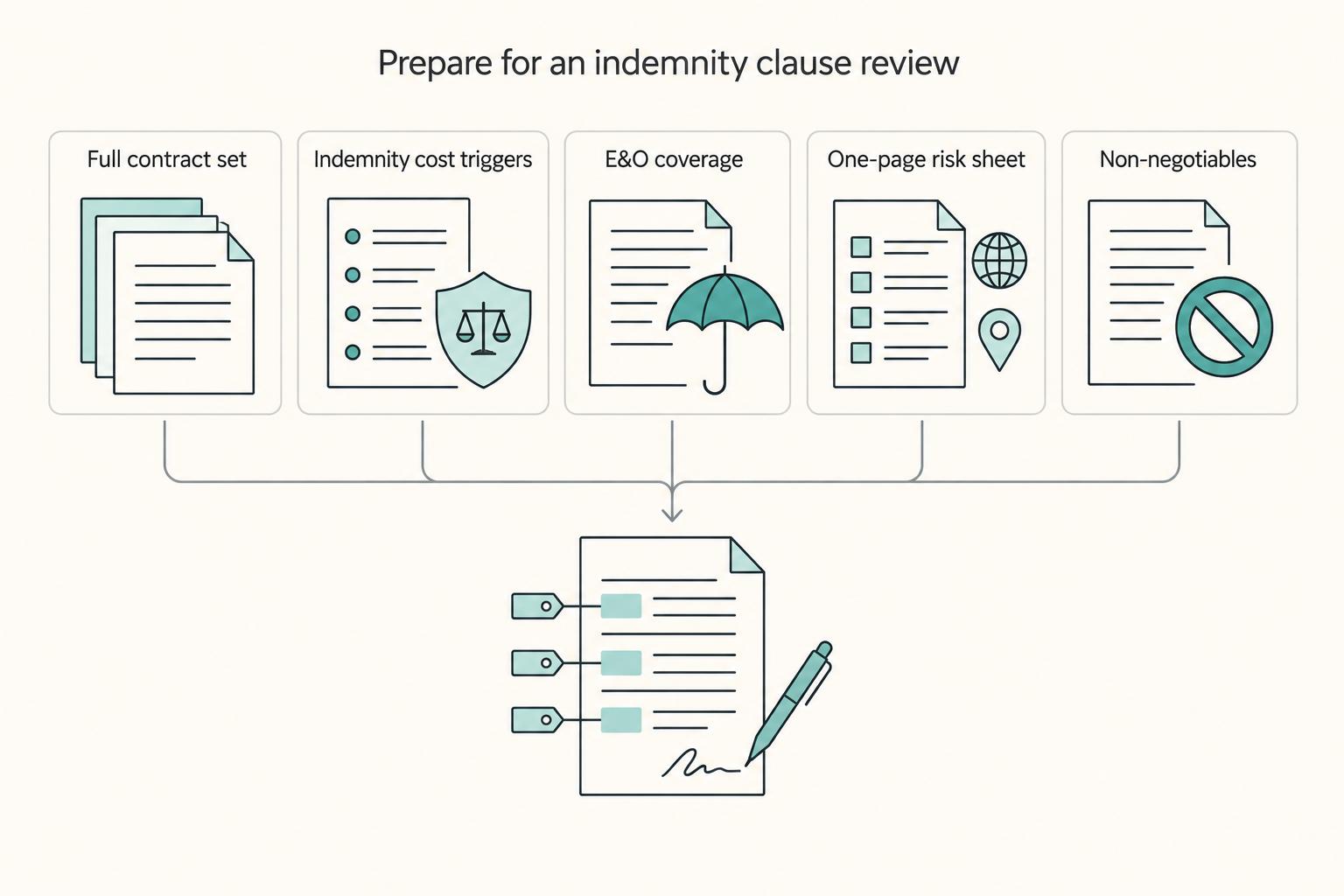
We covered this in detail in Structuring a Limitation of Liability Clause for OpenAI API Client Work.
Define carve-outs and indemnity scope#
Once you choose the cap structure, the next pressure point is what sits outside it. Liability terms are often negotiated late, and late-stage problems can come from carve-outs and indemnity wording that reopen exposure you never priced.
Separate the two risk decisions#
A liability clause allocates risk between the parties. An indemnity is a separate promise to cover specified losses, often tied to third-party claims, and it can include defense and settlement costs.
An indemnity can cover third-party claims, first-party losses, or a defined combination, depending on its wording. A broad indemnity does not automatically escape the cap. State whether each covered indemnity, defense cost, and settlement sits inside the general cap, under a separate cap, or outside it. Keep direct project remedies and third-party claims distinguishable.
Use one drafting test for every proposed carve-out#
Before you accept any uncapped category, run the same four-part test:
| Test element | Question to answer |
|---|---|
| Trigger event | what must happen |
| Responsible actor | whose conduct triggers it |
| Causation link | how direct the link must be |
| Remedy path | direct claim, third-party indemnity, defense costs, settlement, or a defined subset |
This is a drafting discipline, not a statutory rule. If the wording does not pass this test in plain English, it is too broad. Also keep misconduct language tight. Some deals make wilful misconduct uncapped, but the result still depends on the wording and the facts.
A quick practical check is to ask whether the clause can be administered by the deal team without guesswork. If you cannot tell from the text whether a claim belongs in the general cap, a separate cap, or an uncapped bucket, the drafting is still carrying litigation risk. The same is true if the clause says one thing about a claim type and the indemnity says something broader about the same conduct.
Compare carve-outs in one table before trading redlines#
| Proposed carve-out | Scope to define | Cap treatment decision | Indemnity interaction to confirm |
|---|---|---|---|
| Death or personal injury from negligence | Limit to the non-excludable category where relevant | Under English law, this liability cannot be excluded or restricted by contract | Ensure indemnity text does not expand beyond that category |
| Fraud, dishonesty, or wilful misconduct | Define conduct and actor; avoid catch-all wording | Separate legally non-excludable conduct from negotiated exceptions; verify the applicable law and precise actor/conduct | Check overlap with defense and settlement obligations |
| Third-party IP infringement claims | Limit to third-party claims tied to deliverables you control | Decide: inside the general cap, under a separate cap, or as a specific carve-out | Confirm defense control, settlement authority, and remedy mechanics |
| Confidentiality, data protection, or security breach | Tie to specific obligations and explicit causation | Narrow first; avoid broad uncapped buckets by default | Confirm indemnity loss definitions are not broader than the limitation wording |
Use a fixed pushback order: narrow claim type first, then causation, then discuss cap treatment. For each disputed carve-out, document one fallback before the call, whether that is a narrower trigger, different cap treatment, or third-party-only indemnity scope.
Run one cross-document red-flag pass before signature#
Review limitation text, indemnity text, and related schedules together across the MSA and every SOW. This is where exposure can re-enter through inconsistent definitions or broader recovery language in attachments.
Use a direct check: align terms like indemnify, defend, hold harmless, losses, claims, and liabilities across all documents. If carve-outs are closed in the limitation clause but reopened in an SOW or schedule, the cap is weaker than it looks.
Finally, test mutuality by real control, not mirrored wording. Mirrored language can still leave one side carrying risks it cannot meaningfully prevent. Keep exceptions narrow, defined, and synchronized across the full contract set.
When you do this pass, compare the promise, the remedy, and the procedure separately. The promise is what conduct triggers liability. The remedy is what losses are recoverable and where the cap applies. The procedure is who controls defense, settlement, notice, and cooperation. Late-stage problems can surface only when those three pieces are read together.
Align the MSA, SOWs, and attachments#
Your cap may not protect you as intended if the MSA, SOW, and attachments use different liability logic. If one document reads as a single aggregate cap, another reads as per-claim, or an attachment changes the cap base or covered parties, interpretation risk increases and exposure can expand.
Lock the terms that decide the outcome#
A Single Aggregate Cap is one overall limit across all claims. A Per-Claim Cap can apply separately claim by claim. Treat cap-base wording the same way. paid and payable can produce different cap outcomes when your contract uses a specific formula such as charges paid or payable in a defined lookback period.
Check covered parties explicitly. If the clause is framed as the supplier's liability to the customer, do not assume affiliates, subcontractors, or personnel are included unless they are expressly named.
Reconcile the signed stack side by side#
| Issue | MSA | SOW mismatch risk | Attachment mismatch risk | Required fix |
|---|---|---|---|---|
| Cap structure and formula | States one structure and one fee base | Introduces local cap wording or a different formula | Order form or schedule uses different payment terms | Replace local wording with a direct cross-reference, or amend all documents to one formula |
| Carve-outs and cap treatment | Lists exceptions and their treatment | Adds project-specific liability buckets | Security, IP, or data schedule expands recovery scope | Consolidate carve-outs and confirm no document reopens broader uncapped recovery |
| Defined terms and covered parties | Defines key terms and named parties | Uses different labels or leaves terms undefined | Uses different party group terms | Harmonize definitions and expressly name who is covered |
| Conflict/precedence rule | States what forms the agreement and who controls on conflict | Says the SOW prevails without a liability carve-out | Says an attachment overrides on conflict | Add one clear order-of-precedence rule and specify whether liability terms can be overridden |
Use a cold-read test: if a first-time reader cannot tell which document controls and when, the drafting is not ready.
Apply go/no-go rules before pricing or signature#
Accept an SOW variance only when it is deliberate, priced, and explicitly tied to the same cap architecture. Amend before signature if the variance changes cap structure, cap-base wording (paid vs payable), covered parties, or conflict rules. Pause the deal if document control is unclear.
Operationally, treat any SOW variance as a separate approval event. Mark the exact sentence that departs from the MSA, note whether the change affects price or only wording, and confirm whether the same departure appears anywhere else in the stack. If you allow one local variation in an SOW, make sure later SOWs do not silently copy it without review.
Close with execution discipline#
- Reconcile the final liability text in the signed MSA, signed SOWs, and signed attachments, not email intent or draft comments alone.
- Store executed documents, redlines, approvals, and a final liability term map in one evidence pack.
- After liability terms are aligned, hand off to governing law, jurisdiction, and dispute-resolution alignment so the remedy path is coherent end to end.
Agree governing law and dispute terms#
Lock these terms before final pricing and signature, or you can spend the first phase of a dispute fighting about forum and process before you reach liability outcomes. Treat each lever as its own control:
- Governing law: which law applies to the contract.
- Forum selection: which court location will hear the dispute.
- Court jurisdiction: that court's power over the parties.
- Arbitration scope: which disputes are sent to arbitration.
- Arbitration rules: which procedural rules control the case.
- Arbitration seat: the legal place of arbitration, which affects procedural law and supervising courts.
- Hearing venue: where a hearing takes place, including a remote hearing; this need not be the legal seat.
- Delegation: whether gateway arbitrability questions go to the arbitrator.
- Pre-dispute steps: whether mediation is required first, or can run concurrently.
| Preferred route | Why it fits | Tradeoff | Clause elements that must match in both MSA and SOW |
|---|---|---|---|
| Named courts only | Clear court path; valid forum language can carry strong weight | Public process and court procedure | Governing law; chosen courts and intended exclusivity; jurisdiction; consistent scope and no conflicting arbitration clause |
| Arbitration for the merits | Agreed institution, rules, and legal seat define the process | Administrative fees, arbitrator fees, and uncertainty if essential terms are missing | Governing law; covered disputes; institution and rules; legal seat; hearing arrangements; intended arbitrability wording; appropriate court roles for assistance or enforcement |
| Mediation then arbitration | Adds a settlement step before merits arbitration | Delay risk if timing and triggers are vague | Governing law; exact sequence; named mediation provider or rules; clear trigger to start arbitration if mediation fails; arbitration scope, rules, and seat |
Before signature, use these go or no-go checks:
- One consistent governing-law choice across the contract documents.
- A clear route for deciding the merits, with any mediation step and trigger defined.
- Compatible SOWs and schedules, including expressly stated court roles for interim relief or enforcement. Check legal filing deadlines separately; a mediation requirement does not itself extend them.
Also run this pre-signature red-flag checklist:
- Before signature, compare the proposed execution copies of the MSA, each SOW, and attachments; afterward, archive and verify the executed set.
- Confirm governing law is identical across all documents.
- Confirm the route for merits disputes and any permitted court roles agree across the documents.
- Confirm pre-dispute steps are consistent, including whether they are mandatory first steps or concurrent processes.
- Confirm termination and carve-out language does not bypass the agreed dispute path.
The UNCITRAL Model Law, article 20, distinguishes the agreed place of arbitration from meetings or hearings elsewhere. It is a model for national legislation, not a law that automatically governs every agreement. Check the chosen seat’s law and selected rules, including permitted court assistance, interim relief, and award enforcement.
Respond to liability and indemnity requests#
Handle pushback as clause drafting, not as a fairness debate. Answer briefly, then move to paper. Name the lever before you negotiate it:
- Liability cap: the maximum exposure a party accepts under the contract, subject to agreed exceptions.
- Uncapped carve-out: a liability category left outside the general cap.
- Indemnification scope: the expressly covered third-party claims, first-party losses, or both; identify the cap treatment rather than inferring it from the label.
- Duty to defend: the indemnifying party funds and manages defense for covered claims; whether it must be explicit can vary by jurisdiction.
- Payment holdback: temporary withholding of otherwise payable amounts, so trigger, amount, and release mechanics should be explicit.
Objection to response table#
| Client ask | Your framing response | Proposed paper language direction | Risk tradeoff if accepted |
|---|---|---|---|
| "We need unlimited liability. That is our standard." | "I can accept targeted uncapped carve-outs, not unlimited exposure across the contract. Pricing assumes bounded risk." | Keep one general cap. Limit uncapped items to named categories only. Remove open language like "including but not limited to." | Broad uncapped exposure can exceed contract value quickly. |
| "Make the indemnity cover any losses we suffer." | "I can indemnify defined third-party claims. Direct project losses stay in core remedies and under the cap." | Limit indemnity to third-party claims with clear trigger and causation language. | First-party loss indemnity can effectively bypass the cap if drafted broadly. |
| "You must defend any claim immediately." | "I can discuss defense for covered third-party claims, with notice, defense-control, and settlement-consent rules." | Add express defense mechanics: notice timing, counsel control, cooperation, and no settlement admitting fault without consent. | Loose defense duty can force spend before coverage is clear. |
| "We want a per-claim cap." | "Per-claim stacking increases exposure across related issues. I need one aggregate cap for contract claims." | Use single aggregate cap wording and mirror it across the MSA and each SOW. | Multiple caps can multiply recovery on one project. |
| "We can hold back payment until indemnity issues are resolved." | "I can discuss a temporary, defined holdback tied to a covered claim. Payment and release terms need to be clear." | State holdback amount, trigger, and release event. Exclude open-ended suspension of all fees. | Vague holdbacks become cash-flow pressure, not targeted protection. |
| "Liability must be fully mutual." | "Tech risk allocation is not always reciprocal. Liability should track each party's role and control." | Keep justified asymmetry tied to scope, IP ownership, security duties, or client-controlled inputs. | Forced symmetry can shift client-side business risk to you. |
Concede in the right order#
Concede in this sequence:
- Tighten process first: reporting cadence, response windows, cooperation, and cure mechanics.
- Narrow carve-out wording second: tighten trigger, causation, and claim type.
- Move the cap last, only after scope is fixed.
Use walk-away triggers when the draft breaks your risk model:
- uncapped exposure for ordinary breach,
- indemnity expanded to client direct losses,
- defense duty without control rights,
- open-ended payment holdback.
Get to text and close the paper#
After each call, close to text immediately:
- Send same-day redlines.
- Update your fallback-language tracker.
- Run a final cap-versus-indemnity drift check across the MSA and every SOW before signature.
A good operating habit is to send the follow-up in issue order, not in the order the conversation happened. Lead with the items that change exposure, attach exact replacement wording, and identify which points are agreed, open, or subject to internal approval. Final check question: did the cap stay in place while indemnity scope expanded? That keeps the next draft from blurring a concession on process into a concession on monetary exposure.
This pairs well with our guide on How to Use an Indemnification Clause to Limit Your Liability.
Check execution copies and termination records#
Your liability position is strongest when the signed documents and offboarding steps match what you negotiated. Two common failure points are version control before signature and notice or survival execution at termination.
Before signature, collect the MSA, every SOW, schedules, order forms, product terms, and incorporated documents. Confirm precedence in the proposed execution text rather than assuming the MSA always controls.
| Document | Liability-focused checks |
|---|---|
| MSA | cap mechanics, carve-outs, indemnity scope, dispute path, precedence, defined terms |
| SOW | whether it adopts or overrides the MSA, service-specific liability language, defined terms |
| Schedules | security, IP, or warranty language that may add exceptions or survival text |
| Order forms | incorporated terms, commercial references to caps, precedence wording |
| Product terms | extra exclusions, support limits, dispute forum, notice mechanics |
Use this pre-signature checklist:
- Collect the full set and list every incorporated document by name.
- Confirm hierarchy and resolve any conflict between MSA, SOW, schedules, order forms, and product terms.
- Reconcile cross-references so cap, indemnity, dispute, and defined-term references point to the right clauses.
- Check governing law and dispute resolution separately as two distinct fields.
- Verify version integrity by comparing the clean final contract to the last approved redline. If you cannot confirm the match, do not sign.
This is also the right moment to do a line-by-line compare between the execution copy and the last approved negotiation draft. Do not assume a clean copy is safe because no changes are visible on the face of the document. A misplaced cross-reference, a missing schedule, or inconsistent wording can change the liability position even when the signature block looks ready.
At termination or offboarding, run a decision checklist from the signed text:
- Survival: what obligations and claims survive, and for how long? Record the survival period after verification.
- Notice mechanics: what notice clause applies, what triggers it, and what timing window does it set? Record that window from the executed contract.
- Delivery validity: who must receive notice, at which address, and by which method.
- Ownership: identify the deal-specific owner for each action and deadline.
- Tracking: where each action item, send date, and proof of delivery is logged.
For tracking, keep the log practical. Record the document, clause reference, required action, owner, deadline, send method, recipient, and proof location. That way, if a later dispute turns on whether notice was valid or whether a survival obligation was preserved, you have the operational record ready and not just the signed paper.
Archive the signed agreement set, final redlines, clean-versus-redline comparison, approvals, term map, and notices with delivery proof. Resolve conflicting draft references before signature. At closure, preserve the executed originals: flag any conflict for advice or an agreed written amendment instead of editing signed terms yourself.
Related reading: How to Write a Warranty and Disclaimer Clause for a Software Product.
For an early draft, the Freelance Contract Generator can help organize a baseline. Preserve negotiated changes as you revise; do not regenerate over the approved text or treat a template as legal signoff.
Conclusion#
Your objective is not to win one redline. It is to sign with a liability position you can explain, price, and defend across the full contract stack. Set these terms early, price against the risk you are actually accepting, and do not let late edits quietly expand recoverable loss.
Before signature, run this final decision gate:
- Excluded losses are explicit. State which categories are excluded, including any consequential or indirect losses you intend to exclude.
- Cap mechanics are explicit. State whether the cap is a single aggregate cap or can apply per claim, and make formula inputs clear.
- Carve-outs are narrow. For each carve-out, define the trigger, whether it is uncapped or under a higher cap, and whether treatment is mutual.
- MSA and SOW language is aligned. Reconcile definitions, precedence, survival, indemnity interaction, and any attached terms.
- Damage terms are consistent across documents. If terms like "direct," "indirect," or "consequential" conflict, stop and fix before signoff.
Keep a one-page preferred position, fallback, and walk-away note linked to signed documents and approvals. For relevant English-law business contracts, UCTA section 2 prohibits limiting death or personal-injury liability caused by negligence and subjects other negligence limits to reasonableness. Section 3 applies reasonableness to relevant restrictions when dealing on another party’s written standard business terms. Under section 11, the assessment uses circumstances at contracting; resources and available insurance matter for monetary limits. Check statutory scope and exceptions rather than assuming a signed cap is enforceable.
Before sending the execution copy, calculate your cap on an early-project claim and on two related claims. Save the calculation beside the agreed clause and resolve any mismatch between the result and the risk you priced.
Frequently Asked Questions
What does a Limitation of Liability Clause do in software development contracts?
It allocates risk by defining excluded loss categories and the maximum liability that remains. If you cannot tell whether exposure is single aggregate, per-claim, or expanded by carve-outs, the clause is not ready. Run a cross-document consistency check, then do a final redline-to-clean-copy match before signature.
What is the difference between Direct Damages and Indirect Damages?
Under English law, direct losses commonly arise naturally from the breach, while indirect or consequential treatment depends on remoteness and the contract’s context. These are not simply labels for immediate versus later harm. A lost-profit claim can be direct, so an exclusion of consequential loss alone may not achieve the intended profit exclusion. Map concrete examples to the actual wording and governing law, then align the MSA and SOW.
What is an Aggregate Liability Cap, and how is it different from a per-claim cap?
A single aggregate cap is one total ceiling for the claims within its stated scope. A per-claim cap can allow separate recoveries up to the limit for each claim. Define related claims, covered documents, any reset period, and how earlier recoveries reduce the available aggregate. The label alone is not enough to calculate exposure.
Is a cap tied to recent fees a common structure in software services agreements?
Fee-based formulas are used in some software services agreements, but the inputs control the real cap value. "Paid" and "paid or payable," plus lookback trigger wording, can produce different outcomes. Reconcile every cap formula input across the MSA, SOW, schedules, and order form before approval.
Which claims are commonly listed as carve-outs from the main cap?
Contracts may place specific categories outside the main cap or under higher supercaps, so you should read each carve-out as its own risk decision. Keep carve-outs narrow and clearly triggered, and accept broad mutual treatment only when both sides can realistically trigger the same exposure. Confirm each carve-out's cap treatment before signoff.
Can poor drafting make liability broader or narrower than both sides intended?
Yes. Small wording differences can change both the cap effect and the recovery path. Courts may read limitation language together with other contract terms when wording is inconsistent, so "close enough" is not safe. Run a full contract-stack consistency pass and resolve conflicts before final clean execution.
Should liability limits and Indemnification always be mutual in freelance contracts?
No. Fair allocation does not always mean identical wording for both sides. In many IT contracts, indemnities usually focus on third-party claims, not everything that could go wrong between the parties. If obligations are not comparable, narrow the scope, triggers, or cap treatment so your downside stays priced and intentional. Verify indemnity scope and cap interaction as one package before signoff.
Try a related tool
Researched and edited by the Gruv editorial team. Gruv builds cross-border billing, payouts, and finance-operations software for global businesses.
Sources
Includes 4 external sources outside the trusted-domain allowlist.
- law.cornell.edu/ucc/2/2-102trusted
- law.cornell.edu/ucc/2/2-715trusted
- legislation.gov.uk/ukpga/1977/50/section/2trusted
- legislation.gov.uk/ukpga/1977/50/section/3trusted
- bailii.org/ew/cases/EWHC/TCC/2023/1342.htmlexternal
- bailii.org/ew/cases/EWCA/Civ/2016/372.htmlexternal
- it-kontraktret.dk/wp-content/uploads/2023/08/Drax-Energy-Solut...external
- rm.coe.int/uncitral-model-law-on-arbitration/1680a72daaexternal
Educational content only. Not legal, tax, or financial advice.
Related Posts
How to Use an Indemnification Clause to Limit Your Liability
**Giving an indemnity usually adds a payment obligation; it does not by itself limit your liability.** You limit that exposure by negotiating the covered claims, exclusions, defense process and interaction with the liability cap. An indemnity received from the client can allocate client-controlled risks back to the client, but its value also depends on enforceability and the client's ability to pay.

How to Write a Warranty and Disclaimer Clause for a Software Product
You need a **Warranty Disclaimer** that narrows avoidable risk without slowing the deal. The goal is not to disclaim everything. It is to say, clearly and early, what is and is not promised so broad sales language does not turn into a warranty claim later. By the end of this guide, you should have a usable **Disclaimer of Software Warranty clause** and a practical way to align it with your liability cap.
Structuring a Limitation of Liability Clause for OpenAI API Client Work
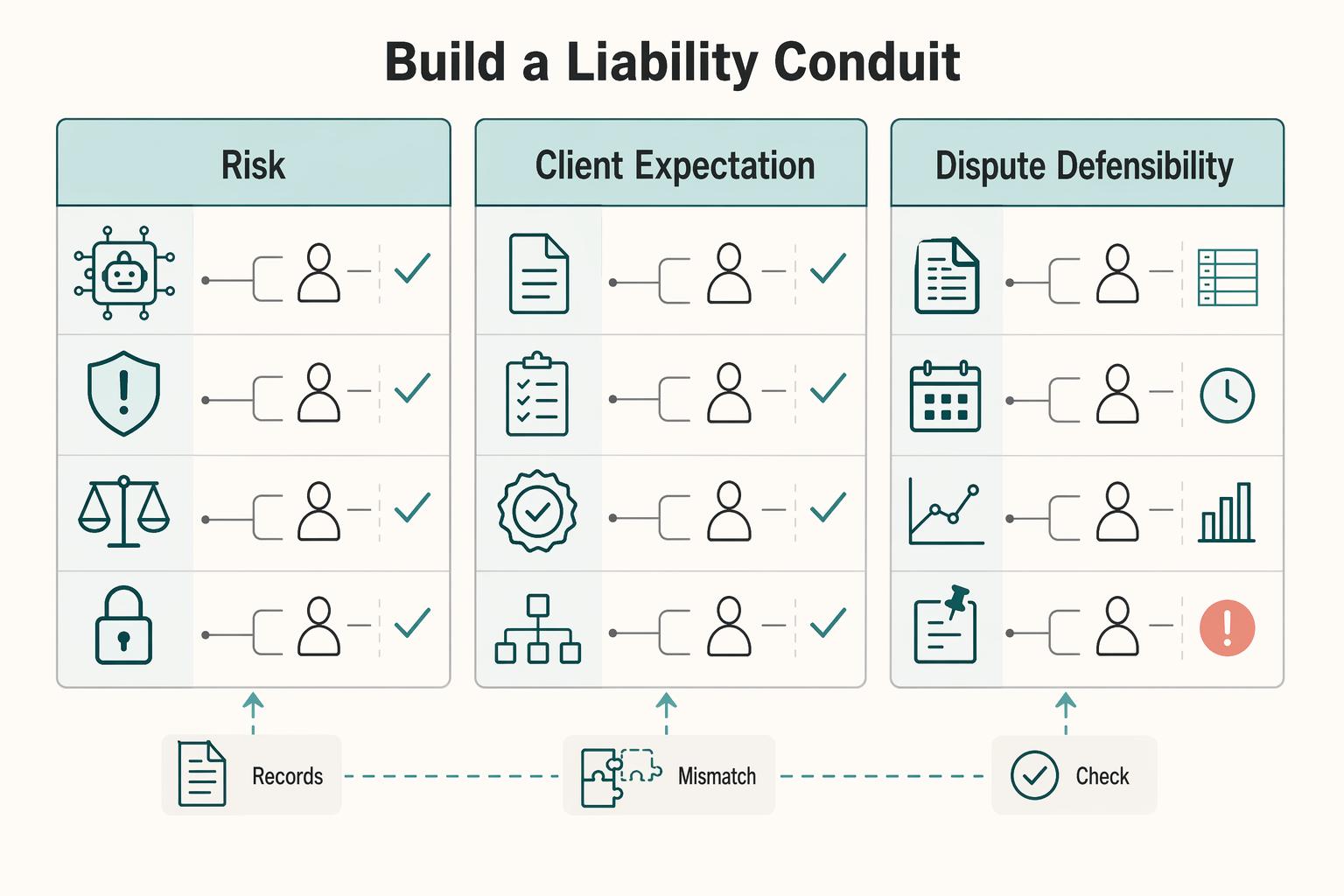
When you deliver AI-assisted work to a client, OpenAI's terms and your client promises do not line up automatically. In a dispute, OpenAI's obligations stop at its own contract terms, while your client may still pursue you under your SOW, proposal, or MSA.