
Quick Answer
Pick Scrum when your agency sells fixed-scope work in planned increments, and pick Kanban when client demand is ongoing and reprioritization is constant. For mixed delivery, use a Scrumban setup with one planned lane, one urgent lane, and one intake point for every request. Keep scope control visible by tying mid-cycle asks to a Sprint Goal in Scrum or to a WIP-based priority swap in Kanban.
Stop Managing Tasks. Start Managing Your Bottom Line.#
Short answer: in kanban vs scrum for agencies, choose the method that gives client work clearer boundaries, cleaner planning, and fewer surprises. A loose delivery process does more than make work harder to track. It gives scope room to expand, lets client assumptions drift, and makes priorities harder to predict.
Scope creep rarely arrives as a dramatic change. A website build picks up "just one more" landing page. A dev sprint absorbs an unplanned analytics request. A branding project turns into extra revision rounds because feedback came through email, Slack, and a call. Expectation gaps grow the same way. You think the client is reviewing one approved batch of work. The client thinks they can comment on every task in motion. That mismatch creates rework fast.
Delivery problems often start there, long before invoicing. When work moves without a visible queue, agreed checkpoints, or a clear point for reprioritizing, it gets harder to explain what is in progress and what changed. Run a quick verification step. Check where new requests enter today. If they can arrive through three different channels and never land on one shared board, you do not have a reliable record of priority or status.
This article is about delivery outcomes, not loyalty to a method. Your workflow is part client-engagement model and part risk control. Kanban gives you visible flow and work-in-progress limits. Scrum gives you fixed-length sprints, defined roles, and planning cycles. Both can help, but they control change in different ways, and that tradeoff matters. One warning up front: Kanban can look simple and still fail if your intake stays messy. Start there, because the method only helps once the rules of engagement are clear.
This pairs well with our guide on How to Create a 'RACI' Matrix for Your Team's Projects.
Set Your Rules of Engagement: Intake, Priority, and Approval#
Treat your framework as your rules of engagement: one intake path, one place to see priority, and one place to record approval. Do not pick Scrum or Kanban because it is popular. Pick based on your project context: time, cost, team, stakeholders, deliverables, and technologies.
In Kanban, your anchor is a shared board with visible work and explicit WIP limits. In Scrum, your anchor is structured sprints with a sprint goal and a backlog for work outside the current sprint. In both cases, define house rules up front: where requests must be submitted, what "ready" means for backlog items, and how out-of-scope asks move through a named change-request path.
Quick stress test: review your last five client requests. If any request exists only in email, Slack, or meeting memory, your boundary is weak, even if your board looks organized.
Use calm, repeatable client language:
- Kanban: "Happy to add [request]. Our active work is currently full, so to start this now we need to move [current item] back to the queue or log this as a change request. Which do you prefer?"
- Scrum: "Thanks, noted. The current sprint is focused on [sprint goal]. I've added [request] to the backlog for next planning. If you need it sooner, we can log a change request and review scope impact."
| Communication burden | Kanban mechanic | Scrum mechanic | What it protects |
|---|---|---|---|
| "Where is my request?" | Shared board shows queued, active, and done work | Backlog and current sprint show now vs later | Clear priority visibility |
| "Can you start this now?" | WIP limit forces an explicit reprioritization choice | Structured sprint cycle routes new work to backlog unless priorities change | Focus and fewer ad hoc switches |
| "What exactly was approved?" | Approval recorded on the card or linked comment | Approval tied to backlog/sprint item history | Traceable decision record |
| "Why is this on the invoice?" | Billing notes can reference completed, approved cards | Billing notes can reference agreed sprint/backlog items and approved changes | Faster, cleaner billing conversations |
This is how you move from busy to billable: requests live in the board or backlog, approvals live on the item record, and status discussions happen from that shared source. With that discipline in place, scope conversations become structured prioritization instead of conflict, which sets up the next section on scope creep. For tools and workflow support, see The Best Project Management Tools for Freelance Developers.
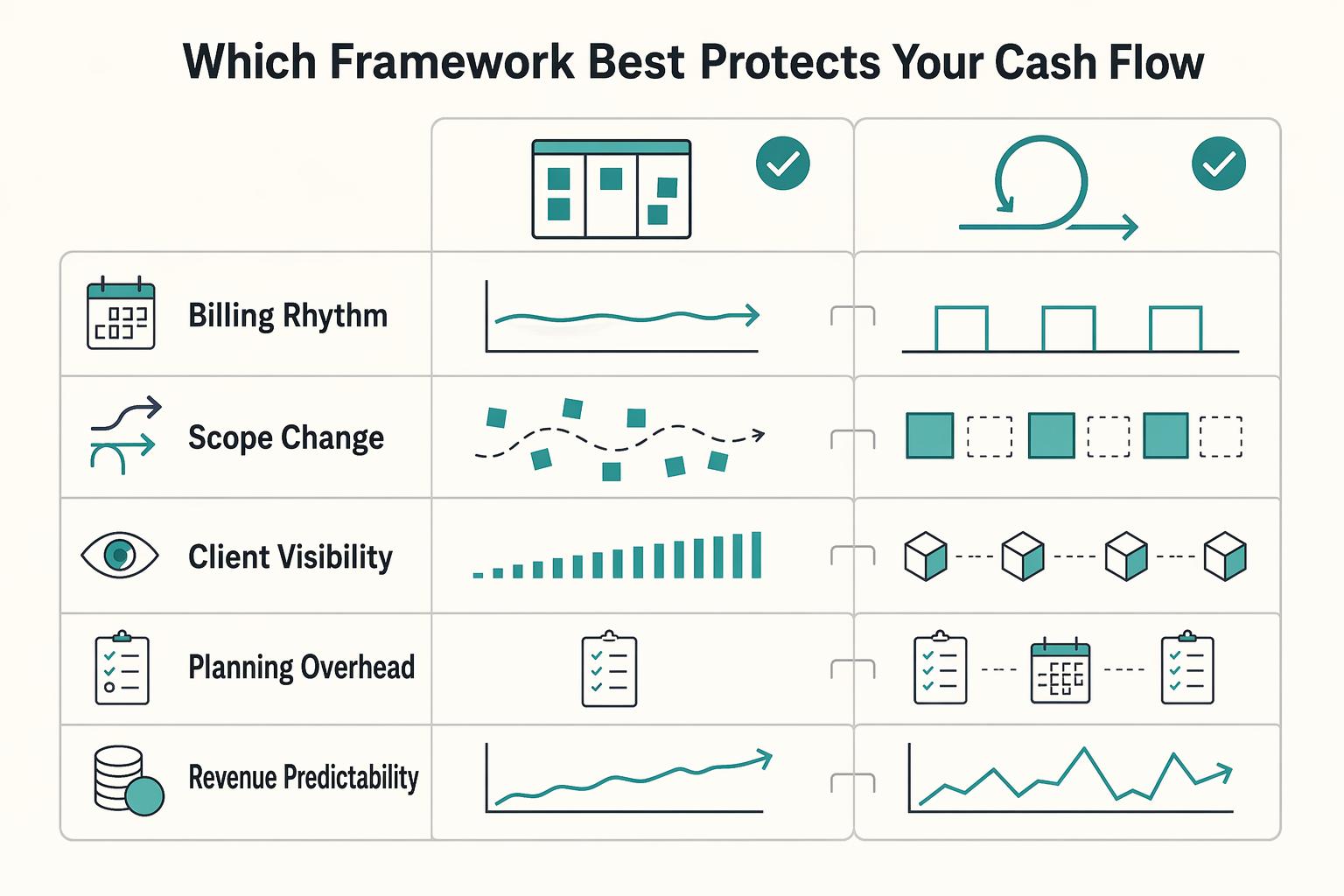
Kanban vs. Scrum: Which Framework Best Protects Your Cash Flow?#
If you want steadier cash flow, choose the framework that fits how your work actually arrives and changes, not the one that sounds more advanced. For most agencies, this is a business-model fit decision: variable, ongoing demand often aligns with Kanban, while defined project chunks often align with Scrum.
Neither framework is universally better. Fit is the real control point: intake pattern, change frequency, and how clearly you can show progress without extra status overhead.
| Buyer concern | Kanban | Scrum | Cash-flow implication |
|---|---|---|---|
| Billing rhythm | Continuous flow with no sprints or time boxes | Fixed-time sprints with planned windows | Billing conversations are usually cleaner when they match delivery cadence |
| Scope-change handling | Flexible reprioritization, with WIP limits to protect active work | More structure around current sprint work, with changes discussed in planning cadence | Fewer ad hoc requests turning into untracked effort |
| Client visibility | Board flow is visible across stages like To-Do, In-Progress, Done | Progress is visible through sprint scope and sprint outcomes | Shared visibility reduces status-chasing and rework |
| Planning overhead | Lighter structure (no prescribed roles, events, or time boxes) | Heavier structure (sprints plus defined roles) | Extra ceremony is worth it only if it improves delivery clarity |
| Revenue predictability | Often a better fit for ongoing, variable-demand work | Often a better fit for defined increments | Predictability comes from fit, not the method label |
Why Kanban fits retainers and ongoing support#
Kanban is usually the better fit when clients are buying ongoing attention and priorities move frequently. Its core mechanics are visible flow and WIP limits, and because there are no sprints, you can reprioritize without waiting for a new cycle.
Use the board as your operating truth. If In-Progress piles up while Done stays thin, treat that as a bottleneck signal and rebalance before you take on more active work. For retainer relationships, this queue transparency helps keep invoicing and progress discussions anchored in the same shared view. For a deeper implementation angle, see A Guide to 'Kanban' for Freelance Project Management.
Why Scrum fits defined project work#
Scrum is usually the better fit when you sell work in defined chunks and want clearer short-cycle boundaries. Sprint structure and roles can feel rigid, but that rigidity can help separate current commitments from later requests.
This is useful for fixed-scope or value-priced project work where planned increments matter. You can review completed sprint work, then discuss the next increment from a shared reference point instead of scattered messages. If pricing is part of your decision, pair this with Value-Based Pricing: A Freelancer's Guide.
How to choose#
| Method | Best when | Setup note |
|---|---|---|
| Kanban | Most paid work is retainer/support | Priorities change often |
| Scrum | Most paid work is defined project work | Work is delivered in planned chunks |
| Hybrid | Your mix is split | Keep support intake and project delivery lanes separate |
- Pick Kanban if most paid work is retainer/support and priorities change often.
- Pick Scrum if most paid work is defined project work delivered in planned chunks.
- Pick a hybrid if your mix is split: keep support intake and project delivery lanes separate so urgent flow work does not erode project margin.
The Agency Owner's Guide to Eliminating Scope Creep#
Scope creep drops when every new request is forced through a visible boundary. In Kanban, that boundary is your WIP cap on active work. In Scrum, it is your current sprint commitment checked against a clear Sprint Goal. If clients cannot see that boundary, scope decisions drift into chat and memory.
| Scope-control point | Kanban | Scrum | What you do |
|---|---|---|---|
| Boundary for new work | WIP limit on active columns | Current sprint commitment tied to a Sprint Goal | Route every new request to the board/backlog first |
| Default client script | "We are at [current load]/[WIP limit]. What should we pause or finish first?" | "Does this support the current Sprint Goal, or should we queue it for backlog review?" | Turn urgency into an explicit tradeoff |
| Checkpoint | Active lane stays controlled while Done continues moving | Sprint work still maps clearly to the Sprint Goal at review | If not, stop accepting vague additions |
| Common failure mode | Work starts outside the board | Goal is too broad, so anything gets justified | Tighten the artifact, then the conversation |
Use the boundary your method already gives you#
With Kanban, treat the board as your control surface, not a status board. Keep a visible WIP limit on active delivery, and put every request on the board before work starts. Use one script every time: "We can take this on. We are at [current load]/[WIP limit] in active work. To start this now, what should we pause or finish first?"
With Scrum, use the Sprint Goal to test fit. A weak goal sounds like a task list ("work on homepage updates"). A stronger goal states the outcome ("ship homepage changes needed for the new offer launch"). When a mid-sprint request arrives, check whether it supports that outcome; if not, move it to backlog review or a separate change discussion.
Use one escalation path for every "urgent" request#
- Capture the request in the board or backlog immediately, not in side-channel messages.
- Assess fit with the current commitment.
- Choose one outcome: trade off current work, defer, or open a paid change request.
This keeps urgency from bypassing prioritization. If a request must happen now, get the tradeoff decision documented.
Treat backlog intake as scope and pricing control#
Use your backlog like an intake desk. Before you prioritize or estimate, capture what is being requested, what deliverable it affects, the intended outcome, stated urgency, and who approves it. If key details are missing, keep it unprioritized until clarified.
| Field | Capture | If missing |
|---|---|---|
| Request | What is being requested | Keep it unprioritized until clarified |
| Deliverable | What deliverable it affects | Keep it unprioritized until clarified |
| Outcome | The intended outcome | Keep it unprioritized until clarified |
| Urgency | Stated urgency | Keep it unprioritized until clarified |
| Approver | Who approves it | Keep it unprioritized until clarified |
That discipline matters because evolving work is harder to plan, track, and coordinate when requests are vague. A clear backlog keeps each request as its own decision unit, with timing and approval attached. Before each closeout or client check-in:
- Update the board so active, blocked, and done work match reality.
- Log every swap, defer, and scope decision.
- Keep the approval trail attached to the request.
We covered this in detail in A Guide to Resource Planning for Small IT Agencies.
Aligning Your Workflow with Your Pricing Model for Maximum Profitability#
Match your billing model to the control point your workflow actually gives you. If you charge against staged increments, Scrum can give you clearer commitment and review checkpoints. If you charge for ongoing support or continuous delivery, Kanban can give you clearer day-to-day flow and request visibility.
When workflow and pricing do not line up, invoices require extra explanation. When they do line up, you can point to the same operating record you already use to run the work.
| Pricing model | What your client expects | Workflow mechanic | Billing control point (defined in your contract) | Main risk |
|---|---|---|---|---|
| Fixed-fee project with staged delivery | Predictable checkpoints toward a defined result | Scrum sprint planning sets a committed scope for the cycle | Invoice after the review/acceptance event named in your proposal, SOW, or MSA | Mid-sprint additions blur what was included |
| Outcome-led project with milestone sign-off | Clear proof each cycle moved the agreed outcome forward | Scrum runs in fixed intervals and ends with a reviewable increment | Invoice only when the acceptance condition for that milestone is met | Vague acceptance criteria create review disputes |
| Monthly retainer or ongoing support | Continuous progress, visible priorities, and clear intake | Kanban uses a persistent board, continuous flow, and WIP limits | Recurring invoice supported by intake, in-progress, done, blocked, and queue history | Work handled off-board makes delivery hard to verify |
When Scrum supports cleaner project billing#
Use Scrum when you need a repeatable chain: sprint commitment -> sprint review -> acceptance decision -> invoice trigger. Sprint planning defines committed work for the cycle, and Scrum discourages mid-sprint scope changes to protect that commitment.
Your invoice trigger is not automatic in Scrum, so define it in commercial terms. In practice, record committed sprint scope, attach acceptance criteria to the relevant item or milestone, run the sprint-end review, then invoice if the named acceptance condition is met. Without explicit acceptance criteria, the review becomes a demo instead of a billing checkpoint.
When Kanban supports recurring billing conversations#
Use Kanban when your client is buying steady throughput, ongoing support, or flexible reprioritization. The board stays persistent, tasks move continuously, and priorities can shift as capacity opens.
For recurring billing conversations, show visible flow: what entered intake, what was pulled into active work, what finished, what is blocked, and what stays queued by priority. WIP limits help you show that new requests are handled through capacity decisions, not hidden side work.
Make the board your single operating record#
Treat this as your internal process rule, not something the framework enforces by itself.
- Log every request in one intake path. Backlog, intake column, or request form that creates a board item.
- Store approvals on the item. Keep the brief, decisions, approver, and approval date attached to that record.
- Redirect off-board asks before work starts. Example: "I logged this on the board so we can prioritize it and keep one record."
This is the control layer that connects delivery activity to billing confidence. If you run both staged project work and ongoing support in one account, that is usually where a hybrid model becomes the practical next step.
For a step-by-step walkthrough, see Notion vs. Coda: which is better for building internal tools?.
What About Scrumban? Keeping Planned Work Stable While Handling Interrupts#
If you run both scoped project work and ongoing support, a hybrid setup is often easier to run than forcing everything into only Scrum or only Kanban. The label matters less than the behavior: you need one system that keeps planned work stable while still handling real interrupts.
Use this operating pattern:
- Keep one planned lane for work you commit to in the current sprint or iteration.
- Keep one urgent flow lane for true interrupts that cannot wait.
- Keep one intake point for every request before work starts, no matter whether it came from email, chat, or a call.
Then route each request from intake: does it belong in the next planned cycle, or is it urgent enough for the flow lane now?
| Approach | Client-request volatility | Planning stability | Owner cognitive load |
|---|---|---|---|
| Pure Scrum | Better when mid-cycle change is limited | High, because work is allocated into sprints | Can rise when interrupts keep forcing replanning |
| Pure Kanban | Better when incoming work changes frequently | Lower, because priorities can shift continuously | Often lighter day to day, but can drift without clear priority rules |
| Hybrid (Scrumban-style) | Better when you have both planned delivery and interrupt-driven support | Medium to high if you protect the planned lane | Manageable when intake and routing rules stay strict |
A weekly decision rule you can actually run#
Run one weekly checkpoint:
- Prioritize the backlog in your intake list.
- Commit bite-sized work for the next sprint or iteration.
- Reserve explicit capacity for interrupts.
- At cycle end, reflect and adjust: review what finished, what was interrupted, and what carried over.
If carryover keeps repeating, you are likely overcommitting or letting the urgent lane absorb planned work.
Minimum viable Scrumban checklist#
- Every request starts in one intake location.
- You only run two active lanes: planned and urgent.
- You decide routing before starting work.
- You review and reprioritize weekly before adding more commitments.
If you are deciding between Kanban and Scrum for agency work, this is the practical middle path: keep sprint planning for committed work, and use visual flow for work that cannot wait.
You might also find this useful: The Best Project Management Tools for Small Agencies.
The Verdict: Choose Control, Not Just a Process#
Choose the method that controls the risk pattern you already see in your agency. If change requests keep colliding with planned delivery, use Scrum. If your bigger issue is intake chaos, constant visibility asks, and frequent context switching, use Kanban.
| What you keep seeing | Choose | Why this gives you control | Best-fit operating pattern |
|---|---|---|---|
| New requests keep colliding with planned work, and scope-change conversations become friction | Scrum | Scrum adds structure around the current cycle and keeps change decisions visible | Keep a planned list for the current cycle, route new requests to the next planning decision, and only change active work when you deliberately replan |
| Work arrives continuously, clients keep asking for status, and interruptions break focus | Kanban | Kanban uses a visual board where cards move across columns until done, so pileups and bottlenecks are easier to spot early | Make the board your single intake and status surface, set clear column rules, and review where cards are stacking up before taking on more in-progress work |
| You run both committed delivery and true interrupt-driven work | Scrumban | A hybrid combines continuous visibility with structured iteration | Keep planned cycles for committed work, maintain a visible flow lane for incoming requests, and review both together |
Start with control mechanics first. In Scrum, tighten change-request handling so new asks do not enter active work by default. In Kanban, tighten board discipline so every request becomes a card and every card has one place in the flow. If requests bypass the system, your control layer is still weak.
Use this checkpoint to confirm fit: scope changes are easier to park and decide, clients are clearer on what is in progress, and your focus is steadier week to week. If one method only solves part of the problem, move to a hybrid instead of forcing a pure choice.
Need the full breakdown? Read A Guide to Key Person Insurance for Small Agencies. Want to confirm what fits your setup? Talk to Gruv.
Frequently Asked Questions
How does Kanban help control scope creep with clients?
Kanban can help by making active work visibly finite. Put a visible WIP limit on active work and require every new request to trigger a priority swap on the shared board. If everything starts getting labeled urgent, the limit is no longer protecting you.
Is Scrum or Kanban better for fixed-scope project work?
Scrum can be a better fit when you can define a Sprint Goal and work in sprint-based commitments. If you cannot realistically plan a sprint or state a Sprint Goal, Kanban may be the better choice.
Which option gives clients visibility without constant meetings?
Kanban can often provide that visibility because the board itself shows status and flow. Share one board, keep backlog triage as the intake path, and check whether a client can see status without sending a “quick update?” message.
Can you use Scrum if you work solo?
Use caution with full Scrum in solo contexts, since Scrum relies on specific roles, artifacts, and regular ceremonies. You can still use sprint-style goals if fixed-interval planning is realistic; otherwise, a flow-based Kanban approach may be simpler.
What if your agency sells both project work and ongoing support?
Use a hybrid instead of forcing an either-or choice. A Scrumban-style setup can combine sprint-based planning for fixed-scope work with flow-based handling for support requests. If urgent work keeps swallowing planned work, tighten routing rules before adding capacity.
Try a related tool
Researched and edited by the Gruv editorial team. Gruv builds cross-border billing, payouts, and finance-operations software for global businesses.
Sources
Includes 4 external sources outside the trusted-domain allowlist.
- gao.gov/assets/d24105506.pdftrusted
- gao.gov/assets/gao-20-590g.pdftrusted
- pmc.ncbi.nlm.nih.gov/articles/PMC10956875trusted
- pmc.ncbi.nlm.nih.gov/articles/PMC8527976trusted
- atlassian.com/agile/kanban/kanban-vs-scrumexternal
- axify.io/blog/kanban-vs-scrumexternal
- coursera.org/articles/kanban-vs-scrumexternal
- hellobonsai.com/blog/kanban-vs-scrumexternal
Educational content only. Not legal, tax, or financial advice.
Related Posts
Value-Based Pricing for Freelancers Under Real Payment Risk
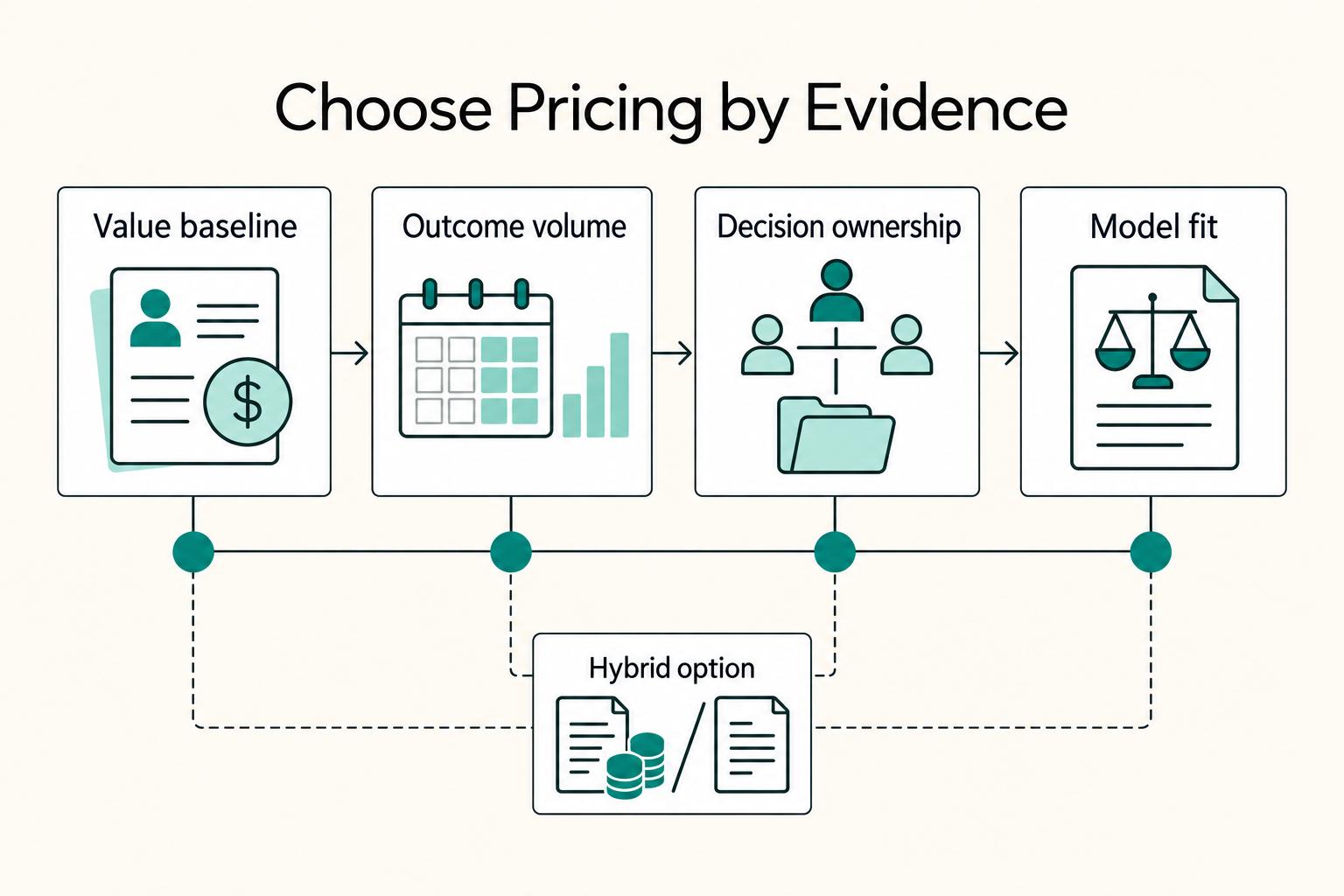
Value-based pricing works when you and the client can name the business result before kickoff and agree on how progress will be judged. If that link is weak, use a tighter model first. This is not about defending one pricing philosophy over another. It is about avoiding surprises by keeping pricing, scope, delivery, and payment aligned from day one.
Kanban for Freelancers Who Need a Real Operating Dashboard
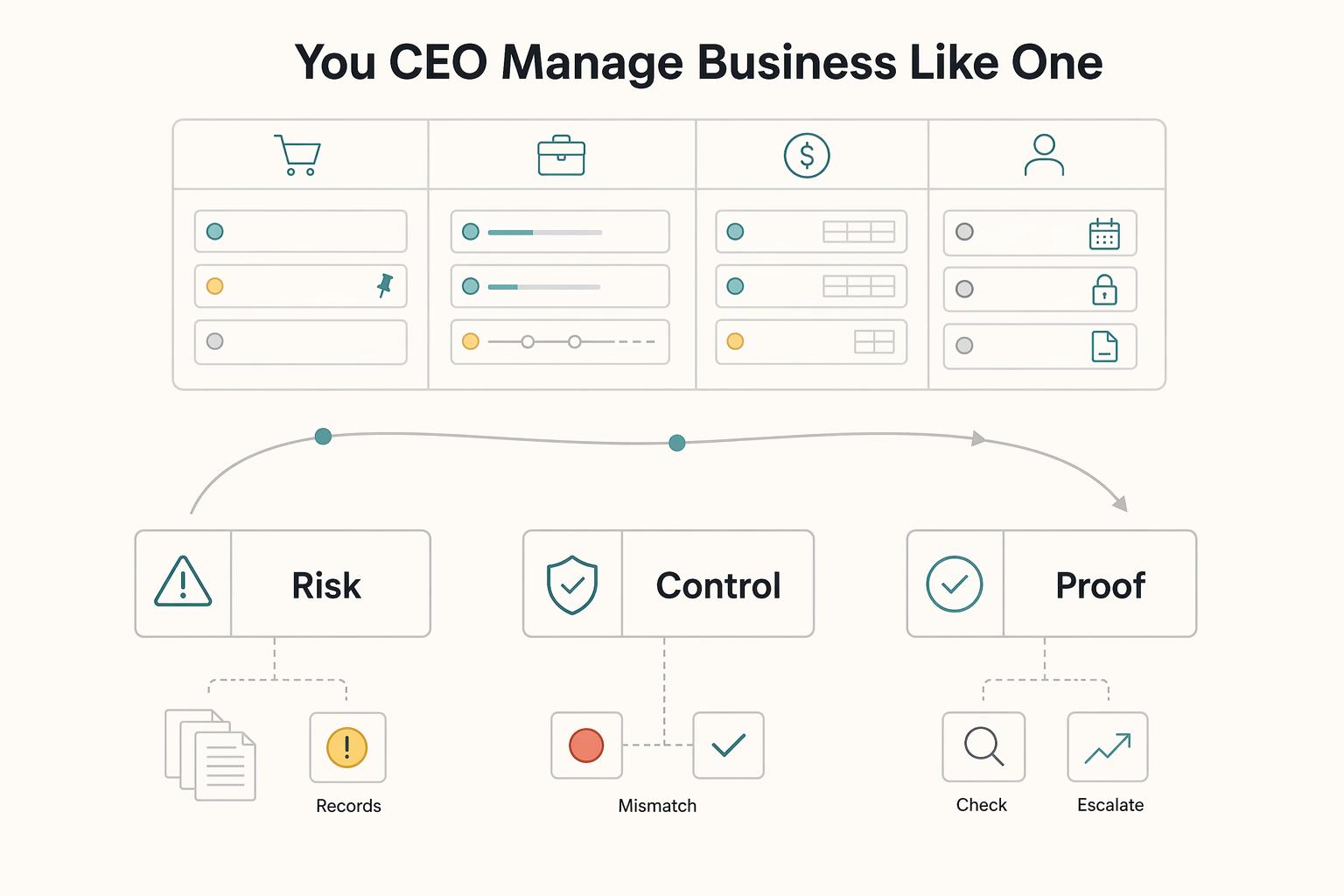
If your client work lives in one app, invoices in another, and admin reminders in your calendar or your head, you do not have a clear operating view of the business. You have fragments. That is the real problem a freelancer board needs to solve. The risk is not a messy task list. It is the blind spots between delivery, invoicing, and admin obligations, especially when you are the person doing every handoff.
The Best Project Management Tools for Freelance Developers
Freelance delivery gets more predictable when planning and client updates follow one clear setup instead of improvised tickets and scattered chat threads. In practice, project management for developers means planning, scheduling, and organizing software work so scope, time, quality, and stakeholder expectations stay aligned.