
Quick Answer
Choose an HSA when you want lasting control of funds and meet high-deductible health plan eligibility; choose a health FSA when you want pre-tax help with expected costs in one employer plan year. In this hsa vs fsa decision, ownership and rollover behavior drive most outcomes: HSA balances stay with you, while FSA access depends on employer rules. Verify Medicare-related contribution timing and your plan's carryover terms before enrolling.
Before you pick between an HSA and an FSA, get clear on what each account is built to do. This is more than open-enrollment jargon. It is a planning decision about how you want to handle medical costs, tax treatment, and control of the money.
The choice comes down to one strategic question. Are you building a long-term, tax-advantaged medical fund, or are you managing predictable costs inside this plan year? Once you answer that, the right account is usually much easier to spot.
Defining the Mission: Wealth Engine vs. Expense Tool#
Start with the time horizon. An HSA is built for money you want to keep and use over time. An FSA is built for medical spending you expect during the current plan year.
| Criteria | HSA | FSA |
|---|---|---|
| Goal | Build a portable pool for current and future medical expenses | Cover expected out-of-pocket medical costs during the plan year |
| Ownership | You set it up with a qualified trustee, and it stays yours | Employer-sponsored and administered through your job |
| Time Horizon | Long term | Short term, usually one plan year |
| Portability | Portable; it stays with you if you change employers or leave the workforce | Employer-linked, so access and continuity depend on the plan and your job situation |
| Rollover Behavior | Balance rolls over year to year and remains until you use it | You generally must use the money within the plan year, though some employers offer a grace period or carryover |
Eligibility comes first. You can contribute to an HSA only if you are enrolled in an eligible High Deductible Health Plan. For 2026, HSA limits are $4,400 for self-only coverage and $8,750 for family coverage. The health FSA salary-reduction cap is $3,400 for plan years beginning in 2026.
With an FSA, overestimating what you will spend can leave you with limited year-end flexibility. Healthcare.gov says an employer may offer a grace period or allow carryover up to $660, but it does not have to offer either option. Before you choose your FSA amount, confirm your employer's actual plan rules instead of assuming unused funds will roll forward.
A quick decision test helps here. If your spending is predictable and near term, an FSA may be the better fit. If you want a portable long-term health fund and meet HSA eligibility, an HSA may be the better fit. From there, compare the actual account mechanics before you enroll. For a broader primer, see A Guide to Health Savings Accounts (HSAs).
The Asset Specifications: An Executive Briefing#
Do not enroll from memory. Use the account terms as a checklist, especially where your employer plan or custodian controls the details.
| Spec | HSA | FSA |
|---|---|---|
| Eligibility | Verify current HSA eligibility rules after checking current IRS guidance | Confirm whether your employer offers an FSA and review current plan terms |
| Ownership | Verify current ownership or custodial structure after checking the account agreement and IRS guidance | Verify plan ownership and access terms in employer plan documents |
| Portability | Verify current portability rules after checking the account agreement and IRS guidance | Verify what happens at job change or termination in employer plan documents |
| Rollover behavior | Verify current rollover treatment after checking current IRS guidance | Confirm the current FSA cap and carryover policy with the IRS or your plan administrator |
| Contribution mechanics | Confirm the current HSA individual or family limits with the IRS, and confirm how contributions are made and reported | Supported here: employees contribute pre-tax earnings from paycheck, then request reimbursement for eligible expenses |
| Investment access | Verify whether your specific HSA provider permits investing, and under what thresholds or fees | No investment feature is supported in this section; verify in your employer plan materials |
| Withdrawal or reimbursement use cases | Confirm current rules for qualified medical expenses before spending | Reimbursement for eligible expenses; IRS Announcement 2021-7 treats PPE bought primarily to prevent COVID-19 spread as medical care |
The supported baseline is narrow but useful. Both accounts are tax-preferred tools for eligible medical expenses, and the FSA process is payroll contribution first, reimbursement request second. Treat anything beyond that as a live verification task, not a memory test.
For tax treatment, keep claims narrow and verify each assumption against current IRS rules before you model savings. The supported treatment here is limited: both accounts are tax-preferred for eligible medical expenses, and the supported FSA treatment here is pre-tax payroll contributions plus reimbursement for eligible expenses.
Decision checkpoint: verify HSA eligibility and compare that with your employer FSA terms before deciding. Use only what you can confirm now about contribution mechanics, reimbursement flow, and eligible-expense use.
If you want a deeper dive, read Canada's Digital Nomad Stream: How to Live and Work in Canada.
Advanced Strategy: Deploying the HSA as a "Super-IRA"#
If you choose HSA, the next question is not whether the account is useful. It is how you plan to use it. If you are eligible, can cover current care from regular cash flow, and can keep clean records, an HSA can work as a long-horizon asset instead of only a reimbursement account. That is conditional guidance, not a universal rule. It works when eligibility, liquidity, and documentation are all solid.
Why the tax profile stands out#
The appeal is real, but it is strongest only if you stay inside the qualified-medical-expense rules. HSA, traditional IRA, and Roth IRA solve different tax problems, so it is better to treat them as complementary tools than as replacements for one another.
| Account | Tax on contributions | Tax on growth | Tax on withdrawals | Most useful when |
|---|---|---|---|---|
| HSA | Deductible if eligible to contribute | Tax-free | Tax-free for qualified medical expenses | You are HSA-eligible, expect future medical costs, and can let assets compound |
| Traditional IRA | Contributions may be fully or partially deductible | Tax-deferred | Deductible contributions and earnings are taxable when withdrawn | You want a deduction now and can manage taxable withdrawals later |
| Roth IRA | Not deductible | Tax-free | Qualified distributions are tax-free | You can give up a current deduction for tax-free qualified withdrawals later |
One operator detail matters more than people expect. Distributions can be tax-free only for qualified expenses incurred after the HSA is established. The expense date and the account-establishment date both matter.
When HSA-first makes sense, and when it does not#
HSA-first can be a strong move, but only when three checks pass.
| Measure | Coverage | 2026 limit |
|---|---|---|
| Minimum deductible | Self-only | $1,700 |
| Minimum deductible | Family | $3,400 |
| Maximum out-of-pocket limit (excluding premiums) | Self-only | $8,500 |
| Maximum out-of-pocket limit (excluding premiums) | Family | $17,000 |
| HSA deduction limit | Self-only | $4,400 |
| HSA deduction limit | Family | $8,750 |
First, confirm eligibility and limits. For 2026, HSA eligibility is tied to HDHP coverage. Minimum deductibles are $1,700 for self-only coverage and $3,400 for family coverage. Maximum out-of-pocket limits are $8,500 and $17,000, excluding premiums. The 2026 HSA deduction limits are $4,400 for self-only coverage and $8,750 for family coverage. You also cannot deduct contributions for months when you were enrolled in Medicare.
Second, protect liquidity. If you expect near-term care costs, keep a cash target for qualified expenses and invest only the excess balance.
Third, check plan design and income stability. If an FSA is available, confirm whether it is limited-purpose before pairing it with an HSA. If your income is uneven, preserving cash may matter more than maximizing tax efficiency.
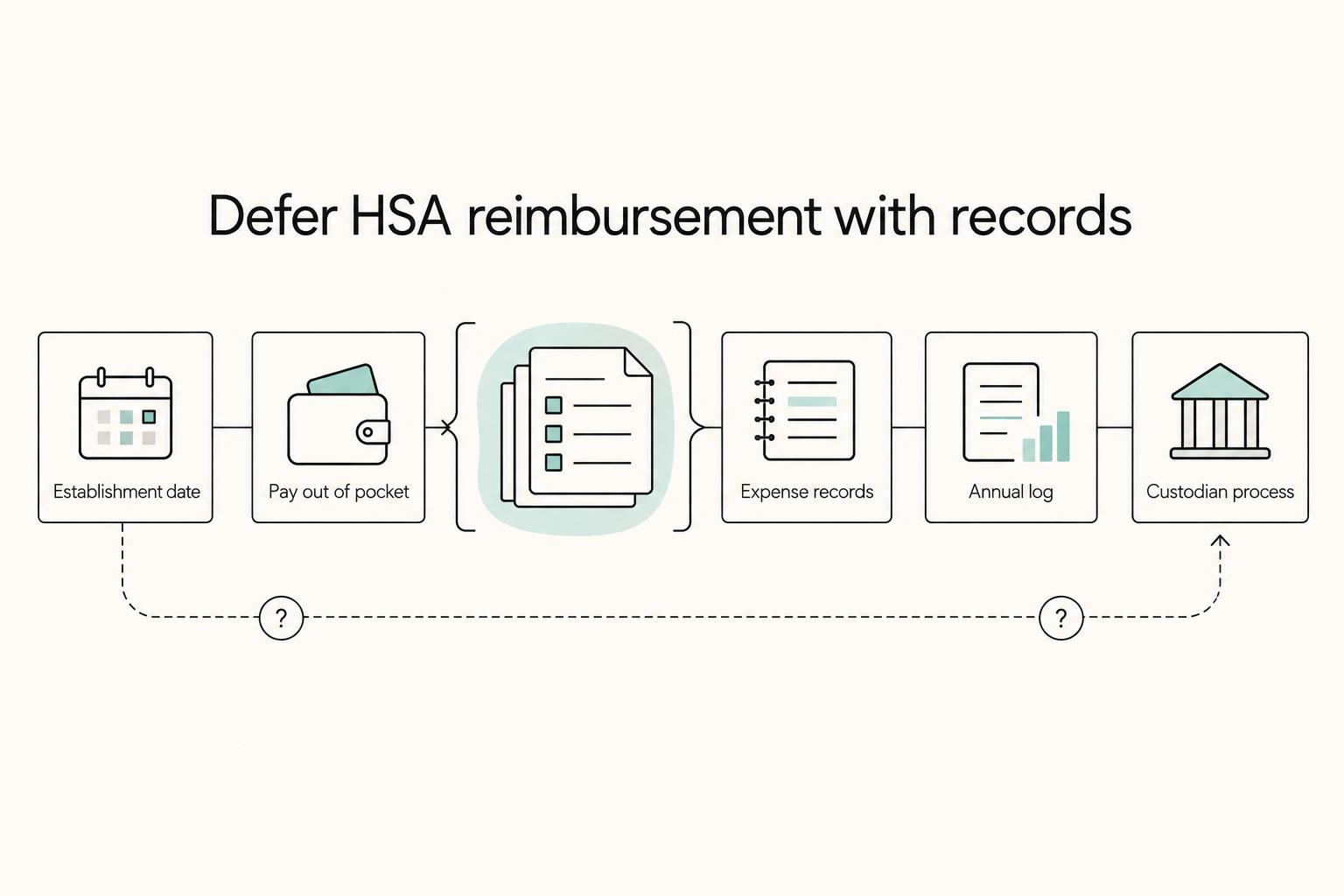
The invest-now, reimburse-later process#
The mechanics are straightforward, but the discipline is where people slip.
| Step | Action | Key detail |
|---|---|---|
| 1 | Confirm the HSA establishment date | Only track qualified expenses incurred after that date; confirm the current establishment-date rule with the IRS |
| 2 | Pay qualified expenses out of pocket | Do this only if your cash position supports it |
| 3 | Keep records for each expense | Invoice or receipt, proof of payment, service date, amount, and confirmation it was not reimbursed elsewhere |
| 4 | Maintain a year-by-year log | Map future reimbursements to specific expenses |
| 5 | Verify your custodian reimbursement process in advance | Submission and documentation steps can differ |
A common failure point is weak documentation, not investment selection. If a distribution is not used for qualified medical expenses, it is includible in gross income. An additional 20% tax can apply unless an exception applies.
What changes later in life#
Age changes the additional-tax treatment, not the core rule. Whether a withdrawal is tax-free still depends on whether it is for qualified medical expenses.
Before the exception point, non-medical withdrawals are generally included in gross income and may also face the additional 20% tax. After that point, verify the current age-based treatment against official IRS guidance before using the withdrawal assumption.
The practical takeaway is simple. Use this strategy only when you can keep it compliant and liquid. Verify HDHP eligibility, stay within current limits, keep complete records, and avoid forcing withdrawals for short-term cash needs. If those checks do not hold, use the account more conservatively.
You might also find this useful: Can You Deduct Health Insurance Premiums as a Freelancer?.
Running the Account: Cashflow, Records, and Job or Country Changes#
Once the account choice is clear, the work becomes operational. Protect cashflow first, keep records you can defend later, and treat job or country changes as admin events, not afterthoughts.
Pick your funding cadence by cashflow#
Pick a contribution pattern that matches cash stability, not tax optimization alone. Treat this as an operating choice, and verify eligibility rules separately.
| Funding pattern | Best when | Main upside | Main tradeoff | Operational checkpoint |
|---|---|---|---|---|
| Front-load contributions | Income is predictable and your cash buffer is already solid | Funds get in earlier | Higher risk of cash pressure if expenses or income shift early | Confirm current eligibility and near-term liquidity before contributing |
| Income-based contributions | Income is uneven across projects or seasons | Contributions track real cash inflows | Less time in account and more discipline required | Use a fixed rule, for example a set share of each payment, and review monthly |
If income is irregular, income-based contributions can be a lower-pressure default. Front-loading can make more sense when emergency cash and current medical spending are already covered.
Treat employer changes like a records event#
When you change employers or contracts, records and deadlines are often where issues appear. Handle transitions like a checklist before access changes.
Before your last day, save:
- Latest statements, year-to-date contribution history, and reimbursement history
- Submitted claims, unresolved claims, and supporting receipts
- Plan documents or summaries that describe deadlines and claim windows
- Administrator or custodian contact details and proof of any pending balances
Access and portability details can vary by plan and administrator. Keep your own copies of statements, receipts, logs, and payment proof, and confirm open items in writing before access changes.
Cross-border use needs stronger documentation#
For care outside your home country, reimbursement treatment can vary, so do not assume a medical-looking bill is automatically reimbursable.
| Item | What to keep |
|---|---|
| Expense proof | Invoice or receipt |
| Payment proof | Proof of payment |
| Date | Service date |
| Provider | Provider name |
| Amount | Amount paid |
| Other reimbursement status | Note that it was not reimbursed elsewhere |
| If records are in another language | Keep a short English description for your file |
| If you track converted amounts | Keep the conversion method you used |
For each expense, keep:
- Invoice or receipt
- Proof of payment
- Service date
- Provider name
- Amount paid
- Note that it was not reimbursed elsewhere
If records are in another language, keep a short English description for your file. If you track converted amounts, keep the conversion method you used.
FEIE is a separate compliance gate#
Keep FEIE separate from account planning. It has its own tests, and passing one set of rules does not answer the other. You still file a U.S. tax return reporting the income.
Under the physical presence test, the core threshold is 330 full days during any period of 12 consecutive months. A full day is a 24-hour midnight-to-midnight day, and the 330 days do not need to be consecutive. This test is based on time abroad, not residence type or intent. Missing the day count fails the test even for unavoidable reasons, and days in a foreign country while violating U.S. law do not qualify. A waiver path may apply in conditions such as war or civil unrest, and the IRS publishes an annual Revenue Procedure listing countries eligible for time-requirement waivers.
For 2026, the FEIE maximum is $132,900 per qualifying person. The housing expense limitation is generally 30%, with a stated 2026 housing amount limitation of $39,870. Verify current FEIE/HSA contribution treatment against official IRS guidance before using it in a plan.
For a step-by-step walkthrough, see What is the difference between a 'tax deduction' and a 'tax credit'?. Before you lock your HSA/FSA workflow, map it alongside your broader freelancer tax checklist in the Gruv tools hub.
Conclusion: Confirm Eligibility, Then Choose by Your Priority#
The clean split is still the right one. If you qualify for an HSA through an HDHP and want to keep and grow your funds across work changes, it is usually the better long-term fit. A health FSA is still useful when your priority is paying predictable medical costs within a single employer plan year.
| Your decision lens | HSA | Health FSA |
|---|---|---|
| What you control | You own the account, so you control how funds are used and, where available, whether to invest for long-term growth. | Your employer maintains the account under its plan, so rules and deadlines are set by that plan. |
| What you keep if work changes | You keep the account through job changes, contracts, and career pivots. | Portability is limited because the account is employer-sponsored, and leaving a job can create forfeiture risk. |
| What happens to unused money | Funds remain yours and can continue compounding over time. | Unspent funds are typically forfeited under plan-year rules, though some employers may allow limited carryover. |
| Which planning horizon it fits | Best for longer-horizon planning, retention of funds, and portability. | Best for near-term, predictable healthcare spending in the current plan year. |
Use a simple decision filter. First, confirm eligibility: an HSA requires enrollment in a high-deductible health plan. Then, if you are considering an FSA, review your plan document for rollover terms, deadlines, and what happens if your employment changes.
If your priority is short-horizon budget relief for predictable expenses, choose the FSA path. If your priority is ownership, portability, treatment of unused funds, and planning flexibility beyond this year, choose the HSA path.
For another comparison framework, see GAAP vs. IFRS: What's the Difference?. When you're ready to align your benefits choices with a more structured way to get paid across borders, explore Merchant of Record for freelancers.
Frequently Asked Questions
Can you get one if you are self-employed or freelance?
You can contribute to an HSA if you are enrolled in an eligible HDHP. For 2026, HealthCare.gov notes HSA eligibility in Bronze and Catastrophic coverage. A health FSA is employer-based, so if you are self-employed, do not assume you can open one the way you would open an HSA.
Is an HSA useful for retirement?
Yes, when your goal is to cover future qualified medical expenses. Qualified HSA distributions are tax-free, but if you use HSA funds for non-qualified expenses, those withdrawals can be taxable and may face an additional tax. In practice, that makes HSA a longer-horizon medical planning tool and FSA a better fit for planned near-term spending.
Which one fits better if you change jobs or contracts often?
It depends on how your accounts are set up. An HSA is set up with a qualified trustee, while a health FSA is an employer-maintained plan for employees. Before you leave a role, confirm FSA deadlines and carryover terms, and save your plan document plus claims records.
Can you have both at the same time?
Sometimes, but plan design decides it. A general-purpose health FSA can disqualify you from contributing to an HSA, while IRS guidance also recognizes HSA-compatible FSA or HRA options. The practical step is to verify your plan type with the administrator before contributing.
What changes once Medicare is in the picture?
Once you are enrolled in Medicare, you cannot make or receive HSA contributions. HealthCare.gov also says contribution timing needs special attention before Medicare starts, so verify the current Medicare timing rule from HealthCare.gov and IRS guidance before contributing.
Try a related tool
Researched and edited by the Gruv editorial team. Gruv builds cross-border billing, payouts, and finance-operations software for global businesses.
Sources
Educational content only. Not legal, tax, or financial advice.
Related Posts
Canada Digital Nomad Visa Planning for Visitor Status and Work Permits
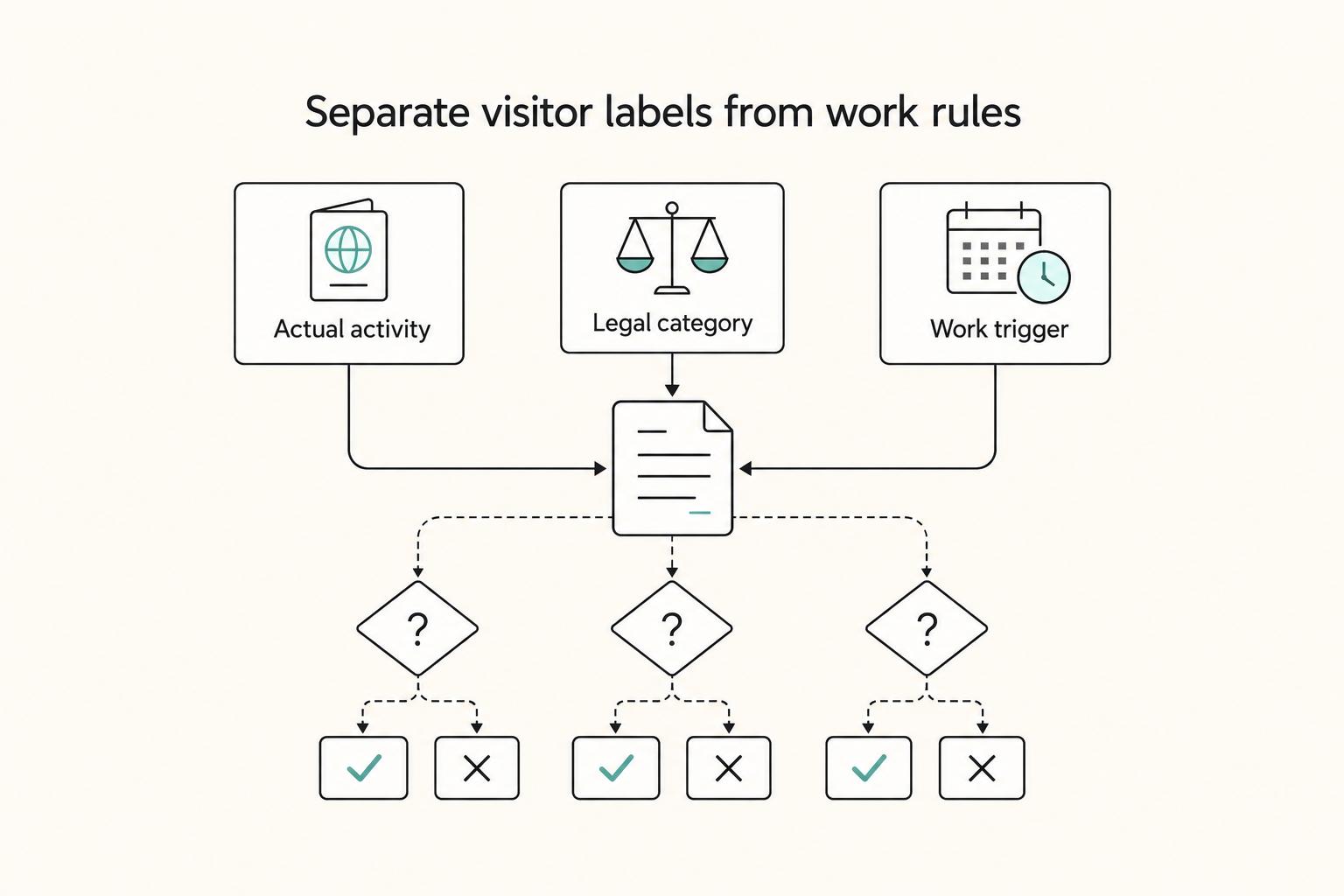
The phrase `canada digital nomad visa` is useful for search, but misleading if you treat it like a legal category. It is shorthand for existing Canadian status options, mainly visitor status and work permit rules, not a standalone visa stream with its own fixed process. That difference is not just technical. It changes how you should plan the trip, describe your purpose at entry, and organize your records before you leave.
HSA Strategy for Self-Employed Global Professionals Abroad and in Retirement
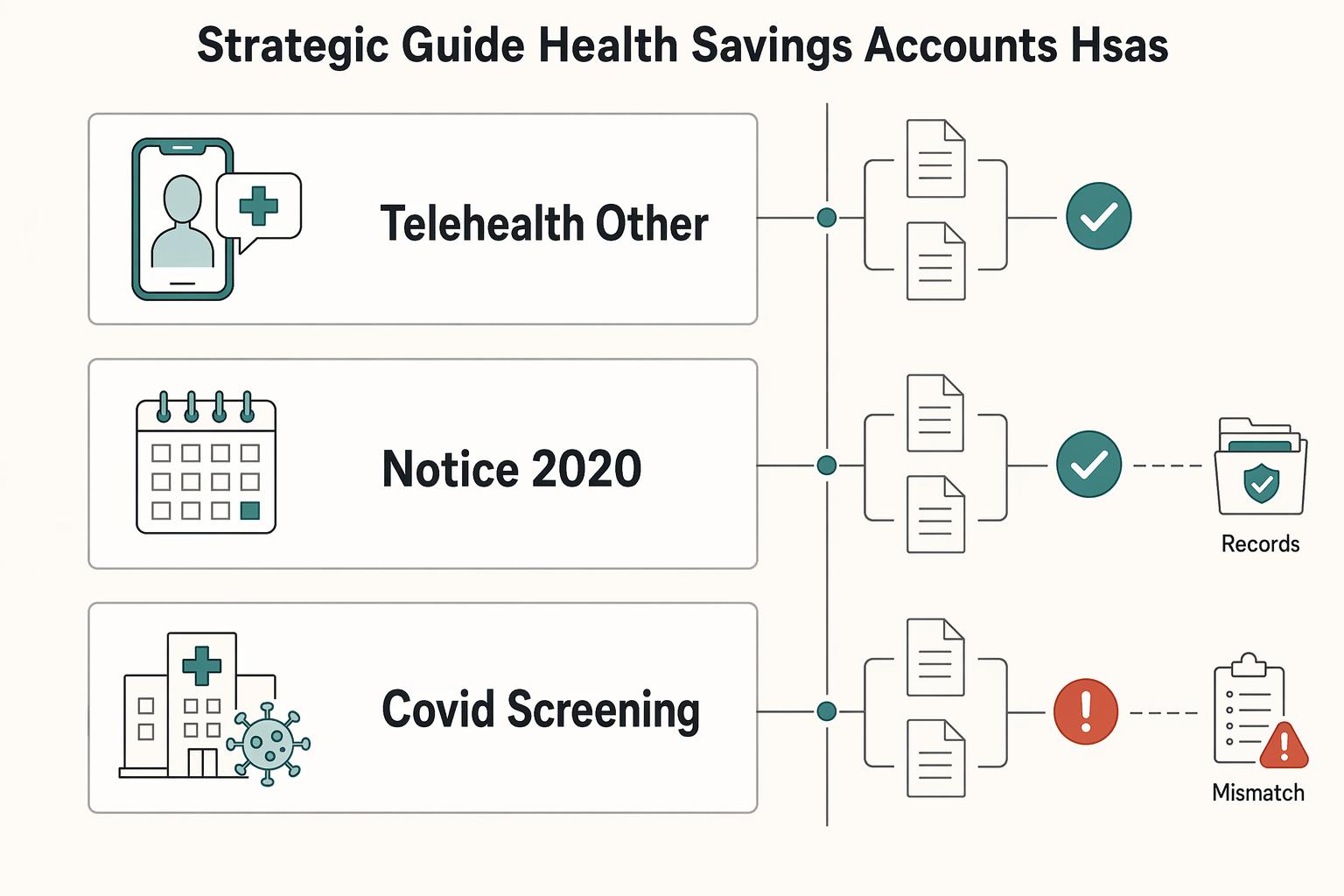
This guide treats an **HSA**, or health savings account, as a three-part asset with current IRS rules setting the edges. In practice, a health savings account can serve as your medical reserve, a cross-border buffer, and a long-term tax-favored account for future qualified medical expenses.
Can You Deduct Health Insurance Premiums as a Freelancer?
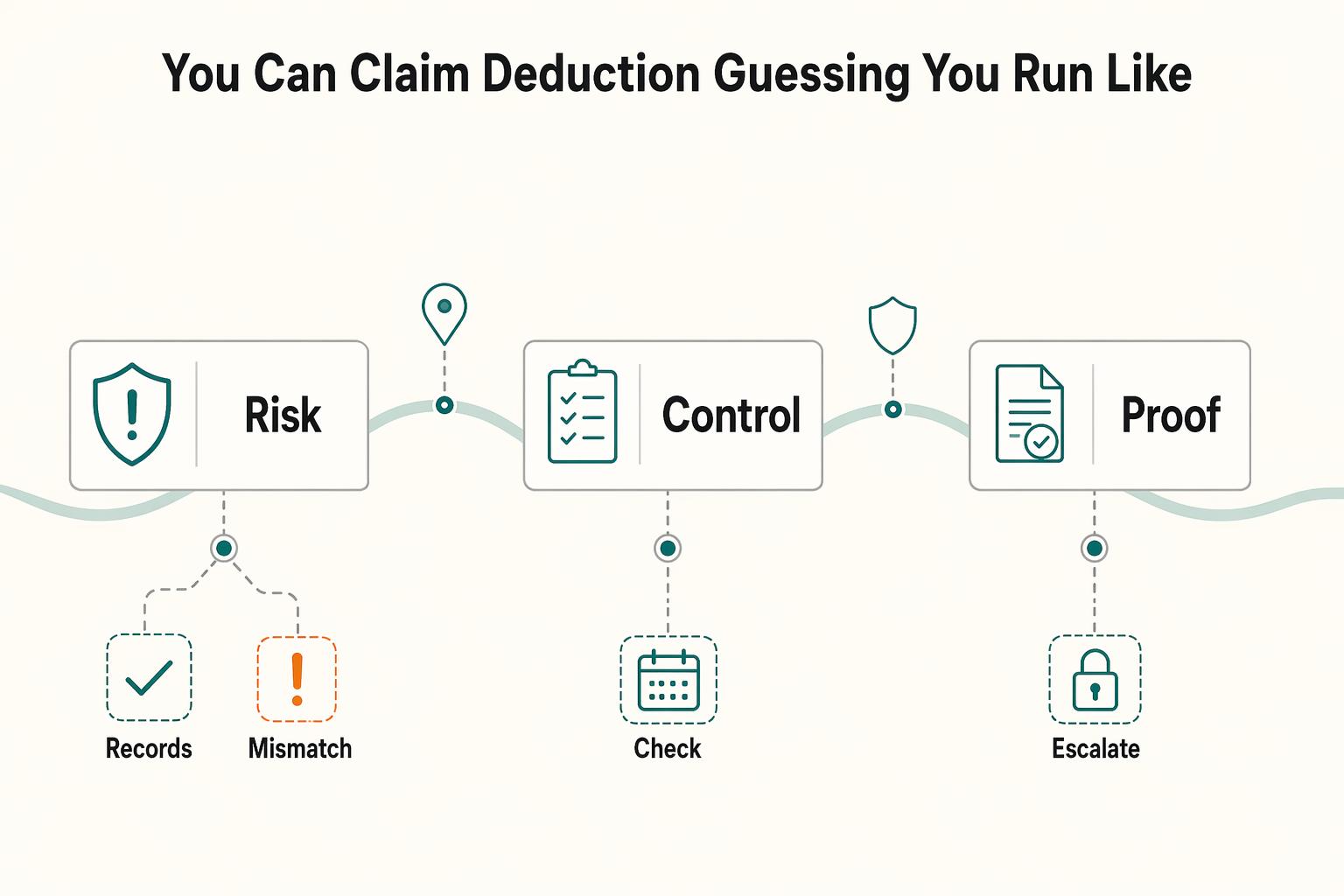
Most guides on how to deduct health insurance premiums as a freelancer fixate on headline savings and skip the real risk controls. That creates filing mistakes, not because freelancers ignore the rules, but because they never run a clear yes or no gate before claiming the deduction.