

Quick Answer
Write your pitch email for sponsorship as a short business case the brand can forward without rewriting. Keep it within about 150 to 250 words, and cover four parts: why you reached out, why the audience fit is real, what you can prove, and one clear next step. Use buyer language for metrics and avoid vague claims. When they engage, follow with a shareable proposal that defines deliverables, reporting, and approval path.
Make the brand fit and the offer clear#
The strongest sponsorship email is one a brand contact can review quickly and pass along internally. That means less "Would you like to sponsor me?" and more "Here is a collaboration that fits your audience, supports a current goal, and is easy to execute."
The reason is practical. Brands are weighing fit, expected outcomes, and whether working with you will create extra friction. If your note reads like a favor request, they have to translate it into business value. If it reads like a clear proposal, you make the review easier. Before you write, check three things: the brand's goals, target audience, and recent campaigns. Then make the ask specific. Are you proposing financial support, product contributions, media amplification, or expertise?
| Weak sponsorship email | Partner-style outreach |
|---|---|
| Frames the message as a personal ask | Frames the message as mutual value |
| Talks mostly about you and your platform | Connects your offer to the brand's priorities |
| Uses vague proof like "great engagement" | Includes relevant credentials and concrete fit |
| Ends with "Let me know what you think" | Ends with one simple next step |
Aim for roughly 150 to 250 words as a drafting guide, not a rule. Explain the audience fit, the proposed deliverable, one relevant proof point and the next step. A shorter complete email is better than padding it to meet a word count.
Start with the foundation. If the posture is wrong, the rest of the outreach usually weakens with it. You might also find this useful: A guide to 'YouTube Sponsorships' for creators.
Step 1: Connect your audience to the brand’s goal#
Start by writing as a partner, not an applicant. In a strong sponsorship email, you make the business fit easy to see and easy to forward instead of asking the brand contact to translate your ask into value.
Keep the tone clear, relevant, empathetic, and explicit about value. You do not need inflated language. You need shared-outcome language that shows you understand their goals and audience fit.
Use a practical phrase swap#
Use this while drafting so your wording stays specific and professional.
| If you write | Swap to |
|---|---|
| Subject: Sponsorship opportunity | Subject: Trail-kit sponsorship for a beginner hiking series |
| I'm hoping you can support my work | I’m proposing a sponsored beginner-hiking video featuring your trail kit |
| I'd love to pitch my channel | Could your upcoming trail-kit launch fit this beginner-hiking series? |
| My audience is very engaged | My last three beginner-hiking videos averaged [verified views] in [time window] |
| Let me know what you think | Would you be open to a short conversation about fit? |
Complete a pre-email mini-brief#
Before you draft, fill in these four lines:
| Brief item | What to define | Examples in article |
|---|---|---|
| Brand goal | Which objective appears most relevant right now | brand awareness; leads; thought leadership |
| Target audience segment | Which audience slice is the best fit | industry; role; challenge |
| Campaign context | What current launch, event, or initiative makes this timely | current launch; event; initiative |
| Success signal | What result will you reference | qualified interest; conversation starts; intent-driven traffic; visibility with a defined segment |
If this brief is thin, pause and tighten it first. Relevance usually beats volume in sponsorship outreach.
A sponsorship email you can adapt#
This fictional example uses illustrative figures, names and a launch idea. Replace them with facts from your own analytics and research; they are not a real campaign or rate benchmark.
Subject: Trail-kit sponsorship for a beginner hiking series
Hi Maya,
I make practical hiking videos for people planning their first overnight trip. Your new lightweight trail kit looks relevant to a packing demonstration I’m planning for November, so I’m proposing a paid sponsorship for that episode.
My last three beginner-hiking videos averaged 12,000 views in their first thirty days. A recent audience survey had 240 responses, with 62% identifying as first-year hikers. I can share the analytics and survey question so you can assess the fit rather than rely on follower count alone.
The proposed package is one five-minute video with a clearly disclosed sponsored segment, a link in the description, and one newsletter placement. I would provide a thirty-day report of views and tracked link clicks. The fee is $800 for those deliverables; paid reuse of the video would be quoted separately. Product testing would precede any recommendation.
Would you like me to send the one-page proposal with the draft concept, schedule and usage terms?
Thanks, Alex
Translate creator metrics into buyer language#
Keep your metrics, but label them in terms a buyer can evaluate.
| Creator-side signal | Buyer-facing language | Safe phrasing format |
|---|---|---|
| Views / opens / listens | Early attention from a defined segment | "Reached a defined audience segment with verified attention metrics." |
| Clicks / replies | Observed action, not proof of purchase intent | Report clicks or replies with the campaign, time window and denominator |
| Sign-ups / demo requests | Marketing lead or sales lead story | "Generated leads or sign-ups using the sponsor's agreed definition." |
| Recall / sentiment indicators | Brand lift direction | "Supports a brand-lift objective for a defined segment, based on your stated measurement method." |
Do not assume universal definitions for marketing lead, sales lead, conversion intent, or brand lift. Use working labels until you confirm how the brand defines success.
Use those verified facts in the email first. If the brand is interested, expand the agreed idea into a proposal with price, rights and delivery dates.
Step 2: Turn interest into a specific proposal#
Once a brand replies, move from email to a decision-ready proposal they can share internally. Your goal is simple: make audience fit, offer scope, pricing, deliverables, and reporting clear enough for approval.
Build a short sponsorship proposal#
Keep the proposal easy to forward: audience fit, offer, price, evidence and a clear decision. A branded document name is less useful than concrete terms.
| Block | What it covers | Notes |
|---|---|---|
| Purpose | One sentence that names the opportunity and the sponsor objective | Start with one sentence |
| Audience-fit statement | Who you reach, why that aligns with the sponsor, and what proof supports it | Use current verified metrics; omit any figure you cannot substantiate |
| Offer summary | Two or three options tied to outcomes, with clear inclusions, exclusions, and reporting scope | Keep it sponsor-centered |
| Decision-ready CTA | One specific next step | approve a package; book a review call; confirm interest for final terms |
- Purpose: Start with one sentence that names the opportunity and the sponsor objective.
Example proposal opening: “One sponsored beginner-hiking video introduces the trail kit through a packing demonstration, with one newsletter placement and a results report after thirty days.”
-
Audience fit: State the relevant audience and use current analytics. Leave unverified figures out of the version you send.
-
Offer summary: Present two or three options tied to outcomes, with clear inclusions, exclusions, and reporting scope.
-
Decision-ready CTA: End with one specific next step: approve a package, book a review call, or confirm interest for final terms.
If someone unfamiliar with the deal cannot explain the sponsor objective, deliverables, and next step quickly, revise for clarity.
Prove claims with labeled evidence#
Use only metrics you can substantiate now. Label each metric so internal reviewers can evaluate it quickly:
- Audience quality: who your audience is and why they match
- Engagement intent: signs of attention or action
- Business outcome: reportable results tied to the sponsor objective
Views are not leads, and clicks are not sales. Define the measurement window and attribution limits. Keep unverified numbers in your private draft and omit them from the sponsor’s copy.
| Offer type | Sponsor objective | Deliverables | Success signal | Reporting method |
|---|---|---|---|---|
| Inventory-based | Awareness or visibility | Placement inventory (for example ad slot, newsletter placement, logo/mention) | Impressions, opens, brand mentions | Placement summary with channel-level results |
| Outcome-based | Demand generation | Sponsored content with CTA, lead magnet, webinar, dedicated send | Qualified responses, sign-ups, leads (by agreed definition) | Post-campaign report against defined KPI with attribution notes |
| Outcome-based | Brand authority or content collaboration | Co-created content asset (for example article, interview, research asset, expert feature) | Engagement, shares, inbound interest, asset usage | Asset delivery summary plus engagement/distribution results |
A placement package promises defined inventory. A campaign built around a business objective can still use a fixed fee; calling it outcome-based does not guarantee leads or sales.
Structure tiers for approval, then frame performance terms#
Name each option for its actual deliverables or purpose, such as “one video” or “video plus newsletter.” Choose names the sponsor can compare without inferring a guaranteed result.
Inside each tier, define scope boundaries clearly: placements, formats, revision limits, reporting included, and exclusions. Ambiguous scope slows approvals.
If you include performance terms, frame them as a negotiation structure, not a guarantee:
- Fixed component
- Variable component
- KPI definition
- Attribution approach
- Review cadence
Agree the KPI definition, attribution window and payout calculation before accepting a variable fee. If a benchmark is not verified, leave it out rather than inserting a research-status label into the proposal.
Before sending, run a final handoff check: use a shareable PDF or clean link, state assumptions clearly, and make one explicit next-step request so your brand contact can forward it immediately.
Related: How to Get Featured in the Press as a Freelance Expert.
Step 3: Agree delivery, rights and payment#
After an expression of interest, confirm scope and the required agreement before starting work. Payment may follow a deposit, milestone or agreed credit term; a paid invoice is not a universal prerequisite for every sponsorship.
Run the handoff checklist first#
Before work starts, confirm how this specific deal will move through the company's process:
| Checkpoint | What to confirm |
|---|---|
| Active contacts | day-to-day marketing owner, scope approver, agreement reviewer, and billing/AP owner |
| Procurement or vendor setup | whether they use a procurement or vendor setup step, and any required documentation handoff |
| Agreement routing | where the agreement should be sent for review and signature |
| Invoice routing | where invoices are submitted and which billing entity details must match the agreement |
Ask the buyer about any unknown approval or vendor-setup step and resolve it before the affected work starts.
Send review-ready terms (lightweight, but complete)#
If they send their own paper, review it against your scope. If they do not, send your agreement in signable form (for example, a DocuSign contract or signable PDF) so the next action is clear.
Use this negotiation framework to avoid ambiguity:
| Term block | What to lock before work starts |
|---|---|
| Scope definition | Exact deliverables and delivery window |
| Usage rights | Where and how deliverables can be used |
| Revision boundaries | Number/type of revisions included |
| Approval process | Who approves and what triggers acceptance |
| Payment triggers | What milestone unlocks invoicing/payment |
| Escalation path | Who to contact if approvals or feedback stall |
| Sponsored-content disclosure | Who ensures the finished endorsement clearly discloses a material brand relationship; approval must not remove the disclosure |
For an endorsement reaching U.S. consumers, disclose a material connection clearly with the endorsement, including paid sponsorship or free products where applicable. A contract or media-kit note does not replace the audience-facing disclosure. Align this with the FTC’s guidance and any other rules relevant to the campaign.
Validate invoice compliance before sending#
The tool can vary (for example, Stripe Invoices), but field accuracy is what prevents delay.
| Invoice field | What to confirm | Risk it prevents |
|---|---|---|
| Your legal business name and address | Matches signed agreement/payment records | Rejection for entity mismatch |
| Sponsor legal name and billing address | Exact billing entity, not shorthand brand name | AP reroute or rejection |
| Invoice number | Unique sequential identifier | Duplicate/conflicting records |
| Line item description | Mirrors agreed deliverables and period | Billing disputes |
| PO number (if used) | Confirm whether AP requires a PO and include the approved number if so | Queueing delay in AP workflow |
| Payment terms / due date | Show the terms agreed in the contract and the actual due date | Approval delays from ambiguity |
| Remittance details | Current bank/payment destination | Failed or misdirected payment |
Before you hit send, run this quick verification sequence:
- Confirm whether a purchase order applies and where it must appear.
- Match invoice billing entity details to the signed agreement.
- Confirm requested tax documentation through the buyer’s approved process before submission.
- Recheck remittance details before submission.
Reliable backend execution is what converts one sponsorship into repeat work and stronger renewals, because the relationship feels low-friction after the yes.
We covered this in detail in How to Write a Cold Email Sequence That Converts for a SaaS Product.
Send a proposal the brand can assess#
Before sending, read the email from the brand contact’s perspective: who will this reach, what am I buying, and what decision am I being asked to make? If an answer is missing, fix that sentence.
Use verified audience evidence, state the deliverables and distinguish an objective from a guarantee. A precise offer is easier to assess than a promise of engagement.
Reference a real launch or campaign only after checking it. One relevant connection is enough; a long account history can hide the offer.
Keep the proposal in one accessible document or link. State the price assumptions, rights and next step so the contact can share it internally without assembling several files.
Before you send, check four things in one pass. Make sure your materials are ready, you are contacting someone who can route the request internally, your success metric matches the brand's objective, and you are prepared to deliver and report on what you promise.
Then send it, track responses, note where prospects stall, and refine the offer based on what decision-makers actually respond to. For a step-by-step walkthrough, see How to Create a 'Pitch Deck' for a High-Value Freelance Proposal.
Frequently Asked Questions
How do you write the first email to a sponsor?
Keep it to about 150 to 250 words and build it in four moves: intent, relevance, proof, and CTA. State why you are reaching out, why this brand fits your audience or project, include one or two numbers or credentials you can substantiate, and end with a simple next step. Skip the long origin story and vague "I'd love to collaborate" language.
What makes a strong subject line?
Lead with clear intent first and relevance second. Subject lines like "Partnership idea for your next campaign" or "Sponsorship proposal for your upcoming project" can help because the point is obvious. Avoid filler like "Quick question" or "Exciting opportunity."
Which metrics should you include?
Show audience fit and one or two verified metrics, including the time window and measurement source. Use prior campaign results only with clear attribution limits. Omit unverified figures and do not promise ROI or conversions you cannot support.
How should you structure sponsorship tiers?
For each option, state the objective, exact deliverables, price, rights and results you will report. Choose clear names and avoid promising more exposure without defined placements or a reporting plan.
What should you attach to the initial email?
Send one shareable document that helps your contact forward the idea internally without rewriting your case. A pitch deck supplement works well because it keeps the email short, while a professional media kit can add credibility if it supports the same story instead of repeating it. Include audience fit, the specific ask, deliverables, and contact details. Do not attach a pile of files and make them assemble the offer themselves.
How should you follow up without sounding automated?
Follow up with a real reason, not a generic bump. Add one useful detail each time, such as a stronger audience-fit point, a clarified deliverable, or a simpler CTA, and keep it tied to the original thread. Plan follow-ups intentionally and avoid both long silence and excessive nudging. If interest stays unclear, close the loop politely instead of chasing indefinitely.
What usually breaks sponsorship outreach?
Weak fit, an unclear ask and vague deliverables make outreach hard to assess. Say whether you seek cash or product support, describe what the brand receives and give one next step.
Try a related tool
Researched and edited by the Gruv editorial team. Gruv builds cross-border billing, payouts, and finance-operations software for global businesses.
Sources
Includes 1 external source outside the trusted-domain allowlist.
Educational content only. Not legal, tax, or financial advice.
Related Posts
How to Write a Cold Email That Actually Gets Clients
If you want this channel to produce clients, track movement through your pipeline, not noise in your inbox. The goal is simple: move the right prospects from researched to contacted to qualified reply to booked call to signed project.
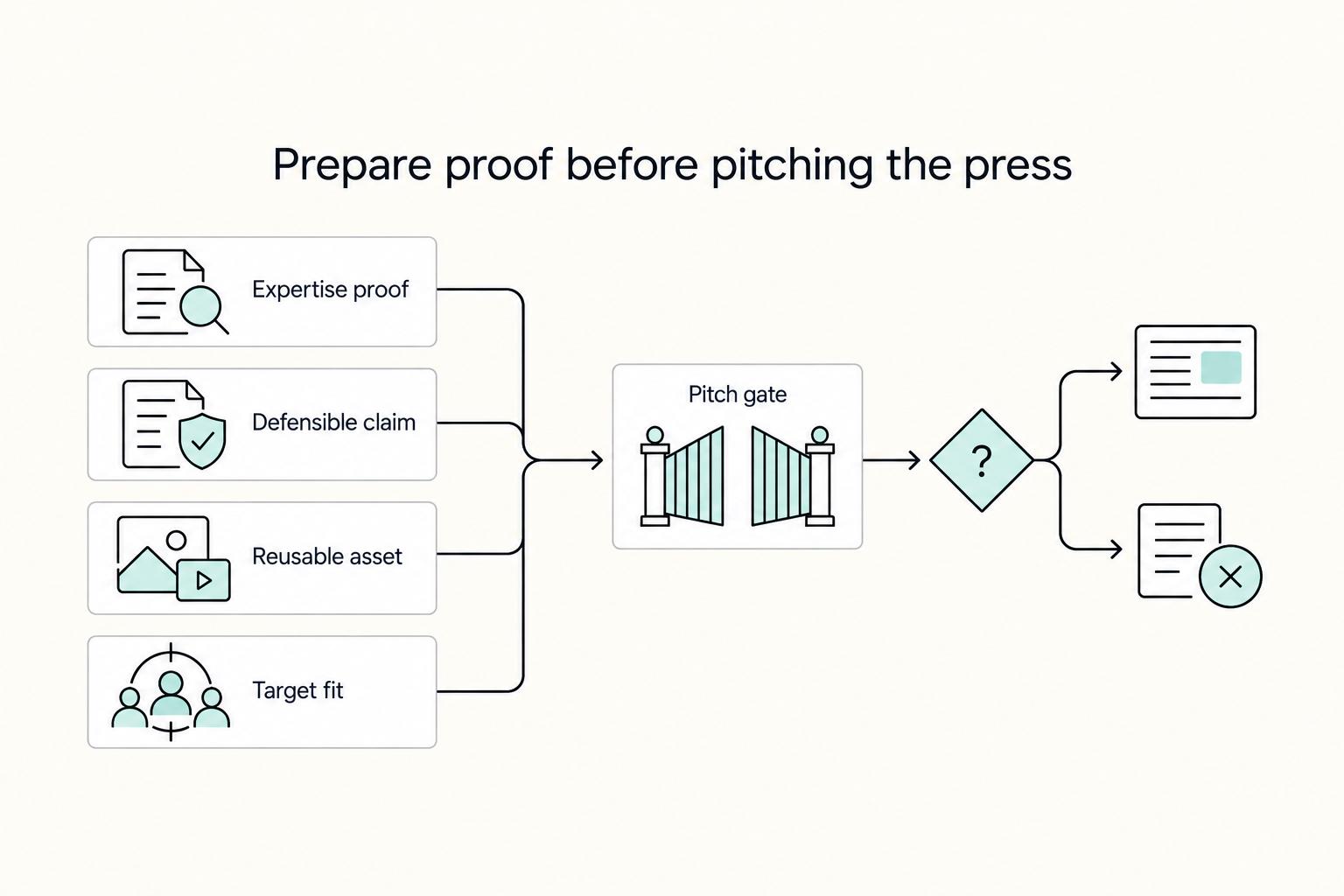
How to Get Featured in the Press as a Freelance Expert
Treat press outreach as a repeatable earned media channel, not a lottery ticket. The goal is to be quoted, mentioned, or featured because your expertise fits a real story, not to expect instant placement in outlets like Forbes or TechCrunch.
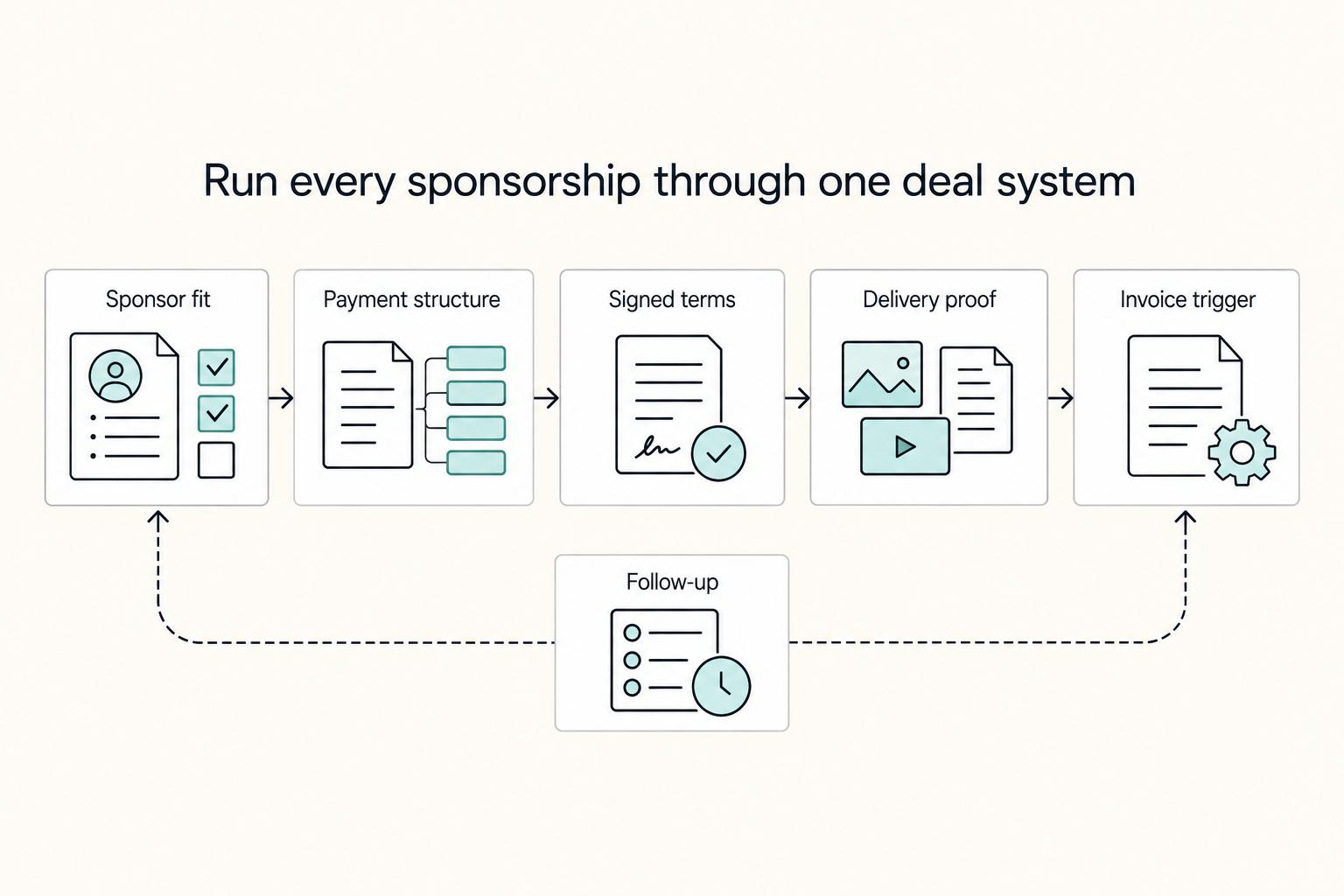
YouTube Sponsorships for Creators Who Want to Get Paid on Time
Landing interest is not the same as getting paid. The goal is not a lucky one-off campaign. It is a deal process that helps you manage sponsor work with fewer surprises.