
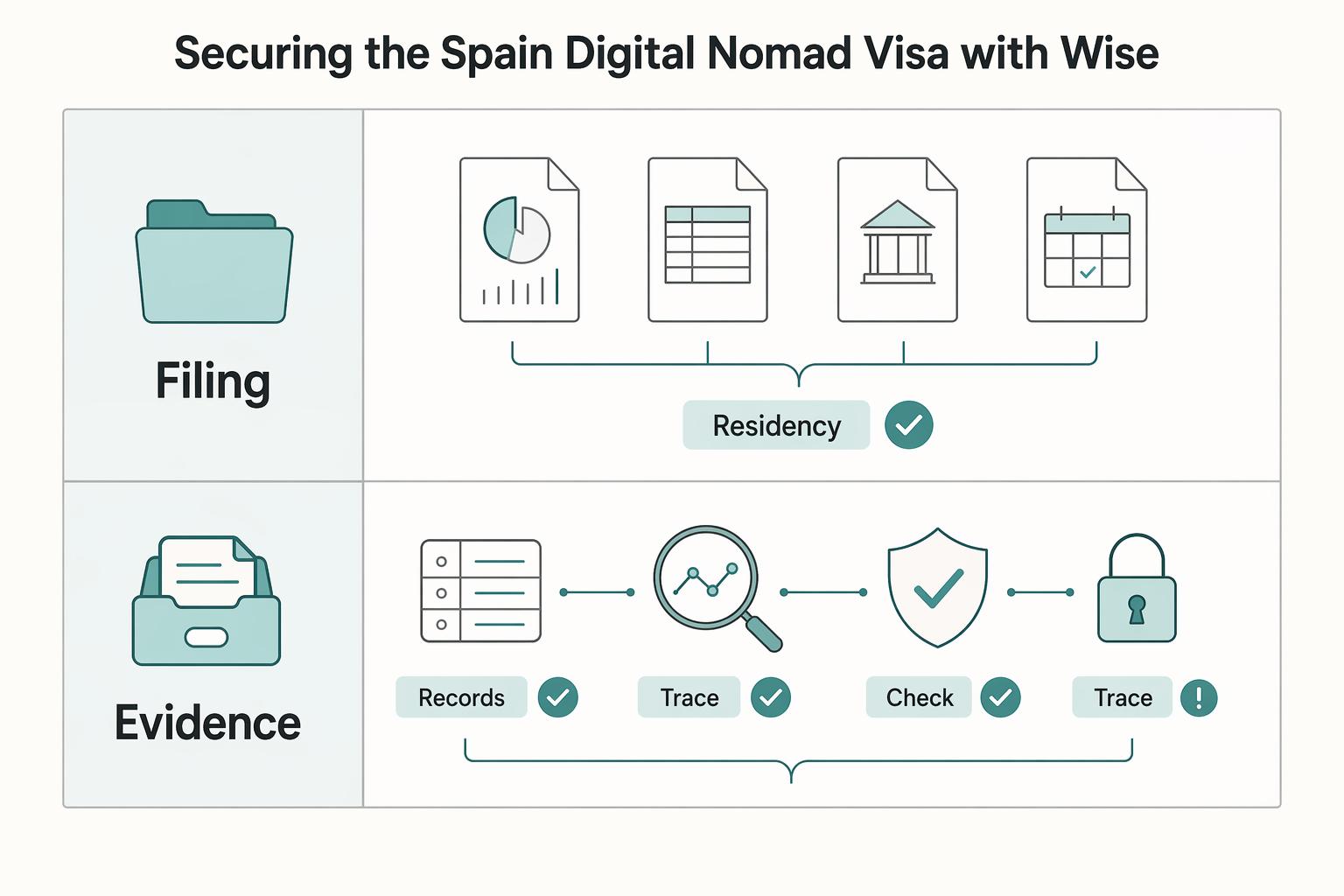
Build a proof-of-income packet a reviewer can verify quickly#
The only source excerpt available for this check is a 2022 Hacker News hiring thread, not official Spain visa-process or Wise policy documentation. Treat this section as a practical document-organization template until route-specific requirements are confirmed with the authority or a licensed professional.
Build your packet so a reviewer can confirm three things fast: your income is ongoing, your documents agree with each other, and the money can be traced back to real client work. In practice, traceability usually matters more than volume.
That means the packet should read like a clean verification trail, not like a dump of everything you have. A reviewer should be able to start on page one, understand the window you are relying on, and then follow each relied-on payment through the supporting records without stopping to decode what belongs where. If they have to infer the timeline, guess why a sender name changed, or hunt through exhibits to find a matching invoice, the packet gets weaker even when the underlying income is real.
This guide is not official visa-process guidance, so treat income thresholds, filing rules, and document requirements as unverified until you confirm them with the authority or licensed professional handling your case.
Use that verification step early, not after the packet is built. The page-one summary, your review window, and the way you label the file all depend on knowing which route you are using and what the reviewer will expect to see. It is much easier to lock those decisions before you start naming exhibits than to rebuild the packet after the structure is already set.
| Decision checkpoint | Verify with | Page-one note until confirmed |
|---|---|---|
| Filing route and current income threshold (if applicable) | The authority or licensed representative handling your case | Verify the exact threshold from official visa or consulate records before use. |
| Required document set for your route | The same authority or representative | Verify the exact document requirement from official visa or consulate records before use. |
| Language/translation handling for your filing | The same authority or representative | Verify the exact language or translation handling from official visa or consulate records before use. |
Treat that table as a control point, not decoration. If one of those entries is still unresolved, the packet is not ready for final assembly. Leave yourself a clean stop before merging files so you do not end up with a polished packet that still relies on assumptions.
Step 1: Define your evidence chain#
Start by separating the terms you will rely on. That keeps the packet clean and avoids mixing summary language with proof.
regular income: repeated, documentable business receipts over time, not a single unusually strong month.
proof-of-income packet: the document set that shows what you earned, who paid you, and why the payment exists.
three-way match (working label): one payment traceable across statement entry, invoice, and signed commercial terms.
Each document has a different job. Statements show the money arriving. Invoices show what you billed. Signed terms show the commercial basis for the payment. If you treat those as interchangeable, the packet gets harder to review and easier to question.
In practice, this is where you decide what counts as evidence and what is just context. The packet works best when every relied-on payment has a clear place in the chain before you start combining files. Start with a list of the payments you actually plan to rely on. Then, for each one, confirm three things: the payment appears in a statement or transaction record, there is a matching invoice, and there is signed commercial support behind that invoice. If one part is missing, fix that gap before you do anything cosmetic.
This is also the point where you separate proof from commentary. A reviewer does not need a long narrative about your business model if the documents already show the relationship clearly. What they do need is a clean path from money received to invoice issued to agreed commercial terms. If the path is obvious on the page, you can keep your explanations short. If the path is not obvious, adding more summary language usually does not solve the underlying problem.
Be strict about naming while you build the chain. Use the same client label everywhere you control it, especially in the income index and exception notes. When the transaction record uses a processor name and the invoice uses the client name, keep one short explanation and reuse that same wording each time the issue appears. Do not write three slightly different explanations for the same mismatch. Repetition with variation creates doubt where a single consistent note would remove it.
It also helps to decide early how you will handle payments that do not fit neatly into a one-payment, one-invoice pattern. Some client relationships are clean; others involve bundled payouts, delayed settlement, or transfers that arrive under a sender name you would not choose. None of that automatically breaks the chain, but it does mean you need to map the transaction carefully before it reaches the final packet. The key is that the reviewer should not have to do the reconstruction for you.
If you are tempted to include extra records "just in case," pause and ask what job each one does. Does it prove that money arrived? Does it identify what was billed? Does it show the signed basis for the work? Or does it simply add volume? Bigger packets often feel safer to the person compiling them, but they are harder to review. The stronger move is to include the records that complete the chain and leave out the rest.
A good evidence chain is disciplined in two ways at once. It is complete enough that each relied-on payment stands on its own, and narrow enough that the reviewer can see what matters immediately. That balance is the foundation for every later step.
Step 2: Build a defensible review window#
Pick a review window that reflects how you normally bill, not the best-looking slice of time. If your income is uneven, use a span that makes the pattern understandable instead of relying on a few unusually strong months.
A defensible window is one you can explain in one sentence and then support everywhere else in the packet. If you chose the span because it reflects your ordinary billing cycle, your packet will feel coherent. If you chose it because it flatters the numbers, the support will usually look patchy: strong months highlighted, weaker periods minimized, and supporting documents that do not line up cleanly with the dates you rely on.
If you are using Wise records, start with your Wise exports, then verify that every amount you plan to count is actually visible in the evidence. This is a common failure point: a summary includes income that never appears clearly in the supporting records. If some of the income came through other banks or processors, include those records too and keep them in the same date order and naming pattern as the Wise material.
Do that check line by line. If a payment appears in your summary, confirm where it appears in the transaction records. If it does not appear clearly, remove it from the summary until you can support it. This sounds obvious, but many packets drift out of alignment because the summary is prepared from memory or from internal business reporting while the exhibits come from bank exports and invoice files. The result is a packet where totals may be directionally true but individual entries are hard to verify.
When income came in through multiple channels, the risk is usually inconsistent handling, not the use of more than one platform. If Wise records are neatly labeled and dated, but non-Wise records are inserted without the same structure, the packet starts to look stitched together. Keep the same chronology, the same naming pattern, and the same exhibit logic across all inflows you rely on. The goal is to make a mixed-source record feel like one timeline.
Once the window is set, keep it stable across the whole packet. That gives the reviewer one timeline to follow instead of several overlapping ones.
That stability matters more than many applicants realize. Your summary page, income index, statements, invoices, and signed terms should all point to the same period. If the statements cover one span, the invoices drift outside it, and the signed commercial support is left broad and undated in practice, the reviewer has to decide what actually belongs in scope. You do not want them making that decision for you.
A stable review window also helps you manage edge cases. If a payment lands just outside the period but relates to work inside it, resist the urge to stretch the logic in the summary unless the supporting documents make the relationship obvious. Likewise, if an invoice was issued inside the period but paid outside it, be consistent about whether you are relying on billed amounts or received amounts and state that basis on page one. The point is not to force every business pattern into a perfect box. The point is to avoid changing your method halfway through the packet.
As you work through the window, isolate anything that might distract from the relied-on income picture. Transfers between your own accounts, reversals, refunds, and unrelated inflows can all create noise if they sit next to real client receipts without context. You do not need a long explanation for each one, but you do need enough control over the packet that the reviewer can see which entries matter and which do not. If an item is not part of the relied-on income, do not let it dominate the page.
By the end of this step, you should be able to answer three practical questions without opening every file again: what period you are relying on, which payments count within that period, and where each relied-on payment appears in the records. If you cannot answer those cleanly, the packet is not ready for assembly.
Step 3: Map each payment before merging files#
Before you combine anything into a final packet, map each payment on its own. This is where most consistency problems show up, and it is much easier to fix them now than after you merge files.
Think of this step as reconciliation before presentation. You are not designing the packet yet. You are pressure-testing whether each payment can survive review. Open the transaction record, the invoice, and the signed commercial support side by side and confirm that they point to the same underlying work. If they do, the final packet will be straightforward. If they do not, a merged file will only hide the problem until a reviewer finds it.
For each client payment, map:
- payer name shown on the transaction record
- matching invoice
- signed agreement or statement of work
At this stage, you are looking for exactness where exactness is possible and controlled explanation where it is not. Compare the payer name on the transaction record with the client name on the invoice and the party named in the signed terms. Check that the timing makes sense in sequence. Check that the amount you rely on matches what the supporting records actually show, or that any difference is readily understandable from the documents themselves. A clean payment map should answer the reviewer’s likely question before they ask it: "What is this money, who paid it, and what ties it to the underlying work?"
If the names do not match exactly, explain the difference once and keep the explanation short. That can happen when a processor name appears instead of the client legal name. Use the same approach for split settlements, delayed transfers, bundled payouts, refunds, and mixed-language records. The goal is not to explain everything at length. It is to remove ambiguity before the reviewer has to guess.
Short, repeated logic works better than long custom narratives. If one client pays through a processor, note that once and use the same wording every time that processor appears. If one invoice was paid in more than one transfer, show that relationship clearly and keep the same explanation in the index and exception notes. If one payout covers more than one invoice, make that link explicit before the files are merged. In all of those cases, the risk is not the business pattern itself. The risk is forcing the reviewer to reconstruct it from scattered clues.
A few failure modes are especially common here. One is a summary line that looks clean until you open the exhibits and realize the corresponding deposit is actually a bundled payment with no note explaining what is inside it. Another is a sender name that appears in several forms across the packet with no indication that those forms refer to the same commercial relationship. Another is a refund or adjustment that sits near a relied-on payment and makes the net movement hard to read. These are all fixable if you catch them before assembly. They are much harder to fix once the final file is built and cross-references have already been added.
| Evidence pattern | Lower risk | Higher risk |
|---|---|---|
| Core chain | Deposit links cleanly to invoice and signed terms | Deposit cannot be matched across documents |
| Sender naming | Mismatch is explained once, clearly | Multiple unexplained name variations |
| Non-Wise inflows | Included with consistent labels and order | Referenced in summary but missing from exhibits |
| Language handling | Mixed-language items are labeled consistently | Language changes appear without context |
Use that table as a diagnostic. If a payment falls into the higher-risk column, decide immediately whether you can cure it with a clear note and supporting record or whether it should be excluded from the relied-on set. Do not carry unresolved ambiguity forward just because the payment is financially helpful. A smaller set of cleanly matched payments is easier to defend than a larger set with visible gaps.
It can help to preserve the payment mapping in the same order you plan to use later: earliest to latest, or whatever sequence best matches the review window. That way, when you move into assembly, you are not re-solving the same questions. The final packet becomes a presentation of work already done, not a last-minute attempt to discover whether the documents agree.
By the end of this step, each relied-on payment should have an answer to every basic review question: where the money arrived, which invoice it corresponds to, what signed terms support it, and whether any naming or timing issue needs a short note. If even one of those answers is uncertain, deal with it now. Merging files does not strengthen evidence. It only fixes the order in which uncertainty will appear.
Step 4: Assemble in reviewer order#
Assemble the file in the order a reviewer would want to verify it. A good packet answers the basic questions first, then shows the proof in the same sequence.
This is where discipline pays off. If the evidence chain is already clean and the review window is already fixed, assembly is mostly an exercise in making verification easy. The reviewer should not need to flip back and forth to understand your method. They should be able to move from summary to proof in a straight line.
- Summary page: filing route, any verified threshold, review window, and your calculation basis.
- Income index: each relied-on payment and where backup appears.
- Statements or transaction records.
- Matching invoices.
- Signed commercial terms.
- Short exception notes.
That order matters. The summary tells the reviewer what standard you are trying to meet. The index shows where each relied-on payment is proved. The statements, invoices, and signed terms then support the claim in a way that is easy to check.
The summary page should do only the work that belongs on page one. It is not the place for argument, biography, or a long procedural explanation. It should state the route you are using once it has been verified, identify the review window, and explain the basis on which you are counting income. If any of those points are unclear on page one, the uncertainty will infect everything after it. The reviewer should know immediately what they are looking at and how to read the rest of the packet.
The income index is the bridge between your summary and your exhibits. Keep it practical. For each relied-on payment, identify enough information that the reviewer can find the transaction record, matching invoice, and signed commercial support without searching. The index does not need to be elegant. It needs to be reliable. If the reviewer cannot use it as a map, they will create their own mental map, and that is when misunderstandings start.
The statements or transaction records should follow the same chronology used in the index. Do not make the reviewer jump backward in time. If you rely on Wise and other sources, keep them integrated in the order the money arrived rather than forcing the reviewer to compare separate sub-packets with different logics. When a page contains both relevant and irrelevant entries, preserve enough context that the relied-on payment still looks authentic and legible. Over-editing can create its own questions.
Matching invoices come next because they answer the obvious follow-up: what was billed that corresponds to this money? Keep them in the same sequence as the transaction records whenever possible. When one payout covers more than one invoice, group those invoices together so the relationship is easy to see. When one invoice is paid through more than one transfer, keep the invoice where the reviewer expects it and let the index or note explain the split. The principle is always the same: do not force the reviewer to assemble the story from memory.
Signed commercial terms sit after the invoices because they support the invoice basis rather than replacing it. Put them where they can be checked without interrupting the payment-by-payment logic. If the same signed terms support multiple invoices from the same relationship, do not make the packet feel fragmented. Organize them so the reviewer can confirm the commercial basis once and then understand how the relevant invoices relate back to it.
Short exception notes belong at the end because they should resolve residual ambiguity, not lead the packet. Keep them truly short. A note should answer a specific question such as why a sender name differs or why one payment was split, and then stop. If exception notes become mini-essays, they usually signal that the underlying mapping work in Step 3 was not finished.
A compact way to think about the assembly order is this:
| Packet section | Reviewer question it answers |
|---|---|
| Summary page | What standard is this packet trying to meet, and over what period? |
| Income index | Where is each relied-on payment proved? |
| Statements or transaction records | Did the money actually arrive? |
| Matching invoices | What was billed for that payment? |
| Signed commercial terms | What commercial relationship supports the invoice? |
| Short exception notes | Is any mismatch already explained clearly? |
That sequence does not just look tidy. It reduces review friction. Instead of asking the reviewer to absorb everything at once, it gives them one decision at a time in the order those decisions naturally arise.
As you assemble, watch for presentation mistakes that create unnecessary doubt: duplicate pages, out-of-order exhibits, unlabeled inserts, and notes that use a different client name than the index. These are small errors, but they matter because they suggest the packet was assembled faster than it was checked. A well-ordered file signals control. A scrambled one invites deeper scrutiny.
Step 5: Run a pass/fail QA check#
Before you send anything, do one final pass as if you were reviewing the packet cold. If the answer is not obvious on the page, assume it will slow the file down.
A real QA pass is different from a quick skim. Open the final file from the beginning and move through it in order without relying on your memory of how you built it. Pretend you are seeing it for the first time. Can you tell, from page one alone, what route is being used, what period is covered, and how income is being counted? Can you use the index without guesswork? Can you follow a relied-on payment all the way through the supporting records without leaving loose ends? If not, the packet still needs work.
- Pass order: route, any verified threshold, and review window are explicit on page one.
- Pass traceability: each relied-on payment is traceable end to end.
- Pass naming: entity names are consistent or clearly explained.
- Pass language handling: mixed-language items are flagged consistently.
- Pass attachment integrity: pages are complete, legible, correctly ordered, and not duplicated.
Take those checks literally. "Explicit on page one" means not implied, not buried later, and not dependent on a reviewer inferring your method from the exhibits. "Traceable end to end" means a payment can be followed from statement entry to invoice to signed commercial support without the reviewer filling in gaps for you. "Consistent or clearly explained" means one controlled explanation for each mismatch, not a patchwork of half-explanations. "Flagged consistently" means language issues are handled the same way every time they appear. "Complete, legible, correctly ordered, and not duplicated" means exactly that; avoid assuming a page is fine because you have seen the original file before.
It also helps to test the packet from more than one angle. Start with the summary and pick a payment from the index at random. Follow it through the packet. Then start in the exhibits and ask whether that same payment would make sense to someone who had not yet memorized your notation. This kind of reverse check catches a lot of quiet errors: a mislabeled invoice, a page inserted in the wrong place, or an exception note that explains the wrong transaction.
Use one last filter before submission: remove non-evidence noise. If a file does not prove income, identify a party, or explain a mismatch, cut it.
That final cut is often where the packet becomes stronger. Extra pages can feel reassuring while you are compiling them, but they weaken the review path if they do not do a specific job. The cleaner standard is simple: every page should either prove a relied-on payment, support that proof, or resolve a likely question. If it does none of those, it belongs outside the submission file.
Common signs that noise has crept back in include repeated copies of the same invoice, transaction pages that contain no relied-on entries and no useful context, long narrative notes that restate what the exhibits already show, and miscellaneous documents included only because they existed in the folder. Cutting those items is not about making the packet shorter for its own sake. It is about protecting the signal.
When the QA pass is done well, the file should feel calm. Page one states the standard. The index maps the evidence. The statements show the money. The invoices show what was billed. The signed terms show the basis for the work. The exception notes resolve the few places where the documents do not match perfectly on their face. Nothing competes for attention.
That is the standard you are aiming for with Wise or any other source of transaction evidence: not maximum volume, but maximum verifiability.
If you want a deeper dive, read our digital nomad visa index for 50+ countries.
Before finalizing your packet, run it through this practical checklist to catch missing proof and sequencing issues early: Digital Nomad Visa Cheatsheet.
If your case includes mixed income flows, dependents, or edge-case documentation, get a second set of eyes before filing: Talk to Gruv.
Use these sources while preparing your visa evidence packet: Source 1, Source 2, and Source 3.
| Packet Component | What to Include | Validation Check |
|---|---|---|
| Income proof | Account statements and payment trail | Amounts align with contracts and invoices |
| Business activity proof | Client agreements and invoices | Dates and counterparties are consistent |
| Identity and legal docs | Passport, residence forms, and translations | Names and document numbers match across forms |
| Review Step | Owner | Output |
|---|---|---|
| Pre-submit audit | You | Final checklist completed |
| Submission | You | Receipt and reference captured |
| Post-submit follow-up | You | Status tracker with response deadlines |
| Risk | Early Signal | Mitigation |
|---|---|---|
| Mismatch in totals | Statement totals differ from invoices | Reconcile entries before submission |
| Missing support | Claimed income lacks documentary trail | Attach matching contracts and invoices |
| Timeline slip | No follow-up after filing | Track deadlines and reminders |
What should you verify before using Wise statements in a visa packet?#
Verify that statement totals, dates, and counterparties align with your contracts and invoices, and confirm the submitted period matches the visa requirement window.
Can one account statement replace contracts and invoices?#
No. Treat statements as one evidence layer and pair them with contracts, invoices, and a reconciliation table that explains how amounts match.
How do you reduce rejection risk in document review?#
Use a checklist, reconcile totals before filing, keep naming consistent across files, and track deadlines after submission.
Frequently Asked Questions
What should you verify before using Wise statements in a visa packet?
Verify that statement totals, dates, and counterparties align with your contracts and invoices, and confirm the submitted period matches the visa requirement window.
Can one account statement replace contracts and invoices?
No. Treat statements as one evidence layer and pair them with contracts, invoices, and a reconciliation table that explains how amounts match.
How do you reduce rejection risk in document review?
Use a checklist, reconcile totals before filing, keep naming consistent across files, and track deadlines after submission.
Researched and edited by the Gruv editorial team. Gruv builds cross-border billing, payouts, and finance-operations software for global businesses.
Sources
Includes 4 external sources outside the trusted-domain allowlist.
- instagram.com/p/DWGVJGbGaFPexternal
- news.ycombinator.com/itemexternal
- scribd.com/document/973434446/the-mint-29-12-2025external
- youtube.com/watchexternal
Educational content only. Not legal, tax, or financial advice.
Related Posts

The 2026 Global Digital Nomad Visa Index for 50+ Countries
Start with legal fit, not lifestyle filters. The practical order is simple: choose a route you can actually document, then decide where you want to live. That single change cuts a lot of wasted comparison work and stops you from falling in love with places that were never a real filing option.

How LLC Owners Separate Business and Personal Finances
For an LLC, separating business and personal money is best treated as a weekly habit, not a one-time bank setup. It keeps records cleaner, cuts month-end cleanup, and creates clearer boundaries as the company grows.
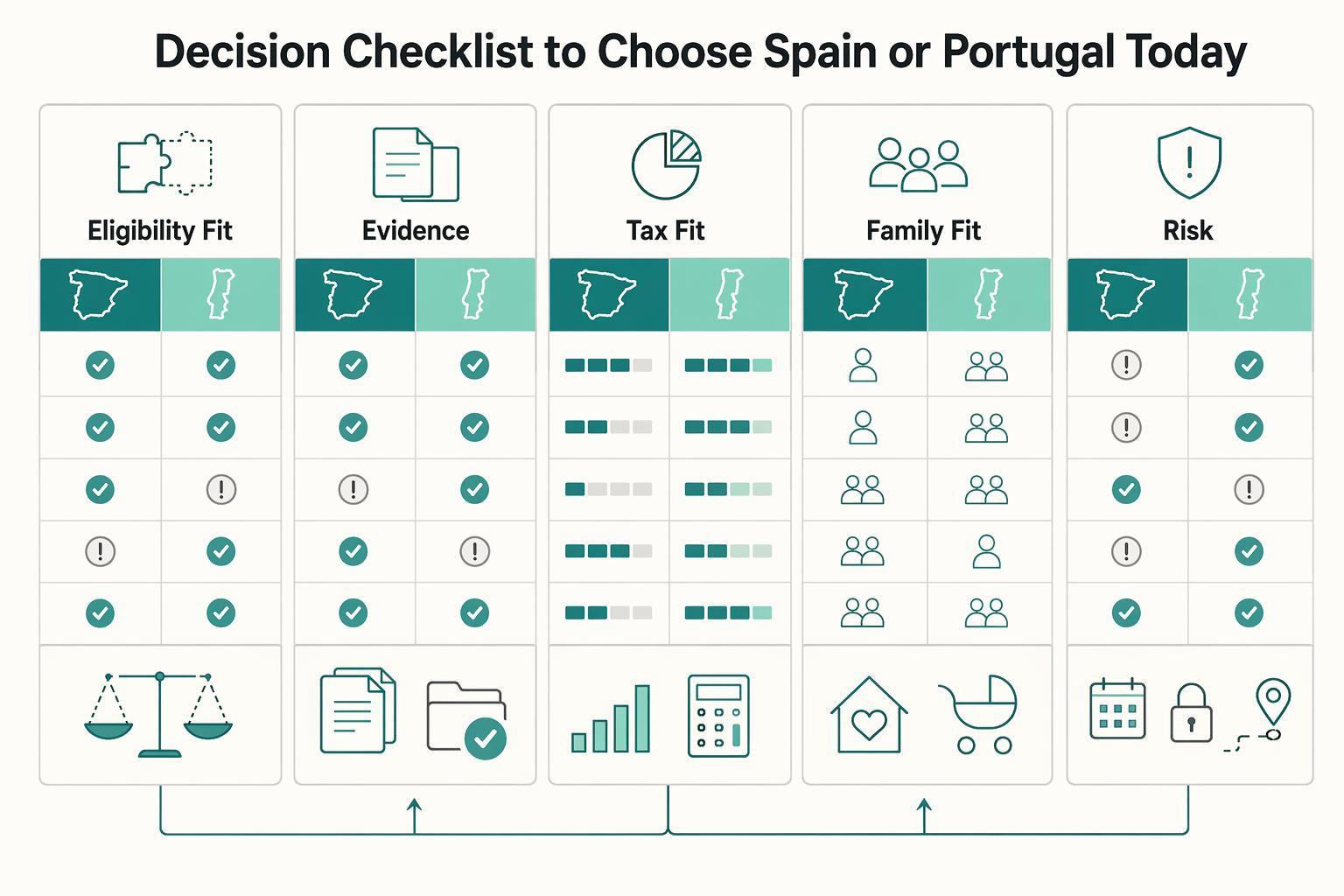
Spain vs Portugal Digital Nomad Visa for a Confident 2026 Move
Choose the country where your case is easiest to prove and where the fewest details are still unclear. When you weigh Spain against Portugal for a digital nomad visa, both options can look similar at first, and there is no single best option for everyone. The better outcome usually depends on your situation and on how clearly you can evidence income, family inclusion, minimum stay, and process.