

Quick Answer
Create a monthly recurring price and a subscription for the client. Choose charge_automatically for an authorized default method or send_invoice for manual payment with a due window. Review the first period, approved overages and all applicable Billing plus processing fees.
Use a subscription to generate the recurring retainer invoices#
For a fixed monthly client retainer, create a Stripe Billing subscription with a monthly recurring price. The subscription generates the invoices; you choose whether Stripe charges an authorized payment method automatically or sends each invoice for the client to pay. Recurring invoices and subscriptions are therefore connected parts of this workflow, not two interchangeable products with undefined differences.
A standalone Stripe invoice suits a one-time or individually reviewed charge. It does not become a monthly subscription just because its description says “retainer.” If the amount must be agreed afresh each month, retain manual invoice approval until the agreement supports automatic repetition. A service retainer here means a fee for agreed work or availability, not legal-client trust money or escrow.
Write terms that map to the billing settings#
Keep units of work specific and stable, for example a set monthly deliverable or a defined review cadence, so each charge clearly ties back to the signed terms. Record the fee, currency, included work, service period, overage rate and approval rule. Also agree renewal, cancellation notice, refunds, payment due dates and what happens if collection fails.
A hypothetical agreement might say: $1,000 monthly for up to ten support hours during the stated service month; unused hours do not roll over; approved additional hours cost $100 each; invoices are issued on the first and due seven days later. Those are example commercial terms, not defaults imposed by Stripe. If you require payment before work starts, a seven-day payment window beginning on the service start date will not achieve that without changing the service or issue date.
1. Create the customer and monthly price#
In the Dashboard, create or select the client’s customer record and confirm the billing entity, email and address match the agreement. Avoid separate records for the same retainer unless you deliberately need them. Store an internal agreement reference so you can find the signed scope without putting sensitive contract details into an invoice description.
Create a product describing the retainer service and a recurring monthly price in the agreed currency. For the example, use $1,000 per month with quantity one. The product describes the service; the price specifies the amount and interval. If you later agree a different fee, use the appropriate new price and subscription update rather than assuming editing a catalogue label changes every client’s obligation.
Open the subscription creation workflow, select that customer and recurring price, and review quantity, start timing, tax treatment and collection settings. Stripe’s subscription documentation explains the recurring relationship and resulting payment states. Check the applicable tax setup for your business and client; a price being denominated in USD does not settle the tax question.
2. Choose automatic charge or invoice payment#
| Collection choice | How the client pays | Setting to confirm |
|---|---|---|
| charge_automatically | Stripe attempts the default payment method for the generated invoice | Authorized reusable method, its supported currency and required mandate or consent |
| send_invoice | Stripe generates the period invoice for manual payment | Invoice email, payment window and supported hosted payment methods |
Stripe’s collection-method guide supports both choices on a subscription. Set a seven-day payment window for the example’s send-invoice terms; in an API integration, use collection_method=send_invoice and days_until_due=7. For automatic collection, use charge_automatically and obtain the required authorization to reuse the chosen payment method. Some bank-transfer methods support send_invoice only.
A saved card is not a signed service agreement, and a recurring subscription is not a guarantee that every charge succeeds. Keep authorization and scope records. Check the supported payment method for the merchant account, client country and currency rather than promising every client the same card, bank-debit or bank-transfer option.
3. Align the first period and renewal date#
Set the intended monthly billing date before creating the live subscription. Stripe’s billing-cycle guide distinguishes the recurring interval from the billing cycle anchor. The anchor aligns future periods and uses UTC. A monthly anchor on day 31 renews on the last day in shorter months; it does not skip February.
If the client joins partway through a month but renewals must fall on the first, decide what that initial period costs. A future anchor can create a prorated initial charge. Disabling that proration can make the initial interval free; it is not a way to charge a full month silently. A full-price first month, a free interval and a prorated interval should each be explicit in the agreement and resulting invoice.
Review a preview before the live subscription is created, especially for start-date changes. Do not assume you will have a manual review window after automatic creation: Stripe’s subscription invoice guide says the first charge-automatically invoice finalizes immediately. Validate the configuration in a sandbox as part of your own implementation before using it with a client.
4. Add approved overages without changing the base fee#
Treat the SOW or retainer as the baseline, define what counts as out of scope in writing, and confirm approval before billing extra work. Keep the base retainer and extra service period separate. Three approved additional hours at $100 produce a $300 overage; the example’s next $1,000 base plus that overage is $1,300 before any tax, discounts or credits.
Add the approved one-time charge to the intended draft subscription invoice or as a pending item for the intended subscription, and check the next invoice preview. A pending item left only on the customer can be picked up by another invoice. If the target invoice is already finalized, use an appropriate separate invoice or supported correction process; adding an item to the customer does not change that finalized amount.
Retain the approval, hours or deliverable record and invoice reference. Give the overage one internal charge identity so a repeated handoff cannot add it twice. If the customer disputes the extra hours, separate that dispute from the undisputed base fee and respond using the agreed process rather than changing next month’s recurring price to bury the adjustment.
5. Handle price changes and cancellation deliberately#
For a new fee effective next month, obtain the approval and arrange the change for that renewal. For a mid-period change, review the proration policy and preview the result. Stripe’s proration guidance says a credit is not automatically a cash refund and a positive adjustment is not necessarily collected immediately. Unpaid invoices need particular care because proration can credit time the client never paid for.
For a simplified contractual illustration, raising a $1,000 fee to $1,400 exactly halfway through a period leaves a $500 credit for unused old service and a $700 charge for new service, a net $200 increase before tax. This is illustrative half-period math. Stripe’s default calculations use seconds and depend on the actual period, discounts, billing mode and chosen proration behavior; use the preview for the amount you communicate.
Follow the agreement’s service end date, then set immediate or period-end cancellation accordingly. Stripe documents cancel_at_period_end=true for the current period’s end. Review pending items and outstanding invoices separately. Cancellation is not an automatic refund or forgiveness of debt; canceling can pause automatic collection on existing open and draft invoices, so decide how those will be handled.
Include Billing fees in the retainer margin#
As checked on October 3, 2026, Stripe’s US Billing pricing lists pay-as-you-go at 0.7% of Billing volume, with payment processing separate. Its US Payments page lists 2.9% plus $0.30 for a standard successful domestic-card transaction. Custom agreements and other markets or payment methods can change these charges.
For a scoped $1,000 US domestic-card subscription charge under those rates, payment processing is $29.30 and Billing is $7.00, leaving $963.70 before other costs. For the $1,300 subscription invoice, the same simplified assumptions give $38.00 processing plus $9.10 Billing, leaving $1,252.90. Neither example includes tax, international-card or FX charges, refunds, disputes or optional products.
One-off Invoicing pricing is separate: the published Starter rate is 0.4% per paid invoice, plus payment processing. Do not add that automatically to every subscription invoice or compare a one-off processing-only number with an all-in recurring number. Use your account’s applicable contract when forecasting net cash.
Recover missed payments and reconcile the result#
If an automatically collected invoice fails, review its payment outcome and configured recovery settings. Ask the client to update the correct subscription payment method or complete required authentication. For sent invoices, follow the due date and reminder policy. Configure the consequence of exhausted retries; indefinite invoice generation can create an unexpected receivable after you stop service.
Keep subscription status, invoice status and bank payout separate. Delayed payment methods can make a subscription active while collection is still processing or later fails. An issued invoice or active subscription alone is not proof of cleared cash. Before making a replacement collection after an uncertain response, recover the original payment attempt to avoid charging the client twice.
At close, reconcile the invoice’s gross charge, credits, successful collections, processor fees, refunds or disputes and the net Stripe balance movement. Match the eventual bank payout separately because it can combine several clients. Maintain open receivables for unpaid invoices and appropriate revenue recognition for the service period; collecting a prepaid retainer does not by itself establish that all service revenue has been earned.
For each renewal, check only what can drift: agreement version, price, service period, approved pending items, payment method and unresolved collection. Keep a complete exception list rather than measuring success only from paid invoices. Once this is consistent, repeating the subscription reduces monthly administration without losing the connection to approved work.
Frequently Asked Questions
Do I choose recurring invoices or a subscription?
For this fixed monthly Stripe workflow, the subscription generates the recurring invoices. Choose its collection method: automatic charge or send invoice. Use standalone invoices for individually approved one-time charges.
Can a client pay the monthly subscription invoice manually?
Yes. With send_invoice, the subscription generates invoices and the client pays them manually within the configured payment window. Confirm the supported payment methods and invoice email settings.
Does the billing date determine the payment due date?
The billing cycle anchor aligns the recurring periods. The collection method and payment window determine when payment is requested or due. Match both to the agreed service and payment dates.
How should I bill approved extra work?
Keep a distinct one-time item for the approved overage, tied to its service period and intended invoice or subscription. Check the preview and retain approval; an added pending item does not alter a finalized invoice.
Is automatic retainer billing free apart from processing?
Stripe Billing has separate pricing. In the scoped US pay-as-you-go example, a $1,000 domestic-card subscription charge incurs $29.30 processing and $7.00 Billing, leaving $963.70 before other costs.
Does canceling the subscription refund the client?
No automatic refund should be assumed. Choose the agreed end date and handle credits, refunds, pending items and existing unpaid invoices separately, including any paused collection after cancellation.
Researched and edited by the Gruv editorial team. Gruv builds cross-border billing, payouts, and finance-operations software for global businesses.
Sources
Educational content only. Not legal, tax, or financial advice.
Related Posts

The Freelance Payment Penalty: A Modeled Audit of Platform Fees, FX Spreads, and Payout Delays
The money rarely disappears through a single, easy-to-spot fee. The real loss is stacked. A marketplace takes its commission, a processor adds a charge for international cards, a bank or payment company converts the currency at a spread, a platform holds the funds before release, and a wire sheds a little to intermediaries on the way in. Each layer looks defensible on its own, but the worker feels the combined result as a smaller deposit and a later payday.
How to Respond to a Subpoena for Business Records
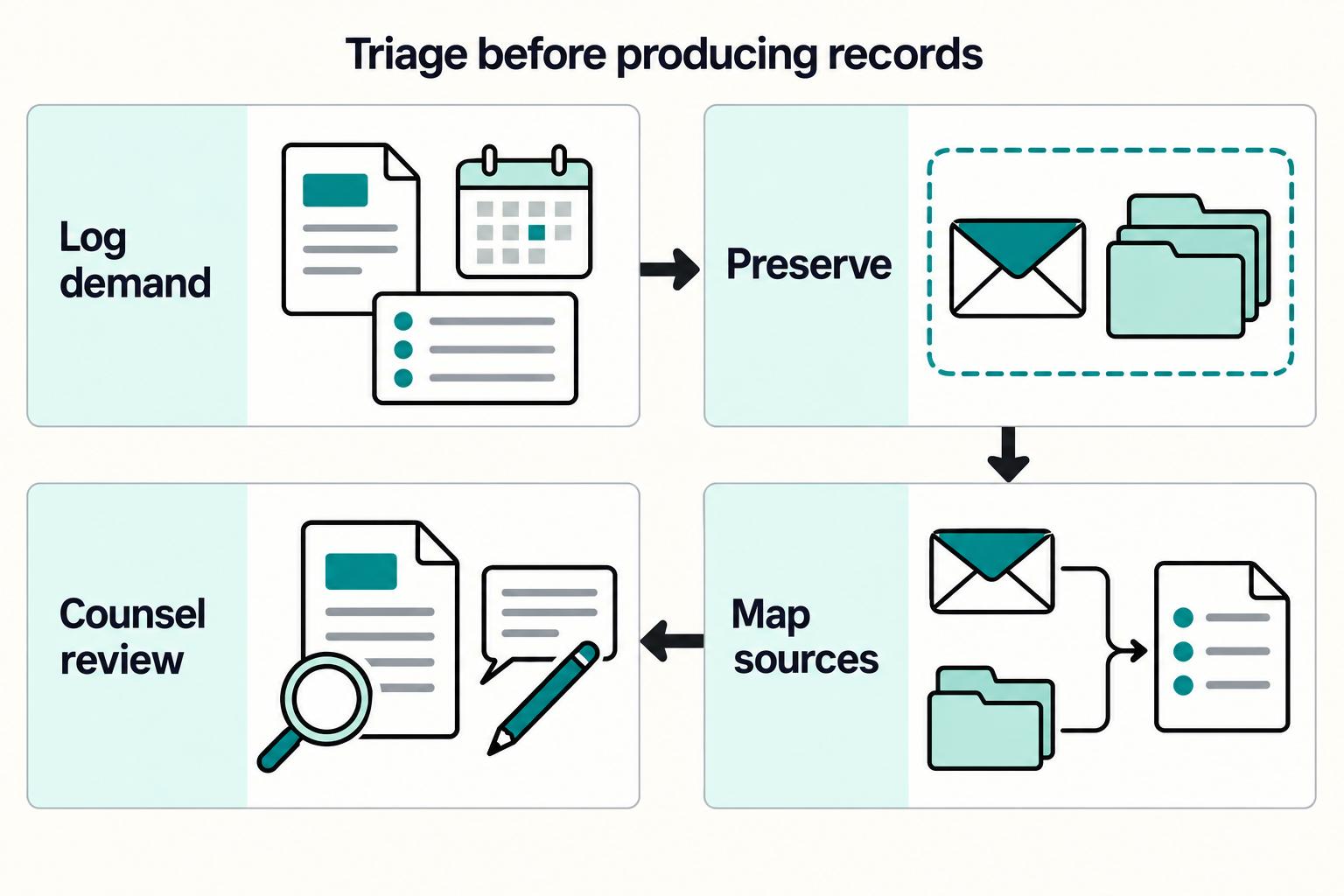
Move fast, but do not produce records on instinct. If you need to **respond to a subpoena for business records**, your immediate job is to control deadlines, preserve records, and make any later production defensible.
A US Expat's Guide to Investing in UCITS ETFs to Avoid PFIC Issues
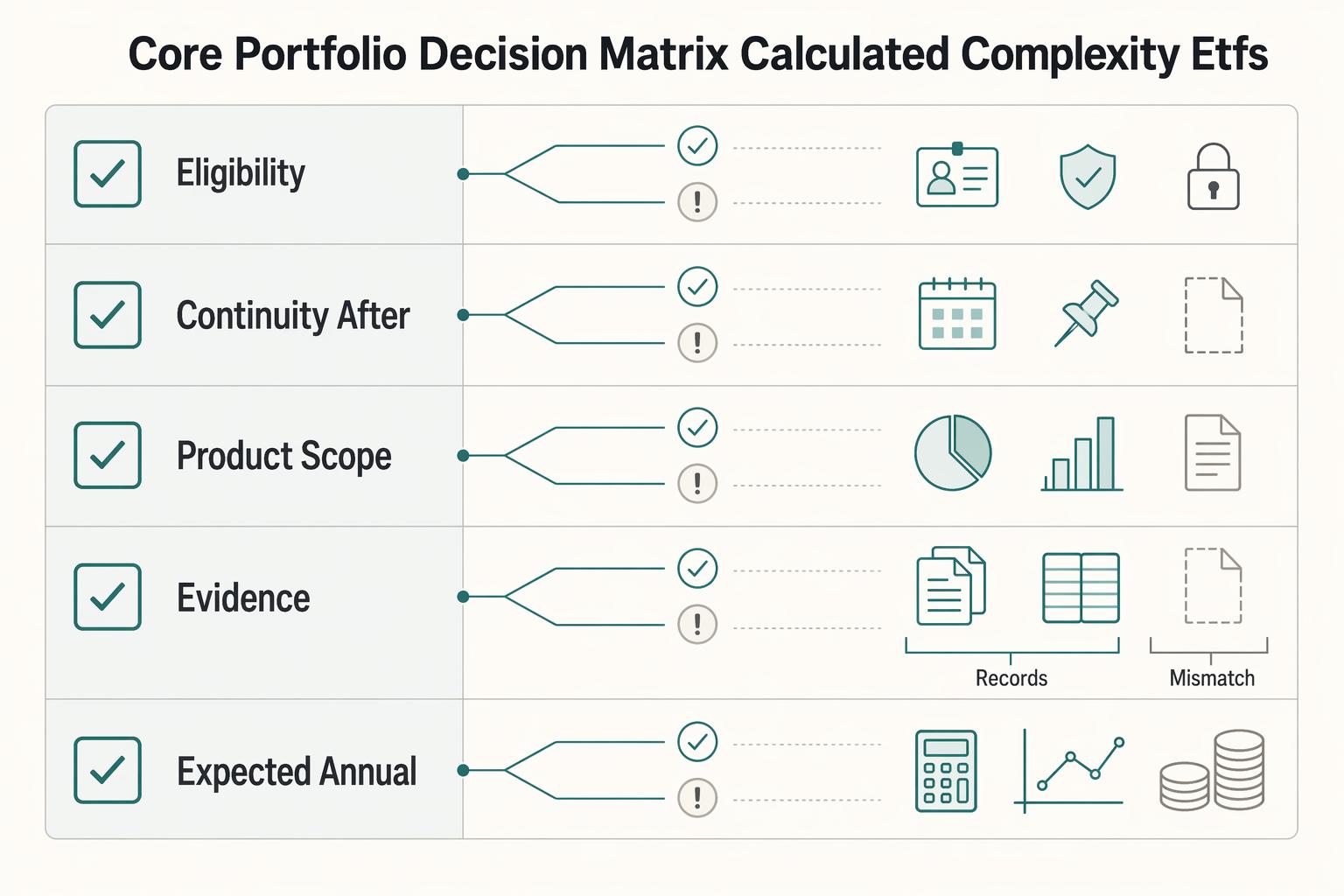
The real problem is a two-system conflict. U.S. tax treatment can punish the wrong fund choice, while local product-access constraints can block the funds you want to buy in the first place. For **us expat ucits etfs**, the practical question is not "Which product is best?" It is "What can I access, report, and keep doing every year without guessing?" Use this four-part filter before any trade: