
Quick Answer
Start by confirming exactly what rights are being sold under your operating agreement, then match those rights to required consents and a buy-sell agreement. To transfer llc ownership safely, line up document execution with payment controls so ownership does not move before conditions are met. Finish by updating state records, internal ownership records, and account authorities so legal control, tax handling, and day-to-day operations reflect the same post-close result.
What has to move together when you transfer LLC ownership#
When you transfer LLC ownership, getting signatures is not enough. Legal rights, tax treatment, required filings, and day-to-day control all need to move together. You should move forward only when the transfer fits your operating agreement, the tax treatment is understood, the filing path is mapped, and control rights are clearly reassigned.
Define exactly what you are transferring#
Get precise on the asset before you negotiate price or timing. You need to know whether the deal is a partial transfer, a full exit, or a change in economic rights only, and what exposure can remain after closing.
- Ownership transfer: assigning some or all of a member's LLC interest. State law and your operating agreement can limit how that works.
- Partial transfer: assigning only part of an interest, which can transfer economic rights tied to that portion without automatically transferring management rights.
- Full exit: assigning all of your interest. In Delaware, that can end your member status and member powers.
- Post-transfer liability: what exposure remains after closing, including taxes, filings, contracts, and system or account authority.
Screen the four risk buckets before you close#
Before you talk about closing, pressure-test the deal across four areas that commonly break after the documents are signed.
| Risk | Check | Key point |
|---|---|---|
| Tax exposure | IRS rules and state LLC law are separate | If your LLC is taxed as a partnership, specialized withholding and gain-character rules can apply in some transfers |
| Contract risk | Agreement and governing statute determine consents and transfer restrictions | Economic assignment may not admit the buyer as a member |
| Filing risk | Ownership and control updates are not automatic | If the responsible party changes, file Form 8822-B with the IRS within 60 days |
| Operational handoff risk | Payment does not automatically equal control | In Delaware, an assignee does not automatically receive management participation rights |
Checkpoint: pull your operating agreement now and confirm transfer limits, required consents, and whether the buyer is receiving economic rights only or full member rights.
Decide whether to proceed, pause, or escalate#
Proceed when the agreement and governing law support the intended rights, the tax treatment is understood and closing conditions are documented. If the agreement is silent, investigate statutory defaults rather than assuming the transaction is prohibited. Resolve disputed consents or cross-border tax treatment before closing.
From here, move through the transfer in three phases: pre-transfer planning, legal and financial execution, and post-closing compliance cleanup. If the commercial terms are still underdefined, review How to Create a Buy-Sell Agreement for a Partnership before you start drafting.
If you want a deeper dive, read Sole Proprietorship vs. LLC: The Definitive Guide for Global Freelancers.
Phase 1: Decide whether the deal is actually ready to move#
Phase 1 is where you decide whether the deal is actually ready to move. Go to Phase 2 only after you confirm what can be transferred, what approvals are required, and what tax-characterization risks could change the price.
Choose the transfer path before you discuss terms#
Pick the path first. It controls rights, consents, and tax review, so do not leave it for drafting cleanup later. In Delaware, an LLC interest is assignable in whole or in part unless the LLC agreement says otherwise, but an assignee does not automatically receive member powers.
| Path | Best fit | Control impact | Tax complexity | Handoff risk |
|---|---|---|---|---|
| Partial transfer | You want to add a partner, investor, or successor without a full exit | Buyer may receive economic rights first; governance rights may still require consent or formal admission | Medium to high; characterization depends on entity tax status and structure | High if buyer expects control but receives only an assignment |
| Full exit | You want to sell all of your interest and separate cleanly | In Delaware, assigning all of your interest can end your member powers | Partnership-interest sales can involve capital gain with§751 ordinary-income elements; disregarded or corporate classification changes treatment | Medium to high if liability cleanup and authority handoff are incomplete |
| Internal restructuring | You are moving ownership for planning purposes, not a market sale | Control may remain with you, but legal ownership still changes | Depends on the receiving entity, tax classification and transaction; do not assume tax-free treatment | Medium if records, contracts, and tax reporting are misaligned |
Verification point: write one sentence that states the path, which rights transfer at closing, and which approvals are still pending. If you cannot write that clearly, pause here.
Legal ownership and federal tax treatment are separate#
An LLC can be disregarded, partnership-taxed or corporation-taxed depending on owners and elections. Selling its membership interests preserves the legal entity in many transactions, but does not guarantee partnership-interest tax treatment. Record the current classification and post-close outcome before selecting tax forms.
An asset sale transfers the scheduled assets from the LLC rather than admitting a new member. Contracts, licenses, debts and liabilities require their own treatment. A buyer cannot assume selected assets move automatically because the owner signed an interest assignment.
Build a valuation file you can defend#
Do not price the deal off a rough estimate. Build a file you can explain and support.
Choose a valuation method that fits the business. Seller’s Discretionary Earnings (SDE) can help assess an owner-operated business, while asset-based or other earnings/cash-flow methods may fit other cases. Do not treat SDE as mandatory for every LLC.
Then normalize the financials so they reflect ordinary operations rather than one-off noise. Keep support for every adjustment and a short rationale so the number can survive diligence.
You also need to separate transferable value from owner-dependent value before you price. For tax purposes, goodwill is value tied to expected continued customer patronage. In practice, you still need to distinguish value that survives your exit from value tied mainly to your personal reputation or relationships. That split is fact-intensive, so treat it as a pricing and tax workstream, not a drafting footnote.
If you need a market multiple, verify the current market range from finance source records before using it in your memo.
Audit the operating agreement like a gatekeeper#
Your operating agreement decides whether this transfer works the way you think it does. If it is silent, state default rules can control the result, and those defaults may not match the deal you are trying to close.
Check these clauses before anyone marks up sale papers:
- Transfer restrictions and consent rights: bans, ROFR/ROFO, drag-along, tag-along, and member-consent requirements.
- Buyout mechanics and valuation method: appraisal rules, formula methods, notices, and timing.
- Assignment rules: whether economic rights can transfer without governance rights, and how admission as a member happens.
- Dispute process terms: provisions that could change timing, leverage, or enforcement if a transfer dispute starts.
If terms are silent or conflicting, pull the governing state default rules and escalate when control rights or consent thresholds are unclear. If you expect custom transfer mechanics in Phase 2, review How to Create a Buy-Sell Agreement for a Partnership.
Verification point: mark each clause as clear, silent, or conflicting. Resolve anything that is not clear before sale-paper drafting.
Complete a pre-transfer risk register#
Before pricing hardens, write down the risks you still need to verify. This keeps negotiation from outrunning the facts.
| Risk | Verify now | Escalate when |
|---|---|---|
| Tax characterization risk | Confirm whether this is an interest sale, asset sale, or internal restructuring; for LLCs taxed as partnerships, baseline treatment is capital gain/loss, with possible ordinary-income recharacterization under Section 751(a) | Deal pricing assumes all gain is capital without analysis |
| Hidden liabilities | Confirm what obligations are in scope for pricing and disclosure (for example debt, tax, claims, guarantees, or refund exposure) | A material obligation is missing from pricing or disclosures |
| Contract assignment barriers | Review material contracts for anti-assignment terms or consent triggers | A value-critical contract cannot be assigned or can terminate on transfer |
| Cross-border exposure | Record seller and buyer US tax status and the LLC’s classification; foreign-partner ongoing tax and foreign-seller transfer withholding are different | Withholding, shareholder eligibility or reporting is unresolved |
Final checkpoint: if the transaction may be an asset deal with goodwill or going-concern value, flag Form 8594 now so buyer and seller can align reporting before price and documents are finalized. Related: What Happens to an LLC When a Member Dies?.
Phase 2: The Core Legal & Financial Execution#
In this phase, paper, approvals, and money all need to line up at the same moment. If they do not, you can close in a way that looks finished but still leaves control, liability, or payment disputes behind.
Lock the governing deal in a buy-sell agreement#
Your buy-sell agreement is the control document for what transfers, when it transfers, and who carries which risks. Draft it so each obligation is operational, not open to interpretation.
If you need deeper clause examples, use Gruv's guide on How to Create a Buy-Sell Agreement for a Partnership, then tailor the drafting to this LLC transaction.
Keep these definitions explicit in the agreement:
- A condition precedent is an event that must occur before performance is required.
- An indemnity is a promise to compensate for specified losses.
- A covenant is a promise to do or not do a specific act.
Use this clause checklist as a drafting control:
- Representations: authority, ownership, financial records, key contracts, litigation, taxes, undisclosed liabilities.
- Indemnity scope: covered losses, exclusions, caps, survival, and claim process.
- Transaction perimeter: list transferred assets in an asset sale. For an interest sale, define balance-sheet/price adjustments and retained obligations without implying the LLC’s assets transfer individually.
- Covenants: pre-closing conduct, records access, consent efforts, confidentiality, transition support.
- Dispute handling: forum, process, notice method, and cure mechanics.
- Closing conditions: approvals, signed transfer instruments, funds verification, and required consents.
Verification point: if the agreement does not clearly answer each checklist item, do not sign.
Choose transaction mechanics that match the paper#
The structure has to match the economics and the documents. Choose it before finalizing the closing set, because structure changes approvals, document packages, and reporting.
| Structure | When it fits | Documentation impact | Reporting touchpoints | Risk tradeoff |
|---|---|---|---|---|
| Asset-focused transfer | Buyer wants selected assets, not the full entity | Typically includes asset schedules, assignment or consent documents, and included/excluded lists | In applicable asset acquisitions, consideration is allocated under IRC 1060; both sides generally file Form 8594 | Can improve liability ring-fencing, but usually adds document and consent workload |
| Membership-interest transfer | Buyer wants continuity of the LLC as an entity | Typically includes an interest purchase agreement, assignment instrument, admission/consent documents, and operating agreement updates | Tax treatment depends on the LLC classification; a disregarded entity’s legal interest sale can be treated as an asset sale for federal tax | Can preserve operational continuity, with potential entity-level carryover risk |
| Mixed or consent-sensitive path | Commercial terms and legal constraints do not align cleanly | Conditional closing steps and approval-dependent drafting; confirm the current approval threshold with legal counsel or the official source | Reporting follows the structure that actually closes | Higher mismatch risk between negotiated economics and executable closing |
Jurisdiction still controls member-rights transfer mechanics. In Delaware, assignment alone does not automatically transfer member governance rights, and post-formation admission can default to all-member consent unless the LLC agreement says otherwise.
Execute in a fixed document order#
Treat closing as a controlled sequence, not a pile of parallel signatures. Names, percentages, dates, and conditions should match across every signed document.
| Order | Required item | Check |
|---|---|---|
| 1. Approval artifact | Any member or manager consent required by the LLC agreement or governing law | Confirm the governing agreement version before you rely on approval language |
| 2. Operative transfer artifact | Executed transfer instrument(s) tied to the buy-sell agreement and the exact interests or assets being transferred | If governance rights require admission or consent, execute those documents in the same closing set |
| 3. Signature and packet control | One controlled signature packet and one closing index | The final signed set should match ownership percentages, party names, effective time, and exhibits in every file |
Audit the packet against the agreed closing sequence. Confirm party names, percentages, effective time, approvals and the permitted signature process for the actual instruments.
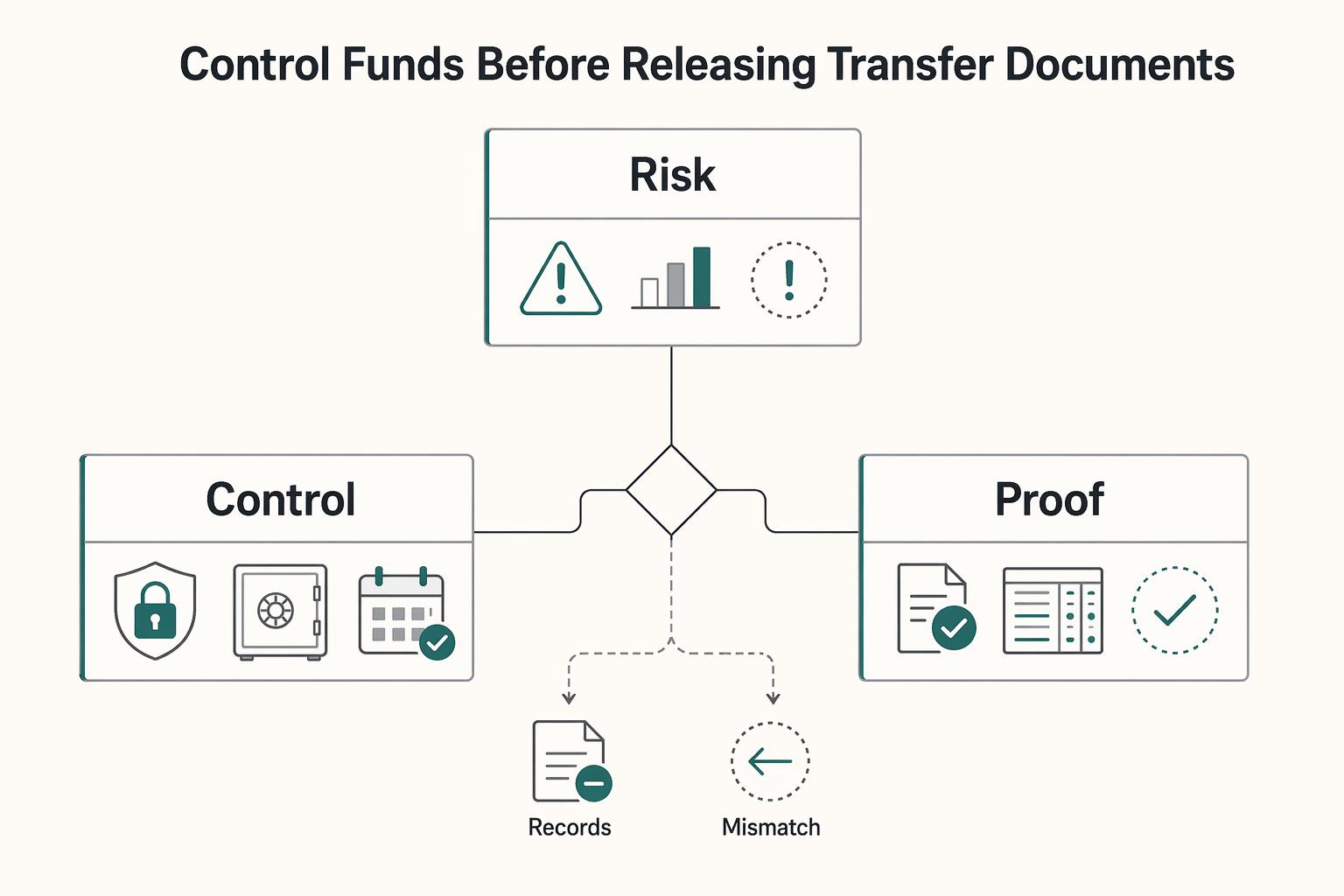
Control funds before releasing transfer documents#
Do not let ownership move before payment conditions are actually satisfied. Escrow is not required in every private LLC transfer, but a hold-and-release setup can reduce execution risk.
Write down four controls:
- Holder: who controls funds pending closing.
- Verification: what counts as cleared funds.
- Release conditions: which signed documents or consents must be complete before release.
- Failure path: whether funds are returned or held through cure windows if conditions fail.
Also write down failure handling:
- If funds are initiated but not cleared, do not release operative ownership documents.
- If documents are signed but a condition precedent fails, follow written hold or return instructions.
- If no escrow is used, consider requiring bank-confirmed receipt plus written release instructions tied to the exact closing set.
By the end of this phase, you should have signed deal terms, valid approvals, operative transfer instruments, and controlled funds release, ready for the record and filing work in Phase 3.
If you are updating governance terms at the same time, you might also find this useful: How to Structure an LLC Operating Agreement for a Multi-Member Partnership.
Phase3: Align post-closing records and authority#
A transfer is not really complete at signing. It is complete when the legal handoff, tax handoff, and operational handoff all tell the same story. Until then, treat the deal as unfinished.
File the right state update#
Start with the formation or registration state, because there is no universal post-transfer filing. The first question is jurisdiction, not form name.
| State | Update | Key detail |
|---|---|---|
| California | Statement of Information (LLC-12) | Recurring, not a one-time transfer filing; if no managers are appointed or elected, list each member name and address |
| New York | Biennial Statement | Requires exact entity name and DOS ID, and includes the service-of-process mailing address |
| Texas | No filing requirement solely for an ownership change | Secretary of State guidance says there is no filing requirement solely for an ownership change |
Use the filing your state actually requires, and match the closing documents exactly on:
- Legal entity name
- State file number or DOS ID, if required
- Member or manager names and addresses
- Management structure
Keep the examples above straight: California's LLC-12 is recurring, New York's Biennial Statement depends on the exact entity name and DOS ID, and Texas does not require a filing solely for an ownership change.
Checklist item: Applicable state update; confirm the current filing deadline with the relevant state filing office.
Update the IRS responsible-party record#
Once the state side is mapped, finish the federal account handoff. For IRS business purposes, the responsible party is the person who owns, controls, or exercises effective control over the entity and manages its funds or assets.
If the responsible party changes, file Form8822-B within60days. The form also handles business address or location changes. Separately check whether the actual ownership or entity-structure change requires a new EIN; not every interest transfer does.
Verification step:
- Confirm the IRS mailing address on file is correct.
- Track IRS acknowledgment.
- If no confirmation letter arrives within
60 days, mail a copy of Form8822-Bas instructed.
Lock the internal record set#
Internal records are where a lot of bad transfers show up later. Your operating agreement, member ledger or cap table, and authority records should all reflect the same post-close result.
Use this document-control list:
- Align ownership percentages.
- Confirm admission or withdrawal status.
- Update governance and signing authority rights.
- Complete any signatures required for final executed versions.
- Store one final close-out package, including the buy-sell agreement, assignment, consents, and any amended operating agreement or updated ledger.
Keep the executed documents, ownership history and authority changes under a retention policy covering tax, contractual and legal needs. A generic three-to-seven-year period is not a safe disposal rule for every LLC closing file.
Reset external accounts and keep proof#
Separate legal rights from operational access. The closing documents determine the legal transfer, while banks and providers must separately recognize approved signers and account administrators. Remove access according to the new authority structure; an owner who remains an authorized manager may still need it.
| Partner | What to update | What to verify | Proof to save |
|---|---|---|---|
| Bank | Signers, online admins, beneficial-owner info | Approve new signers/admins and remove former rights where the closing authority structure requires it | Bank confirmation, signature card, portal screenshot |
| Payment processors | Owner or authorized representative details | Complete provider-required ownership/representative verification and update access to the approved post-close authority structure | Confirmation email, updated profile export |
| Lenders | Borrower contact and authorized signer details | Whether notice or consent is required under loan documents | Written lender acknowledgment |
| Insurance | Named-insured contact, authorized representative, billing or admin contacts | Servicing access updated; claims and renewal notices route correctly | Broker or carrier confirmation |
| Key vendors | Billing contact, contract notice address, account admins | Invoices, PO flows, and service notices route correctly | Email confirmations, updated account profiles |
Do not assume timing is uniform across platforms. Some owner changes require identity or business verification, and some transfers have strict completion windows. Save every confirmation so the audit trail shows exactly when control changed.
For a step-by-step walkthrough, see A Guide to Setting Up a Business Bank Account for a New LLC.
Foreign sellers and overseas buyers need different tax checks#
An overseas buyer raises ownership eligibility and post-transfer reporting questions. A foreign seller can raise withholding on the transfer itself. Identify both parties’ US tax status and the LLC’s actual tax classification before conflating these branches.
Confirm each party’s status and the LLC classification#
Residence abroad alone does not make a person foreign for US tax purposes. US citizenship, residence tests, entity type and applicable treaty positions can matter. Collect the certifications required for the transaction rather than assuming a buyer’s W-8BEN determines seller withholding.
Before signing, lock four facts: who the buyer is, where they are tax resident, whether they are buying personally or through an entity, and where the payment will come from. If any of those points is unclear, treat the closing as not ready.
Check classification and withholding before you paper the deal#
A legal LLC membership-interest sale and its federal tax treatment are not always the same. A partnership-taxed LLC uses partnership-interest rules; a sale of a disregarded single-member LLC can be treated as an asset transaction. Adding an owner can also change default classification. Confirm elections and the resulting structure.
For a non-publicly traded partnership interest transferred by a foreign seller, §1446(f) generally requires the buyer/transferee to withhold10% of amount realized when the relevant gain is effectively connected under§864(c)(8), unless an applicable exception or adjustment is properly established. A foreign buyer alone is not that trigger. FIRPTA separately concerns foreign transferors disposing of US real-property interests; resolve any overlap for the actual deal.
For an illustrative covered transfer, assume a foreign seller receives USD100,000 cash and is relieved of USD20,000 of relevant partnership liabilities. If amount realized is USD120,000 and no exception or adjustment applies,10% withholding is USD12,000—not10% of gain or merely the cash price. The example does not determine your transaction’s treatment.
Assign the withholding and reporting tasks before funds release. The current Form8288 instructions explain non-PTP reporting and timing, certifications and exceptions; have the transaction tax owner apply them. A purchase agreement allocating responsibility does not itself remove a statutory withholding duty.
| Entity posture | What changes | Why it matters | What to do before signing |
|---|---|---|---|
| LLC taxed as disregarded entity | Adding a second owner can shift default federal tax classification from disregarded to partnership, unless a corporate election applies | Reporting and withholding analysis may change once ownership changes | Confirm current election status from prior tax filings and model post-close classification |
| LLC taxed as partnership | Foreign-transferor sale may require§1446(f) withholding; ongoing foreign-partner income withholding is a separate rule | Buyer may owe withholding based on amount realized, including relevant liability relief | Document seller status, applicable certifications/exceptions, remittance and reporting before closing |
| LLC with S-corp election | Nonresident alien shareholders are not permitted | This is an eligibility constraint, not a drafting preference | Verify residency and shareholder eligibility before signing |
Do not rely on the operating agreement alone here. You need both the agreement and the LLC's actual tax election history.
Build a cleaner cross-border evidence file#
Cross-border diligence needs a cleaner evidence file. You are not running a bank AML program, but you do need enough proof to verify identity, ownership, payment trail, and sanctions risk before release.
- Verify identity and beneficial ownership with appropriate identity documents, entity records, and an ownership chart that identifies ultimate owners.
- Document the payment trail with records that match the buyer and sending account.
- Screen sanctions risk, but do not treat a sanctions-list search alone as sufficient diligence.
- Set governing law and dispute venue in the contract so enforcement is more predictable.
- Use escrow instructions where appropriate so a neutral third party can hold transfer documents and payment until release conditions are met.
Put those cross-border protections into the documents#
Build those protections into the deal documents. Your purchase agreement or buy-sell agreement should state transfer timing, tax and residency documents, governing law, dispute forum, and delay handling for banking, conversion, or sanctions-review issues.
Use escrow instructions that require cleared funds, matching sender details, and completed transfer documents before release. Keep the escrow instructions, payment confirmation, sanctions-screen record, identity and ownership file, and tax-status documents in your closing package.
If you cannot confirm tax treatment, buyer eligibility, and payment trail, pause closing.
This pairs well with our guide on How to Contribute a Personal Asset Like a Car to an LLC.
Close the legal, tax and authority records together#
A completed transfer has a traceable closing file: operative documents, required approvals, payment and withholding records, ownership updates and the agreed account authority.
Reconcile the ownership record before you close the file#
Before you close the file, make sure the internal ownership record set is complete. Your signed transfer document, any required member consents, payment proof, and any amended operating agreement should all show the same ownership outcome. If your state required an amendment or similar filing, wait for acceptance, not just submission.
Be explicit about rights. Under default rules such as Delaware's, assigning an LLC interest does not automatically give the assignee member powers. Your documents should say clearly whether the buyer was admitted as a member or remains only an assignee.
Treat IRS and tax-record updates as part of closing#
Treat IRS and tax-record updates as part of closing, not as admin cleanup. If the responsible party changed, file Form 8822-B within 60 days. The IRS also states the responsible party must be a person, not an entity, and Form 8822-B is signed under penalties of perjury.
Keep a signed copy in your packet and track IRS confirmation. If no confirmation arrives within 60 days, follow IRS instructions to mail a copy of the form.
Reset the control points that do not update automatically#
Finish by updating the control points that may not update automatically after a sale. That can include bank signer authority, contract authority, and related account access. Some banks may require in-person document review, so confirm the process directly instead of assuming access changed at closing.
Before you call this done, verify:
- all signatures and required consents are complete
- state acceptance is confirmed where a filing was required
- Form 8822-B was filed when the responsible party changed, and follow-up is calendared
- banking and contract authorities now match the new control person
- the full closing packet is stored in one place
If you still need to tighten the deal terms, review your transfer language against this buy-sell agreement guide. Then schedule one post-close advisor review with the full packet in hand.
We covered this in detail in How Canadians Can Set Up a US LLC Without Tax Surprises.
If your post-transfer setup includes paying people across borders, confirm coverage, compliance gates, and operational fit before you implement: Talk with Gruv.
Frequently Asked Questions
What are the core steps to transfer LLC ownership?
Start with the operating agreement, then execute the deal documents, then complete required record and filing updates. Confirm transfer limits, consent requirements, and whether the buyer receives full member rights or only an assigned economic interest. Close only after signed documents, required consents, and payment confirmation are in your closing file.
What IRS form do you file after the owner changes?
If your LLC's responsible party changes, file Form 8822-B within 60 days. The responsible party is an individual person, not an entity, who owns, controls, or exercises effective control over the business and its funds or assets for EIN purposes. Keep proof in your records, and separately verify whether the ownership or structure change means you need a new EIN.
How should you value a single-member LLC before a sale?
Choose a valuation method suited to the business: asset value, earnings or cash-flow approaches may apply. SDE can help for an owner-operated business, but it is not mandatory for every single-member LLC. Support adjustments with actual books and verify market comparisons before relying on them.
Can you sell to a buyer who lives or operates overseas?
Often yes, subject to state law, the agreement, contracts and the actual ownership structure. An S-corporation election limits eligible owners, including a prohibition on nonresident alien shareholders. A foreign buyer can also change reporting obligations. Separately analyze any foreign seller’s withholding exposure.
What if your operating agreement says nothing about ownership transfers?
If the agreement is silent, default state rules apply and may require broader member consent than you expected. An assignment alone may transfer economics without management rights. Check your state LLC statute, collect written consents, and tighten future terms in a buy-sell agreement.
Try a related tool
Researched and edited by the Gruv editorial team. Gruv builds cross-border billing, payouts, and finance-operations software for global businesses.
Sources
Includes 1 external source outside the trusted-domain allowlist.
- delcode.delaware.gov/title6/c018/sc07trusted
- dos.ny.gov/biennial-statements-business-corporations-an...trusted
- irs.gov/businesses/small-businesses-self-employed/re...trusted
- irs.gov/businesses/small-businesses-self-employed/li...trusted
- sos.ca.gov/business-programs/business-entities/faqstrusted
- sos.state.tx.us/corp/amendmentsfaqs.shtmlexternal
Educational content only. Not legal, tax, or financial advice.
Related Posts

Sole Proprietorship vs LLC for Global Freelancers in 2026
For most freelancers in 2026, the practical default is still simple: use the simplest structure you can run cleanly, then formalize when risk actually rises. If your work is still in validation mode and the downside is contained, a sole proprietorship is often the practical starting point. When contract exposure, delivery stakes, or dispute risk starts climbing, forming an LLC deserves earlier attention.
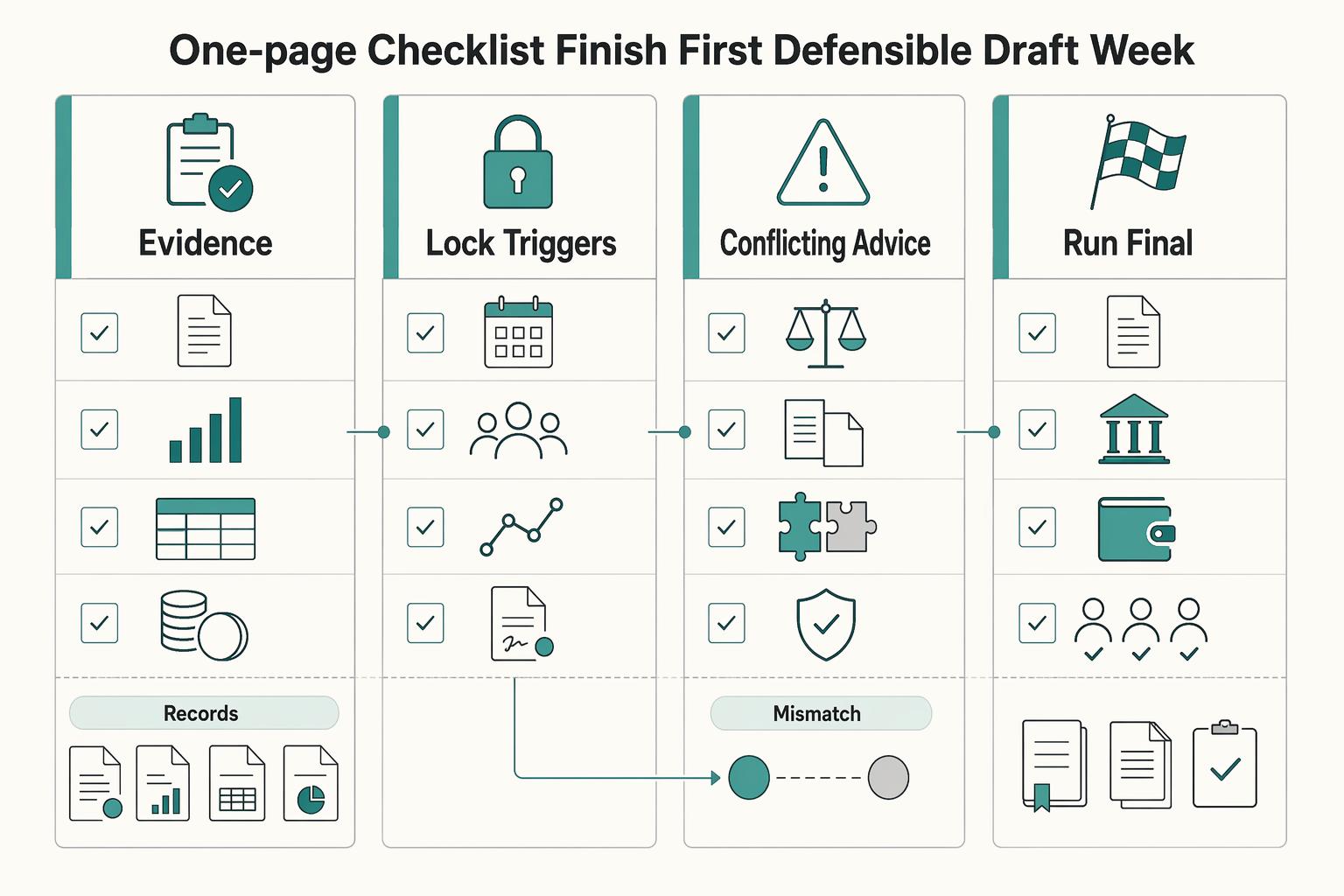
How to Create a Buy-Sell Agreement for a Partnership
**Treat your buy-sell agreement for partnership as core operating infrastructure, not paperwork for later.** Freelancers and consultants move fast on client delivery, but shared ownership risk keeps running in the background until one partner leaves, becomes disabled, goes bankrupt, or goes through a divorce.

The Freelance Payment Penalty: A Modeled Audit of Platform Fees, FX Spreads, and Payout Delays
The money rarely disappears through a single, easy-to-spot fee. The real loss is stacked. A marketplace takes its commission, a processor adds a charge for international cards, a bank or payment company converts the currency at a spread, a platform holds the funds before release, and a wire sheds a little to intermediaries on the way in. Each layer looks defensible on its own, but the worker feels the combined result as a smaller deposit and a later payday.