
Quick Answer
Follow a three-step build to train for high-altitude hike: first establish repeatable aerobic and strength work, then rehearse the exact route demands, then taper so you arrive ready to execute. Use hills or stairs, practice with your real boots, pack, and poles, and test fueling before travel day. Keep acclimatization written and aligned with your guide or operator, because home training cannot replace mountain exposure. Before departure, carry a short response note on phone and paper.
Train in three phases: build capacity, rehearse the route, arrive fresh#
To train well for a high-altitude hike, treat preparation as risk control, not just fitness. Trips often run into predictable gaps: the acclimatization plan is weak, training does not match the actual hike, and gear or fueling were never tested under load.
Use the three phases below in order. At-home training can support acclimatization, but it does not replace real mountain exposure or a deliberate schedule once you are at altitude. Each phase closes a different gap before departure. First build general capacity. Then make training look like the route. Then arrive fresh enough to execute without improvising.
| Phase | Objective | Primary workouts | Recovery focus | Readiness check |
|---|---|---|---|---|
| Step 1 | Build an aerobic base and durable legs, hips, and trunk | Easy aerobic work, basic strength, short loaded walks | Protect sleep, keep one light day and one full rest day, watch for pain that changes your gait | You finish sessions feeling worked, not wrecked |
| Step 2 | Make training look like the trip | Long hikes on hills or stairs, pack carries, pre-dawn practice, fueling and hydration rehearsal | Recover from long-footprint efforts before adding more load | You can complete a full dress rehearsal with your real kit |
| Step 3 | Arrive fresh and operationally ready | Reduced training volume, light hike-specific movement, final gear checks | Shed fatigue, avoid last-minute hard sessions | Your acclimatization schedule, gear list, and response note are written and easy to access |
Step 1. Build the base without confusing fitness with acclimatization#
Start with the work that carries over to almost any route: aerobic base, strength durability, and movement that keeps you comfortable on your feet for hours. Easy cardio you can sustain matters more here than constant max efforts.
| Weekly element | Details | Focus |
|---|---|---|
| Aerobic sessions | Controlled, not breathless | Aerobic base |
| Strength sessions | Squatting, hinging, stepping up, lunging, and carrying | Strength durability |
| Loaded walk or stair climb | Easy and done at the end of one session each week | Weekly equipment screen for shoes, socks, and pack fit |
Your weekly checklist is straightforward:
- Do aerobic sessions that feel controlled, not breathless.
- Add strength sessions built around squatting, hinging, stepping up, lunging, and carrying.
- Finish one session each week with an easy loaded walk or stair climb to check shoes, socks, and pack fit.
What matters most in this phase is repeatability. The point is not to prove how hard you can train in a single week. It is to stack weeks that leave you stronger, more durable, and ready for the more specific work that comes next.
If your easy sessions are turning into survival efforts, pull back. If your strength work leaves you so sore that your walking form falls apart, pull back. At that point, the training is drifting away from the job you actually need it to do.
The decision rule in this phase is simple. If fatigue is stacking up, your mood is poor, or pain changes how you walk, reduce volume before you add intensity. A common failure mode is chasing hard sessions too early, then starting hike-specific practice already tired or slightly injured.
Treat the loaded walk or stair climb as more than a token finish. It is your first weekly equipment screen. If your socks bunch, your heel rubs, or your pack shifts even on an easy day, that is useful information.
If you have access to a hypoxic tent, treat it as optional support, not a shortcut. It can reduce the oxygen concentration you breathe while sleeping. It still needs to be paired with a real acclimatization schedule on the mountain.
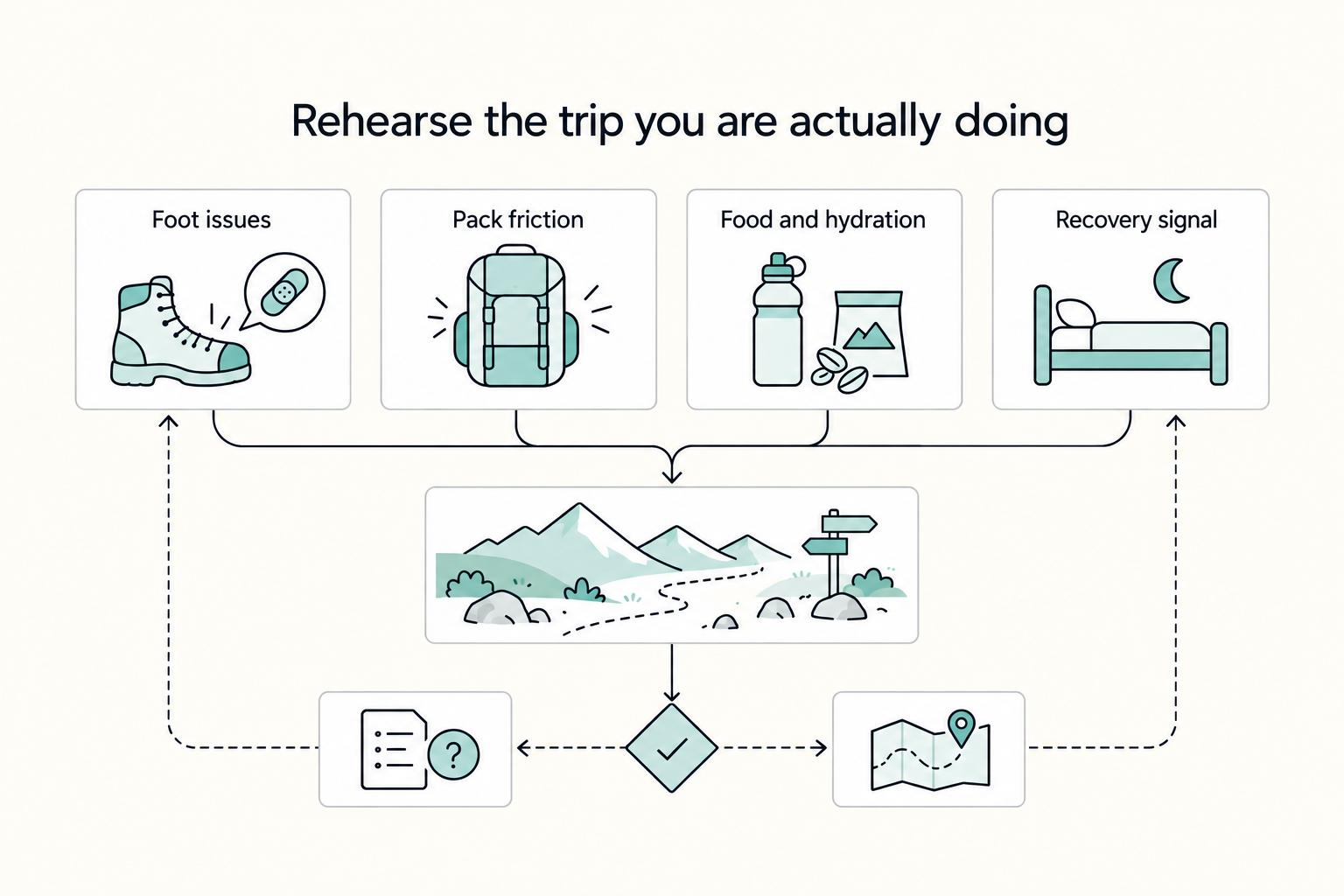
Step 2. Rehearse the trip you are actually doing#
This is where your preparation should stop looking generic. Long hikes, stairs, uneven terrain, and loaded time on feet matter more than abstract fitness wins. Many climbers treat treks as lower-risk altitude labs and valuable training for bigger objectives.
| What to record | Specific detail from the article | Why it matters |
|---|---|---|
| Foot issues | Hot spot started after the first long descent | Fix that now |
| Pack friction points | Shoulders go numb | Fix that now |
| What you ate and drank | Stopped eating because food was hard to chew when breathing hard | Gives you something to change |
| How you felt in the final hour | Final hour turns messy, heavy-footed, or hard to manage | Shows where the system weakens |
In this phase, your weekly checklist is:
- Do one hike-specific session that is longer than your weekday training and includes climbing and descending.
- Wear the boots, socks, pack, layers, and trekking poles you expect to use on the trip.
- Rehearse fueling and hydration exactly as you plan to do it on trail, then note what caused stomach issues, low energy, leaks, or hot spots.
A good rehearsal starts before you leave the house. Lay out the gear the night before. Pack the food you actually plan to eat. Set the alarm for the kind of start your route may require, then move through the morning without changing the plan just because you are still close to home.
Add one operational rehearsal that many people skip: start very early at least once. If your route involves alpine-style departures or long summit days, practice a pre-dawn wake-up. Go as early as 2 a.m. if that matches the route, so you know how your body handles moving, eating, and thinking when sleep is cut short.
Verification matters here. After each long practice day, write down four things: foot issues, pack friction points, what you ate and drank, and how you felt in the final hour. If your shoulders go numb, your knees flare on descents, or your hydration setup leaks, fix that now.
Be specific in those notes. "Feet hurt" is not as useful as "hot spot started after the first long descent" or "sock bunching showed up once the pace slowed." The same goes for fueling. "Energy bad" does not help much next week, but "stopped eating because food was hard to chew when breathing hard" gives you something to change.
This phase works best when each practice outing produces a short list of adjustments. The next outing should tell you whether those adjustments solved the issue.
If the final hour consistently turns messy, heavy-footed, or hard to manage, treat that as useful signal. The route rehearsal is doing its job. You are seeing where the system weakens before the trip depends on it.
Step 3. Taper, finalize acclimatization, and write your response plan#
The last phase is about arriving rested and clear-headed. Reduce training volume, keep a little hike-specific movement, and stop trying to gain last-minute fitness.
Use this final checklist:
- Cut back training and avoid hard confidence sessions that leave soreness behind.
- Confirm your acclimatization schedule with your guide or operator, including planned progression and rest days.
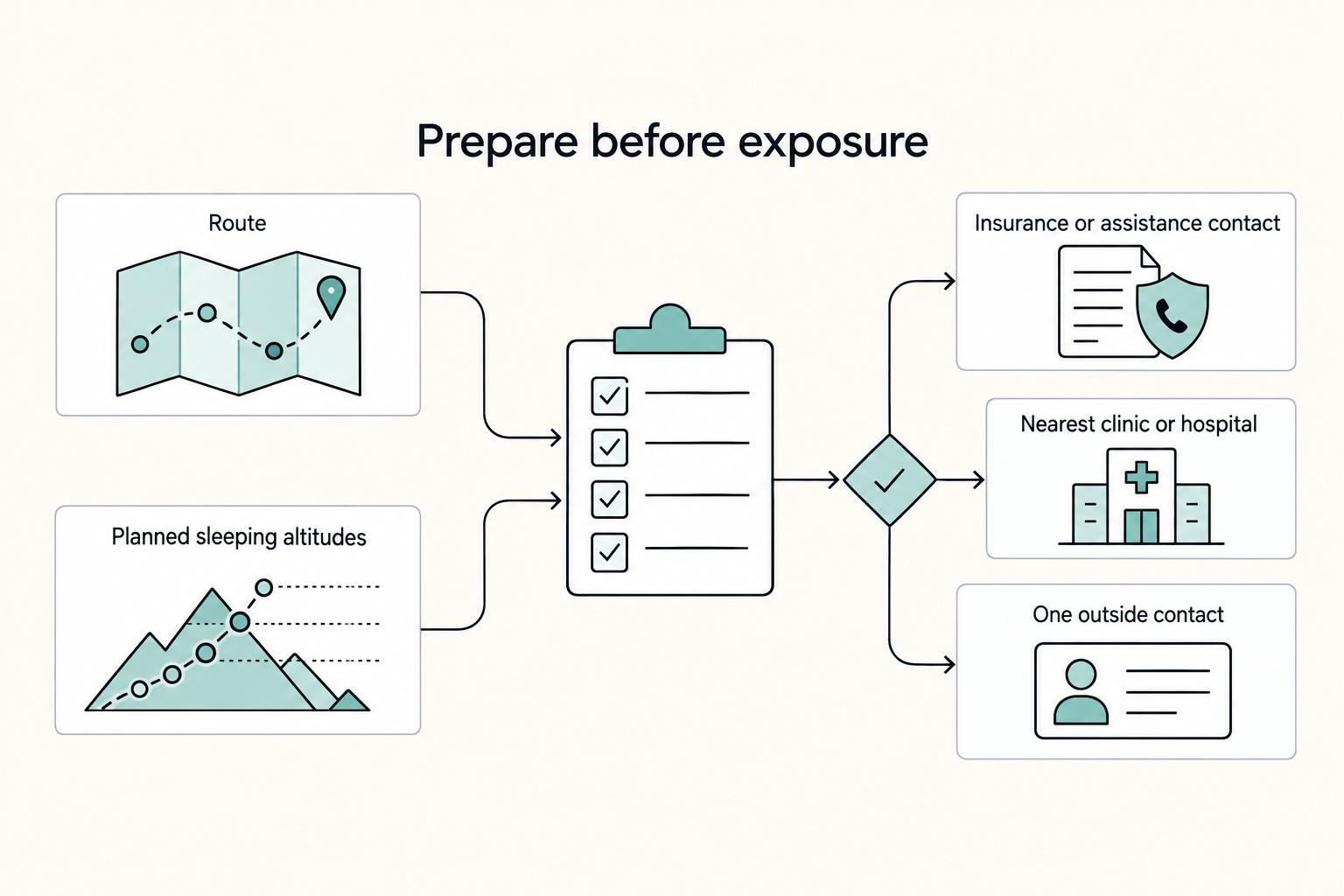
- Pack a simple response note on your phone and on paper: who you report concerns to, key contacts, and how decisions are communicated.
This is also the time to clear up the administrative details. Make sure the acclimatization plan you think you are following is the same one your guide or operator intends to use. If travel timing, weather, or route changes affect the schedule, you want those adjustments visible before the trip starts.
Your response note should be short enough to use under stress. Keep it practical: who you tell first, how the group handles decisions, and where the emergency contact details live.
This is the right time for one final gear test run. Walk with your full clothing and pack setup, check every buckle and zipper, and confirm your food is easy to eat when you are tired.
If you want a deeper symptom refresher before you leave, read A Guide to Altitude Sickness. For a broader travel-health review, read How to Stay Healthy and Fit While Traveling.
Conclusion: You've Mitigated the Risk. Now Execute the Mission.#
If you prepared well, departure day should feel quiet and methodical. This is not when you add extra fitness work. It is when you confirm the plan you already tested, especially once your route moves into high altitude (generally above 7,000 feet), where lower barometric pressure can make normal effort feel harder.
| Decision | When the article says to use it |
|---|---|
| Continue | Only when you feel stable and your guide agrees |
| Hold | When symptoms or performance changes are unclear; stop and reassess |
| Descend | When symptoms worsen or your guide calls the day |
- Confirm training readiness. Do not add a last hard workout. Your check is simple: you feel rested, your legs move normally, and you have no pain that changes your gait. Confidence at this stage should come from completed rehearsal, not extra fatigue.
- Confirm the acclimatization plan. Keep the schedule written down and verify who can adjust it if weather, travel delays, or fatigue force a change. If performance at altitude matters, plan for an acclimation window closer to two weeks.
- Confirm the gear system. Do one final walk in your full setup. Check the exact items that caused trouble in training: hot spots, shoulder rub, leaking bottles, sticky zippers, or layers that were hard to manage with cold hands. This is not the time to keep experimenting.
- Confirm fueling and hydration. Pack the same foods, bottles, and timing you already rehearsed. If travel stress or nerves disrupt your routine, keep day one as familiar as possible so you are not solving avoidable problems while also adapting to altitude.
- Confirm the symptom-reporting plan. Keep your notes on your phone and on paper, and make sure your guide or operator is the first person you tell if something feels off. The goal is to shorten the gap between noticing a problem and acting on it. On the trail, keep the decision rule conservative:
- Continue only when you feel stable and your guide agrees.
- Hold when symptoms or performance changes are unclear; stop and reassess.
- Descend when symptoms worsen or your guide calls the day.
Even with solid acclimatization, expect performance at altitude to be lower than at sea level. Related: How to Build a Travel First-Aid Kit.
Altitude Training Progress Dashboard for 2026 Treks#
Build one training dashboard that combines aerobic load, sleep, hydration, and ascent schedule. Ground your protocol in peer-reviewed altitude physiology findings, CDC travel medicine guidance, and WHO high-altitude risk overviews.
| Training Block | Weekly Target | Risk Trigger | Adjustment Rule |
|---|---|---|---|
| Aerobic conditioning | 4 sessions, 45 to 60 min each | RPE remains above 8 for 3 sessions | Reduce next week volume by 20% |
| Strength and pack carries | 2 sessions with progressive load | Knee or back pain persists beyond 48h | Switch to lower-load movement pattern |
| Sleep and recovery | 7.5+ hours average | Sleep under 6.5h for 3 nights | Cancel one high-intensity session |
| Hydration and fueling | 2.5 to 3.5 L/day + carb plan | Weight drop above 1% in 24h | Increase fluid and electrolyte intake |
Set budget and timing thresholds for 2026 expeditions: reserve $500 to $1200 for pre-expedition testing and gear maintenance, keep acclimatization staging windows at 3 to 5 days, and flag any itinerary that compresses ascent pacing below safety targets.
According to clinical and field research reports, progressive load and staged acclimatization outperform compressed schedules for most recreational high-altitude objectives.
Frequently Asked Questions
How should I structure a plan to train for a high-altitude hike?
Start with the trip, not a generic template. Note the route terrain, expected hours moving, and where the effort happens in a low oxygen environment, then shape training around that. Use a step-by-step approach: define the route demands first, then align sessions to those demands.
Can I prepare well if I live at sea level?
You can still prepare by matching route demands as closely as possible. If your trip includes steep stairs and steps, train on stairs. If it includes very steep terrain (for example, 40 to 60 degree angles), use the closest safe uphill substitute you can manage. This kind of prep can be useful, but it does not recreate altitude conditions.
What matters more for mountain training, mileage or time?
Use hours of activity, not mileage, as your main workload check. Mountain days can look short on paper and still be very hard, so compare your sessions to the route by duration and terrain first, then distance second. | Training lens | Good for | What it misses | |---|---|---| | Mileage | Basic volume tracking | Steepness and total effort time | | Hours of activity | Closer match to mountain-day effort | Terrain specificity if sessions do not match the route | | Terrain match | Route-specific effort pattern | Total workload if sessions are too short | A good reality check is that a summit push can be only 4.4 miles on paper and still be a major day. Kosovo Camp at 16,000 feet to Kilimanjaro's 19,341 feet summit and back is a useful example. If you train by mileage alone, you can badly underread the job.
How should I handle pack training?
Keep pack sessions tied to the specific trip and terrain demands.
How should I think about acclimatization if I am already fit?
Use the actual itinerary for planning, and follow qualified guide and medical advice for altitude decisions.
What should I do if something feels off at altitude?
Follow your trip operator's safety plan and seek qualified medical help when needed. If you want a general refresher before you go, read A Guide to Altitude Sickness.
Try a related tool
Researched and edited by the Gruv editorial team. Gruv builds cross-border billing, payouts, and finance-operations software for global businesses.
Sources
Includes 2 external sources outside the trusted-domain allowlist.
- faa.gov/sites/faa.gov/files/regulations_policies/han...trusted
- ncbi.nlm.nih.gov/books/NBK430716trusted
- pmc.ncbi.nlm.nih.gov/articles/PMC10110736trusted
- pmc.ncbi.nlm.nih.gov/articles/PMC10110736trusted
- who.int/health-topics/high-altitudetrusted
- wwwnc.cdc.gov/travel/yellowbooktrusted
- acefitness.org/continuing-education/certified/october-2017/...external
- rmiguides.com/rmi-knowledge-hub/trekking-as-training-for-m...external
Educational content only. Not legal, tax, or financial advice.
Related Posts

How Remote Professionals Stay Healthy During Long Stays Abroad
Use this sequence before workload, housing, and travel friction make health tasks harder to execute. If you are traveling for months, treat this as four pass-fail gates. A gate is closed only when you have a written output you can verify.

How to Build a Travel First-Aid Kit
**Treat your travel first aid kit like a system for long stays, not a vacation pouch.** If you move city to city, you need repeatable coverage for everyday minor problems and a simple way to keep that coverage current. Build once, review it regularly, and stop re-deciding the basics before every move.
Altitude Sickness Planning for High-Altitude Travel
High altitude is manageable when you treat it as an oxygen-pressure problem early, not a toughness test after symptoms start. The main stressor is lower oxygen pressure, which means less oxygen is available to your body with each breath, and that drop can push you into hypoxia.