
Quick Answer
Start by hardening the systems that fail first: what you wear outside, how you commute, how your workspace handles dark days, and how you verify bills and coverage. For Germany, that means checking mobility rules like Winterreifenpflicht, running a stable home routine with planned ventilation, and keeping records ready for annual utility reconciliation. The practical goal is fewer disruptions, steadier focus, and fewer last-minute costs during the cold season.
German winter gets much easier if you prepare for the few systems that usually fail first. If you are relocating to Germany, winter is not background scenery. It changes how you get around, how you work, how you feel, and what your housing and travel decisions cost you.
This playbook focuses on the systems that break down early: clothing, footwear, commute choices, your home office, your work rhythm, your finances, and your risk coverage. Make a few deliberate decisions early, and cold, dark, or disrupted days stop stealing time and attention later.
Harden Your External Infrastructure: Attire, Footwear, and Mobility#
Do not try to tough out winter. Build a setup that still works when a short trip turns wet, slow, or unpredictable. Winter friction often starts with small failures that compound: cold feet, a soaked coat, a delayed platform, or a route that suddenly takes longer than planned.
Step 1 Check the day before you get dressed#
Use Zwiebelprinzip as a practical layering reminder, not a strict rule set. Check the expected conditions for both the trip out and the trip home: temperature, wind, precipitation, and how long you may be standing outside. A mild morning can still turn into a colder, wetter evening, and that is often when underdressing catches up with you.
Also check exposure, not just the forecast. A short walk plus an unexpected platform wait needs a different setup than door-to-door travel by car. Winter disruptions are not always dramatic, but they can stack. One storm account described downed trees, lost power and phones, and neighbors clearing roads together. You do not need to expect that every day, but it is reasonable to assume weather can interfere with timing, routing, and fallback options.
Verification point: before you leave, be able to answer two questions. What are you wearing if you end up outside longer than planned? What is your backup commute if the first choice fails?
| Item | When people usually choose it | Main tradeoff |
|---|---|---|
| Base layer you can wear for hours | Long days with mixed indoor and outdoor time | Comfort and drying speed vary by fabric and person |
| Extra dry layer in your bag | Days with uncertain precipitation or delays | More to carry |
| Single warm outer layer | When you want fewer decisions before leaving | Less adaptable if conditions shift |
| Layered setup | Days that may swing between walking, transit, office heat, and evening cold | More pieces to manage |
Step 2 Build your layers and choose footwear for the actual commute#
Match your setup to the failure mode you are actually managing. If you expect wet or windy conditions, or longer time outdoors, adjust layers before you leave. Focus on staying dry, blocking wind, and keeping enough warmth for delays.
| Condition | What to prioritize |
|---|---|
| City slush | Footwear that helps keep water out and has enough height for shallow slush |
| Slick surfaces | Visible tread and stable footing over appearance-only soles |
| Long platform waits | Room for the socks you will actually wear |
| Bike commute | Grip when stopping, ankle mobility, and a setup you can pedal in safely |
| Office transition | Keep a lighter pair of shoes at work so you are not sitting in wet footwear all day |
Use those cues when you buy and when you get dressed. In practice, a boot that squeezes your toes can feel colder, and a bulky pair is easier to live with if you keep lighter shoes at work.
Verification point: try boots on with winter socks. Your heel should stay planted, your toes should still move, and you should be able to walk on a smooth floor without sliding inside the boot. A common failure mode is buying for warmth and forgetting traction or fit.
Step 3 Pick your mobility path and verify the rule set you rely on#
Do not choose your transport mode by habit once winter starts. Choose it by conditions and by current official rules.
- If you drive: verify current local winter-equipment requirements and check your insurer and rental terms directly. Keep screenshots, service invoices, and tire details in your phone so you are not searching for proof after a problem.
- If you cycle: treat glossy surfaces, slush, and thaw-refreeze conditions as decision points. If braking or footing looks uncertain, switch to transit or walking instead of forcing a normal ride.
- If you use public transit: dress for the platform, not the heated carriage. Keep enough buffer, and carry a little water or a snack for longer disruptions.
Compliance note for Germany: Current winter tire and equipment language pending official, insurer, or rental-provider verification before use.
That note matters because legal and coverage details can change. Do not rely on this article for live rule text. The practical move is simple: verify the current rule, keep the proof, and dress for the wait rather than the plan. Once the trip outside is under control, indoor comfort can still vary by space. Related: How to Stay Healthy and Fit While Traveling.
Engineer Your Deep-Work Sanctuary: The Winter-Ready Home Office#
Treat your winter home office as a simple readiness system: set up before move-in, stabilize in your first week, then maintain it weekly. When focus drops, adjust the room first, then your schedule.
Quick desk self-audit (5 minutes)#
Run this while seated and working, not by visual guesswork.
- If you keep dropping your chin to see the screen, raise the screen.
- If your lower back support fades during a work block, add support or switch chairs.
- If typing makes your wrists bend awkwardly, reposition keyboard and mouse to a flatter setup.
- If you are on a laptop only, use a stand plus external keyboard and mouse so screen position and hand position are not in conflict.
After one normal work block, note the first thing that drifts (shoulders, back, wrists, constant repositioning) and fix that specific point first.
Winter readiness framework: pre-move, first week, weekly#
| Phase | What to do |
|---|---|
| Pre-move setup | Confirm you have a workable desk/chair plan, a lighting fallback, and a clear way to operate heating in the apartment |
| First-week stabilization | Start with lighting, then verify heating controls, then set an air routine that fits your building and call schedule |
| Weekly maintenance | Re-check heater operation, lighting reliability, and window function so small failures do not compound |
Keep the order simple: lighting first, then heating controls, then a ventilation routine you can actually maintain.
Stabilize lighting first#
Natural light can shift during a task, and that inconsistency can break concentration. A practical first adjustment is often just changing the bulb. Choose your setup by use case, not by price alone.
| Lighting option | When to use it | Main tradeoff | Verify before use |
|---|---|---|---|
| Natural light positioning | You have useful window light during work hours | Light changes across the day | Glare, reflections, and how light shifts during your main work block |
| Task lighting | One desk zone is too dim | Improves a spot, not the whole room | Beam spread and brightness control |
| Therapy lamp | Dark mornings are your main friction point | Extra device to place and use consistently | Confirm the current device output and usage specs with the manufacturer |
| Daylight bulbs | Room feels flat and you want a simple upgrade | Label quality and real experience can differ | Confirm fixture compatibility and current bulb specs with the manufacturer or product listing |
Lighting choices can span a wide budget range (for example, £5 to £1,500), so match the purchase to the specific problem you are fixing.
Keep heating and ventilation operational#
Do not wait for a very cold night to learn unfamiliar heating controls, especially in older apartments. One first-winter account described failing to turn on an old gas heater at all; treat that as a setup risk to remove early. Test controls in daylight, document settings, and ask for written instructions if anything is unclear.
Use Stoßlüften as a planned reset: open windows wide at natural breaks, then close and resume work. On very cold days, place airing between tasks, not right before deep work or client calls. In shared buildings, verify building rules before assuming window-use expectations.
Architect Your Day: The Daylight-Aligned Work Schedule#
Your schedule works better when you sort work by focus level first, then place each type of task into the part of the day when you usually perform best. Keep one protected deep-focus block, follow with medium-focus work, and move admin or routine calls to lower-energy windows.
Step 1 Sort work by focus level before you open your calendar#
Start with task weight, not clock time. If everything stays "urgent," meetings and inbox work will crowd out your most valuable work.
- High focus: writing, coding, analysis, strategy, work that needs uninterrupted thinking
- Medium focus: reviews, editing, planning, documentation
- Low focus: inbox, expense admin, status updates, routine calls
Build your day in that order. On low-energy or overcast days, keep the same sequence and scale the high-focus block down instead of replacing it with admin.
Verification point: after five workdays, check whether your hardest task starts before reactive work. If not, adjust calendar order, not effort.
Step 2 Use a small habit stack that supports output#
Use a short routine you can repeat in busy weeks: consistent wake time, early light exposure, one outdoor break, and some movement. Tie each habit to work outcomes: steadier focus early, fewer afternoon crashes, and cleaner handoff into lower-focus tasks.
If you use a therapy lamp or similar device, follow current manufacturer guidance and verify specs before setting any threshold. Keep the priority on consistency, not gadgets.
| Remote setup | Pattern to test | Tradeoff to watch | Weekly check |
|---|---|---|---|
| Fully remote | Protect one deep-focus block before meetings | Home and work boundaries can blur | Did you protect a real high-focus block on most days? |
| Hybrid coworking | Reserve in-person days for collaboration-heavy tasks | Commute and context switches can reduce focus time | Did office days improve collaboration enough to justify the energy cost? |
| Frequent travel weeks | Keep task order stable even when locations change | Routine drift can push you into reactive work | Did high-focus work still happen before low-focus churn? |
Step 3 Enforce Feierabend with a repeatable shutdown#
A clear stop protects tomorrow's focus. End each day with a short shutdown so unfinished work does not spill into the evening by default.
- send only truly necessary late replies
- capture unfinished items in one list
- set tomorrow's first high-focus task
- close communication apps
- physically leave the work zone (even briefly)
If you work across time zones, prewrite boundary messages so you are not improvising under pressure: "I've wrapped for today and will pick this up tomorrow morning my time." / "Send it through and I'll review it in my first work block tomorrow."
That steady rhythm also makes networking easier to sustain when casual encounters are less frequent.
Maintain Momentum: Structured Networking in the Indoor Season#
Winter networking stays effective when you run it as a system, not a mood. Use a repeatable weekly rhythm: one in-person touchpoint, one virtual touchpoint, and one scheduled follow-up block.
Step 1 Choose your channels for this winter block#
Pick your channel mix based on your current relocation stage and career goal, then keep that mix stable for one defined window. A fixed block (for example, January 31 to March 27) is easier to execute and review than ad hoc outreach.
If you are still settling in, favor repeated-contact spaces like a local Stammtisch, a coworking day, expat communities, and niche online groups. If your target clients or employers are already clear, shift more time toward industry events, professional associations, and direct outreach.
| Format | Effort | Relationship depth (if repeated) | Best use this week |
|---|---|---|---|
| In-person meetup or Stammtisch | Medium | Medium | Build local familiarity and repeat contact |
| Conference or formal event | High | Medium | Meet a concentrated set of people in one field |
| Coworking day pass | Medium | Medium to high | Create longer, practical conversations |
| Online community thread | Low | Low to medium | Stay visible through useful contributions |
| Direct outreach | Medium | Medium to high | Start targeted conversations with clear intent |
Step 2 Prepare two assets before you show up#
Use a short intro pitch and one concrete value offer so outreach is easy to act on.
Intro pitch template:
- "I'm your name, a your role helping your target audience with a specific problem. I'm currently focusing on your current goal."
Value-offer template:
- "If useful, I can [small concrete help], and if it fits, we can schedule a short follow-up."
If the event page offers appointment booking, use it. A booked slot is a concrete checkpoint that turns interest into a next step.
Step 3 Follow up on a pre-set cadence#
Do not rely on memory in winter. Send your first follow-up while the conversation is fresh, then place two checkpoints in your calendar with your own verified timing, for example [T+X days] and [T+Y days].
Track momentum with simple signals: one booked call, one useful intro, one active thread with real replies. The pattern to avoid is obvious but common: outreach feels important, but no follow-up block is actually scheduled.
Optional context on saunas or spa spaces: treat them as recovery first, networking second. Follow posted rules, read the room, and do not force work talk.
The same principle applies to money. Winter gets easier when the recurring costs are legible before the annual surprise arrives.
Secure Your Finances: Decoding the Annual Heating Bill#
Your monthly payment is only part of the picture, so treat the annual reconciliation as part of your winter budget from day one. In many German leases, base rent is listed without heating, and you pay an additional monthly ancillary-cost amount that is later reconciled.
Step 1 Read the cycle first, then the total#
Before you react to any statement, identify where you are in the cycle: monthly advance phase or annual reconciliation phase.
| German term | What it means for you | What to check next | What to do if this looks wrong |
|---|---|---|---|
| Vorauszahlung | A monthly advance payment is being collected | Confirm your lease shows a separate ancillary-cost charge and what it is meant to cover | Ask the landlord in writing which items are included and which are billed separately |
| Nebenkostenabrechnung | You received the annual reconciliation statement | Verify billing period, listed consumption data, and whether they align with your contract records | Request written clarification and a corrected breakdown where needed |
| Nachzahlung | The statement says you need to pay more | Check whether all your prior advance payments were counted | Ask for recalculation; if gaps remain, request inspection of underlying documents (Belegeinsicht) where applicable |
| Guthaben | The statement shows a credit in your favor | Confirm the credit matches your recorded prepayments | Ask when and how the credit will be refunded or offset |
Step 2 Use a simple review flow when the bill arrives#
Follow this order so you do not miss basics:
- Verify the billing period and meter/consumption data shown.
- Compare the statement with your lease and your payment records.
- Request clarification in writing on any mismatch.
- If discrepancies remain, ask to inspect the supporting billing documents (Belegeinsicht) in your case.
Step 3 Keep a relocation-proof checklist#
From move-in, keep the paperwork in one place so annual reconciliation does not turn into a search project.
| Timing | What to keep or track |
|---|---|
| From move-in | Your written lease; handover paperwork; records of each rent and ancillary-cost payment |
| Track monthly | What you paid; any changes to ancillary charges; whether electricity, gas, and water are included in your lease terms (often included, but not always) |
| Before annual reconciliation | Put lease, payment records, and prior landlord communications in one folder; pre-mark unclear line items so your clarification request is specific |
Step 4 Plan a buffer using your own lease scenario#
Use scenario planning tied to your contract, not a generic fixed number. Before setting a savings target, verify the cash-flow strain amount and monthly buffer from your lease, utility records, contract terms, or adviser review. As a broad baseline only, the federal guide notes about 14 euros per square metre in large cities and about 8 euros per square metre in small towns and rural areas for rent plus ancillary costs.
For a step-by-step walkthrough, see How to Write a Formal Email in German.
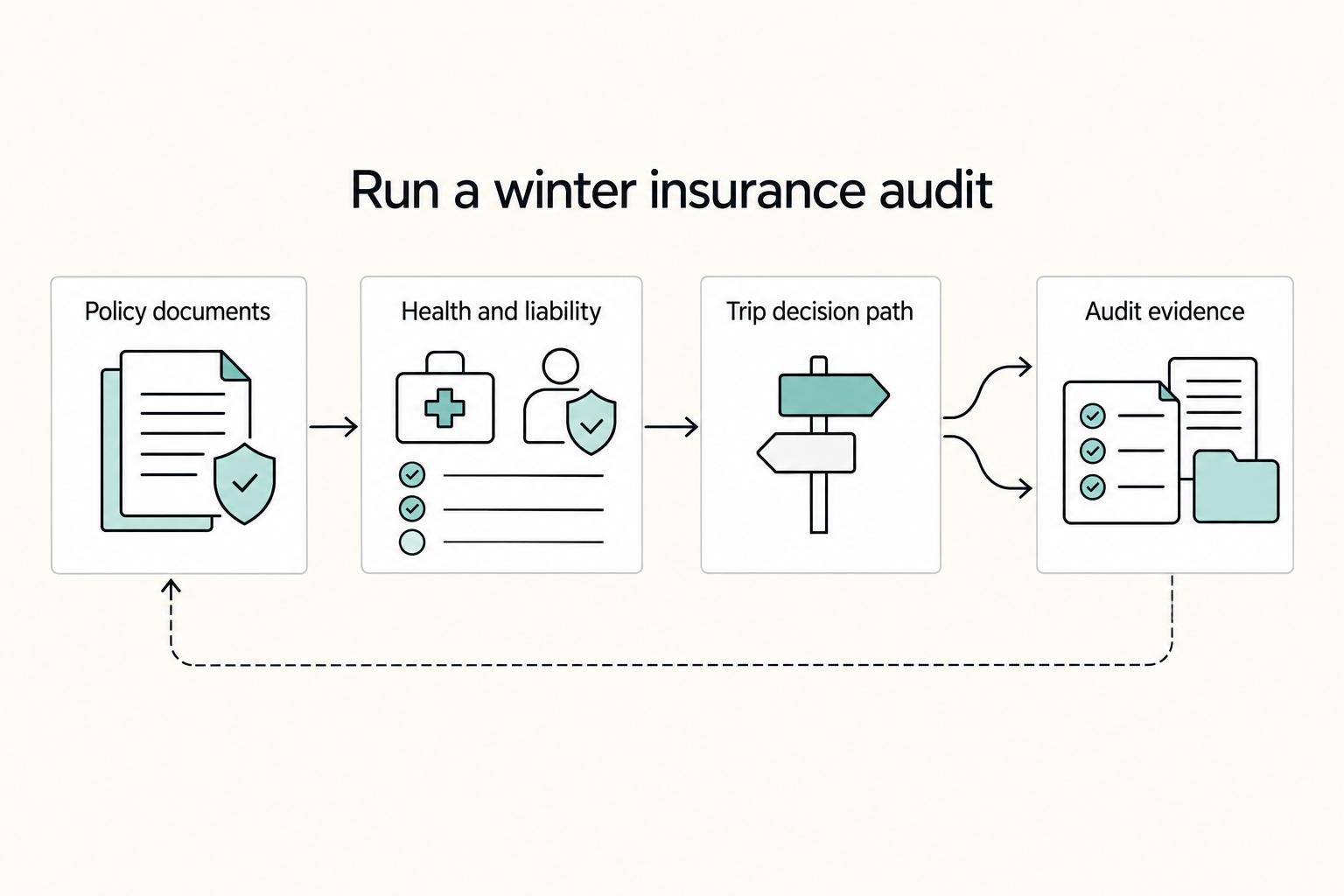
Mitigate Physical and Financial Risk: Winter Insurance Audit#
Before winter travel or activities, treat insurance as a verification task, not a guess. Check your exact policy wording for treatment, liability, rescue, transport, deductibles, and how to file a claim.
| Policy type | What it typically addresses | Common winter gap | What you should confirm before travel |
|---|---|---|---|
| Health insurance | Medical treatment for illness or injury under your plan | Rescue, medical transport, cross-border use, or sport-related exclusions may be separate | Coverage area, winter-sport wording, rescue/transport terms, deductible, and claim contact method |
| Personal liability insurance | Damage or injury you cause to others or their property | Travel scope and activity exclusions are easy to miss | Whether private travel outside Germany is included, which activities are excluded, and what claim evidence is required |
| Travel or cross-border cover | Additional protection outside your usual place of residence | Activity exclusions or add-on requirements can apply | Countries covered, trip-duration limits, winter-sport treatment, transport terms, and emergency-assistance process |
Step 1 Pull full policy documents#
Use full documents, not app summaries. For each policy, collect the current wording, benefit summary, and insurer claims/contact page, then verify in writing: coverage scope, exclusions, rescue/transport terms, deductible, and notice requirements.
Step 2 Audit health and liability together#
Check both policies as one risk workflow. It is not enough to confirm medical treatment if you do not also confirm how a third-party injury or property-damage claim would be handled in the same incident.
Step 3 Follow a trip-based decision path#
Use the same check logic, but match it to your itinerary.
| Scenario | Minimum check before departure | When to add supplemental cover |
|---|---|---|
| Local day trip | Confirm geography limits and emergency claims contact details | Add cover if geography or activity falls outside stated terms |
| Multi-country travel | Confirm country list and whether trip length changes terms | Add cover if any stop or duration is excluded |
| Winter sports trip | Confirm sport wording, rescue terms, and transport handling | Add cover if your planned activity is excluded or restricted |
Step 4 Build and keep your audit evidence pack#
- Collect policy PDFs, benefit summaries, insurance cards, and emergency contacts.
- Ask each insurer in writing: is this covered in these countries, for these activities, with these rescue and transport terms?
- Ask for exclusions, deductibles, and claim notice deadlines.
- Save written replies, screenshots, booking records, and trip dates in one folder.
- If an incident happens, keep receipts, medical notes, incident photos, and witness details.
From Surviving to Mastering: Your Winter Operational Plan#
Move from reactive to planned by scheduling the few checks that usually fail first. If U.S. tax treatment may apply to you, treat FEIE day tracking as a fixed compliance workflow, not a year-end guess.
Step 1 Build a planned baseline#
| Operating area | Reactive | Planned (before winter / weekly / monthly) |
|---|---|---|
| Personal setup | You fix gear only after a bad commute or errand. | Before winter: check what you already own, flag failure points, and verify the current tire requirement through official, insurer, or rental-provider sources before you rely on it. Weekly: replace the highest-friction item first. Monthly: recheck wear on boots, outer layer, and commute gear. |
| Home workspace | You react only after comfort, focus, or costs slip. | Before winter: set a heating, lighting, and ventilation routine, and verify current Stoßlüften guidance from official, lease, utility, or adviser sources before using it. Weekly: keep the routine consistent so drift is obvious. Monthly: review utility records you may need for Nebenkostenabrechnung. |
| Work cadence | You keep summer rhythms and let boundaries blur. | Before winter: place demanding work earlier and set a firm Feierabend cutoff. Weekly: protect one daylight break and one non-work commitment. Monthly: check whether meeting load or overtime is eroding those protected blocks. |
| Financial and legal risk | Winter costs and coverage gaps show up as surprises. | Before winter: create one folder for heating records, policy PDFs, and written insurance gap checks. If you are a U.S. taxpayer abroad, choose the exact 12-consecutive-month FEIE window you are testing. Weekly: update travel day counts. Monthly: compare your count to the 330-full-days rule and note whether any housing exclusion must be calculated first. |
| Well-being and connection | You assume motivation and social connection will self-correct. | Before winter: schedule recurring exercise and social plans. Weekly: keep commitments small enough to repeat. Monthly: remove routines that create setup work but no relief. |
Step 2 Follow your next-step sequence#
- Pre-winter setup: build your records folder, lock your work cutoff, verify commute and insurance weak points, and choose your FEIE 12-month window if relevant.
- In-season cadence: run one weekly reset for gear, calendar boundaries, and day count updates.
- End-of-season review: reconcile heating records, close open insurance or billing issues, and confirm your day-count record aligns with return prep.
This keeps performance and compliance steady because your system runs on repeatable checks, not memory.
Frequently Asked Questions
Do I need winter tires in Germany?
If you plan to drive in winter, treat tire compliance as something to verify before you drive, whether you own the car or use a long-term rental. Do not rely on last year's advice, a rental handover note, or a seller's word. Check the tire marking on the car itself, then confirm the current requirement with an official source or your insurer.
How does the annual heating bill reconciliation work?
If your housing setup includes monthly advance payments for utilities and heating, do not treat that monthly amount as final. Pull your lease, save each monthly utility payment record, and calendar the expected reconciliation period. If a final bill arrives, verify current review and dispute steps before you accept or challenge any charge.
How do I build a routine for winter low mood while working from home?
If you feel constantly tired, unmotivated, or low during the darker months, build the week around a few anchors you can actually keep. The medical term for winter depression is seasonal affective disorder (SAD), and January, February, and March are often the toughest stretch for many people in Germany, including both expats and locals. This week, protect one morning anchor, one daylight break, and one social or exercise commitment in your calendar. If your symptoms keep getting heavier instead of lifting, get professional support early rather than waiting for spring.
Is my normal insurance enough for skiing or snow trips?
Do not assume it is. From this section's sources alone, exact coverage boundaries are unknown until you verify your own policy in writing. Use the policy PDFs from your winter audit, ask the insurer whether your exact activity and country are covered, and save the reply with your trip booking. | Scenario | What is unknown until verified | What to check now | |---|---|---| | Domestic care in Germany | Exact limits, exclusions, and cost sharing | Your policy wording, deductible, claim path, emergency contact route | | Cross-border treatment | Country rules, provider rules, and activity exclusions | Covered countries, provider requirements, pre-approval or notice rules | | Rescue or evacuation | Whether rescue, helicopter transport, or evacuation is included | Explicit rescue wording and emergency assistance number | | Repatriation | Whether return transport is covered at all | Repatriation benefit wording and conditions | | Liability after an accident | Whether private liability applies to your trip and activity | Travel scope, excluded activities, and required claim evidence |
What winter clothes should I buy first if I do not want to overpack?
If you are setting up for your first full cold season or arriving with mostly mild-weather clothes, avoid buying everything at once. A practical approach is to start with daily-use essentials: boots, layers, and weather protection. Buy in this order: waterproof or water-resistant boots with grip, a weatherproof outer layer, two warm mid-layers, then gloves, scarf, and hat. Test each item on a normal grocery or commute walk before buying more.
What is the quickest way to make this guide practical?
Start with the few points that fail first instead of trying to optimize everything at once. This week, verify your tires if you drive, create a heating bill folder, set a January-to-March wellbeing routine, and keep one winter insurance evidence pack ready for any trip.
Try a related tool
Researched and edited by the Gruv editorial team. Gruv builds cross-border billing, payouts, and finance-operations software for global businesses.
Sources
- academia.edu/11943423/Substance_and_Attribute_in_the_Cont...trusted
- cityofpalmdaleca.govtrusted
- congress.gov/116/chrg/CHRG-116hhrg35198/CHRG-116hhrg35198...trusted
- eures.europa.eu/living-and-working/living-and-working-condit...trusted
- events.umich.edu/week/2021-03-17/csvtrusted
- howardcountymd.gov/forestrytrusted
- irs.gov/individuals/international-taxpayers/figuring...trusted
- irs.gov/individuals/international-taxpayers/foreign-...trusted
Educational content only. Not legal, tax, or financial advice.
Related Posts

Can Digital Nomads Claim the Home Office Deduction?
Claim the deduction only when your facts and records can carry it. With the home office deduction for digital nomads, the real decision is usually a three-way call: claim it, do not claim it, or pause and get help because your file is not ready.

How Remote Professionals Stay Healthy During Long Stays Abroad
Use this sequence before workload, housing, and travel friction make health tasks harder to execute. If you are traveling for months, treat this as four pass-fail gates. A gate is closed only when you have a written output you can verify.

How to Integrate Calendly with Your Website
Start with a simple three-step launch sequence: choose the embed path that fits the page, lock in your real availability, then validate the booking flow before you publish. That turns a Calendly embed into a client-facing booking process, not just a design element on the page.