
Quick Answer
Choose one plan path first and label it consistently across board, legal, and employee documents. In a US startup, a formal ESOP is a qualified defined contribution plan under IRC Section 401(a), while stock options and ESPP solve different compensation problems. Before rollout, lock your objective, participant scope, vesting terms, and named owners for administration. If teams use the same acronym for different structures, stop and rescope before drafting moves forward.
Start Here and Avoid the ESOP Naming Trap#
Step 1 Verify the term before you discuss structure#
If you searched for employee stock option plan esop, stop and sort out the label first. In startup conversations, people often say "ESOP" when they mean a stock option plan or option pool. A formal Employee Stock Ownership Plan (ESOP) is different. It is often discussed as a business transition option for owners, while startup stock options are commonly used to give employees a stake in the business.
That naming slip matters. If a founder tells counsel, finance, or a board member "we need an ESOP" without clarifying which one, the company can end up on the wrong legal and admin path early. Costly setup mistakes can start with people not fully understanding how these plans work, and formal ESOPs are not right for many companies.
A practical checkpoint: open your draft board memo, hiring plan, and any email thread with counsel. Every time you see "ESOP," rewrite it as either "Employee Stock Ownership Plan" or "stock option plan." If you cannot do that cleanly, you are not ready to draft.
Step 2 Anchor the decision in your real startup goal#
For a US startup, the core tension is simple. You want strong equity compensation incentives without creating a plan your team cannot explain, afford, or administer. That is why this guide starts with path choice before paperwork. The right answer depends on what you are trying to solve, not on which acronym sounds familiar.
A useful rule here is to distrust any plan choice made only from recruiter pressure or founder shorthand. If your real need is employee equity incentives, you may be talking about stock options. If the discussion is really about business transition, a formal ESOP may come into view. Those are different problems, and mixing them can create cleanup later in legal documents, employee communications, and tax review.
There is also a cost signal worth respecting. Most leveraged ESOPs will probably cost $150,000 to $400,000 to set up and run in the first year, with many smaller companies later spending about $20,000 to $30,000 annually. Those figures are not universal, but they are a warning against drifting into a formal ESOP by accident.
Step 3 Use this guide as an operating outline, not a substitute for counsel#
This article is meant to help you choose the right path for a US startup and organize the work so there are fewer compliance surprises. It will not replace legal drafting, tax analysis, or plan documentation.
So set your scope now. Use the next sections to define the objective, gather the right documents, and pressure test administration before launch. Then get legal drafting and tax sign-off from qualified advisors before anything reaches employees or the board for final approval. That sequence is the simplest way to keep a naming mistake from turning into a real compliance problem.
Choose the Right Equity Structure Before You Draft Anything#
Choose the equity path before you draft documents. Treat Employee Stock Ownership Plan (ESOP), stock options, and ESPP as separate choices so legal, finance, and hiring are not solving different problems under one label.
Step 1 Compare the paths by objective, not acronym#
In tax-law framing, the Internal Revenue Code defines only one plan as an ESOP, so use that term precisely. Then sort the options as distinct lanes:
| Path | Practical signal to check now | Early admin signal |
|---|---|---|
| Employee Stock Ownership Plan (ESOP) | You are evaluating a formal ESOP path, not a generic startup option pool | ESOP planning is often described as complex; one implementation checklist breaks it into 8 steps |
| Stock options | You want equity upside as part of startup compensation | Grant tracking and recordkeeping quality become critical early |
| Employee stock purchase plan (ESPP) | You want a separate employee equity program | Keep it scoped and named separately from ESOP and option-plan work |
If you cannot state the primary objective in one sentence, pause before drafting.
Step 2 Make your internal documents use one structure consistently#
Check your board memo, cap table model, and offer-letter language together. If they focus on grants, vesting, approvals, and tracking, you are operating in an option-plan workflow. If teams are mixing ESOP, options, and ESPP terms in the same draft, fix that first so legal and admin work does not drift.
Step 3 Pressure-test rework risk before launch#
Most cleanup cost comes from late correction, not day-one drafting. If legal, finance, and recruiting describe the plan differently, stop and rescope before circulation. For options specifically, treat recordkeeping as a first-order control, since poor recordkeeping is a common mistake. Related: Digital Nomad Health Insurance: A Comparison of Top Providers.
Gather Prerequisites and Build a Founder Evidence Pack#
If you are evaluating an Employee Stock Ownership Plan (ESOP), build a single evidence pack before drafting so counsel and finance can test structure, tax impact, and ownership assumptions from the same facts.
Step 1 Assemble the baseline company record. Collect a current cap table snapshot, hiring plan, compensation philosophy, and a short board-level objective for equity compensation. Keep these dated and internally consistent so the objective, stakeholders, and share picture all match.
Step 2 Add the legal anchors up front. Include IRC Section 401(a) and IRC Section 4975(e)(8) in the file for your first counsel review. IRS framing is direct: an ESOP is a Section 401(a) qualified defined contribution plan, and it must be designed to invest primarily in qualifying employer securities under Section 4975(e)(8). Also note that IRS and DOL share jurisdiction over some ESOP features, so compliance review should not be scoped as a single-agency exercise.
Step 3 Confirm entity constraints early, especially S corporation status. Document whether you are an S corporation now, expect to be one, or are evaluating an ESOP-owned structure. One rule to flag early: an ESOP-owned S corporation cannot deduct retirement plan contributions for ESOP participants. Align on that before modeling contributions, deductions, or participant economics.
Step 4 Build an auditable operations file. Name owners for legal, finance, and board decisions, set a target timeline, and keep a question log plus version history. The goal is traceable decisions, not extra process.
Step 5 Run a readiness check before design. Do a joint pass with counsel and finance. If your documentation does not clearly state the entity status, plan objective, Section 401(a) structure under review, and decision owners, keep gathering inputs before you design.
Set the Plan Objective and Ownership Boundaries#
Set one primary objective first, then make ownership and participation rules serve that objective. If you cannot clearly say whether the plan is mainly for retention, owner liquidity, or financing efficiency, pause before drafting terms.
Step 1 Pick one primary objective and record the tradeoff. Write a short board note with one sentence at the top: "The primary purpose of this plan is ___." Keep the other goals secondary.
This avoids a common conflict: a retention narrative paired with design pressure that is really about creating a market for shares of departing owners in a closely held company. If board, finance, and counsel each describe the plan differently, stop and align first.
Step 2 If liquidity is urgent, test leveraged ESOP mechanics early. Model the borrowing structure before you debate participant language. In a leveraged ESOP, the plan can borrow cash to buy shares from the company or existing owners, and company contributions repay that loan.
Use a finance memo to confirm who is selling, how ownership could shift over time, and whether the company can carry the contribution load. This keeps affordability and timing decisions in the first model, not the last.
Step 3 Set boundaries on ownership, control expectations, and participant scope. Define your red lines before drafting polished policy language: how much ownership the plan may hold, who is covered, and who is out of scope.
Be explicit in communications: employees are beneficial owners of ESOP account assets, not direct stockholders through individual share certificates, and contributions generally come from the company, not employees. Then align those boundaries with your vesting philosophy so retention goals are reflected in vesting over time.
Step 4 Define 12- and 24-month success tests before adding complexity. At 12 months, success should be operationally clear: approved documents, clear participant scope, and communication that consistently explains the plan structure. At 24 months, success should map directly to the primary objective you chose at the start.
If you cannot name those checks now, plan complexity is likely outrunning business need.
Draft the Plan Architecture and Legal Skeleton#
Lock the legal sequence before drafting participant-facing language: plan designation, trust and funding mechanics, compliance alignment, governance approvals, then launch.
Step 1 Review the entity and formally choose the plan type#
Start by confirming what your entity documents allow, because charter/bylaws or operating agreement, cap table status, and existing equity approvals determine what you can adopt and who must approve it. If you are using an Employee Stock Ownership Plan (ESOP), document that choice explicitly as a qualified defined-contribution plan structure under IRC 401(a), not as a loose label.
If this is an ESOP, the plan document must formally designate it as an ESOP. Keep that language explicit in your draft package and assign a legal reviewer to it. Also flag timing with counsel early: there are remedial timing concepts tied to ESOP requirements, including 12 months after ESOP designation or 90 days after a determination letter.
Step 2 Set up the ESOP trust fund and pick the funding path#
Define the ESOP trust fund up front, because the trust is the holding vehicle for plan shares. Your architecture should name the trustee role and choose one funding method clearly:
| Funding path | What it involves | Planning note |
|---|---|---|
| Cash contributions | Cash contributions used to buy company stock | The chosen method drives accounting, transaction steps, and implementation timing |
| Direct share contributions | Direct share contributions | The chosen method drives accounting, transaction steps, and implementation timing |
| Plan borrowing | Plan borrowing to buy shares (a leveraged ESOP) | Borrowed financing should be called out directly in board materials |
- cash contributions used to buy company stock
- direct share contributions
- plan borrowing to buy shares (a leveraged ESOP)
Do not leave funding as "TBD." The chosen method drives accounting, transaction steps, and implementation timing, and borrowed financing should be called out directly in board materials.
Step 3 Document qualifying employer securities and legal signoff points#
State the compliance core plainly: the ESOP is designed to invest primarily in qualifying employer securities. In your working memo, identify the exact security class, why it qualifies, and which counsel signs off on that conclusion.
Plan review should also reflect shared oversight across ESOP features by the IRS and Department of Labor. Keep tax, ERISA, and corporate legal assumptions separated so approvals are clear and auditable.
Step 4 Build governance checkpoints and amendment guardrails#
Put approvals on a written calendar: plan adoption, trust formation, share contribution or purchase authorization, and amendment authority. If you also issue options elsewhere, confirm whether terms are set in governing documents or board resolutions, and whether stockholder approval is required under your charter, bylaws, and applicable state law.
For amendments, keep flexibility narrow and controlled. Notice 2013-17 is relevant in a specific ESOP context: certain sponsors may get anti-cutback relief when eliminating a distribution option. If distribution rights are changing after launch, pause and get benefits counsel confirmation before proceeding.
Set one go-live gate: launch only after plan designation, trust setup, funding method, qualifying-security analysis, and required approvals are complete. That discipline reduces downstream finance and legal rework.
Design Eligibility, Vesting, and Distribution Rules People Can Understand#
Make this section pass one test: an employee should be able to tell whether they are in the plan, when their benefit becomes nonforfeitable, and what happens if they leave.
Step 1 Define eligibility in plain language. State who is included, who is excluded, and how service is counted. If you are using ESOP mechanics, explicitly define a year of service in your plan terms, since it generally maps to a plan year with 1,000 hours of service.
A quick audit check: ask someone outside finance to read the eligibility paragraph and explain whether they are in. If they cannot, rewrite it.
Step 2 Use a vesting schedule people can follow. In an ESOP, vesting is the service-based path to a nonforfeitable benefit. The legal minimum is one of two schedules, and your plan can be more generous.
| Minimum schedule | What it means |
|---|---|
| Cliff vesting | 100% vesting after not more than three years of service |
| Graded vesting | 20% after year 2, then +20% each year until 100% after year 6 |
Say this clearly in employee-facing language, and state directly that employees who leave before full vesting forfeit the unvested portion.
Step 3 Explain distribution without profit-sharing shortcuts. An ESOP is a qualified defined contribution plan that invests primarily in qualifying employer securities, and benefits are mainly paid after employment ends. So avoid language that sounds like a routine annual cash bonus.
The plain version: shares are allocated under the plan, vesting determines what is nonforfeitable, and distribution is generally tied to termination of employment.
Step 4 Add one example and use it as a consistency check. Example: "Maria works more than 1,000 hours in each plan year under a graded schedule. After two years, she is 20% vested. After three years, she is 40% vested. If her account has 600 shares and she leaves then, 240 shares are nonforfeitable and 360 shares are forfeited."
If HR and finance explain this example differently, fix your wording before launch.
For a step-by-step walkthrough, see What is a 'Vesting Schedule' for Founder and Employee Equity?.
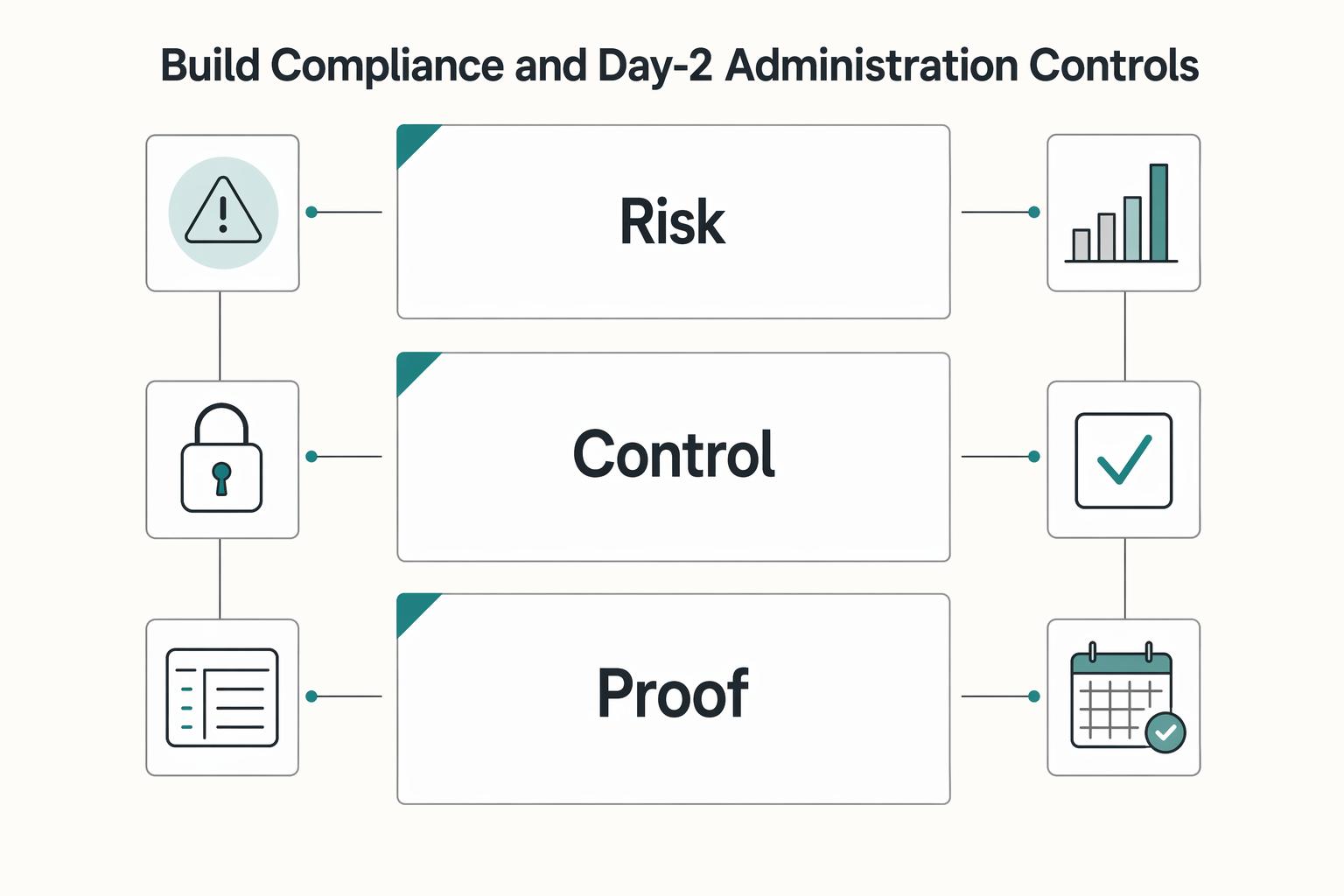
Build Compliance and Day-2 Administration Controls#
After participant rules are set, control drift early: name owners, run on a fixed cadence, and keep records you can reconstruct under pressure.
Step 1 Assign one accountable owner, then split execution duties. Put one person in charge of plan administration, even if legal, finance, payroll, and HR all contribute. Then assign clear supporting owners for participant records, approvals, and annual compliance steps with the Internal Revenue Service (IRS) and Department of Labor (DOL). If you ask who updates records after a termination or who owns the annual IRS/DOL calendar, you should get one name, not a department.
Shared ownership without a final decision maker is where missed notices, stale data, and conflicting employee answers start. If your process depends on one spreadsheet that only one team can explain, tighten it before launch.
Step 2 Set a cadence that catches errors before year end. Use a three-part rhythm: monthly data hygiene, quarterly policy review, and an annual legal and tax check. Monthly, reconcile hires, terminations, service data, allocations, and distribution-triggering events against payroll and HRIS records. Quarterly, confirm the written plan still matches actual operations, especially on eligibility, vesting, and employee communications.
Your control test is simple: every participant-status change should trace back to payroll, HR, or an approved plan action. If it does not, treat it as a control break.
Step 3 Build an audit trail someone else can follow. For each material event, keep one evidence pack: approval record, effective date, amendment (if any), participant notice, calculation support, and distribution record. Apply the same standard to board actions, plan amendments, participant communications, and post-employment distributions.
Aim for reconstruction, not storage. A new finance lead should be able to open one folder and explain what happened, when, who approved it, and what the participant received.
Step 4 Add a cross-border tax-risk note before you need it. If any participant may have cross-border reporting exposure, document that the company is not giving personal tax advice and route cases for tax review. Keep the note anchored to Form 8938, FATCA, FBAR, and FinCEN.
IRS materials say Form 8938 is used to report specified foreign financial assets when thresholds are met, and it must be attached to the taxpayer's annual income tax return rather than filed separately. The IRS also notes a $50,000 aggregate-value trigger for certain taxpayers, with higher thresholds in some cases, including joint filers and taxpayers residing abroad.
Do not overstate scope. Form 8938 does not apply to everyone, and if a taxpayer is not required to file an income tax return for the year, the IRS says Form 8938 is not required for that year. For FBAR, keep the statement general: FinCEN is the reporting channel for foreign bank and financial accounts, so cross-border cases should get documented tax review before participant communications go out.
Common Failure Modes and How to Recover Fast#
The fastest recovery is to pause rollout, fix scope and ownership, and only then resume grants, allocations, or employee communications.
| Failure mode | What it looks like | Recovery step |
|---|---|---|
| Plan types treated as interchangeable | Employee stock option plan and Employee Stock Ownership Plan (ESOP) are used as the same thing | Start with a legal re-scope memo that names the actual plan type, governing documents, and ESOP-specific IRS and DOL oversight boundaries |
| Terms no one can explain back | Eligibility or vesting language is too complex, so employees and managers interpret it differently | Rewrite employee-facing eligibility and vesting schedule language in plain English and confirm consistent answers from a manager, an HR partner, and a non-finance employee |
| Unclear compliance ownership | Shared ownership without named accountability causes missed steps | Assign one owner for IRS items, one for DOL touchpoints, and one amendment controller, then keep a single evidence pack with approvals, effective dates, participant notices, and calculation support |
| Complexity added before operations are stable | Leveraged structures, custom logic, or edge-case exceptions are added while basic administration is still noisy | Freeze design changes and stabilize operations first if the monthly file cannot explain every participant status change end to end |
Failure mode 1: treating plan types as interchangeable. If your team uses "employee stock option plan" and "Employee Stock Ownership Plan (ESOP)" as the same thing, stop. An ESOP is an IRC Section 401(a) qualified defined contribution plan that is designed to invest primarily in qualifying employer securities, so your first recovery step is a legal re-scope memo that names the actual plan type, governing documents, and ESOP-specific IRS/DOL oversight boundaries.
Failure mode 2: terms no one can explain back. When eligibility or vesting language is too complex, employees and managers will interpret it differently. Recover by rewriting employee-facing eligibility and vesting schedule language in plain English, then confirm one manager, one HR partner, and one non-finance employee can all answer the same core questions consistently.
Failure mode 3: unclear compliance ownership. "Shared ownership" without named accountability causes missed steps. Recover by assigning one owner for IRS items, one for DOL touchpoints, and one amendment controller, then keep a single evidence pack with approvals, effective dates, participant notices, and calculation support, especially where amendment changes can affect distribution requirements.
Failure mode 4: adding complexity before operations are stable. Do not add leveraged structures, custom logic, or edge-case exceptions while basic administration is still noisy. If your monthly file cannot explain every participant status change end to end, freeze design changes and stabilize operations first.
Copy-Paste Launch Checklist for a US Startup#
Use this as your go-live gate: pick one plan path, align every document to that path, and launch only when ownership and review are clear.
- Confirm the plan path.
Choose one label for this launch: ESOP, stock options, or ESPP. If you select an ESOP, state it clearly as an IRC Section 401(a) qualified defined contribution plan designed to invest primarily in qualifying employer securities under IRC Section 4975(e)(8). Verification point: the same plan name appears in board materials, draft governing documents, and employee communications.
- Finalize objective, eligibility, and vesting in one approval-ready document.
Put the core design choices in one packet: objective, eligibility, exclusions, participation timing, and vesting schedule. For ESOPs, participation, vesting, and allocation are core qualified-plan features, so these terms should be explicit before launch. Verification point: the plan draft and employee explainer use the same eligibility and vesting language.
- Verify the legal and tax basis if you selected an ESOP.
Check document language against the ESOP anchors, not just the business intent: IRC Section 401(a) and the IRC Section 4975(e)(8) qualifying-employer-securities requirement. Verification point: counsel can point to the specific provisions covering participation, vesting, allocation, and the qualifying-employer-securities design. If you are considering a leveraged ESOP, flag it early because leveraged structures are generally more complex than non-leveraged ones.
- Assign governance and administration owners before launch.
Name accountable owners for IRS items, DOL touchpoints, participant records, amendments, and employee communications. IRS and DOL share jurisdiction over some ESOP features, so owner-by-name clarity matters. Verification point: you have a written owner list with named individuals for each operating area.
- Publish a plain-language explainer, then use internal sign-off as the launch gate.
Write one employee explainer that covers what the plan is, how vesting works, and what participation means in practice. For ESOP communication, keep terms precise and avoid using "ESOP" as shorthand for grant-based options. Verification point: the final explainer and final document set match before go-live.
Frequently Asked Questions
What is an Employee Stock Ownership Plan (ESOP)?
In the US, an ESOP is an IRC Section 401(a) qualified defined contribution plan. It must be designed to invest primarily in qualifying employer securities, as referenced in IRC Section 4975(e)(8). That is a retirement-plan structure, not just a loose label for employee ownership.
How is an ESOP different from stock options at a US startup?
They are not the same legal structure. An ESOP is a qualified plan with participation, vesting, and allocation features common to qualified plans. If you do business outside the US, be extra careful: "ESOP" can mean different things in other countries, including stock options in some contexts.
Who should use an ESOP instead of a stock option plan?
Use an ESOP when you intend to establish a qualified plan under IRC Section 401(a) that primarily invests in qualifying employer securities and complies with applicable ESOP distribution and payment rules, including IRC Section 409(o). If that is not the plan type you intend, do not label it an ESOP.
Is an ESOP mainly for succession planning in closely held companies?
Not by definition. The legal anchor is whether the plan meets qualified-plan requirements under IRC Section 401(a) and ESOP-specific rules for employer securities and distributions.
What makes an ESOP compliant under IRS and DOL rules?
At minimum, it needs to be structured as a qualified defined contribution plan under IRC Section 401(a), designed to invest primarily in qualifying employer securities under IRC Section 4975(e)(8), and comply with IRC Section 409(o) distribution and payment requirements. IRS and Department of Labor (DOL) oversight can both apply. A practical verification step is to confirm the plan provisions for participation, vesting, allocation, and the participant right to demand distributions in employer securities.
Can an S corporation use an ESOP structure?
Yes, but limits apply. IRS guidance notes S-corporation-related limits, including that an ESOP-owned S corporation cannot deduct retirement plan contributions for ESOP participants.
What should founders prepare before launching any equity compensation plan?
Before launch, confirm the plan type and governing documents match the intended structure. For an ESOP, that means a plan that meets IRC Section 401(a), primarily invests in qualifying employer securities under IRC Section 4975(e)(8), and addresses IRC Section 409(o) distribution and payment requirements, including participant rights to demand distributions in employer securities. Because IRS and DOL share jurisdiction over some ESOP features, assign clear ownership for those compliance items before rollout.
Try a related tool
Researched and edited by the Gruv editorial team. Gruv builds cross-border billing, payouts, and finance-operations software for global businesses.
Sources
- congress.gov/crs_external_products/IF/PDF/IF13104/IF13104...trusted
- ecfr.gov/current/title-26/chapter-I/subchapter-D/part...trusted
- ecfr.gov/current/title-26/chapter-I/subchapter-D/part...trusted
- fincen.gov/report-foreign-bank-and-financial-accountstrusted
- irs.gov/retirement-plans/employee-stock-ownership-pl...trusted
- irs.gov/retirement-plans/employee-stock-ownership-pl...trusted
- jec.senate.gov/reports/94th%20Congress/Hearings/Employee%20...trusted
- law.cornell.edu/uscode/text/26/401trusted
Educational content only. Not legal, tax, or financial advice.
Related Posts

Sole Proprietorship vs LLC for Global Freelancers in 2026
For most freelancers in 2026, the practical default is still simple: use the simplest structure you can run cleanly, then formalize when risk actually rises. If your work is still in validation mode and the downside is contained, a sole proprietorship is often the practical starting point. When contract exposure, delivery stakes, or dispute risk starts climbing, forming an LLC deserves earlier attention.

Digital Nomad Health Insurance Comparison for Long-Stay Moves
Use focused time now to avoid expensive mistakes later. Start with a practical `digital nomad health insurance comparison`, then map your route in [Gruv's visa planner](/tools/visa-for-digital-nomads) so we anchor policy checks to your real plan before pricing pages pull you off course.
Tax Implications of Receiving Stock Options as a Freelancer
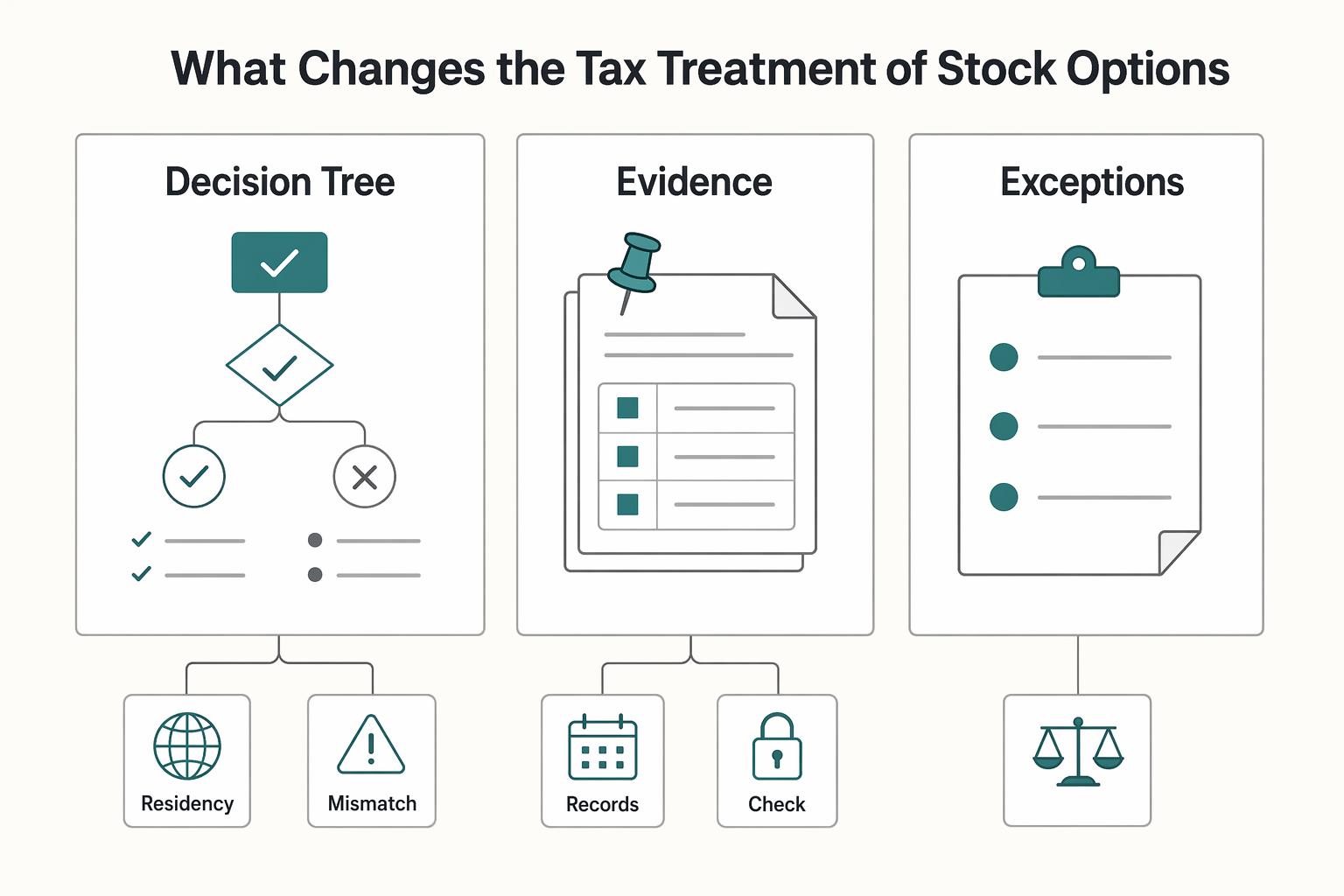
Stock options can create tax exposure at multiple moments, so sequence matters more than guesswork. Use a compliance-first order for grant, stock option exercise, and stock disposition so decisions are made before money moves.