
Quick Answer
Start with partner verification, move to enforceable drafting, then drive subcontract conversion immediately after award. For a teaming agreement government contract approach, confirm SAM status, UEI, and CAGE against the legal entity, test the partner’s record through references and public signals, and define exclusivity, work allocation, and IP boundaries in clear written terms. Attach baseline subcontract language before award and keep a dated file of drafts, redlines, and decision emails so disputes are resolved by record, not memory.
--- Before you draft a single word of a teaming agreement, the most important work starts. In government contracting, a weak partner is often a bigger risk than a weak contract. You are not just pursuing a subcontract role. You are deciding whether to invest your expertise, pricing logic, and reputation in a partner and a pursuit. This playbook gives you a disciplined three-stage process so partnership risk becomes something you can evaluate and control.
Stage 1: The Vetting Protocol - Is This Partnership Built to Last?#
Do your diligence before you share pricing logic, proposal narrative, or reusable technical IP. In a government pursuit, enthusiasm is not a control.
Start by asking for the exact legal entity name, UEI, CAGE code, SAM profile, and three references from organizations that actually worked with them as a subcontractor or teammate. If they stall, treat it as a risk signal.
Step 1. Verify the entity, not just the brand#
Start with identity and eligibility. If the legal entity is fuzzy at the outset, everything that follows gets harder to trust and harder to enforce.
| Check | What to confirm | Why it matters |
|---|---|---|
| Legal name | The SAM legal name matches the entity in your draft documents | You need the same legal entity across SAM and your draft documents |
| UEI | The UEI maps to that same entity and location | The UEI is the federal identifier of record |
| CAGE code | The CAGE code maps to that same entity and location | The CAGE code is the location-based contracting identifier |
| SAM registration | The SAM registration is active | An active SAM registration is required to do business with the federal government |
| SAM exclusion | No active exclusion record appears in SAM | An active SAM exclusion can block offers, awards, and subcontract consent |
| Responsibility/Qualification record | The SAM Responsibility/Qualification record does not show integrity or performance issues that raise unresolved questions | If the prime fails basic eligibility or integrity checks, contract language will not fix the core risk |
Confirm identity in SAM first, then validate the UEI, CAGE code, and registration status against that record.
What to verify
- The SAM legal name matches the entity in your draft documents.
- The UEI and CAGE map to that same entity and location.
- No active exclusion record appears in SAM.
- The SAM Responsibility/Qualification record does not show integrity or performance issues that raise unresolved questions.
Why this matters
- An active SAM exclusion can block offers, awards, and subcontract consent.
- Under FAR 9.6, the prime stays fully responsible for performance even in a team arrangement.
- If the prime fails basic eligibility or integrity checks, contract language will not fix the core risk.
Save a copy of the SAM profile and log the check date. That gives you a clean record and helps prevent entity substitution later, such as negotiating with one affiliate while another is named in the offer.
Step 2. Review award history and public distress signals#
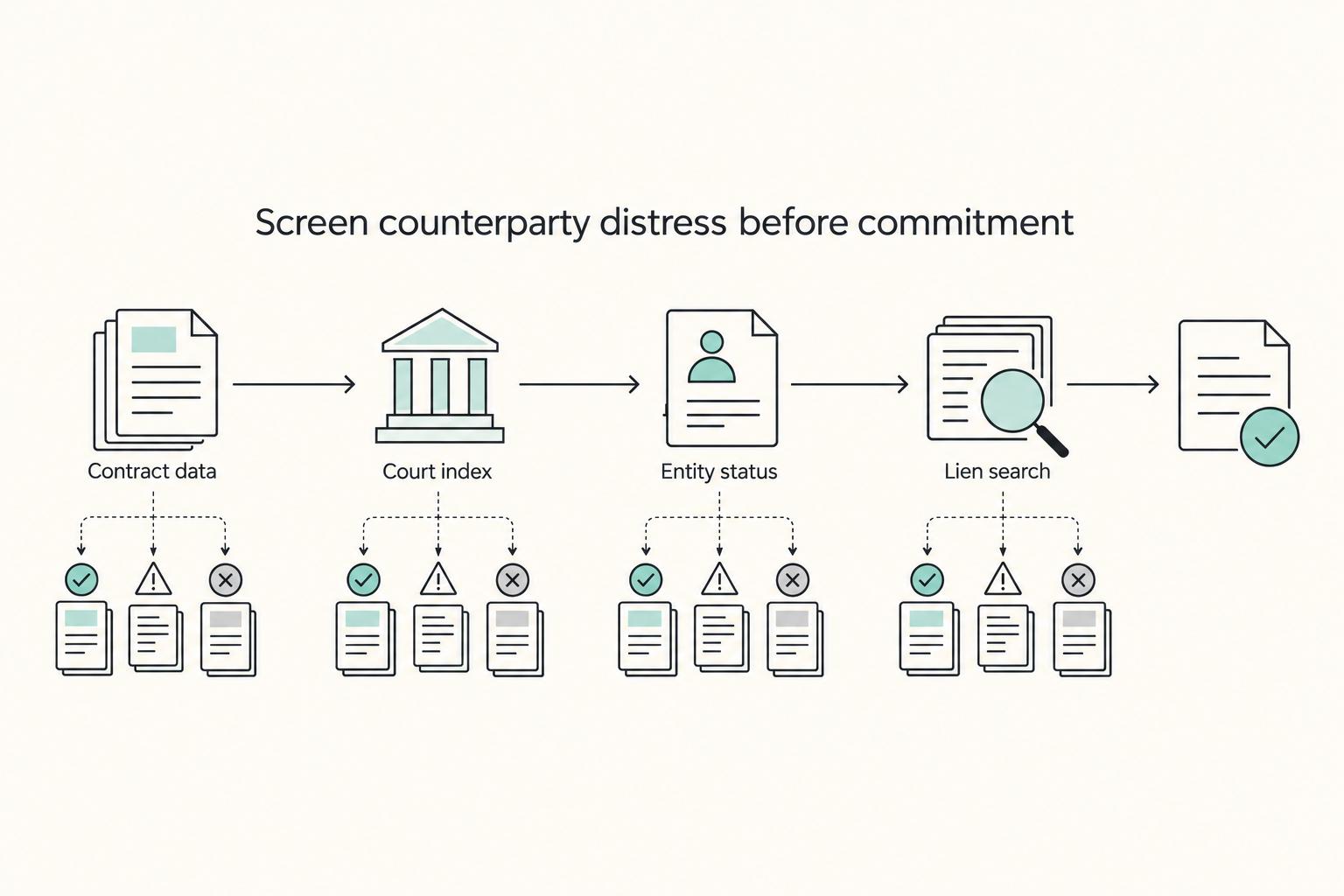
What they tell you should line up with the public record. Use public contract data (reported actions with estimated values of $10,000 or more) to look for patterns, not just isolated wins.
| Source | What to review | Follow-up |
|---|---|---|
| Public contract data | Consistent activity over time, agency and work patterns that match what they are promising you now, and signs they can support financial, schedule, and performance responsibility | Use reported actions with estimated values of $10,000 or more to look for patterns, not just isolated wins |
| PACER national index | Federal litigation | A lawsuit is not an automatic no-go; ask for the case caption and current status |
| State Secretary of State UCC systems | Relevant UCC filings | Ask for release or payoff records, or a short written explanation |
| IRS Automated Lien System extracts | Potential lien leads | Treat extracts as leads only, then confirm in the proper local filing jurisdiction |
What to look for
- Consistent activity over time, not just isolated wins.
- Agency and work patterns that match what they are promising you now.
- Signs they can support financial, schedule, and performance responsibility.
Then screen for public distress signals
- Search PACER's national index for federal litigation.
- Check UCC filings in relevant state Secretary of State systems.
- Treat IRS Automated Lien System extracts as leads only, then confirm in the proper local filing jurisdiction.
A lawsuit or lien is not an automatic no-go. Evasiveness is the red flag. Ask for the case caption, current status, and release or payoff records, or a short written explanation.
Step 3. Call references and score the answers#
References help you fill past-performance gaps that public records usually will not cover. CPARS is the official source, but that data is generally not public to third parties, so ask the partner to share relevant excerpts or summaries they can provide.
Use a fixed script so answers are comparable.
- What contract or task order was involved, and what role did this company actually perform?
- Were invoices handled predictably, or did payment disputes repeat?
- Did they keep agreed scope or workshare, or pull work back in-house?
- Were they transparent about changes, risks, and agency direction?
- Would you team with them again, and why?
Score each reference as green/yellow/red across:
- Payment behavior
- Scope integrity
- Teaming conduct
One yellow may justify tighter controls. Two reds, especially across scope integrity and teaming conduct, are usually a no-go.
Step 4. Lock a pre-teaming operating rule set#
Before you start moving real proposal content, set a short written rule set for how the pursuit will run. Keep it simple and in writing.
Define:
- Decision rights for technical changes, pricing assumptions, and role representations
- Communication cadence and response expectations for bid-moving issues
- Conflict path and escalation contact on each side
- Proposal-control boundaries for your draft language, pricing inputs, methods, and reusable materials before signature
FAR 9.6 requires the arrangement and company relationships to be disclosed in the offer, so misalignment here can quickly turn into proposal risk. If the prime expects you to perform primary and vital work while it keeps only a thin front-end role, pause and assess ostensible subcontractor risk. In covered small-business services structures, also check whether work allocation could conflict with similarly situated and 50 percent limitation rules.
| Area | Complementary-fit indicators | Overlap-risk indicators | Proof to collect | Workshare security implication |
|---|---|---|---|---|
| Technical capability | You cover a capability gap they do not credibly staff in-house | They already staff and market the same specialty | Resumes, sample deliverables, capability statements | A real gap is harder to displace after award |
| Past performance role | Their record supports prime management, while your record supports specialist delivery | Both sides claim the same role and value story | Reference notes, partner-provided past-performance summaries, award-history review | Overlap makes your scope easier to compress |
| Set-aside and performance structure | Roles align with prime status and performance responsibility | Prime appears unusually reliant on you for primary and vital work | NAICS or size-status context, responsibility narrative, org chart | Misalignment can weaken award posture and subcontract stability |
If they clear these four steps, move to drafting. If they do not, exit early.
Stage 2: Define Exclusivity, Workshare, IP, and Post-Award Terms#
This is where a promising partner either becomes a workable deal or starts to drift. Your job is to define exclusivity, clarify workshare, protect IP, and reduce post-award renegotiation risk.
Step 1. Define exclusivity with exact scope controls#
If exclusivity matters, tie it to the exact opportunity. Vague language here is easy to reinterpret later.
Insert
- The named solicitation and the specific bid this teaming covers.
- Whether updates or reissued versions of that same pursuit are included.
- Whether affiliates and related entities are included, if relevant.
- Any carve-outs for work that is outside this pursuit.
Reject
- Vague language like "work together in good faith on this opportunity" without scope boundaries.
- Silence on what happens if either party shops the same pursuit elsewhere.
Step 2. Separate commitment language from performance assumptions#
Write the committed role in one sentence, then put the conditions behind it in a separate sentence. That separation makes it harder for award-time changes to erase your role.
Insert
- One clear commitment sentence on your reserved role or scope if award occurs.
- One separate assumptions sentence, such as awarded scope, funded items, customer-driven changes, and prime-retained functions.
- Named ownership boundaries and who can approve changes in writing.
Reject
- Generic verbs like "support," "assist," or "participate" without task ownership.
- Open-ended "we will revisit scope later" language.
| Issue | Weak pattern | Clearer pattern |
|---|---|---|
| Scope | "Subcontractor will provide technical support" | Named tasks or deliverables tied to the solicitation |
| Role ownership | "Roles will be finalized after award" | Responsibilities stated now, with only specific open items listed |
| Change control | "Parties will revisit scope as needed" | Written approval by named contacts, with clear triggers for repricing or reallocation |
Step 3. Protect IP with clear buckets and verified source text#
Do not let IP collapse into one vague pool. Use three buckets: background IP, project deliverables, and the license rights each side needs for proposal support and performance.
Insert
- Background IP stays with its original owner.
- Deliverables are defined for this pursuit.
- Limited license rights each party needs to bid and perform.
Reject
- Blended IP language that treats pre-existing tools and new deliverables as one pool.
- Unverified legal text copied from informal sources.
For federal contract clause drafting, verify against official sources. FAR Part 52 covers solicitation provisions and contract clauses, including procedures at 52.104 and 52.105. If you are checking a DFARS rule on FederalRegister.gov, treat that page as informational and verify against an official Federal Register edition. The printed PDF version is a practical checkpoint. Also keep OA/T content out of FAR procurement drafting. The NSF OA/T Guide states OA/Ts are separate from procurement and does not address FAR procurement contracts.
Step 4. Reduce "agreement to agree" exposure before award#
You cannot eliminate all jurisdiction risk, but you can reduce ambiguity before award. The more you settle now, the less room you leave for post-award drift.
Insert
- A pre-attached baseline for key subcontract terms most likely to stall.
- Objective trigger events for moving from teaming to subcontract drafting.
- A fallback path if final terms deadlock, such as escalation steps and what survives if parties exit.
Reject
- "We will negotiate later on mutually acceptable terms" with no baseline terms, no triggers, and no fallback path.
Related: How to Structure a Joint Venture Agreement Between Two Freelancers.
Before you finalize clause language, turn your workshare, deliverables, and acceptance terms into a practical draft SOW. That makes your subcontract terms harder to dilute later: Use the SOW Generator.
Stage 3: Turn the Teaming Agreement Into a Signed Subcontract#
After award, speed matters. Your goal is to turn the teaming agreement into a signed subcontract before scope, workshare, or pricing starts to move.
Step 1. Start the handoff yourself#
The prime is generally responsible for post-award conferences with subcontractors, but you should not wait for the process to start. Send the first post-award email as soon as award is confirmed to you.
Owner: You Deliverable: Award-confirmation email that includes:
- The teaming agreement
- The baseline subcontract terms already negotiated
- A milestone line: "Target subcontract draft: confirm the timeline from the solicitation, official procurement record, contract record, or counsel records."
Ask for the prime's contracts owner, program owner, and whether a consent-to-subcontract path under FAR 52.244-2 applies. If they say consent is required, ask what triggered it and who owns the package.
If anyone says, "the Government told us to change your role," ask for the written direction to the prime. In this context, direction that affects subcontract performance should flow to the prime in writing.
Step 2. Tie draft progress to owners and concrete deliverables#
A drafting cycle without named owners and dated outputs usually drifts. Lock both sides to concrete handoffs.
Owner: Prime contracts lead Deliverable: First subcontract draft; confirm the timeline from the solicitation, official procurement record, contract record, or counsel records
Owner: Your contracts lead Deliverable: Redline return window; confirm the window from the solicitation, official procurement record, contract record, or counsel records; limit comments to issue-tagged items unless the draft departs from the agreed baseline
If this is a covered small-business set-aside services contract, check 13 CFR 125.6 before pushing workshare positions. The prime generally cannot pay more than 50% of the amount paid by the Government to firms that are not similarly situated. That may explain a proposed rebalance, but it does not automatically justify drift from reserved scope. Require the compliance rationale in writing.
Step 3. Run a simple evidence protocol from day one#
Build the record before conflict starts. A clean chronology makes it easier to support your position if scope or workshare starts to move.
| Record | What to include |
|---|---|
| Call recap template | date, attendees, draft version, decisions, open issues, owner per action, next meeting date |
| Decision log | one line per issue, status, each side's position, controlling document |
| Version-control habit | one folder, one naming rule, one redline owner, paired clean and redline files by date and sender |
| Escalation record | each scope, workshare, pricing retrade, or "customer direction" claim, with supporting email or draft attached |
Checkpoint: After the post-award timeline is verified from the solicitation, official procurement record, contract record, or counsel records, you should be able to show a clean chronology from award notice to the current draft.
Step 4. Escalate by decision tree, not frustration#
Escalation works best when it follows facts and thresholds, not irritation. Use the same sequence every time:
- Informal push: Use when the issue is normal drafting friction.
- Formal notice: Use when milestones are missed without explanation, essential agreed terms are reopened, or reserved scope is being reallocated.
- Counsel involvement: Use early if enforceability depends on definiteness, governing-law risk, or repeated ambiguity around essential terms.
Your formal notice should cite the governing-law clause, notice clause, and the specific section at issue. It should also state the cure requested.
Keep privity in view. As a subcontractor, you usually do not have direct privity-based claims against the U.S. Government. If the dispute is with the Government contract, the prime is typically the party that submits a written claim under FAR 52.233-1. Claims over $100,000 require certification.
| Pattern | What it signals | Your response playbook |
|---|---|---|
| Named contracts lead, draft date, tracked issues list | Smooth transition | Keep comments narrow, return redlines quickly, confirm owners and next dates after each call |
| Specific request for consent-package support, such as technical or pricing items | Likely legitimate delay | Ask for checklist, package owner, and submission date; provide only requested support |
| Repeated "legal is reviewing" with no draft movement | Potential stall tactic | Send a milestone-reset email and request a marked-up draft, not a status update |
| Verbal scope cuts or "CO said so" without written direction to the prime | Red flag | Request written direction, log the issue, and reserve rights in writing if workshare or scope is affected |
For a step-by-step walkthrough, see How to Structure a Retainer Agreement for a Fractional CMO Role.
Conclusion: From Partnership Risk to Strategic Advantage#
The common thread through all of this is control. Current procurement updates emphasize clearer, less redundant language, so treat the teaming agreement as a control tool, not a courtesy document. In practice, that means screening partner fit, tightening written terms, and managing post-award follow-through with evidence.
Step 1. Screen the partner before you commit#
Start with the counterparty, because cleaner drafting will not fix a weak partner fit. Confirm roles and capability assumptions in writing, and keep diligence notes plus role-setting emails in one place so your record is clear if expectations shift.
Step 2. Tighten terms while the proposal still matters#
Before submission, make sure the signed agreement, redlines, scope or responsibility exhibits, confidentiality terms, IP language, and proposal-support obligations line up where applicable. Clarity here reduces downstream argument and makes post-award changes easier to spot.
Step 3. Drive post-award follow-through with evidence#
After award, manage proof, not assumptions. Keep a single evidence pack with the signed teaming agreement, relevant proposal excerpts, award notice, subcontract draft requests, redlines, and response emails, and track open items to closure with a simple status log.
| Behavior | Contract posture | Likely outcome |
|---|---|---|
| You wait for the prime to define terms later | Reactive and harder to prove | More ambiguity and less leverage |
| You screen partner claims against written facts early | Better fit before heavy bid spend | Fewer avoidable surprises |
| You leave key points open for later | Risk pushed downstream | Harder cleanup after award |
| You track drafts, redlines, and approvals to closure | Structured written record | Clearer subcontract follow-through |
Use this on your next bid:
- Confirm partner role, scope assumptions, and proposal responsibilities in writing before major bid effort.
- Keep the signed agreement, redlines, and scope exhibits together so you can prove the baseline.
- At award, request the subcontract draft and compare it line by line to your teaming baseline.
- For every important promise, identify the exact clause or email that supports it.
- Treat deal-specific mandates (for example timelines, workshare, exclusivity, or mandatory clause wording) as document- and counsel-dependent unless your source documents state them clearly.
You might also find this useful: How to Structure a 'Key Person' Clause in a Consulting Agreement.
If you are moving from bid strategy into cross-border billing and payout operations, validate fit and coverage for your workflow before you lock your process. Talk to Gruv
Frequently Asked Questions
Are teaming agreements enforceable?
Sometimes. Enforceability depends on governing law and drafting quality. Check whether obligations and responsibilities are clearly stated in writing or left for later negotiation. If key terms are left open, your position may be weaker, so confirm state-specific enforcement and damages rules with counsel for your governing-law state before relying on them.
What is the difference between a teaming agreement and a subcontract?
A teaming agreement is used during pursuit. A subcontract is the performance agreement that usually replaces it after award. If you are in a MAS opportunity, a MAS CTA is a separate structure for two or more Schedule contractors, and FAR Subpart 9.6 does not apply to MAS CTA agreements. | Arrangement | Timing | Legal effect in practice | Terms to negotiate now | Your immediate action | | --- | --- | --- | --- | --- | | Teaming agreement | Before award, during the pursuit and proposal phase | Depends on governing law and drafting quality; FAR and SBA do not prescribe required content | Proposal responsibilities and other key commitments you want defined now | Confirm whether your proposal relies on your capabilities or past performance and whether submission is required | | Subcontract | After award, during performance | Performance agreement that usually replaces the teaming agreement after award | Final performance terms for scope, delivery, payment, and dispute handling | Request the first draft immediately and compare it to the teaming baseline | | MAS CTA | MAS opportunities only | MAS-specific written agreement for two or more Schedule contractors; can be order-level or contract-level | Each member's responsibilities and whether coverage is order/BPA-specific or contract-level | Confirm CTAs are not prohibited by the buyer and that you are actually under MAS rules |
How do you protect intellectual property in a teaming agreement?
IP outcomes are drafting- and governing-law-dependent. Define your pre-existing IP and permitted use in clear written terms, and spell out any ownership or license terms for work created during pursuit or performance. Final checkpoint: have counsel confirm your IP, confidentiality, and data-rights language is aligned and no broader than intended.
What are the biggest red flags in a teaming agreement?
Use a simple triage. Green means responsibilities are clearly defined in writing. Yellow means key terms are vague or deferred to later negotiation. Red means core obligations or role commitments are still open, so pause or walk unless those points are fixed in writing.
Can a subcontractor sue a prime contractor over a teaming agreement?
It depends. Viability turns on governing law and drafting quality, not a blanket rule. Build your evidence pack early: signed agreement, proposal versions, reliance emails, any submission requirement, and the exact language you believe was breached. Before spending on a claim, confirm jurisdiction-specific thresholds and remedies with counsel for your governing-law state before relying on them.
Try a related tool
Researched and edited by the Gruv editorial team. Gruv builds cross-border billing, payouts, and finance-operations software for global businesses.
Sources
- acquisition.gov/far/52.204-16trusted
- acquisition.gov/far/52.233-1trusted
- ecfr.gov/current/title-48/chapter-1/subchapter-B/part...trusted
- ecfr.gov/current/title-13/chapter-I/part-121/subpart-...trusted
- federalregister.gov/documents/2025/09/10/2025-17359/defense-fede...trusted
- gsa.gov/sell-to-government/step-1-learn-about-govern...trusted
- gsa.gov/policy-regulations/policy/acquisition-policy...trusted
- irs.gov/privacy-disclosure/automated-lien-system-dat...trusted
Educational content only. Not legal, tax, or financial advice.
Related Posts

Germany Freelance Visa Application Path for Freiberufler and Gewerbe
Choose your track before you collect documents. That first decision determines what your file needs to prove and which label should appear everywhere: `Freiberufler` for liberal-profession services, or `Selbständiger/Gewerbetreibender` for business and trade activity.
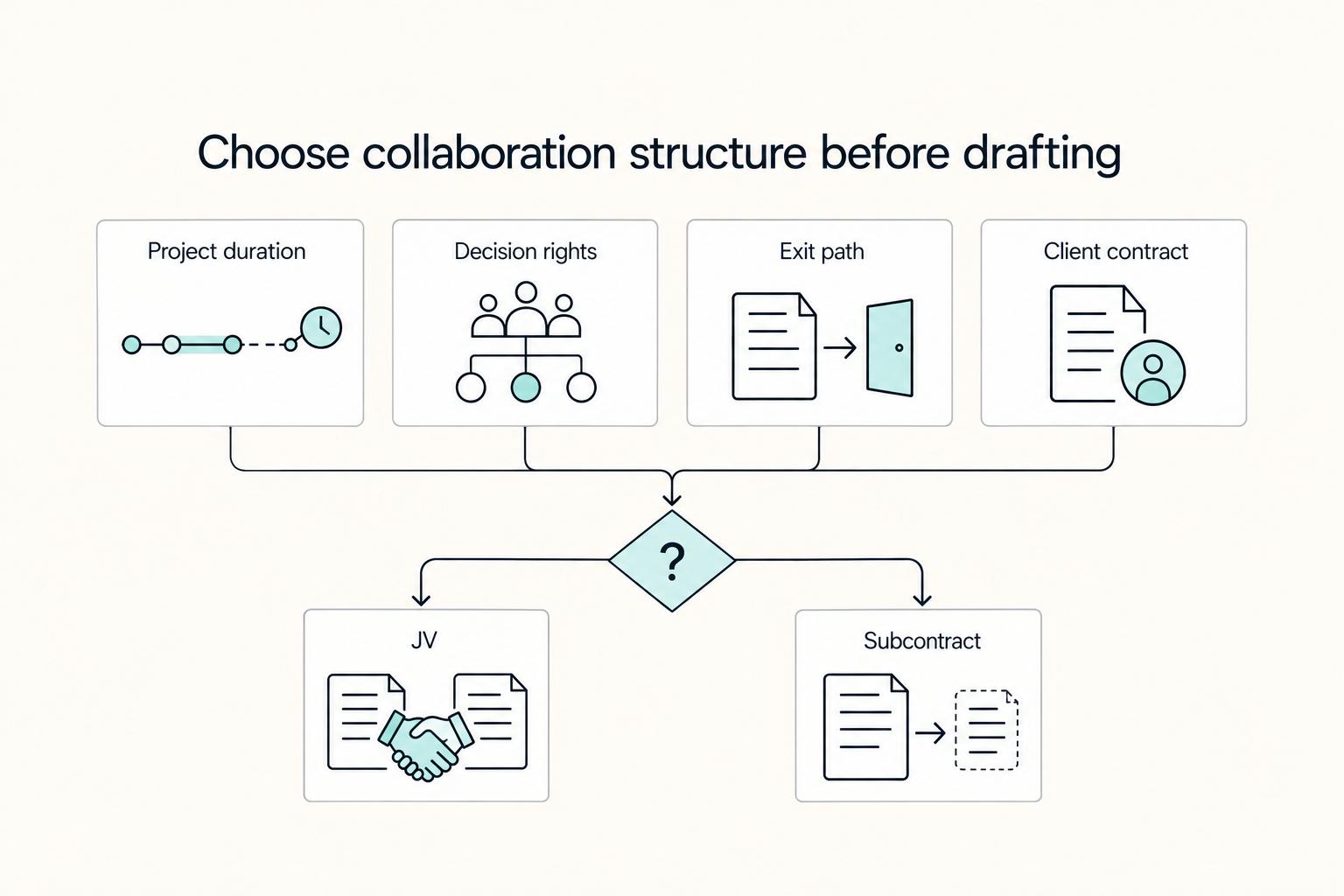
How to Structure a Joint Venture Agreement Between Two Freelancers
Treat the **freelance joint venture agreement** as a working document you can use day to day, not a ceremonial signature page. Put it in place before work starts so everyone involved is working from the same written terms.

The Freelance Payment Penalty: A Modeled Audit of Platform Fees, FX Spreads, and Payout Delays
The money rarely disappears through a single, easy-to-spot fee. The real loss is stacked. A marketplace takes its commission, a processor adds a charge for international cards, a bank or payment company converts the currency at a spread, a platform holds the funds before release, and a wire sheds a little to intermediaries on the way in. Each layer looks defensible on its own, but the worker feels the combined result as a smaller deposit and a later payday.