

Quick Answer
Start with the law at your work location and the facts of the working relationship. Then verify client insurance requirements and compare policies for your occupation, owner inclusion, covered injuries, territory and income limits. A 1099 form or an occupational accident certificate does not settle employee status or replace required workers’ compensation.
Start with your work location and legal status#
Remote work changes where an injury may happen, not whether the worker is legally an employee. A tax form, freelance agreement or insurance certificate does not settle that question. Before buying injury coverage, identify the state or country where you actually work, the hiring relationship, your business structure and whether you employ anyone. Those facts determine which workers’ compensation duties and policy options need examination.
For a genuine solo contractor, the decision has three parts: coverage the law requires, coverage a client contract requires, and protection you want for medical costs or lost income. They can lead to different policies. If you hire employees or direct a remote team, assess their locations and your employer obligations separately; your personal accident policy cannot be assumed to cover them.
A client’s policy is a question to resolve, not an impossibility#
Do not assume a client’s workers’ compensation covers a genuinely independent business. Equally, do not assume the client has no responsibility merely because the agreement says “contractor.” Employee status, subcontracting rules and the actual policy can change the answer. If the relationship involves employee-like control, raise the classification issue before relying on a certificate that shifts all responsibility to you.
New York’s Workers’ Compensation Board explains that many service providers are employees for its law and that alleged subcontractors can be found to be employees after an injury. It also describes contractors without employees purchasing coverage to satisfy general-contractor requirements. That state-specific guidance contradicts a universal rule that all 1099 workers must arrange protection independently or can never claim through a hiring business.
Ask the hiring business who handles injury reports, which insurer covers the relationship, and what evidence supports the answer. If coverage or status is disputed after an injury, preserve the facts and use the relevant insurer or workers’ compensation authority’s process. Do not sign away a possible statutory claim simply because a manager calls you a vendor.
Compare the job of each policy#
| Coverage | What it is meant to address | What to establish before relying on it |
|---|---|---|
| Workers’ compensation | Work-related injury or illness benefits under the applicable statutory system | Covered worker/owner, jurisdiction, work classification, territory and endorsements |
| Occupational accident insurance | Contract-defined benefits for eligible occupational accidents | Occupation eligibility, accident definition, medical and income limits, exclusions and covered activity |
| Health insurance | Covered medical treatment under the health plan | How the plan treats work-related conditions and coordination with another insurer |
| Disability income insurance | Income benefits when the policy’s disability definition is met | Covered causes, waiting period, benefit calculation, occupation definition and duration |
| General or professional liability | Specified claims against the business | Whether the claim falls within the insured risk; do not treat it as personal income replacement |
Workers’ compensation and occupational accident insurance are not interchangeable names. The Texas insurance regulator describes statutory workers’ compensation benefits and explains that most private Texas employers may choose whether to participate. That is a Texas rule, not a national exemption. Establish the requirement in the actual work jurisdiction before considering an alternative.
Occupational accident products are often designed for particular industries or programs. For example, Chubb’s workers occupational solutions describes an occupational accident offering for truckers and other commercial drivers outside required workers’ compensation coverage. That does not establish that the same product accepts a remote designer, covers gradual wrist injury, or follows someone abroad. Obtain the proposed policy’s eligibility and wording rather than buying by the product label.
Owner coverage does not require an S-Corp shortcut#
Business structure can affect who must be included or may elect coverage, but incorporation is not a universal gateway. California’s DWC employer FAQ says a sole proprietor may seek coverage for themselves and that inclusion must be stated in the policy or an endorsement. Owner, officer and exclusion rules need review for the actual entity and state. Confirm that you are included; a policy issued to your business can leave an excluded owner without benefits.
Give the broker your legal entity name, ownership, employee count, work descriptions and locations. Ask for the endorsement or policy section that names or includes you. If a client asks for workers’ compensation and you offer occupational accident coverage instead, obtain agreement to the substitution; it cannot substitute for a statutory duty that applies. A certificate summarizes insurance, while the policy and endorsements define coverage.
Use the home-office scenario to test coverage#
Consider a developer who normally works in California and plans a temporary stay in Portugal. They want protection for a fall while carrying equipment and for gradual wrist symptoms. These are two different fact patterns. The work connection, jurisdiction and the policy’s accident or disease definitions all matter; an accident product may not respond to a condition that develops over months.
| Question | Request from the insurer or broker | Why it changes the decision |
|---|---|---|
| Where will I work? | Written confirmation of ordinary and temporary work locations, territory limits and any required endorsement | A policy valid at home is not proof of overseas coverage |
| Who is insured? | Named insured, covered-person definition and owner inclusion/exclusion | A business certificate may not include the owner |
| What injury or illness qualifies? | Definitions of accident, occupational disease and covered work; exclusions for gradual or repetitive conditions | A fall and repetitive strain may have different treatment |
| What medical costs are payable? | Limit, deductible, provider/network rules and coordination with health insurance | Medical cover and income replacement solve different needs |
| How is lost income paid? | Waiting period, benefit formula/cap, duration and proof of earnings | The advertised maximum may exceed your payable benefit |
| When and how do I report? | Insurer contact, reporting deadlines and required documentation | Coverage still requires a properly handled claim |
Read your health plan’s actual treatment of occupational injuries instead of assuming every plan excludes them. Ask how it coordinates with workers’ compensation or accident insurance and what happens if coverage is disputed. For overseas work, also establish where treatment can be obtained and whether evacuation or repatriation is included or requires a different policy. A broker’s general assurance of “portable cover” needs to match the written terms.
Work through the income gap before choosing a limit#
Here is a hypothetical planning example, not a quote or a promise of benefits. Assume a covered inability to work lasts eight weeks, essential spending is USD 750 a week, and a proposed policy would pay USD 600 a week after a two-week waiting period. Assume all six later weeks qualify and ignore taxes and offsets solely for the illustration.
| Item | Calculation | Amount |
|---|---|---|
| Essential spending | 8 × USD 750 | USD 6,000 |
| Illustrative income benefit | 6 × USD 600 | USD 3,600 |
| Remaining spending gap | USD 6,000 − USD 3,600 | USD 2,400 |
The first two weeks require USD 1,500 of funding; the later six weeks have a USD 150 weekly gap. Even an eligible claim can take time to assess, so the cash reserve must also cover payment timing. Compare the actual benefit formula, offsets and duration with your earnings records and expenses. Medical deductibles or uncovered treatment would add to this example’s gap rather than disappear inside the income benefit.
Keep contract promises within the policy and the law#
A services agreement can identify who must obtain insurance, the required limits, evidence, notice of relevant changes and the process for reporting an incident. It should describe the actual arrangement rather than claim that buying insurance makes a worker legally independent. If the business hires employees, allocate their coverage obligations explicitly and check the law at their work locations.
Indemnity and liability-cap clauses affect specified contractual risks only to the extent they are valid and applicable. They do not automatically erase statutory injury rights, eliminate the client’s liability, or ensure the insurer pays an assumed obligation. Before accepting an indemnity, compare its scope with the policy’s contractual-liability provisions and exclusions. Have the jurisdiction-specific terms reviewed where the exposure warrants it.
If the client requires a waiver of subrogation or another endorsement, obtain the insurer’s approval and actual endorsement rather than merely adding the words to a certificate. Record policy renewal dates and material changes. A contract should provide a way to resolve a lapse before new work without assuming that previously earned invoices can be withheld as leverage.
If an injury happens#
Get appropriate medical care, then report the incident through the applicable employer, insurer or statutory process within its deadlines. Keep a factual account of the work task, location, date and witnesses, plus relevant medical and earnings records. For gradual symptoms, preserve the work history and medical assessment rather than inventing a single accident date.
Tell each involved insurer about other possible coverage so coordination can be resolved. Keep copies of submissions and decisions, and use the stated review or appeal process if a claim is denied. A coverage dispute and a worker-status dispute may need different processes. Paying for your own insurance does not decide either one.
Frequently Asked Questions
Does a 1099 form mean my client’s workers’ compensation cannot cover me?
No. A tax form does not determine worker status under the applicable workers’ compensation law. A genuine independent business should not assume client coverage, but employee status and subcontracting rules can create different outcomes. Establish the work jurisdiction, actual relationship and policy before deciding.
Do I need to form an S-Corp to insure myself?
Not universally. Owner coverage and exclusions vary by jurisdiction and entity. California’s DWC explains that a sole proprietor may seek coverage for themselves if inclusion is stated in the policy or an endorsement. Confirm your own eligibility and inclusion with the insurer.
Is occupational accident insurance a substitute for required workers’ compensation?
Do not treat it as one. Occupational accident insurance pays the benefits defined in its contract for eligible people and incidents. If workers’ compensation is legally required, comply with that obligation; if it is a client requirement, obtain agreement before proposing a different policy.
Will an occupational accident policy cover repetitive strain or work abroad?
Only if the actual terms cover the person, condition, activity and location. Gradual conditions may not meet an accident definition, and territory limits or endorsements can matter. Ask for written policy confirmation for each planned location and the injury scenarios relevant to your work.
Can an indemnity clause prevent all injury claims against my client?
No. Its effect depends on the applicable law, wording and claim, and it cannot be assumed to remove statutory rights. Match any accepted obligation with the insurance terms and obtain appropriate local review before relying on a liability cap or indemnity.
Researched and edited by the Gruv editorial team. Gruv builds cross-border billing, payouts, and finance-operations software for global businesses.
Sources
Includes 1 external source outside the trusted-domain allowlist.
Educational content only. Not legal, tax, or financial advice.
Related Posts
Canada Digital Nomad Visa Planning for Visitor Status and Work Permits
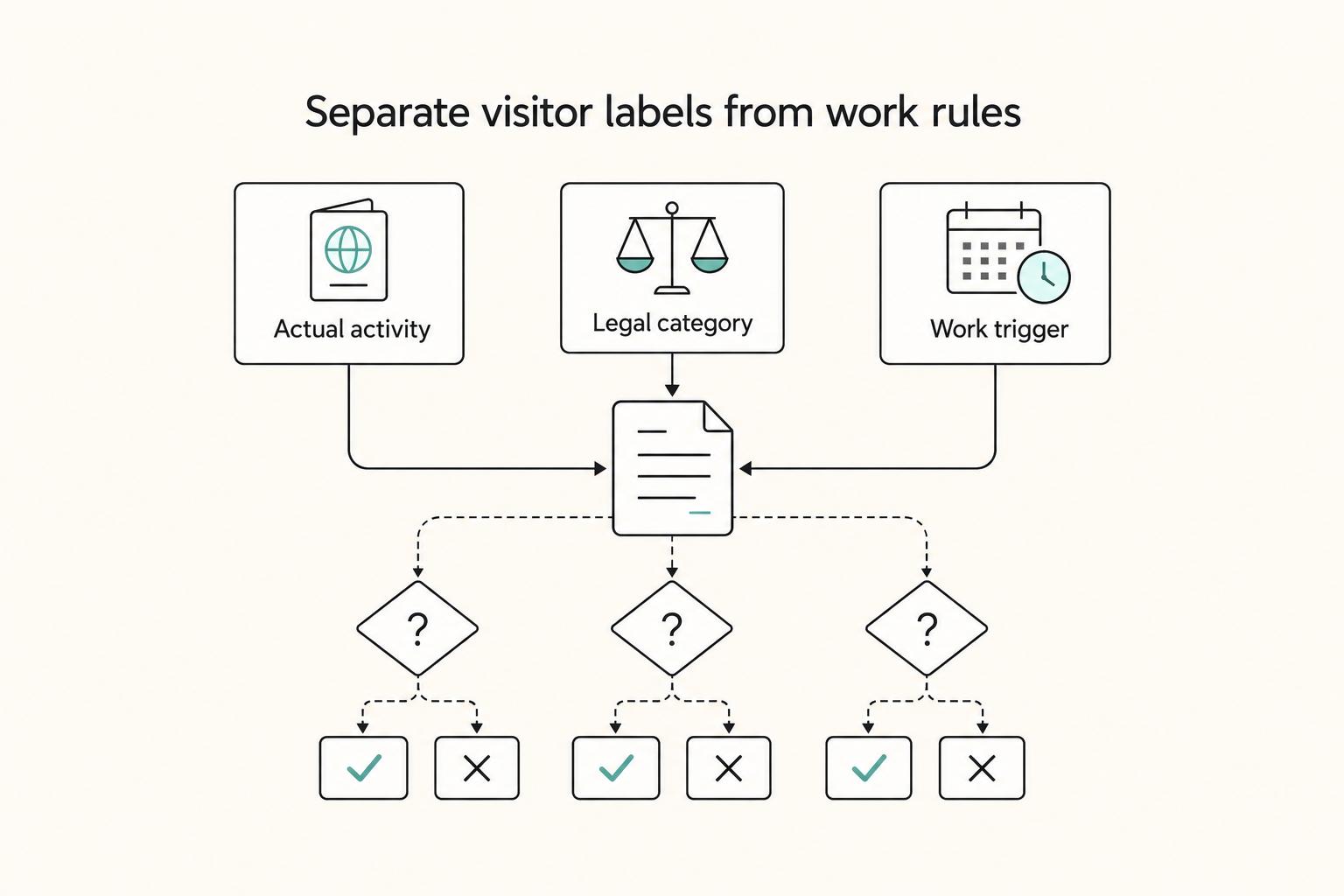
The phrase `canada digital nomad visa` is useful for search, but misleading if you treat it like a legal category. It is shorthand for existing Canadian status options, mainly visitor status and work permit rules, not a standalone visa stream with its own fixed process. That difference is not just technical. It changes how you should plan the trip, describe your purpose at entry, and organize your records before you leave.

What to Do If You've Been Misclassified as an Independent Contractor
If a business calls you an independent contractor but directs your work like an employee, check the rules for the rights you need to recover. A contract label, LLC or Form 1099 does not decide every legal status. Federal wage law, federal employment taxes and state employment laws can use different tests and provide different remedies.
How to Handle Payroll Taxes for a Remote US Team
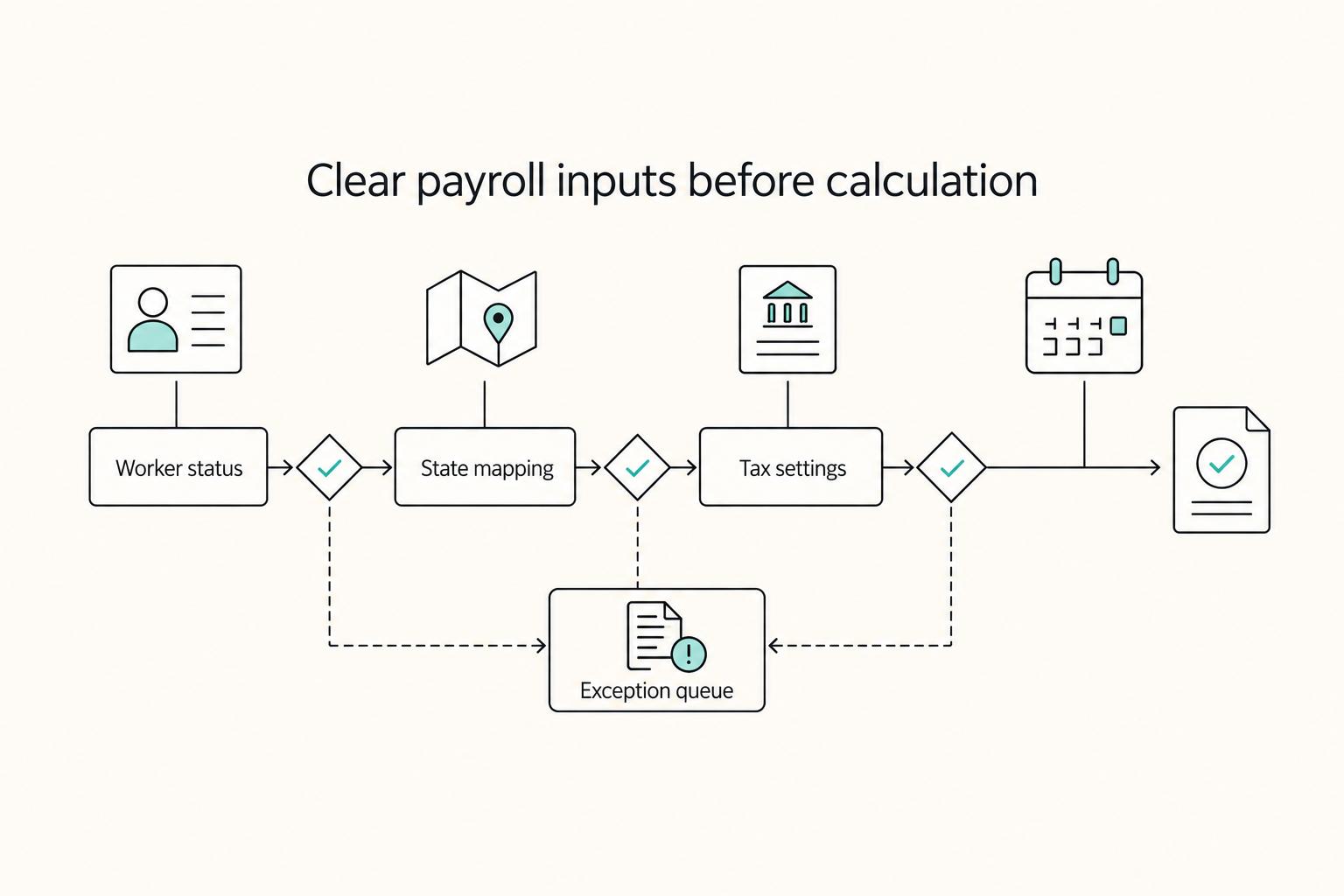
Use a risk-first setup before your first run. Put decisions and verification in a fixed order so payroll tax mistakes are less likely to turn into cashflow problems.