

Quick Answer
Confirm your legal entity, actual trading location and applicant residence against current provider rules before applying. Prepare the requested identity/ownership/activity evidence, verify the product’s bank or safeguarding protection, then test legitimate GBP receiving, fees, availability and exports. Incorporation alone does not guarantee an account.
A non-resident director can run a UK company, but incorporation does not guarantee a UK business account. Providers separately assess your residence, where the business operates, ownership, activity and payment needs. Start with those facts before submitting an application.
Use three stages: verify entity and provider eligibility, check the treatment of customer money and access risk, then test collection, payouts and bookkeeping. A GBP sort code is useful receiving infrastructure; it does not by itself make an account a bank deposit.
Stage 1: Verify entity, eligibility and payment route#
Your goal in this first stage is simple. Set up a payment route you can actually use, for the exact business setup you invoice from, with documents ready for review.
Match the invoicing entity, actual trading address and applicant residence to the provider’s current rules. Do not enter a UK service address as your home or physical trading location merely to pass a form.
Step 1. Match the application to your real business setup#
Get the legal identity right first. Avoidable friction can start when your entity, invoices, and application do not describe the same business.
A sole trader is owned and run by one person, while a private limited company is a separate legal entity. Your invoices, website details, and account application should all reflect the same setup.
For a UK limited company, use the legal name and company number consistently and keep Companies House filings current. Directors need not live in the UK, but the company needs an appropriate registered office in its UK jurisdiction. A registered office, director service address, residential address and physical trading address serve different purposes.
Quick alignment check before you apply:
- Invoice header name
- Website footer business identity
- Companies House details, if applicable
- Application legal name
Opening a UK account does not alone determine tax residence or create a Self Assessment obligation. A company’s tax and filing duties are separate from its director’s personal return; foreign-resident owners should assess UK and home-country requirements from their actual activities.
Step 2. Screen providers before you submit any application#
Do not apply blind. For non-resident applicants, requirements can differ by provider, so confirm current guidance before you submit.
Before applying, confirm these points from the provider's own guidance:
- Whether your country of residence and business setup are eligible.
- Which business details and documents are required.
- How GBP receiving details are presented and whether they fit your invoicing setup.
- What happens if the application is paused for additional review.
Current examples, checked October 5, 2026: Revolut requires a UK/EEA company’s registration and physical presence plus a supported applicant residence; its list includes the UK, EEA, US, Australia, Singapore and India. Wise separately verifies a physical trading address in a supported Wise Business country; a virtual office or mail-forwarding address is not a trading address. Neither example guarantees approval.
| Business model | Inbound payment route to verify | Currency handling question | Payout need | Integration and escalation check |
|---|---|---|---|---|
| UK client services, consulting, contractor work | Can clients pay in GBP to details that match your invoicing entity? | Do you need to hold or convert non-GBP income? | Lower-volume supplier or owner payouts | Can you export statements cleanly, and is there a support path if onboarding stalls? |
| Cross-border freelancer or small agency | Can overseas clients pay without confusion or extra friction? | Can you receive and hold the currencies you bill in? | Regular international payouts | Check accounting integrations and how account reviews are handled |
| Marketplace or online seller | Does the account support your platform settlement routes? | Are settlement currencies forcing unwanted conversions? | Frequent supplier, logistics, or refund payouts | Confirm the process if transaction patterns change |
Step 3. Prepare a pre-application evidence pack#
Prepare current identity, ownership and activity records requested by the actual provider. Use its secure upload route and retain a private record of what you supplied; do not publish passports or personal bank statements on a public website.
| Evidence type | What to include |
|---|---|
| Identity evidence | Identity and address documents requested during verification |
| Company evidence | Company registration details, if using a UK company, plus ownership or director details you may be asked to confirm |
| Business-activity evidence | Sample invoices, signed contracts or proposals, website, and a plain-language summary of what you sell, who pays you, and where payments come from |
| Records for tax readiness | Bank statements or receipts |
- Identity evidence: identity and address documents requested during verification.
- Company evidence: company registration details, if using a UK company, plus ownership or director details you may be asked to confirm.
- Business-activity evidence: sample invoices, signed contracts or proposals, website, and a plain-language summary of what you sell, who pays you, and where payments come from.
- Records for tax readiness: bank statements or receipts, because you need records like these to complete tax returns correctly.
Common mismatches that can cause avoidable delays:
- Company name on invoices does not match the application.
- Address on ID does not match uploaded proof of address.
- Website description does not match the business activity entered in the form.
Step 4. Test the payment rail immediately after approval#
After approval, use a genuine low-value client transaction or clearly labeled own-funds transfer allowed by the provider. Do not invent a sale or invoice merely to test the account. Confirm the receiving name, references, fees, bank availability and export before routing core revenue.
If onboarding is paused, respond with the specific evidence requested. Keep your business description, invoices, and account details consistent so your payment details and records flow match how you actually trade.
If you want a deeper dive, read Automating Your Freelance Finances: A Zapier Workflow for Connecting Stripe.
Stage 2: Check money protection and access risk#
Check protection before funding the account, then choose a balance and backup funding plan that can support your next payroll, supplier and tax obligations during a review.
Step 1. Verify account terms and fallback steps before you hold meaningful balances#
Identify the legal provider and product in your contract, then verify its regulatory permissions. Eligible UK bank deposits can have FSCS cover; e-money and payment-firm balances generally rely on safeguarding. Holding less money can reduce exposure but does not prevent restrictions or guarantee rapid recovery.
| Your cash-balance behavior | Account-terms check | Access-risk check during review | Support-path check | Suitability signal |
|---|---|---|---|---|
| Money in, money out quickly | What do the account terms say about access controls and account use? | What access limits can apply during review? | Is there a clear path to urgent support? | Lower held balance limits exposure; still verify protection and access terms |
| You hold 1-2 months of operating cash | Do the terms fit the balances you actually hold? | Can you still run core payouts if a payment is reviewed? | What evidence may be requested, and how fast can you provide it? | Acceptable only if temporary friction is operationally manageable |
| You hold tax reserves or large client advances | Have you documented the terms that apply to long-held balances? | What is your fallback if access is restricted? | Do you know the escalation route in advance? | Use stricter controls on where cash sits and for how long |
Step 2. Reduce restriction risk with transaction hygiene and response discipline#
Transactions that are hard to explain after the fact can create review friction. Your job is to make each payment legible before anyone asks.
- Keep business identity consistent across invoices, website footer, application details, and Companies House records, if you trade through a limited company.
- Use clear payment references, for example invoice IDs, and confirm those references appear in exported records.
- Keep a live evidence folder with invoices, contracts or proposals, proof of delivery, and records such as bank statements or receipts.
- Screen counterparties at a basic level: who is paying, why, from where, and under which contract.
- If a transfer is restricted or status is unknown, trace it promptly through support; avoid duplicate retries and fund essential obligations from separately available cash where lawful.
Step 3. Choose for audit-trail quality, not onboarding speed#
Choose records you can reconcile: gross receipt, fee, net credit, currency and status. Non-resident personal tax reporting may require software or forms outside HMRC’s standard online service; that is separate from the company’s account choice.
Before committing, test whether you can produce records your accountant can use quickly:
- Monthly and year-end statements
- Readable statement files plus structured exports
- Clear fee line items
- Preserved payment or payout references
- Clean matching from payments to invoices or bills
Hypothetical £1,000 client payment with a £10 provider fee should show £1,000 clearing the invoice, £10 fee expense and £990 bank/available funds. If £200 is held, record £790 available plus £200 held; do not turn the hold or fee into false client nonpayment.
Step 4. Keep tax-compliance admin from becoming a cashflow risk#
For a UK sole trader with applicable Self Assessment duties, the £1,000 test refers to gross trading income, not profit or every non-resident company’s receipts. For 2025–26, newly required or returning filers generally notify HMRC by October 5, 2026; ordinary paper returns are due October 31, 2026, online returns and tax payment January 31, 2027. Check exceptions and payments on account separately.
| UK personal tax point | Check only where the obligation applies |
|---|---|
| Self Assessment basis | Assess the person’s actual taxable activity and residence; a UK account alone is not the test |
| Sole-trader threshold | More than £1,000 gross trading income, subject applicable filing rules |
| 2025–26 notification | October 5, 2026 for covered newly required or returning filers |
| Ordinary filing/payment | Paper October 31, 2026; online and tax payment January 31, 2027; check exceptions and payments on account |
| Non-resident route | Check residence pages and commercial software/paper support rather than assuming standard online filing works |
If personal Self Assessment applies, check whether an existing registration needs reactivation. A non-resident who needs residence pages cannot simply assume the standard HMRC online service supports the required return. Confirm the correct software/paper route early.
Keep company accounts, Corporation Tax and personal Self Assessment deadlines in separate records. A bank onboarding checklist cannot substitute for the relevant filing requirements.
Before you lock your account setup, run your typical client payment mix through this payment fee comparison tool to pressure-test fees and FX drag.
Stage 3: Test collection, bookkeeping and backup funding#
Once your first route is stable and your protection checks are done, stop treating this as a single account choice. Treat it as an operating setup. The goal is faster cash application, cleaner reconciliation, and fewer manual handoffs before month-end.
Step 1. Fit check bundled setup versus modular tools#
Convenience is real, but so is concentration risk. A bundled setup can be the right call when speed matters most. A modular setup can be better when control, portability, and component-level choice matter more.
| Factor | What to compare |
|---|---|
| Ownership | Who controls account access, invoice flow, and payout settings, and what happens if one user loses access |
| Portability | Whether you can export statements, transaction history, and beneficiary data cleanly enough to move |
| Support quality | Whether urgent payment-review support is clear and reachable |
| Lock-in risk | How hard it is to replace one component without rebuilding the full setup |
Compare bundled and separate tools using the same legal entity, receiving rails, permissions, exports and support requirements. A bundle may still require several approvals; a modular stack can add reconciliation work. Choose from verified behavior rather than assuming one arrangement is always faster.
If one provider controls too many layers, one review, outage, or support bottleneck can disrupt invoicing, collections, and payouts together. Compare this before you commit:
- Ownership: who controls account access, invoice flow, and payout settings, and what happens if one user loses access
- Portability: whether you can export statements, transaction history, and beneficiary data cleanly enough to move
- Support quality: whether urgent payment-review support is clear and reachable
- Lock-in risk: how hard it is to replace one component without rebuilding the full setup
If you cannot explain how you would exit quickly with records intact, the setup is too tightly coupled.
Step 2. Connect the payment, accounting, and payout layers#
The handoff between payments, accounting, and payouts is where many setups break. Validate that flow before volume arrives. Your setup works only if incoming payments, accounting records, and payout flows line up.
| Task | Native route | Manual fallback | Verification point |
|---|---|---|---|
| Bank data into Xero | Direct feed if supported | Import a CSV bank statement | Confirm references, fees, and dates survive import |
| Bank data into QuickBooks | Direct connection if supported | Manually upload transactions | Confirm duplicate handling and opening-balance treatment |
| Gateway payouts into your books | Automatic sync if available | Export payout data and match to bank credits manually | Confirm each payout maps back to invoices or charges |
Test the specific collection and payout product you use. Provider status names differ across products; record initiated, pending, available, failed, returned and reversed outcomes against the relevant transfer ID. Reconcile gross customer payments, fees and net settlement rather than treating every bank credit as a new sale.
Step 3. Tighten the client-facing payment instructions#
Small naming mismatches create real payment friction. Clean instructions reduce failed payments and credibility issues at the same time. Credibility is operational consistency. Your invoice needs a unique identification number, and if you trade through a limited company, use the full registered company name exactly as shown on the certificate of incorporation.
Use the receiving details supplied for the exact account and currency. Wise says verified GBP details include a sort code/account number and are not a bank account; it supports domestic and eligible Swift routes with different fees/timing. Confirm the selected Revolut product’s actual details and protection rather than assuming every account under the brand is identical.
Where Confirmation of Payee is available, compare the name result with independently verified recipient details. It helps detect mismatches but does not certify the invoice or transaction is legitimate. Resolve a mismatch through the provider or a known contact before changing details or sending funds; do not override a warning simply to make the payment go through.
Step 4. Define your backup-route trigger before you need it#
Use the provider’s account-specific expected date and failure reason to start an investigation. A backup can fund obligations or receive future payments; it cannot release held money. Before asking a client to replace a payment, confirm the original was canceled/returned or agree a controlled refund/duplicate resolution so the client does not pay twice.
Onboard a genuine backup in advance using its own residence, trading-address, activity and ownership rules. It may reject the same profile as the first provider; using another account to bypass a restriction is not an eligibility solution.
Keep the fallback details verified and test exports. If both accounts use the same underlying banking partner or operational provider, their failure/access risk may be correlated; assess that dependency before assuming two brands create independent protection.
Keep bank deposits, safeguarded funds, client receivables and held balances in distinct ledger categories, with the person responsible for each incident and the next action date.
Beyond the Bank Account: Your Next Step to Financial Control#
Once you know your operating options, the next step is operating discipline. This is where the account becomes part of a reliable records, bookkeeping, and tax-control setup.
| Business model | Setup path | Receiving details choice | First controls to document |
|---|---|---|---|
| Service freelancer | Accounting records + invoicing + one primary collection route | Confirm with your provider which receiving details are available, and use only options you can reconcile cleanly | Weekly reconciliation, invoice-reference check, record retention (bank statements or receipts) |
| E-commerce seller | Accounting records + payout records from each sales channel | Match your enabled payment details to how each channel settles, and keep routes documented | Daily payout check, clearing-account review, record retention (bank statements or receipts) |
| Multi-currency team | Accounting records that track balances by currency | Treat detail and currency setup as provider-dependent; document the exact setup you run | Monthly close checklist, conversion approval rule, named incident owner |
-
Connect your accounting setup. Choose the setup that gives you a clean audit trail. Keep your legal structure consistent in your records: a limited company is a separate legal entity, while a sole trader is one person and is personally responsible for business debts. Done means you can trace each invoice, fee, payout, and ending balance without guesswork.
-
Connect your payment collection routes. Map each route to its own ledger path so receipts and payouts stay auditable. Done means each route can be reconciled from payment to payout to ledger entry, and any fallback route is documented internally.
-
Update invoices and client payment instructions. Update templates, saved billing details, and client-facing instructions together. Use payment details that match how you bill and reconcile. Done means payee name, account details, and invoice currency match exactly.
-
Assign access, initiation and payment-detail approvals; keep currency balances and held funds visible, reconcile regularly and calendar applicable company and personal tax duties separately. Follow the correct non-resident return route where needed.
Related: The Best Bank Accounts for Freelancers in the UK.
If you are evaluating this route, review how Virtual Accounts fit your operating model.
Frequently Asked Questions
Can you legally open a UK business account if you do not live in the UK?
Some providers accept eligible non-resident applicants. UK company directors need not live in the UK, but each provider separately tests residence, operating presence, business type and verification. Incorporation creates no entitlement to an account, and GBP receiving details may be a payment account rather than a bank deposit.
Do you need a UK residential address to apply?
Requirements vary. A company needs an appropriate registered office in the UK jurisdiction of incorporation; that is not the director’s home or necessarily the trading location. Use the actual residential/trading address and supported residence. Do not assume a UK registered office satisfies a provider’s physical-presence requirement.
What exactly counts as a non-resident director, and why do people confuse the addresses?
A non-resident director is a director who lives outside the UK. Most confusion comes from mixing up three different addresses: the company's registered office, your public service address, and your usual residential address. Treat them as separate compliance fields, not interchangeable labels. Stage 1 gives the deeper setup context.
What documents should you expect to provide?
Expect provider-specific identity/address, registration, ownership/control and activity documents. There is no universal “shareholders over 10%” test for every provider. Companies House verification for directors and PSCs began November 18, 2025 with role-specific due dates during transition; it is separate from bank KYC and does not mean all shareholders or all filers have the same verification deadline.
How should you choose between providers for this setup?
First check your exact entity, applicant residence and trading location, then receiving rails, fees, money protection and export/support needs. Confirm the contractual provider and product, not only the brand; use the table below to record evidence.
Are these accounts protected the same way as bank accounts?
Eligible UK bank deposits are generally protected up to £120,000 per eligible depositor per authorised firm for failures from December 1, 2025; brands sharing a firm share the limit. EMI/API customer funds use safeguarding, not direct FSCS deposit cover, and recovery can be delayed or reduced by insolvency costs. SPIs need not safeguard; ask what protection applies. Verify the particular product and depositor eligibility.
How do you check whether a provider is real and properly regulated?
Check the FCA register for the exact legal entity, permissions and contact details, and compare them with your agreement. Use registered contact information to guard against cloned firms. A register match does not guarantee approval, availability or equivalent protection across a bank, electronic money institution, authorised payment institution or small payment institution.
How long does approval usually take, and what should you do if it stalls?
There is no universal approval deadline. Answer specific requests through verified secure channels, log unresolved items and avoid promising clients receiving details before they are enabled. An independently approved backup can support future collections; it does not make the original application or held transfer complete.
Watch
How Non-Residents Can Set Up UK Business Banking
Try a related tool
Researched and edited by the Gruv editorial team. Gruv builds cross-border billing, payouts, and finance-operations software for global businesses.
Sources
Includes 5 external sources outside the trusted-domain allowlist.
- changestoukcompanylaw.campaign.gov.uk/identity-verificationtrusted
- wise.com/help/articles/2969315/how-does-wise-verify-m...trusted
- wise.com/help/articles/2935927/how-do-i-receive-money...trusted
- bankofengland.co.uk/explainers/what-is-the-financial-services-co...external
- fca.org.uk/consumers/using-payment-service-providersexternal
- fca.org.uk/news/press-releases/payment-safeguarding-rul...external
- gov.uk/limited-company-formation/company-addressexternal
- gov.uk/limited-company-formation/appoint-directors-...external
Educational content only. Not legal, tax, or financial advice.
Related Posts
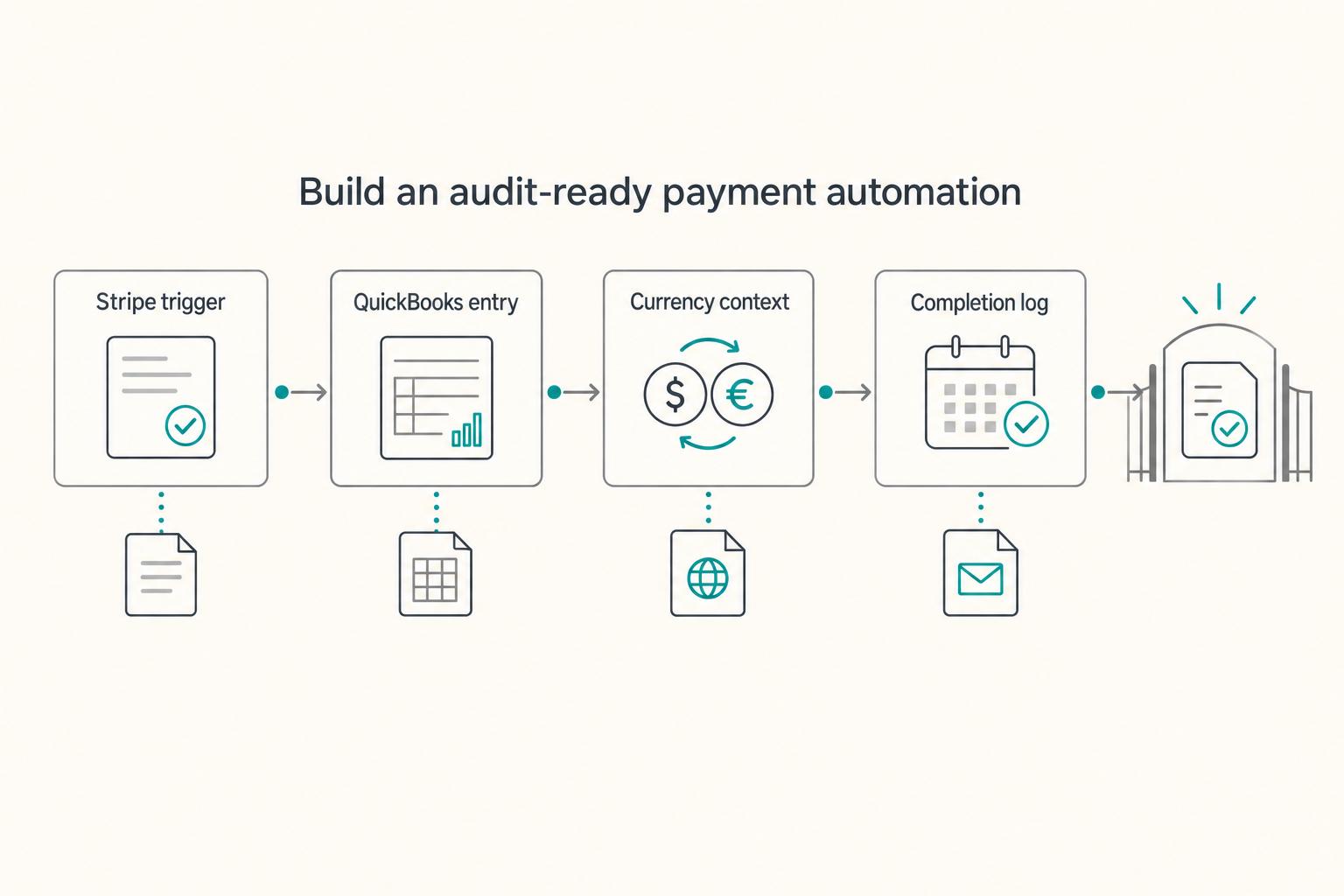
Automating Your Freelance Finances: A Zapier Workflow for Connecting Stripe, QuickBooks, and Wise
Start with one payment flow you understand, then automate its accounting record without losing the source reference. Stripe captures payments, QuickBooks holds the books, Zapier connects the selected steps, and Wise records any separate cross-border balance or conversion activity.
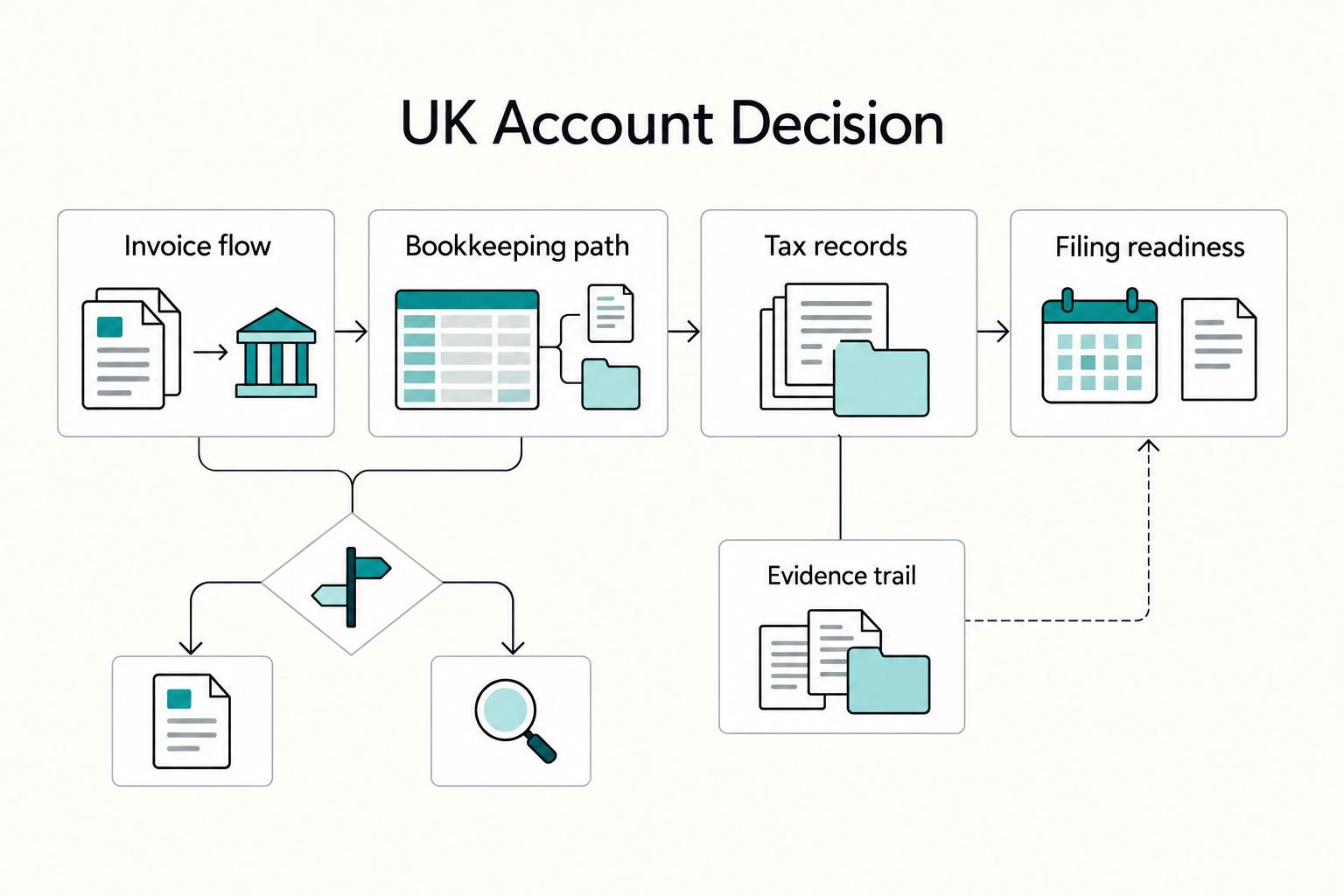
The Best Bank Accounts for Freelancers in the UK
For mainly GBP invoices, start by comparing Starling’s sole trader account, Monzo Business Lite and Tide Free. Each has a no-monthly-fee option, but cash handling, paid bookkeeping tools and international payments can change the total. For regular overseas receipts, compare Wise Business alongside a UK current account. Product prices below were checked on 2 October 2026.

The Freelance Payment Penalty: A Modeled Audit of Platform Fees, FX Spreads, and Payout Delays
The money rarely disappears through a single, easy-to-spot fee. The real loss is stacked. A marketplace takes its commission, a processor adds a charge for international cards, a bank or payment company converts the currency at a spread, a platform holds the funds before release, and a wire sheds a little to intermediaries on the way in. Each layer looks defensible on its own, but the worker feels the combined result as a smaller deposit and a later payday.