
Quick Answer
Start by confirming your LLC’s federal tax treatment, then set up your solo 401(k) for llc in document order: written plan, signed adoption agreement, trust setup, account registration, then funding. Verify required features in the adoption package instead of relying on sales summaries. Keep employee deferrals and employer contributions in separate records with dated posting proof. Review staffing changes, compensation basis, and Form 5500-EZ filing triggers each year so the plan stays defensible.
Confirm solo 401(k) fit, then contribution mechanics, then paperwork#
A one-participant 401(k) works when only business owners or partners, and their spouses, participate. There cannot be common-law employee participants. If hiring is even a realistic possibility, treat that as a setup decision now because it can change whether this structure still fits.
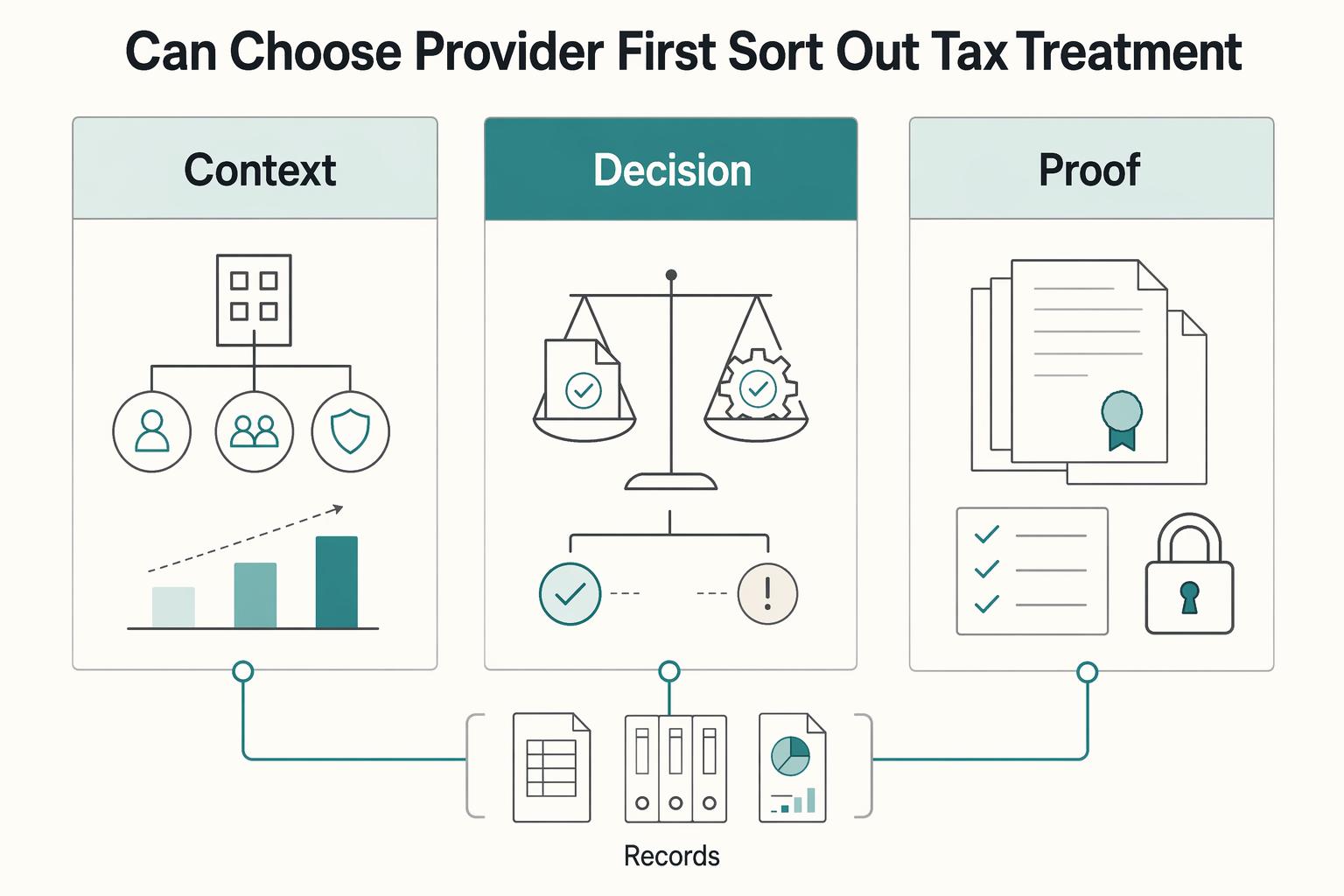
A useful way to run the decision is through three roles. As CEO, confirm the plan still matches where the business is going. As CFO, base contributions on compensation or earned income. As COO, keep the documents, account setup, and annual checks clean enough to prove later.
That framing matters because solo 401(k) mistakes usually do not come from one dramatic error. They come from treating the plan as a product purchase instead of a system. The CEO mistake is choosing a structure that fits this quarter but not the hiring path you already see coming. The CFO mistake is sending money based on a rough estimate instead of the compensation basis that actually controls the contribution. The COO mistake is assuming the provider "has the paperwork" without checking that the signed plan package, trust setup, account registration, and contribution records all tell the same story.
If you keep those three roles separate, the process gets simpler. First, confirm fit. Next, confirm contribution mechanics. Then make sure the paperwork and account setup support what you intend to do. That sequence is what keeps a clean owner-only plan from turning into a year-end reconstruction project.
Before you start#
Get the basics straight before you compare providers. For an LLC, contribution mechanics follow federal tax treatment, so this is not the place to guess and clean it up later. Confirm these inputs first:
| Input | What to confirm | Why it matters |
|---|---|---|
| Current federal tax treatment | Confirm what has already been filed, how you are currently paying yourself, and whether bookkeeping and tax prep reflect the same classification | Contribution rules follow how the IRS classifies your LLC |
| Expected compensation or self-employment income | Know what records will support contributions and avoid building a contribution plan on a vague top-line revenue number | Retirement contributions must come from compensation or earned income |
| Spouse participation | Decide whether your spouse will participate now or later so records, participant setup, and contribution tracking reflect two people instead of one | This is a setup choice, not just an onboarding detail |
| Hiring plans | Give an honest answer about whether this is likely to remain a one-participant arrangement long enough to justify the setup | Hiring can change whether this structure still fits |
| Non-negotiable features | Decide them before the sales conversation starts and make sure they appear in the written plan package you adopt | Avoid solving for convenience instead of document fit |
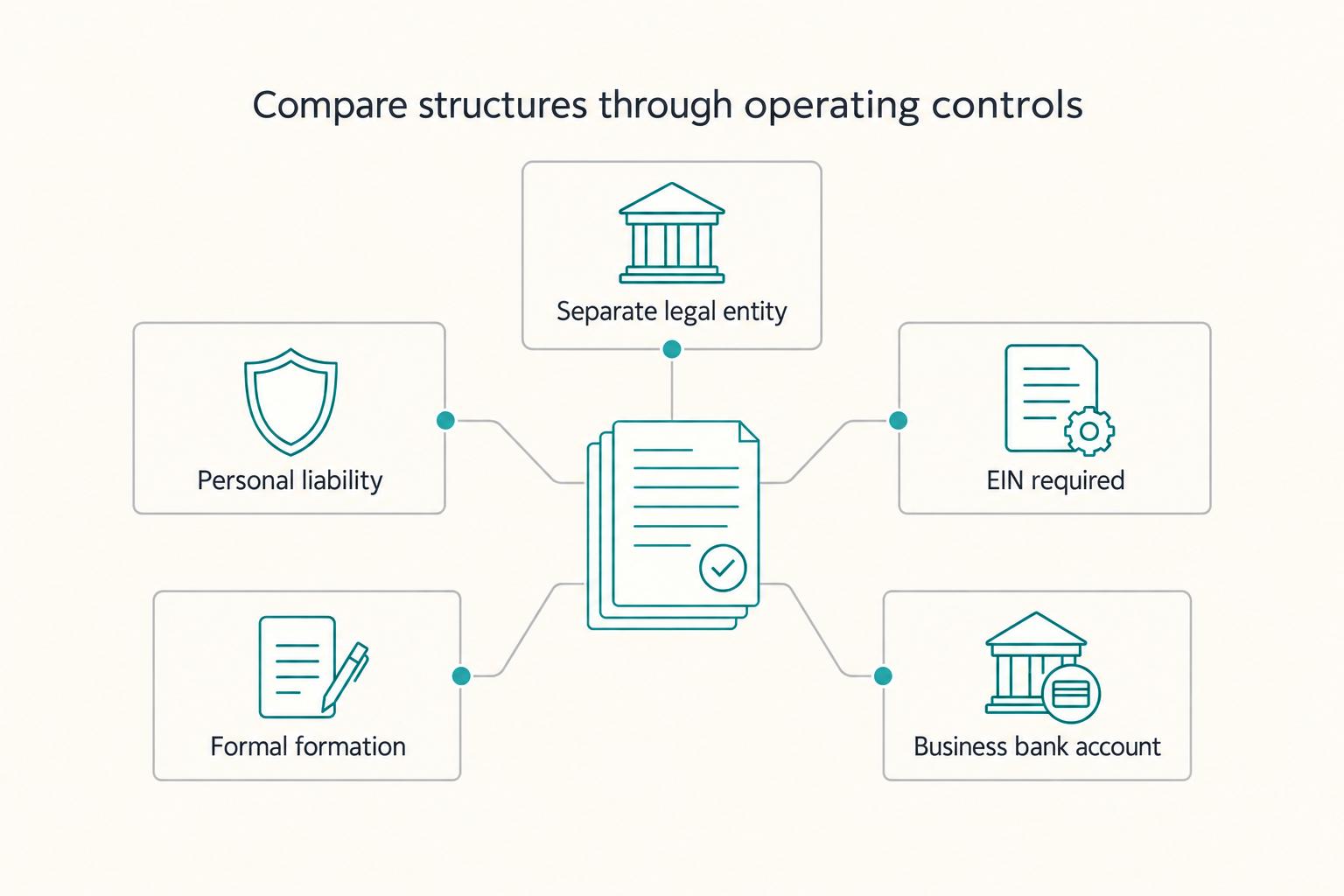
Start with tax treatment because the contribution rules follow how the IRS classifies your LLC. A single-member LLC is generally disregarded for federal income tax unless you elect otherwise, and retirement contributions must come from compensation or earned income, not S corporation shareholder distributions. If that point is unclear, resolve it first. If needed, review How to Choose the Right Business Structure for Your Freelance Business.
Do not treat those inputs as a formality. Each one affects what provider options are even worth reviewing.
Your LLC's current federal tax treatment tells you which contribution path you are actually using. That means you should look at what has already been filed, how you are currently paying yourself, and whether your bookkeeping and tax prep reflect the same classification. If you are still speaking in mixed language, like "owner draws" in one place and "wages" in another, stop there first. A provider comparison cannot fix an unclear compensation basis.
Your expected compensation or self-employment income is the next practical input. The issue is not predicting the year perfectly. The issue is knowing what records you will rely on when it is time to support contributions. If your estimate is likely to swing, build that into how cautious you are with funding. A contribution plan built on a vague top-line revenue number is not the same as a contribution plan built on the compensation or earned income figure that will matter later.
Whether your spouse will participate is also a setup choice, not just an onboarding detail. If your spouse may join, think through that now so you are not choosing documents and account workflows that become awkward the moment a second participant exists. The plan can still fit, but your records, participant setup, and contribution tracking need to reflect two people instead of one.
Whether you expect to add workers is even more important. Many owners answer this too casually because they are not hiring today. But "not hiring today" and "realistic chance of hiring soon" are different answers. If you already expect growth, compare providers and plan terms with that in mind. You do not need a theoretical five-year workforce model. You do need an honest answer about whether this is likely to remain a one-participant arrangement long enough to justify the setup.
Then there is the last input: which features are truly non-negotiable. The key word is truly. Decide that before the sales conversation starts. Otherwise every provider starts to sound acceptable, and you end up solving for convenience instead of document fit. If something is required for the way you plan to operate, it should appear in the written plan package you adopt, not just in a demo or onboarding call.
A practical way to handle this stage is to make one working memo for yourself before you contact anyone. Keep it short. Write down your current tax treatment, how you pay yourself, whether your spouse will participate now or later, whether hiring is likely, and which plan features you will not compromise on. That memo becomes the baseline for every later decision. It also helps you catch a common problem: when your own facts change mid-process but your provider comparison never gets updated.
This is also where you avoid a lot of wasted motion. If tax treatment is unresolved, if you do not know what compensation figure will support contributions, or if hiring plans are unsettled, you are not ready to rank providers. You are still defining the problem.
Step 1. Compare providers against written-plan requirements#
Choose from plan documents, not marketing copy. You are bound by the plan document, and in a pre-approved plan, the adoption agreement controls the features you selected.
| Decision area | What to verify before you sign | Red flag |
|---|---|---|
| Eligibility fit | Owner-only, or owner or partner plus spouse, setup is reflected in the documents | Verbal confirmation sounds clear, but the documents stay vague |
| Feature fit | Required features appear in the signed plan package | Features are promised verbally only |
| Administration | Recordkeeping, participant information delivery, and year-end support responsibilities are explicit | No clear split between your tasks and the provider's tasks |
| Account onboarding | Trust setup and account registration requirements are documented | The provider cannot explain the registration requirements clearly |
Your goal here is simple: narrow the field to one or two real options, then save the sample documents, onboarding instructions, and written notes that confirm the features you need.
The easiest mistake at this stage is assuming that the provider's summary page is enough. It is not. Marketing copy tells you how the provider describes the plan. The plan document and adoption agreement tell you what you are actually adopting. If those two things do not line up, the signed paperwork wins.
That is why "show me where that appears in the documents" is such a useful question. If a feature matters to you, ask to see the exact place in the written package where it is addressed. If the answer stays verbal, incomplete, or delayed, treat that as information. A provider does not need perfect sales language for you to have a workable plan. But they do need a written package that clearly supports the structure and operations you are about to use.
The first line in the table, eligibility fit, is less about theory than precision. You are confirming that the plan you are adopting actually reflects the owner-only or owner-or-partner-plus-spouse structure you intend to run. If a representative says, "Yes, that should work," but the sample materials do not clearly reflect the setup, do not fill in the gap yourself. Vague documents become your cleanup problem later, especially when you need to prove why the plan was appropriate when adopted.
Feature fit should be reviewed the same way. Do not make a mental note that a provider "supports what I need." Tie that statement to the signed package. If you cannot connect a promised feature to the plan paperwork you will actually execute, you do not yet know that you have it.
Administration deserves more attention than it usually gets. A lot of solo owners assume administration is basically automatic because there is only one participant, maybe two. But small plans still create recurring tasks. Someone has to maintain records, deliver participant information, monitor annual items, and answer the practical question, "What exactly am I responsible for, and what exactly is the provider doing?" If that split is fuzzy before you sign, it will stay fuzzy after you sign.
Account onboarding is where paper fit and operational fit meet. The provider should be able to explain trust setup and account registration requirements in a way that is specific enough for account opening. If they cannot explain the registration requirements clearly, assume onboarding will involve guesswork. That is the kind of issue that looks small until money is ready to move.
A useful comparison process is to build one simple review file for each provider you are seriously considering. Save the sample plan documents, the adoption agreement or equivalent paperwork, onboarding instructions, and any written responses to your questions. Then summarize each provider in plain language under the same four headings from the table: eligibility fit, feature fit, administration, and account onboarding. That way you are comparing the same issues side by side instead of relying on whichever sales call felt most polished.
Also, do not overlook the value of written notes created at the time of review. If you choose a provider because a specific document package matched a specific need, write that down when you make the decision. Later, if you need to revisit why a provider was chosen, you will have more than memory.
You do not need to turn provider selection into a legal review exercise. You do need to avoid choosing a plan on assumptions. By the end of this step, you want one or two providers that have survived document review, not just one or two providers that sounded easy to use.
Step 2. Adopt the plan before moving money#
Do not fund first and document later. The sequence matters. Adopt a written plan, arrange a trust for plan assets, set up a recordkeeping method, and provide plan information to participants.
Use one checkpoint before any money moves: your adoption agreement is signed and dated before contribution activity. Elective deferrals cannot be effective earlier than the 401(k) feature adoption date. If you are setting up late in the year, keep each contribution type pending official or advisor verification and avoid assuming you can backfill elections.
Once the plan exists on paper, the next risk is mismatch between the plan package and the financial account setup. This is where good intentions often collide with timing. An owner decides to "get the money in," opens an account, sends funds, and assumes the paperwork can be aligned afterward. That is exactly backward.
Keep the sequence strict:
- Confirm the provider and the written package you are adopting.
- Complete the adoption agreement.
- Make sure it is signed and dated.
- Arrange the trust for plan assets.
- Set up the recordkeeping method you will actually use.
- Provide plan information to participants.
- Only then move to contribution activity and funding.
That order does not exist to create busywork. It exists because later questions almost always start with dates and documents. If you cannot show when the plan was adopted, what feature was effective when, and what records you intended to maintain from the beginning, you will end up reconstructing intent from account activity.
The checkpoint in this section should be non-negotiable: before any money moves, confirm that the adoption agreement is complete, signed, and dated. Not "ready to sign," not "in the portal," not "the rep said it is fine." Signed and dated.
It also helps to treat "moving money" broadly. Do not limit that phrase to a final bank transfer. If you are setting contribution elections, submitting contribution instructions, or coding transactions in a platform, those operational steps should follow a plan that already exists on paper. Once activity begins, it becomes harder to separate what was intended from what was actually authorized when.
Late-year setup is where discipline matters most. That is the moment when owners are most tempted to assume they can simply catch up once an account is open. Treat each contribution type as pending official or advisor verification and avoid assuming you can backfill elections. In practice, that means slowing down, confirming the timing for each contribution category, and not letting urgency push you past the document sequence.
A good operational habit here is to build a small "ready to fund" file before the first dollar moves. Include the signed adoption agreement, the dated participant materials, your trust setup documents, and the account opening instructions you are following. Add a first contribution worksheet showing who is contributing, what type of contribution it is, and what compensation basis will support it. None of that changes the legal rules. It gives you a clean starting record.
This is also the stage to decide how you will keep records over time. Do not postpone that question until year-end. If your system is going to be a folder with signed PDFs, statements, contribution logs, and dated notes, set that up now. If it will live partly in your provider portal and partly in your own files, note that clearly. The worst version is assuming the provider has everything while you do not know exactly what "everything" includes.
Once the plan exists on paper, you are ready to move to the next operational risk: making sure the plan package and the account setup match exactly.
Step 3. Align trust and account setup exactly#
Before funding, confirm the trust setup and account registration details required by your provider and plan documents, then verify that account titling matches the plan and trust naming.
Save proof as you go: signed adoption agreement, trust onboarding forms, account approvals, and contribution coding instructions. If key plan/trust/account details do not line up, stop and fix it before any contribution posts.
This is the step where "close enough" creates avoidable cleanup. Your plan documents, trust setup, and financial account should read like parts of the same file, not like three versions of the same idea. If the plan package uses one naming format, the trust paperwork uses another, and the account opens under something else entirely, do not assume it will sort itself out later.
Read the names and registration details line by line. Compare the signed adoption agreement to the trust onboarding forms. Compare both of those to the account approval notice or new-account registration details. If the provider has given you titling instructions, compare the final account registration to those instructions instead of assuming the institution entered everything the way you intended.
This is also where you should be specific about proof. "I think the account was set up correctly" is not a record. Save the documents that show what was submitted and what was approved. That includes signed paperwork, final account confirmations, and the contribution coding instructions you plan to use once funding begins. The more these items live in one folder, the easier it is to verify the setup before any money posts.
A practical review question is: if you had to prove the plan trust and the financial account were set up consistently, what documents would you show? If the answer is mostly emails, memory, or screenshots without the underlying signed package, pause and tighten the file.
The stop-and-fix rule in this section is worth taking literally. If the plan/trust/account details do not line up, stop before contribution activity. Do not tell yourself you will fix the account after the first deposit. Once contributions post, you are no longer solving a setup issue. You are solving a records issue that now involves actual plan assets.
The same discipline applies if you are working with multiple parties. A provider may handle the plan documents while a financial institution handles the account. That split does not reduce your need to reconcile the final result. It increases it. When responsibility is shared, mismatches are easier to create, and easier for each side to assume the other side has handled.
Step 4. Separate employee and employer contribution workflows from day one#
Treat employee and employer contributions as two different lanes from the start. Keep them separate in elections, coding, and records so you are not untangling them later.
| Item to track | Baseline for 2026 | What to verify |
|---|---|---|
| Employee elective deferral | $24,500 excluding catch-up | Contribution coding method and election timing. Confirm the current contribution rule with your plan advisor or the IRS. |
| Catch-up contribution | $8,000 for age 50+ | Participant eligibility; confirm the current IRS amount with your plan advisor or the IRS. |
| Total annual additions cap | $72,000 excluding catch-up | Compensation basis and aggregation rules; confirm both with your plan advisor or the IRS. |
| Form 5500-EZ trigger | $250,000 combined one-participant plan assets at year end | Confirm the current filing requirement with your plan advisor or the IRS. |
Use a dated contribution log that shows participant, contribution type, amount, tax treatment, and posting confirmation. Recheck the compensation basis before funding. In an S corporation context, shareholder distributions are not earned income for retirement contribution purposes.
This is where the CFO role becomes concrete. "I contributed to my solo 401(k)" is not detailed enough for real administration. You need to know who the participant was, what type of contribution it was, when it was authorized, how it was coded, what amount was sent, and what compensation basis supported it.
The simplest way to stay organized is to think of employee and employer contributions as two separate lanes that should never be merged just because the participant is the same person. If you combine them conceptually, you tend to combine them in records. Then later, when you need to verify timing, limits, tax treatment, or year-end totals, you are working backward from bank activity instead of forward from a clean contribution process.
Your contribution log should do more work than a simple total. Make it a dated running record. Each line should show the participant, the contribution type, the amount, the tax treatment, the date you initiated it, and the date it actually posted. If a provider portal gives you only partial detail, keep the missing detail in your own log rather than assuming you will remember it later.
This matters even more if contributions happen in more than one step. Some owners contribute in a single later-year move. Others make multiple contributions or revisions during the year. Either way, the recordkeeping rule should stay the same: each entry needs to stand on its own. Avoid unlabeled transfers. Avoid "I'll sort that out at year-end." Avoid relying on statement descriptions that do not fully identify the contribution type.
The verification column in the table is where to focus your attention. For employee elective deferrals, confirm the contribution coding method and election timing. For catch-up contributions, confirm participant eligibility and the current amount. For the annual additions cap, verify the compensation basis and aggregation rules. For the filing trigger, verify the current filing instructions with the plan provider or advisor. The repeated theme is that the category matters just as much as the amount.
This is also why compensation support should be rechecked before funding, not just estimated once at the start of the year. If your compensation picture has changed, your contribution assumptions may need to change with it. One key point in an S corporation context is already here: shareholder distributions are not earned income for retirement contribution purposes. That is exactly the kind of issue that reinforces why "money available in the business" is not the same as "compensation basis supports the contribution."
If your spouse participates, do not collapse two participants into one tracking system just because the plan is small. Use separate participant lines, separate contribution records, and clear coding for each person. A small plan still benefits from big-plan discipline here.
A helpful operating rule is that every posted contribution should be traceable in both directions. Starting from your log, you should be able to find the supporting transaction and the compensation basis. Starting from a transaction or statement entry, you should be able to identify the participant, contribution type, and reason it belongs where it does. If you cannot do that, your process is too dependent on memory.
This is one of the few areas where a little extra discipline early saves a lot of time later. Once contributions accumulate, reconstructing categories, timing, and participant allocation becomes much harder than maintaining the lanes correctly from day one.
Step 5. Run an annual operating compliance check#
Keep the annual review short, but do it every year. It is not about complexity. It is about catching the few changes that can break fit or create filing mistakes.
Focus on three checks: staffing changes, compensation changes, and filing duties. Hiring can change one-participant plan status. Compensation changes affect contribution accuracy. Form 5500-EZ monitoring should include the asset threshold and baseline due date as items pending official or plan-advisor verification in your checklist.
The annual check works best when it is treated like a small operating review rather than a tax-season panic task. You are not trying to re-learn the plan every year. You are checking whether anything changed that affects fit, contribution handling, or filing responsibilities.
Start with staffing changes because that is the fastest way to invalidate assumptions you made at setup. Review whether the business still matches the owner-only or owner-or-partner-plus-spouse structure you adopted. If you hired, expect to hire, or changed how work is being done in the business, do not assume the plan still fits just because nothing has gone wrong yet. Recheck current eligibility and the plan terms while there is still time to make decisions cleanly.
Then review compensation changes. This is not just about whether income went up or down. It is about whether the compensation basis you relied on is still the right one, whether the way you pay yourself changed, and whether any participant status changed during the year. If your spouse joined, stopped, or changed involvement, your contribution records should reflect that clearly. If your own compensation picture changed, the annual review is the moment to reconcile what was funded with what your records support.
Finally, review filing duties. The two core items to monitor are the asset threshold at year end and the baseline due date, both of which you should confirm with the official source or a plan advisor. The practical point is to check these items deliberately, not incidentally. Pull the year-end account values, note the total, confirm whether the filing trigger is met, and record your conclusion.
If the threshold is nowhere near relevant, note that in your annual file anyway. If it is close, that is even more reason to document the review carefully.
Keep the annual file compact. A one-page checklist is enough. Add your year-end account statements, your contribution log, and a short note on staffing and compensation changes. That set is usually more useful than a vague promise to "review later." The goal is to create a yearly record showing that you checked fit, checked contribution support, and checked filing duties.
This annual habit also protects the human side of the process. Most solo owners do not forget because the rules are impossible. They forget because the business changes in small ways, and the plan is left running on last year's assumptions. An annual check is how you interrupt that drift.
What if my spouse joins the business?#
That can still fit a one-participant 401(k) structure. Treat your spouse as a separate participant for onboarding and contribution tracking, and confirm the exact participant setup steps in your signed documents before funding.
Operationally, this means more than adding a name somewhere in a portal. Confirm how the provider expects the participant to be onboarded, what information needs to be delivered, how elections will be documented, and how contributions will be coded and tracked. Then keep your records consistent with that setup from the beginning.
In practice, the cleanest approach is to mirror your own file structure for your spouse rather than blending everything together. Separate participant records, separate contribution entries, and separate posting confirmations make later review much easier. Even if the household is treating the plan as one broad savings strategy, the records should still reflect two participants.
It is also worth pausing on timing. If your spouse is joining near the time you want to fund, do not skip the document review because the plan already exists. Confirm the exact participant setup steps in the signed package before any spouse contribution posts. That keeps you from assuming that "same plan" means "same paperwork and timing for every participant action."
What if I expect to hire next year?#
Plan for that now, not as a later fix. One-participant status depends on having no common-law employee participants, so recheck current eligibility and plan terms before hiring decisions are final.
The key phrase here is "before hiring decisions are final." Do not wait until an offer is accepted or payroll is about to start to revisit the plan. If hiring is part of the real business plan, the CEO role needs to weigh whether the current structure still makes sense, and the COO role needs to understand what changes would need to happen operationally.
At a minimum, review the current plan terms. Confirm whether the provider is still the right fit for the next stage. Make sure you are not making contributions under a structure that is about to stop matching the business. You do not need to solve every future scenario in advance. You do need to stop treating hiring as irrelevant just because the business is still technically owner-only today.
This is one of those decisions that is cheaper to think about early. Once staffing changes are in motion, you are making plan decisions under time pressure. A short review now is usually easier than a corrective review later.
Can I choose a provider first and sort out tax treatment later?#
Start with tax treatment first. LLC classification affects contribution mechanics, so you cannot judge provider fit correctly until that piece is clear. After that, confirm the provider's signed plan documents match the path you will actually use.
This matters because provider choice is not separate from contribution mechanics. A provider may look efficient, inexpensive, or easy to onboard, but those qualities do not answer the core question of whether the plan documents and administration actually fit your tax treatment and compensation path.
If you reverse the order, you create two problems. First, you compare providers using assumptions that may turn out to be wrong. Second, you are more likely to read a provider's materials in the way you hope they work instead of the way your facts require them to work. Starting with tax treatment keeps the comparison grounded.
Once that foundation is clear, the provider review becomes much easier. You are no longer asking, "Could this maybe work for me?" You are asking, "Do the signed documents and onboarding steps support the exact path I am actually using?" That is a better question, and it usually leads to a cleaner setup.
Before you lock your contribution workflow, validate how your income classification affects your planning assumptions with the W-2 vs 1099 calculator.
If you want your retirement plan process to run alongside a cleaner get-paid workflow, review Gruv for freelancers.
Frequently Asked Questions
What if my spouse joins the business?
That can still fit a one-participant 401(k) structure. Treat your spouse as a separate participant for onboarding and contribution tracking, and confirm the exact participant setup steps in your signed documents before funding. Operationally, this means more than adding a name somewhere in a portal. Confirm how the provider expects the participant to be onboarded, what information needs to be delivered, how elections will be documented, and how contributions will be coded and tracked. Then keep your records consistent with that setup from the beginning. In practice, the cleanest approach is to mirror your own file structure for your spouse rather than blending everything together. Separate participant records, separate contribution entries, and separate posting confirmations make later review much easier. Even if the household is treating the plan as one broad savings strategy, the records should still reflect two participants. It is also worth pausing on timing. If your spouse is joining near the time you want to fund, do not skip the document review because the plan already exists. Confirm the exact participant setup steps in the signed package before any spouse contribution posts. That keeps you from assuming that "same plan" means "same paperwork and timing for every participant action."
What if I expect to hire next year?
Plan for that now. One-participant status depends on having no common-law employee participants, so recheck current eligibility and plan terms before hiring decisions are final. The key phrase here is "before hiring decisions are final." Do not wait until an offer is accepted or payroll is about to start to revisit the plan. If hiring is part of the real business plan, weigh whether the current structure still makes sense and what would need to change operationally. At a minimum, review the current plan terms. Confirm whether the provider is still the right fit for the next stage. Make sure you are not making contributions under a structure that is about to stop matching the business. You do not need to solve every future scenario in advance. You do need to stop treating hiring as irrelevant just because the business is still technically owner-only today. This is one of those decisions that is cheaper to think about early. Once staffing changes are in motion, you are making plan decisions under time pressure. A short review now is usually easier than a corrective review later.
Can I choose a provider first and sort out tax treatment later?
Start with tax treatment first. LLC classification affects contribution mechanics, so you cannot judge provider fit correctly until that piece is clear. After that, confirm the provider's signed plan documents match the path you will actually use. This matters because provider choice is not separate from contribution mechanics. A provider may look efficient, inexpensive, or easy to onboard, but those qualities do not answer the core question of whether the plan documents and administration actually fit your tax treatment and compensation path. If you reverse the order, you create two problems. First, you compare providers using assumptions that may turn out to be wrong. Second, you are more likely to read a provider's materials in the way you hope they work instead of the way your facts require them to work. Starting with tax treatment keeps the comparison grounded. Once that foundation is clear, the provider review becomes much easier. You are no longer asking, "Could this maybe work for me?" You are asking, "Do the signed documents and onboarding steps support the exact path I am actually using?" That is a better question, and it usually leads to a cleaner setup. Before you lock your contribution workflow, validate how your income classification affects your planning assumptions with the W-2 vs 1099 calculator. If you want your retirement plan process to run alongside a cleaner get-paid workflow, review Gruv for freelancers.
Try a related tool
Researched and edited by the Gruv editorial team. Gruv builds cross-border billing, payouts, and finance-operations software for global businesses.
Sources
Educational content only. Not legal, tax, or financial advice.
Related Posts

Japan Digital Nomad Visa 2026: Six-Month Planning Runbook
Treat this as your operating model: identify the right mission first, commit to one route, and keep dated records before you make irreversible plans. That is what keeps the rest of your timeline, paperwork, and decisions coherent.
How to Choose the Right Business Structure for Your Freelance Business
Most freelancers end up in a business structure by default rather than by design, but that accidental choice shapes taxes, personal liability, and payment operations in ways that compound over time. This guide walks independent professionals through four entity types — Sole Proprietorship, Single-Member LLC, S-Corp election, and Corporation — covering the tax treatment, liability exposure, and operational overhead of each. Rather than prescribing a single best answer, it provides a trigger-based framework: start with the structure that fits today, then upgrade when specific signals — indemnification clauses, enterprise KYB requirements, a first hire, or material net profit — make the switch worthwhile. The result is a deliberate, revisable foundation that keeps records clean, reduces onboarding friction, and avoids the expensive mismatches that come from letting structure lag behind business growth.

The Freelance Payment Penalty: A Modeled Audit of Platform Fees, FX Spreads, and Payout Delays
The money rarely disappears through a single, easy-to-spot fee. The real loss is stacked. A marketplace takes its commission, a processor adds a charge for international cards, a bank or payment company converts the currency at a spread, a platform holds the funds before release, and a wire sheds a little to intermediaries on the way in. Each layer looks defensible on its own, but the worker feels the combined result as a smaller deposit and a later payday.