
Quick Answer
Yes, an hra for s-corp can work, but only when owner and employee treatment are split from day one. Use family attribution and 2-percent shareholder checks before choosing QSEHRA or ICHRA for staff, and keep owner premium handling in a separate payroll-linked path. Then lock the sequence: complete documents, verify eligibility, reimburse, and reconcile year-end records. The practical goal is clean alignment between plan files and reporting support so deduction treatment is preserved.
Start Here So You Do Not Lose the Deduction#
An HRA can still work in an S corporation, but owner treatment and employee treatment are not the same. In practice, you win or lose the deduction in payroll handling, reporting, and the order in which you set things up.
If you are setting up an hra for s-corp owners and staff, make three decisions before any money moves: who belongs in the owner lane versus the employee lane, what filing sequence has to happen before any reimbursement, and what documentation must be complete first.
Know the rules before you start#
This guide stays focused on federal mechanics. It relies on IRS guidance on S corporation compensation and medical insurance issues, federal HRA rules, and Notice 2017-67 as a named HRA reference point.
If ownership facts or prior reporting are unclear, stop and have a CPA or tax advisor confirm the edge case before reimbursements begin.
Separate owners from employees first#
Separate owners from employees before you choose any benefit path. The IRS specifically calls out limits on QSEHRA participation for 2-percent shareholder-employees, so do not assume the same arrangement works for both non-owner employees and shareholder-employees.
Use this checkpoint. Review ownership records, your payroll roster, and prior Form 1120-S treatment before setup. If the person receiving coverage might be an owner or officer, treat status as unresolved until you verify it.
Set the filing sequence first#
Set the filing sequence before reimbursing anything. For shareholder-employees, IRS reasonable compensation rules still matter. S corporations must pay reasonable compensation before non-wage distributions, and the IRS can reclassify payments that were handled as non-wage distributions.
That means you should not run owner medical payments outside a defined payroll and reporting path. For eligible non-owner employees, review an employee-facing HRA such as a QSEHRA or, when the conditions are met, an ICHRA integrated with individual coverage or Medicare under the final federal HRA rules issued June 20, 2019.
Build the proof file before money moves#
Build the proof file before money leaves the business account. Keep a dated file showing who was eligible, what was paid, and why it was handled through payroll or through the employee HRA lane. Include the core records you are relying on for ownership, payroll, and plan setup.
Use one operating rule: no reimbursements until the file is complete and dated. That sequence helps protect the deduction, and it sets up everything that follows.
Decide Ownership Status Before You Touch Benefits#
Decide owner versus employee status before any plan setup, notice delivery, or reimbursement. In an S corporation, if someone is or may be in the 2-percent shareholder-employee lane after attribution, do not put them in the employee HRA path until status is confirmed.
| Scenario | Practical treatment | Verify before moving forward |
|---|---|---|
| Clearly below the ownership threshold and no family attribution found | Tentatively review for employee HRA eligibility, such as a QSEHRA or other employee-only design, if other rules fit | Ownership records, payroll roster, and family ownership links |
| Clearly treated as a 2-percent S corporation shareholder-employee or otherwise in the owner lane | Do not assume employee HRA participation works the same way; route to owner-specific review and payroll reporting analysis | Stock ownership records, payroll status, and year-end reporting approach |
| Ownership status is unclear because of family attribution or inconsistent records | Pause setup and reimbursements until payroll and tax advisor confirm status in writing | Direct ownership, attributed ownership, and ownership changes during the year |
Apply family attribution first#
Start with direct ownership, then check family links before you choose a path such as QSEHRA or ICHRA. Family attribution can change the result for someone who looks like a regular employee in payroll.
One guidance source includes spouse, parents, children, and grandchildren in this ownership-related analysis. If any of those relationships connect to stock ownership, do not treat the person as clearly non-owner until that review is done. By the end of this step, label each person as clear employee, clear owner, or hold for review.
Anchor the call in IRS guidance#
Once you have mapped ownership, ground the decision in the main IRS framing for S-corp medical insurance issues. The IRS specifically addresses QSEHRA limits for 2-percent shareholder-employees, so owner treatment and employee treatment should not be blended casually.
Use Notice 2017-67 as a named IRS reference point here. If non-IRS summaries point in different directions, especially around >2% owner treatment, stop and confirm treatment before benefits start.
Verify status before any reimbursement starts#
Make this checkpoint explicit. Compare ownership records, your payroll roster, and everyone expected to receive reimbursements or premium support, then test for attribution and midyear ownership changes.
If status is unclear on any day of the year, stop there. Do not reimburse and do not enroll that person in the employee HRA lane until payroll and your tax advisor confirm treatment and you document the decision.
Prevent reporting failure after a bad classification#
A classification mistake usually turns into a reporting mistake. For shareholder premium payments or reimbursements, one key reporting rule is W-2 wage inclusion while excluding FICA taxes.
A common failure mode is losing the shareholder's above-the-line deduction because W-2 handling was missed. Keep a dated eligibility log with ownership findings, attribution findings, and approval or hold decisions before money moves.
This pairs well with our guide on How to Structure an S-Corp for a Husband and Wife Partnership.
Gather the Documents Before Setup#
Before you launch reimbursements, pull payroll, plan, and tax handoff records into one dated packet. That one control helps reduce documentation gaps that later create payroll classification or tax-treatment issues.
| Step | What to gather | Key point |
|---|---|---|
| 1 | Prior Form 1120-S workpapers and current payroll setup | Shows how owner compensation, distributions, and medical-related amounts were handled |
| 2 | Reimbursement policy language and written eligible-expense definitions | Follow plan documents and administrator instructions because plan rules vary by employer |
| 3 | Proof of coverage and proof of expense | Collect minimum essential coverage evidence for each reimbursed month if reimbursements are intended to be tax-free |
| 4 | Dated support packet for later owner tax review | List missing items and use a clear hold flag until the file is complete |
Step 1. Pull entity and payroll records first. Gather prior Form 1120-S workpapers and your current payroll setup, including how owner compensation, distributions, and medical-related amounts were handled. In an S corporation, compensation treatment is sensitive, and the IRS can reclassify improperly treated shareholder payments.
Step 2. Assemble the plan documents that govern reimbursement. Put your reimbursement policy language and written eligible-expense definitions in one folder. For a QSEHRA or other HRA, follow your own plan documents and administrator instructions because plan rules vary by employer.
Step 3. Build substantiation before the first claim. Set up for the two core artifacts: proof of coverage and proof of expense. If reimbursements are intended to be tax-free, collect minimum essential coverage evidence for each reimbursed month as part of the process.
Step 4. Prepare the owner tax handoff file. Create a dated support packet for later owner tax review, and list any missing items. If documents are missing, use a clear hold flag until the file is complete. Related: Can an LLC Pay for a Member's Health Insurance?.
Choose the Correct Benefit Path for Your Team#
Choose the lane before any reimbursement starts. Keep the employee HRA lane for eligible employees, and if owner status is treated differently for that lane, handle owner premiums through payroll-linked wage treatment and separate tax review.
Choose the lane before you choose the plan#
Split your roster into two groups first: employees who may be in an employee HRA, and owner cases that may need separate handling. IRS S-corporation guidance includes limits on QSEHRA participation for 2-percent S corporation shareholder-employees, so do not assume the owner can be handled like non-owner employees.
If owner status puts someone in a category the IRS treats differently, do not force that person into the employee HRA lane for convenience. Keep the employee plan for eligible staff, and keep the owner process separate so payroll and tax treatment stay consistent.
Before adoption, compare payroll records with ownership records and flag anyone who may fall into the 2-percent shareholder-employee category. If status is still unclear, pause the launch until classification is clear.
Compare the two paths on operational risk and control#
| Decision point | Employee-facing QSEHRA or ICHRA | Owner premium reimbursement route |
|---|---|---|
| Intended user | Eligible employees in the plan class | Owner cases that may need handling outside the employee HRA lane |
| Tax objective | Reimbursement through the employee HRA framework when plan rules and conditions are met | Premium amounts often handled through payroll-linked wage treatment and separate tax review |
| Main guardrails | QSEHRA limits for 2-percent shareholder-employees, ICHRA allowed only when integration conditions are met | IRS S-corp shareholder compensation and classification guardrails, including reclassification risk |
| Admin burden | Plan documents, plus ICHRA notice and attestation artifacts where applicable | Premium and payment records, payroll support, and year-end tax handoff records |
| Common failure | Including an ineligible owner in the employee HRA lane | Paying or booking owner premiums informally and trying to fix classification later |
| Cashflow timing | Reimburse under plan terms and conditions | Payment or reimbursement timing can vary, but classification and wage treatment still need to be handled correctly |
The tradeoff is straightforward. Employee HRAs can work well for staff. The owner route is narrower, but it is often safer when shareholder treatment rules apply.
Use ACA and IRS guardrails to narrow the choice#
Treat ICHRA as a regulated design choice, not a casual reimbursement policy. Final HRA rules allow integration with individual coverage or Medicare only when conditions are satisfied. IRS materials also tie ICHRA analysis to section 4980H and certain section 105(h) nondiscrimination rules.
For owner handling, the real risk is classification. IRS S-corporation guidance emphasizes reasonable compensation and notes reclassification authority when payments are treated incorrectly as non-wage distributions.
Use this decision rule. If your goal is an employee health benefit, design QSEHRA or ICHRA for eligible staff and keep owner treatment separate unless you have clear support for including the owner. If your goal is handling shareholder premiums, do not build an employee HRA around that one objective.
Set one checkpoint before month one closes#
Before the first reimbursement month closes, run a two-lane file check. In the employee lane, confirm the governing plan documents and required HRA records are in the file. For ICHRA, confirm the required attestation and notice artifacts are actually there.
In the owner lane, keep premium records, proof of payment or reimbursement, payroll treatment support, and the tax handoff file together in one dated packet. Mixing lanes can create avoidable classification problems, so fix classification early instead of trying to clean it up at filing time.
You might also find this useful: A Guide to Accountable Plans for S-Corp Expense Reimbursements.
Set Up the Employee HRA Correctly#
Treat the employee arrangement as a formal plan before the first reimbursement. The easiest mistake to avoid is paying claims before the plan terms, notices, and compliance file line up with the arrangement you intend to run.
Draft terms you can defend later#
Write plan terms that clearly state eligibility, coverage start, and substantiation requirements, and define which expenses are reimbursable under your plan design. Avoid broad labels you will have to reinterpret later.
Build terms with Section 105(h) nondiscrimination in mind. IRS guidance ties certain individual coverage HRA designs to Section 105(h), so class design and reimbursement rules should be consistent and reviewable from the start. Compare plan eligibility language to your payroll roster before launch. If payroll exceptions do not match plan terms, fix that before you pay any claim.
Build the notice and document pack before reimbursing anyone#
Set up one dated launch packet rather than a collection of scattered drafts. Include the plan document, reimbursement rules, participant notice materials, and other participant-facing plan information you use in one controlled file set.
If you are using an ICHRA, use the IRS model attestation and notice documents as your baseline. If you are using a QSEHRA, treat notice handling as a core setup task, because IRS S-corp guidance separately flags QSEHRA notice requirements and failure to satisfy QSEHRA requirements. Keep version dates and distribution records so you can show which materials were in effect for each reimbursement period.
Confirm integration assumptions before choosing how claims work#
If your design depends on integration, confirm that first. Final HRA rules issued on June 20, 2019 allow integration with individual coverage or Medicare only when conditions are satisfied. Proposed rules issued on September 30, 2019 addressed Section 4980H and Section 105(h) treatment for ICHRAs.
Operationally, "paired with coverage" is not enough. For ICHRA, make attestation and coverage evidence part of enrollment, not an informal afterthought. If HDHP interaction is part of your design, verify those setup assumptions before launch.
Test one sample employee file from offer through first reimbursement. Confirm the attestation or coverage evidence, notice artifacts, and substantiated claim records are all present.
Add COBRA and HIPAA checks to the setup file#
Do not leave COBRA and HIPAA to assumption. As part of setup, get a written determination on whether and how those obligations apply to your specific HRA structure.
If they apply, document owners, notice handling, privacy controls, and record retention. If they do not apply, keep the written reasoning in the same plan file for future review.
Process Owner Premiums Through Payroll and Tax Reporting#
Process shareholder-owner premiums in a separate payroll and tax lane, not through the employee HRA claims flow. That keeps reporting defensible and avoids blending records that may need different treatment.
Route owner premiums through payroll records#
Start with the shareholder-employee's payroll records. IRS S-corporation guidance explicitly includes treating medical insurance premiums as wages, so record corporate payment or reimbursement in the same reporting chain you use for wages.
Keep those records separate from employee Health Reimbursement Arrangement (HRA) files. If you also run QSEHRA or ICHRA for staff, keep a distinct record trail for owner premiums rather than blending entries into employee plan files. The IRS S-corporation page separately notes limitations for 2-percent shareholder-employees under QSEHRA.
Tie each owner premium entry to (1) the coverage bill, (2) proof of corporate payment or reimbursement, and (3) the related payroll record.
Prepare a clean payroll-to-tax handoff#
Before individual return work begins, confirm your payroll records reflect the owner premium treatment you expect to hand off for Form W-2 and Form 1040 preparation. Keep this as a records check, not a guess at line-by-line mechanics.
| Handoff item | What to include |
|---|---|
| Premium ledger | Premium ledger included in the handoff pack |
| Payroll reports | Payroll reports reflecting the owner premium treatment |
| Months covered | The months covered |
| Covered person | The covered person |
| Payment path | Whether the corporation paid the carrier or reimbursed the owner |
Exact Form W-2 boxes or exact Form 1040 lines are not established, so do not fill those details from memory. Provide a concise handoff pack instead: premium ledger, payroll reports, months covered, covered person, and whether the corporation paid the carrier or reimbursed the owner.
Reconcile to Form 1120-S support before filing#
Before filing, reconcile owner premium records against your U.S. Income Tax Return for an S Corporation support set. IRS guidance points to Form 1120-S instructions for officer wage treatment and also emphasizes reasonable compensation before non-wage distributions.
| Check item | What to compare | Red flag |
|---|---|---|
| Premium ledger | Total owner premiums paid or reimbursed | Does not tie to payroll reports |
| Payroll register | Shareholder-employee wage treatment support | Missing periods or partial treatment |
| Shareholder distributions | Non-wage payments or draws | Premium-like amounts embedded in distributions |
Form 1120-S workpapers | Officer compensation support | Weak wage support with significant distributions |
If the records do not tie, fix them before final filing.
Correct misses in records, not in narrative#
If payroll records were incomplete or inconsistent, correct them before returns are finalized. IRS guidance says it can reclassify payments treated as non-wage distributions, so unsupported intent is weaker than aligned books and payroll.
Use a short dated correction memo that states what was wrong, what changed, and which reports were updated so Form W-2, Form 1040 handoff materials, and Form 1120-S support stay consistent.
We covered this in detail in How to Run Payroll for an S-Corp with a Single Employee (Yourself).
Handle Family Attribution and Mixed-Team Scenarios#
Treat attribution as an enrollment gate. Classify each person first, then enroll. For anyone who may receive benefits, map identity, employing entity, ownership ties, and attribution links so you can place them in the right lane before reimbursements start.
Build a person-by-person attribution map#
Create one roster that ties to your cap table, payroll roster, and related-entity ownership schedule. If those records do not match, pause enrollment until you resolve the mismatch.
If more than one company is involved, document your controlled-group review under sections 414(b) and 414(c) using section 1563(a) mechanical ownership tests. Where a controlled group exists, count employees across member companies together for plan testing.
Keep mixed teams in separate lanes#
A mixed team can still be handled cleanly. Eligible employees and former employees stay in the employee HRA lane, while ownership-sensitive cases stay in a separate payroll and tax review lane until classification is confirmed. Do not blend the files.
Keep separate enrollment records, substantiation folders, and ledgers. Also confirm the HRA is solely employer-funded and not paid directly or indirectly through salary reduction.
Flag spouse-on-payroll cases for review#
A spouse on payroll should be treated as a review trigger, not a standalone attribution determination. Keep those cases in pending status until payroll and tax reviewers confirm the correct lane.
Record the decision with a dated ownership chart and a short written rationale so the classification is traceable later.
Re-check annually and on ownership change#
Run this review before each plan year and again when ownership or related-entity structure changes. Typical triggers include share transfers, household ownership changes, or adding another entity.
Your target output each cycle is an updated attribution roster, a current participant list, and plan records that match before the first reimbursement of the year.
Recover From Common Mistakes Without Blowing Up the Year#
Most year-saving fixes come down to one rule: correct the classification now, then make payroll, tax, and plan records tell the same story before final filing.
Move owner reimbursements out of the employee HRA lane#
If owner medical expenses may have been reimbursed in a QSEHRA or employee ICHRA lane, treat that as a correction item right away. In an S corporation, shareholder-employees must receive reasonable compensation before non-wage distributions, and the IRS can reclassify shareholder payments.
Pause new reimbursements for that person in the employee lane while you document the affected entries by date, amount, recipient, and original lane. Then align payroll and tax support with plan records so owner amounts are not carried as employee HRA reimbursements.
Use this checkpoint: records should match your eligibility determinations. If the person is a 2-percent shareholder-employee, flag it for focused QSEHRA review because IRS guidance specifically addresses participation limits.
Rebuild the plan file before relying on it#
Weak documentation becomes a filing risk quickly, so rebuild the file and date each corrective action. Keep one current-year record set instead of scattered notes.
Include the records used to administer eligibility and required notices tied to the arrangement. For a QSEHRA, notice compliance is an explicit IRS checkpoint, and failure to satisfy QSEHRA requirements is a known failure path. For an ICHRA, keep the notice and attestation records used to confirm that individual coverage conditions were met.
Add a dated correction memo stating what was missing, what was rebuilt, who was affected, and when corrected administration began.
Reconcile payroll and tax return support#
Before final filing, run one three-way reconciliation across payroll, owner tax support, and S-corp return workpapers. This catches errors that look small in one file but conflict across records.
- Compare owner medical reimbursement totals in payroll to owner tax support used for year-end filings.
- Compare those totals and dates to S-corp return support workpapers.
- Confirm corrected owner amounts are removed from employee HRA rosters, notices, and reimbursement ledgers.
- Verify names and status are consistent across payroll, benefits, and tax files.
The target is consistency on people, amounts, and timing across all files. If the records do not tie, fix them before filing.
Keep a Monthly Compliance and Cashflow Control Sheet#
Use an internal monthly control sheet to keep cashflow, payroll treatment, and documentation aligned before issues pile up at year-end.
Build one ledger that ties payments, reporting, and support#
Keep one owner-facing log instead of splitting records across payroll, email, and plan files. For each reimbursement, track:
- payment date, payee, amount, and method
- whether supporting receipt or invoice is on file
- expense category and plan-eligibility check
- where it was reported for payroll and tax support
- correction or follow-up status
Use this checkpoint: every paid item has support, and any reporting gap is clearly flagged for correction.
Review exceptions before the next payroll cycle#
Each month, review exceptions first: missing documents, items posted in the wrong lane, and anything still provisional. Fix misposted items before the next payroll run, and keep a year-to-date note of what was paid, how it was reported, and what still needs verification.
Keep foreign-asset tracking separate from HRA plan records#
If globally mobile owners are part of the picture, keep foreign-asset reporting records in a separate tab or folder from HRA plan administration files. Form 8938 is attached to the annual return and filed by that return's due date, including extensions, and filing Form 8938 does not replace FBAR (FinCEN Form 114).
As an internal monthly control point, track whether foreign assets were acquired or sold during the tax year and the maximum value of foreign deposit accounts, since those are concrete Form 8938 data points. Thresholds vary by filer context, with a $50,000 base aggregate-value trigger for certain taxpayers and higher thresholds for joint filers or taxpayers residing abroad. If no income tax return is required for the year, Form 8938 is not required.
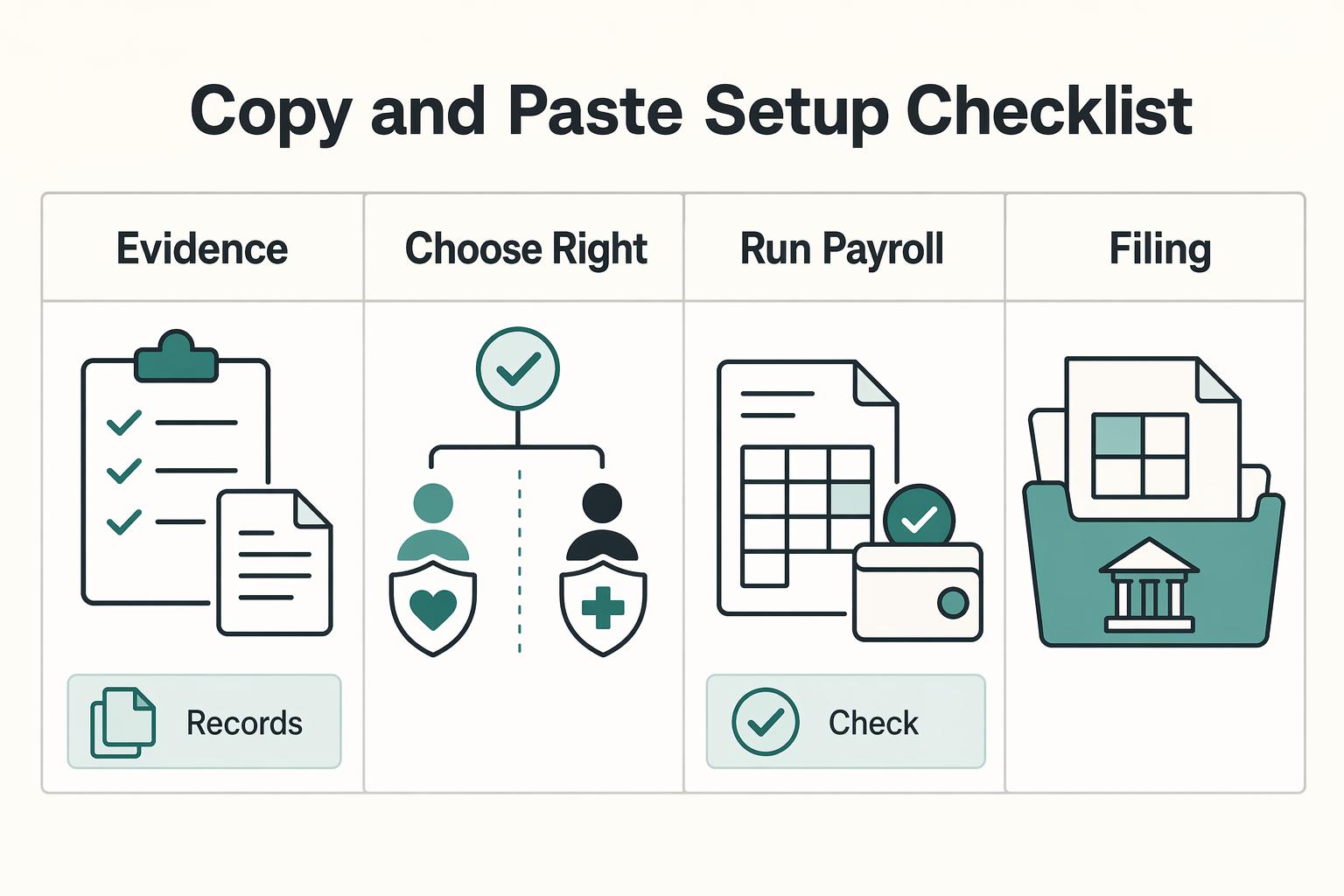
Copy and Paste Setup Checklist#
Use this five-step checklist each year: confirm owner status first, keep the employee HRA lane separate from the owner premium lane, and reconcile payroll and tax records before filing.
| Checklist item | Action | Detail |
|---|---|---|
| Confirm ownership status in writing | Document ownership status before enrollment or reimbursement starts | If anyone may be in the IRS 2-percent shareholder-employee lane, confirm treatment with payroll and tax advisors before you proceed |
| Choose the right path for each group | Set the employee path as either QSEHRA or ICHRA | Keep owner premium reimbursement and wage reporting in a separate process when the owner is outside the employee tax-favored lane |
| Finalize the document pack before payment | Finalize the plan file and reimbursement policy before any reimbursement is paid | Keep dated final versions |
| Run payroll and verify year-end reporting | Run owner premium treatment through payroll early enough to catch errors before year-end reporting | Match reimbursement activity to payroll entries throughout the year |
| Reconcile the tax file before filing | Do a reconciliation across payroll records and S-corp tax workpapers before filing | Use the current instructions at IRS.gov/Form1120S as the final pre-filing check |
Confirm ownership status in writing#
Document ownership status before enrollment or reimbursement starts. If anyone may be in the IRS 2-percent shareholder-employee lane, confirm treatment with payroll and tax advisors before you proceed. Record the review date, names reviewed, and final status used for setup.
Choose the right path for each group#
Set the employee path as either QSEHRA or ICHRA based on your plan design. ICHRA can integrate with individual health insurance coverage or Medicare only when federal conditions are met. Keep owner premium reimbursement and wage reporting in a separate process when the owner is outside the employee tax-favored lane.
A known failure mode is not meeting QSEHRA requirements, so keep owner reimbursements out of employee-plan records unless your tax/payroll advisors confirm the treatment.
Finalize the document pack before payment#
Finalize the plan file and reimbursement policy before any reimbursement is paid, and keep dated final versions. If you reference Federal Register text, verify it against an official edition.
Run payroll and verify year-end reporting#
Run owner premium treatment through payroll early enough to catch errors before year-end reporting. IRS S-corp guidance includes treating medical insurance premiums as wages, and shareholder-employees must receive reasonable compensation before non-wage distributions. Match reimbursement activity to payroll entries throughout the year, not only at year end.
Reconcile the tax file before filing#
Do a reconciliation across payroll records and S-corp tax workpapers before filing. Use the current instructions at IRS.gov/Form1120S as the final pre-filing check.
If you want to operationalize this checklist month after month, use Gruv's tools to standardize your workflow.
Set Up Once and Protect the Deduction Every Year#
The durable approach for hra for s-corp is simple: keep owner and employee benefit lanes separate, then confirm reporting before you file. This is not about finding a loophole. It is about keeping payroll records, plan documents, and tax workpapers consistent and defensible.
Keep owner and employee lanes separate all year#
For S corporations, that separation prevents most avoidable errors. Healthcare.gov says HRAs are for employees, not self-employed individuals, so do not run owner reimbursements through the same employee HRA workflow by default. If you offer an employee HRA, keep it for the eligible staff group and keep it in its own plan file and reimbursement log.
Use one control rule: each reimbursement belongs to one lane only. If a payment appears in both owner and employee records, fix it before month-end.
Validate compensation and payroll treatment before filing#
Do a final payroll and tax review before year-end filing. The IRS says S corporations must pay reasonable compensation to shareholder-employees before non-wage distributions, treats officer payments as wages to the extent they are reasonable compensation, and can reclassify non-wage shareholder payments.
Keep a lean, complete review file:
- current ownership and status memo
- employee HRA plan documents for the current 12-month plan year
- owner payment summary tied to payroll records
- year-end tie-out from payroll support to Form 1120-S workpapers
If any owner month was handled outside the intended payroll path, correct the ledger now while the details are still clear.
Recheck employee ICHRA affordability before you lock the year#
If you offered an ICHRA, run one more affordability check before final filings and employee communications. Affordability depends on employer contribution, employee household income, and benchmark premium cost, and employees offered an affordable ICHRA cannot receive Marketplace premium tax credits.
Use the lowest-cost Silver plan affordability tool as your checkpoint, and save the calculation in the plan-year file. If contributions or assumptions drifted during the year, flag and resolve that before close.
Put the checklist on your calendar#
Implement this checklist this month, then consider a quarterly reconciliation as an internal control. Quarterly is a practical cadence to catch drift early when payroll, reimbursements, and tax preparation are handled by different people.
Each quarter, confirm:
- owner and employee reimbursements stayed in separate lanes and were not double-counted
- employee HRA administration still matches the written 12-month plan-year documents
- payroll summaries still tie to what your tax preparer needs
If you keep that cadence, year-end becomes a verification step instead of a cleanup project. Need the full breakdown? Read The S-Corp Election for LLCs: A Tax-Saving Strategy for High-Earning Freelancers.
When you're ready to align this tax process with cleaner money movement operations, talk to Gruv.
Frequently Asked Questions
Can an S-corp owner use an HRA for tax-free reimbursements?
Usually not when you fall into the IRS 2-percent shareholder-employee lane. IRS guidance specifically addresses QSEHRA participation limits for 2-percent S corporation shareholder-employees, and one non-IRS source describes owners above 2% as typically treated as self-employed for HRA participation. Another non-IRS source notes eligibility can depend on business setup, so keep owner premium handling separate from the employee HRA process unless your advisor confirms otherwise.
Can a 2% shareholder-employee participate in a QSEHRA?
Treat this as no by default. The IRS S-corp medical insurance guidance has a dedicated QSEHRA limitation section for 2-percent shareholder-employees. Do not run owner reimbursements through the same QSEHRA process used for other employees unless your tax advisor confirms treatment for your facts.
What should an ineligible owner do instead of HRA participation?
Handle owner premiums separately from employee HRA participation. One source states that, instead of HRA participation, S-corp owners can deduct health insurance premiums on their personal income tax returns. Keep clear documentation for the owner premium path so the treatment is traceable.
Do family attribution rules change whether I count as a shareholder-owner for benefit purposes?
Potentially. Non-IRS guidance says family members may still be ineligible even when they are W-2 employees, so ownership review should include family relationships before reimbursements begin. If attribution may apply, pause and document the determination before approving claims.
Can my S corporation still offer an HRA to non-owner employees?
Yes, and that is often the cleanest structure. Keep the employee HRA lane separate from the owner premium and reporting lane. Mixing owner claims into employee HRA records raises compliance risk, including possible QSEHRA requirement failures.
What if my ownership is exactly at the threshold and not clearly above it?
Do not guess. This guide does not fully resolve exact 2.00% treatment, so pause reimbursements until payroll and tax advisors confirm how ownership is measured and whether attribution changes the result. Document the review date, who was reviewed, and the status used.
What are the minimum records I need to defend payroll and deduction treatment if audited?
Keep a lean file that proves eligibility status and claim support. Include your ownership and family-status determination, proof of each reimbursed expense, and documentation that each claim was reviewed before reimbursement was scheduled. Keep owner premium documentation separate from employee HRA claim files.
Try a related tool
Researched and edited by the Gruv editorial team. Gruv builds cross-border billing, payouts, and finance-operations software for global businesses.
Sources
- federalregister.gov/documents/2019/06/20/2019-12571/health-reimb...trusted
- healthcare.gov/small-businesses/learn-more/individual-cover...trusted
- irs.gov/businesses/small-businesses-self-employed/s-...trusted
- irs.gov/businesses/corporations/do-i-need-to-file-fo...trusted
- nyc.gov/assets/hra/downloads/pdf/contracts/audit_pro...trusted
Educational content only. Not legal, tax, or financial advice.
Related Posts
Canada Digital Nomad Visa Planning for Visitor Status and Work Permits
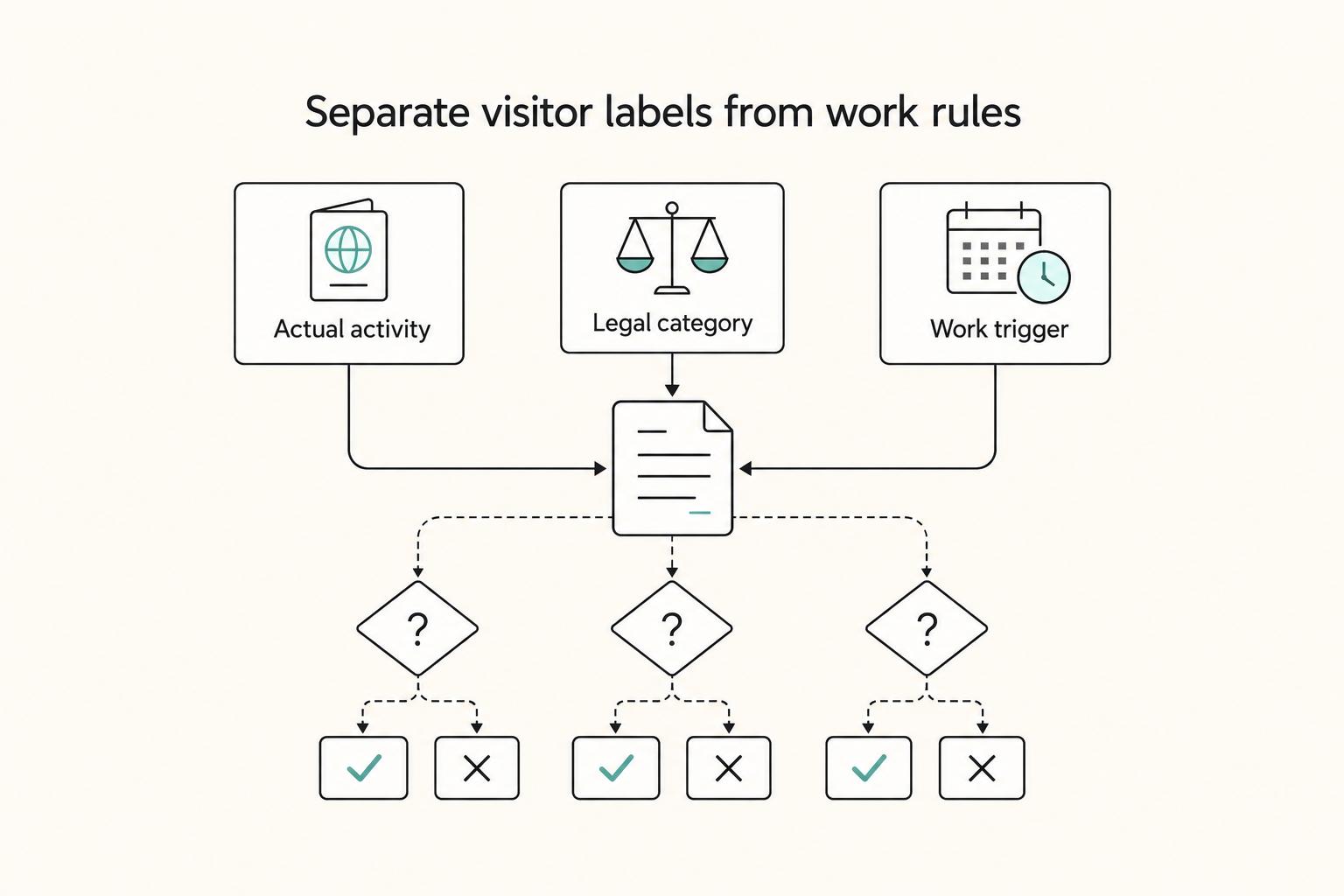
The phrase `canada digital nomad visa` is useful for search, but misleading if you treat it like a legal category. It is shorthand for existing Canadian status options, mainly visitor status and work permit rules, not a standalone visa stream with its own fixed process. That difference is not just technical. It changes how you should plan the trip, describe your purpose at entry, and organize your records before you leave.
Can an LLC Pay for a Member's Health Insurance?
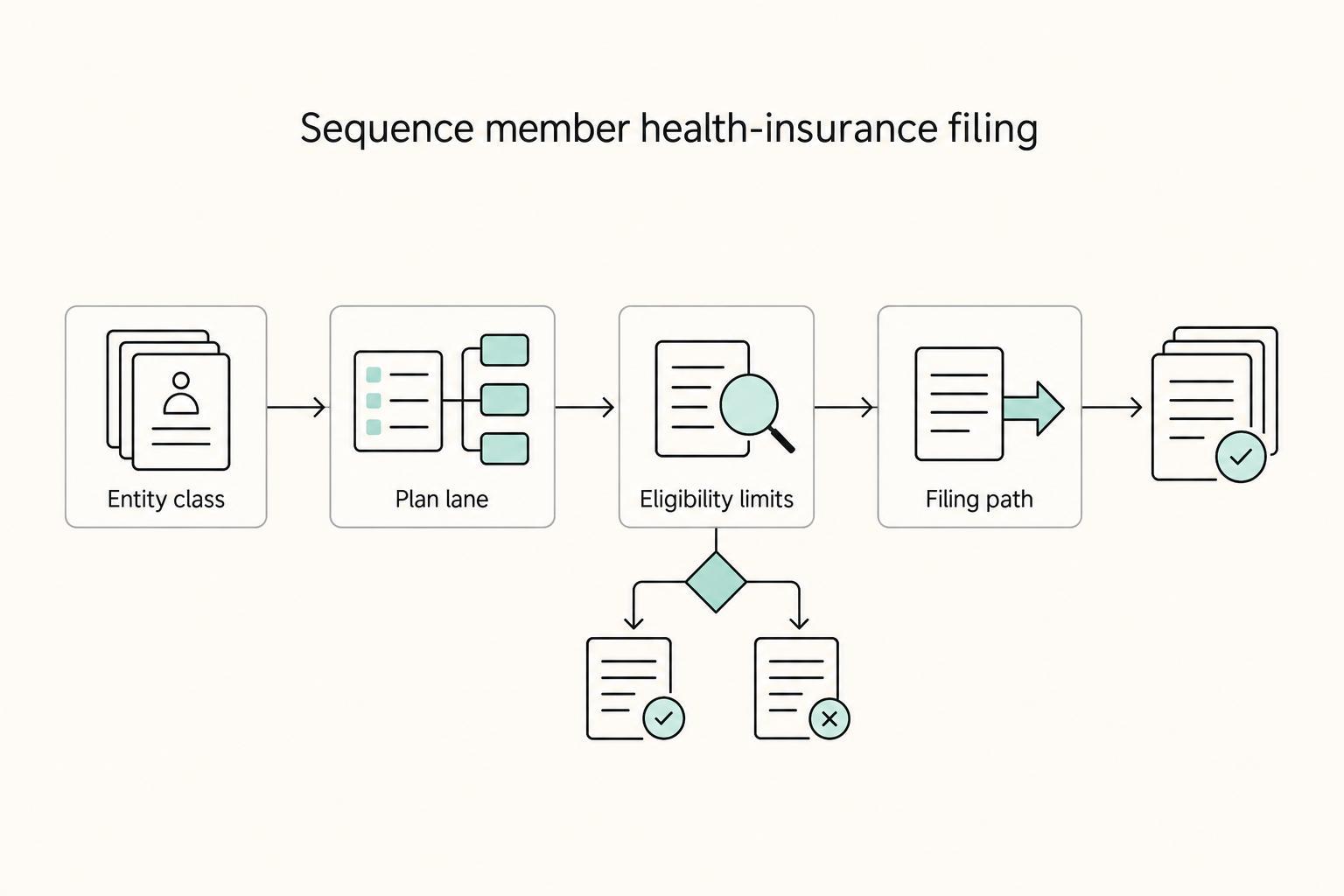
This decision controls tax routing and execution, not just who pays the premium. If your LLC will pay for health insurance, work in this order. Confirm which coverage lane you can use. Confirm how the [IRS classifies your LLC](https://www.irs.gov/businesses/small-businesses-self-employed/limited-liability-company-llc) for federal tax purposes. Then route any deduction to the right form.

The Freelance Payment Penalty: A Modeled Audit of Platform Fees, FX Spreads, and Payout Delays
The money rarely disappears through a single, easy-to-spot fee. The real loss is stacked. A marketplace takes its commission, a processor adds a charge for international cards, a bank or payment company converts the currency at a spread, a platform holds the funds before release, and a wire sheds a little to intermediaries on the way in. Each layer looks defensible on its own, but the worker feels the combined result as a smaller deposit and a later payday.