
Quick Answer
Pay yourself as an employee first: run W-2 payroll for your services, then take shareholder distributions separately. Build a reasonable-compensation file tied to duties and benchmarks, and keep each owner payment clearly classified in your books. Confirm whether your account files Form 941 or Form 944, complete Form 940 and W-2/W-3 reporting, and retain filing and deposit proof so issues can be corrected quickly if notices arrive.
Treat S-corp payroll as a separation and recordkeeping job first#
To run payroll correctly in a single-employee S corp, treat it as a separation and recordkeeping job first and a tax planning job second. A common operational risk is blurring your employee role and your shareholder role until payments and records no longer show clear business separation.
An S corporation is a tax classification with pass-through taxation, so income, losses, deductions, and credits pass to shareholders' personal returns. It can also avoid C-corp-style double taxation. Liability protection is typical, not absolute, so execution and documentation still matter.
Step 1 Define roles before money moves#
In a solo S corp, you can be both worker and owner, but each payment still needs a clear role before it leaves the business account.
- Operational separation: Keep company activity and personal activity clearly separated in how you pay and record transactions.
- Owner-employee: You perform services for the business, not just hold shares.
- Owner salary (wages): Compensation for work performed in the employee role. Salary paid to employee-shareholders is subject to employment tax.
- Shareholder distributions: Payments tied to ownership status rather than labor performed. Confirm treatment details with a licensed tax professional.
Checkpoint: verify the business still satisfies IRS-set S-corp requirements. These requirements include 100 or fewer shareholders and one class of stock.
Step 2 Classify each payment intentionally#
Classify every owner payment by purpose first, then document it before you close the books. That sequence keeps the records cleaner and makes compliance decisions easier to defend.
| Payment type | Use it when | Documentation to have first | Main risk if sequence or classification is wrong |
|---|---|---|---|
| Owner salary (wages) | Paying for actual services performed as the owner-employee | Entity-level payroll setup and records that support compensation treatment | Payroll/compliance risk and classification risk |
| Shareholder distributions | Taking funds in your owner capacity after confirming compensation approach | Distribution records and books showing the transfer is not payroll | Classification risk and recordkeeping risk |
| Uncoded owner transfer | Not a standard method; treat as an exception to clean up quickly | Immediate classification notes and cleanup records | Recordkeeping risk and weaker audit trail |
If you cannot clearly label an outflow as wages or a distribution, resolve that classification promptly and verify it with a licensed tax professional.
Step 3 Use a minimum compliance checklist#
Once roles and payment types are clear, use this as a practical checklist and verify current requirements with a licensed tax professional.
| Checklist item | Action | Reference |
|---|---|---|
| Confirm entity status | Verify S-corp election and eligibility still hold. | Verify current requirements with a licensed tax professional. |
| Set up payroll at the entity level | Confirm the current federal and state registration steps with the relevant tax authority. | Entity-level payroll setup. |
| Run payroll for owner labor | Confirm the current pay schedule, withholding setup, and compensation method with a licensed tax professional. | Pay schedule, withholding setup, and compensation method. |
| Remit taxes and file required payroll returns | Confirm the current deposit schedule and filing cadence with the relevant tax authority. | Deposit schedule and filing cadence. |
| Retain records | Keep payroll, compensation support, distribution records, bank records, and filed returns. | IRS Publication 583 (12/2024), Starting a Business and Keeping Records. |
A practical flow is to build a defensible compensation file, then choose a payroll setup that keeps filings and records controlled, then use clean wage records for planning.
You might also find this useful: How to Structure an S-Corp for a Husband and Wife Partnership.
Part 1: The Defensible Compensation Framework - How to Set a Salary the IRS Will Respect#
Set your wage to be defensible first and tax-efficient second. For a single-owner S-corp, the IRS standard is that a shareholder-employee must receive reasonable compensation for services performed. Non-wage distributions can be reclassified as wages when the facts support that treatment. Before you benchmark anything, make sure you are using the right definitions:
- Reasonable compensation: pay that reflects services the shareholder-employee provides before non-wage distributions.
- Owner-employee services: actual work performed for the corporation; when officers perform services and receive, or are entitled to, payment, those payments are wages.
- Profit preference is not the standard: there is no fixed Code or Regulation formula, so this is a facts-and-circumstances judgment based on services performed, not simply a preference for lower wages and higher distributions.
Step 1 Inventory the work you actually do#
Start with what you actually did, not the title on your email signature. IRS guidance points to the source of gross receipts as a starting point: if receipts are mainly driven by your personal services, payments to you should be classified as wages to that extent. If receipts are primarily generated by non-shareholder employees, capital, or equipment, that can support non-wage distribution treatment. Build a role inventory that ties duties, time, and evidence together:
| Role area | Duty scope | Time allocation method | Evidence artifacts to retain |
|---|---|---|---|
| Revenue-producing services | Client delivery, design, coding, consulting, production work | Calendar blocks, project logs, client deliverables, invoicing records | Signed client contracts, statements of work, delivery files, invoices |
| Business development | Sales calls, proposals, account management, renewals | CRM notes, proposal count, meeting calendar, pipeline reviews | Proposals, email threads, CRM exports, call notes |
| Administration and finance | Bookkeeping review, vendor management, payroll approvals, compliance | Recurring admin time blocks, task tracker, monthly close notes | Bank statements, bookkeeping reports, payroll records, filing confirmations |
| Executive oversight | Strategy, pricing, hiring decisions, operational planning | Owner notes, planning calendar, monthly review time | Internal memos, meeting notes, budgets, policy approvals |
Checkpoint: the inventory should explain where revenue came from and map to a believable share of your working time. If your records show billable work but your compensation story says you are only an "owner," that mismatch is a risk signal. Keep this support with your payroll and employment-tax records for at least four years after filing the 4th quarter for that year.
Step 2 Benchmark the roles against the market#
Benchmark the work you actually performed, not the most flattering version of your job. IRS guidance includes comparable pay in similar businesses and states that officer wages should generally be commensurate with duties. Use these selection criteria:
| Criterion | Guidance | File note |
|---|---|---|
| Role match quality | Benchmark the real work, not a prestige title. | Record the occupation choice. |
| Geography | Use national, state, metro, or nonmetro wage views as appropriate. | Record the geography. |
| Industry match | Use industry-specific occupational data when it improves comparability. | Record the industry filter if used. |
| Experience and responsibility level | Reflect training, experience, and duty scope. | Training, experience, and duty scope. |
| Full-time equivalency | Document how each benchmark is adjusted to your actual time share. | Actual time share. |
| Source hierarchy | Use official data first, such as BLS OEWS, then reputable industry references when they improve fit for specialty, seniority, or local market. | Record the data year and access date. |
Verify current reference sources before you use them. A practical hierarchy is official data first, such as BLS OEWS, then reputable industry references when they improve fit for specialty, seniority, or local market. Record the occupation choice, geography, industry filter if used, data year, and access date. If newer benchmark data was not yet available, say that plainly in your file.
Step 3 Write a compensation report you can defend later#
Do not leave this analysis scattered across tabs, screenshots, and memory. Put it into one internal memo so a reviewer can follow how you set the wage. Your short "Reasonable Compensation Report" should include:
- role inventory summary and time-allocation assumptions
- benchmark sources, with dates, geography, occupation match, and any industry filter
- calculation method, including any weighted or blended approach
- assumptions that affected the result, such as role mix or experience level
- selected salary and variance rationale if you chose above or below the benchmark midpoint
- internal approval date
- annual review trigger, such as major changes in duties, revenue mix, hours, geography, or staffing
You are not trying to prove a magic number. You are showing a documented, service-based judgment you can explain later.
Audit defensibility#
Compensation issues usually come from shortcuts that leave no credible story behind the number. Common failure patterns and fixes:
- Single-title shortcut: one title, one number, no duty breakdown.
Fix: rebuild around actual services and role-level time allocation.
- Stale benchmarking: old data with no reason documented.
Fix: log data year, access date, and why the source was the best current match.
- No documentation trail: salary chosen but support is missing.
Fix: keep the report, benchmark snapshots, and role evidence with payroll records.
Final caution: IRS officer-compensation discussion includes a 2012 fact pattern with $24,000 wages and large distributions. The takeaway is not a universal dollar rule. It is that low wages without a documented, service-based record are difficult to defend. If you want a deeper dive, read Value-Based Pricing: A Freelancer's Guide.
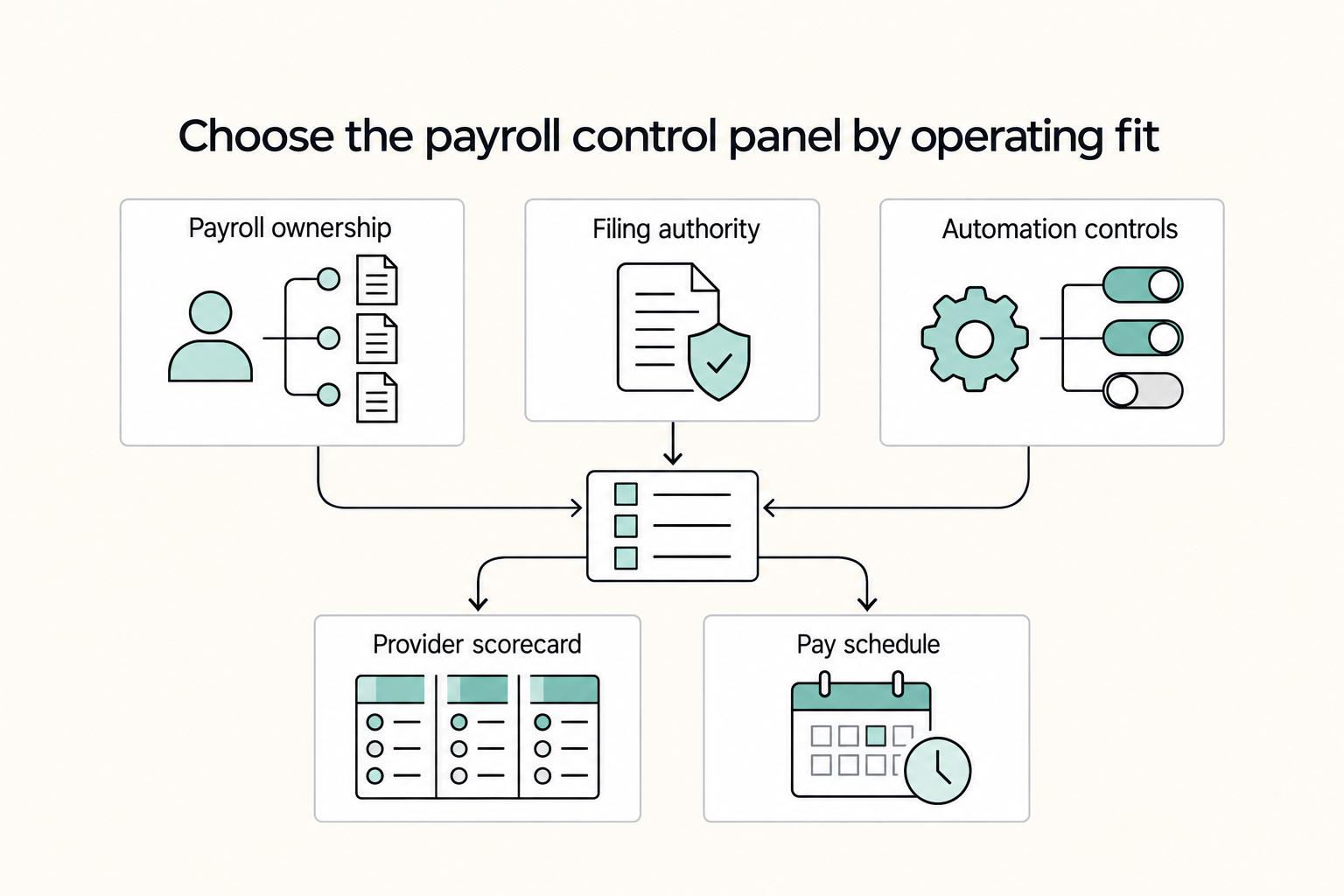
Part 2: Your Automated Compliance System - Choosing Your Payroll "Control Panel"#
A payroll setup is only as good as the ownership behind it. For a one-owner S-corp, the real question is not which interface looks easiest. It is who files, who remits, who signs, and who responds when something goes wrong.
Step 1 Choose the payroll path by ownership, not marketing#
Start with one practical question: if deposits or filings are late, who is still responsible? Under standard outsourcing arrangements, the employer generally remains responsible for federal employment tax deposits and timely returns unless a different third-party structure changes that outcome.
| Path | Who files/remits in practice | Liability pattern to plan for | Workflow complexity | Confirmations to retain |
|---|---|---|---|---|
| DIY manual filing | You calculate payroll, file returns, and make deposits | You carry the full error risk | Highest | Filed returns, payment confirmations, payroll reports, agency notices |
| Payroll software / PSP / Reporting Agent | Provider can process returns, withholding, deposits, and payments; authority depends on setup | Employer responsibility usually remains; authorizations control scope | Medium | Service agreement, Form 8655 (if used), filing acceptances, payment proof, payroll reports |
| CPEO arrangement | CPEO handles covered payroll tax functions under contract | Generally different treatment from standard PSP/RA; shared liability can still apply in some worker categories | Medium to high upfront | CPEO contract, current CPEO status check, filing records, payroll reports, notice trail |
Step 2 Lock down filing authority, signatures, and your evidence pack#
Do not assume "the provider handles payroll" means the authority setup is correct. Confirm who can sign, file, and pay before the first payroll run. For S-corp officer-employees, compensation for services is treated as wages.
| Record | What it covers | Example |
|---|---|---|
| Provider agreement and IRS authorization documents | Authority setup with the provider. | Form 8655. |
| Tax agency registration confirmations and account access details | Registration and account access. | Account access details. |
| Filing confirmations | Proof that filings were submitted. | Form 941 quarterly filings and year-end filings. |
| Deposit proof | Payment proof for deposits. | Confirmation number and payment method. |
| Payroll records and tax notices | Payroll registers, pay statements, year-end wage reports, and all tax notices. | All tax notices. |
A Reporting Agent can be authorized through Form 8655 to sign and file certain returns and make related deposits and payments, including electronic Forms 940 and 941. If agent-signed Forms 940 or 941 are filed on paper, additional power-of-attorney documentation may be required.
For corporations, return-signature authority generally sits with a principal officer unless a valid authorization arrangement applies. Retain:
- provider agreement and IRS authorization documents, for example Form 8655
- tax agency registration confirmations and account access details
- filing confirmations, including Form 941 quarterly filings and year-end filings
- deposit proof with confirmation number and payment method
- payroll registers, pay statements, year-end wage reports, and all tax notices
Keep employment-tax records for at least four years after filing the 4th quarter for that year.
Step 3 Implement automation with controls that catch silent failures#
Automation helps only if you pair it with explicit checks. Silent failures happen when a setup field is wrong, an authorization is missing, or a filing was queued but never accepted. Use these controls:
- Account setup: Confirm legal entity name, EIN, officer and employee setup, addresses, funding account, and owner contact email.
- Tax registrations: Complete required registrations before live payroll, and verify filing requirements before the first payroll run.
- Pay item configuration: Set salary or officer wage treatment, withholdings, and deductions intentionally to avoid downstream return and W-2 errors.
- Filing and remittance elections: Confirm who files Forms 941 and 940, who makes Federal Tax Deposits, and which authorizations are active.
- Deposit timing controls: Federal deposit schedule is tied to the Form 941 four-quarter lookback; at $50,000 or less you are generally a monthly depositor, and above $50,000 generally semiweekly. Monthly deposits are generally due by the 15th of the next month. Electronic deposits must be initiated by 8 p.m. Eastern the day before the due date.
- Alerting and reconciliation: Enable alerts for payroll processed, tax debit initiated, return filed, return accepted, and year-end forms issued. Monitor EFTPS activity directly.
If a tax notice arrives, handle it in order:
- Match the notice period to payroll register, filed return, and payment history.
- Pull transaction proof, including confirmation number and payment method for electronic payments.
- Escalate to provider support with a dated case record and request a correction plan.
- If preparer misconduct is suspected, use the IRS complaint channel, Form 14157.
Step 4 Use a provider selection scorecard before you buy#
A payroll provider is only as good as its weak points under deadline pressure. Use the demo or trial to test operational details, not just the sales pitch.
| Criterion | What to verify in demo or trial | Pass signal | Risk signal |
|---|---|---|---|
| Onboarding quality | Guided setup for officer payroll and tax accounts | Structured checklist with owned steps and confirmations | Self-serve only, no accountable setup flow |
| Support responsiveness | Pre-deadline access to human support and SLA clarity | Clear channels, response expectations, escalation owner | Slow or unclear path near filing deadlines |
| Amendment handling | Process for corrected payroll, amended returns, W-2 fixes | Documented workflow, timelines, and ownership | Ad hoc process or vague "case by case" answers |
| Multistate support | Registration and filing support if state footprint changes | Defined state onboarding steps and limits | "Supported" claims without process detail |
| Reporting and export reliability | Ability to export registers, filings, wage forms, payment history | Self-serve exports available on demand | Key exports require support tickets |
For a product-specific walkthrough after selection, How to Use Gusto for Payroll for a Small US-Based Agency is the practical next read.
Step 5 Choose a pay schedule by operating reality#
Pick a cadence you can actually sustain. Your payroll run cadence does not change federal deposit classifications, which follow lookback-period tax liability. For most solo owners, the practical default is the one that reduces late fixes and keeps wages and distributions distinct.
| Scenario | Better default | Why |
|---|---|---|
| Stable cash flow, moderate admin tolerance, consistent recordkeeping | Monthly | Fewer processing cycles than weekly or biweekly while keeping compensation records current |
| Tight admin capacity but strong planning discipline | Quarterly | Fewer runs, but requires strict tracking so wages, deposits, and distributions stay cleanly separated |
| Uneven cash flow or recurring admin slippage | Monthly | More frequent checkpoints reduce the chance of late corrections and blurred records |
Once the schedule and controls are stable, payroll stops being just a compliance task. It starts supporting the planning decisions in Part 3.
Related: How to Choose a Multi-State Payroll Service for a Business of One.
Before you lock your payroll workflow, map the controls you need for status tracking, retries, and audit-ready records in Gruv Docs.
Part 3: How clean wages create cleaner planning choices#
Once filing and deposit controls are stable, payroll becomes more than a tax task. Clean wages create cleaner planning choices, but only if you keep compensation and profit withdrawals clearly separated.
Step 1 Separate compensation from profit on purpose#
Separate compensation from profit on purpose. If you work in the business, you are treated as an employee and must earn a reasonable salary. Classify each owner payment either as wages through payroll or as a shareholder distribution, and do not rely on distributions alone if you perform work for the business.
Use one consistency check across records: your payroll register, general ledger, and bank activity should align for each payment. Do not treat a fixed 60/40 salary-distribution split as safe guidance. It is commonly cited, but it is not an officially approved method.
Step 2 Choose your retirement setup after verifying current plan rules#
Choose your retirement setup only after verifying current plan rules and limits. The right fit depends on your goals, provider options, and current requirements.
| Decision criterion | Solo 401(k) | SEP-IRA |
|---|---|---|
| Contribution flexibility | Varies by current plan rules and provider setup. Verify current rules. | Varies by current plan rules and provider setup. Verify current rules. |
| Admin burden | Varies by provider and plan administration requirements. Verify current rules. | Varies by provider and plan administration requirements. Verify current rules. |
| Cash flow fit | Depends on how and when contributions are handled under current rules. Verify current rules. | Depends on how and when contributions are handled under current rules. Verify current rules. |
| Owner-only use case | Confirm fit for an owner-only business in your case. | Confirm fit for an owner-only business in your case. |
| Current threshold | Confirm the current contribution threshold with the plan provider. | Confirm the current contribution threshold with the plan provider. |
Step 3 Keep payroll records accurate before retirement decisions#
Retirement decisions are easier to execute when payroll records are already accurate. Use a compliance-first payroll sequence: set reasonable salary, calculate deductions, file taxes, and record transactions consistently.
For plan-specific contribution mechanics and thresholds, verify current requirements with your provider before acting.
Step 4 Confirm lender requirements directly before you apply#
Lender-readiness is not one-size-fits-all. Mortgage documentation and underwriting criteria vary by lender and loan scenario, so confirm current requirements directly before you apply.
If you run payroll for a single-employee S-corp at an artificially low salary only to reduce payroll tax, you can increase compliance risk because working shareholders must be paid a reasonable salary. The FAQs next cover those edge-case decisions.
We covered this in detail in A Guide to Using Wise for Payroll for International Contractors.
Conclusion: Own the wage decision and the final review of proof#
Your job is to own the controls, not to run payroll by hand. In practice, that means three things: reasonable compensation documentation, payroll system controls, and compliance-to-planning outcomes.
1. Reasonable compensation documentation#
Decide and document compensation before non-wage distributions. For an S corporation, shareholder-employees are expected to receive reasonable compensation for services provided before non-wage distributions. Keep a short file with duties performed, time allocation, benchmark notes, and the date you approved pay. If distributions are regular but that file is outdated or weak, treat that as a review trigger.
2. Payroll system controls#
Use software to execute payroll, but verify what was filed and deposited. Core controls usually include Form 941 (or 944, if applicable) filings, annual Form 940, year-end Form W-2, and electronic federal tax deposits. If a provider files for you, confirm the authorization setup, for example Form 8655 for a reporting agent, and remember the employer remains responsible for timely deposits and returns.
3. Compliance-to-planning outcomes#
Use compliance records as planning inputs, not just filing evidence. Wage records can inform retirement planning, and a one-participant 401(k) treats the owner in employee and employer roles. Retain payroll registers, EFT confirmations, filed returns, W-2 and W-3 proof, and your compensation memo. Keep them for at least four years after filing the fourth quarter for the year, and re-check current IRS instructions as rules are updated.
| Pillar | Owner action | System artifact | Escalate to CPA/EA when |
|---|---|---|---|
| Reasonable compensation documentation | Approve pay based on duties and services performed before distributions | Compensation memo, role and time notes, pay-change log | Wage decision is hard to defend, income changed sharply, or distributions keep outpacing wages |
| Payroll system controls | Review payroll calendar, deposit status, and return completion | Form 941 or 944 records, Form 940, Form W-2 and W-3 records, EFT confirmations | Missed deposit, corrected return, unclear deposit schedule, or reporting-agent setup questions |
| Compliance-to-planning outcomes | Use wage and filing records in periodic tax and retirement reviews | Year-end wage summary and retained payroll file | You need to coordinate wages, distributions, and retirement contribution strategy |
What this means in practice: you own the wage decision and the final review of proof, software handles execution, and a CPA or EA helps with gray areas and corrections. Next, set your compensation method, run a payroll cadence you can sustain, keep the records current, and review the setup on a recurring schedule.
For a step-by-step walkthrough, see The Best Payroll Services for Small Agencies with US Contractors.
If you want to connect client payment collection and payout operations into one traceable workflow, talk to Gruv.
Frequently Asked Questions
What counts as salary in an S corporation?
Salary is your W-2 wages as an officer-shareholder for services you perform. If you perform more than minor services and receive or are entitled to payment, treat that compensation as wages and run it through payroll. That keeps withholding, employment-tax reporting, and compliance records aligned.
What is a shareholder distribution, and is that the same as an owner’s draw?
A shareholder distribution is a non-wage payment, and for a shareholder-employee it comes after reasonable compensation. In practice, use precise labels in your books, W-2 wages and shareholder distributions, rather than relying on "owner's draw" shorthand. Precise labeling helps prevent payment misclassification.
Do I pay payroll tax or self-employment tax?
For S-corp owner-employee wages, use the employment-tax, or payroll-tax, framework, including withholding and employer payroll obligations. Self-employment tax is a different regime (15.3%, split 12.4% Social Security and 2.9% Medicare) that applies primarily to people working for themselves. Mixing these regimes leads to wrong assumptions about how wages and distributions should be handled.
How do I set reasonable compensation without guessing?
Start with your actual duties and document how you chose the wage. There is no single IRS formula or approved fixed salary-distribution ratio, so your support file is your control point. Pay that is hard to support can increase reclassification risk.
What forms usually matter for a one-owner payroll setup?
Form 941 is generally filed quarterly, unless the IRS has notified you to file Form 944; only notified employers use 944. Form 941 generally follows the April 30, July 31, Oct. 31, and Jan. 31 due-date pattern, Form 940 covers employer-paid FUTA, and year-end wage reporting uses W-2 and W-3. Verify current-year filing timing, limits, and e-filing requirements before submission.
How often should I run payroll, and when should I change cadence?
Use a cadence you can execute consistently, then follow the IRS deposit schedule assigned to your account. Monthly versus semiweekly depositor status is based on previously reported employment taxes, not how often you run payroll. Change cadence when off-cycle transfers, repeated corrections, or cash-flow behavior keep blurring wages and distributions.
Try a related tool
Researched and edited by the Gruv editorial team. Gruv builds cross-border billing, payouts, and finance-operations software for global businesses.
Sources
Educational content only. Not legal, tax, or financial advice.
Related Posts
Value-Based Pricing for Freelancers Under Real Payment Risk
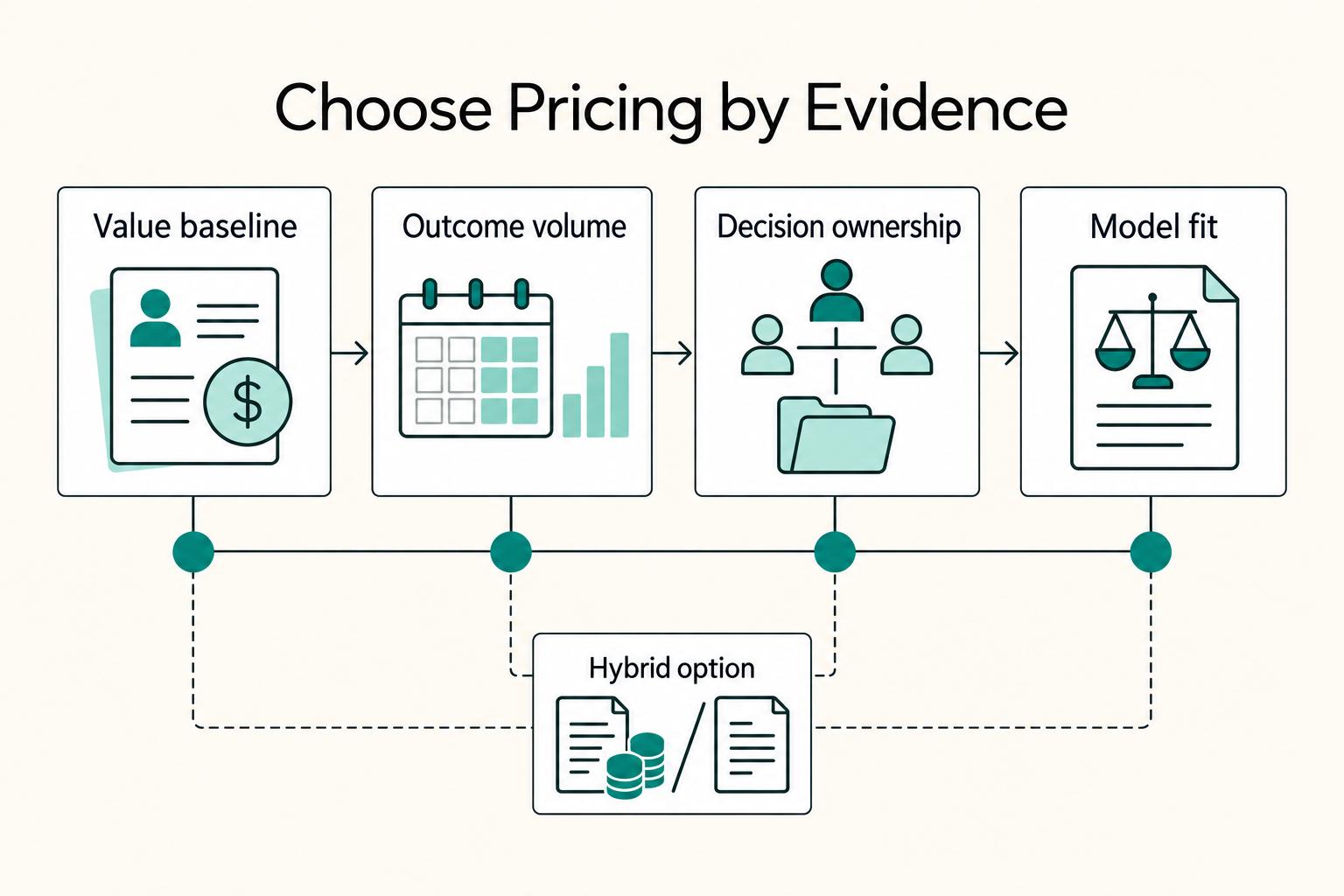
Value-based pricing works when you and the client can name the business result before kickoff and agree on how progress will be judged. If that link is weak, use a tighter model first. This is not about defending one pricing philosophy over another. It is about avoiding surprises by keeping pricing, scope, delivery, and payment aligned from day one.
How to Use Gusto for Payroll for a Small US-Based Agency
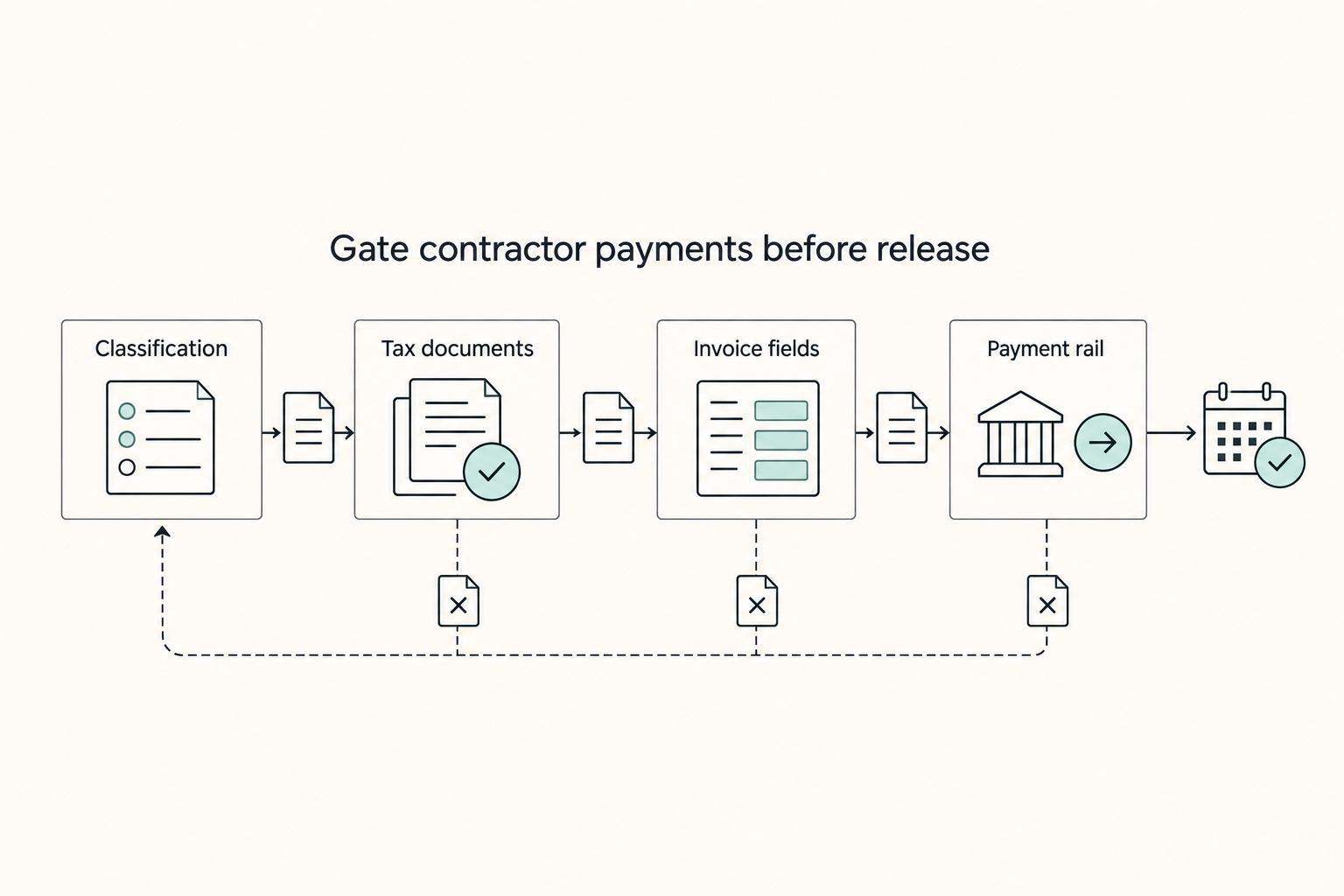
Gusto is a strong primary payroll system when your agency mostly runs U.S. payroll. Once you start paying people outside the U.S., it becomes one part of a broader stack, because sending money and carrying compliance responsibility are different jobs.

The Freelance Payment Penalty: A Modeled Audit of Platform Fees, FX Spreads, and Payout Delays
The money rarely disappears through a single, easy-to-spot fee. The real loss is stacked. A marketplace takes its commission, a processor adds a charge for international cards, a bank or payment company converts the currency at a spread, a platform holds the funds before release, and a wire sheds a little to intermediaries on the way in. Each layer looks defensible on its own, but the worker feels the combined result as a smaller deposit and a later payday.