

Quick Answer
Agree scope and billing triggers, preserve authentic delivery/payment records, and verify protection eligibility before relying on a platform. If a dispute opens, record its actual deadline, check prior refunds, choose accept or contest and submit reason-matched evidence through the case channel. Avoid a second reimbursement and confirm whether final submission can be amended.
Why freelancers lose money to chargebacks even after delivering good work#
Chargeback prep can reduce avoidable losses, but it cannot guarantee a win. The real goal is narrower and more useful: build a repeatable sequence you can follow before, during, and after a dispute so cash flow is less fragile and decisions are less reactive.
Good work does not protect you by itself. A chargeback is a bank or card issuer dispute to reverse a charge, not a judgment on your work quality. Once a case starts, the issuer controls the process and the outcome. On Upwork, that review can include contract and work details from the platform, which is why solid delivery alone is not always enough.
This guide covers freelance card-payment disputes, with separately labeled Upwork, Fiverr, Stripe and US PayPal examples. On a marketplace, the platform usually handles the bank response and asks you for evidence. With direct processing, you normally manage the response through your processor. Identify who owns the case before acting.
That is the thread that runs through everything that follows. Decide how you will get paid before the proposal is approved. Put workable terms in place before work starts. Build evidence while the project is still healthy. Keep delivery and invoicing tied to what the client actually approved. If a notice arrives, respond on the official timeline with a packet a reviewer can validate quickly.
Use this baseline on every project:
- Align scope, timeline, and deliverables in writing before work starts.
- Keep client updates clear while the work is moving.
- Use platform resolution channels early when issues appear.
- Keep documentation ready for financial institution review if a dispute is filed.
It also helps to separate prevention from response. Prevention is mostly scope control, expectation setting, and approval discipline. Response is about documentation quality, completeness, and speed once the case is live. Those jobs support each other, but they are not the same.
In practice, freelancers lose money when they treat documentation as an afterthought. The project feels obvious while it is underway, so records stay scattered across chat threads, inboxes, shared docs, receipts, and memory. Then a dispute arrives, and the work that felt easy to explain in conversation becomes surprisingly hard to prove in a form a bank reviewer can follow. The gap is rarely effort. It is usually traceability.
That is why the strongest protection is boring. A reviewer does not see your intent, your relationship with the client, or the hours you spent trying to make the project go well. They see the file in front of them. If that file clearly shows what was agreed, what changed, what was delivered, what was accepted, and what was paid, you have something usable. If it does not, good work can still lose.
Improve current records while a project is active, but preserve the original agreement, invoices and messages. Document genuine new approvals and agreed changes with their actual dates; do not backdate an acceptance or rewrite existing evidence to look stronger.
Related: Value-Based Pricing: A Freelancer's Guide.
Chargeback and refund are not the same risk#
A merchant-initiated refund and a cardholder’s bank chargeback are different processes. A refund may be agreed or legally required; it is not always optional. A bank dispute follows card-network and provider rules. PayPal buyer claims and platform disputes can also follow their own routes, so read the notice rather than calling every reversal a chargeback.
That difference matters in day-to-day operations. In a chargeback, the bank can issue temporary credit to the cardholder and review the case with your processor. In a refund, you and the client settle directly without entering that bank-led track. The result is a different timeline, a different decision maker, and a different standard for what documentation needs to do.
| Path | Who starts it | Who controls outcome | Typical cashflow effect |
|---|---|---|---|
| Refund | Merchant or platform through the normal payment route | Subject to agreement, applicable law and provider rules | Refund amount and potentially nonreturned processing fees |
| Chargeback | Cardholder through issuing bank | Issuing bank or financial institution, with processor involvement | Possible reversal plus extra fees |
That is why the early decision is not just "Will I give money back?" It is "Which process am I in?" If the client is still dealing with you directly, a controlled refund can sometimes keep the issue inside your agreement and your timeline. If the bank has already opened a dispute, you are no longer working inside a customer support problem. You are inside a formal review process where timing and evidence matter more than intent.
Before kickoff, use these three control points:
- Explain the customer-support and refund route without claiming it removes a cardholder’s bank or statutory rights.
- Set review criteria for refunds so decisions stay consistent across clients and projects.
- Keep dispute-ready records from day one, because once a chargeback is filed, control shifts to the issuer process.
The common failure mode is treating a chargeback like a delayed support ticket. By the time you respond that way, the case is already on a formal track where verbal context and goodwill carry much less weight than the file you can submit.
Before a formal dispute opens, a valid refund can resolve a complaint through the normal payment route. Once a dispute is open, use the provider’s dispute process and check existing debits or refunds before moving more money. Stripe does not permit an ordinary refund of an open disputed payment; accepting the dispute is different from issuing another refund.
The tradeoff is simple. Refunds give you more control while both sides are still talking. Chargebacks move on bank and processor timelines, and they can still end against you even when the work was real. That is why your next decision, the payment route, has to happen before the proposal is approved.
If you want a deeper dive, read The Silent Profit Killer: How to Stop Margin Erosion in Your Freelance Business.
Pick your payment route before proposal approval#
Choose the payment route before proposal approval, not after the client says yes. Pick the route that lets you produce a clean agreement-to-payment trail if the case is ever reviewed.
| Route | Practical strength | What to verify before kickoff |
|---|---|---|
| Platform-based agreements and payment workflows | Contracting, approvals, invoicing, and payments can stay linked in one place, which can reduce back and forth when records are needed | Confirm current platform terms for your exact setup |
| Direct processor workflow | Fits direct client billing and can be flexible | Contract, approval, invoice, and proof can be split across tools, so confirm you can produce one clear trail quickly |
This is not just a billing preference. It determines how much reconstruction work you will face if a dispute appears months later. If your contract lives in one tool, approvals in another, invoices in a third, and delivery proof in a chat thread, you can still run a safe process, but only if your recordkeeping is disciplined from day one. Otherwise, you are creating future cleanup work before the project even starts.
Use this decision rule: if documentation risk is high, for example because scope is still moving or the project is cross-border, pick the option with the strongest documented dispute support at that time. A slightly less convenient payment route is often worth it if it keeps approval, billing, and delivery easier to prove.
Before kickoff, run these checks in order:
- Classify risk before sending the proposal. Note client familiarity, scope stability, and delivery complexity.
- Test whether you can show who approved what, what was paid, and which files support payment without searching across scattered threads.
- Lock the payment method and due date terms in writing, then recheck provider terms.
- Assign one owner for records and one backup owner so a case does not stall when someone is unavailable.
A dry run before the first invoice is worth the few minutes it takes. Ask yourself: if a dispute opened today, could you hand over the agreement, approval history, invoice trail, and delivery proof in one pass? If the answer is no, fix the structure before work starts. Waiting until the first notice arrives is when small gaps turn into expensive ones.
This is also where many freelancers discover that the weak point is not the payment tool itself. It is the handoff between the tool and the rest of the project record. If approval language, invoice wording, and delivery labels do not match across systems, the route becomes harder to defend even if each individual tool is fine. Choose the route you can actually operate cleanly.
Once the route is chosen, the contract becomes your next anchor.
Put dispute-ready terms in your contract before work starts#
Agree deliverables, price, billing triggers, review/revision limits and any lawful cancellation or refund terms before work. Identify authorized parties and record the version accepted. Those terms explain the transaction; they do not remove cardholder or statutory rights.
Use this pre-signature check:
- Document actual parties, scope, price, billing trigger and acceptance/revision process.
- Agree cancellation, deposit and refund terms that fit the deal and applicable law.
- Check provider protection conditions and dispute deadlines for this contract type.
- Save authentic accepted terms and later amendments with actual dates.
A contract supports your account of what was purchased but does not guarantee a bank decision. A nonrefundable-deposit clause is not immunity from an unauthorized, undelivered-service or other valid claim. Check the applicable provider conditions and legal obligations separately.
So use the contract for what it can reliably do in this context: document the actual deal, confirm the payment path, and make scope and approval points easy to trace later. That sounds basic, but it is exactly what many dispute files are missing. A contract is most useful here when it makes the project legible to someone who was not part of the work.
Keep the emphasis practical. If a reviewer or a backup team member opens the agreement, they should be able to connect it to the invoice, the milestone record, and the delivery history without guessing. If outside legal references help, verify them. If they do not, do not let them distract from the actual transaction record.
With that checked, the next job is evidence capture.
If you decide to document scope and acceptance up front, this freelance SOW generator is one option.
Prepare your evidence stack before kickoff#
Build the record before work starts, because reconstructing it later is always slower and weaker. In remote service work, even legitimate purchases can later be disputed as unauthorized, and chargebacks can create downside beyond the disputed payment, including reputational damage and increased processor fees. Relying only on verbal agreements also makes deliverable and payment disputes easier to grow.
Keep it lean, not exhaustive. You do not need to save everything. You need to save the right things in a form that another person can follow under pressure.
Use a lean evidence stack from the start:
- Create a dated project folder anchored by a formal agreement. Store the signed Statement of Work (SOW) or equivalent written agreement, invoice terms, and key approval messages from the beginning.
- Keep one timeline log for client decisions. Track milestone decisions with dates and link each entry to the supporting message or file so proof of delivery is easy to trace.
- Capture written acceptance at major milestones. Save each acceptance as a client acceptance record, including any conditions and follow-up approvals.
- Store records tied to payment and delivery. Keep what you need to show service performance, payment terms, and approval history.
The point is not volume. The point is usability. If a reviewer or backup team member has to piece the story together from memory, the evidence is still too fragile.
A simple folder standard helps more than you might expect. Keep agreement files, delivery artifacts, acceptance records, invoices, and communication excerpts in predictable locations with dated filenames. That way, when a case opens, you are not deciding where to look while the clock is running. You are just pulling a known set of files.
Use a recurring checkpoint while the project is live. After each milestone, confirm that the timeline log includes the approval decision, delivery proof, and acceptance artifact for that milestone. If one item is missing, fix it before moving on. That habit does more to reduce scramble than any elaborate filing scheme.
Another common gap shows up when team members rotate or when you revisit an old project months later. If someone else had to submit your case tomorrow, could they understand what happened without calling you? If not, tighten the record now while the context is still fresh. Good records are not just for winning disputes. They also protect continuity when memory fades.
Keep communication excerpts focused and labeled. Your goal is quick verification, not maximum volume. A short, well-chosen excerpt showing instruction, approval, or acceptance is usually more useful than a long thread with mixed topics. Banks and processors do not need every message. They need the messages that clearly support the transaction story.
This is also the stage where prevention and response meet. A strong evidence stack does not just help later if something goes wrong. It changes how you run the project today. Once you know you will need a dated approval, a clear milestone label, and a recognizable invoice line, you naturally structure the work in a cleaner way.
Once the evidence base exists, delivery discipline has to preserve it.
Control delivery so scope drift does not become a dispute#
Scope drift is one of the fastest ways to turn a healthy project into a payment fight. The simplest protection is to use the same written sequence for every milestone: confirm scope, deliver to that scope, get explicit acceptance, then move forward.
That sequence matters because disputes rarely start with one dramatic failure. More often, the project gets muddy a little at a time. A small extra request gets folded in casually. Revision feedback turns into new work. An unfinished milestone gets treated as partly approved without anyone stating what that means. By the time payment is challenged, nobody is looking at the same version of the deal.
Record scope changes and obtain the approvals required by your agreement. If acceptance is delayed, clarify the disputed item and follow any agreed notice or suspension process before pausing existing obligations. Keep revisions distinct from genuinely new work.
A common failure mode is blending unfinished work, revisions, and new scope into one conversation. Once that happens, it becomes much harder to show what was originally agreed, what changed later, and what you already delivered. Keep a clean chain for each milestone: what changed, who approved it, what was shipped, and what was accepted.
Use this practical rule before you start the next milestone: the previous one needs either a clear acceptance record or a written change request that redefines what completion now means. That prevents silent carryover work from being treated later as unpaid obligation or incomplete delivery.
Partial approvals need the same discipline. If a client approves one part and asks for edits on another, record that split as a split. Ambiguous approvals become ambiguous disputes very quickly. If you know exactly what was accepted and exactly what remains open, your later billing and evidence stay much cleaner.
Separate optional new requests from correction of defects or work that fails the original acceptance criteria. A revision-round cap does not automatically cancel a correction you already owe. Price genuine extra scope only after agreement on its output, timing and fee.
In practice, delivery control is what keeps your invoice believable. When each milestone has a clean paper trail, the invoice confirms the record instead of trying to explain it after the fact. That is the bridge to the next section, because even good records can be weakened by sloppy billing.
Configure invoicing and collection to reduce reversal risk#
Each charge should map to the agreed billing trigger and recognizable scope. A deposit or hourly charge can be due before completed-deliverable acceptance; do not fabricate a sign-off to fit the invoice. Preserve the agreed basis for that charge and the work actually performed.
Mirror invoice lines to approved milestones in plain language. For PayPal, keep project references consistent across invoice text, checkout text, and receipt text. If you bill in installments, keep the main reference stable and add milestone numbering instead of renaming each charge.
That consistency matters because names are often the first thing a client remembers when a charge appears. If the proposal calls it one thing, the invoice another, and the receipt something else again, you create friction for no benefit. A reviewer sees the same problem. Small label mismatches force them to do interpretation work that you could have removed earlier.
Compare pricing for your account country and exact product, including transaction, FX and dispute fees. Under current US PayPal Seller Protection, intangible services need eligible-transaction and delivery evidence conditions. Significantly-not-as-described claims and card-issuer item-not-received claims are excluded. A transaction label is not blanket protection.
Before payment links go live, run a preflight:
- Test exactly what the client sees at checkout and on receipts.
- Confirm the wording matches the agreed scope and billing trigger, including any deposit, hourly work or completed milestone.
- Save checkout and receipt artifacts in your evidence folder.
- Check current pricing and protection terms for your country and exact product; retain the applicable version.
Use itemized descriptions or milestone references where they help explain the agreed charge. One combined invoice is not inherently invalid; ensure its lines and total map to the agreement. Do not split payments merely to evade provider controls or dispute thresholds.
Use a final invoice check before sending:
- Does each line match the agreed scope and billing trigger, including any advance or hourly work?
- Does the reference match earlier client-facing documentation?
- Can you show the agreement and any acceptance or time records actually required for this billed unit?
- Would a third-party reviewer understand the charge without extra explanation?
If any answer is no, revise before sending. Clean invoicing will not prevent every dispute, but it reduces avoidable confusion and makes your evidence much easier to use if a reversal is attempted.
This is also one of the best places to catch weak wording before money moves. If an invoice line looks vague to you, it will look vague to a client later and even vaguer to a reviewer who has never seen the project. Fixing that before collection is far easier than trying to explain it after a notice lands.
When a notice does land, speed matters more than elegance.
Act fast in the first 24 hours after a chargeback notice#
The first day matters because the deadline and the stated dispute reason start shaping your options immediately. Once a notice arrives, move quickly and anchor every step to the response cutoff shown in the official dispute channel.
Use this sequence:
- Step 1: Capture notice details immediately. Log the case details, dispute reason, and stated response cutoff.
- Step 2: Map the reason to a structured evidence checklist. Build an organized packet tied to the reason code, using the documents that matter for that claim, such as agreement terms, delivery records, acceptance records, and relevant communication history.
- Step 3: Contact the dispute channel in writing. Confirm status, ask whether the dispute can be reversed if it was filed in error, and save the full exchange.
- Step 4: Submit before cutoff and verify receipt. Include a short file index, confirm submitted status in the dispute system, and save a timestamped record.
If time is tight, prioritize a complete, reason-matched packet over extra commentary. The goal is to get clear facts into the official process before the window closes, not to write a long explanation.
A reliable order helps under pressure. Capture the deadline first, then map the evidence, then handle outreach, then verify submission. Teams often lose valuable time drafting messages before they have even pulled the core files. Do not let the inbox set the pace. Let the response cutoff do that.
When you do reach out, keep the message factual and short. Do not try to argue the whole case in a long thread. Confirm status, ask for correction if the dispute was filed in error, and preserve the written record while you keep building the formal submission.
Use a packet structure that matches the stated reason. If the issue is service related, bring forward the files that directly support your response. Leave unrelated attachments out unless they materially support the claim. Reviewers need clean mapping, not volume.
| Dispute reason | Relevant truthful evidence |
|---|---|
| Service not received | Agreed service, dated delivery/access records, recipient identity and communication about fulfillment |
| Service not as described | Accepted scope, actual deliverables, change approvals and relevant complaint/resolution history |
| Unauthorized payment | Available legitimate transaction/authentication/account evidence; delivery alone does not prove cardholder authorization |
| Already refunded or duplicate charge | Original transaction identifiers, actual refund or distinct-charge records and amounts |
After submission, verify the case status in the dispute system and store proof of submission in the case folder. A sent email confirmation alone may not be enough if the dashboard still shows an incomplete or unclear state.
Prepare the strongest truthful packet you can before the actual deadline. On Stripe, final submission is a single opportunity: you cannot edit it or add files afterward. Use the remaining time to resolve important gaps, then submit before cutoff without assuming supplementation is possible. A saved draft is not a submitted response.
Once the immediate deadline is under control, the next job is packaging the case so a bank reviewer can follow it quickly.
Build a dispute packet an issuing bank can validate quickly#
Reviewers do not know your project, so your packet has to make the case legible fast. Once a chargeback starts, control moves away from you. A clear packet gives the issuer and processor a straightforward path to validate what happened.
Build it in this order:
- Step 1: Assemble core evidence first. Start with a matching invoice or transaction receipt, proof of delivery, and relevant customer communication records.
- Step 2: Add focused context. Include a short milestone timeline and communication excerpts that show instructions, approvals, delivery, and acceptance.
- Step 3: Present the argument in order. Show what was agreed, what was delivered, what was accepted, and what was paid, with each point mapped to a file.
- Step 4: Follow submission rules. Submit through the case channel before the actual deadline. For Stripe, include the evidence itself rather than external links or audio/video; combine related documents in permitted formats, check size/page limits, and review the complete packet before its single final submission.
Chargebacks can include fees and potential penalties, so an early, organized submission helps reduce avoidable loss and makes future responses easier.
Structure is part of evidence quality. Strong files in a confusing order can still underperform. Use clear filenames, a short index, and one consistent chronology from agreement through payment. The packet should read like a simple record, not a scavenger hunt.
Use reviewer readability as a check. Can someone unfamiliar with the project understand the claim in a few minutes? If they have to interpret long narrative blocks to find the basics, tighten the sequence and labeling. The file should do most of the talking.
Keep communication excerpts selective. Include lines that prove instruction, approval, delivery acknowledgment, or acceptance. Remove unrelated discussion that adds noise without helping validation. More pages do not automatically mean a stronger case.
Check references, dates and amounts for contradictions. Explain genuine differences, such as an agreed amendment, refund or partial payment; do not edit original records to hide them. Submit clear copies while preserving authentic originals.
A disciplined packet also becomes a repeatable template. Every clean submission reduces scramble the next time and gives you a clearer standard for what your records should look like during live projects. That repeatability matters because not every case should be fought the same way. The next step is deciding which disputes are worth contesting and which are better resolved another way.
Decide whether to accept or contest an open dispute#
For an open dispute, decide whether to accept it or contest through the permitted channel. Consider whether the claim is valid, the disputed amount, protection eligibility, evidence, cost and deadline. Do not send a separate reimbursement without checking the case’s money movement: duplicate recovery can create a second loss.
Work through the choice in order:
- Classify the dispute first. Service-related chargebacks claim the service was not received or not as described. Fraud chargebacks claim the cardholder did not authorize the transaction. On Fiverr, service-related chargebacks are the freelancer's responsibility, while fraud protection may be provided at Fiverr's sole discretion.
- Check what you can prove quickly. Prioritize transaction information, proof of delivery, and proof of refund if one exists.
- Choose the path you can support. If you contest, submit the most complete evidence file you can within the response window. If key proof is missing or unclear, treat the outcome as uncertain and decide accordingly.
- Account for cash timing before final sign-off. In Fiverr's flow, disputed amounts can be held, orders can be canceled, and funds can be taken from upcoming or cleared balance. Even favorable outcomes can include delay: returned funds are withdrawable only after 45 days, and credited protection funds can still be removed after further investigation.
Use an evidence-first rule for judgment calls. If you can show a clean chain of transaction details and delivery proof, you have a stronger basis to contest. If the file is thin, make the call with uncertainty in mind instead of assuming work quality will carry the case.
Suppose a 2000-dollar payment has already received a confirmed 300-dollar partial refund, then a dispute arrives for the full 2000. Include the original transaction and the 300 refund evidence in the case; do not assume the bank already netted them or send another 2000. Record the actual disputed debit, any fee and the final adjustments separately. The provider’s process determines the recovery; the remaining commercial amount of 1700 does not automatically determine the bank’s debit.
A short decision log helps. Record the claim type, evidence status, chosen path, submission timing, and outcome. That keeps standards stable across cases and makes team handoffs much easier. It also shows where the real weakness is. Sometimes the lesson is not about fighting harder, but about improving invoicing, acceptance, or delivery control upstream.
When fraud is claimed, remember the uncertainty in protection outcomes. Where protection is discretionary, plan around evidence quality and cash timing rather than assumptions about automatic coverage. That is a practical posture, not a pessimistic one. It keeps your response grounded in what you can actually prove.
There is also a simple business judgment here. A weak file and a short deadline is a different situation from a clean file with documented approval and acceptance. Treat them differently. Consistency does not mean making the same choice every time. It means using the same standard every time.
The goal is not to fight every case or refund every case. The goal is to choose the path with the best supported downside control based on what you can prove today.
Common mistakes that trigger losses and how to recover#
Common execution gaps include missing terms, unrecognizable charges, missing delivery records and missed submission conditions. These can weaken a response, though a valid complaint or an unauthorized payment can still succeed against a well-kept file.
| Mistake | Risk | Recovery |
|---|---|---|
| Missing evidence of agreed terms | The client disputes consent to price, deposit or refund conditions | Preserve authentic evidence and assess the actual agreement; obtain advice on disputed entitlement and improve future written terms |
| Vague service descriptions in payment records | Generic descriptions make the record weaker | Preserve the original invoice and explain its mapping; issue dated corrections through the normal accounting process where needed |
| Missing client acceptance records | You are relying on memory of what was approved | Add a dated sign-off checkpoint for each milestone and store that approval with the invoice and delivery records |
| Weak evidence when a dispute is filed | Your position weakens quickly once the case is formal | Submit authentic available agreement, delivery, billing and refund evidence matched to the actual dispute reason; identify missing proof honestly |
| Treating informal language as official dispute labels | "Deposit return chargeback" is not an official bank reason code term | Align your response to provider dispute categories and the evidence you can actually submit |
Here are the patterns that show up most often, along with the most practical recovery step for each one.
- Missing evidence of agreed terms. It can be harder to prove consent, but a missing signature does not automatically establish that no agreement exists.
Recovery: Preserve evidence of the actual agreed terms and obtain advice if refund or deposit entitlement is disputed. Improve written acceptance for future work; a new signature does not retroactively prove consent to old terms.
- Vague service descriptions in payment records. Generic descriptions make it harder to connect the charge to signed scope and delivered work.
Recovery: Preserve the original invoice. Explain its mapping to the agreement and actual work; use a clearly dated correction or credit through your normal accounting process if needed. Do not silently rewrite a disputed invoice.
- Missing client acceptance records. When a client says the service did not match the description, you cannot rely on memory of what was approved.
Recovery: Add a dated sign-off checkpoint for each milestone and store that approval with the invoice and delivery records.
- Weak evidence when a dispute is filed. If your records do not clearly show agreed terms and delivery, your position weakens quickly once the case is formal.
Recovery: Submit the authentic agreement and any accepted deposit terms with relevant delivery, billing and refund records. Identify gaps honestly and respond to the actual reason rather than implying a signed clause defeats every chargeback.
- Treating informal language as official dispute labels. "Deposit return chargeback" may describe the scenario, but it is not an official bank reason code term.
Recovery: Align your response to provider dispute categories and the evidence you can actually submit.
Across these examples, the pattern is the same: expectation gaps grow when the transaction record is weaker than the project record. Your job is to keep those two aligned from agreement through payment.
Make this practical by adding one habit after every closed dispute. Run a short post-case review and update the checklist immediately. Do not wait for quarterly planning. The closer the review is to the actual case, the easier it is to fix the gap while everyone still remembers what broke.
Look for repeat signals, not one-off noise. If several cases involve vague invoice lines, fix invoice templates first. If several cases involve missing acceptance artifacts, fix milestone sign-off behavior first. Start with the issue that appears most often and affects the most money.
Keep recovery actions concrete. Assign an owner, set a due date, and verify that the change is now part of onboarding or project delivery. A good fix shows up in files and client habits, not just in internal notes.
If you do nothing else, stop accepting weak records as a temporary inconvenience. Weak records are often the dispute itself, just earlier in the timeline.
Use this checklist on every new client#
Use the same onboarding sequence every time so your dispute response is ready before anything goes wrong. Consistency matters here more than cleverness. A simple checklist you actually use on every project beats a detailed process that only appears after the first problem.
- Confirm payment route before kickoff. Choose your payment platform or processor, then save the current dispute terms in the client folder.
- Sign a complete written agreement (
MSAorSOW) before billing. Document scope, deliverables, pricing, and any revision or refund terms, with authorized signatures and dates. - Capture proof of delivery and dated acceptance at each milestone. Store each delivery artifact and client acceptance record as work is completed.
- Align invoices with agreed scope and billing triggers. Describe deposits, time-based work or completion milestones accurately, using recognizable references and the evidence required for that charge.
- Maintain a ready dispute packet. Keep agreement files, invoices, delivery proof, acceptance records, and refund records in one organized structure.
- If a chargeback arrives, record and meet the actual deadline. Check refunds, decide accept versus contest, and verify final-submission rules before filing a truthful reason-matched packet. Save submission proof.
Treat this as a live working checklist, not a one-time setup. Review it at kickoff, at each milestone invoice, and after any dispute outcome so the lesson from one project improves the next one.
Chargebacks can debit or freeze funds and incur fees. Refunds can resolve a complaint or meet a legal obligation, but neither route is a universal margin safeguard. Clear agreed billing, authentic evidence and correct provider handling reduce avoidable errors; issuer decisions and coverage remain outside your control.
If you want to evaluate whether a managed payment setup fits this risk-control approach, review Merchant of Record for freelancers.
Frequently Asked Questions
What is freelance chargeback protection in practical terms?
In practical terms, it means setting terms and keeping records that let you answer a bank-led reversal with proof instead of memory. For freelancers, that usually comes down to clear payment terms, detailed quotes and invoices, milestone sign-offs, and organized files that connect agreement, delivery, and payment. The real test is speed and clarity under deadline, not whether you can eventually find the documents.
Are chargebacks and refunds interchangeable for freelancers?
No. A refund is normally initiated through the merchant or platform and can be agreed or legally required. A card chargeback follows the bank/network process. Once a dispute is open, check the provider’s permitted accept-or-contest procedure and existing debits before issuing another payment; avoid reimbursing the same amount twice.
Can freelancers actually win a payment dispute?
Yes, but not by default. Completed work alone is not enough if the evidence does not clearly connect agreement, delivery, acceptance, and payment. Your odds improve when the packet is matched to the dispute reason and submitted before cutoff. The practical question is less "Did I do the work?" and more "Can a reviewer validate that quickly from the file?"
What evidence should I keep for every client project?
Keep clear payment terms, detailed quotes and invoices, delivery records, customer sign-offs, and the key communication that shows instructions, approvals, changes, and acceptance. Store it in a dated trail so you can pull it quickly. For each milestone, you should be able to show what was agreed, what changed, what was delivered, and what the client approved. If you cannot show that sequence without searching in multiple places, tighten the record before the next invoice goes out.
What should I do in the first 24 hours after a chargeback notice?
Open the official case and record its response deadline, timezone, amount, reason and owner. Gather reason-matched evidence, check existing refunds and provider-protection conditions, and decide whether to accept or contest. Check final-submission rules before filing: Stripe allows one final evidence response, with no later additions. Submit before cutoff and retain proof; customer outreach does not extend the deadline.
Is platform protection on Upwork enough by itself?
Protection depends on the precise contract type and eligibility. Upwork says it handles the bank dispute and asks for your evidence; freelancers qualifying for Payment Protection have protected funds subject to its terms. An ordinary hourly contract’s manual time does not qualify for hourly protection. Verify the conditions for your engagement and reply through the platform’s requested channel.
Should I process payments through Stripe or PayPal for lower dispute risk?
There is no universal winner for every freelancer or every project. The lower-risk choice is usually the one that makes your business name and transaction details clear to the client and lets you produce a clean, fast document trail for that specific scope. Compare current terms, dispute handling, and how easy it is to match approval, invoice, receipt, and delivery proof in one place. The easier the full chain is to show, the easier the charge is to defend.
Try a related tool
Researched and edited by the Gruv editorial team. Gruv builds cross-border billing, payouts, and finance-operations software for global businesses.
Sources
Includes 3 external sources outside the trusted-domain allowlist.
- docs.stripe.com/disputes/respondingtrusted
- docs.stripe.com/disputes/how-disputes-worktrusted
- paypal.com/us/legalhub/paypal/seller-protectiontrusted
- help.fiverr.com/hc/en-us/articles/360010978618-Chargebacks-a...external
- support.upwork.com/hc/en-us/articles/14084991625107-What-happen...external
- support.upwork.com/hc/en-us/articles/211068288-How-Hourly-Payme...external
Educational content only. Not legal, tax, or financial advice.
Related Posts

Stop Freelance Profit Margin Erosion Before It Hits Cashflow
Revenue can hold steady while the business underneath it gets weaker. What comes in matters, but what you keep after the work is delivered is the clearer signal of health.
Value-Based Pricing for Freelancers Under Real Payment Risk
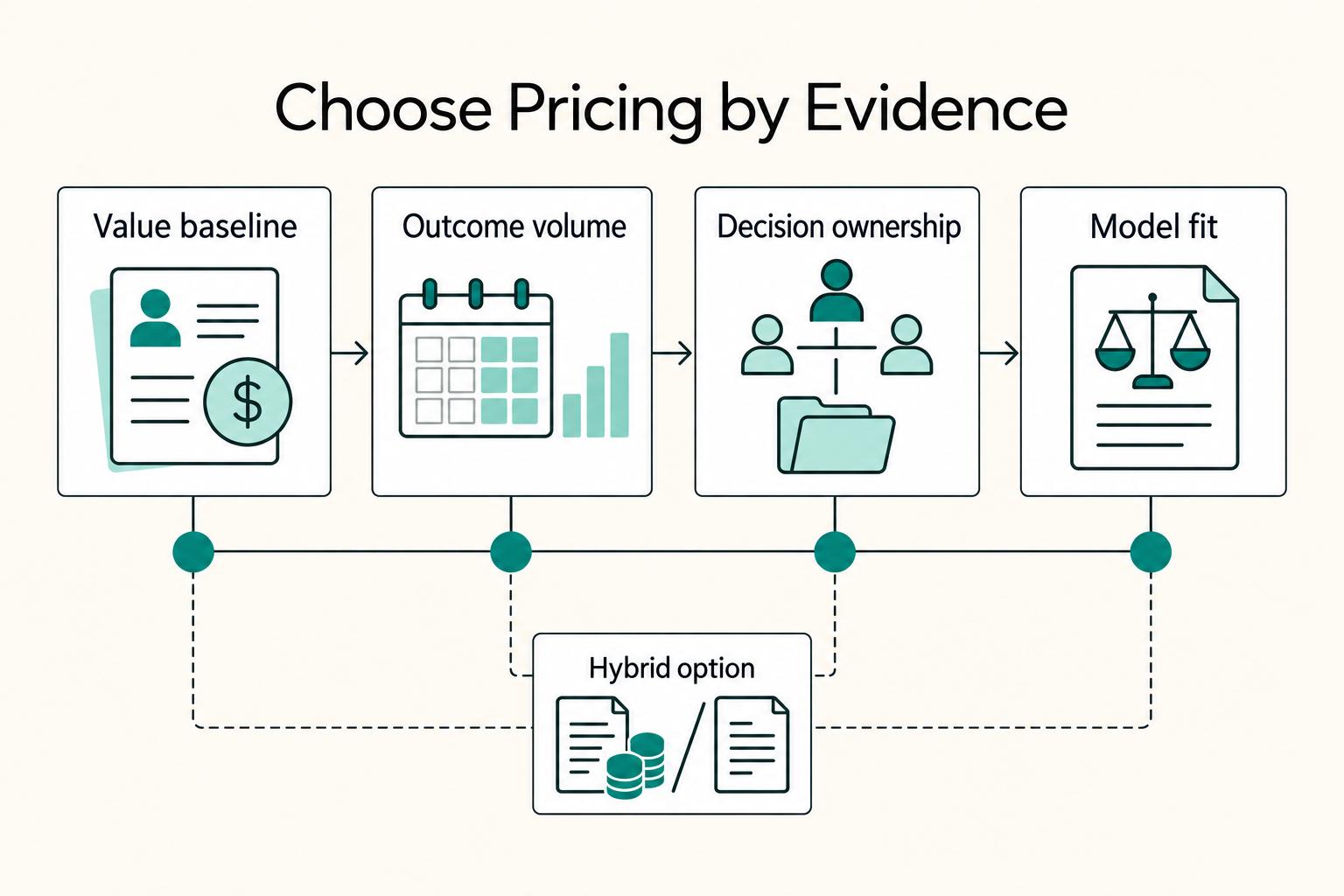
Value-based pricing starts with the client’s expected benefit and willingness to pay. It still needs a deliverable, scope and payment agreement you can perform. Use a discovery phase when the benefit or effort is too uncertain to support a defensible quote.

Opening a Bank Account in Spain as a Foreigner
You can open a Spanish account as a foreign resident or non-resident, but the available product depends on where you live, your documents and the account holder. Start by separating a personal account, an autónomo account in your own name and an incorporated company account. The account must support the client payments you intend to receive.