
Quick Answer
Set your minimum from real costs first, then layer in compliance and protection overhead before you chase occupancy. For how to price your airbnb, use verified payouts, invoices, and contracts to build a floor that still works after cleaning, platform fees, reserves, and admin load. Next, run seasonal rate bands and enforce guardrails like stay minimums and booking-window controls. Finally, automate routine adjustments, but review outputs weekly so no tool pushes rates below your all-in floor.
To price your Airbnb well from abroad, start with a real floor based on actual costs, add compliance and asset-protection costs, then automate the routine parts without giving up judgment. Your property is not just a listing. It is part of a global portfolio, and pricing it from abroad is not mainly a hospitality problem. It is a compliance and control problem.
Most Airbnb pricing guides are written for casual hosts. They skip the part that keeps experienced owners up at night: the unknowns around tax, local rules, and operating a rental across borders.
The biggest financial threat is rarely one empty weekend. It is the formal notice, missed filing, account issue, or local rule change that lands when your pricing has no room for error. Cross-border rental income can also affect broader tax and residency questions, so pricing cannot be treated as a separate marketing task. It needs to carry the real cost of operating safely. That is why this playbook is built around three mindset shifts:
- Price Like a CFO: Move past the mortgage-only view. Build a financial model that captures the real cost base, from cross-border accounting fees to asset depreciation, and judge performance with metrics like Net Operating Income (NOI) and Cash-on-Cash ROI.
- De-Risk Like a Lawyer: Put the cost of compliance and protection into the rate itself. Your price should help absorb legal and operating friction, and it should help filter for the kind of guest and booking pattern you actually want.
- Automate Like a COO: Use automation to reduce decision load, not to remove oversight. The goal is a semi-passive operating setup that handles routine pricing work while leaving the important calls in your hands.
Get those three right and you stop acting like a remote landlord reacting to platform prompts. You start acting like an asset manager with a model you can defend.
Build a Pricing Model That Protects Margin First#
Start with the floor, not the market. Margin is the buffer that helps a property stay resilient when demand or costs move. Your job here is to build a pricing model that protects margin first and then drives occupancy, not the other way around.
Before you start: pull recent payout reports, cleaning invoices, utility bills, insurance documents, and any accountant or property manager contracts. Only enter local assumptions after you verify them against real statements, not memory or broad market averages.
- Build your floor rate from the bottom up.
Start with a simple pro forma, even if it is just a spreadsheet. Include acquisition, financing, operating, capital expense, and disposition assumptions, then map those into your working cost stack: fixed costs, variable turnover costs, platform service fees, reserves, and admin overhead. For a short-term rental, that often means rent or financing, insurance, utilities, internet, cleaning, laundry, supplies, Airbnb service fees, a maintenance or capital expense reserve, and professional help such as bookkeeping or tax prep.
A good check is whether the floor still makes sense on a small booking. A common failure mode is ignoring turnover-heavy costs, then assuming short stays are profitable when cleaning and fee drag wipe out margin.
- Model seasonality instead of one flat average.
A useful pro forma can run for up to 10 years, but the immediate win is simpler: stop using one annual ADR and one annual occupancy guess. Build seasonally adjusted assumptions by month or quarter. If your market has a Q3 peak, that should show up in both expected nights booked and expected average price instead of being smoothed into a misleading annual average.
Use this checkpoint: if a few high-season months carry the year, your low-season floor cannot be based on peak demand. Benchmarks are only context, because earnings vary by location, property type, and booking frequency.
- Track decision KPIs, not vanity metrics.
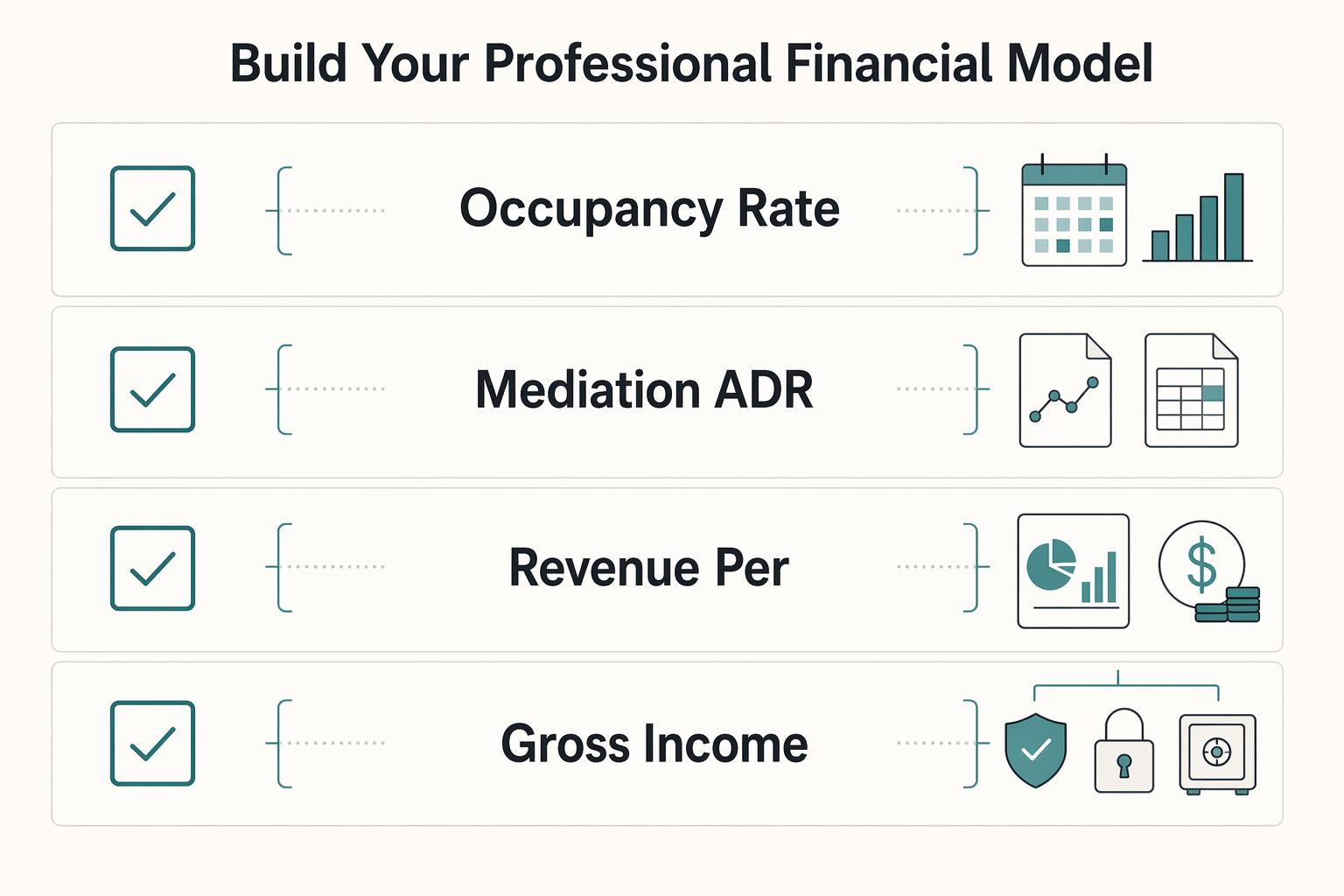
| KPI | Type | When this KPI is useful | When it misleads |
|---|---|---|---|
| Occupancy rate | Vanity on its own | Spotting demand softness or calendar gaps | When higher occupancy comes from underpricing |
| Average daily rate (ADR) | Decision metric | Checking pricing power on booked nights | When you ignore empty nights and turnover costs |
| Revenue per available night | Decision metric | Seeing how well your whole calendar monetizes | When you treat revenue as profit |
| Gross income | Vanity on its own | Quick top-line trend check | When fees, cleaning, and admin overhead are rising |
Use a simple flow in your model. Verified assumptions -> expected nights booked and average price by season -> gross booking revenue -> less platform or service fees and turnover costs -> contribution margin -> less fixed costs, reserves, and admin overhead -> floor rate -> target rate band.
- Set fee policy and a review cadence.
Consider using the nightly rate to carry costs guests see as part of the stay when it fits your market. Use separate fees when they are real, easy to explain, and applied consistently. The goal is transparent pricing, not a headline rate that looks cheap in search and expensive on the final screen.
Then make the model part of operations. Review it regularly, update assumptions through the year, and reset rate bands ahead of seasonal shifts. Once the floor is real, you can move to the next job: deciding how much risk the property should absorb and what kind of bookings the price should attract.
If you want a deeper dive, read How to Calculate Your Billable Rate as a Freelancer. If you want a quick next step, try the free invoice generator.
De-Risk Like a Lawyer: Pricing for Compliance and Asset Protection#
Use pricing as a risk-control system: identify compliance exposure, convert it into operating cost, then apply rate rules that protect the asset when risk rises.
Start with a current risk file: permit or registration status (if required), tax filing confirmations, platform account standing, insurance declarations page, and the legal triggers you have personally verified. For anything unconfirmed, record the source to check, the owner, and the next review date before using it in pricing.
- Identify exposure before you change any price rule.
Put risks into three buckets: residency or operating-presence risk, licensing and tax-filing risk, and platform-policy risk. Treat each as ongoing, because local short-term-rental rules can change within months, and a compliance change can stop operations abruptly. Use one rule: every risk on your sheet must tie to a document or status you can verify today.
- Convert risk into explicit cost buckets, then add them to your floor.
Keep compliance overhead separate so it does not disappear into general admin. Price these buckets directly: professional advisory, filing/admin workload, insurance or risk tooling, and contingency reserve. Then stress-test with conservative occupancy, not peak assumptions. If demand swings hard by season, run your downside case at 50-60% annual occupancy and confirm your floor still holds.
- Use risk tiers to control booking mix, not just raise base price.
| Risk context | Tighten when | Relax when | Pricing levers | Coverage/deposit setting |
|---|---|---|---|---|
| Low risk | Conditions stable, low incident history, no known rule changes | Longer-stay demand is healthy and documented | Keep standard minimum stay, broader booking window, weekly discounts where margin supports it | Standard setting; amount range not yet confirmed |
| Medium risk | Turnover-heavy periods, rising complaints, more short weekend demand | Incident rate stays low through a full review cycle | Trim discounts, raise minimum stay, narrow near-date booking window | Adjusted setting; amount range not yet confirmed |
| High risk | Major demand spikes, recent damage, unresolved account or compliance concerns | Only after the period passes and status is clean | Remove broad discounts, require longer minimum stay, restrict last-minute bookings | Higher setting; amount range not yet confirmed |
Prioritize control over volume when risk is rising. High occupancy can still underperform if it brings costly incidents or extra admin load.
- Run a control loop before high-risk periods.
After each incident, log date, booking type, active rule set, direct cost, and whether stricter rules would have screened it out. Review monthly, retier risk quarterly, and reset guardrails before peak-demand windows. If compliance items are unresolved, keep stricter settings in place until verified.
Related: How to Invest in Real Estate as a Digital Nomad.
Automate Like a COO: Build Your Semi-Passive Operations System#
Treat automation as a system you maintain, not a set-and-forget shortcut. It should reduce your decision load and execution errors while keeping you in control of exceptions. Dynamic pricing helps, but it is only part of optimization, so keep pricing, listing quality, promotions, and channel behavior in one operating loop.
How do you choose your pricing layer?#
Choose the lightest stack that still gives you control, then verify capabilities before you rely on them.
| Capability to verify | Built-in pricing tool | Third-party engine |
|---|---|---|
| Rule depth | Verify date logic, minimum stay controls, and gap-night handling | Verify how granular rules are by date, day pattern, and stay length |
| Override control | Verify whether manual edits stick or get overwritten | Verify rule priority when manual exceptions conflict |
| Multi-channel sync | Verify channel limits and update timing | Verify PMS/channel manager compatibility and sync behavior |
| Reporting | Verify pacing and historical views you can act on weekly | Verify reports support decisions, not just dashboards |
| Risk controls | Verify booking window and stay restrictions | Verify rules can enforce your existing guardrails |
How should you turn rules into decision playbooks?#
Run each rule with a clear objective, trigger, guardrail, and review checkpoint.
| Rule type | Objective | Trigger | Guardrail | Review after activation |
|---|---|---|---|---|
| Orphan nights | Fill awkward inventory without lowering overall quality | A single-night gap appears between confirmed bookings | Keep your all-in floor intact | Check if it filled profitably after fees and did not increase operational friction |
| Far-future pricing | Protect upside on long-lead demand | Dates beyond your confirmed long-lead horizon | Cap premium at your confirmed policy limit | Review monthly booking pace and conversion quality |
| Last-minute adjustments | Recover occupancy close to check-in | Inside your confirmed last-minute booking window | Never price below your all-in floor | Check whether filled nights reduced nearby date performance |
How do you connect tools without losing control?#
Build one maintained chain: pricing engine -> PMS/channel manager -> calendar sync -> alerts. Keep one source of truth for availability, publish rate updates from one layer, and test every configuration change on a future date before relying on it live. Your goal is to prevent stale-rate errors, conflicting updates, and double-booking risk.
Use a lightweight governance loop to keep the system reliable:
- Weekly: review exceptions and failed syncs.
- Seasonal: recalibrate rules before peak and shoulder periods.
- Event overrides: log date, reason, old rule, temporary rule, and the review trigger for reverting the rule.
This keeps automation useful without turning your pricing into unattended autopilot.
You might also find this useful: The Pros and Cons of Short-Term vs. Long-Term Rentals.
Conclusion: Take Control of Your Asset#
If you want to price your Airbnb well, stop treating pricing as a one-time market guess. Treat it as an operating habit. The core job is simple: protect cash flow, absorb avoidable risk, and make better decisions as your booking data gets cleaner.
In practice, that means wearing three hats without overcomplicating the work. You price like a CFO by setting rates from real costs and judging performance with NOI, not just occupancy. You de-risk like a lawyer by building management friction into the floor instead of pretending those costs do not exist. And you operate like a COO by letting pricing tools handle routine calendar movement while your own rules stay in charge. What you do next should be practical:
-
Set your floor. Break overhead and operating costs into the nightly rate, then confirm the payout still works after core variable costs and fees. If you rent a private room or shared setup, be more careful here, because cost allocation is an easy place to fool yourself.
-
Apply risk guardrails. Keep minimums and stay-length discounts aligned with the kind of booking you actually want. If a lower rate increases turnover, complaints, or admin work, it may hurt NOI even when occupancy looks better.
-
Automate and review. Use your pricing tool to handle calendar movement, but review the output against your floor and your performance record. The checkpoint that matters is documented cash flow. Keep a rolling 24 to 36 months of history, with NOI and operating metrics such as RevPAR, so you can see whether changes improved the business or just filled nights.
Immediate checkpoint: before your next price update, verify your minimum nightly rate against the all-in floor, confirm the operational risk threshold your team uses, and review the booking window you rely on for performance checks to make sure recent bookings cleared your target after real costs.
For a step-by-step walkthrough, see How to Automate Your Airbnb with Smart Home Tech.
Frequently Asked Questions
How can your Airbnb income affect your tax residency?
It depends on local law. Rental activity can change your tax posture depending on where the property and owner are based, so get country-specific advice before relying on any general guide. Track your physical presence and who handles guest communication, cleanings, and local decisions. The Airbnb and EY tax booklet is explicitly informational only, so use it as a starting reference, not a decision document.
Do you need to report Airbnb income that lands in a foreign bank account?
Possibly. If payouts land in a foreign financial account, reporting obligations may apply based on your facts and jurisdiction. Keep monthly statements, payout reports, and account ownership records organized, and confirm current requirements with a qualified adviser before filing.
What is the right way to calculate your real ROI?
Use a net-income approach, not gross booking revenue alone. Start with gross bookings, then subtract operating costs that actually hit the asset, including cleaning and platform fees, plus any management, insurance, and professional compliance costs tied to your setup. As a checkpoint, reconcile your numbers to payout statements and invoices, and if you file in the U.S., use Schedule E (Form 1040) categories as a reality check for your expense mapping.
How should you price weekly or monthly stays?
Apply stay-length pricing only if the discount still clears your floor and fits the guest type you want. Compare similar nearby listings, then test weekly and monthly discounts against your cost-based minimum so a longer booking still works after cleaning and platform fees. A common failure mode is chasing occupancy with a blanket discount that looks good on the calendar but weakens profitability.
How should you handle your cleaning fee?
Keep it tied to your real turnover cost. Document your actual cleaning, laundry, and restocking expense, then test whether your total pricing still works on one-night and multi-night stays before changing anything. Avoid setting a cleaning fee that hides an unsustainably low nightly rate.
Should you use Airbnb Smart Pricing or a third-party pricing tool?
Set a firm minimum rate first, then monitor outcomes closely. Compare Smart Pricing behavior with your own comp set and with Airbnb Price Tips, which hosts report can diverge. If you test a third-party tool, evaluate it against the same baseline. Do not assume any tool will match your goals by default, especially if rates keep moving toward your minimum.
What is the minimum viable nightly rate during low-demand periods?
It is the lowest rate that still covers your fixed operating costs. Build that number from your real cost base, not guesswork, then verify it on an off-peak sample reservation after cleaning and platform fees are removed from the payout. Static pricing can leave revenue on the table, but lowering rates below your floor usually buys the wrong kind of occupancy, so adjust for seasonality instead of panic cuts.
Try a related tool
Researched and edited by the Gruv editorial team. Gruv builds cross-border billing, payouts, and finance-operations software for global businesses.
Sources
Includes 5 external sources outside the trusted-domain allowlist.
- cic.edu/wp-content/uploads/2024/01/0107_Financial-Ch...trusted
- digitalcommons.unl.edu/cgi/viewcontent.cgitrusted
- scholarship.law.ua.edu/context/fac_articles/article/1474/viewconten...trusted
- aakashg.com/objectives-vs-goals-vs-strategiesexternal
- assets.airbnb.com/eyguidance/us.pdfexternal
- avantstay.com/blog/airbnb-portfolio-valuation-property-ownersexternal
- community.withairbnb.com/t5/Help-with-your-business/Price-tips/m-p/21...external
- community.withairbnb.com/t5/Help-with-your-business/How-do-you-break-...external
Educational content only. Not legal, tax, or financial advice.
Related Posts
How to Calculate a Freelance Rate You Can Actually Get Paid On
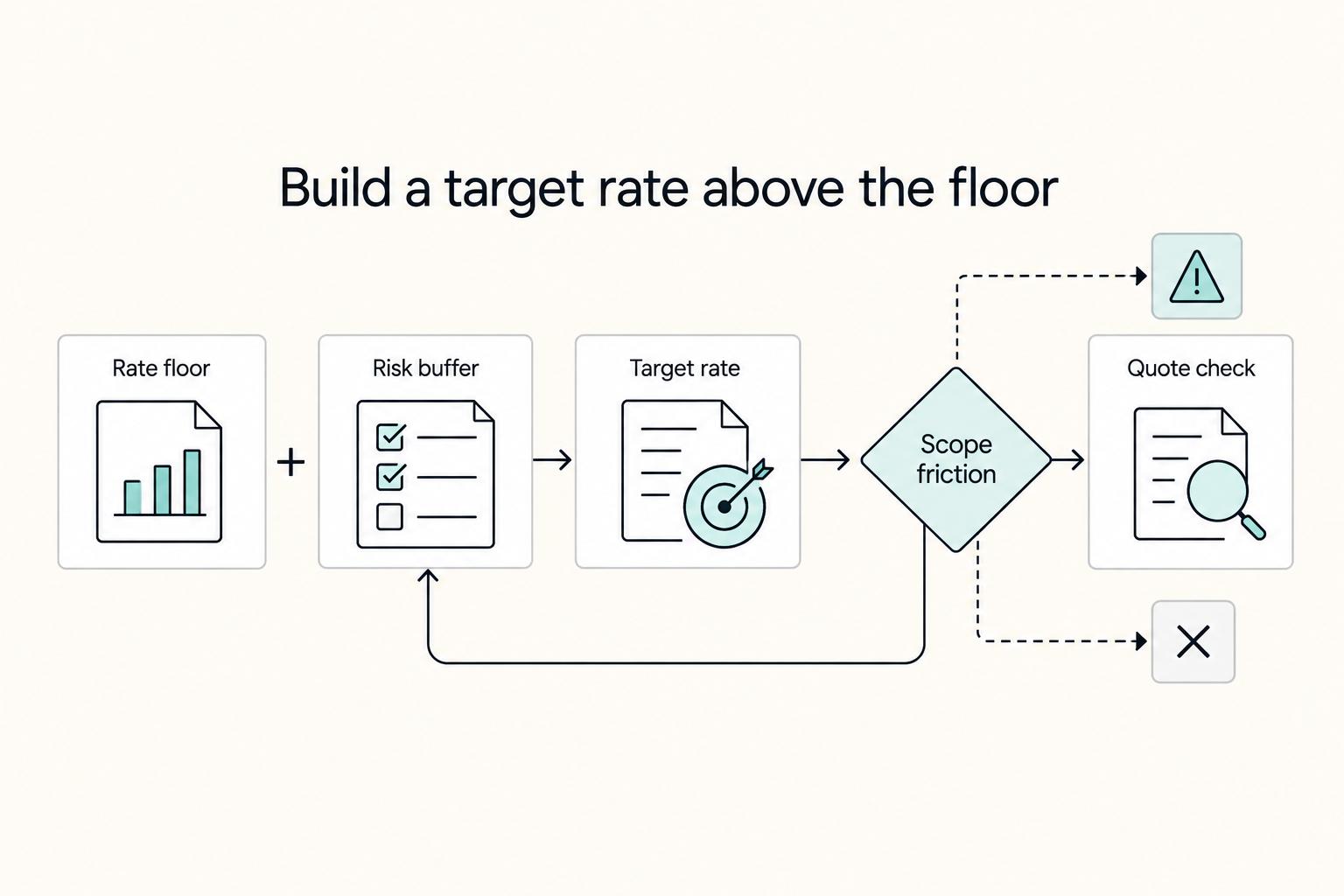
A workable rate is not the neat number a calculator produces. It is the number that still works after you account for real billable capacity, non-client time, scope drift, and the gap between sending an invoice and receiving cleared cash. Start with hourly math even if you do not plan to bill hourly, then turn that number into a quote with clear `payment terms`.
How to Invest in Real Estate as a Digital Nomad
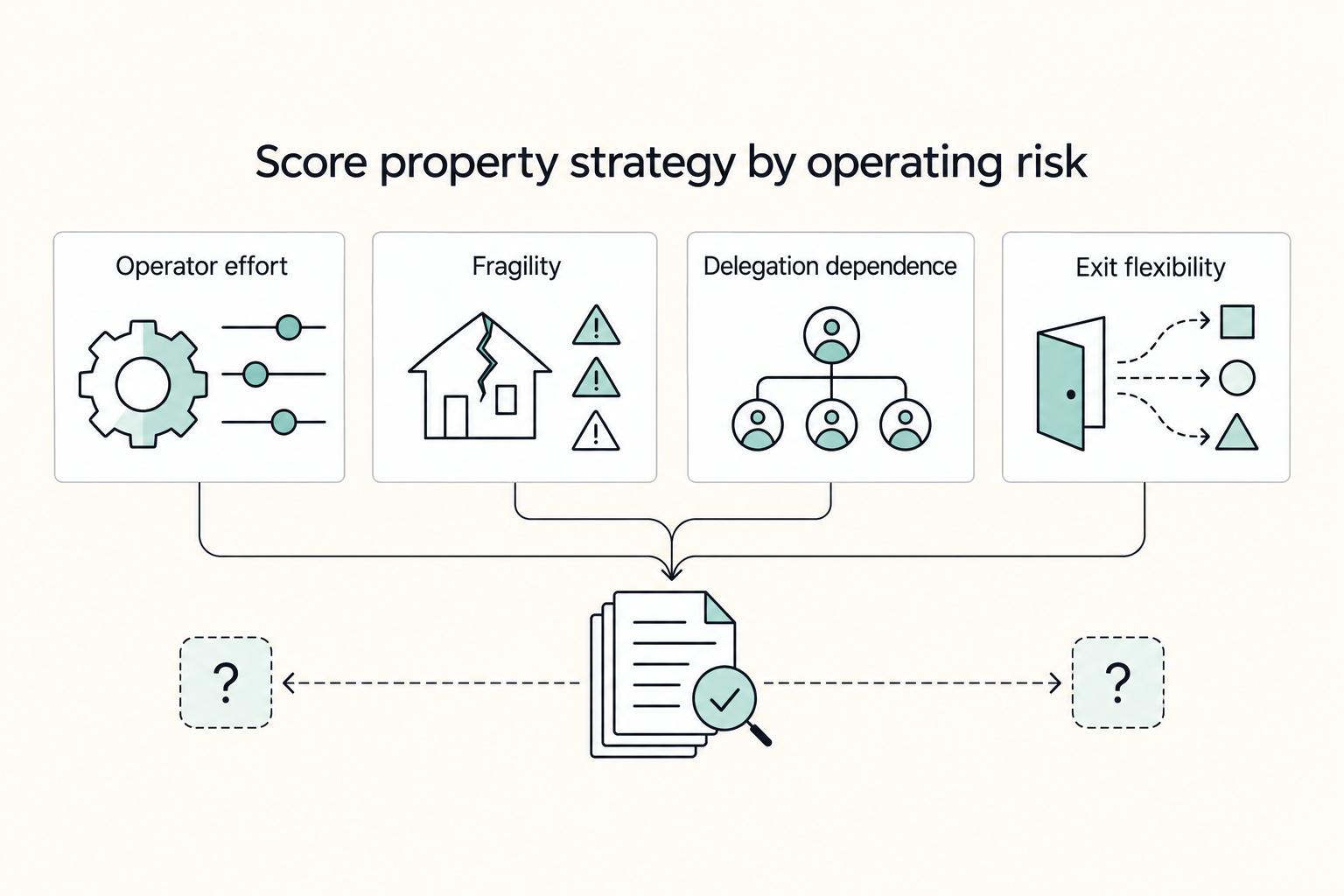
**Run anything with money and moving parts like an operations system (cash, docs, delegation, and controls), not a "passive income" vibe.** Real life stress-tests weak spots. You change time zones, a client pays late, and something breaks at the worst moment. As the CEO of a business-of-one, your job is to build a setup that keeps working when you are not available on demand.
The Pros and Cons of Short-Term vs. Long-Term Rentals
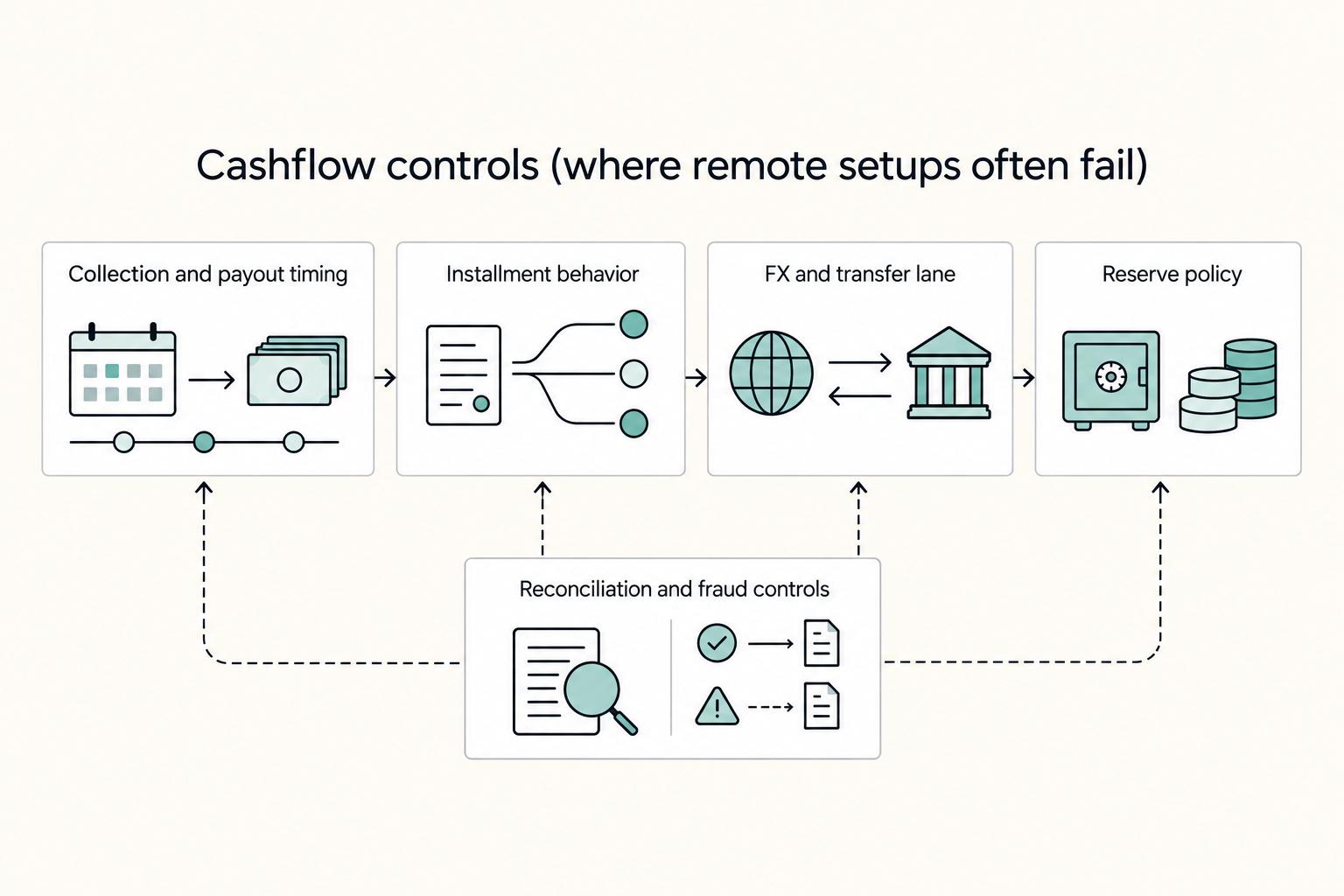
You are probably not chasing the biggest headline revenue number. You want rent that arrives, stays collected, and does not turn into a second job or a cross-border tax headache. For an owner living internationally, the real choice between a short stay and a long-term lease is about risk first. Which model gives you lower compliance exposure, less remote operating drag, and more cash left after fees, taxes, and reporting?