

Quick Answer
Calculate your cost floor, including discovery, testing, support and tool costs, then choose a model that fits the scope: hourly discovery, a fixed implementation or a bounded recurring retainer. Compare expected client value with the full implementation and running cost. Agree deposit or milestone triggers, review deadlines and usage overages before kickoff.
How to price AI-assisted freelance services without getting paid late#
Protect cashflow first, then optimize upside. Late-payment risk rises when scope is unclear, approval ownership is loose, and payment terms are left until late in the process.
Pricing has three connected decisions: choose hourly, project or retainer terms for the uncertainty involved; calculate a viable fee from delivery, review and running costs; then define deposit, milestone or recurring invoice triggers before kickoff. The client should be able to compare scope and payment timing without guessing what AI changed.
AI can shorten drafting or implementation time while leaving discovery, testing, error correction and client support in your scope. Price those responsibilities explicitly. A fixed fee can reward efficient delivery, while an hourly engagement must bill the actual agreed time rather than an estimate of how long unaided work would have taken.
If you are a solo freelancer or small team selling GPT tools, AI agent systems, or AI workflow automation, follow this order:
- Define outcome and boundaries before naming a price. Write one sentence for the business outcome, one list of deliverables, and one list of exclusions. Confirm who approves each milestone and when. If the decision owner or success metric is unclear, start with a paid discovery block instead of a fixed quote. Add one line stating what you need from the client before delivery can begin, so kickoff does not stall after approval.
- Match pricing model to uncertainty. Use hourly pricing when requirements are still moving, package pricing for repeatable implementations, and a monthly retainer for ongoing optimization. When your costs vary with usage, price that usage directly instead of hiding it in a flat fee. Keep the charge metric visible in the proposal so no one has to guess how billing works.
- Set payment controls before kickoff. Define the agreed deposit, milestone or retainer invoice triggers, due dates, and pause and restart terms. Keep signed scope, acceptance criteria, approved changes and delivery records from day one so both sides can resolve conflicting recollections.
- Use market signals as directional context, not pricing law. Public listings and forum examples can help with positioning, but they often omit full scope. If those examples fall below your viable floor, narrow scope before cutting margin. A cheaper offer with vague boundaries can cost more in rework and delayed payment.
This sequence helps keep offers credible for buyers while reducing avoidable payment disputes. If you skip the sequence and jump straight to a number, you may end up renegotiating terms you could have settled in one call. Want a quick next step for pricing your AI freelance services? Try the free invoice generator.
What to prepare before you quote any client#
Gather your quote inputs before the pricing call. Price pressure can show up before discovery is complete, and weak prep leads to rushed numbers.
Use a one-page pre-quote brief, and keep any fixed project pricing provisional until that brief is complete. The brief should be short enough to scan quickly, but specific enough that another person could quote the same project consistently.
- Capture the minimum evidence pack. Record service type, the client's current process, expected business outcome, and decision owner. If ownership is unclear, do not finalize a fixed quote. Include one sentence on what success looks like at handoff, because that line becomes your acceptance anchor later.
- Set pricing inputs in order. Estimate delivery effort, support burden, handoff and training time, and downside risk. If support is open-ended, keep your pricing provisional until boundaries are written. If support expectations are uncertain, write two support assumptions and ask the client to choose one before pricing is final.
- Decide commercial terms before the call. Preselect your billing approach and how you'll handle approval or payment delays, so terms are not improvised live. This keeps the conversation focused on business fit instead of last-minute friction.
- Run a fixed-quote checkpoint. If scope is not specific enough or success criteria are too vague to confirm completion, pause fixed pricing and sell a paid discovery step first. You protect trust by naming what is missing now instead of burying uncertainty inside a large fixed fee.
Use market cues to sanity-check your positioning, but let your brief drive the number you send. The brief is not admin overhead. It is your first quality-control pass before a price leaves your inbox.
Define scope and risk boundaries before discussing price#
Set boundaries before you discuss price. Without this step, fixed projects drift into unpaid work and arguments about what was promised.
For each integration, name the inputs, outputs, supported workflow, excluded work and client responsibilities. State which human checks are included, who supplies approved data, and whether third-party tools or subscriptions are paid by you or the client.
- Separate build, launch, and support. Keep each phase distinct so project-based pricing has a clear endpoint. If ongoing help is expected, define it separately (for example, a monthly retainer). Put phase boundaries in the proposal body, not only in a call recap.
- Write in-scope and out-of-scope items for each AI integration. Name what you include for each tool in the proposal. Anything outside that list should move through a change request, so new asks do not quietly become unpaid rework.
- Add failure-mode clauses early. Model output errors can still occur even with grounding, and third-party API limits or client-side delays can become project risks. Describe how each risk is handled, including when work pauses and what reapproval is needed to continue.
- Use one rule for moving requirements. Start with paid discovery under hourly pricing, then re-quote when scope and success criteria are stable. If discovery changes the project shape, issue a revised scope summary before any fixed-fee work begins.
Ad hoc pricing can create inconsistent rates and unclear expectations. Make this boundary pass mandatory before final pricing. A clear boundary is not rigid; it lets you handle changes without billing conflict.
Choose the right pricing model for the job#
Choose the model by delivery risk and cost exposure, not personal preference. Good model fit protects margin before and after launch.
| Model | Use when |
|---|---|
| Hourly pricing | Active discovery and moving requirements |
| Package pricing | Repeatable outcomes with stable acceptance criteria |
| Monthly retainer | Ongoing optimization and support |
Treat this as a business decision with explicit tradeoffs. The right model keeps scope, billing unit, and support obligations aligned as the project changes.
- Measure predictability and integration load first. If requirements or integrations are changing frequently, uncertainty is high. In many custom AI projects, integration effort can drive cost more than model fees. Start by listing what is stable now and what is likely to change after kickoff.
- Match model to delivery shape. Use hourly pricing for active discovery and moving requirements. Use package pricing for repeatable outcomes with stable acceptance criteria. Use a monthly retainer for ongoing optimization and support. If the work includes ongoing monitoring of AI agent systems, retainer or hybrid pricing can fit better than a one-off fixed fee because effort and costs often continue after launch.
- Separate usage-driven risk before offering a flat fee. For automations where volume drives effort and model spend, include a usage-based component instead of assuming one flat number will hold. A flat monthly fee improves predictability for the client, but it can hide your margin risk when usage spikes. If you keep a flat fee, define included usage and what triggers repricing.
- Use a switch rule when conditions change. When support needs expand or usage assumptions break, reopen pricing in writing. If scope is still unclear, keep paid discovery active and re-quote after findings are approved. A written switch rule makes model changes feel procedural rather than arbitrary.
Model choice is easier when you explain the tradeoff directly. If a client asks for a fixed fee while inputs are still moving, show the two paths: fixed later after discovery, or hourly now with capped milestones.
Set a value-based price range clients can understand#
Calculate a viable cost floor first, then assess client value and scope options. Include your paid work time, allocated business costs, testing and support, plus any tool or usage costs you absorb. A value-based target can exceed that floor when the business case supports it; expected savings are not guaranteed savings.
| Level | Definition |
|---|---|
| Floor | Covers delivery effort, support load, and downside risk |
| Target | Reflects expected business impact when adoption goes to plan |
| Ceiling | Covers higher-complexity cases with deeper integration and heavier support |
Hypothetical fixed-fee quote: 60 hours across discovery, build, testing and handoff at an internal cost allowance of $75 per hour produces $4,500. Add $450 of allocated overhead and project tool costs: total cost is $4,950. For a 25% project margin on revenue, the price is $4,950 ÷ (1 − 0.25) = $6,600 before tax. Adding 25% to cost would yield $6,187.50 and only a 20% margin. This is a costing example, not a market rate or a promised profit.
- Define outcome metrics before drafting price. Start with a small set of business effects the client cares about, such as faster response times, fewer manual steps, or higher conversion from automated follow-up. Confirm who tracks each metric and where that data will come from.
- Build floor, target, and ceiling. Floor covers delivery effort, support load, and downside risk. Target reflects expected business impact when adoption goes to plan. Ceiling covers higher-complexity cases with deeper integration and heavier support. Keep each level tied to a clear scope assumption.
- Turn the range into three options. Clear tiering (for example, starter, growth, and premium) helps buyers compare outcomes and scope instead of pushing on one line item. Use plain labels and avoid vague wording that hides what changes between tiers.
- Write negotiation and renewal guardrails. If price drops, scope or expected outcomes should drop on the same line item. For recurring work, define review timing and adjustment terms before launch. This keeps renewal conversations focused on changed inputs, not surprise repricing.
Suppose the client currently spends 40 hours a month on a process at an internal $50 hourly cost. An estimated 20-hour reduction is $1,000 a month before new running costs. Over six months that is $6,000, which by itself does not support a $6,600 implementation plus recurring charges. Reduce scope, test a stronger business case, or decline; do not assume a large “AI value premium” makes the arithmetic work.
Turn your quote into tiered offers with clear upgrade paths#
Offer scope alternatives that a buyer can compare: a bounded baseline implementation and a broader rollout, with ongoing support quoted separately or clearly included. A monthly retainer is a recurring commitment, so show its total cost over a stated period rather than treating it as directly comparable with a one-time build fee.
Step 1. Map each tier to one clear outcome#
Assign each tier to a distinct outcome level and scope boundary. Use one primary charge metric per tier so buyers can compare without guesswork. Consider a hybrid model only when variable usage materially changes delivery cost.
Write each tier with the same structure: outcome, deliverables, exclusions, support window, and revision policy. Consistent formatting helps clients compare substance instead of reading style.
Step 2. Show scope differences side by side#
Define exactly what changes as clients move up:
| Tier | Integrations | Training depth | Support window | Revision limits |
|---|---|---|---|---|
| Baseline package | Core integrations listed in proposal | One handoff session for the primary owner | Short post-launch window | Fixed revision count |
| Implementation tier | Broader integration set and rollout support | Team training plus adoption check-in | Longer support window with stated response times | Higher cap with clear boundaries |
| Performance retainer | Ongoing optimization across active integrations | Recurring enablement sessions | Monthly support coverage | Revisions handled inside retainer scope |
If a tier says custom or as needed, tighten it until the boundary is explicit. Those phrases create ambiguity during approval and after signing.
Step 3. Add one operational gate before kickoff#
Before kickoff, confirm terms acceptance, payment setup (ideally at signing), and kickoff inputs are complete. Keep proposal approval, contract acceptance, and payment setup in one sequence so billing can start without back-and-forth.
This gate protects both sides. The client knows exactly what must happen before work begins, and you avoid starting delivery while commercial details are still unresolved.
Step 4. Write upgrade and out-of-tier rules in plain language#
State what triggers an upgrade, such as added integrations, deeper training, or expanded optimization scope. When work falls outside the selected tier, pause and document a scope change with updated scope, fee, and timeline instead of absorbing hidden hourly work. Apply the same trigger rule every time so clients see a process, not arbitrary repricing.
Write payment terms that protect cashflow and reduce disputes#
Choose invoice triggers that fit the agreement: a signing deposit, an accepted milestone, scheduled retainer billing or a completed project. Acceptance-linked billing works only when the review period, responsible approver and treatment of disputed items are explicit. Do not accidentally make every invoice contingent on an open-ended client approval.
Step 1. Define the agreed trigger for each invoice#
For a project, state deposit and milestone amounts, invoice triggers, review deadlines and due dates. Define the objective acceptance tests and the correction process. For a retainer, state whether payment buys reserved capacity in advance or completed services in arrears, and cap included work.
Expected outcome: each invoice points to its agreed trigger. A deposit follows signing, an advance retainer reserves the agreed capacity, and an acceptance-linked milestone includes the delivery and approval evidence. Client finance can verify the relevant condition without inventing a completion requirement for every invoice.
Step 2. Add late-payment, pause, and restart protections#
Agree due windows such as net-7, net-14 or net-30, any deposit, permissible late charges and service-pause conditions. Define notice, cure and restart steps, including necessary handoff or access continuity. These are negotiated terms subject to applicable law, rather than automatic rights created by writing a clause.
Verification checkpoint: before sending the contract, confirm each milestone includes deliverable, acceptance owner, invoice trigger, due term, and pause condition. If any field is missing, fix the contract before kickoff.
Step 3. Define a dispute process with records and response timing#
Treat payment disputes as a documentation problem, not a last-minute argument. Your agreement should state where notices are sent, what records are required, and how response timing works under your terms. Keep an evidence pack for every billed milestone:
- Signed contract and scope version used for billing
- Written acceptance or approval message for the deliverable
- Invoice, payment receipt, and change-order approval
- Communication log with timeline, revisions, and handoff
Failure mode: teams move quickly, skip acceptance records, and then struggle to show completion when payment is challenged. A simple habit helps: store each acceptance message in the same folder as the matching invoice.
Step 4. Review terms after each project and tighten weak clauses#
If invoices are delayed or disputed, update the contract language that created ambiguity before the next kickoff. Many payment disputes start with unclear expectations, not bad intent, so tighten due terms, late charges, pause conditions, and dispute-process details.
Expected outcome: fewer repeat payment issues and clearer approvals on future projects. Payment rules can vary by state, industry, and payment method, so tailor your terms to your context.
Price variable usage and change requests without margin leaks#
Margin leaks start when usage or scope grows faster than your pricing terms. Separate fixed build fees from variable run costs, and require written repricing before expanded delivery continues.
Usage-heavy work can look profitable in month one and unprofitable in month three if billing units are unclear. The fix is to define units, ownership, and review timing before launch.
Step 1. Separate fixed build fees from variable run costs#
Quote implementation and launch as a fixed block under project-based pricing or package pricing. Price variable operations separately when demand depends on usage-based billing units.
Use a two-line quote checkpoint to keep billing clear:
- Fixed deliverables
- Usage-driven costs with unit definition, billing period, and data owner
This split protects both parties. The client sees what is fixed, and you can explain variable charges without reopening the entire proposal.
Step 2. Trigger repricing when scope changes#
Distinguish agreed usage overages from a scope change. If the contract already defines a usage band and overage rate, invoice under that rate without inventing a new fee after consumption. A new channel, integration or support obligation can require a prospective approved change order.
Use one change-order record for fast approvals:
- Requested change
- Impact on usage units
- Impact on support effort
- Revised fee model
- Effective date
Keep this record short and repeatable so approvals stay focused on impact, not narrative length.
Step 3. Use the same variance sequence every time#
When actual usage diverges from assumptions, run the same sequence before expanded work continues:
- Detect variance.
- Quantify impact.
- Approve revised scope and pricing in writing.
- Continue expanded delivery after approval.
Consistency helps prevent avoidable disputes. If a client asks for immediate expansion, send the variance note first and continue after approval.
Step 4. Reconcile regularly for usage-heavy hybrid accounts#
Hypothetical monthly arrangement: $400 includes support and 2,000 defined completed runs, then $0.10 per additional completed run. At 3,000 runs, the invoice is $500. If your variable cost is $0.03 per run, running cost is $90 and $410 remains before support time, overhead and other costs; that is not net profit. Define how failures, retries, duplicate requests and provider charges affect the billed run count, and reconcile the meter with the agreed unit.
Before the next invoice, run a margin check that includes applicable commission structures and other variable costs. Document each approved adjustment in the client file, and keep a short summary line each month so trends are visible before they become urgent.
Reality-check your quote against market signals without copying them#
Use market signals to stress-test your quote, not to dictate it. Treat public forum threads, case-study posts, and peer examples as directional input.
External examples can help when your own data is thin. They become risky when you use them as direct pricing rules for different scope and support levels.
Step 1. Gather directional signals, not price targets#
Collect examples, then keep only the ones with clear scope and deliverables. If scope is unclear, mark the example as non-comparable and exclude it from pricing decisions. A non-comparable example can still inform language, positioning, or packaging, but it should not set your final fee.
Step 2. Label benchmark confidence before it reaches your proposal#
Public discussions can reveal useful patterns and a lot of noise. Add a confidence label in your notes:
| Confidence | Definition |
|---|---|
| High confidence | Clear scope match across multiple sources |
| Medium confidence | Partial match with important gaps |
| Low confidence | Anecdotal claim or opinion without clear scope |
This gives you a quick filter when a client references public examples during negotiation.
Step 3. Check external signals against your own economics#
Test outside references against your minimum viable price, delivery effort, and support load. When they conflict, narrow scope before lowering price.
If the client insists on a lower number, show what changes: fewer integrations, shorter support, or reduced revision scope. Keep one line per tradeoff so the decision is explicit.
Step 4. State confidence limits in the proposal#
Explain the quote through the actual scope, cost assumptions and support commitment. Keep uncertain public benchmarks in your internal notes unless they help the buyer compare like-for-like offers. A proposal does not need to repeat market-research caveats in every tier.
Common pricing mistakes and how to recover fast#
Many pricing problems are recoverable if you correct them early and in writing. The pattern is simple: name the mistake, reset terms, and document the updated scope before delivery continues.
1) Quoting before scope is clear#
Mistake: sending fixed pricing before scope is stable. Recovery: clarify deliverables, exclusions, acceptance ownership, and handoff timing before you finalize pricing. If you bill hourly, set a clear cap so total cost is not open-ended, and make any additional costs explicit in the main offer.
2) Hiding support costs inside delivery#
Mistake: packaging implementation and ongoing support as one unclear offer. Recovery: separate what is included in delivery from post-launch support, then state support window, revision limits, and where extra costs apply. If support demand rises, update scope and pricing before work expands.
3) Ignoring payment-risk terms until there is a dispute#
Mistake: treating payment-risk language as an afterthought. Recovery: set payment timing, milestones, acceptance criteria, and dispute process before work starts, then keep milestone records so decisions rely on documentation. A complete record can resolve conflicts faster than long message threads.
4) Using generic packages that do not match service fit#
Mistake: selling broad packages that do not match the client's outcomes or expected support load. Recovery: rebuild offers around clear outcomes, delivery boundaries, and post-launch support depth. If price pressure appears, narrow scope first and then reprice so delivery stays specific and testable.
Use this copy-paste checklist before sending any AI service proposal#
With model choice and terms settled, run this checklist before you send. It helps catch scope gaps and pricing mistakes that can lead to late payment or renegotiation.
Before you start: Keep one brief open with buyer persona, current process, expected outcome, and decision owner. If any field is blank, fill it before drafting. Keep the brief and proposal side by side so assumptions match.
- Confirm scope boundary and service type.
Name the offer first, then list exact deliverables and one out-of-scope line per deliverable. Add the acceptance owner for each deliverable so approvals are clear. Checkpoint: someone outside the project can state what is delivered, excluded, and how acceptance works.
- Select a charge metric and pricing model.
State why this model fits: consumption, workflow, outcome, or hybrid pricing. Make the billing unit explicit: per token, per call, per minute, per run, or per document. If model and metric are different, write both clearly so billing logic is obvious. Checkpoint: proposal language names both model and charge metric in plain words.
- Set floor, target, and ceiling with margin targets.
Set a viable floor from costs and the chosen margin calculation, then quote target and higher-scope options separately. State what scope changes if budget is below the viable price. Each tier needs a price, included work, support limits and a clear comparison period; recurring and one-time fees should be labelled.
- Lock payment controls in writing.
State the agreed deposit, milestone or retainer invoice triggers and due dates. For acceptance-linked milestones, name the acceptance test, approver, review period and correction path. Confirm those terms match the contract and keep the resulting approval record.
- Define variable-cost rules for usage-heavy work.
For pay-per-minute pricing and pay-per-call pricing, specify included usage, overage units, and reconciliation timing. Reflect variable compute costs in those terms before work starts. Add who owns usage reporting so invoice reviews do not stall. Checkpoint: proposal states who reviews usage totals and when adjustments apply.
- Add change-order triggers and support limits.
List events that reopen pricing and set clear limits for revisions and support response windows. Include what happens when a trigger occurs: pause, re-scope, then approve revised pricing in writing. Checkpoint: change-order terms are in the proposal, not only in email.
- Run one external sanity check and note confidence limits.
Use one public example as directional context, not as a verified market-rate benchmark, then note where confidence is weak, such as unclear scope or anecdotal pricing. If external examples conflict with your economics, keep your floor and narrow scope. Keep this note short so it is easy to reuse in negotiation. Checkpoint: include one short note explaining why your quote may differ from public examples.
- Send only when all checkpoints pass.
A consistent final pass can reduce avoidable renegotiation and protect cash flow. If one checkpoint fails, fix it before sending instead of promising to resolve it after kickoff. If you need help validating country-specific or program-specific constraints, Talk to Gruv.
Frequently Asked Questions
Should I use hourly, project, or retainer pricing for AI freelance work?
Start with hourly pricing when requirements or success metrics are still moving. Shift to project-based (fixed-cost) pricing after deliverables, exclusions, and acceptance ownership are documented. Use a monthly retainer when work becomes ongoing optimization or recurring support. If a project starts fixed and then expands, move changes to hourly or retainer terms instead of forcing them into the original fee.
What package ranges are common for AI freelance services?
Public examples are useful context, but they are too inconsistent to use as hard benchmarks. Final pricing should follow project complexity, skill level, location, and delivery risk. Keep inclusions explicit so clients can compare offers fairly. If two offers look similar but include different support obligations, the lower price is often not the better value.
When does usage-based pricing make sense?
Use pay-per-minute or hybrid pricing when variable usage is the main cost driver. Flat monthly fees improve predictability when usage and overage terms are explicit. Set included usage, overage pricing, and reconciliation timing before kickoff. Add a monthly review note so both sides can verify usage before the next invoice.
What factors increase or decrease my quote most?
Quote changes usually come from project complexity, integration complexity, personalization depth, expected call volume, and support expectations. Payment risk is often priced through milestones and approval gates. Setup fees, overages, and premium support can also change total cost if they are not named early. The fastest way to avoid surprise pricing is to list these factors in the proposal and confirm them in writing.
How do I avoid underpricing AI automation projects?
Define boundaries first, then price in phases so uncertainty is paid instead of absorbed. One approach is hourly discovery, followed by a fixed-cost proposal tied to milestone acceptance once scope is stable. Add change-order triggers before kickoff for new integrations or support volume. If a trigger occurs, stop and reprice before expanded work continues.
What should I do when market-rate advice is inconsistent?
Treat forum and creator benchmarks as directional, not as pricing law. Protect your floor price, then adjust scope, support depth, or revision rounds if budget is below that floor. If you need to reset your baseline math, use How to Calculate Your Billable Rate as a Freelancer. Keep a short confidence note beside each benchmark so you can explain why your final range differs.
Can I keep pricing competitive and still protect cashflow?
Yes, if terms are explicit on milestones, payment timing, dispute handling, and usage reconciliation. Fixed-cost payment can be tied to full-project completion or predefined milestones, so choose the structure that matches delivery risk. Keep records of accepted deliverables, invoice confirmations, and usage totals so payment decisions rely on documentation. Competitive pricing without documentation usually creates collection delays.
Try a related tool
Researched and edited by the Gruv editorial team. Gruv builds cross-border billing, payouts, and finance-operations software for global businesses.
Sources
Includes 2 external sources outside the trusted-domain allowlist.
Educational content only. Not legal, tax, or financial advice.
Related Posts
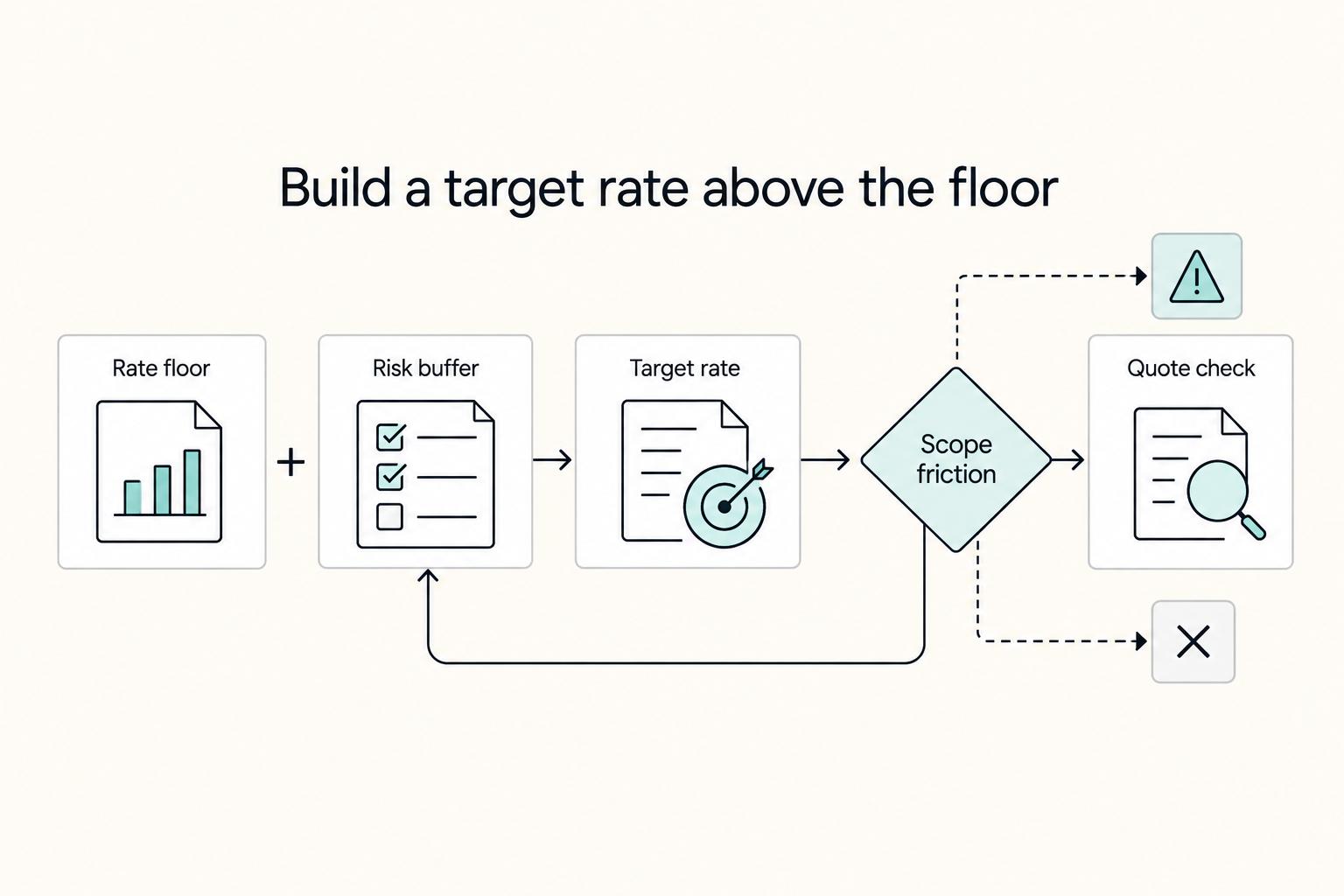
How to Calculate a Freelance Rate You Can Actually Get Paid On
A workable rate is not the neat number a calculator produces. It is the number that still works after you account for real billable capacity, non-client time, scope drift, and the gap between sending an invoice and receiving cleared cash. Start with hourly math even if you do not plan to bill hourly, then turn that number into a quote with clear `payment terms`.
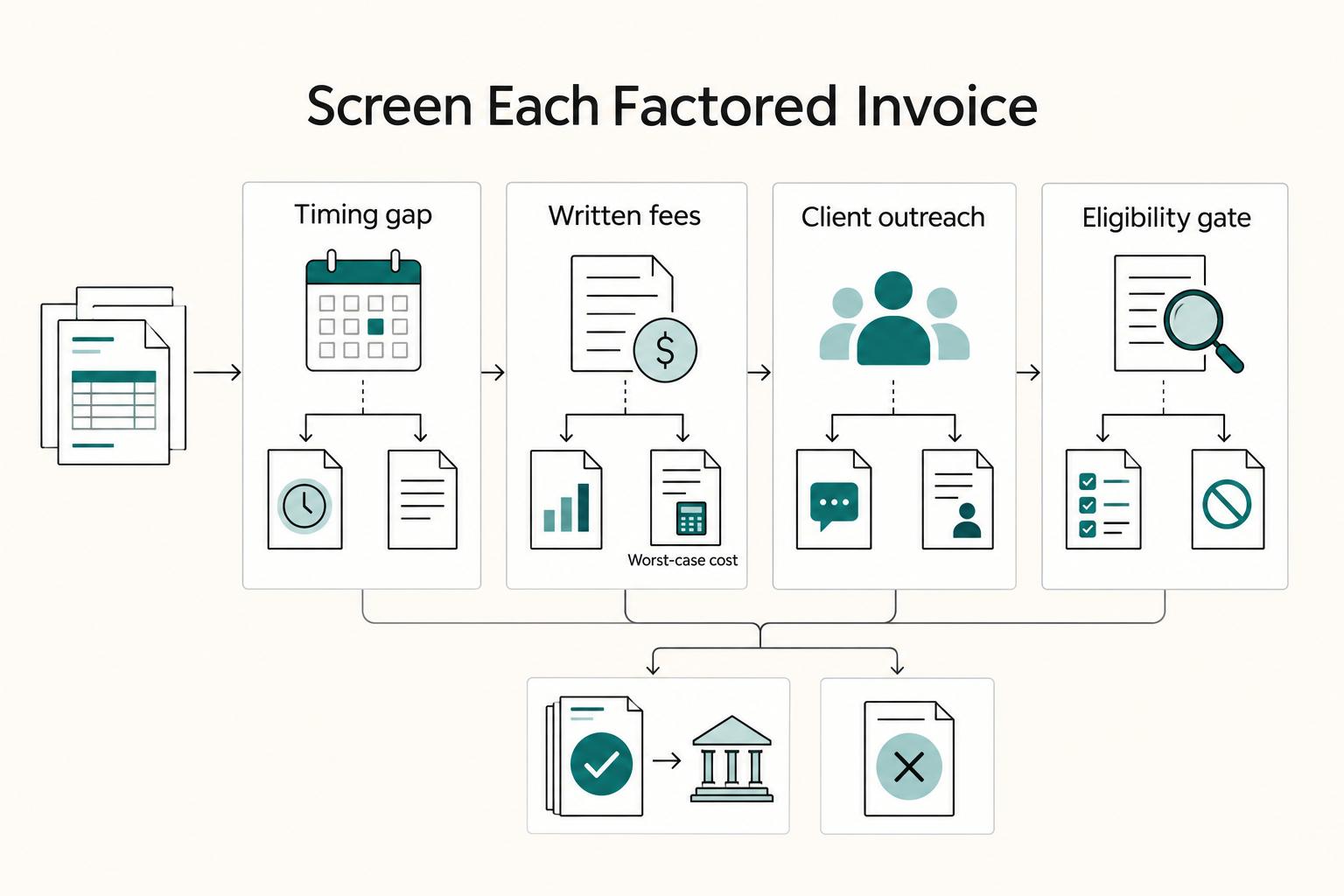
A Guide to Invoice Factoring for Freelancers
Factoring can turn an eligible unpaid invoice into earlier cash, with a fee and possible repayment obligations. Before committing, compare the amount available now with what you will eventually retain, and confirm who contacts the client. A quicker advance is useful only if it covers the timing gap on terms you can afford.

The Freelance Payment Penalty: A Modeled Audit of Platform Fees, FX Spreads, and Payout Delays
The money rarely disappears through a single, easy-to-spot fee. The real loss is stacked. A marketplace takes its commission, a processor adds a charge for international cards, a bank or payment company converts the currency at a spread, a platform holds the funds before release, and a wire sheds a little to intermediaries on the way in. Each layer looks defensible on its own, but the worker feels the combined result as a smaller deposit and a later payday.